Search results
Query: general radio
Links: 212 | Categories: 6
-
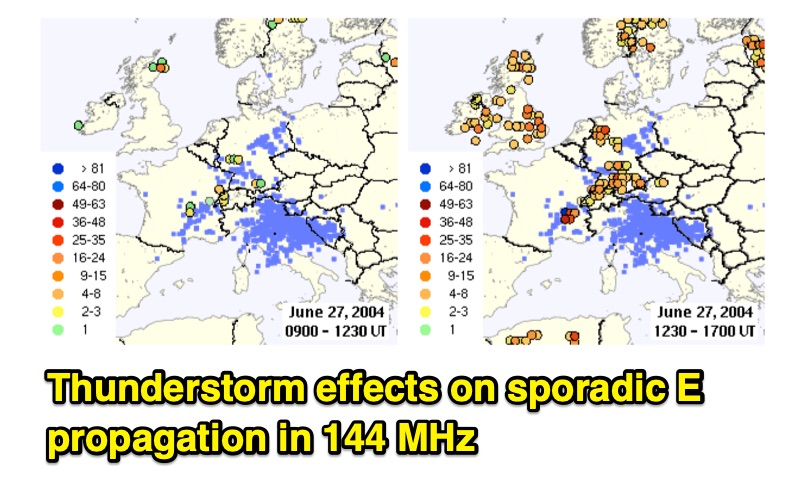 The paper examines the potential effects of thunderstorms on ionospheric _sporadic E_ propagation at **144 MHz**. It addresses community skepticism by considering scientific investigations into travelling ionospheric disturbances and spread-F irregularities, suggesting that thunderstorm effects on the ionosphere cannot be generally excluded. A model is presented where thunderstorm-triggered gravity waves travel from the troposphere and stratosphere into the ionosphere, potentially causing wind shears at E region level, which are considered a cause of mid-latitude sporadic E layers. The _GPS/MET radio occultation experiment_ and OH nightglow measurements support this model by showing a correlation between convectively generated gravity waves and electron density irregularities in the E region. A ham radio project analyzed the spatiotemporal correlation between 144 MHz sporadic E long-distance communication and VLF radio emissions from lightnings (sferics). The June 27, 2004 event showed a correlation between sferic and sporadic E scatterer positions, motivating further analysis. The paper proposes a data analysis method for amateur radio propagation studies, contingent on scientific observatories providing raw data.
-
 HAMgpt offers a personalized amateur radio experience, leveraging AI to provide real-time operational guidance. It integrates live propagation data, current band conditions, and operator-specific context, including callsign, QTH, license class, and station equipment, to deliver relevant answers. The system can identify open HF, VHF, and UHF bands, suggest workable DXpeditions and POTA/SOTA activations, and provide accurate repeater offsets and CTCSS/DCS tones for local repeaters. Unlike general-purpose chatbots, HAMgpt avoids fabricating frequencies or license privileges, instead relying on actual data for its responses. It supports antenna design calculations for various types like Yagi, dipole, vertical, and magnetic loop antennas, offering to-scale dimensions. The platform also assists with license exam preparation and provides satellite pass predictions tailored to the user's location. It supports multiple countries, including the United States (FCC Technician, General, Extra), Canada, the United Kingdom, Australia, Japan, and Argentina, incorporating their specific band plans and power limits.
-
 Facilitates preparation for FCC amateur radio licensing exams by providing free, unofficial practice tests for all three license classes: Technician, General, and Extra. Each question includes its source and a detailed explanation for the correct answer, promoting deeper understanding beyond simple memorization. Users can engage in an _exam mode_ with timed, scored simulations or print question sets for offline study, reinforcing knowledge of operating procedures, FCC regulations, and radio theory. The platform covers all topics from the official question pools, such as operating rules, remote pilot certificates, airspace classes, and weather effects on performance. It also includes specialized sections like _METARs, TAFs, and weather sources_, crucial for understanding atmospheric conditions impacting radio wave propagation. While primarily focused on amateur radio, the site also hosts practice tests for other certifications, including Part 107 Remote Pilot, various Element tests for commercial radio licenses, and numerous state-specific driving and professional exams.
-
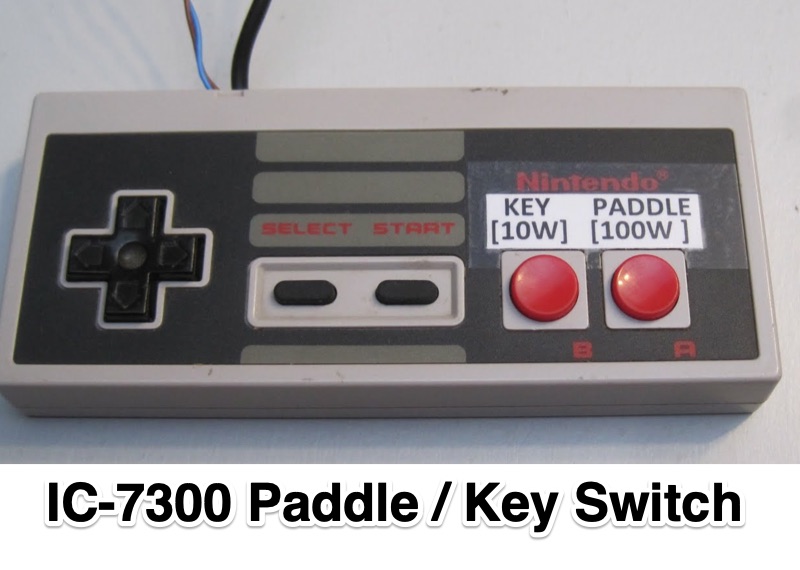 Demonstrates an **Arduino-based** solution for the Icom IC-7300 transceiver, specifically addressing the operational inconvenience of switching between a CW paddle and a straight key. The project leverages the IC-7300's **CI-V bus** (Computer Interface 5) to provide instant keyer type selection and two preset power levels, bypassing the rig's menu system which otherwise requires eight button presses. This implementation utilizes the 3.5mm CI-V connector, leaving the USB port free for CAT control and the internal soundcard, a critical design choice for integrated station setups. The system's utility is particularly evident for CW operators who frequently alternate between keying methods during contesting or general operating. The article details the hardware setup, including an Arduino Nano, a 3.5mm jack for CI-V, and pushbuttons for control. An update in 2023 expanded the project to incorporate an 8-button Nintendo controller, enhancing user interface flexibility and demonstrating the adaptability of the initial design for further customization and feature integration.
-
 The Lancaster & Fairfield County Amateur Radio Club is a general interest amateur radio group that offers monthly licensing exams, emergency communication activities, and social gatherings. They meet on the first Saturday of each month at 10:00 am at the Fairfield County Emergency Management and Homeland Security in Lancaster, Ohio. Meetings are public and welcome anyone interested in amateur radio, electronics, and emergency communications.
-
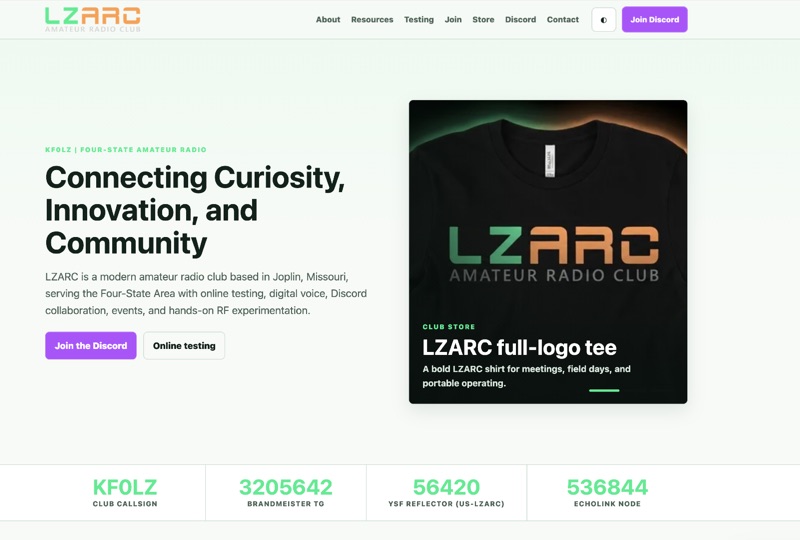 The LZ Amateur Radio Club (LZARC) operates with the club callsign **KF0LZ** and utilizes BrandMeister Talkgroup 3205642, YSF Reflector 56420 (US-LZARC), and EchoLink node 536844 for digital voice communications. This club, based in Joplin, Missouri, provides online FCC amateur radio license testing for Technician, General, and Amateur Extra class licenses, facilitating entry into the hobby. LZARC actively promotes hands-on RF experimentation, mesh networking with **Meshtastic**, and participation in **Parks on the Air** (POTA) activations. LZARC hosts regular events including the N0NMS Youth Net on 145.350 MHz (PL 91.5), the LZMesh Net on the LZMesh Meshtastic Channel, and the LZARC Digital Voice Net (CHAOS Net) via BrandMeister TG 3205642. The club maintains an active Discord server with over 300 members for daily conversations, project discussions, and quick support. Recent updates highlight member upgrades and participation in local hamfests, demonstrating a focus on community engagement and operator development across Missouri, Arkansas, Oklahoma, and Kansas.
-
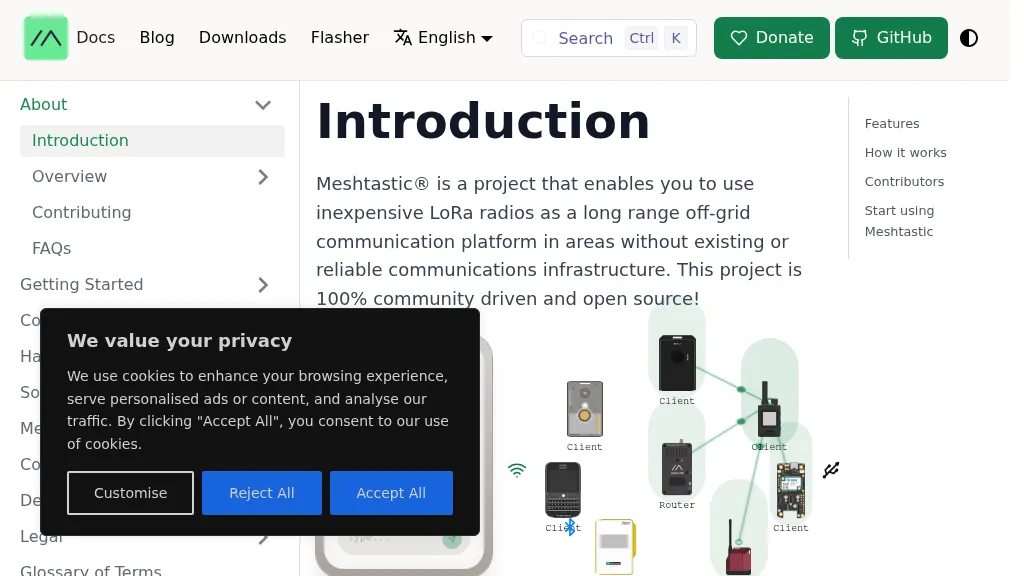 The Meshtastic project leverages _LoRa_ radio protocol to establish a long-range, off-grid communication platform, functioning as a decentralized mesh network. It facilitates sending and receiving text messages using inexpensive LoRa radios, eliminating reliance on traditional infrastructure or a smartphone for core mesh communication. Key features include encrypted communication, extended battery life, and optional GPS-based location services, with radios designed to rebroadcast messages to ensure delivery across the mesh. This system has demonstrated a record range of **331km** and is entirely community-driven and open source, with its codebase hosted on GitHub. Unlike conventional amateur radio, Meshtastic operates on LoRa frequencies generally accessible without specific licenses. Each Meshtastic radio can pair with one phone for message exchange, and support is provided by volunteers.
-
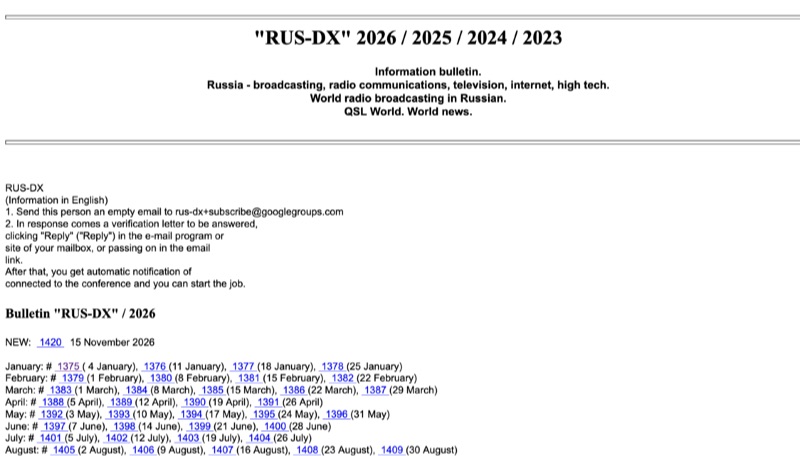 Accessing the RUS-DX PLUS Bulletin reveals a landing page that serves as a gateway to both Russian and English versions of the bulletin. This resource primarily functions as a newsletter, disseminating updates relevant to the amateur radio community. It focuses on general ham radio topics and DX-related activities, rather than specific technical measurements, equipment modifications, or detailed schematics. The content is presented in a textual format, offering news and announcements without performance data or software downloads. The bulletin acts as a communication channel for general amateur radio interest, without specifying particular operating modes like **FT8** or **CW**, or frequency bands such as 20 meters or 40 meters. The information is structured as a collection of articles or announcements, providing a concise overview of current events and interests within the ham radio world.
-
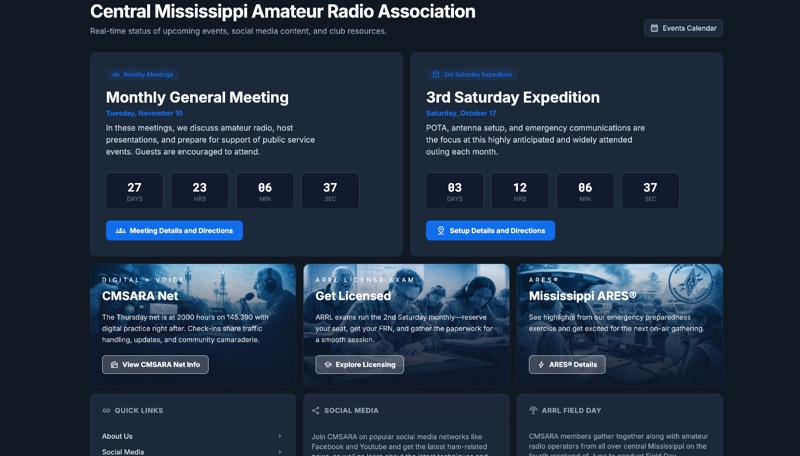 Illustrates the activities of the Central Mississippi Amateur Radio Association (CMARA), a vibrant club fostering amateur radio in central Mississippi. The organization regularly convenes for monthly general meetings, which feature discussions on various ham radio topics and presentations, alongside planning for public service support. A notable recurring event is the "3rd Saturday Expedition," focusing on _POTA_ (Parks On The Air) activations, antenna deployment, and practical emergency communications drills. CMARA maintains a consistent on-air presence with a weekly Thursday net at 2000 hours local time on 145.390 MHz, incorporating both voice and digital modes for traffic handling updates and community building. The club also facilitates _ARRL_ license examination sessions on the second Saturday of each month, providing essential guidance on reservations, obtaining an FRN, and required documentation. Furthermore, the resource highlights Mississippi _ARES_® (Amateur Radio Emergency Service) activities, showcasing emergency preparedness exercises and upcoming on-air gatherings. The site provides quick access to club information, including "About Us," "Social Media," and "Field Day" operations, specifically mentioning CMARA members' participation in _ARRL Field Day_ each June, making contacts across North America.
-
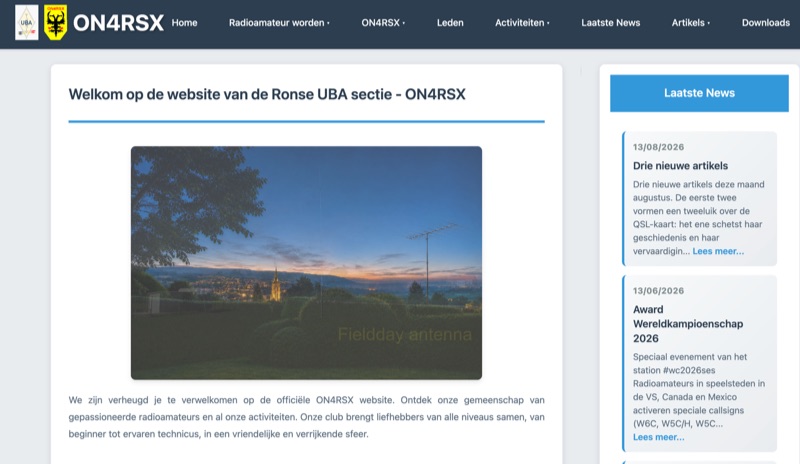 The ON4RSX website serves as the official online presence for the UBA Ronse/Renaix amateur radio club, providing information on its community and activities. It outlines the club's engagement across various amateur radio facets, including **HF**, VHF, UHF, digital modes, antenna construction, propagation studies, and general electronics. The site highlights past DXpeditions, such as the _OJ0V Market Reef_ operation, and mentions participation in contests, offering insights into the club's operational focus and technical interests. The resource details the club's commitment to fostering a welcoming environment for operators of all experience levels, from beginners to seasoned technicians. It implicitly compares the breadth of activities available to members, covering both theoretical knowledge development and practical application in areas like antenna building. The site's content structure suggests it functions as a central hub for club news, event announcements, and potentially educational materials, supporting members in expanding their radio knowledge and sharing their passion.
-
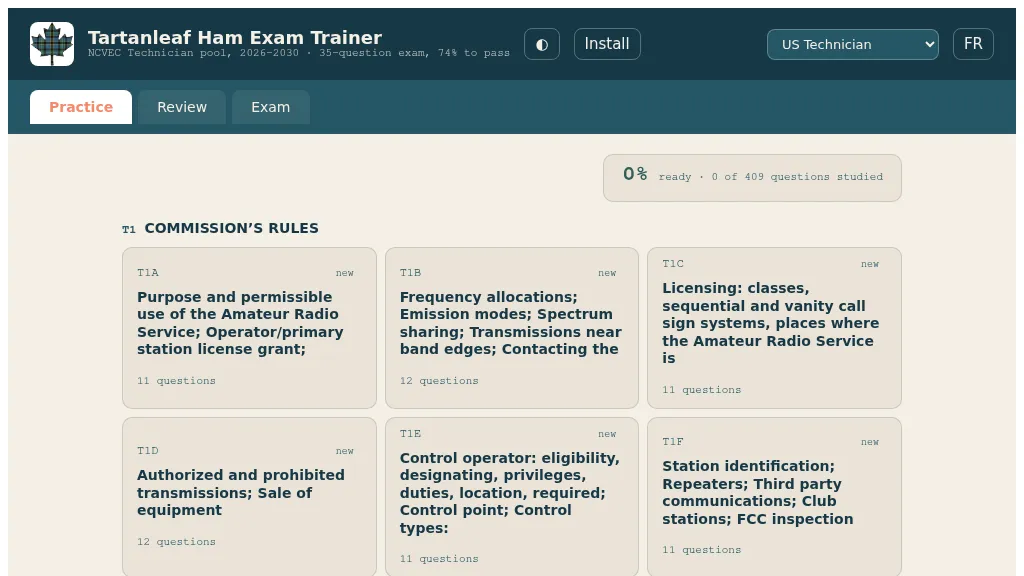 Facilitates preparation for amateur radio licensing exams in Canada (Basic and Advanced) and the United States (Technician, General, Extra). This web application provides a structured environment for self-study, offering question practice, review sessions, and full mock exams. The trainer tracks user progress locally on the device, enabling personalized study paths and highlighting areas needing improvement. Its offline-first design allows for continued study without an internet connection after the initial download, making it a flexible tool for hams on the go. The application's architecture leverages modern web technologies, ensuring accessibility across various devices and operating systems. The source code is openly available on GitHub, promoting transparency and community contributions to its development. This open-source approach allows for verification of the question pools and algorithms, fostering trust among users preparing for their licensing examinations.
-
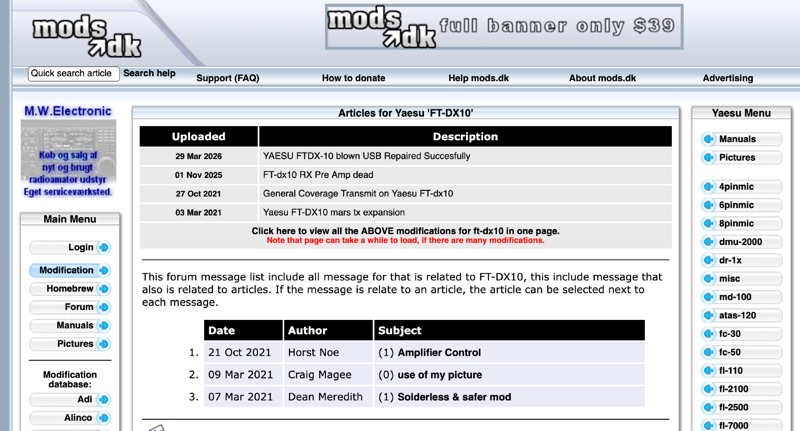 The Yaesu FT-DX10 Transceiver Modifications and Repair Database compiles technical articles and user-contributed messages specifically for the FT-DX10 HF transceiver. It features documented procedures such as "YAESU FTDX-10 blown USB Repaired Succesfully" and an entry detailing a "FT-dx10 RX Pre Amp dead" issue. The resource also includes instructions for "General Coverage Transmit on Yaesu FT-dx10" and "Yaesu FT-DX10 mars tx expansion," providing specific adjustments for the radio's operational parameters. This platform organizes content to allow viewing all modifications for the FT-DX10 on a single page, streamlining access to various technical adjustments. Users can find discussions on topics like amplifier control and solderless modifications, offering practical insights from the amateur radio community. The database serves as a central point for operators seeking to enhance or repair their FT-DX10 units. Each entry is dated, with examples like a March 2026 article on USB repair and a November 2025 entry concerning the RX pre-amplifier. The site also facilitates user interaction through a message board, where operators can post comments or new modification ideas not yet documented.