Search results
Query: ham radio club
Links: 329 | Categories: 91
Categories
- Ham Radio > Clubs
- Operating Modes > Packet Radio > Clubs
- Ham Radio > Clubs > North America > USA > New Hampshire
- Ham Radio > Clubs > Contest Clubs
- Ham Radio > Clubs > North America > USA > Alabama
- Ham Radio > Clubs > North America > USA > Alaska
- Ham Radio > Clubs > North America > Canada > Alberta
- Ham Radio > Clubs > North America > USA > Arizona
- Ham Radio > Clubs > North America > USA > Arkansas
- Ham Radio > Clubs > Asia
- Ham Radio > Clubs > Europe > Belgium
- Ham Radio > Regional > Brazil
- Ham Radio > Clubs > North America > Canada > British Columbia
- Ham Radio > Clubs > Europe > UK > Central England
- Ham Radio > Clubs > North America > USA > Colorado
- Ham Radio > Clubs > North America > USA > Connecticut
- DX Resources > Contest > Contest Stations
- Ham Radio > Clubs > North America > USA > Delaware
- Ham Radio > Clubs > Europe > Denmark
- Ham Radio > Clubs > Europe > UK > Eastern England
- Ham Radio > Clubs > Europe > Italy > Emilia Romagna
- Ham Radio > Clubs > Europe
- Ham Radio > Clubs > North America > USA > Florida
- Ham Radio > Clubs > Europe > France
- Ham Radio > Clubs > North America > USA > Georgia
- Ham Radio > Clubs > Europe > Germany
- Ham Radio > Blogs > Europe > Germany
- Ham Radio > Clubs > North America > USA > Hawaii
- Ham Radio > Clubs > Societies
- Ham Radio > Clubs > North America > USA > Idaho
-
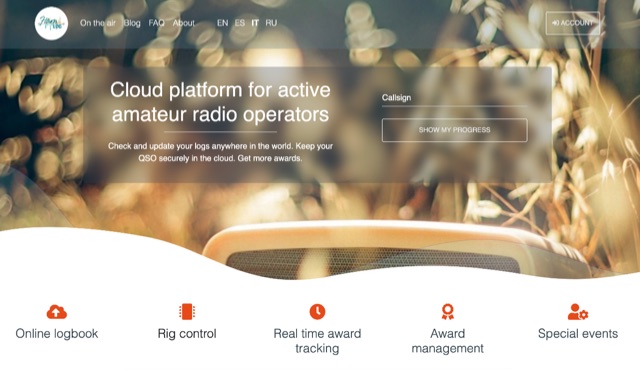 Hamlog is online cloud platform for active amateur radio operators. It supports various on the air activities of various clubs, associations and national amateur radio organizations, allows them to create award programs and deliver awards to those who earned them. Hamlog also has a built-in real-time logger, which allows operators to enter QSO in the system as they make them. It supports multiple callsigns, multiple locations, multi-station activities, etc. Soon it will allow to connect transceivers and other ham radio devices right to the browser, allowing easy online logging virtually anywhere.
-
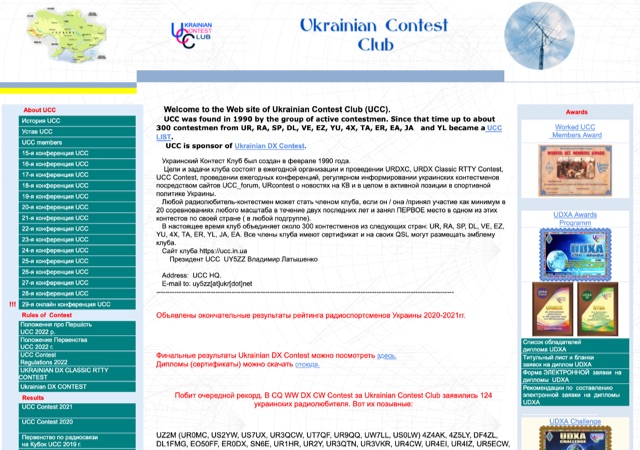 The Ukrainian Contest Club (UCC) website details contest activities, including a March 2026 contest calendar compiled by _UW3WF_ that excludes specific "exotic" tests, mini-tests, sprints, VHF competitions, and events organized by Russian entities. It lists major contests such as the ARRL International DX Contest, Stew Perry Topband Contest, and CQ WPX SSB Contest, providing dates, times, modes, bands (e.g., **10-160m**), organizers, log submission methods, and deadlines. The resource also highlights Ukrainian participation in various international contests, noting specific callsigns that represented the UCC, and acknowledges new Ukrainian records, such as UW5Y's new record in the ARRL DX CW Contest. The site presents contest results and rankings, including the top 20 Ukrainian contesters in the World Amateur Radio Contesting Association (WARCA) rating for 2019-2024, with _UW1M_ ranked #18 globally and #1 in Ukraine with **26,490.32** points. It also details the club's 12th place finish among 155 clubs worldwide in the CQ WPX Contest 2024 (CW + SSB). The resource includes information on WRTC 2026 participants from the club and lists members excluded due to collaboration with adversarial entities, reflecting the current geopolitical context.
-
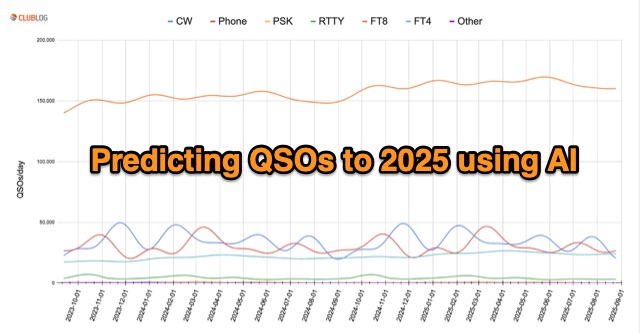 In an innovative analysis, Michael G7VJR employs NeuralProphet to predict ham radio modes' usage trends. The AI model, leveraging deep learning, forecasts a steady FT8 dominance, with slight declines in CW and Phone activities. This approach simplifies statistical predictions, showcasing the power of AI in understanding complex patterns and facilitating insightful time series projections. Access the freely available Club Log data for continuous exploration.
-
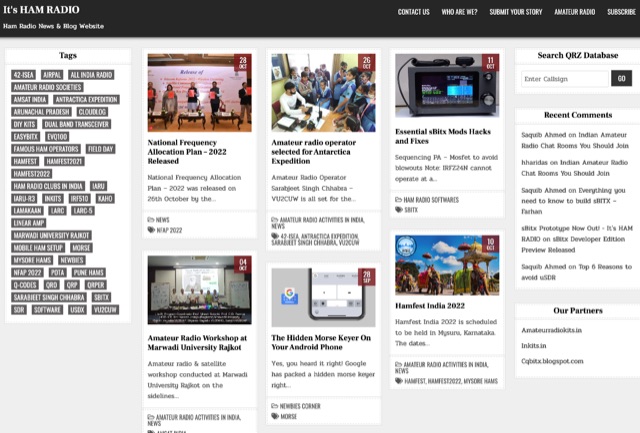 Focusing on the Indian amateur radio community, this resource provides a collection of articles covering news, technical tutorials, and DIY project instructions. It features content on various aspects of ham radio, including club activities, circuit ideas, and general information relevant to operators in India, often referencing local events and regulations. The site serves as a central point for information exchange within the region. The author, VU3HZW, shares insights and practical guidance, drawing from personal experience to present topics such as antenna construction and station setup. The content aims to support both new and experienced hams, with articles detailing specific projects and offering practical advice for improving station performance or engaging in local ham radio activities. For instance, one article might detail a simple _QRP transceiver_ build, while another could discuss optimal antenna placement for **local nets**.
-
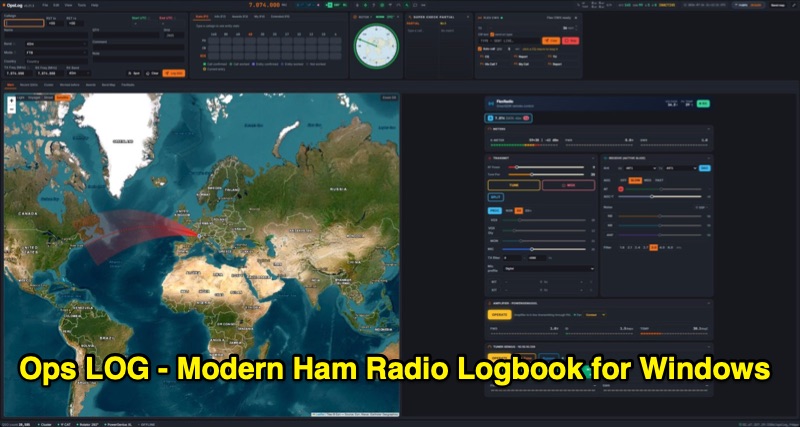 OpsLog is a modern amateur radio logbook application for Windows, designed to consolidate station operations into a single, integrated interface. It provides fast, single-strip QSO entry with automatic lookup from QRZ.com or HamQTH, populating callsign, name, QTH, and grid square. The software offers real-time CAT control supporting OmniRig, native FlexRadio/SmartSDR, Icom CI-V (via USB or internet), and TCI protocols. Key logging features include ADIF 3.1.7 compliance, offline DXCC resolution, a worked-before matrix, and dupe detection. It also incorporates a great-circle map for short/long path calculations and a clickable rotor compass, displaying antenna direction accurately. The application integrates DX cluster functionality with multiple server connections, band map spot display, and customizable alert rules for callsign, country, band, mode, or spotter, delivering notifications via sound, on-screen alerts, and email. OpsLog tracks numerous awards such as DXCC, WAS, WAZ, WAC, WPX, IOTA, POTA, SOTA, WWFF, and DDFM, with synchronization capabilities for ClubLog, LoTW, QRZ.com, and eQSL. For contesting and multi-operator environments, it offers serial number auto-fill, enforced contact windows, live dupe flagging, and shared MySQL logbook support for real-time status updates among operators. Additionally, it includes a QSL card designer with automated layout suggestions.
-
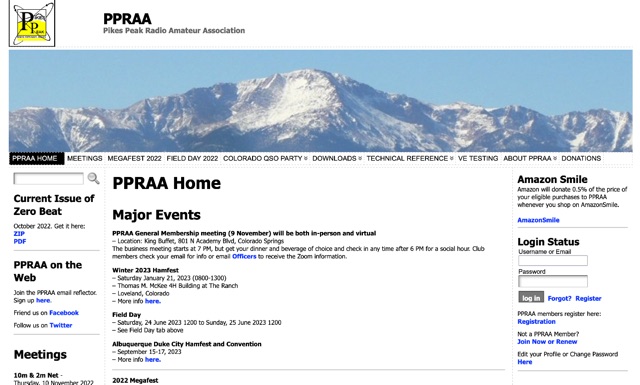 The Pikes Peak Radio Amateur Association (PPRAA) serves as an ARRL Special Service Club, providing a calendar of events and activities for its members and the wider amateur radio community. The resource details upcoming events such as the USS Pueblo Memorial Museum Ships Weekend activations, a Cubical Quad Antenna Workshop, LARCFest, and various hamfests including Dayton Hamvention and Duke City Hamfest. It also lists on-air activities like a FreeDV digital voice mode event on 10 meters, a Black Friday Simplex Event on 2M and 70cm, and a 10m event for Technician class operators, emphasizing SSB privileges from 28.300 to 28.500 MHz. The PPRAA's event schedule includes educational opportunities like a Technician Class and a Soldering Workshop, alongside social gatherings such as the PPRAA Picnic and Car Show. Past event summaries highlight successful activities like the 2024 Megafest Raffle, Winter Field Day, and multiple fox hunts utilizing frequencies like 147.420, 147.480, and 147.540 MHz. The club actively supports POTA activations, exemplified by their AF0S park activation at Cheyenne Mountain State Park, and participates in historical commemorations like the USS Pueblo Memorial operations, demonstrating a broad engagement across various amateur radio facets.
-
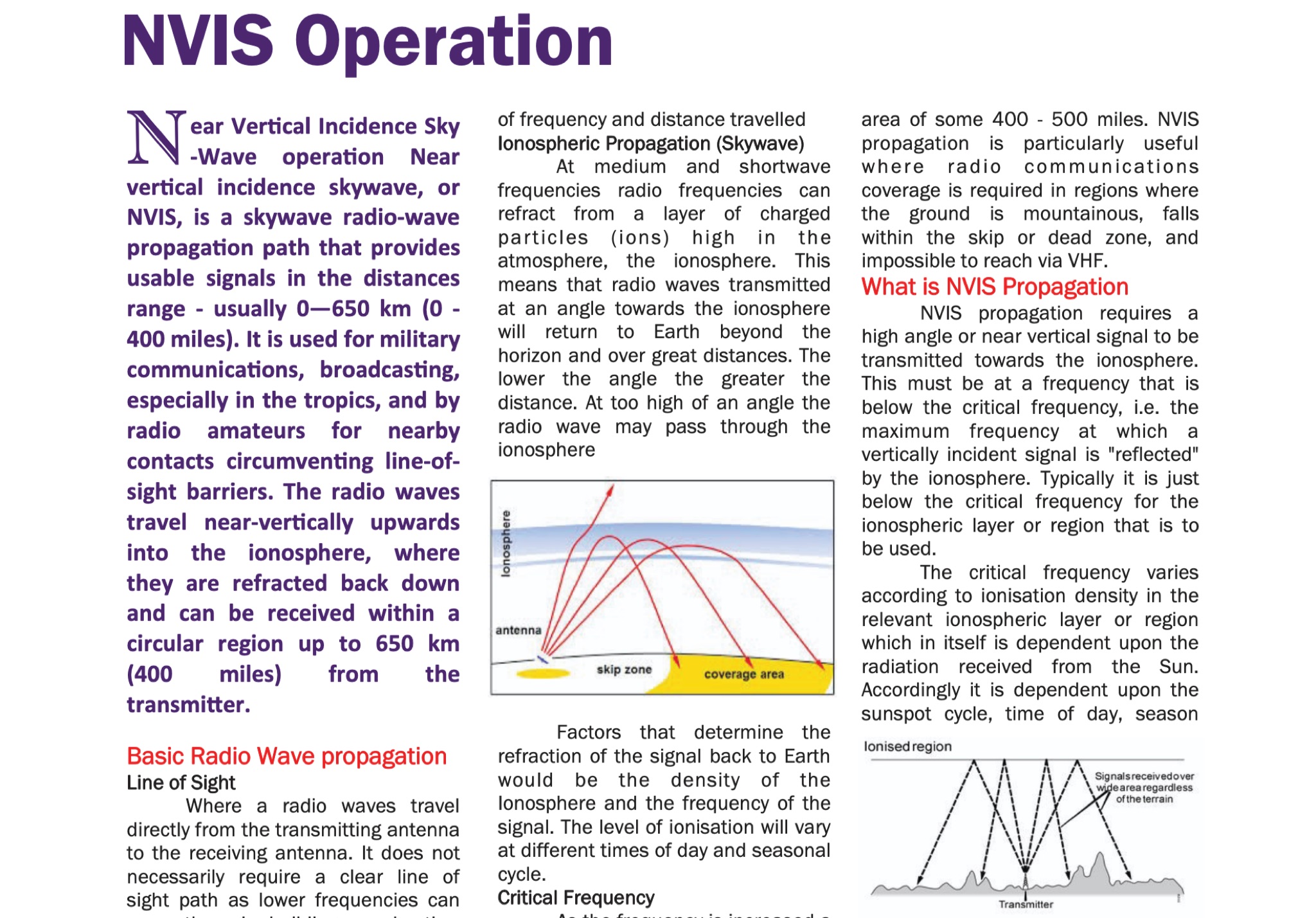 Understanding radio wave propagation is fundamental for effective HF communication, and this guide from the Galway Radio Club elucidates the principles behind _Near Vertical Incidence Skywave_ (NVIS) operation. It begins by contrasting NVIS with line-of-sight and surface wave propagation, highlighting its utility for reliable regional coverage, particularly in challenging terrains or within the skip zone. The document explains how NVIS leverages high-angle radiation, refracting signals from the ionosphere to return to Earth within a circular region, typically up to **650 km** (400 miles) from the transmitter. The guide delves into critical factors influencing NVIS, such as the _critical frequency_ (Fo) and the Maximum Usable Frequency (MUF), emphasizing their dependence on solar activity, time of day, and season. It provides practical advice on frequency selection, noting that 40 meters is often the highest daytime NVIS band, with 60 meters and 80 meters favored as darkness falls. The author, EI5DD, suggests using an ionogram for real-time propagation data, considering it more reliable than generic ham-clocks. Antenna considerations are also covered, recommending dipoles, inverted vees, or phased dipoles positioned 0.1 to 0.25 wavelengths above ground for optimal high-angle radiation. The document mentions mobile NVIS setups, including military configurations and commercial options like the Barrett Communications roof-rack antenna, which can cost around **£2000.00**. It concludes by reinforcing NVIS as an essential technique for national emergency communications, with 5 MHz (60m) and 80 meters being primary bands for daytime and nighttime operations, respectively.
-
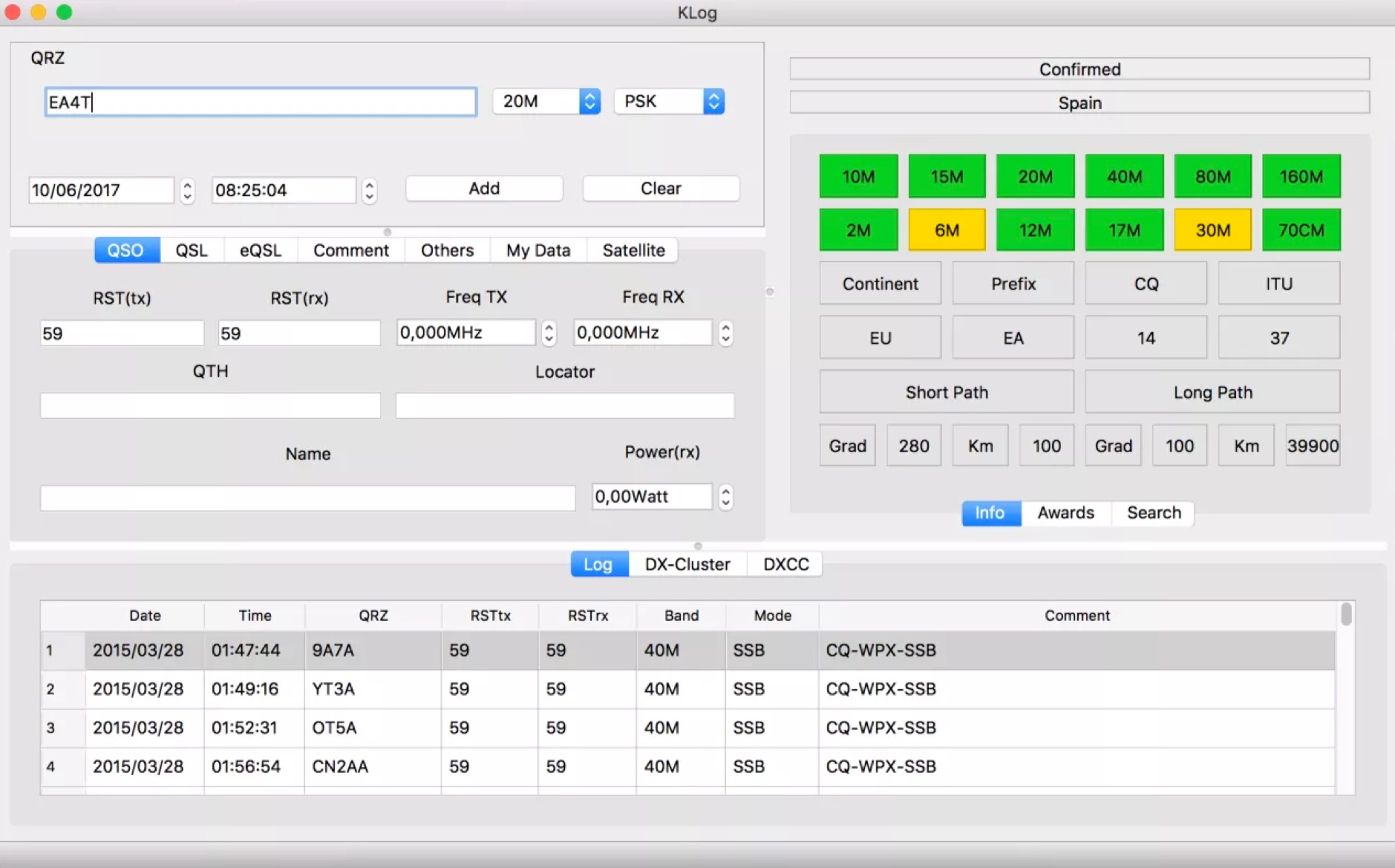 KLog is a free, multiplatform ham radio logging application that runs natively on Linux, Windows, and macOS. It provides comprehensive **QSO management**, including features for logging contacts, managing QSL cards, and tracking DXCC entities. The software integrates a **DX-Cluster client** for real-time DX spotting, supports WSJT-X for digital modes, and includes functionality for the DX Marathon award program. It also offers Club Log integration for uploading logs and managing awards. The application's multiplatform nature ensures broad accessibility for amateur radio operators using various operating systems. Its support for WSJT-X facilitates logging of popular digital modes like FT8 and FT4, while DX Marathon integration assists contesters and DXers in tracking progress. The built-in DX-Cluster client streamlines the process of finding and working rare DX, enhancing overall operating efficiency and award pursuit.
-
 Twigger is a very lightweight, free ham radio logger designed for Windows, offering seamless integration with transceivers via _TCI_ or OmniRig. This software stores all logged contacts in a SQLite database, with the flexibility to export daily ADIF files for import into a main logger or to send real-time QSO data via UDP in N1MM XML format. It also supports direct, real-time uploads to popular online logbooks like Clublog and QRZ.com, streamlining the logging process for active operators. The application has seen continuous development, with version 1.1.34 fixing an ADIF log importer bug and earlier versions adding crucial features like WSJT-X/JTDX UDP support. Author OE3IDE, Ernst, has incorporated user feedback, including ideas and testing from MW0LGE, to refine the software. Key enhancements include the transition to SQLite for data storage in version 1.1.32, allowing for easy import of previous Twigger ADIFs upon initial startup. The logger also features integrated DX cluster support, enabling users to send spots directly and query QRZ.com for callsign information, which is then cached to reduce redundant queries. The software's compact design and essential logging capabilities make it a practical tool for casual logging or as a secondary logger during contests, with the ability to handle **25 downloads** for version 1.1.34.
-
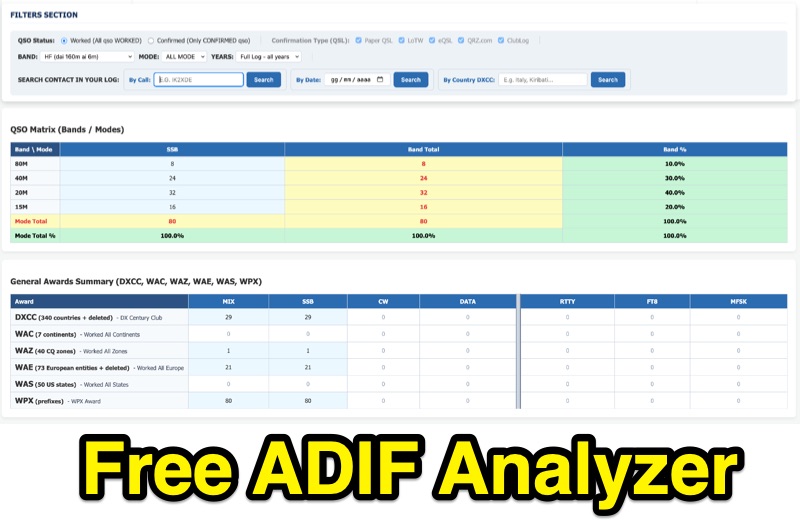 IK2XDE's ADIF Log Analyzer provides a robust, browser-based solution for radio amateurs to scrutinize their ADIF log files. The tool processes .adi/.adif files up to the ADIF 3.1.7 standard, delivering instant statistics on QSO activity and award progress without uploading any data to a server; all analysis occurs securely within the user's web browser, ensuring privacy. Operators can load their logs to track progress for major awards like DXCC, WAC, WAZ, WAE, WAS, and WPX. The analyzer differentiates between worked and confirmed QSOs, supporting various QSL confirmation types including paper QSL, LoTW, eQSL, QRZ.com, and ClubLog. It also generates detailed band and mode statistics, a QSO matrix, and year/month breakdowns. Beyond general statistics, the tool identifies missing DXCC entities and offers detailed PDF reports for each award, providing a comprehensive overview of an operator's on-air achievements. This functionality makes it a practical utility for contesters and DXers alike, streamlining log review and award tracking.
-
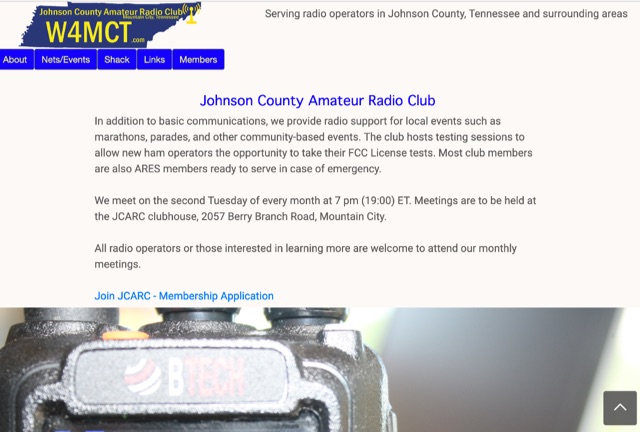 The amateur radio club serving Johnson County Tennessee and northeastern Tennessee and southwestern Virginia. Open to all licensed hams.
-
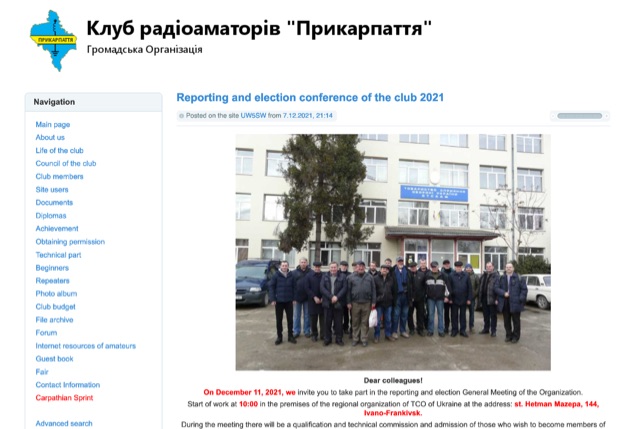 Ham Radio club Prykarpattia Ivano Frankivsk
-
 Established in 2018, the Long Island CW Club aims to revitalize Morse Code (CW) usage among amateur radio operators. Despite the FCC's removal of CW as a licensing requirement, the club observes a growing interest in learning and mastering the code. Through online video conferencing, the club offers CW training classes catering to various skill levels, fostering a vibrant community of enthusiasts engaged in diverse ham radio activities worldwide.
-
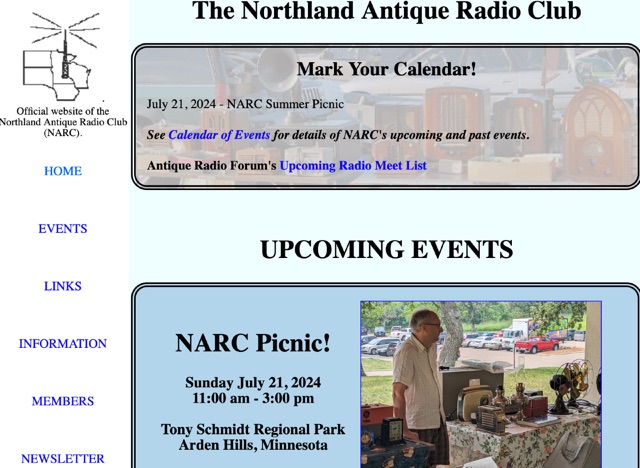 The Northland Antique Radio Club is located in Minneapolis, Minnesota. We were founded in 1986. We have multiple indoor and outdoor events. Our main events are an auction and outdoor swap meet in May and an indoor swap meet in October each year. We also have a technical program in February.
-
 The Playground Amateur Radio Club has be in service to the Northwest Florida Panhandle since 1951. The team in Fort Walton Beach Florida sponsors and hosts multiple events, contests, Hamfests, Swapmeets, meetings, nets and technical instruction and assistance.
-
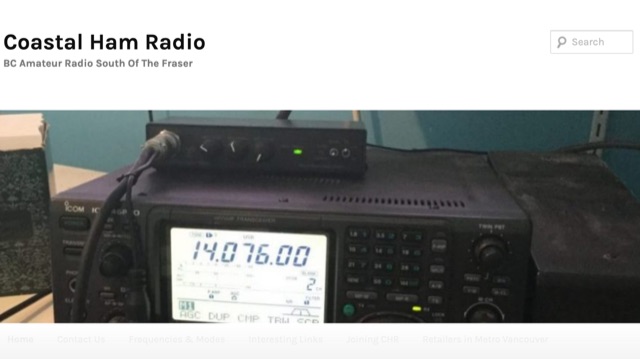 BC Amateur Radio South Of The Fraser. Coastal Ham Radio Club is for the amateur radio enthusiast. We are a group of local British Columbia amateurs who wish to socialize, learn, share and promote the hobby.
-
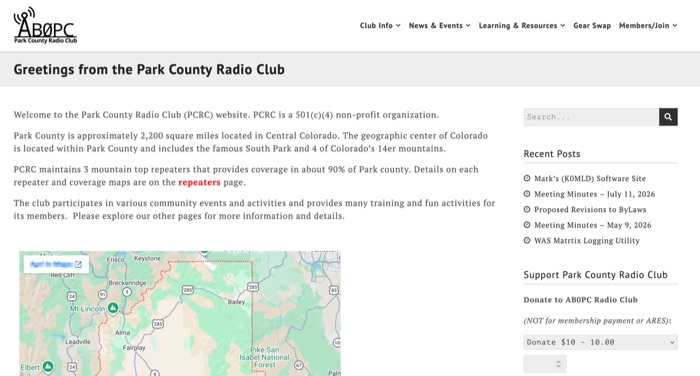 The AB0PC Park County Radio Club website serves as a central hub for its members and prospective members, detailing the club's mission to promote amateur radio, provide technical assistance, and facilitate communication services, especially during local emergencies. It outlines the club's operational structure, membership benefits, and participation methods. The resource also provides contact information for club leadership, meeting schedules, and event details. The club actively participates in events such as _Field Day_ and various public service activities, demonstrating practical applications of amateur radio skills. It emphasizes the importance of local repeaters, specifically mentioning the **AB0PC** repeater, for maintaining reliable communication links within Park County. The site reinforces the club's role as a community focal point for amateur radio in the region.
-
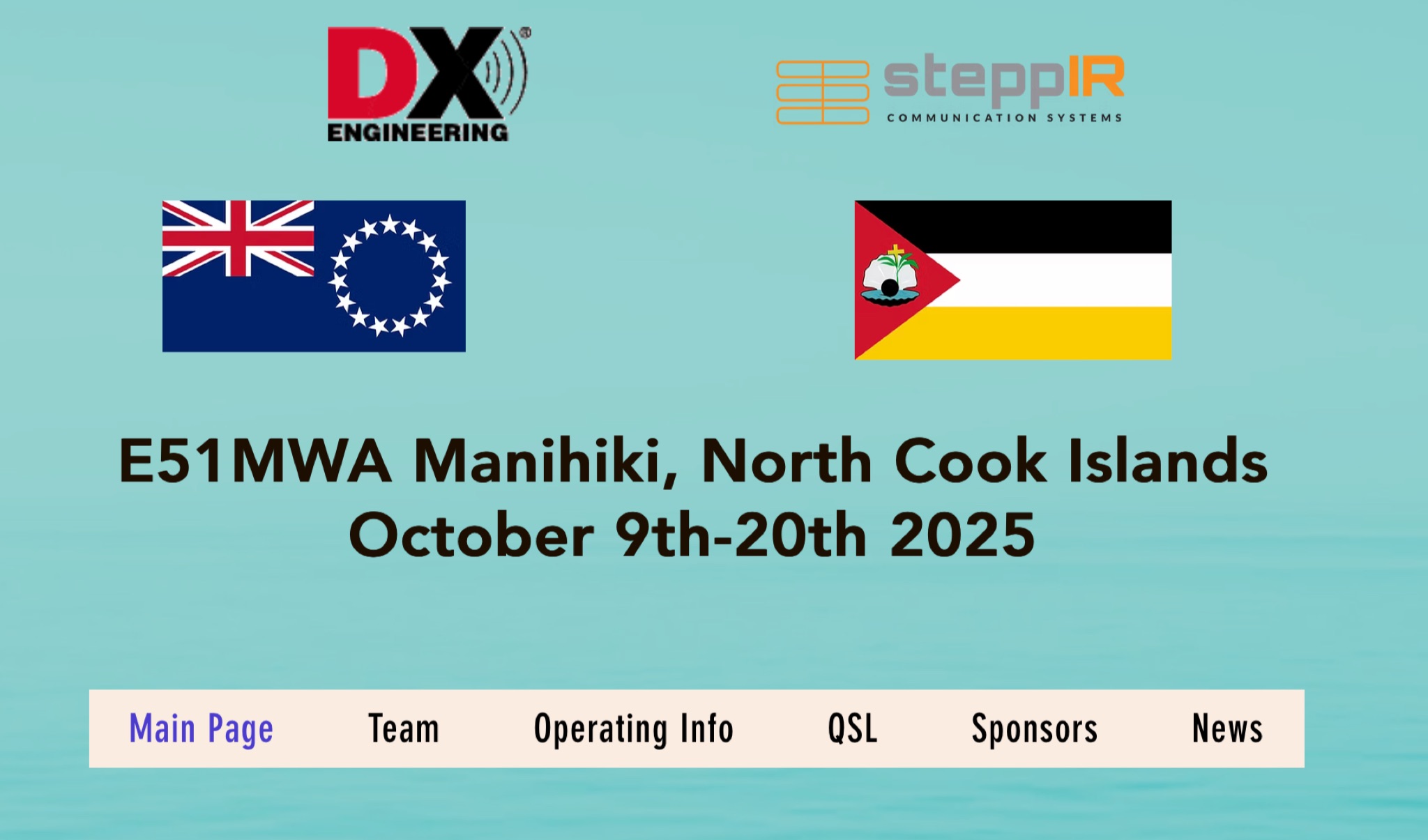 This page provides information about the upcoming DXpedition to Manihiki in the North Cook Islands by a team of Western Washington DX Club hams. It includes details about the dates of the operation, financial support options, QSL policy, and how hams can get involved. The page is aimed at ham radio operators interested in working the E51MWA station during the DXpedition and supporting the team financially.
-
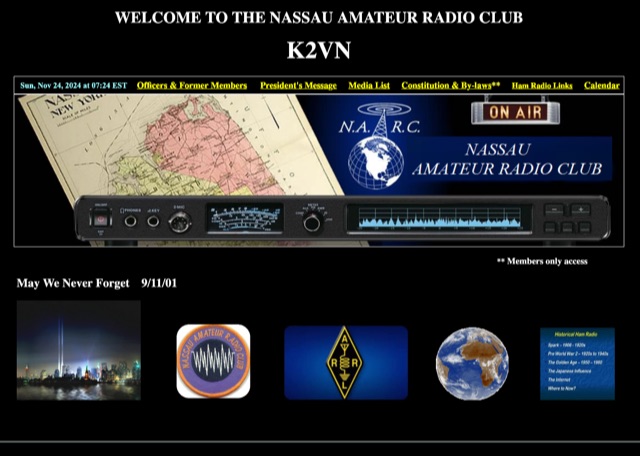 The Nassau Amateur Radio Club (NARC), a Special Service Club of the ARRL, focuses on Ham Radio education to train skilled radio operators for emergency communications, foster international goodwill, and advance the radio art. Based in Nassau County on Long Island, the club is affiliated with the New York City-Long Island Section of the ARRL Hudson Division.
-
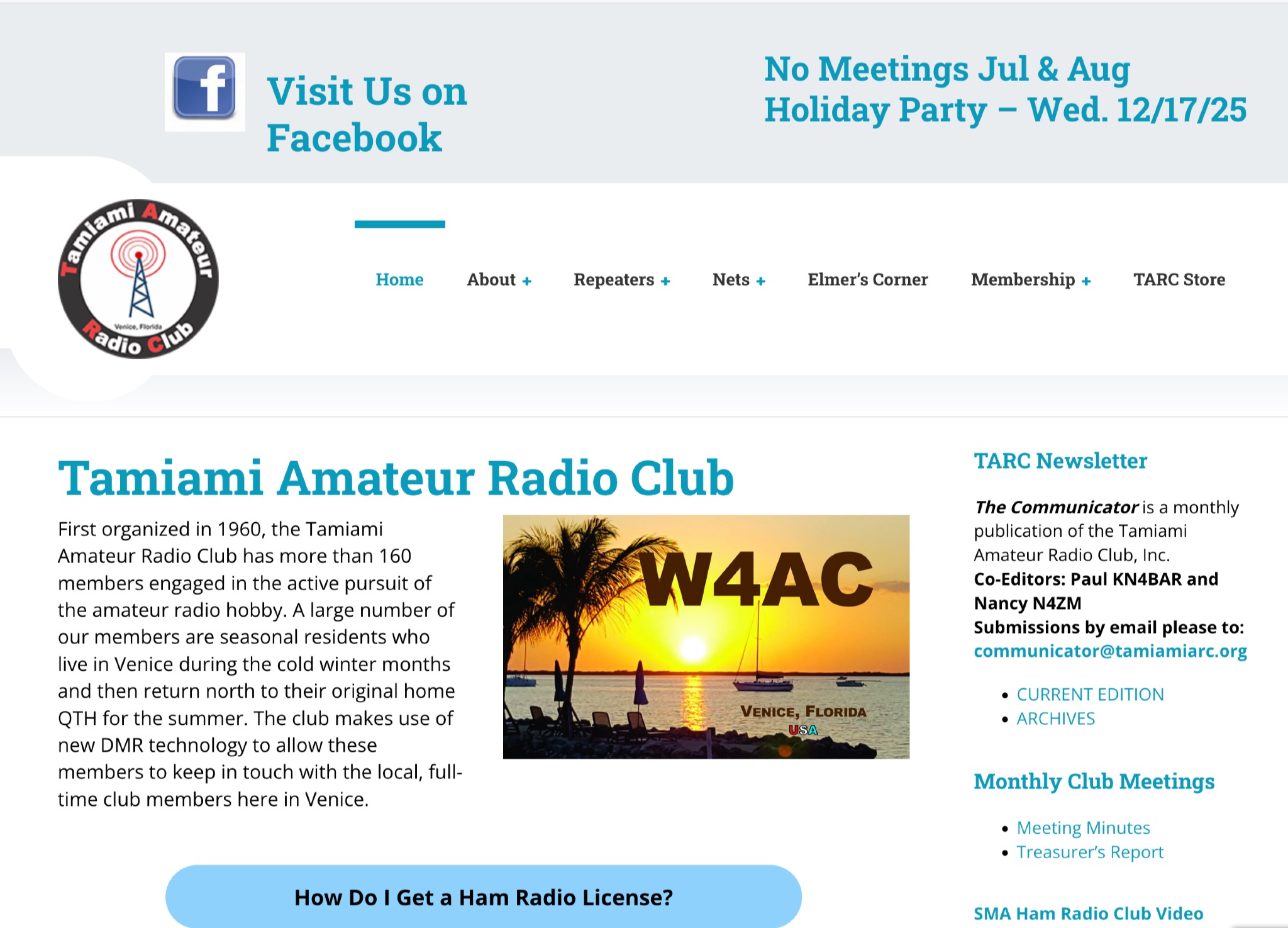 Tamiami Amateur Radio Club website provides information on club activities, membership, FCC license testing, special events, and participation in ARRL Field Day and Florida QSO Party. It also includes details on DMR technology and VE testing sessions. The club has been affiliated with ARRL since 1963 and operates a special event station at the Venice Shark's Tooth Festival annually.
-
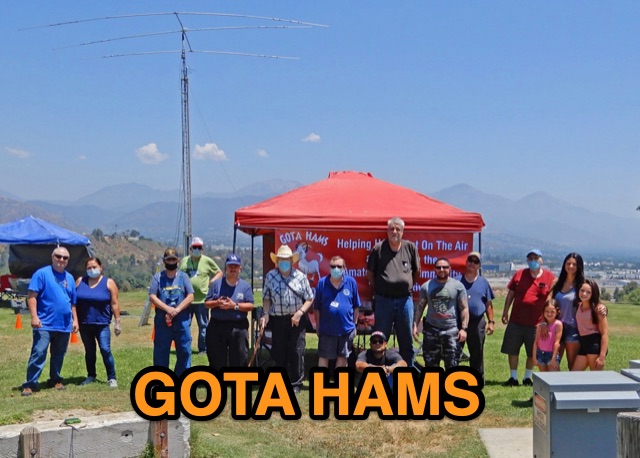 The GOTAhams Amateur Radio Club offers a welcoming environment for anyone interested in ham radio, from complete beginners to seasoned operators. They host various activities like park outings, license testing sessions, and nets, fostering a hands-on learning experience. They emphasize inclusivity with diverse member interests and ages. If you're curious about ham radio, the GOTAhams seem like a friendly club to check out.
-
 Bear Bait Radio Club is dedicated to educating new ham radio enthusiasts while having fun. We emphasize emergency preparedness, community service, storm watching/reporting, and wilderness search and rescue.
-
 With the reputation of being the most active amateur radio club in Hampshire, we support enthusiasts, experienced and new, with monthly meetings and summer field events. Free to visit!
-
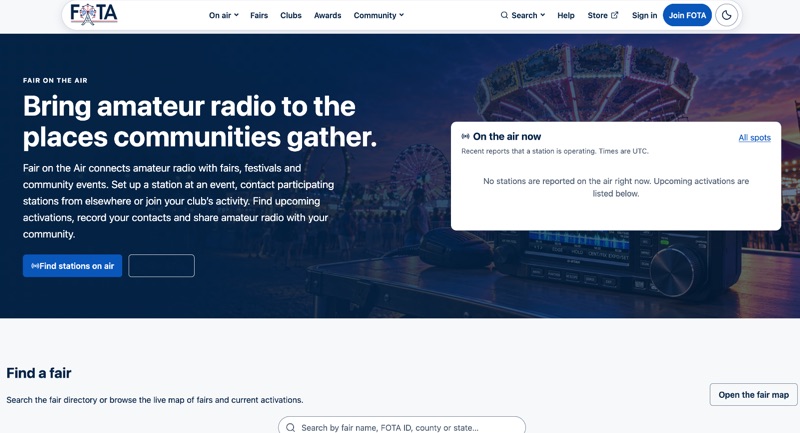 The Fair on the Air (FOTA) program integrates amateur radio operations with community gatherings, such as local fairs and festivals. It provides a structured framework for radio amateurs to set up portable stations at these public events, make contacts with other participating stations, and introduce the hobby to a broader audience. The platform offers tools for locating upcoming activations, logging radio contacts, and tracking participant progress toward various awards. FOTA supports two primary modes of participation: "hunting" and "activating." Hunters locate active FOTA stations via a real-time spots page and establish radio contacts from any location. Activators, conversely, identify eligible fairs, plan their station setup, and log QSOs made from the event site. The system automatically records these contacts and applies them toward specific award criteria. Participants can earn Hunter, Activator, and Club awards, with progress and certificate issuance managed directly by the FOTA platform. The site features a directory of fairs, a live map of current activations, and a news section detailing program updates and recent activities, such as the K9J planned activation at the Jennings County Fair.
-
 Presents the K1PRC Patriot Radio Club, an international online amateur radio organization dedicated to fostering community among licensed operators and enthusiasts. The club provides ARRL-VEC accredited testing services, enabling hams to earn or upgrade their licenses, and actively engages in youth outreach initiatives. Members participate in monthly Zoom meetings, with invites distributed via email, and the club maintains a presence at significant events like the _Northeast HamXPosition_, where Head Trustee Mr. Gene McDole and Youth Outreach Lead _KC1WNO_ distribute promotional materials. The club welcomes all license classes, from Technician to Extra, emphasizing emergency preparedness and international goodwill. Membership is available for **$24** per year, supporting its mission and activities.
-
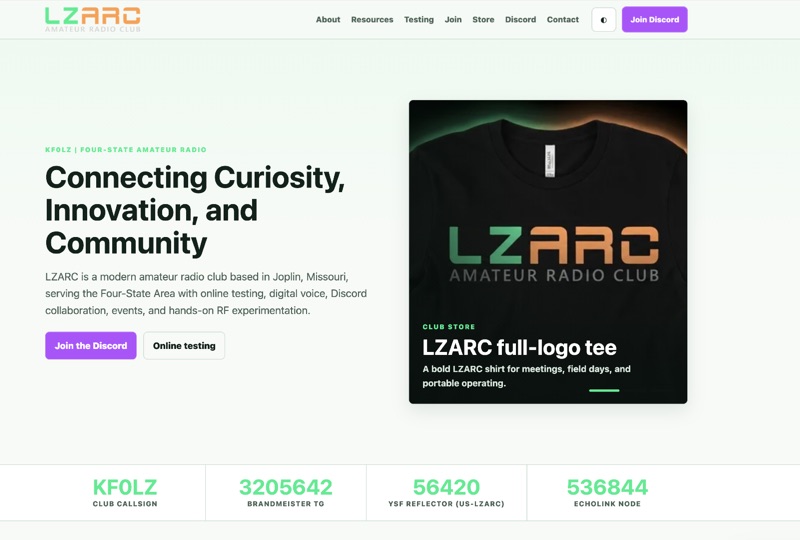 The LZ Amateur Radio Club (LZARC) operates with the club callsign **KF0LZ** and utilizes BrandMeister Talkgroup 3205642, YSF Reflector 56420 (US-LZARC), and EchoLink node 536844 for digital voice communications. This club, based in Joplin, Missouri, provides online FCC amateur radio license testing for Technician, General, and Amateur Extra class licenses, facilitating entry into the hobby. LZARC actively promotes hands-on RF experimentation, mesh networking with **Meshtastic**, and participation in **Parks on the Air** (POTA) activations. LZARC hosts regular events including the N0NMS Youth Net on 145.350 MHz (PL 91.5), the LZMesh Net on the LZMesh Meshtastic Channel, and the LZARC Digital Voice Net (CHAOS Net) via BrandMeister TG 3205642. The club maintains an active Discord server with over 300 members for daily conversations, project discussions, and quick support. Recent updates highlight member upgrades and participation in local hamfests, demonstrating a focus on community engagement and operator development across Missouri, Arkansas, Oklahoma, and Kansas.
-
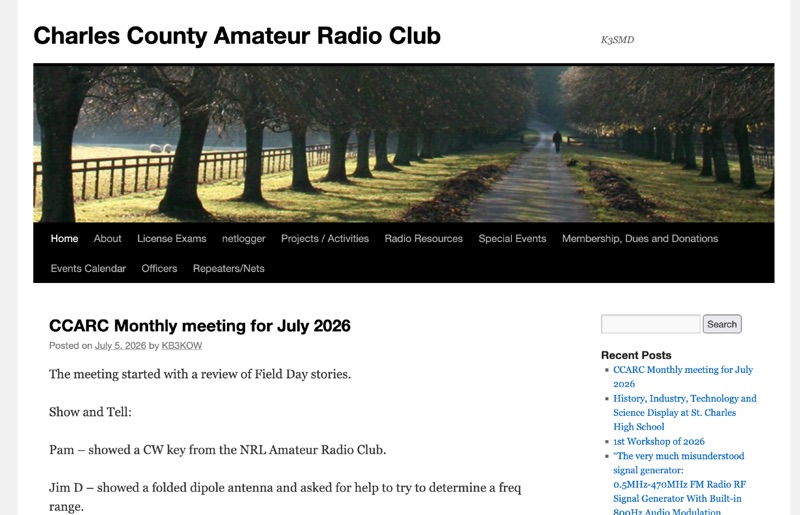 The Charles County Amateur Radio Club (K3SMD) website documents the diverse activities and technical explorations undertaken by its members. It features detailed recaps of monthly meetings, often including "Show and Tell" segments where members present projects like folded dipole antennas, LED moth lights, and multi-band QRP radios such as the _uBITX6_ and Bitx-40. The resource also covers community engagement efforts, including participation in the HITS Expo and STEAM Festival, where the club demonstrated Morse code, Digital Amateur TV, and basic electronics to the public, achieving an **87% success rate** in Morse code decoding by youth participants. Technical workshops and presentations are a recurring theme, detailing hands-on sessions for soldering kits and configuring DMR HTs. Advanced topics include discussions on CI-V for remote rig control and practical experiments with solar panel interfacing for portable operations, addressing challenges like inrush current and voltage regulation with buck/boost converters. One article describes troubleshooting a solar charging system that crashed when current jumped from 4 amps to **6 amps**. Further content includes demonstrations of test equipment like a 0.5-470 MHz RF signal generator, evaluating its performance with various QRP transceivers. The site also provides educational sessions on observational astronomy and amateur satellite operations, covering essential equipment, Kepler data, and the Doppler effect for Low Earth Orbit (LEO) satellites, offering practical insights for new and experienced operators.
-
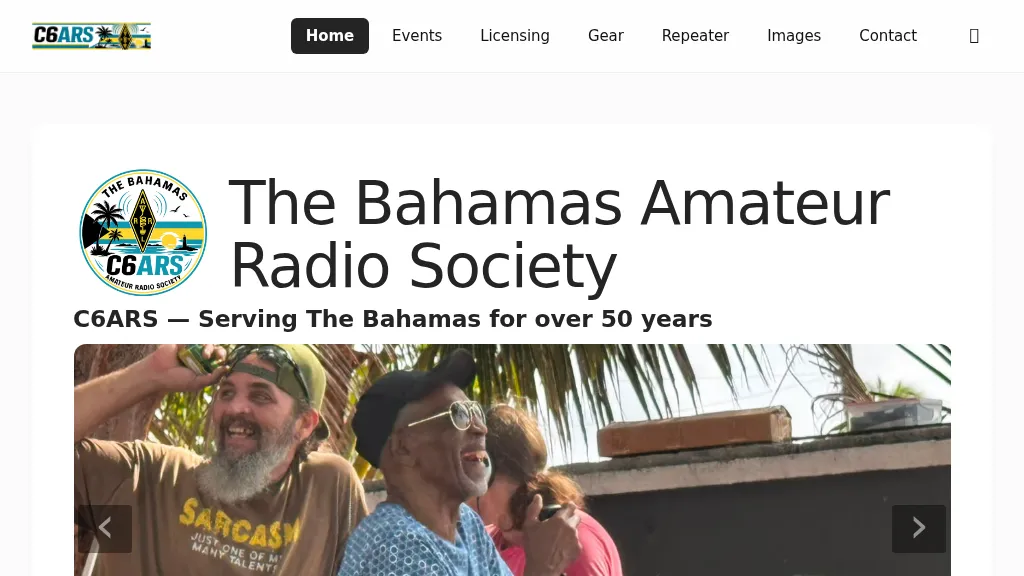 The Bahamas Amateur Radio Society (C6ARS) serves as the primary amateur radio club for the Bahamian archipelago, providing a hub for operators interested in DXing, portable operations, and emergency communications. The society actively participates in Parks on the Air (POTA) activations monthly, deploying portable stations to various parks and protected areas to put The Bahamas on the air for global hunters. Additionally, C6ARS engages in the annual ARRL Field Day, setting up off-grid stations powered by batteries, solar, and generators to practice emergency preparedness and operating skills. C6ARS also offers licensing assistance and mentorship for new operators, highlighting amateur radio's role as a STEM education platform through practical applications in physics, electronics, mathematics, and computing. The club emphasizes resilient emergency communication, particularly crucial for an island nation in the hurricane belt, demonstrating how trained operators can maintain vital communication links when conventional infrastructure fails. Their regular off-grid activations serve as rehearsals, ensuring readiness for disaster response.
-
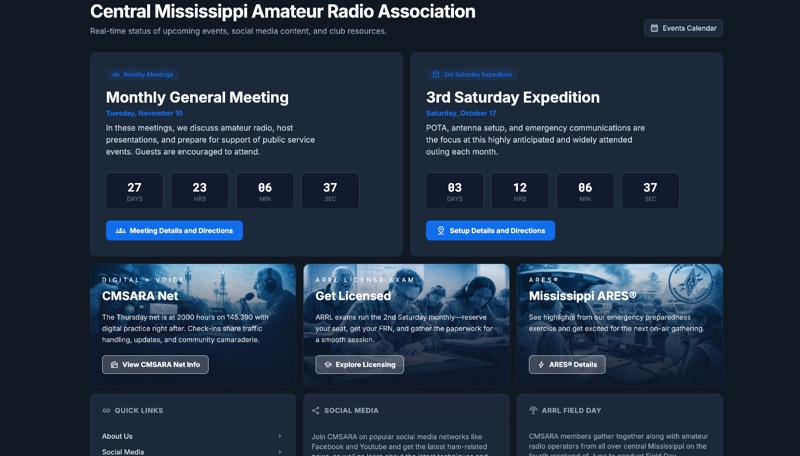 Illustrates the activities of the Central Mississippi Amateur Radio Association (CMARA), a vibrant club fostering amateur radio in central Mississippi. The organization regularly convenes for monthly general meetings, which feature discussions on various ham radio topics and presentations, alongside planning for public service support. A notable recurring event is the "3rd Saturday Expedition," focusing on _POTA_ (Parks On The Air) activations, antenna deployment, and practical emergency communications drills. CMARA maintains a consistent on-air presence with a weekly Thursday net at 2000 hours local time on 145.390 MHz, incorporating both voice and digital modes for traffic handling updates and community building. The club also facilitates _ARRL_ license examination sessions on the second Saturday of each month, providing essential guidance on reservations, obtaining an FRN, and required documentation. Furthermore, the resource highlights Mississippi _ARES_® (Amateur Radio Emergency Service) activities, showcasing emergency preparedness exercises and upcoming on-air gatherings. The site provides quick access to club information, including "About Us," "Social Media," and "Field Day" operations, specifically mentioning CMARA members' participation in _ARRL Field Day_ each June, making contacts across North America.