Search results
Query: amateur radio cluster
Links: 25 | Categories: 1
Categories
-
 DX Summit Web Cluster, built up and operated by the members of OH9W OH2AQ Radio Club.
 -
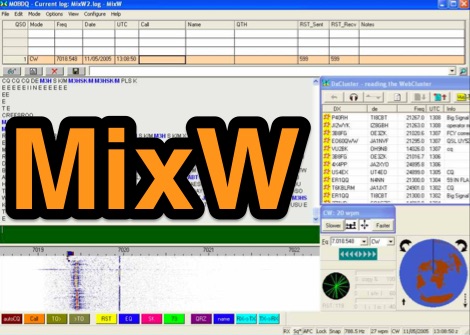 MixW V3 is a software program for amateur radio operators that supports PSK31, RTTY, SSTV, MFSK, Olivia, Hellschreiber, and other modes. It provides features such as logging, DXCluster, telnet access, log backup, rotor, and CAT control. The page offers downloads for Olivia support DLL, Q15X25 support DLL, contest DLLs and macros, serial port emulation drivers, virtual network adapter drivers, Ax25Inet program, and help files. It also includes important notes for Olivia mode operation, such as sound card sample rate calibration and signal placement guidelines.
 -
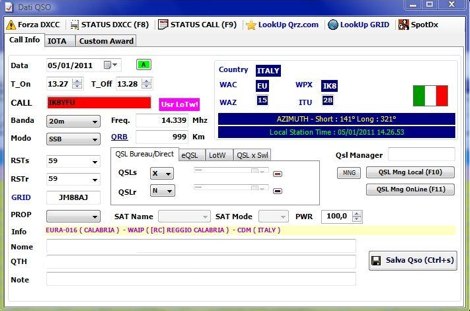 BBLogger, is a Free windows Logging software to fully manage you Amateur or Short Wave Listener Radio Station. Offer several fatures including Rig control, Cluster interface, mapping features, Awards and DXCC management, LoTW, Label printing, QRZ lookup and more by IK2VIW and IK2UVR
 -
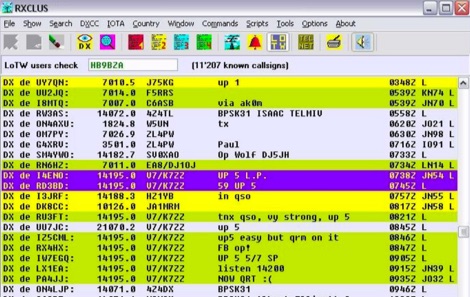 RXCLUS is a free windows amateur radio software especially designed for the DX'ers and SWL's wanting to receive the informations transmitted by packet radio on the DX-cluster system. It supports also telnet protocol.
 -
 Multimode suite, feature logging, Internet interface to CXCluster, Smart multi-mode controller software, contest, APRS, and PSK31 via Sound card. Free and Commercial version available.
 -
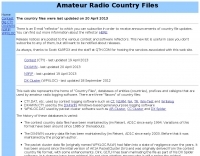 This web site represents the home of "Country Files", databases of entities (countries), prefixes and callsigns that are used by amateur radio logging software. There are three "flavors" of country files: CTY.DAT used by contest logging software such as CT, N1MM, NA, TR and Writelog DX4WIN.CTY used by the DX4WIN logging software WPXLOC.DAT used by packet cluster software such as AR-Cluster, CC Cluster and DX Spider maintained by Jim Reisert, AD1C
 -
 The website offers a comprehensive guide on high-frequency (HF) skywave propagation for amateur radio operators. It explains HF radio propagation fundamentals, including electromagnetic wave properties, HF bands, and propagation modes like skywave, ground wave, and line-of-sight. The site focuses on the ionosphere's critical role, influenced by solar activity, in refracting HF waves for long-distance communication. Real-time monitoring tools such as DX clusters, beacons, and digital modes like FT8 assist users in tracking band activity and propagation conditions globally. Forecasting methods are detailed, highlighting scientific insights into solar-terrestrial interactions and ionospheric variability. The guide also covers advanced topics like NVIS and gray line propagation, ionosonde data, and propagation prediction models, making it a valuable resource for ham radio enthusiasts aiming to optimize communications
 -
 Reliable amateur radio software for OS X and Windows that works the way you expect. Spot allows you to chase the DX that really matters by putting you in charge of which DX spots you need to see and alarming you when they appear.
 -
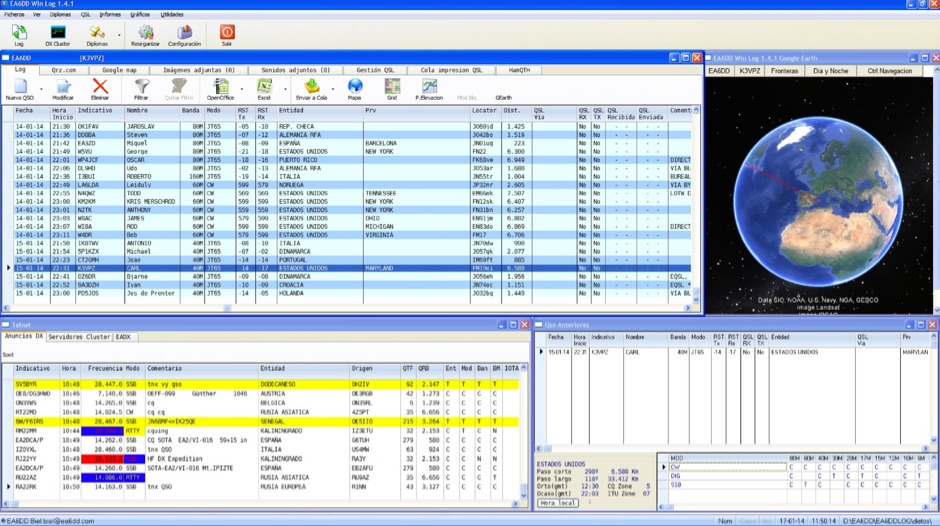 Win EA6DDlog free winows amateur radio logbook software in spanish offering cluster telnet connection, CAT interface via Omnirig, QSL management, QRZ and hmaqth connections
 -
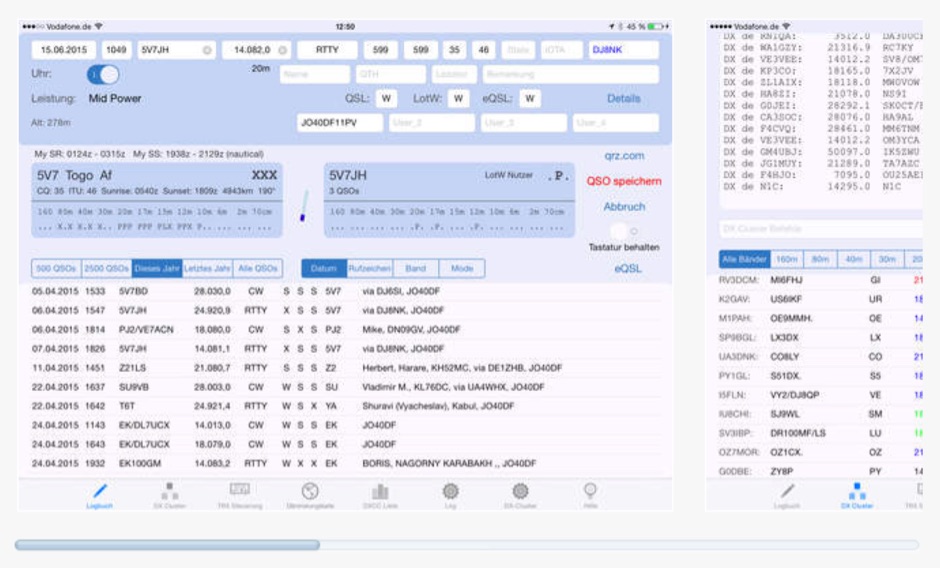 Amateur radio log book for iOS devices, including iPad and iPhone. Featuring several advanced logging functions, including export to ADIF, DX Cluster access, LoTW eQSL interface and more
 -
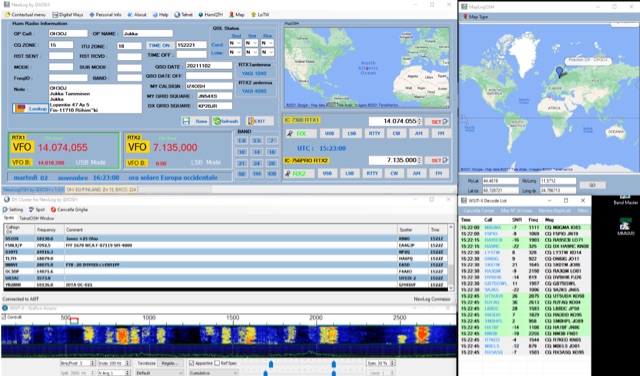 Program for Amateur Radio use, features Digital modes such as FT4 FT8 currently implemented along to RTTY, PSK modes, DXCLuster and Radio interfacing. The database is built in the Sqlite environment.
 -
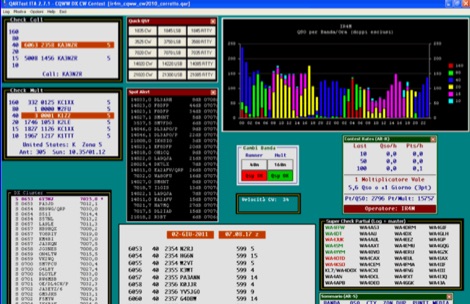 Free Windows contest logging software, initially designed for the ARI 40-80 contest supports all major world wide contests. QARtest supports dx cluster, radio control interface and many new features. Can be used for most popular amateur radio contests. Works from Windows XP to Windows 10.
 -
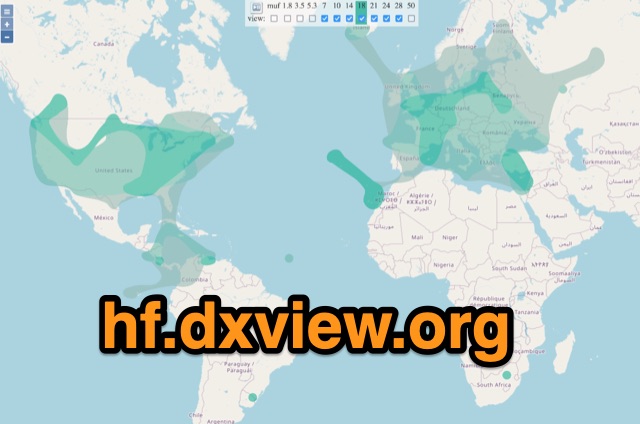 This map shows real-time radio propagation from stations operating on 11 bands between 1.8 and 54 MHz in the amateur radio service. The display shows world-wide activity from the last 15 minutes and is automatically updated about every minute. Data for the map is gathered from several online sources: WSPRnet, Reverse Beacon Network (CW, FT4, FT8), PskReporter, and DX Cluster.
 -
 Le radioamateurisme,le qrp,l elecraft k2, antennas,qrp,schemas,manuals,nostalgia, meteo,dx clusters hf, and contests links in french
 -
 An Amateur Radio enthusiast living in the North of England. A keen DXer and Contester.CoSysop GB7MBC DXCluster. Member of Sands Contest Group MX0SCG/M0SCG
 -
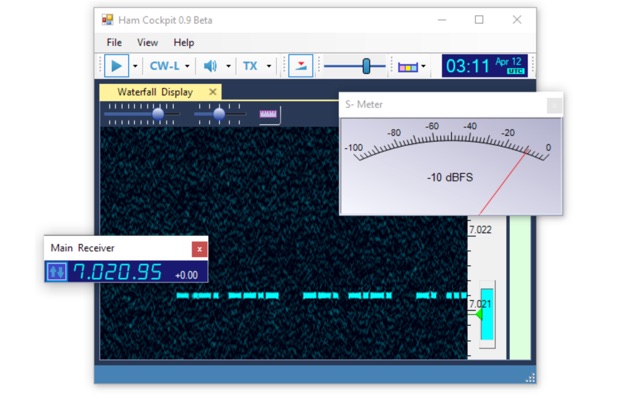 Ham Cockpit is a program of a new type. All of its functions are implemented in the plugins, the main program simply loads the plugins and helps them work together. Ham Cockpit is an integrated environment for a Radio Amateur that every user can build according to his needs. It can work as SDR client, a logger, a cluster monitor, a propagation prediction tool, or have any combination of these working together.
 -
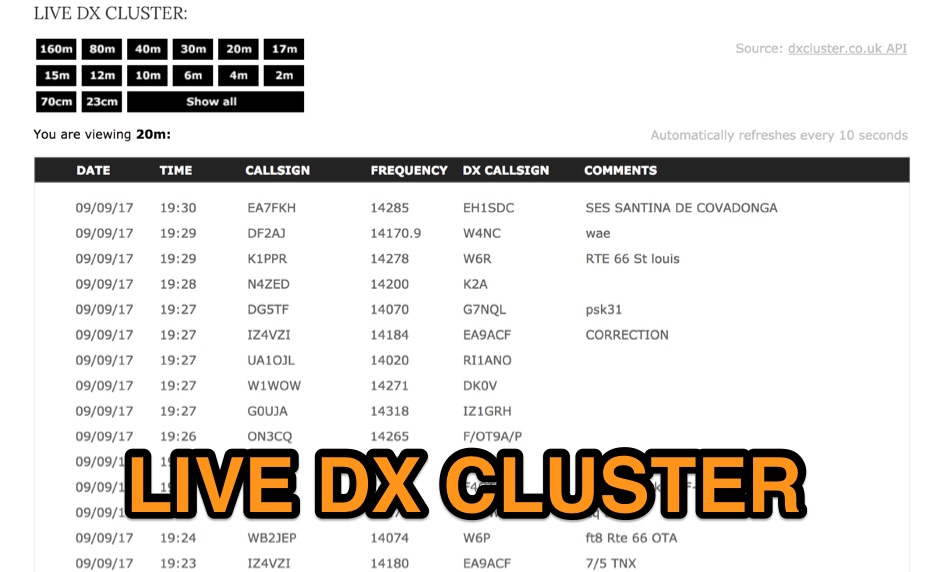 View real-time spot information by band for active amateur radio operators around the world via the DX Cluster network, taking raw data from a JSON API made available by DXCluster.co.uk
 -
 HA8TKS website dedicated to amateur radio VHF DXing include a dx-cluster map & list, HAM tools, QRB calculator and personal statistics
 -
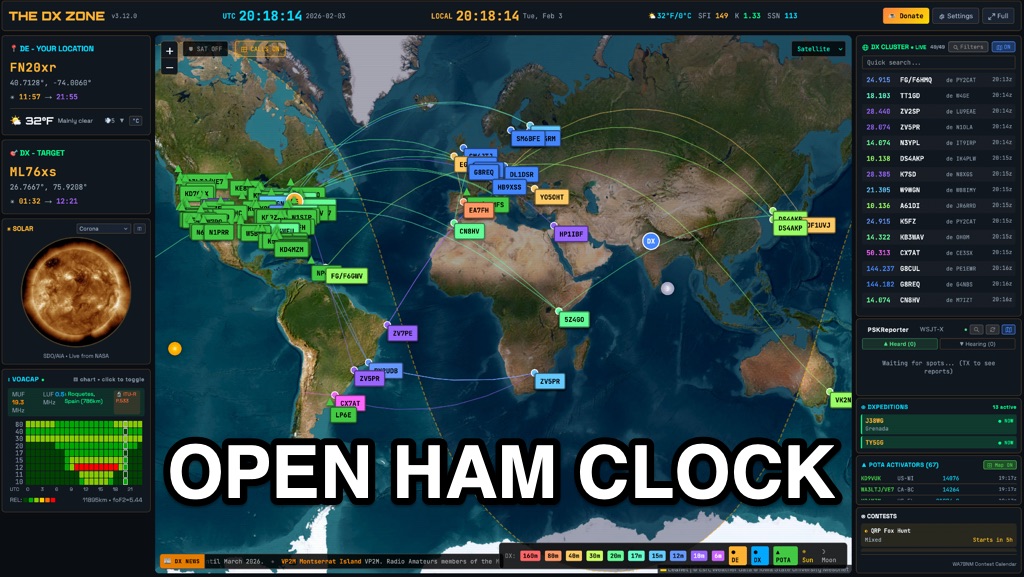 OpenHamClock is a modern, open-source dashboard for amateur radio operators, designed as a web-based successor to the original HamClock. Deployable locally on a Raspberry Pi or via the cloud, it centralizes essential DX operations into a single, intuitive interface. At its core is an interactive world map that visualizes real-time DX spots, signal paths, satellite tracking, and POTA activators. The software seamlessly integrates critical tools like WSJT-X, DX Cluster, and PSKReporter for monitoring digital traffic. Additionally, it provides vital environmental data, including real-time space weather indices, solar activity, and personalized HF propagation predictions. With customizable themes and a modular architecture, OpenHamClock offers modern operators comprehensive, at-a-glance situational awareness of global radio conditions
 -
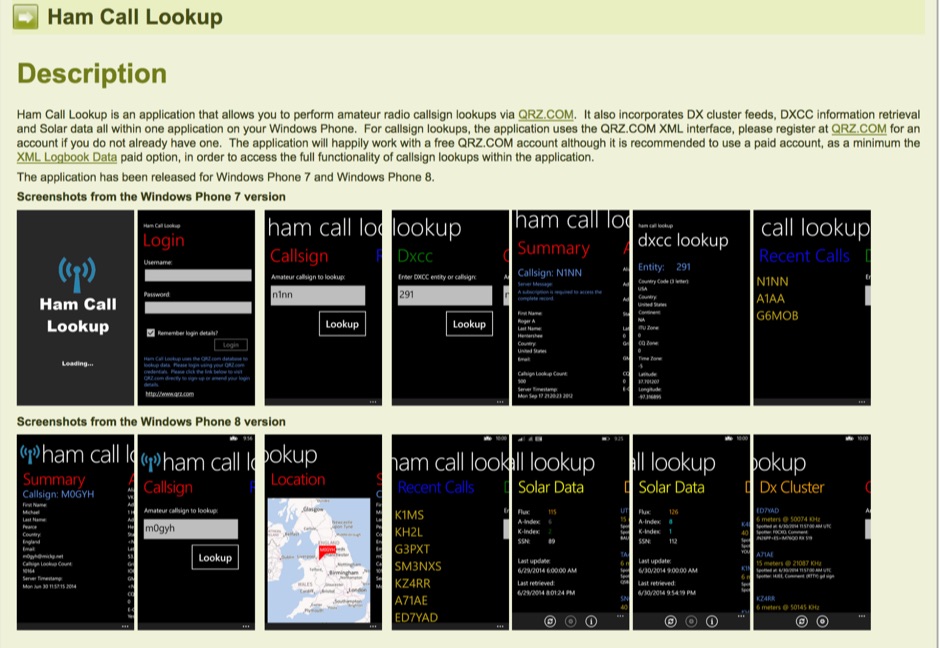 Ham Call Lookup is an windows phone app that allows you to perform amateur radio callsign lookups via QRZ.COM. It also incorporates DX cluster feeds, DXCC information retrieval and Solar data all within one application on your Windows Phone. For callsign lookups, the application uses the QRZ.COM XML interface, please register at QRZ.COM for an account if you do not already have one. The application will happily work with a free QRZ.COM account although it is recommended to use a paid account, as a minimum the XML Logbook Data paid option, in order to access the full functionality of callsign lookups within the application.
 -
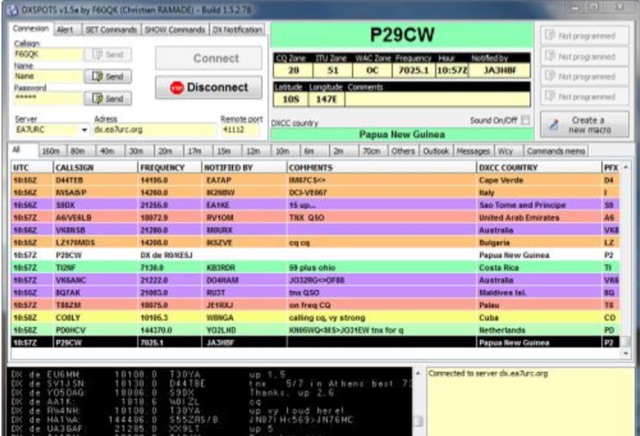 DXSPOTS is a Telnet connection program. It allows radio amateurs with a lot of DX traffic to know instantly the status of the bands and to know which DX are currently on the air. Following the Packet-Clusters where data was transmitted on VHF/UHF via dedicated relays and sometimes on HF at a very low speed (300Bds on HF), the Internet has taken over and is now transmitting DX information via the computers in most shacks. Translated with www.DeepL.com/Translator (free version)
 -
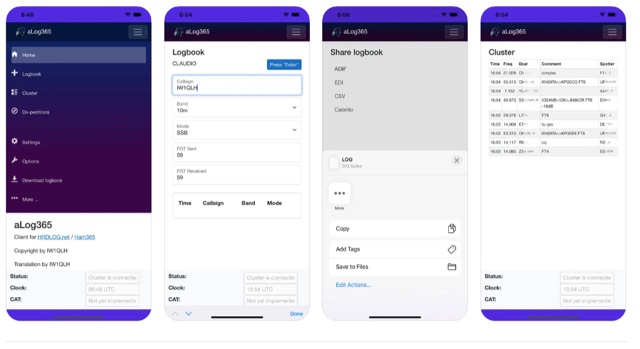 aLog365 is a ham radio (amateur radio) logbook for Android and for apple iOS. Includes features for SOTA, POTA, WWFF operations, export to all popular log file formats ADIF, EDI, Cabrillo. Upload data to HRDLOg.net Ham465 and includes dx cluster spots. iOS version is compatible with iPhone, iPad, and iPod touch and provides also an up to date DX Pedition plan.
 -
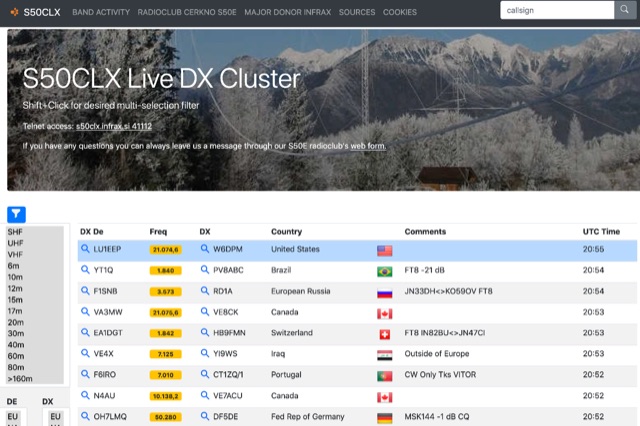 Get DX spots from S50CLX Live DX Cluster in real time on your device showing all the current and recents Amateur Radio spots on all bands and modes.
 -
 GDX is a free Linux DX Cluster client for Radio amateurs. It allows hamradio operators to connect to the Packet Radio DX Clusters network via telnet. Connection via radio frequency modem, or TNC, not available at the moment.
 -
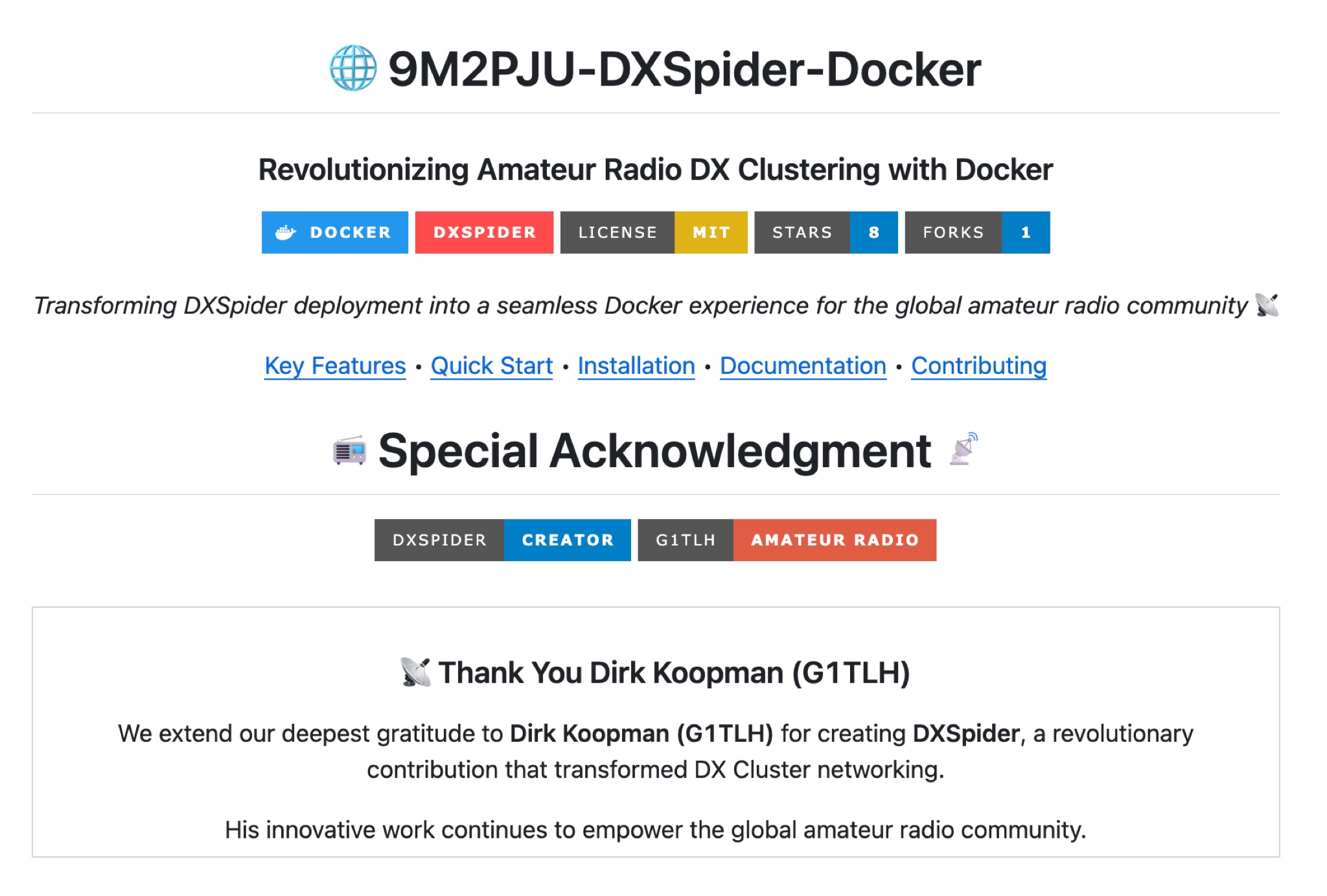 This project focuses on the transformation of DXSpider deployment into a seamless Docker experience for the global amateur radio community. It highlights the key features, installation process, and documentation, while acknowledging Dirk Koopman (G1TLH) for creating DXSpider. The project aims to simplify the deployment and management of DX Cluster nodes for amateur radio operators by containerizing the software. With a Docker-native architecture and intelligent defaults, the project offers an easier setup process without compromising on the powerful features of DXSpider.