Search results
Query: radio collection
Links: 115 | Categories: 23
Categories
- Shortwave Radio > Broadcasters > Offshore Radios
- Antique Radios > Collections
- Software > Collections
- Antennas > 2M
- Operating Modes > Internet Linking > AllStarLink
- Ham Radio > Clubs > Asia
- Technical Reference > Audio
- Software > Clip Art
- Technical Reference > Components > Component Database
- Ham Radio > Regional > Denmark
- Internet and Radio > Directories
- Internet and Radio > Humor
- Ham Radio > Blogs > Asia > India
- Software > Legacy Systems
- Operating Modes > Morse code > Morse Code Practice Audio Files
- Software > Legacy Systems > MS DOS
- DX Resources > QSLing > QSL Galleries
- Ham Radio > Resources
- Radio Scanning > Scanner Frequencies
- Operating Modes > SSTV > SSTV Images
- Ham Radio > Blogs > Europe > UK
- Ham Radio > Blogs > USA
- Radio Equipment > HF Transceivers > Yaesu FT-817
-
 Italian site, for antique radios, with photos, collections, technical and forum
 -
 Ham radio manuals in italian and english for several makers and products
 -
 Collection of radio mods for Kenwood TS-870
 -
 Demonstrates the operational status and reception reports for the SK6RUD/SA6RR QRPP beacons, which transmit on 478.9 kHz, 1995 kHz, 10.131 MHz, and 40.673 MHz. These beacons utilize extremely low power, with the 630-meter beacon operating at approximately 0.1 watt ERP into an L-antenna, showcasing the potential for long-distance contacts under favorable propagation conditions. The site details the specific frequencies and antenna types employed, such as a vertical at 500 kHz and a 1/4 vertical for higher bands. The resource compiles over 10,530 reception reports from amateur radio operators worldwide, logging details such as date, time, band, RST signal report, locator, distance, and receiver setup. Notable long-distance reports include a 500 kHz reception by AA1A-Dave from 5832 km in 2008 and a 10.133 MHz reception by ZL2FT-Jason from 17680 km in 2010, illustrating the global reach of these low-power transmissions. Each log entry provides specific equipment used by the reporting station, including transceivers like the Yaesu FT817, ICOM IC-7300, and various antenna configurations such as coaxial mag loops, inverted Ls, and end-fed wires. The primary objective of the SK6RUD beacons is to challenge conventional notions of power requirements for effective two-way communication, proving that contacts over significant distances are achievable with minimal output. The site also includes a submission form for new reception reports, fostering community engagement and continuous data collection on propagation phenomena across different bands. The detailed logs offer practical insights into real-world propagation characteristics and the efficacy of QRPP operations.
 -
 Edwin H. Armstrong's foundational contributions to radio technology are presented, including the _Regenerative Circuit_ (1912), the _Superheterodyne Circuit_ (1918), the Superregenerative Circuit (1922), and the complete FM System (1933). This resource functions as a curated collection of historical documents and artifacts, many previously uncirculated, stemming largely from the _Houck Collection_. The site's purpose is to offer these primary source materials for study and enjoyment, rather than to retell Armstrong's life story, which is covered in works like Lawrence Lessing's "Man of High Fidelity" and Tom Lewis's "Empire of the Air." The collection emphasizes original documents, photographs, and equipment, all sourced from the Houck Collection unless explicitly noted otherwise. The site is structured for browsing chronologically, by selected year, or by highlight, allowing users to explore Armstrong's technical evolution. Document files are intentionally large to preserve readability and detail, while individual pages are kept concise to optimize loading times. The content provides direct insight into the technical development of radio communications.
 -
 The Research and Documentation Center for the History of Radio Communications and the Electronic Media (our full name) is the world's biggest organization to collect, save, research and present whatever relates to the history of radio communications, particularly amateur radio and broadcasting
 -
 Over 100 amateur radio beacon audio files are presented, offering a direct auditory experience of propagation conditions across a wide spectrum of frequencies, from 1.8 MHz to 47 GHz. These recordings, primarily captured by IW3FZQ and IK3NWX, document signals from beacons such as DK0WCY, IY4M, GB3RAL, and S55ZRS, providing a valuable resource for **propagation study** and **beacon monitoring**. Each entry in the list specifies the beacon's callsign, its operating frequency in kHz, and the recording operator. This compilation includes signals from beacons located in various grid squares like JN55VF, JO44VQ, and IO91IN, illustrating diverse geographical origins. The frequencies covered span the 160m, 80m, 40m, 30m, 20m, 17m, 15m, 12m, 10m, 6m, 4m, 2m, 70cm, 23cm, 6cm, 3cm, 1.2cm, and 6mm amateur bands. Users can listen to these recordings to identify characteristic beacon tones and observe signal strength variations. The resource also invites other radio amateurs to contribute their own beacon audio files, fostering a collaborative archive of propagation data. The last update to this collection was on March 24, 2009, indicating a historical snapshot of beacon activity. Accessing the files requires the Real Player software.
 -
 A collection of technical articles on antennas, radios and other stuff.
 -
 The _TA Callbook_ provides a dedicated online search utility for Turkish amateur radio operators, enabling users to query a database of over 15,500 records. This resource allows for lookups based on a callsign, operator's name, surname, city, or even a specific address keyword. It serves as a practical tool for DXers and contesters seeking to identify or verify Turkish stations, facilitating QSLing and contact logging. The interface is straightforward, requiring only a single keyword input to initiate a search. Operators can also update their personal information through an integrated editing form, ensuring data accuracy within the system. The platform's data collection practices are noted to comply with Turkish Personal Data Protection Law No. 6698, specifically Article 28, Paragraph 2, Clause b, by utilizing publicly disclosed information. The database was last updated on March 6, 2026, reflecting ongoing maintenance by its creators, _TA3AK_ and _TA8A_, who collaboratively developed this essential Turkish callbook.
 -
-
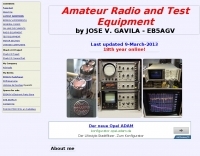 EB5AGV / EC5AAU Boatanchor collection. Useful data on TV-testers, Collins, Drake, Hammarlund, Hallicrafters, National, Heathkit, EF Johnson.
 -
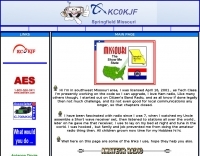 The **KC0KJF** personal amateur radio page provides a collection of resources for fellow hams, particularly those interested in operations within southwest Missouri. It offers detailed listings for **Missouri repeaters** on both 2 meters and 70 centimeters, serving as a practical reference for local VHF/UHF communication. The site also includes information about the operator's station setup and antenna projects, such as a dipole and a bazooka antenna, which can offer insights into basic antenna construction and deployment. Beyond local repeater data, the page features links to the FCC Part 97 rules, essential for understanding amateur radio regulations. The operator, licensed as a Technician Class since April 16, 2001, shares his journey from Citizen's Band Radio to amateur radio, driven by a lifelong fascination with shortwave listening. This narrative provides context for the resource's focus on practical operating information and foundational regulatory knowledge. Additional content covers specific equipment like the 2-meter/70-centimeter Arrow Antenna, useful for hams considering portable or fixed station VHF/UHF setups.
 -
 A collection of calculators, contest schedules, references, databases and more for Palm OS by KB7AVT
 -

-
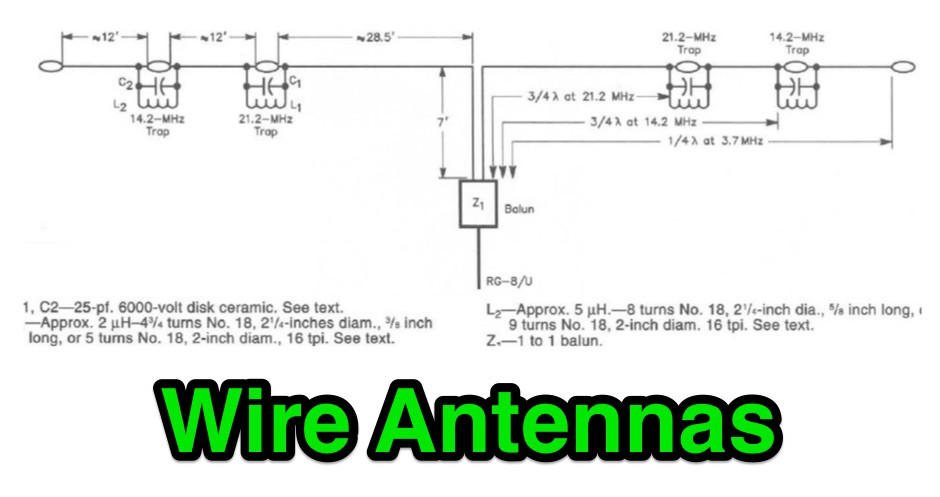 A collection of drawings of most popular wire antennas for hf ham radio bands
 -
 The QRV.DK platform offers a dedicated **QRZ callsign search engine** specifically tailored for Danish amateur radio operators. It enables users to look up callsigns and ascertain their **Logbook of The World (LoTW)** status, a critical feature for DXers and contesters seeking QSL confirmations. The search functionality facilitates rapid access to operator details within the Danish amateur radio community, streamlining contact verification processes. Beyond callsign lookups, the resource includes a comprehensive repeater list for Denmark, providing essential information for local and regional VHF/UHF operations. This feature supports mobile and portable stations in locating active repeaters, enhancing communication reliability across various bands. The site also curates a collection of ham radio links, serving as a centralized hub for related amateur radio resources.
 -
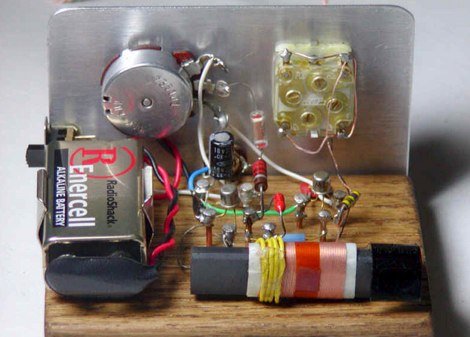 Collection of several Crystal Radio receiver circuits with schematics diagrams and pictures
 -
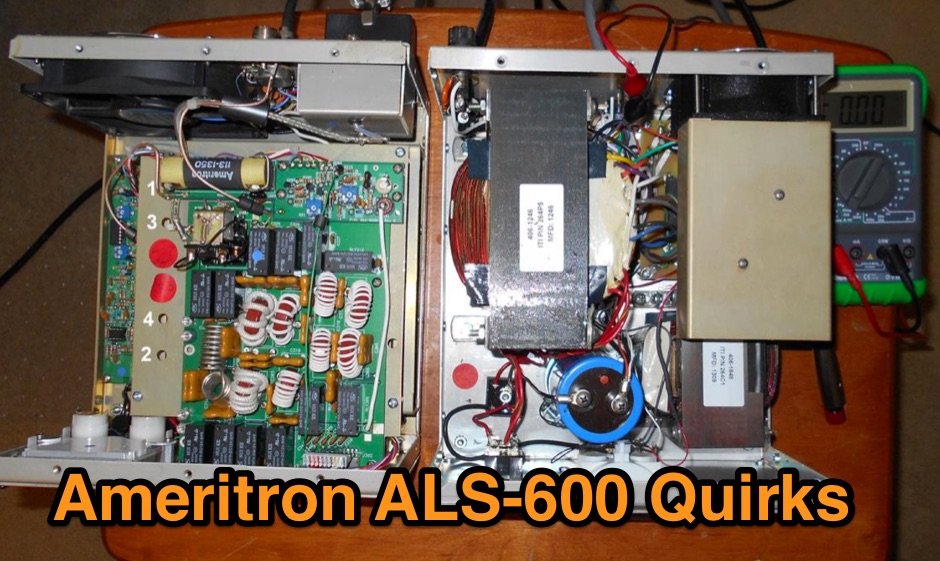 A collection of modifications and improvements to the Ameritron ALS-600 ham radio RF power amplifier
 -
 Several bash scripts are provided to automate common amateur radio tasks on Linux and FreeBSD systems, addressing the need for quick access to specific data without navigating web interfaces. These utilities include `call` for fetching US callsign details from callook.info, `qth` for obtaining address information for US and Canadian callsigns, and `grid` for determining grid squares based on license addresses. Each script is designed for command-line execution, allowing for single lookups or interactive sessions, and emphasizes a KISS (Keep It Simple, Stupid) programming philosophy. Another script, `au_kp.sh`, is tailored for weak signal VHF operators, fetching and displaying the NOAA 30-minute Aurora forecast and GFZ Space Weather Kp index data. This script generates static images, requiring re-execution for updates, and is intended to be run as a clickable desktop object for real-time space weather monitoring. It helps operators track propagation conditions, especially during solar cycle peaks. Beyond bash scripts, the resource offers a PHP/web page `fortune` implementation, including Henrik Aasted Sorensen's PHP script, sample HTML/CSS, and a HOWTO guide for creating fortune files. W3DHJ provides several amateur radio-themed fortune files, such as "Ham Humor & Wisdom" with 354 entries and "VHF Rover Humor & Wisdom" with 223 entries, along with other general humor and wisdom collections. These fortune files are designed with embedded HTML for web page display and are refreshed monthly, offering a total of 21,400 entries.
 -
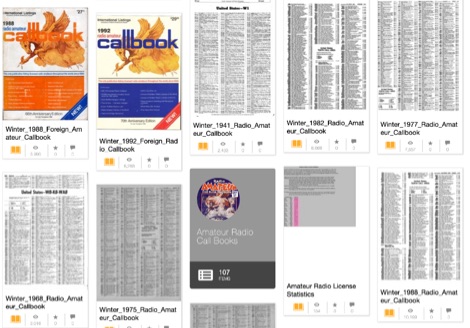 Indexes over 100 digitized amateur radio callbooks, primarily from the early to mid-20th century, providing a historical record of callsign assignments and licensee data. The collection facilitates research into past amateur radio operations, tracing callsign lineage, and identifying operators from specific eras. Each entry typically includes the callsign, licensee name, and geographic location as published in the original printed volumes. Users can browse the collection by publication date or utilize the search function to locate specific callsigns or names within the archived documents. The resource serves as a valuable repository for historical amateur radio data, supporting genealogical and operational research. Access to these scanned documents is provided directly through the Internet Archive platform, ensuring long-term preservation and availability of these historical amateur radio records.
 -
 QSL Cards from the past, ham radio QSL Card collection by W8JYZ
 -
 Antique radio collection from brazil, philips , philco, telefunken, blaupunkt, saba, mende, rca, ekco, pilot, general electric, bush and more
 -
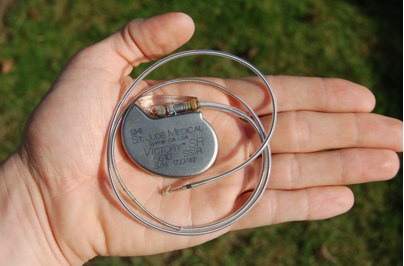 An ARRL article collection about influence of radio frequency with pacemakers and other similar medical devices.
 -
 Antique old radio restoration, european radios collection
 -
 Telegraph Key Collection, ham radio telegraphy, cw, radio telegraphy, ham radio key, morse code key collection, key collecting, El-Key, Nikey, Vibroplex Champion, Vibroplex Blue Racer 2000, Bug, J-38, J-47, Navy Flame Proof key, Bencher, CT 599 MB key, amateur radio, amateur radio history, cw history, morse code history
 -
-
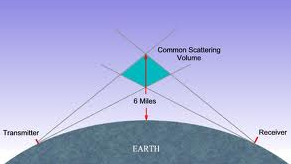 A collection of ad Hoc empirical comments on VHF radio waves propagation by Pete Heins N6ZE
 -
 This resource compiles claimed scores, often referred to as "rumor scores," for numerous amateur radio contests, providing a historical snapshot of competitive activity from 1993 through 2007. It lists entries for prominent events such as _CQWW CW_, _ARRL Sweepstakes_, _IOTA Contest_, and various _NAQP_ events, categorized by year and contest. Each entry typically includes the contest name and the month/year of operation, allowing users to quickly navigate to specific contest periods. The site also references the _3830 Web Page_ on Contesting.com as the primary submission portal for these claimed scores. The collection offers a unique perspective on contest participation and performance trends over more than a decade, preceding the widespread adoption of real-time score reporting systems. While not official results, these rumor scores provided early indications of top performers and overall activity levels for a wide array of HF and some VHF contests, including _ARRL 10M_ and _CQWW VHF_. The historical data can be useful for analyzing past contest popularity, identifying consistently strong operators, or simply reminiscing about earlier competitive eras in amateur radio.
 -
 The Shortwave Radio Audio Archive is a collection of shortwave radio recordings in both the form of a podcast and blog with embedded audio. The collection grows every day and includes both historic and modern day shortwave radio audio recordings
 -
 A collection of articles related to my pursuit of the hobby of Amateur Radio.
 -
 The Vintage and Military Amateur Radio Society was formed with the following aims,To encourage and facilitate the collection, preservation, restoration and use of radio equipment
 -
 CT1FUI - Amateur Radio from Portugal , QSL card collection from 90's
 -
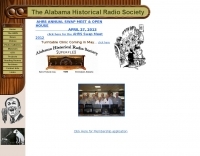 The alabama historical radio society - come visit our website and museum where we have a large collection of antique radios. our club does coil winding, has a large library, and a wealth of knowledge in our members.
 -
 The Canadian Vintage Radio Society, and its bimonthly publication, Canadian Vintage Radios, is dedicated to the preservation, restoration, collection and enjoyment of antique radios
 -
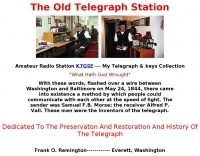 Amateur Radio Station K7GSE, Telegraph & keys Collection
 -
-
 Presents a personal blog, "QSL, maraca!", maintained by Luiz Belem, PY1UR, detailing his amateur radio endeavors. The content includes posts on station setup, operating experiences, and general ham radio topics, reflecting the perspective of an active DXer and contester. The blog serves as a digital logbook and platform for sharing insights with the amateur radio community. Documents PY1UR's participation in various on-air activities, showcasing his QSL card collection and providing narratives behind specific contacts. It offers practical insights into antenna configurations and radio equipment used, demonstrating effective strategies for achieving **DX contacts** and improving station performance. The blog's entries provide a historical record of PY1UR's _amateur radio journey_.
 -
 The W0IS resource outlines methods for finding historical US amateur radio call signs, particularly for genealogical research. It highlights the comprehensive collection of digitized call books from 1906-1996 available at leehite.org, stored as searchable PDF files. These resources significantly simplify what was previously a laborious manual search through physical call books, which were typically indexed by call sign rather than name. The guide details specific search techniques for various eras. For early radio days (1913-1923), government call books are readily available and searchable online via Google Books and hathitrust.org. For the period between the 1930s and 1980s, when private publishers like "Radio Amateur Call Book Magazine" dominated, the resource points to archive.org for scanned editions (1938, 1940, 1948, 1972) that support full-text OCR searches, despite potential scanning errors requiring flexible search terms. It also provides strategies for navigating Google Books' "snippet view" for the 1952 call book, including searching by name or address and interpreting often illegible snippets. The resource suggests cross-referencing findings with hamcall.net for call sign verification from 1921, 1954, 1960, 1969, and 1983 onwards. Additionally, it lists physical call book collections at institutions like the Pavek Museum of Broadcasting and individuals like W3HF, offering avenues for deeper research when digital methods fall short.
 -
 Large personal QSL collection by I3CRW
 -
 Bruce K1XR Collins Radio Collection pages
 -
 This website was originally inspired by the discovery of a number of QSL (radio reception report) cards dating from the 1920s and is intended to make images of the cards available to as many people as possible.
 -
 The I2YSB DXpedition Team presents a collection of videos documenting their past DXpedition activities. These visual records offer insights into the operational aspects, equipment deployed, and environmental conditions encountered during various DXpedition events. The resource also contains a specific announcement regarding the cancellation of the planned Ghana AF-084 DXpedition, originally scheduled for April. It further details the refund process for sponsors who had contributed donations for the cancelled operation. The content serves as an archive of DXpedition experiences, showcasing the efforts involved in activating rare or challenging entities. It provides a historical perspective on the team's operations and logistical considerations. The site also functions as a communication channel for important updates concerning future or cancelled DXpedition plans, directly addressing the amateur radio community interested in their activities.
 -
 My blog is general info regarding HAM radio hobby and collection of my QSL cards
 -
 Presented is a historical collection of short-wave listening (SWL) QSL cards, primarily from the late 1930s and early 1940s, offering a glimpse into early international broadcasting and the technical pursuits of SWL operators like Les Miles during that era. The resource showcases specific QSLs from stations such as _Broadcasting Corporation of Japan_, _XGOY - The Central Broadcasting Administration_ in Chungking, China, and _Australian broadcasting ship, Kanimbla VK9MI_, each with reception dates and frequencies like 11.90MHz or 9.525MHz. It highlights the self-sufficiency of SWL enthusiasts who constructed and maintained their own radio and test equipment, evoking the sensory experience of vintage valve receivers. The collection provides concrete examples of international broadcast stations active before and during World War II, including _2RO3 - Rome_ and _WRUL - World Wide Broadcasting Foundation_ from Boston. Each QSL entry details the station, location, reception date, and often the frequency, such as 9.63MHz or 11.26MHz, allowing for historical verification of broadcast schedules. The resource also briefly mentions the operational details of the _VK9MI_ offshore radio station, directing readers to further information on its history. This compilation serves as a tangible record of global radio communication during a pivotal historical period.
 -
 AB0CW's Amateur and Antique Radio Page, Boathanchors, key and bugs
 -
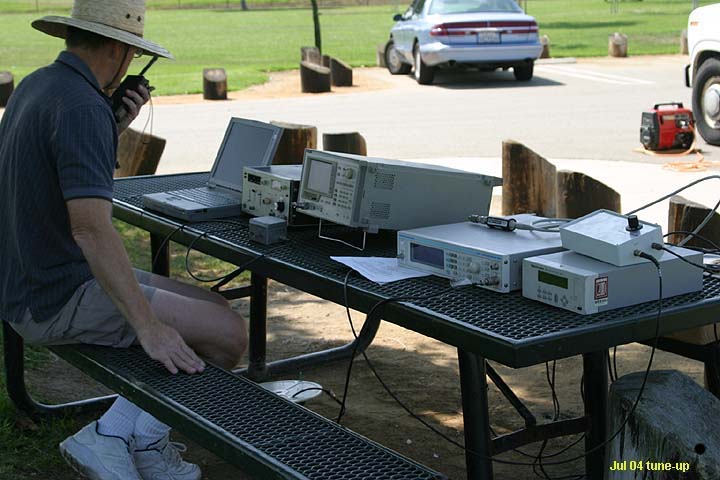 The San Bernardino Microwave Society, operating under the callsign _W6IFE_, serves as a significant technical hub for amateur radio operators specializing in frequencies above 1 GHz. This organization's influence extends across Southern California, providing a centralized resource for advanced RF experimentation and **regional frequency management** within the microwave spectrum. Its permanent value lies in its extensive archive of technical papers and project documentation, which are critical for operators engaged in high-frequency design and deployment. The society's infrastructure is primarily intellectual, focusing on the dissemination of specialized knowledge rather than a conventional repeater network. It offers a robust collection of technical papers from prominent members like K6PIP, K6BLG, and WA6EXV, covering topics such as Rubidium oscillator data, logging software, and filter design. This resource facilitates advanced amateur radio operations, including participation in microwave contests and the development of custom transverters for bands like 24 GHz. The site also details various member projects, such as the Owens Valley Radio Observatory Project, showcasing practical applications of **RF propagation analysis** and system integration. DXZone Focus: Microwave | Technical Papers | RF Propagation | Contest Results
 -
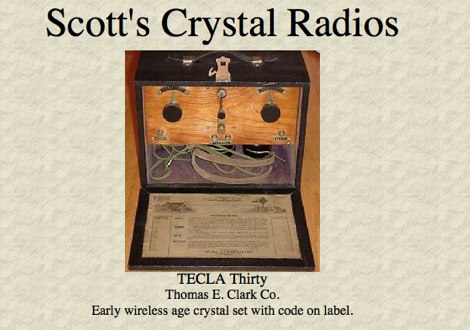 The TECLA Thirty, an early wireless age crystal set, is featured among a gallery of over 100 collectible headphones, with detailed close-up photos of vintage models. Several pages offer vintage headphones for sale, including Brandes, Baldwin, and Western Electric, suitable for crystal set use or collecting. Construction details are provided for a reproduction KILBOURNE AND CLARKE crystal set, built with vintage 1920s parts and featuring a miniature variable condenser for fine tuning. The resource also presents a project for a simple crystal radio and a 1-tube amplifier, complete with a schematic and component diagram, suitable for driving a horn speaker or amplifying weak signals for headphones. Instructions for mounting argentiferous galena detector crystals are included, along with information on MRL Handbooks covering crystal detectors and modern diodes. Additional projects include a 2A3 single-ended triode tube amplifier and two stereo tube amps using 12AX7, 6V6, 5Y3G, 6SN7, VT-25, and 5U4G tubes.
 -
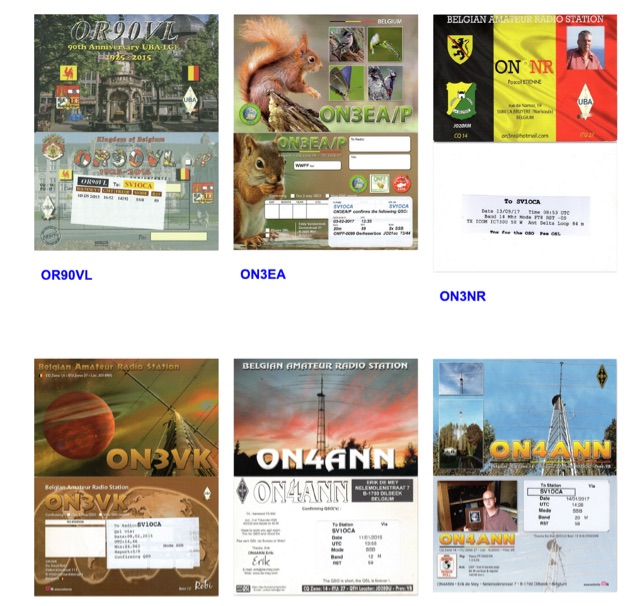 A QSL card is a written confirmation of a two-way radiocommunication between two amateur radio stations. The QSL card has been the most important part of Amateur Radio communications procedure for many years. QSL cards are used for awards and for just the pleasure of collecting the cards.
 -
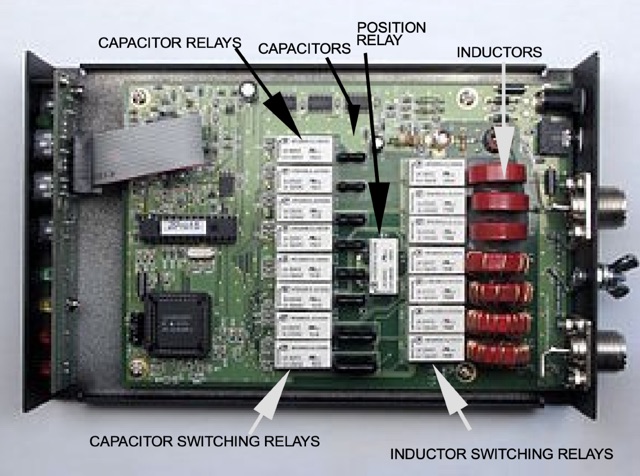 Collection of several topics on antenna tuners and their performance. Why use an antenna tuner? How does an antenna tuner…tune Does an antenna tuner fool the radio? Will an antenna tuner waste power? Can an antenna tuner help get more power to the antenna?
 -
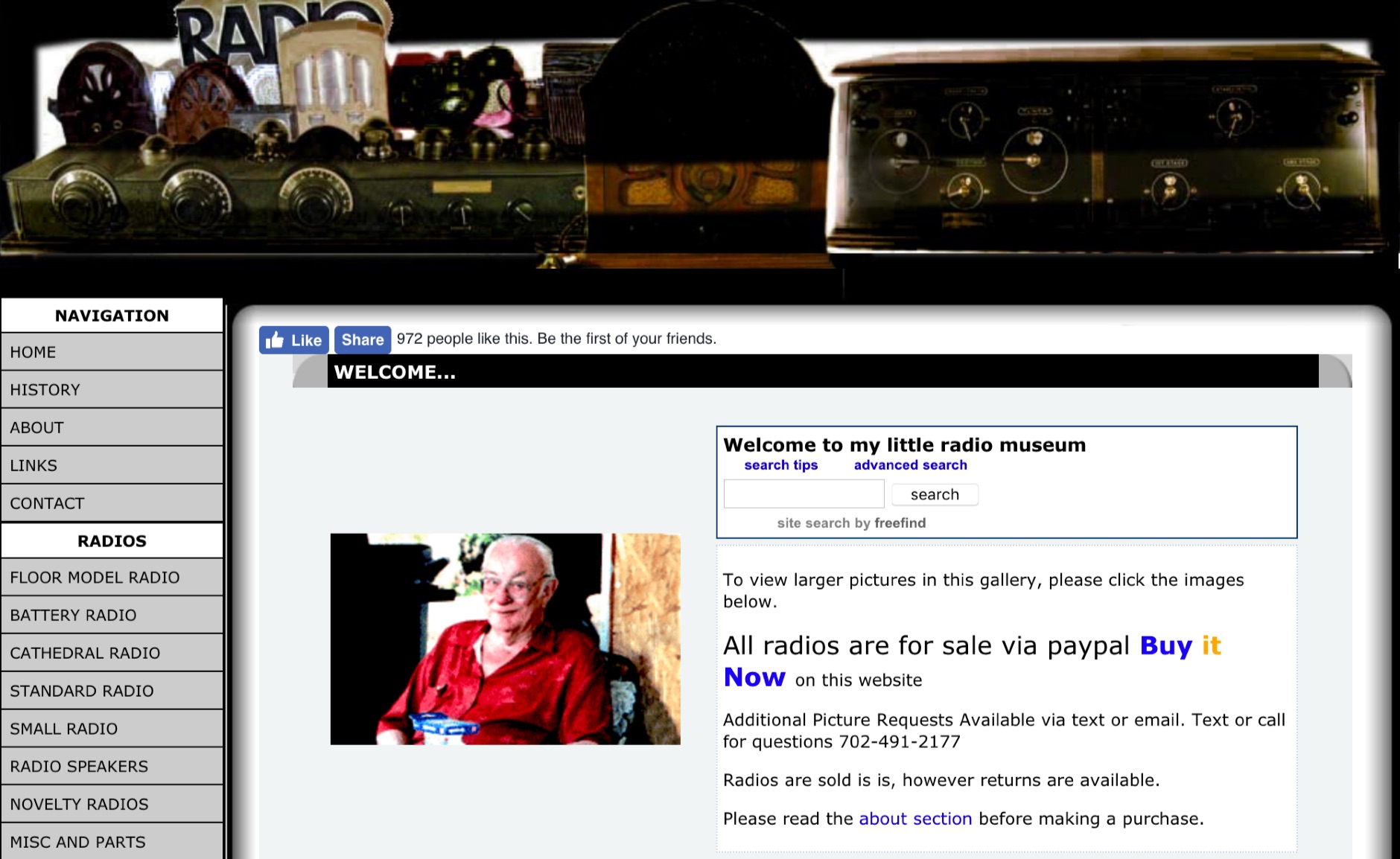 Large collection of 1900's antique Radios for sale,Floor model, Cathedral, table top, Novelty, Battery, police and broadcast band image gallery