Search results
Query: dx info
Links: 403 | Categories: 15
Categories
- DX Resources > DX Peditions > 2014 DXpeditions
- DX Resources > DX Peditions > 2016 DXpeditions
- DX Resources > DX Peditions > 2017 DXpeditions
- DX Resources > DX Peditions > 2020 DXpeditions
- DX Resources > DX Peditions > 2021 DXpeditions
- DX Resources > DX Calendars
- Software > Linux > DX Cluster Clients
- Radio Equipment > HF Transceivers > Kenwood TS-950SDX
- DX Resources > Clusters > Mobile DX Cluster
- Shortwave Radio > SWL DX Newsletters
- DX Resources > Clusters
- Ham Radio > Regional > Japan
- DX Resources > Newsletters
- DX Resources > Contest > Sponsors
- Ham Radio > Clubs > North America > USA > Texas
-
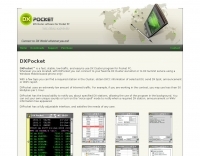 DXPocketâ„¢ is a fast, stable, low-traffic, and easy-to-use DX Cluster program for Android-powered smartphones and devices. DXPocket monitors the DX Spots and Announcements available on the Internet at DX Summit web site and presents the information in a sortable grid format. With a few taps you can find a required station in the Cluster, obtain DXCC information of selected DX, send DX Spot or Announcement.
 -
 SMIRK club news, DX information, content details, and forum for 6 meter operation enthusiasts.
 -
 Packet Radio networking home page with lots of informations and tech. resources
 -
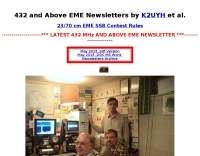 Presents a curated collection of newsletters dedicated to _Earth-Moon-Earth_ (EME) communications, primarily focusing on the 432 MHz band and higher microwave frequencies. The resource details various EME DX experiences and news contributions from operators like K2UYH (W6/PA0ZN), offering insights into successful moonbounce contacts and operational strategies. It serves as an archive of specialized content for those engaged in or interested in extreme weak-signal propagation via the moon. The newsletters provide practical information on achieving EME contacts, often including details on station setups, antenna arrays, and signal reports from challenging DX. For instance, operators might report achieving contacts over **750,000 km** round trip, demonstrating the feasibility of long-distance communication on UHF and microwave bands. The content differentiates itself by concentrating on the unique technical and operational aspects of EME, which contrasts significantly with terrestrial DXing, providing a specialized knowledge base for advanced amateur radio operators.
 -
 Information on ham radio including qrp, radio kits, Heathkit sw-717, Realisitic DX-160 and DX-302, and more.
 -
 Prince Edward Island. The PEI DX Lodge offers a turnkey operation from a custom designed shack featuring state of the art transceivers/amplifiers, etc. and the ultimate in antennas on every band.
 -
 Presents _HamQTH_, a free online callbook and callsign server, which provides rapid XML access for various logging programs, enabling seamless integration for amateur radio operators. The service includes features such as recent activity logs, propagation predictions, and support for multiple languages, making it a versatile tool for DXers and contesters. It also offers detailed information on callsigns, including US states, counties, IOTA, WAZ, and ITU zones. Users can leverage _HamQTH_ for efficient log searching and to monitor current band conditions, aiding in planning DX operations and contest strategies. The platform's XML interface facilitates automated lookups, streamlining the process of identifying stations and gathering essential QTH data. Petr Hlozek, OK2CQR, developed this resource, reflecting practical experience in amateur radio data management.
 -
 The Online Callbook for Internet Explorer makes it easy to find QSL information from the most popular HAM-radio web sites, such as QRZ.COM, ARRL.ORG, RAC.CA, QRZ.RU, BUCK.COM and OCTAVIA.COM,
 -
 The ARRL DXCC Challenge is a new program for all band DXers
 -
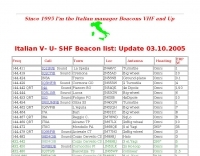 The _Italian VHF Beacons_ resource provides a detailed listing of active and QRT amateur radio beacons operating across VHF, UHF, and SHF bands within Italy. Each entry specifies the beacon's callsign (e.g., IQ1SP/B), operating frequency (e.g., 144.411 MHz), QTH locator (e.g., JN44VC), effective radiated power (ERP) in watts, and antenna configuration (e.g., Big Wheel, 4x Dipole, Yagi). This data is crucial for radio amateurs involved in propagation studies, equipment testing, and long-distance (DX) communication on these higher frequency bands, offering fixed signal sources for monitoring. This compilation, last updated in October 2005, serves as a historical snapshot of Italian beacon activity. For instance, it lists several 144 MHz beacons with ERPs ranging from **0.1W** to **10W**, and higher frequency beacons such as I8EMG/B on 1296.880 MHz and I3EME/B on 24192.132 MHz. The inclusion of QRT (Quiet Radio Teletype) status for many entries indicates the dynamic nature of beacon operations over time. Users can utilize this information to identify potential signal sources for band openings or to calibrate their receiving equipment against known transmissions.
 -

-
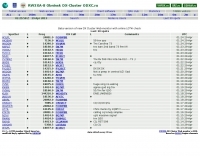 Approximately 1,500 unique DX spots are typically visible on the _ODXC Web Monitor_ at any given time, providing real-time intelligence for amateur radio operators seeking DX contacts. This service aggregates spotting data from the _RW3XA-8 Obninsk DX Cluster_ node, presenting it through a straightforward web interface. Users can monitor current activity across various HF bands, identifying stations calling CQ DX or reporting rare entities. The platform supports both traditional telnet access for those using dedicated cluster clients and a Java-based web interface, catering to different operational preferences. It serves as a practical tool for contesters and DXers to track propagation, identify active stations, and plan their operating strategies. The cluster data includes callsigns, frequencies, modes, and spotter information, crucial for effective DX hunting. Integration with other spotting networks like _RBN_ and _PSK Reporter_ enhances its utility.
 -
 dxing.com explains utc time and gmt conversions to local time
 -
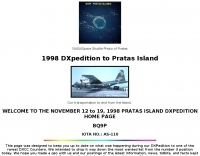 BQ9P Interactive Logbook 1998 DXpedition to Pratas Island
 -
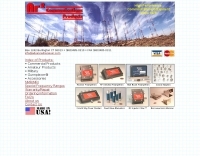 Showcasing a specialized product line, Advanced Receiver Research presents a comprehensive catalog of **low noise preamplifiers** and microwave **Gunnplexers**. The offerings span a broad spectrum of radio frequencies, from VLF, LF, MF, and HF bands up through VHF, UHF, and microwave, catering to diverse applications including amateur radio, commercial installations, and military systems. Their product range includes mast-mount preamplifiers, inline attenuators, power dividers, and various coaxial components. My own experience with similar low-noise front ends for weak-signal work on 2 meters and 70 centimeters underscores the critical role such components play in maximizing receiver sensitivity, especially when chasing distant DX or engaging in EME. The detailed product descriptions and technical specifications provided on the site allow operators to select the optimal preamplifier for their specific band and noise figure requirements, essential for improving signal-to-noise ratio. The site also lists specialized products for unique applications like Nuclear Magnetic Resonance (NMR) and Studio Transmitter Links (STL), demonstrating a depth of engineering capability beyond typical amateur radio fare. This breadth of offerings, coupled with clear ordering and warranty information, positions Advanced Receiver Research as a key supplier for high-performance RF components.
 -
-
 Operating on the 11-meter band, the Alfa Tango Argentina website serves as a digital hub for CB radio DX enthusiasts, particularly those affiliated with the _Alfa Tango_ international group. The resource primarily functions as a community portal, facilitating connections among members and promoting activities related to long-distance CB communications. It presents basic information about the group's presence in Argentina and emphasizes the social aspect of radio communication, framing participants as "friends who have never met." The site's content reflects the operational focus on **DXing** within the CB radio sphere, a practice that mirrors amateur radio's pursuit of distant contacts. While specific operational data or technical guides are not detailed, the site's existence supports the organizational structure of the Alfa Tango group, which coordinates activities across various countries.
 -

-
 Special purpose amateur radio club devoted to the pursuit of operating and technical excellence. This site serves as a library of amateur radio contest and DX information.
 -
 Alfa Tango England Official Homepage - A vast amount of information about the English division of GRI Alfa Tango also including DX news, tools, software and events
 -
 NJDXA North Jersey DX Association is a platform maintained by Urb LeJeune, W2DEC, providing information about upcoming meetings, VE testing sessions, and the operation of the W2 QSL Bureau. The site offers resources for amateur radio operators in the North Jersey area to connect, share experiences, and learn from each other. It serves as a hub for DXing enthusiasts to stay updated on events and activities related to amateur radio. The intended audience includes hams in the North Jersey region looking to participate in club meetings, VE testing, and QSL bureau operations.
 -
 Preparing to contest, and get ready for action
 -
-
 A Tropical Band Antenna with good Receiving characteristics
 -
 A non-political DX organization, founded in 1966. Its aims are to strengthen this fascinating and scientific hobby as well as the international DX movement for better understanding and friendship among nations.
 -
 QSL Information Pages QIP for BC-DXers - more than 50000 qsl logs from more than 10000 BC-DX radio stations
 -

-
 Exaustive shortwave dx and tech resources for BCLs.
 -
 The Ukrainian Contest Club (UCC) The Ukrainian Amateur Radio League (UARL)
 -
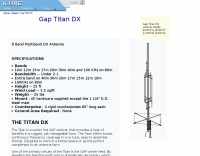 K4JRG GAP titan dx specifications
 -
 DXpeditions to Mauritius Island from 1996 till today. Island infos, log-search, contry infos and many more
 -
 The Western Washington DX Club is an organization of Amateur Radio (HAM) operators who have a special interest in DX or distance communications
 -
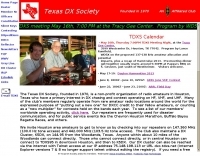 The Texas DX Society, founded in 1970, is an organization of radio amateurs in Houston, Texas who have a primary interest in DX chasing and contest operating on HF, VHF, and UHF
 -
 Presents the _K7AR DX NorthWest Web Cluster_, an online service for amateur radio operators to access real-time DX spots. The resource functions as a web-based interface, enabling users to monitor current band activity, identify rare DX stations, and track propagation conditions across various amateur bands. It aggregates spotting data, making it accessible without requiring a dedicated telnet client, thus simplifying access for many hams. The cluster integrates with the broader DX spotting network, offering a continuous stream of reported contacts. While specific performance metrics are not detailed, such web clusters typically update spots within **seconds** of submission, providing timely information crucial for DXing and contesting. Its utility lies in offering a quick, browser-based overview of the airwaves, comparable to traditional telnet clusters but with enhanced accessibility.
 -
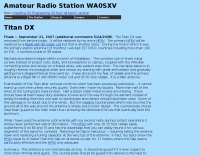 WA0SXV Experience with GAP Titan DX Antenna
 -
 Vanuatu - YJ 2010 - DXpedition info and online log
 -
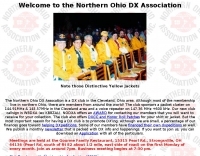 The Northern Ohio DX Association (NODXA) operates a voice repeater on 147.36 MHz with a +600 kHz shift, utilizing the club callsign W8DXA. The organization provides an award program for contacting its members and offers DXCC and Honor Roll patches to recognize member achievements. NODXA publishes a monthly newsletter containing DX information and meeting minutes, with a recent brochure and membership application dated May 2024. The club actively promotes DXing, allocating a portion of its finances to support DXpeditions, and several members have also financed their own expeditions. The NODXA roster was last updated in June 2015, and a list of supported DXpeditions was revised in June 2024. Tedd Mirgliotta, KB8NW, serves as the club president and is the editor of the OPDX Bulletin, a widely distributed internet and packet cluster resource. Meetings are held on the first Monday of each month at Amici Italian Restaurant & Bar in North Royalton, Ohio, located at 13000 Royalton Road, near the intersection of Route 82 and W.130th Street. The club leadership includes Dennis Stuber, K8LBT, as Vice President; Glenn Williams, AF8C, as Secretary; and Mary Michaelis, N8DMM, as Treasurer.
 -
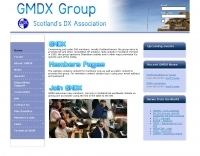 The GMDX Group Internet site provides DX information for Scottish and International Amateurs as well as resources for IOSA
 -
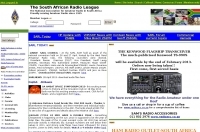 The South African Radio League (SARL) serves as the national representative body for amateur radio in South Africa, holding membership in the International Amateur Radio Union (IARU). It actively promotes the hobby, coordinates national amateur radio activities, and provides essential services to its members, including advocacy for spectrum allocation and regulatory liaison with ICASA. The organization frequently publishes updates relevant to the ZS amateur community, such as "HF Update with ZS4BS" and reports on events like the "ZS6STN Field day." SARL supports various aspects of amateur radio, from contesting and DXing to technical experimentation and emergency communications. The league's website lists upcoming events and news, ensuring members stay informed about national and international amateur radio developments. Its focus encompasses all amateur bands, with recent updates highlighting HF activities. The league's digital presence, including its canonical URL _mysarl.org.za_, provides a central hub for South African hams. The site frequently updates with news, event schedules, and technical information, reflecting an active and engaged amateur radio community.
 -
 Examining the _Angle of Radiation_ and its impact on amateur radio operations, the resource provides insights into optimizing antenna performance for DX and local contacts. It features a design for SPOTTO, a direct conversion high-performance universal DSB transceiver, detailing its construction and operational characteristics for homebrew enthusiasts. Additionally, the site presents a 7-element VHF high-gain antenna design, offering practical schematics and expected performance metrics for those seeking enhanced gain on VHF bands. The resource also covers the development and popularity of the _FT8_ digital mode, highlighting its effectiveness in weak-signal conditions and its role in special event operations like the FT8DMC anniversary. It includes information on Hamfest India 2023 and the Lamakaan Amateur Radio Convention, providing dates and organizational details for significant Indian amateur radio gatherings. Technical articles on Direct Digital Synthesizers (DDS) VFOs and low-cost multifunctional frequency counters offer practical project ideas for radio amateurs.
 -
 TAPR, an international organization dedicated to amateur digital communications, is pleased to present this collection of information about TAPR, via the World Wide Web.
 -
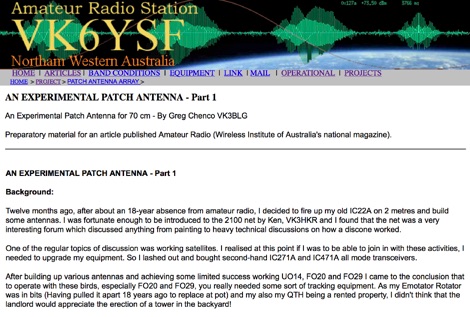 This web article by VK3BLG details the construction of an experimental 70cm (432 MHz) circularly polarized patch antenna, intended for satellite communication. The resource provides dimensions, feed point specifications, and impedance matching considerations for a single patch element, with discussion extending to array configurations for circular polarization. Construction involves a copper patch element on a dielectric substrate, fed via a coaxial cable. The design is based on information derived from AO-40 satellite antenna specifications, focusing on achieving circular polarization for satellite reception. The article includes specific dimensions for the patch and feed points, along with impedance values. Validation is implied through on-air satellite reception reports, with initial signal reports of **1 S-point above noise** for AO-40 beacons using a grid reflector, improving to **3-4 S-points above noise** with a 2-turn helical feed. The author references a _NanoVNA_ for impedance measurements and discusses the relationship between slot and dipole antennas in the context of patch design. DXZone Focus: Web Article | 70cm Patch Antenna | On-Air Satellite Reception | Circular Polarization
 -
 Notes on using RG-174 Coaxial Cable at Medium and Lower HF Frequencies by John Bryant and Bill Bowers
 -
 The resource provides specific information regarding amateur radio operations from various French islands, focusing on geographical and visual data. It includes photographic documentation of locations and detailed maps, which are crucial for operators planning DXpeditions or seeking to understand the unique challenges and opportunities presented by island activations. The content aims to support enthusiasts interested in rare grid squares and IOTA (Islands On The Air) awards. While currently under maintenance, the site's stated future enhancements include QSL card examples, which would offer practical insights into confirmation processes for these specific entities. The emphasis on French islands distinguishes it from more general DX resources, providing a concentrated body of information for a niche but active segment of the amateur radio community, particularly those pursuing island-specific operating awards.
 -
 The club was formed at a meeting of a group of hams on a May 1989 afternoon at Jake's Truck Stop in Bend.
 -
 eham reviews of the Yaesu FT-9000
 -
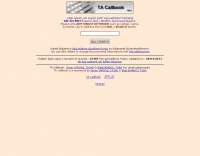 The _TA Callbook_ provides a dedicated online search utility for Turkish amateur radio operators, enabling users to query a database of over 15,500 records. This resource allows for lookups based on a callsign, operator's name, surname, city, or even a specific address keyword. It serves as a practical tool for DXers and contesters seeking to identify or verify Turkish stations, facilitating QSLing and contact logging. The interface is straightforward, requiring only a single keyword input to initiate a search. Operators can also update their personal information through an integrated editing form, ensuring data accuracy within the system. The platform's data collection practices are noted to comply with Turkish Personal Data Protection Law No. 6698, specifically Article 28, Paragraph 2, Clause b, by utilizing publicly disclosed information. The database was last updated on March 6, 2026, reflecting ongoing maintenance by its creators, _TA3AK_ and _TA8A_, who collaboratively developed this essential Turkish callbook.
 -
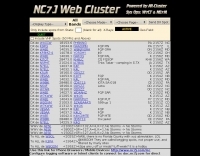 The NG7M Web Cluster, maintained by W7CT and NG7M, offers real-time DX spotting information crucial for amateur radio operators engaged in DXing and contesting activities. This service aggregates DX spots from various sources, presenting them in a user-friendly format accessible via both web interface and traditional telnet protocols. Operators can monitor band conditions, identify rare DX entities, and track propagation paths across multiple amateur radio bands. This cluster supports a wide range of operating modes and bands, facilitating efficient station operation for both casual DX chasers and serious contesters. The system integrates data from the Reverse Beacon Network (RBN) and PSK Reporter, enhancing its utility by providing automated CW and digital mode spots alongside manually entered voice spots. Access methods include a direct web interface for graphical display and a telnet connection for command-line interaction, catering to different operational preferences. The cluster's data stream is continuously updated, ensuring timely information for making critical operating decisions.
 -
 Offer various contest logging programs, for scandinavian contests, SPDX, PAXX, OK/OM Contests, IARU VHF Contest, Portugal Day DX contests, HSC contest, various polish and norwegian local contests and other utilities
 -
 With all the wire you have out, you may run into a problem with static buildup on the antennas. This static may try to make its way into your receiver, causing you major problems and damage that can run into a lot of money.