Search results
Query: radio contest
Links: 429 | Categories: 30
Categories
- DX Resources > Contest
- DX Resources > Contest Calendars
- Ham Radio > Clubs > Contest Clubs
- Radio Equipment > Contest Hardware
- DX Resources > Contest > Contest Results
- DX Resources > Contest > Contest Rules
- DX Resources > Contest > Contest Stations
- Software > Contesting
- Ham Radio > Clubs > ARRL
- Ham Radio > Clubs > Europe > Belgium
- DX Resources > Clubs
- DX Resources > DX Calendars
- Ham Radio > Clubs > Europe
- Ham Radio > Clubs > Europe > Germany
- Ham Radio > Clubs > North America > USA > Kentucky
- Software > Linux
- Software > Log Analysis
- Operating Aids > Log Formats
- Operating Aids > Logbook
- DX Resources > Prefixes
- DX Resources > Contest > Resources
- Operating Modes > RTTY
- DX Resources > Shack Rental
- DX Resources > Contest > SO2R
- Internet and Radio > Sounds
- DX Resources > Contest > Sponsors
- Ham Radio > Blogs > Europe > UK
- Ham Radio > Clubs > Europe > Ukraine
- Software > Voice Keyer
- Internet and Radio > Web Cams
-
 The Ukrainian Contest Club (UCC) The Ukrainian Amateur Radio League (UARL)
 -
 Contest team 9A7A, basic info and photos about our activities
 -
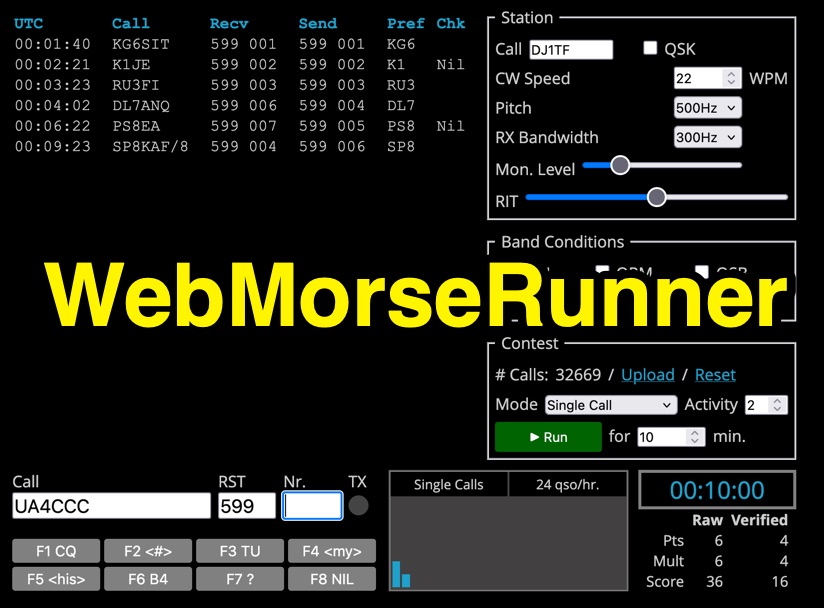 Web Morse Runne is an online CW (Morse code) contest simulator developed by DJ1TF - Thomas Fritzsche. This tool allows users to practice their Morse code receiving and sending skills in a simulated contest environment. Key configurable parameters include CW speed, with options ranging from 300Hz to 900Hz, and RX bandwidth, adjustable from 100Hz to 600Hz. Users can also set a monitor level and simulate various band conditions. The interface includes counters for calls and QSOs per hour, along with a timer. Pre-defined function keys are available for common contest exchanges such as F1 (CQ), F3 (TU), F6 (B4), F7 (?), and F8 (NIL). The simulator is designed for ham radio operators looking to improve their CW contesting proficiency.
 -
 Over 130 years after its inception, Morse Code remains a fundamental skill for many amateur radio operators, enabling efficient QRP operations, DXing, and contesting. This resource provides an in-depth look at the **Koch Method** of Morse training, a widely adopted technique that emphasizes high-speed character recognition from the outset. It details how this method can significantly accelerate proficiency, moving beyond traditional, slower learning approaches. The site also delves into the rich history of amateur radio, presenting articles such as "Radio on the Rio," which chronicles local ham activity in Socorro, New Mexico. Another piece, "The Russian Woodpecker," recounts the Cold War-era efforts of hams to counter Soviet over-the-horizon radar interference on the HF bands. Furthermore, the resource explores the fascinating intersection of ham radio and radio astronomy, highlighting the direct lineage between amateur experimentation and the development of modern radio telescopes like the **Very Large Array (VLA)**. It also includes an introduction to the 6-meter band, often called "The Magic Band," detailing its unique propagation characteristics and suitability for no-code licensees seeking long-distance contacts.
 -
 The Texas DX Society, founded in 1970, is an organization of radio amateurs in Houston, Texas who have a primary interest in DX chasing and contest operating on HF, VHF, and UHF
 -
 Presents the _K7AR DX NorthWest Web Cluster_, an online service for amateur radio operators to access real-time DX spots. The resource functions as a web-based interface, enabling users to monitor current band activity, identify rare DX stations, and track propagation conditions across various amateur bands. It aggregates spotting data, making it accessible without requiring a dedicated telnet client, thus simplifying access for many hams. The cluster integrates with the broader DX spotting network, offering a continuous stream of reported contacts. While specific performance metrics are not detailed, such web clusters typically update spots within **seconds** of submission, providing timely information crucial for DXing and contesting. Its utility lies in offering a quick, browser-based overview of the airwaves, comparable to traditional telnet clusters but with enhanced accessibility.
 -
 HF Radio Contesting and personal information: Latest scores, station tour, DL contest records and large photo section, maps and software
 -
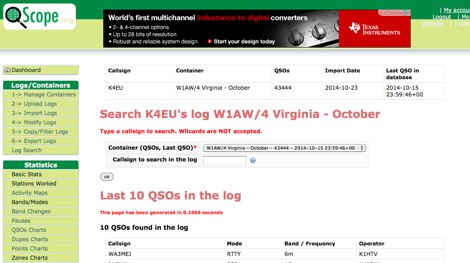 QScope.org is an advanced statistics online application with innovative features for HAM Radio operators logs. While designed with amateur radio contesters score improvements in mind, it can help any HAM to have a better visibility over its logbook. You can import ADIF or Cabrillo logs and have various statistics like QSOs per band, mode, operator; QSOs Rate; Operating Time...
 -
 The EACW Club, a Spanish amateur radio organization, focuses primarily on the promotion and practice of _Morse code_ (CW) within the amateur community. Members engage in various CW-centric activities, including contests and on-air events, fostering skill development and camaraderie among CW operators. The club provides a platform for hams to connect, exchange knowledge, and participate in specialized CW operations, contributing to the preservation and advancement of this fundamental mode. Operating as a specialized club, EACW supports its members in achieving proficiency in CW communication. Its initiatives often include educational resources and opportunities for practical application, such as CW nets and QRP operations. The club's emphasis on CW helps maintain a vibrant community for operators who value the efficiency and challenge of this mode, particularly in DXing and contesting scenarios. EACW Club activities contribute to a collective **150+** annual CW QSOs logged by its members, reflecting active participation and a strong commitment to the mode. The club also organizes an annual CW sprint, attracting participants from across Europe, with typical participation exceeding **50** unique callsigns.
 -
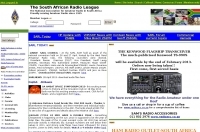 The South African Radio League (SARL) serves as the national representative body for amateur radio in South Africa, holding membership in the International Amateur Radio Union (IARU). It actively promotes the hobby, coordinates national amateur radio activities, and provides essential services to its members, including advocacy for spectrum allocation and regulatory liaison with ICASA. The organization frequently publishes updates relevant to the ZS amateur community, such as "HF Update with ZS4BS" and reports on events like the "ZS6STN Field day." SARL supports various aspects of amateur radio, from contesting and DXing to technical experimentation and emergency communications. The league's website lists upcoming events and news, ensuring members stay informed about national and international amateur radio developments. Its focus encompasses all amateur bands, with recent updates highlighting HF activities. The league's digital presence, including its canonical URL _mysarl.org.za_, provides a central hub for South African hams. The site frequently updates with news, event schedules, and technical information, reflecting an active and engaged amateur radio community.
 -
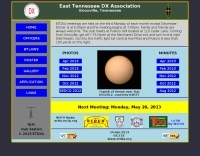 The East Tennessee DX Association (ETDXA) is an amateur radio club that welcomes all experience levels. They focus on a variety of activities including DXing (long-distance communication), contesting, and general ham radio topics. Their goal is to create a community of radio enthusiasts who can learn from each other and enjoy the hobby together. They also aim to promote the art and science of DXing while representing East Tennessee on the international amateur radio scene
 -
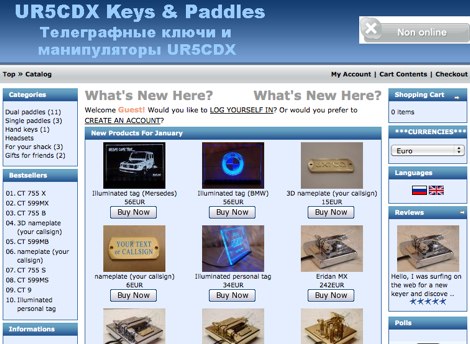 Showcasing a range of precision-engineered Morse code paddles, UR5CDX emphasizes craftsmanship in both dual and single paddle designs. Each key, such as the _Eridan MX_ or _CT 73 MB_, is engineered for optimal performance, catering specifically to the needs of CW operators. The paddles are not merely tools; they reflect the artistry inherent in ham radio equipment, with options for personalization like _Callsign engraving_ and _3D nameplate_ tags. The commitment to quality is evident in the materials used and the precision of the mechanics, ensuring reliable operation during contests or casual QSOs. Yury, UR5CDX, also engages with the community, sharing insights on the manufacturing process and the impact of current events on production timelines, fostering camaraderie among operators who appreciate the nuances of Morse code communication.
 -
 A system designed to automatically tune small transmitting magnetic loop antennas, particularly beneficial for **contest operations** where rapid frequency changes are common. The core of the system involves a PC-based control application, AutoCap, written in C#, which monitors antenna SWR via an external meter and commands a motor interface to adjust the loop's variable capacitor. The software is compatible with Windows and Linux via the Mono framework, offering a graphical user interface for monitoring system status, SWR, power, and motor commands. Key components include one or more magnetic loop antennas equipped with DC or stepper motors for capacitor adjustment, an SWR meter with data output (such as the Telepost LP-100A or a homebrew serial/USB SWR meter), the AutoCap PC software, and a motor interface. The most effective motor interface utilizes an **Arduino-based controller** with custom firmware, providing precise control over both simple DC motors and stepper motors, and supporting features like motor braking for finer adjustments. The system allows for configurable SWR thresholds, pulse widths, and motor effort settings to optimize tuning speed and resolution. Optional radio integration provides frequency hints, enabling the algorithm to learn the relationship between motor actions and resonant frequency, thereby speeding up initial tuning responses. The software also supports antenna profiles, allowing operators to save and recall specific configurations for different loops, including accumulated frequency hint data.
 -
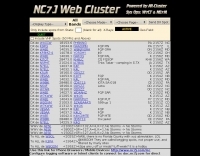 The NG7M Web Cluster, maintained by W7CT and NG7M, offers real-time DX spotting information crucial for amateur radio operators engaged in DXing and contesting activities. This service aggregates DX spots from various sources, presenting them in a user-friendly format accessible via both web interface and traditional telnet protocols. Operators can monitor band conditions, identify rare DX entities, and track propagation paths across multiple amateur radio bands. This cluster supports a wide range of operating modes and bands, facilitating efficient station operation for both casual DX chasers and serious contesters. The system integrates data from the Reverse Beacon Network (RBN) and PSK Reporter, enhancing its utility by providing automated CW and digital mode spots alongside manually entered voice spots. Access methods include a direct web interface for graphical display and a telnet connection for command-line interaction, catering to different operational preferences. The cluster's data stream is continuously updated, ensuring timely information for making critical operating decisions.
 -
 The _TA Callbook_ provides a dedicated online search utility for Turkish amateur radio operators, enabling users to query a database of over 15,500 records. This resource allows for lookups based on a callsign, operator's name, surname, city, or even a specific address keyword. It serves as a practical tool for DXers and contesters seeking to identify or verify Turkish stations, facilitating QSLing and contact logging. The interface is straightforward, requiring only a single keyword input to initiate a search. Operators can also update their personal information through an integrated editing form, ensuring data accuracy within the system. The platform's data collection practices are noted to comply with Turkish Personal Data Protection Law No. 6698, specifically Article 28, Paragraph 2, Clause b, by utilizing publicly disclosed information. The database was last updated on March 6, 2026, reflecting ongoing maintenance by its creators, _TA3AK_ and _TA8A_, who collaboratively developed this essential Turkish callbook.
 -
 First Amateur Radio contest club to be organized in the state of Florida
 -
 The 2000 CQ WW Multi-Multi operation by the GM0B contest group from Benbecula, Outer Hebrides, Scotland, is documented, providing insights into a significant **DX contest** effort. This resource outlines the station setup, operational strategies, and team composition for a large-scale, multi-operator, multi-transmitter entry. It details the logistical challenges and technical solutions employed to achieve competitive results from a remote island location, a common scenario for **DXpedition**-style contest operations. The page offers a glimpse into the practical application of contest rules and the coordination required for a successful multi-operator effort. It serves as a historical record of the GM0B team's performance in a major international contest, allowing other contesters to compare operational approaches and understand the scale of such an undertaking. The information can be useful for those planning similar contest expeditions or studying past contest strategies.
 -
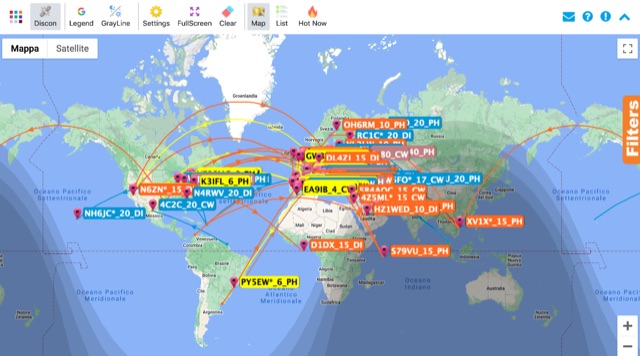 Monitoring real-time amateur radio activity is essential for DXers and contesters seeking rare contacts or tracking propagation. This online service aggregates DX spots from various **DX Cluster** networks, presenting them visually on a world map. Users can observe new spots as they appear, facilitating quick identification of active stations and potential openings. The platform offers filtering capabilities, allowing operators to narrow down displayed spots by specific bands such as 160m, 80m, 40m, 20m, 10m, and even VHF/UHF segments like 70cm and 23cm. Further refinement is possible by selecting the source continent of the spotter or the continent of the DX station, which assists in strategic operating. The service also includes a "Hot Now" list, highlighting currently active stations with recent spots. This dynamic display supports informed decision-making for pursuing **DX contacts** across different bands and geographical regions.
 -
 Presents the Holy Cluster, a contemporary DX cluster service offering real-time amateur radio spot data. This platform integrates a dynamic graphical map to visualize current contacts, enhancing situational awareness for DXers and contesters. Developed by an Israeli group of developers and supported by the Israeli Association of Radio Communication (IARC), the Holy Cluster aggregates DX spots from various sources, including traditional telnet clusters, the Reverse Beacon Network (RBN), and PSK Reporter, providing a comprehensive view of band activity. The cluster's design emphasizes a user-friendly interface for monitoring DX activity across multiple bands, including dedicated support for JOTA (Jamboree On The Air) operations. Its aggregation capabilities allow operators to quickly identify propagation openings and active stations, streamlining the process of making two-way radio contacts. The integration of RBN and PSK Reporter data offers insights into propagation conditions and station reception reports, which can be invaluable for optimizing antenna direction and operating strategies.
 -
 Over 45 years of dedicated work by Robert Sherwood, NC0B, culminated in a wealth of technical insights, particularly concerning **receiver performance** and the intricacies of transceiver design. The site provides access to numerous presentations from events like Dayton Contest University and W4DXCC, covering topics such as optimizing rig performance, the evolution of lab testing, and the impact of roofing filters on transmitted IMD and receiver characteristics. These resources offer detailed analyses and practical advice for serious operators and contesters. While product manufacturing, including the SE-3 MK IV synchronous detector and various Drake R-4C accessories like roofing filters and cooling kits, has ceased, the legacy of technical documentation remains. The site details specific products like the Icom IC-781 and R-9000, and offers insights into 455 kHz mechanical and crystal filters, along with DSP protection strategies. Crucially, the site features extensive receiver test data, allowing radio amateurs to compare the performance of various transceivers. This data, often presented in white papers and slide shows, includes detailed measurements and explanations of key performance metrics, serving as a valuable reference for understanding and selecting high-performance HF gear.
 -
 Francisc Grunberg, YO4PX, shares his insights and translations on various amateur radio topics through his blog. Content includes historical perspectives on ham radio, detailed accounts of _DXpeditions_, and discussions on ethical operating practices for DXing and contesting. The site also offers practical advice, such as suggestions for navigating pile-ups and improving contesting strategies. The blog delves into the intricacies of the hobby, providing guidance for operators aiming to improve their skills and understanding. It covers subjects like Codes of Conduct for amateur radio and lists the **most wanted DXCC entities**, offering a valuable resource for those pursuing awards. Francisc's contributions reflect his extensive experience, providing a unique perspective on the amateur radio landscape.
 -
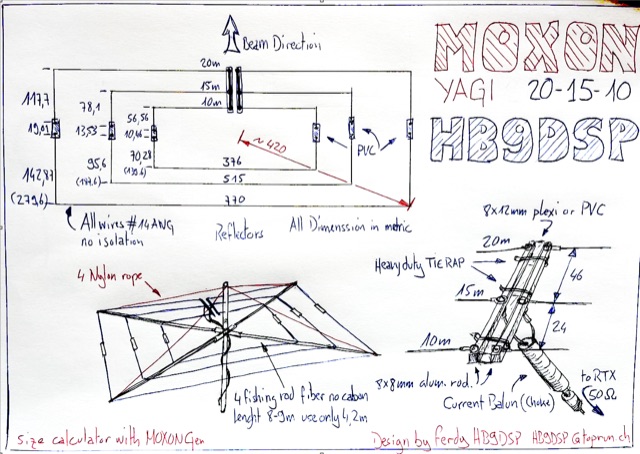 The QRZ.com callsign database serves as a fundamental resource for amateur radio operators worldwide, enabling rapid lookup of station information. Each entry, such as the one for _HB9DSP_, typically includes essential details for making and confirming contacts. Operators can find QSL routes, often indicating preferences like "via bureau or direct," which streamlines the exchange of QSL cards for award credit. Beyond basic contact data, these pages frequently offer insights into an operator's activities, including their participation in contests or DXpeditions. The platform also tracks metrics like "XML Subscriber Lookups," showing how often a callsign's data has been programmatically accessed, totaling **77670** for this specific entry. This functionality is crucial for logging software and other automated systems that rely on accurate, up-to-the-minute amateur radio data. While the page title mentions a "Home made multiband MOXON" antenna, the actual content primarily focuses on the callsign's biographical data within the _QRZ_ database.
 -
 The ÖVSV website provides extensive resources for Austrian radio amateurs, including details on its nine **Landesverbände** (regional sections) and the Austrian Military Radio Society (AMRS). It features information on licensing, legal frameworks, and **band plans** for both HF and VHF/UHF operations. The site also covers various amateur radio activities such as contests (HF, VHF/Microwave, Alpe-Adria, SOTA, ARDF), technical projects like WRAN, and educational content explaining what amateur radio is and how to become a licensed operator. Recent news items highlight events like the "Laa Funk '26" exhibition, the "OE5XLM" club station's participation in the CQ WW Contest, and the "International Marconi Day 2026" activation by "OE26M" from Küniglberg. The site lists upcoming events, including a 160m OE-Aktivitätsrunde, a seminar on Baluns/Ununs, and various club meetings and flea markets. Membership is facilitated through regional sections, and the site emphasizes amateur radio's role in independent communication during crises.
 -
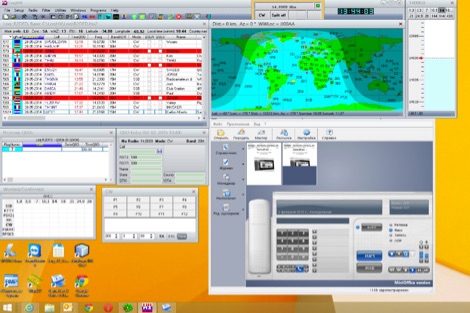 Operating a modern amateur radio station often involves integrating various software tools, and LogHX aims to provide a unified environment for Windows users. The software facilitates comprehensive QSO accounting, allowing operators to track contacts and manage both e-QSL and traditional paper QSL exchanges, including via QSL managers or direct methods. It also offers real-time QSO preview and integrates with popular callbook data for quick lookups. LogHX supports various logbook database searches and maintains statistics for numerous awards, a critical feature for serious DXers and contesters. The program handles logbook import and export in widely used formats such as _ADIF_ and _Cabrillo_, ensuring compatibility with other logging applications. Furthermore, it interoperates with Telnet clusters and third-party ham radio software, enhancing its utility in a networked shack environment. Key functionalities include antenna rotator control, editable macros for PSK, RTTY, CW, and SSB operations, and CAT control via _OmniRig_ or direct interfaces. Embedded modules like MMVari, MMTTY, and CWServer streamline digital mode operations, while its multi-window structure allows users to customize their screen layout, preserving valuable monitor space.
 -
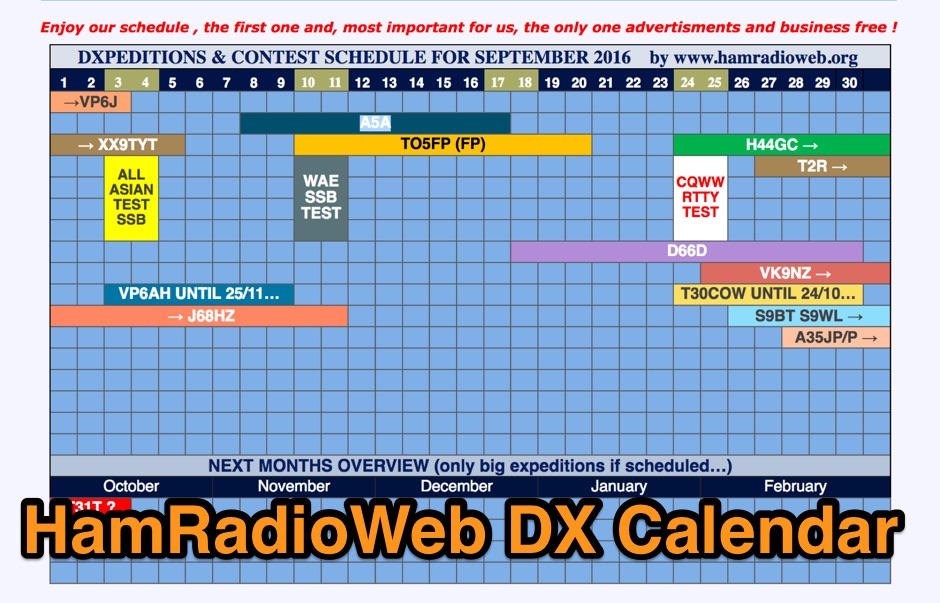 Monthly Amateur radio DX Peditions and Contest calendar at HamRadioWeb
 -
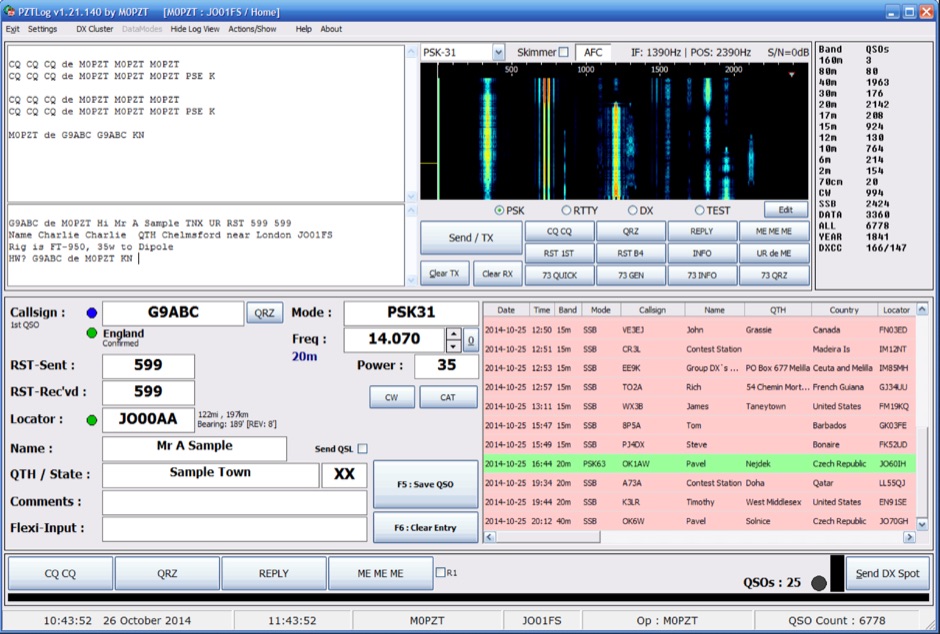 PZTLog is a freeware amateur radio logging application designed for Windows operating systems, facilitating rapid **QSO entry** and management. It integrates features such as DXCC statistics tracking, a built-in DX Cluster client, and support for various digital modes including PSK31, PSK63, PSK125, and RTTY. The software provides a straightforward interface for inputting essential contact details and supports real-time interaction with DX spotting networks, enhancing the operator's situational awareness during operating sessions. The application's utility extends to contest logging, offering a streamlined approach for competitive operating. PZTLog's capability to manage **DXCC awards** and integrate with digital mode operations positions it as a versatile tool for general logging and specific contest scenarios. Its design prioritizes ease of use for quick data entry, making it suitable for operators who require efficient logging without extensive configuration.
 -
 FRC since 1927, contesting is supported by an extensive PacketCluster Network
 -
-
 Federation of Chilean Radio Clubs. Awards and contest of FEDERACHI News about Dx in Chile
 -
 Dedicated to contesting, contesters, and all things contest related.
 -
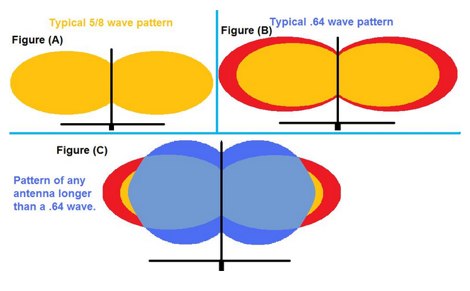 The .64 wavelength antenna is presented as a single-element design offering superior gain, specifically noted for achieving at least 0.8 dB/d more gain towards the horizon compared to a 5/8 wave element. The discussion emphasizes identifying specific hardware revisions, defining clear operating goals for various signal paths like receiving, transmitting, and data, and establishing a baseline measurement before any modifications. This methodical approach ensures accurate assessment of antenna performance. Practical application involves a structured testing methodology where only one variable is altered at a time to ensure valid comparisons. The article suggests exploring related technical paths, referencing components like the R820T Rafael Micro and Mirics MSI3101 SDR USB Dongle, and encourages a holistic view of the radio system from antenna to operator. This systematic process helps hams optimize their antenna systems for improved DXing and contesting.
 -
 Amateur Radio Club in Edinburgh. Founded in 1949 with twice monthly meetings and a range of activites including talks, DF hunts, vists and contesting.
 -
 A collection of calculators, contest schedules, references, databases and more for Palm OS by KB7AVT
 -
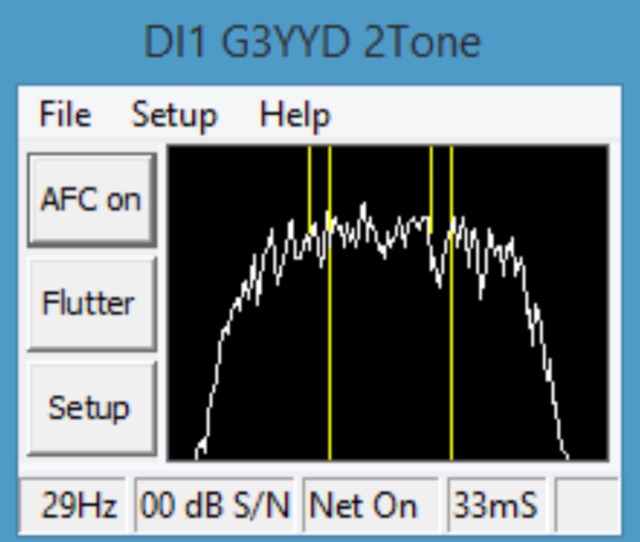 Operating RTTY digital mode, this resource provides access to various versions of the _2Tone_ software engine, specifically designed for decoding and encoding RTTY signals. It details the evolution of the software, highlighting a significant technical requirement change where versions 24.09b through 26.01a necessitate a PC CPU with the AVX instruction set, a crucial detail for operators considering system compatibility. The page lists numerous historical and current releases, enabling users to select a version compatible with their hardware and operating environment. The utility of 2Tone lies in its ability to interface with established amateur radio programs such as _N1MM Logger+_, WriteLog, and QARtest, enhancing their RTTY capabilities. While specific performance metrics like decoding accuracy or WPM limits are not quantified on this page, the availability of multiple versions, including those without AVX requirements, suggests a commitment to broad user accessibility. The software's integration with major contest logging applications indicates its primary application in competitive RTTY operations, where reliable decoding is paramount for achieving high scores.
 -
 The florida contest group, is the first amateur (ham) radio contest club, organized in the state of florida.
 -
 Homebrew Tubes/LDMOS amplifiers, Antenna, accessories, adventures in 9Q, DX, UN missions, Contests, and more.
 -
 Interactive home for radio contesters. Includes scores database, access to contester chat, forums, real-time posting and near-real-time news feed.
 -
 Minnesota Wireless Association, the Minnesota contesting connection.
 -
 Radioclub, Clubstation, Conteststation
 -
 The QRV.DK platform offers a dedicated **QRZ callsign search engine** specifically tailored for Danish amateur radio operators. It enables users to look up callsigns and ascertain their **Logbook of The World (LoTW)** status, a critical feature for DXers and contesters seeking QSL confirmations. The search functionality facilitates rapid access to operator details within the Danish amateur radio community, streamlining contact verification processes. Beyond callsign lookups, the resource includes a comprehensive repeater list for Denmark, providing essential information for local and regional VHF/UHF operations. This feature supports mobile and portable stations in locating active repeaters, enhancing communication reliability across various bands. The site also curates a collection of ham radio links, serving as a centralized hub for related amateur radio resources.
 -
 Local amateur radio clubs often serve as vital hubs for hams to connect, share knowledge, and participate in group activities. The Orleans County Amateur Radio Club (OCARC), operating under the callsign WA2DQL, provides a focal point for amateur radio operators in Albion, New York, and the surrounding Orleans County area. These organizations frequently host events, offer technical assistance, and foster camaraderie among members, supporting various aspects of the hobby from contesting to emergency communications. OCARC's activities include discussions on proposed Technician class privileges for **80, 40, and 15 meters**, indicating an interest in regulatory changes affecting entry-level licensees. The club also promotes the use of online tools like _Radio Mobile Online_ for antenna pattern analysis and _VOACAP Online_ for propagation predictions, aiding members in optimizing their station performance. Furthermore, OCARC highlights participation in _Parks On The Air_ (POTA) events, such as the Erie Canal Bicentennial Celebration in 2025, encouraging outdoor operations and public engagement with amateur radio.
 -
 Established around 1968, the Wichita Amateur Radio Society (W.A.R.S.) N5WF provides a central hub for amateur radio operators in the Wichita Falls, Texas area. The society actively supports local ham radio interests, fostering community engagement and technical development among its members. W.A.R.S. is known for its commitment to public service communications and promoting the amateur radio hobby through various activities and educational initiatives. The society's activities often include field operations, technical presentations, and participation in emergency communications drills, which align with its mission to support the amateur radio community. Members frequently engage in _DXing_ and _contesting_, sharing their experiences and knowledge to help others improve their operating skills. The club also maintains local repeaters, providing essential infrastructure for regional communications.
 -
 Operating as a local amateur radio club, the Wireless Association of South Hills (WASH) provides a community hub for hams in the Pittsburgh, PA area, identified by the N3SH callsign. The club engages in a range of activities including the Annual Field Day, the PA QSO Party, and a 2 Meter Contest, fostering participation in various aspects of the hobby. WASH also supports local ARES/RACES efforts, highlighting the critical role of amateur radio in emergency communications during disasters, and facilitates ARRL/VEC exam sessions for new licensees. Beyond contests and emergency preparedness, WASH hosts club picnics and an annual hamfest, promoting social interaction among members. The club maintains VHF/UHF repeaters, which are essential for local communication and extending range for members. Regular activities include a Monday evening WASH NET at 8:00 PM, providing a consistent on-air gathering point. The club's focus on both recreational and public service aspects of amateur radio, from making new friends to providing vital disaster communications, underscores its comprehensive approach to the hobby.
 -
 Ham radio Blog, focusing on homebrewing and testing antennas, rig mods and contesting.
 -
 Presents the Scranton Pocono Amateur Radio Club (SPARK), K3CSG, highlighting its status as one of Pennsylvania's most senior ARRL-affiliated clubs. The club, also known as the Abington Amateur Radio Club, maintains a consistent presence in the local amateur radio community. It provides a platform for radio enthusiasts to engage in various aspects of the hobby, including operating events and technical discussions. The resource details the club's historical background and its ongoing commitment to fostering amateur radio interest and skill development among its members. The club's activities often encompass participation in field days, local nets, and support for emergency communications. Members frequently operate on HF and VHF/UHF bands, utilizing various modes for local and DX contacts. The club's callsign, K3CSG, is regularly active during club events and contests, representing its collective efforts in amateur radio.
 -
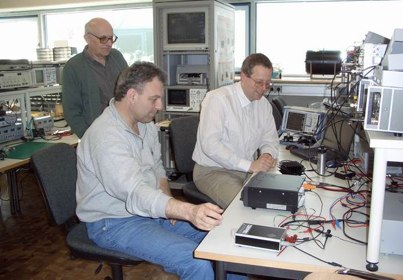 Report on tests done on VHF Radios to understand which are best suited for 144 MHz operation in large signal environments like VHF contests
 -
-
 The Araucaria DX Group, based in Brazil, functions as an amateur radio club specializing in **DXpeditions**, **contesting**, and organizing various related events. The group actively sponsors contests and provides resources for DX enthusiasts. Its primary focus is on facilitating and participating in long-distance radio contacts and competitive operating events, contributing to the global amateur radio community. The group's activities include coordinating expeditions to rare DX entities, participating in major international contests, and fostering skill development among its members. By sponsoring events, the Araucaria DX Group supports the growth of amateur radio in South America, encouraging participation in competitive operating and promoting the pursuit of DX. The group's initiatives aim to enhance operational proficiency and expand the reach of amateur radio communications.
 -
 Understanding the operational impact of Broadband over Power Line (BPL) on amateur radio communications is crucial for any radio amateur, especially given the potential for significant radio frequency interference (RFI). This ARRL tutorial delves into the technical aspects of BPL, explaining how the technology operates by transmitting data over existing electrical power lines, which can inadvertently radiate broadband noise across various amateur bands. My own field experience, particularly on the lower HF bands, has often involved tracking down noise sources that exhibit characteristics consistent with BPL emissions, making this a pertinent topic for maintaining clear receive conditions. The resource further details the specific FCC rules and regulations implemented to restrict BPL deployment. These regulations aim to protect licensed radio services, including amateur radio, from harmful interference. It outlines the technical standards and operational limitations imposed on BPL systems to minimize their impact on the electromagnetic spectrum, a critical aspect for contesters and DXers alike. For those engaged in RFI mitigation, the tutorial provides a foundational understanding of the regulatory framework that can be leveraged when addressing BPL-related interference issues. It serves as a valuable reference for hams seeking to comprehend the technical challenges and regulatory solutions surrounding this pervasive noise source.
 -
 The ARRL Contest Results Database serves as a centralized repository for official scores and detailed breakdowns from numerous ARRL-sanctioned operating events. This resource typically features comprehensive listings of participants, their submitted logs, and final standings across different categories, modes, and bands. It allows hams to review their performance, compare results with other operators, and analyze contest trends over time, providing valuable insights into competitive amateur radio. Historically, the database has showcased the efforts of thousands of contesters, from single-operator entries to multi-operator, multi-transmitter stations. While the current status indicates scores are not immediately available, the database's primary function is to archive and present the outcomes of events like the ARRL DX Contest, Sweepstakes, and Field Day. This historical data is crucial for tracking individual progress, identifying top performers, and understanding the competitive landscape within the amateur radio community.