Search results
Query: earn on google
Links: 18 | Categories: 0
-
 Super Morse is the original comprehensive Morse Code training program for the PC. Super Morse permits the user to learn the Morse characters in a very orderly way using several different methods, including one unique to Super Morse; build speed with special exercises
 -
 NuMorse 2.20.0.0 for Win 7/Win 8/XP/Vista/Win 10 A complete rewrite of the original NuMorse used by thousands of radio amateurs to gain and upgrade their licenses. NuMorse offers an intermediate feature set that is somewhere between the lean and mean NuCode program and the vast array of features supported by NuMorse Professional. But NuMorse is no cut-down program. It has several unique features not found in other Nu-Ware products as well as a compact and intuitive set of controls that you will be able to learn quickly.Product is no more developed and out of support.
 -
 The original G5RV antenna system consists of a center-fed horizontal 102' wire plus a 34' length of open-wire 525-Ohm feeder. Louis Varney, the antenna system's developer, intended two other features. Learn more at Cebik website
 -
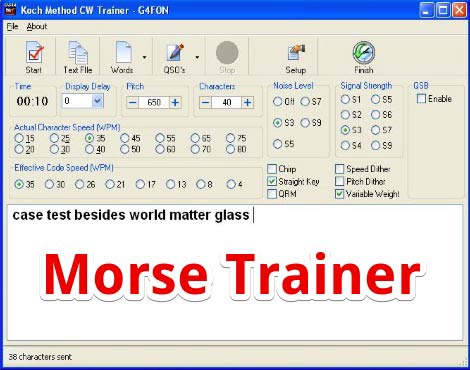 Mose Trainer by G4FON is a free windows morse code training program developed using the Koch method. Sends words simulating real morse code transmission, with QSB and QRM, allow change speed tone and many other settings. Download the kochmorsetrainer_install file and start learning Morse Code.
 -
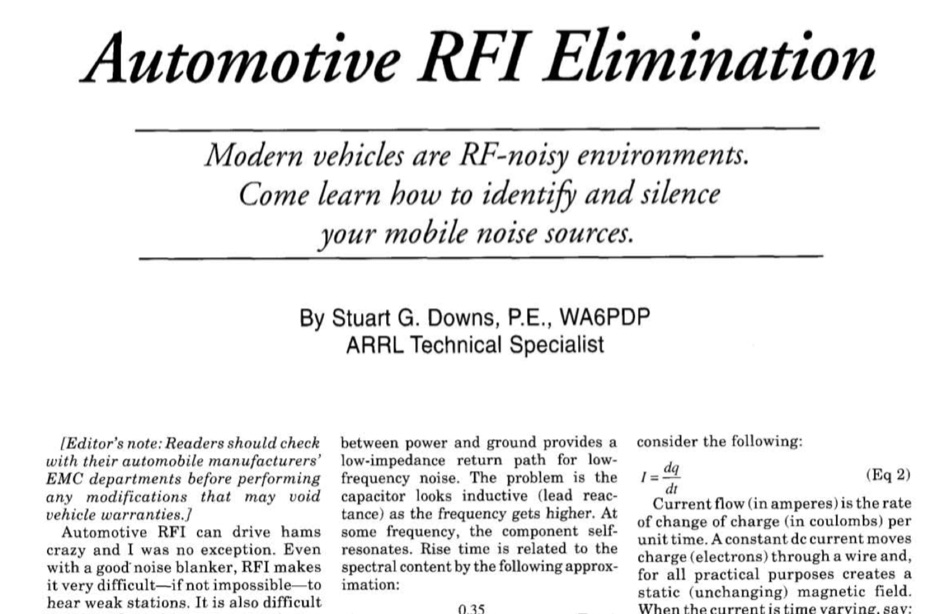 ARRL pdf file on how remove car noise from your radio. Modern vehicles are RF noisy environments. Come learn how to identify and silence yor mobile noise sources, by WA6PDP
 -
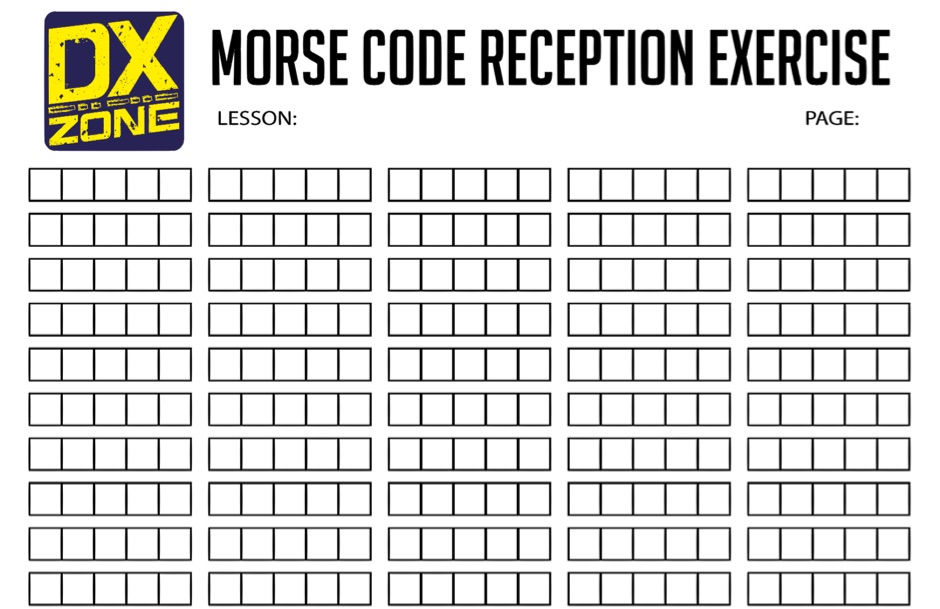 Useful exercise sheet to learn morse code reception. In A4 format PDF File, it contains groups of 5 characters commonly used while learning morse code reception.
 -
 Learn how to start using ham radio satellites for your DX contacts, PDF presentation by Dave Long
 -
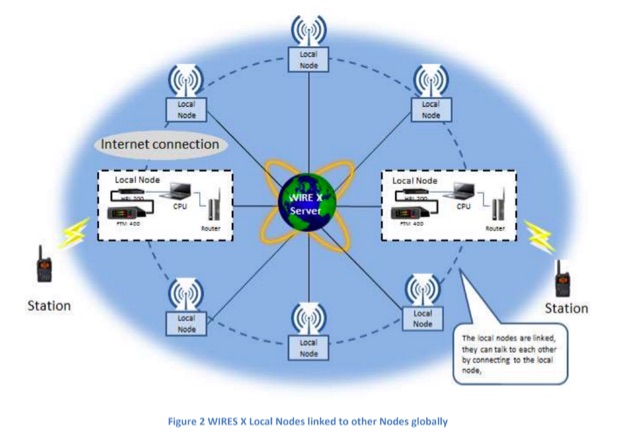 The purpose of this book is to provide a common source for WIRES-X, gather information from manuals, experiences from the Amateur Radio Community, and the best practices from both the Amateur Radio Community and the Bakken Amateur Radio Society. To provide a platform for learning, experimentation, and advancement of Amateur Radio skills and art. A platform of Discovery and to have FUN. To encourage networking, sharing, and exchange of interesting technical information of WIRES X, where people are encouraged to help each other out.
 -
 GW6ITJ articles on morse code, learning techniques, clubs and organizations and a custom learning software.
 -
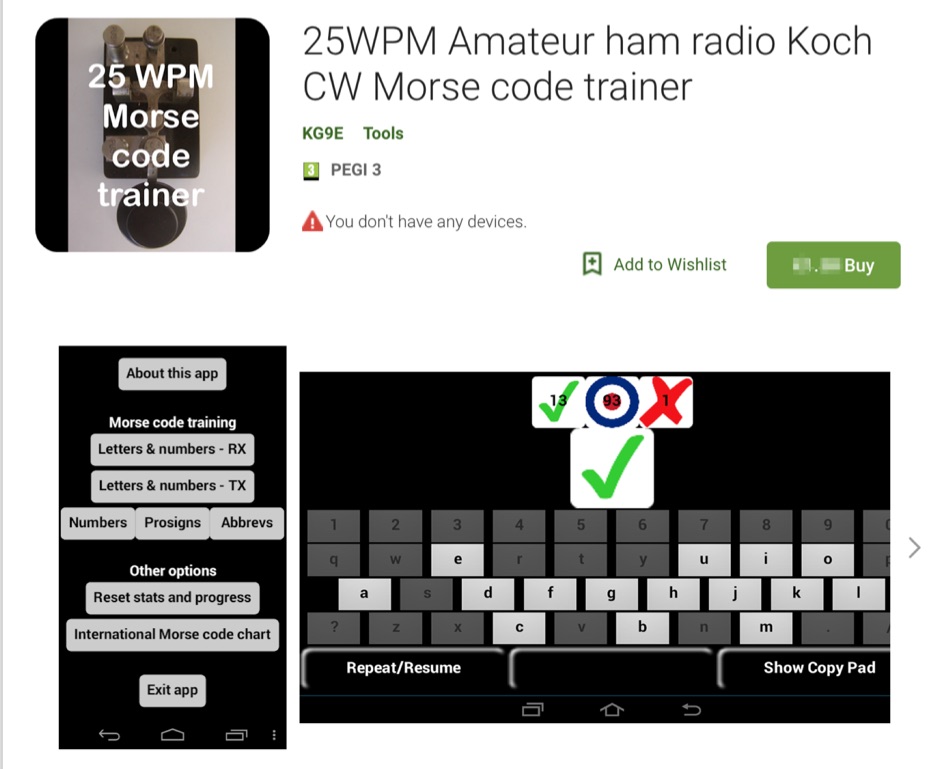 Learn to recognize Morse code at 25 WPM and not memorize DITs and DAHs at 5 WPM. This app will train you to hear and send Morse code at 25 WPM using an approach very similar to the Koch method.
 -
 Around 17% of the U.S. population experiences some degree of Dyslexia, a condition affecting language processing that can hinder amateur radio license candidates, often leading to repeated exam failures despite diligent study. This resource outlines methods for Volunteer Examiners (VEs) and Elmers to identify and assist candidates with cognitive disorders like Dyslexia and **ADHD**, which affects approximately 4% of U.S. adults. It emphasizes recognizing patterns in missed answers, such as spatial placement errors on answer sheets, and suggests reading questions aloud as an accommodation. The author, NC4FB, shares a structured approach developed over three years, involving extensive candidate interviews and a self-study program. This program utilizes specialized software with keyword highlighting and a unique font to improve comprehension for Dyslexic/ADHD candidates. It also incorporates **MP3 audio files** for subelement questions and correct answers, providing an alternative study method for those who benefit from auditory learning. Key elements of the support strategy include repetition, positive reinforcement, and timely progress updates, often visualized with a color-coded table tracking scores of 85 or higher. The goal is for candidates to pass three consecutive sample exams with at least 85% before attempting the actual license exam, demonstrating mastery of the material.
 -
 Starting March 23rd, the Peterborough Amateur Radio Club (PARC) conducts a virtual licensing class via Google Meet, led by Mark, VE3SB. This course comprises seven two-hour lessons, held on Mondays at 7 PM EST, focusing specifically on material required to pass the ISED exam. The registration fee of $60 covers the course, including in-person or remote exams, and grants participants a PARC membership for the remainder of the calendar year. Outside participants are welcome to join the virtual class, with exam options available upon completion. While recommended study material can be purchased separately, Peterborough-area participants have the option to arrange for a loaned copy of the book. The club emphasizes practical learning for exam success.
 -
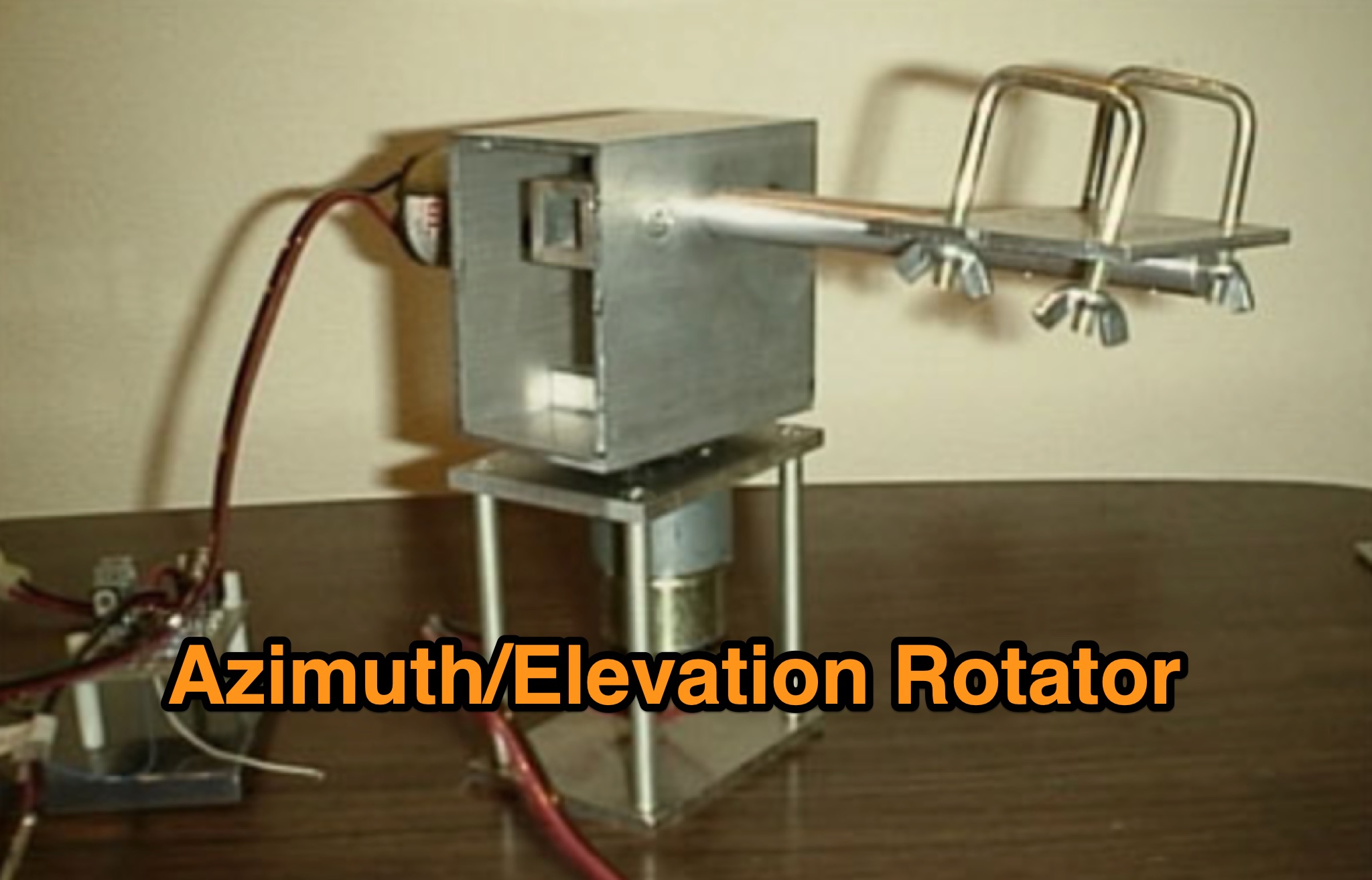 Learn how to build a simple 12vdc azimuth and elevation motor unit for the Arrow Satellite Antenna to improve your FM satellite communication experience. This DIY project involves using a camera tripod and basic materials like aluminum tube and standoffs. Get detailed instructions, including the gearhead motor product number for optimal performance. Discover where to purchase the necessary components and stay updated on alternative motor options. Enhance your ham radio operations with this homemade rotator setup, designed for easy satellite tracking and communication. Share feedback and connect with other radio enthusiasts for more tips and ideas.
 -
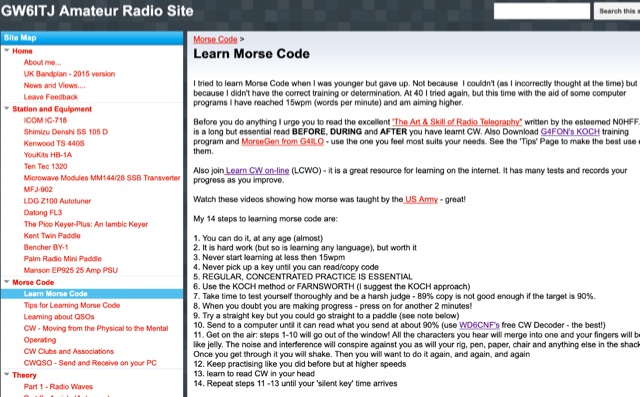 A multi section article on learning the morse code for beginners. The article include a list of tips the author consider to be uesful when someone want to begin the trip to learn the morse code.
 -
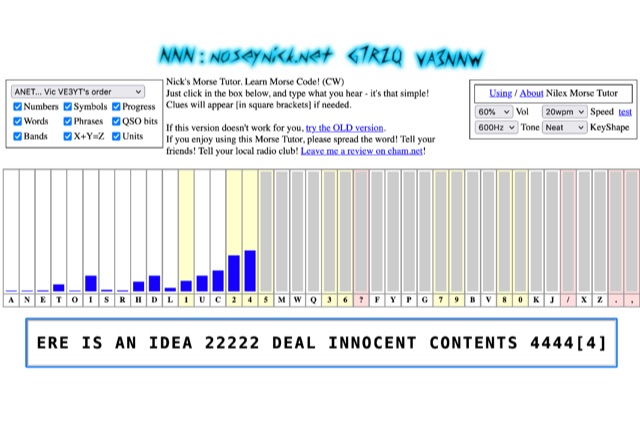 The **Nilex Morse Tutor** is an HTML5 web application designed to teach Morse code reception, adapting to user proficiency by adding new characters as readiness is detected. It prioritizes practice on less familiar letters, numbers, symbols, words, and phrases, while minimizing repetition of already mastered elements. The program offers multiple learning orders, including "Q7ZG..." (Ward/Jim's), "KMRS..." (PU5EPX/Koch), "KMUR..." (lcwo.net), "AENT..." (CWops CW Academy), "TEAN..." (Stephen C Phillips), "ANET..." (Vic VE3YT), and "ETI5..." (Ham Whisperer), alongside an alphabetical option. Users can customize the learning experience by enabling or disabling automatic progression, and selecting specific content categories such as numbers, symbols, words, phrases, QSO bits, Ham Radio Bands, X+Y=Z math, and units. Audio settings are adjustable for volume, speed (WPM), tone frequency, and keyshape/keying envelope, allowing for a personalized auditory environment. The interface provides visual feedback with blue bars indicating practice emphasis and gray bars for reserved characters, with clickable bars for manual character selection. Developed by "Nosey" Nick Waterman, VA3NNW, this tutor is based on earlier versions by Jim Wilson and a 1977 QST article. A significant October 2019 rewrite incorporated a new WebAudio sound library by AwesomeAidenW, improving offline functionality and mobile support. The content library was expanded to include 3000 top Google words, 2284+ General Service List words, ISO country codes, capital cities, US states, Canadian provinces, UK counties, common names, periodic table elements, quotes, Q-codes, electronic components, ham abbreviations, and example call signs. The software is distributed under the GNU GPL V2 license.
 -
 A comprehensive overview of a 10-band attic antenna system developed for contesting and DXing is presented, covering its evolution and performance. Initially intended in a restricted location, the system has been developed through numerous iterations, using various antenna types such as delta loops and Yagis. Automatic switching, dual-direction capability, and optimum tuning for certain band segments are among the most notable features. The project not only improves operating efficiency but also provides great learning opportunities in antenna design and installation in restricted places.
 -
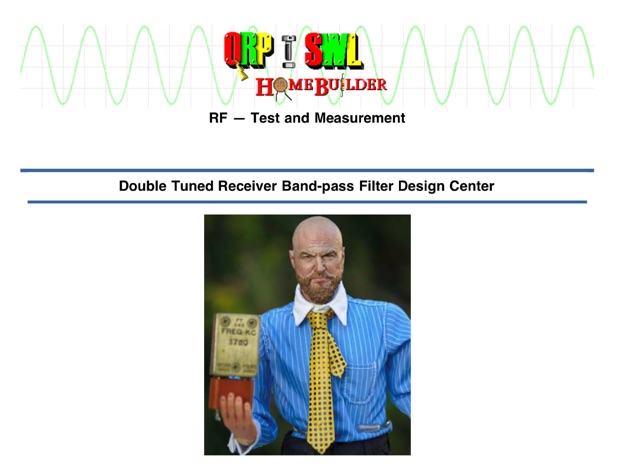 This webpage caters to EMRFD owners, offering insights into building popcorn receiver band-pass filters with Ladpac programs and EMRFD Chapter 3 knowledge. Through practical experiments and Ladpac tools, the author explores coupling capacitors' impact on filter response and return loss optimization. The content emphasizes empirical approaches, encouraging builders to embrace experimentation and learn from mistakes. Detailed examples and workflow suggestions aid hobbyist-level designers in creating customized filters, fostering a deeper understanding of filter design principles.
 -
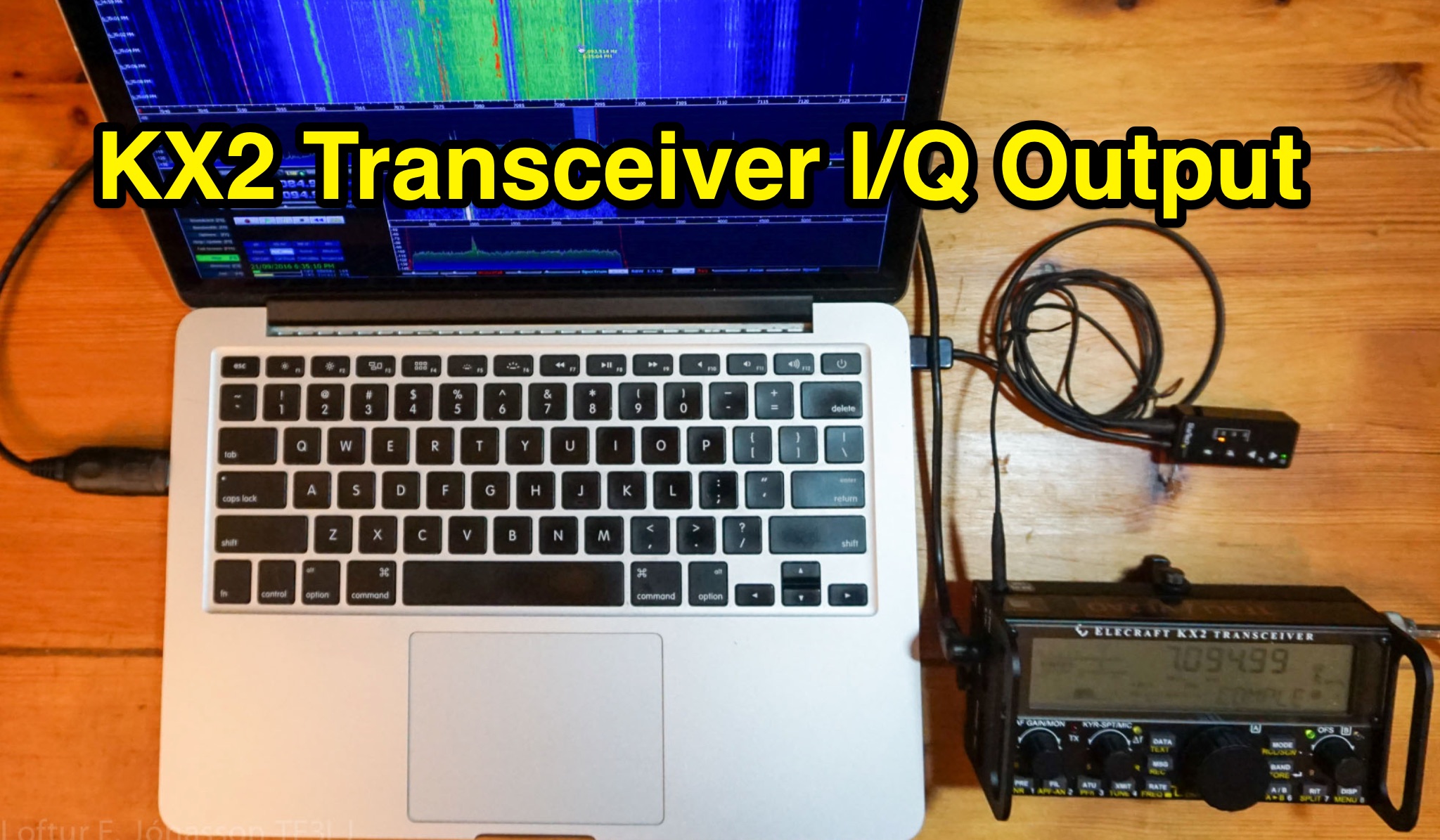 Learn how to add an audio I/Q output to your KX2 transceiver for use with a Spectrum Scope or external SDR software. The article provides a detailed guide on the circuit design and components needed, along with precautions to avoid signal degradation. Follow the instructions to enhance the functionality of your KX2 without compromising its performance.