Understanding Sunspots and HF Radio Propagation
Learn how sunspot cycles and solar indices impact high-frequency radio communication and improve your propagation forecasts.

Sunspots are crucial for amateur radio operators, directly influencing HF propagation conditions across all bands. The number and location of sunspots indicate solar activity levels, which in turn affect the ionosphere's ability to reflect radio waves, making or breaking DX QSOs. Understanding sunspot cycles and their impact helps hams predict when bands will be open for long-distance contacts or when conditions might be poor.
Hams can find various resources to track solar activity, including real-time sunspot numbers and solar flux index (SFI) data. Many sites offer detailed explanations of solar indices and their interpretation, helping operators make sense of propagation forecast bulletins. There are also historical archives, such as the Sunspot Index Since 1750 from the Royal Observatory of Belgium, which provide long-term solar observation data for deeper analysis of solar cycles and their patterns.
-
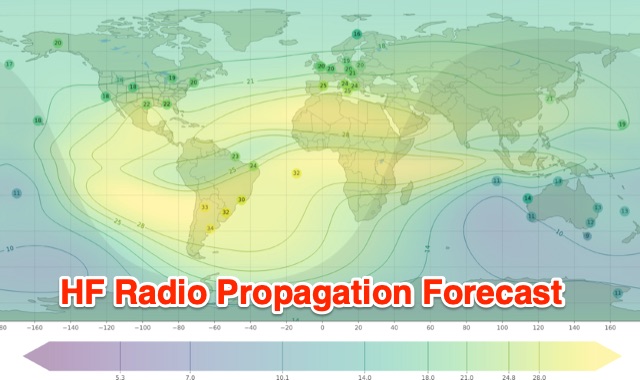 Comprehensive guide and real-time tool for HF skywave propagation, covering fundamentals, solar effects, ionospheric dynamics, and practical monitoring
 -
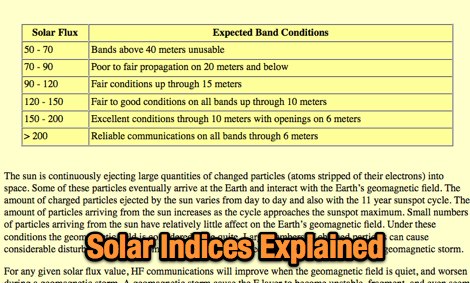 Comprehensive guide to understanding of solar indices, reading this article you will allow a better understanding and interpretation of propagation forecast bulletins and propagation reports
 -
 Monitors the space weather parameters essential for HF radio, including SSN/SFI, Ap/Kp, X-ray/Proton flux, and Auroral activity. IonoProbe downloads near-real time satellite and ground station data, stores information for future use and displays it in a user-friendly way.
 -
 Nasa MSFC predictions on the behavior of current sunspot cycle.
 -
 Definition of smoothed sunspot number and R12 index
 -
 The short history of the SSN Smoothed Sunspot Number at Luxorion
 -
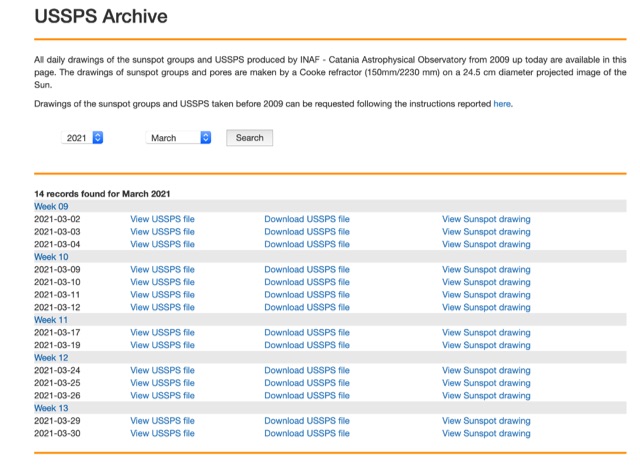 All daily drawings of the sunspot groups and USSPS produced by INAF - Catania Astrophysical Observatory from 2009 up today are available in this page. The drawings of sunspot groups and pores are maken by a Cooke refractor (150mm/2230 mm) on a 24.5 cm diameter projected image of the Sun.
 -
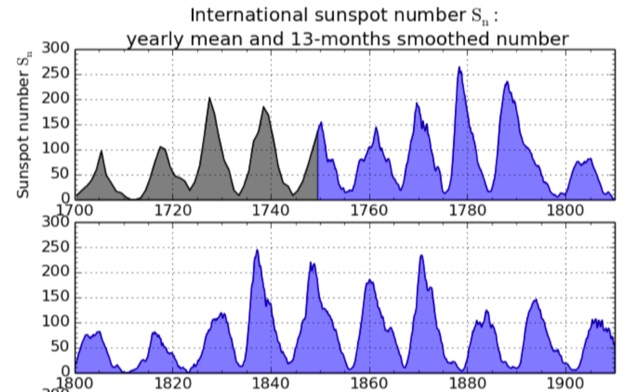 The yearly, black, up to 1750, and monthly red, from 1750 up to now, sunspot numbers provided by the Royal Observatory of Belgium SILSO
 -
 The document discusses the classifications of sunspots and their potential for solar flare activity, categorizing them into Alpha, Beta, and Delta groups based on their magnetic field characteristics. It explains how these classifications relate to the likelihood of solar flares, ranging from minor to extreme events. The report also outlines the geomagnetic indices and conditions that affect high-frequency (HF) radio propagation, emphasizing the effects of solar flares on radio communication and geomagnetic storms. The information is geared towards amateur radio operators, providing insights into how solar activity influences HF radio operations.