Search results
Query: amateur radio event
Links: 248 | Categories: 17
Categories
- Ham Radio > Ham Radio News
- DX Resources > DX Peditions > Announcements
- Ham Radio > Clubs > South America > Argentina
- Ham Radio > Clubs > North America > Canada
- DX Resources > Clubs
- DX Resources > Contest
- DX Resources > Contest > Contest Rules
- Ham Radio > Clubs > North America > USA > Delaware
- DX Resources > JOTA
- Ham Radio > Clubs > North America > USA > Minnesota
- Ham Radio > Clubs > Europe > UK > Northern England
- DX Resources > QSO Party
- Ham Radio > Clubs > Scouting
- DX Resources > Sked
- Ham Radio > Clubs > North America > USA > South Dakota
- DX Resources > Contest > Sponsors
- Ham Radio > Clubs > Europe > UK > Wales
-
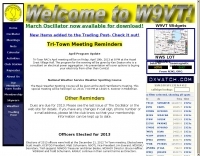 Presents the W9VT Tri-Town Radio Club, an ARRL-affiliated organization serving the Illinois amateur radio community. The club maintains a 2-meter repeater on 147.180 MHz (+600 kHz offset, 107.2 Hz CTCSS) and a 70-centimeter repeater on 444.825 MHz (+5 MHz offset, 107.2 Hz CTCSS), both located in Woodridge, IL. Regular meetings are held on the second Tuesday of each month at 7:00 PM at the Woodridge Public Library, focusing on technical discussions, operating practices, and community service. The club participates in Field Day, supports local public service events, and offers licensing classes for Technician, General, and Extra class examinations. Members engage in various amateur radio activities, including DXing, contesting, and digital modes, fostering skill development among hams. The club's repeater infrastructure provides reliable local communication for members and supports emergency preparedness efforts within DuPage County. Participation in ARRL-sponsored events like the Simulated Emergency Test (SET) and various operating awards promotes active engagement and technical proficiency. The club provides a platform for mentorship, allowing experienced operators to guide newer hams through licensing and operational aspects.
-
 Friendly Club that offers club nights, full licence training and social events for Radiop fans in the South London area
-
 Describes Atlantic Tower Services (ATS), a company specializing in antenna tower erection and maintenance, operating from Orlando, Florida. ATS offers a range of services including site maintenance, structural repairs, system modifications, and complete tower installations for various communication needs. The company emphasizes its capability to handle diverse tower projects, from routine inspections to complex upgrades, ensuring structural integrity and optimal performance for amateur radio and commercial installations. ATS focuses on delivering reliable infrastructure solutions, supporting the backbone of communication systems. Their service portfolio covers critical aspects of tower ownership, addressing both preventative care and reactive solutions for existing structures. They are equipped to manage projects involving different tower types and heights, adhering to safety standards and operational best practices. Services include **site maintenance** and _structural modifications_.
-
 The F5GIT blog documents the amateur radio pursuits of Tony, F5GIT, offering insights into his DXpedition experiences and contest operations. It presents detailed accounts of his participation in events like the _CQ WW DX Contest_ and the _IARU HF Championship_, often including specific callsigns worked and operational strategies employed. The resource covers various aspects of station setup, antenna configurations, and radio equipment used for achieving contacts across different bands. Content includes discussions on antenna performance, such as a **2-element Yagi** for 10/15/20 meters, and operational challenges encountered during remote or portable setups. The blog also serves as a personal log, chronicling significant QSOs and providing a historical record of his amateur radio journey. It details specific locations operated from, like _Île de Ré_, and the unique challenges presented by such environments. Furthermore, the blog provides practical information on optimizing station efficiency and maximizing contact rates during high-intensity operating periods. It reflects a dedicated approach to improving radio skills and contributing to the global amateur radio community through active participation and sharing experiences.
-
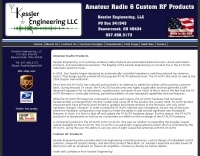 The AT-AUTO automatic antenna tuner handles 1.5kW CW operation, employing stepper motors under microprocessor control to precisely position a roller inductor and air-dielectric variable capacitor, avoiding relay-switched discrete components. This design choice prevents loud relay clacking and burning contacts, a common issue with competing products. The tuner features auto-retuning capabilities and receives periodic firmware updates, ensuring continuous improvement and added user-requested features. Its companion product, the _CX-AUTO_ coaxial switch, also features an embedded microprocessor controller. It enables selection of 1-of-8 coaxial outputs via a serial data interface. When integrated with the _AT-AUTO_, the tuner can associate specific coaxial outputs with amateur radio bands, automatically commanding the _CX-AUTO_ to select the correct antenna when the operator QSYs to a different band. Don Kessler began designing the AT-AUTO in 2005, with its debut at the 2006 Dayton Hamvention. Kessler Engineering also offers custom RF product design and electrical engineering consulting, specializing in Class-E RF amplifiers.
-
 The Tri-County CW Amateur Radio Club, operating under the callsign _W3TCW_, is situated in North Huntingdon, Pennsylvania, just southeast of Pittsburgh. This organization extends an open invitation to all licensed amateur radio operators, regardless of age or experience level, to participate in its activities and community. The club maintains a web presence detailing various aspects of its operations, including a calendar of events, a member roster, and contact information. It also provides resources related to _VE Testing_ and links to other local clubs and the _ARRL_ section website. Historical content, such as information from _Field Day 2008_, is also referenced.
-
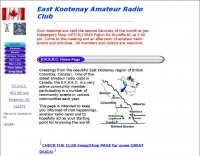 One of the oldest amateur radio clubs in Canada, the E.K.A.R.C. is a very active community member, participating in a number of events each year.
-
 This resource compiles claimed scores, often referred to as "rumor scores," for numerous amateur radio contests, providing a historical snapshot of competitive activity from 1993 through 2007. It lists entries for prominent events such as _CQWW CW_, _ARRL Sweepstakes_, _IOTA Contest_, and various _NAQP_ events, categorized by year and contest. Each entry typically includes the contest name and the month/year of operation, allowing users to quickly navigate to specific contest periods. The site also references the _3830 Web Page_ on Contesting.com as the primary submission portal for these claimed scores. The collection offers a unique perspective on contest participation and performance trends over more than a decade, preceding the widespread adoption of real-time score reporting systems. While not official results, these rumor scores provided early indications of top performers and overall activity levels for a wide array of HF and some VHF contests, including _ARRL 10M_ and _CQWW VHF_. The historical data can be useful for analyzing past contest popularity, identifying consistently strong operators, or simply reminiscing about earlier competitive eras in amateur radio.
-
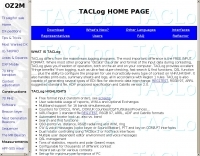 TACLog offers a distinct approach to contest logging for **VHF/UHF/SHF** operations, diverging from the rigid input formats often found in other logging applications. This software prioritizes operational freedom, allowing contesters to input data in a sequence that suits their workflow during a fast-paced event, rather than being constrained by predefined field orders. It's particularly tailored for those participating in contests governed by **Region 1 rules**, ensuring compliance with established regulations. The program's design focuses on practicality for serious contesters, providing a robust platform for managing contacts. Its support for the EDI format is a significant advantage, streamlining the process of submitting logs to contest committees and facilitating data exchange within the amateur radio community. My experience with various logging tools confirms that flexibility in data entry can dramatically improve efficiency during multi-operator or high-rate single-operator contests, where every second counts.
-
 Twenty-four repeaters, including D-STAR and Fusion systems, are maintained and operated by MARCA Inc., primarily located on Arizona mountaintops and around the Phoenix metropolitan area. The organization, holding the callsign _W7MOT_, facilitates a wide range of amateur radio activities, such as ARRL Field Day events near Forest Lakes, Arizona, and participation in ARRL FMT contests. Members engage in antenna experimentation, construction, and maintenance trips to repeater sites. The club's interests span diverse topics, including HF voice, digital modes like _WSPR_, _WSJT-X_ (FT8, FT4), and CW, alongside DXing, MESH networking, and EOC operations. It supports technologies from SDR radio building to antique radio restoration and computer-based operations like Echolink, fostering a Single Board Computer (SBC) and Raspberry Pi group. Monthly meetings, held on the third Tuesday, feature business discussions and guest presentations, with informal summer gatherings and an annual holiday dinner in December. Monthly VE testing sessions for Technician, General, and Extra Class licenses are conducted by Ray Vasquez, K4RMV. Post-meeting discussions often cover specialized interests such as repeater operations, technical topics, D-STAR, SDR, APRS, Fusion, and Raspberry Pi projects.
-
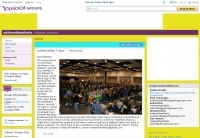 Hundreds of ham radio operators in the US Midwest rely on regional hamfests for equipment sales, technical presentations, and social interaction. This Yahoo Groups forum serves as a dedicated platform for promoting these events, allowing organizers to post announcements and attendees to find information on upcoming gatherings. The group's focus is specifically on hamfests within the Midwest, facilitating local and regional participation in these important amateur radio activities. The platform enables members to share details about various hamfest activities, including flea markets, vendor exhibits, and license examination sessions. While the group primarily functions as an announcement board, it also supports community discussion related to event planning and attendance. The resource helps hams locate nearby events, fostering engagement within the Midwest amateur radio community.
-
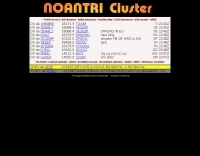 The Noantri WebCLX presents real-time DX spots, including frequency, DX callsign, country, and comments, facilitating active DXing and contesting. It operates as a web-based cluster, offering an alternative to traditional Telnet clusters for accessing spotting data. The interface displays current UTC, allowing operators to track propagation and activity across various amateur bands. This service is maintained by the _Noantri DX Group ARI Roma_, indicating its origin within the Italian amateur radio community. It supports the dynamic exchange of DX information, crucial for operators seeking new entities or participating in competitive events. Key features include the display of spots for modes like FT8, and it functions as a DXSpider-based system, providing a robust platform for **DX spotting** and **propagation analysis**.
-
 You'll find information about the club, membership, our newsletter, the BARC repeaters, and special club events.
-
 Radio 2 Radio broadcasts amateur & HAM radio news and current events from around the world.
-
 The Club Radio Amateur de Québec (CRAQ) is a prominent amateur radio club based in Québec, Canada, dedicated to fostering interest and participation in amateur radio. It provides a platform for local hams to connect, share knowledge, and engage in various radio-related activities, including **DXing**, contesting, and technical experimentation. The club supports its members through regular meetings, technical presentations, and organized operating events, aiming to enhance their skills and enjoyment of the hobby. CRAQ also plays a role in public service communications, often collaborating with local authorities for emergency preparedness and response. CRAQ's activities include operating club stations, organizing **field day** events, and offering training sessions for new licensees. Members frequently participate in provincial and national contests, contributing to the club's competitive standing. The club maintains a network of repeaters, providing reliable local communication infrastructure for its members and the broader amateur radio community in the Québec area. These resources facilitate daily QSO traffic and serve as critical links during community service operations.
-
 The Medina County Amateur Radio Corporation (MCARC) is an amateur radio club based in Medina County, Texas, dedicated to promoting the hobby and providing community support. The organization actively participates in events such as **Winter Field Day 2024**, demonstrating operational readiness and emergency communications capabilities. MCARC focuses on fostering camaraderie among local hams and engaging in various on-air activities, contributing to the overall health of the amateur radio community in its region. The club's activities include regular meetings and participation in significant operating events, which serve to enhance members' technical skills and operational proficiency. By organizing and engaging in events like Field Day, MCARC members gain practical experience in setting up and operating portable stations, often under challenging conditions. This hands-on experience is crucial for developing robust **emergency communications** skills, which are vital for supporting local communities during times of need.
-
 A cavity filter, often a critical component in _duplexer_ designs, functions as a sharply tuned resonant circuit, allowing only specific frequencies to pass while attenuating others. These filters are essential for maintaining signal integrity in environments where multiple transmitters and receivers operate simultaneously on closely spaced frequencies, such as in repeater stations. The article details how these filters, sometimes referred to as _notch filters_, achieve high Q factors, which are crucial for their performance. Understanding the principles of cavity filters is fundamental for any amateur radio operator involved in repeater operation or designing custom RF front-ends. The discussion covers the basic circuitry and operational characteristics that enable these devices to provide significant isolation, often achieving **-80 dB** or more between transmit and receive paths. This level of isolation is vital for preventing receiver desensitization and intermodulation distortion. Properly tuned cavity filters ensure that a repeater can transmit and receive simultaneously on different frequencies without self-interference, a common challenge in VHF/UHF operations.
-
 The Yolo Amateur Radio Society (YARS) is primarily a public service oriented club assisting with communications for many public events around the Sacramento Valley.
-
 The Utility DXers Forum (UDXF) provides a centralized platform for exchanging news and information concerning utility radio stations and signals operating within the 0 to 30 MHz spectrum. It specifically excludes broadcasting, pirate, and amateur radio transmissions, concentrating instead on a diverse array of other signals. The resource details the types of stations covered, including maritime coastal and ship stations, aeronautical ground and aircraft communications (voice, HFDL, Selcalls, Volmet), military operations, various beacons (NDB, driftnet, propagation, pirate, high-frequency), fax transmissions, numbers stations, diplomatic communications, clandestines, and other unusual signals. Further content addresses radar systems such as Over-the-Horizon, Ocean Wave, and CODAR, alongside ionosondes, chirpsounders, ALE-systems, Selcall-systems, and tone calls. Experimental stations and standard frequency and time stations are also within its scope. The forum also acknowledges utility radio-related amateur events like the International Lighthouse Weekend and Night of Nights, providing a broader context for listeners. The site offers sections for modes, hardware, software, a utility radio archive, digital BC & HF conditions, and a utility radio club archive, along with QSLs and pennants.
-
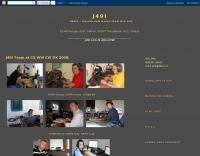 J49I operated from Crete Island (EU-015, KM25PH) during the 2008 _CQ WW DX CW Contest_, focusing on multi-operator category participation. The station's activity centered on maximizing contacts and multiplier acquisition across various HF bands during the competitive event. Operators aimed to achieve a high score by leveraging the island's DXCC entity status. The team, comprising Greek and Italian amateur radio operators, utilized the J49I callsign for this specific contest operation. Their efforts contributed to the overall contest results for the 2008 CW segment, with logs submitted reflecting their performance from the European continent.
-
 The Breeze Shooters is an amateur radio organization based in Western Pennsylvania, established in 1937 by a group of local hams. The club's initial focus was on fostering camaraderie and promoting amateur radio activities among its members. Over the decades, its membership has grown significantly, at one point exceeding 1,800 individuals, making it one of the larger regional ham radio clubs. The organization maintains a casual operational structure, emphasizing member participation in various aspects of the hobby rather than strict formal governance. The club actively supports and organizes events such as the annual Breeze Shooters Hamfest, a significant gathering for the amateur radio community in the region. Members frequently engage in contesting, DXing, and local emergency communications support. The club's history includes a strong tradition of mentoring new hams and providing a platform for experienced operators to share knowledge and resources. Its enduring presence in Western Pennsylvania underscores its role in sustaining local amateur radio interest and activity.
-
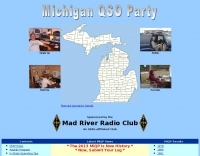 Participating in state QSO parties offers a focused opportunity for amateur radio operators to make contacts within a specific geographic area, often aiming to work all counties or administrative divisions. The Michigan QSO Party (MiQP) serves as an annual event where hams worldwide can connect with stations located in Michigan, contributing to county totals and overall scores. This resource provides the official rules, historical results, and information on planned operations, enabling participants to prepare effectively for the contest. Contesters can access details on scoring, exchange requirements, and various operating categories, ensuring compliance with the _Mad River Radio Club_ (MRRC) sponsored event. The site also offers downloadable Michigan county maps, a crucial tool for those pursuing county hunting awards or planning their operating strategy to maximize **multipliers**. Beyond the contest specifics, the platform facilitates community engagement through a link to the official groups.io mailing list, fostering interaction among participants and organizers. It also directs newcomers to the _ARRL_ for general amateur radio licensing information.
-
 Six meter club of chicago smcc amateur radiomembers interested in hf/vhf/uhf, special events and public service
-
 This resource documents numerous QRP (low power) portable amateur radio operations conducted by W1PID, Jim Cluett, primarily from various outdoor locations in New Hampshire. The content includes detailed accounts, photographs, and operational specifics for over 350 individual "QRP Adventures," often involving hiking, biking, or kayaking to remote sites. Each entry typically highlights the location, date, bands and modes used (frequently CW on HF), and notable DX contacts made with minimal power, sometimes as low as 200mW WSPR. The site serves as a chronicle of practical QRP field operation, demonstrating successful DXing and contesting from challenging environments. It showcases diverse operating scenarios, from mountaintops like Cannon Mountain and Knox Mountain to lakeshores, riverbanks, and even marine mobile operations. The documented contacts span numerous DXCC entities across Europe, Asia, and the Americas, providing empirical evidence of QRP's efficacy in varied propagation conditions and terrains. Specific events like the Worked All Germany contest, 13 Colonies Event, and CWT sprints are also featured.
-
 The **Arlington Amateur Radio Club** (K5SLD) website details club activities, including a weekly Taco Tuesday net on their 147.140 MHz repeater with a 110.9 Hz PL tone. The club, organized in July 1955 by 22 hams, also hosts monthly dining events and promotes Community Emergency Response Team (CERT) training through the Arlington Fire Department. Membership renewal information for 2026 dues is prominently featured, with an online payment option and a donation button available on the "Pay Dues" page. Club communications extend to a dedicated Facebook page for members and the wider amateur radio community. The site lists upcoming contests and encourages participation in local events. The 2-meter repeater net is open to all, fostering local camaraderie and technical exchange among hams in the Arlington, Texas area, regardless of club affiliation.
-
 Amateur radio clubs provide essential local support and foster community engagement for radio operators. The VE2CLM website serves as the online presence for the Club Radio Amateur de la Rive Sud de Montreal, offering information about club activities, events, and membership. It details upcoming gatherings such as monthly member meetings and the annual **Hamfest**, a significant event for local hams to connect and exchange gear. The site also features recaps of past events, including a video from **Field Day 2022**, showcasing the club's participation in emergency preparedness exercises and outdoor operations. The resource highlights the club's focus on regular interaction and event organization, with specific dates mentioned for future activities like the April 9, 2026, monthly meeting and the October 18, 2025, Hamfest. By documenting these events, the club demonstrates its commitment to active participation in the amateur radio community. The content provides practical information for members and prospective members interested in local ham radio operations and social events within the Quebec region.
-
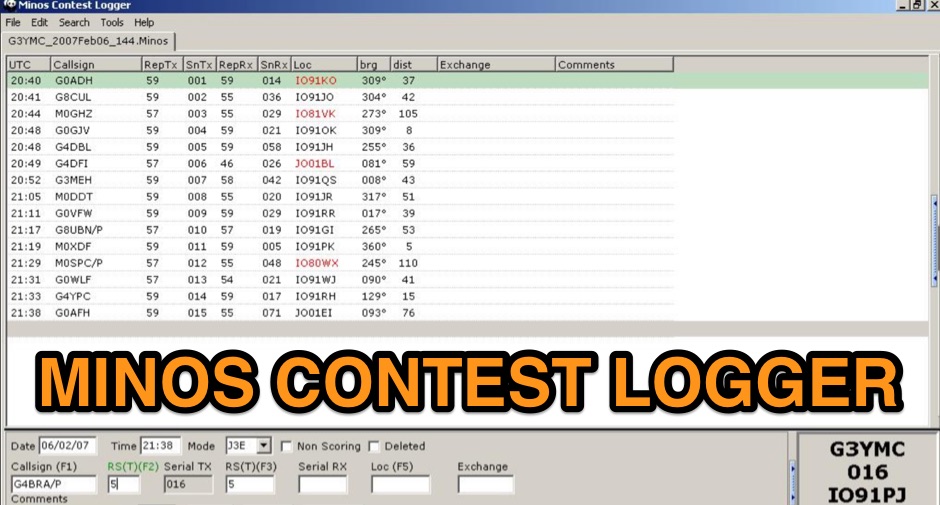 Minos Contest Logging Software, a contest logging suite for VHF and UHF Amateur Radio Contests, Minos offers support for most RSGB and Region 1 events
-
 The Malaysian Amateur Radio Transmitters' Society (MARTS) serves as the national representative body for amateur radio operators across Malaysia, having been established in 1952. This organization plays a crucial role in advocating for the interests of Malaysian hams, fostering community engagement, and supporting the growth of the amateur radio service within the country. MARTS actively participates in national and international amateur radio affairs, often collaborating with organizations like the _International Amateur Radio Union_ (IARU) to ensure the continued development and recognition of amateur radio. The society's activities encompass a range of services for its members, including the dissemination of information regarding licensing, operating procedures, and technical advancements. MARTS also facilitates various on-air events and provides resources to help members improve their operating skills and expand their knowledge base. The organization's long-standing presence since 1952 underscores its commitment to the amateur radio community in Malaysia. MARTS supports local clubs and individual operators, promoting best practices in radio communication and emergency preparedness.
-
 The Alcorn County ARES group provides crucial **emergency communications** support within Alcorn County, Mississippi, operating under the Amateur Radio Emergency Service framework. This organization mobilizes licensed amateur radio operators to assist public safety agencies during emergencies, natural disasters, and other critical events when conventional communication infrastructure fails or becomes overloaded. Their activities include regular training exercises, participation in local drills, and maintaining readiness to deploy communication assets. Members engage in various aspects of amateur radio, including voice, digital modes, and message handling, ensuring a robust and redundant communication network. The group's focus on preparedness and community service aligns with the core principles of ARES, emphasizing rapid response and effective information relay during crises. They often collaborate with local emergency management agencies, such as the Alcorn County Emergency Management Agency, to integrate amateur radio capabilities into broader disaster response plans. Dustin Brumfield, KD5LAP, serves as the Public Information Officer, facilitating outreach and coordination. The club's operational area is specifically Alcorn County, Mississippi, contributing to local resilience.
-
 Explains the annual Jamboree on the Air (JOTA) event, a global amateur radio gathering for Scouts and Guides. This activity connects young people worldwide through ham radio, fostering international friendship and introducing them to radio communication technology. Participants use various amateur radio bands and modes, including HF, VHF, and digital modes like FT8 and JS8Call, to make contacts with other JOTA stations and learn about the hobby. The ARRL provides resources for Scout leaders and amateur radio operators interested in hosting a JOTA station, including guidelines for setting up temporary stations, safety protocols, and educational materials. The event typically occurs on the third full weekend of October, aligning with the World Organization of the Scout Movement's (WOSM) global schedule. JOTA emphasizes hands-on experience with radio equipment, antenna theory, and basic operating procedures. It serves as a significant public service opportunity for hams to engage with youth and promote the educational aspects of amateur radio.
-
 The Mississippi QSO Party, sponsored by the Mississippi Section of the ARRL, offers a prime opportunity for hams worldwide to make contact with Mississippi stations. This annual event encourages both in-state and out-of-state operators to activate Mississippi counties, promoting activity across the Magnolia State's diverse geographic regions. Participants often operate from various locations, including parks and historical sites, contributing to the unique character of the contacts. Operators typically utilize a mix of HF and VHF bands, employing CW, SSB, and digital modes to maximize their QSO count and multiplier acquisition. The exchange usually involves a signal report and county for Mississippi stations, or state/province/country for others. Results are compiled and published, recognizing top scorers in various categories and encouraging friendly competition among participants. The event serves as a significant annual gathering point for the Mississippi amateur radio community, fostering camaraderie and operational skill development.
-
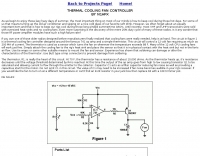 The N1HFX thermal cooling fan controller project details a practical circuit designed to manage cooling fan operation based on temperature, a common requirement for high-power amateur radio equipment. This build utilizes a **LM34** temperature sensor, providing a linear voltage output directly proportional to Fahrenheit degrees, simplifying the control logic. The circuit's core functionality involves a comparator that activates the fan when a preset temperature threshold is exceeded, ensuring efficient cooling and reducing unnecessary fan noise. This controller is particularly useful for amplifiers, power supplies, or transceivers that generate significant heat during operation. The design incorporates a _TIP120 Darlington transistor_ to drive the fan, capable of handling up to 5 amps, making it suitable for a range of fan sizes and current requirements. Field results indicate stable temperature regulation, preventing thermal runaway in enclosed environments. Construction involves readily available components, making it an accessible project for hams looking to optimize their station's thermal management.
-
 The page provides information about the activities and events of the El Dorado County Amateur Radio Club in California, including meeting schedules, field day updates, and presentations by club members.
-
 Demonstrates the community-driven mission of the McKinney Amateur Radio Club (MARC), a North Texas organization dedicated to advancing amateur radio. The club actively promotes continuous learning, encouraging technical innovation among its members, and provides avenues for public service engagement, skill enhancement, and global connectivity with fellow operators. MARC hosts weekly breakfast discussions every Saturday at 7:30 AM at IHOP in McKinney, Texas, covering diverse topics and offering a Q&A forum. The club emphasizes emergency communication preparedness, antenna design and tuning, and the science of global radio wave propagation, crucial for clear amateur radio contacts. Furthermore, MARC explores modern radio technologies, including digital modes and _Software-Defined Radio_ (SDR), blending traditional amateur radio with cutting-edge advancements. The club also facilitates license testing sessions, hands-on training, and participates in events like _Field Day_ to hone emergency communication skills.
-
 Fostering community spirit and recognizing contributions within amateur radio clubs often involves tangible tokens of appreciation. **Challenge coins** have emerged as a popular and effective method for achieving these goals, providing a unique way for clubs to acknowledge member participation and milestones. These custom-designed coins can reflect a club's specific identity and achievements, serving as a physical representation of membership and dedication. Clubs can utilize these coins for various purposes, including recognizing membership renewals, commemorating event participation like Field Day, or even as a fundraising mechanism to support club activities and repeater funds. The customization options extend to plating and color, allowing for different tiers of recognition, such as bronze for general membership, silver for life members, or gold for special awards presented by club officers. This flexibility makes them a versatile tool for enhancing engagement. Beyond traditional amateur radio clubs, organizations like the **Military Auxiliary Radio System (MARS)** also benefit significantly from challenge coins, reinforcing their connection to the broader military and amateur radio communities. The production process is simplified with artwork assistance, ensuring clubs can easily bring their unique designs to fruition.
-
 Details the Big Thunder Amateur Radio Club (BTARC), a long-standing amateur radio organization based in Boone County, Illinois, established in 1962. It covers the club's mission to enhance the skills of local hams, promote radio knowledge, and foster social interaction among operators. The resource outlines BTARC's commitment to community service, including emergency communications support through RACES, and its active participation in events like Field Day, fox hunts, and public service communications for local races. Explains the club's history, including the establishment of its first repeater in the 1970s by members WD9JGH, Mike George, K9ORU, and Claude Horsman, WB9PMM, using a VHF Engineering kit and a Sinclair duplexer. It provides specifications for two club-maintained FM repeaters: a 2-meter repeater on 147.375 MHz (+600 KHz shift, 100.0 Hz PL tone) and a 70-cm repeater on 442.825 MHz (+5 MHz shift, 114.8 Hz PL tone). The club hosts a weekly 2-meter net on Sundays at 7:00 PM local time and holds monthly meetings on the second Thursday at the Spring Township Building in Belvidere, IL.
-
 The Union Métropolitaine des Sans-filistes de Montréal (UMS) operates daily nets on **VE2REM** 147.015+ T103.5, **VE2RYV** 146.655- T141.3, and **VE2RVK** 145.430- T141.3, alongside Echolink VE2UMS-L and DMR TG302273. This Montreal-based club, representing hundreds of radio amateurs, provides information for those interested in amateur radio and serves as a communication hub for its members, including a regularly visited ham radio flea market section. The site also highlights significant club initiatives like the AREDN Mesh Network modernization project and an innovative after-school program. The UMS website details upcoming events such as the 2026 sugar shack invitation, Field Day 2025, and monthly meetings scheduled for September 18, 2024. It also features a live log sheet section and a WEB SDR, offering practical tools for members and visitors. The club's president, Bruno VE2VK, extends a welcome, emphasizing the UMS's role in fostering amateur radio in the greater Montreal region, with contact information provided for inquiries.
-
 Over 1900 ARISS school events have been conducted since 2000, facilitating amateur radio contacts between students and ISS crew members. This resource details the Amateur Radio on the International Space Station (ARISS) program, outlining scheduled contacts, operational procedures, and application processes for educational institutions worldwide. It lists specific upcoming contacts, such as those with Lewis Center for Educational Research in California and Vauban, Ecole et Lycée français de Luxembourg, typically operating on a 145.800 MHz downlink frequency. The content also provides crucial guidelines for radio amateurs, emphasizing the importance of not interfering with scheduled school contacts and utilizing the crossband repeater for general QSOs when available. It clarifies crew availability for casual contacts, noting that astronauts are usually free during personal time, approximately one hour after waking and one hour before sleeping, and often on weekends. Constraints on scheduling, such as avoiding EVA weeks and specific crew rest periods, are also detailed. Furthermore, the resource includes historical statistics on direct versus telebridge contacts, QSL information, and links to related ARISS, AMSAT, ARRL, and NASA websites. It also provides information on applying to host an ARISS contact for schools and youth organizations in various regions, including the United States, Europe, Africa, the Middle East, Canada, Central and South America, Asia, and Australia.
-
 The Kitchener Waterloo Amateur Radio Club (KWARC) website provides a central hub for its members and the broader amateur radio community, detailing club activities, meeting schedules, and special events. It features a monthly newsletter, the _Kilowatter_, which archives club news and technical articles, offering insights into local amateur radio operations and projects. The site also includes information on the club's repeaters, operating on various bands, and details about the annual _Central Ontario Hamfest_. Content covers diverse aspects of the hobby, from general interest articles to specific technical discussions. The resource serves as a primary communication channel for KWARC, facilitating member engagement and disseminating information about club-sponsored activities like field days and public service events. It also lists contact information for club executives and provides resources for new licensees.
-
 UN Amateur Radio News, curated by Artur UN6QC, presents information relevant to Kazakh radio amateurs, including details on their account activity and participation in **WFF Kazakhstan** expeditions. The resource also documents various diplomas issued within Kazakhstan, such as those related to WFF Kazakhstan and special programs like the "50th Anniversary of the first manned space flight by Yuri Gagarin" and "The Columbus of the Cosmos" Award. It aggregates international ham radio news and maintains a calendar of international HAM competitions. The site, operational since May 14, 2010, serves as a central point for information on HAM competitions organized in Kazakhstan. It also references external resources like WWW.CQHAM.KZ for award details and WWW.EQSL.KZ for UN EQSL services. The platform aims to be a useful hub for both local and international amateur radio enthusiasts interested in Kazakh-specific operations and awards. Key events like the **UN DX Contest** and the First UN Field Day, held May 19-20, 2012, are highlighted.
-
 The International Lighthouse/Lightship Weekend (ILLW) is an annual amateur radio operating event, typically held on the third full weekend in August, spanning **48 hours**. Originating in 1998 as the _Scottish Northern Lights Award_ by the Ayr Amateur Radio Group, the ILLW has evolved into a major international event. It encourages amateur radio operators to activate stations from lighthouses and lightships worldwide, fostering contacts and promoting maritime heritage. The event is characterized by its minimal rules, making it accessible and enjoyable for participants without the competitive pressure of traditional contests. Over 500 lighthouse entries from more than **40 countries** participate annually, contributing to August becoming recognized as "Lighthouse Month" within the amateur radio community. Unlike typical contests, the ILLW emphasizes participation and enjoyment over scoring or prizes for high contact counts. The site provides registration forms, entrant lists for upcoming years like 2026 and 2027, and reports from previous events, alongside historical context for the ILLW and related lighthouse activities such as the US National Lighthouse Week and the International Lighthouse Heritage Weekend.
-
 Sent every Saturday, Amateur Radio Weekly is an email newsletter containing links to the most relevant news, projects, technology, and events happening in Ham Radio
-
 The Barrow Amateur Radio Emergency Service Club (BARES) serves as a local hub for amateur radio operators in Barrow County, Georgia, focusing on community engagement and emergency preparedness. Established in 2007, the club provides a platform for hams to connect, share knowledge, and participate in various radio activities. Members often engage in public service events, offering communications support, and conduct regular meetings to discuss technical topics and operational procedures. BARES emphasizes the importance of emergency communications, with members frequently training for and participating in simulated emergency tests (SETs) and real-world disaster response scenarios. The club maintains a focus on local area coverage, ensuring reliable communication infrastructure is available when traditional systems fail. Their activities often involve operating on _VHF_ and _UHF_ bands for local nets and _HF_ for longer-distance emergency coordination. Key activities include field day operations, technical workshops, and supporting local events with radio communications.
-
 Operating as a hub for its members, the Club Radioamateur Sorel-Tracy VE2CBS Inc. website provides essential information regarding club activities, membership management, and technical resources. It features articles on topics such as **D-STAR** digital voice mode training, offering a multi-capsule course for members to understand, configure, and effectively use D-STAR with ICOM equipment, including callsign routing and reflector connections. The site also details access to member cards, renewal processes, and upcoming events like the annual HAMFEST, which serves as a significant gathering for local radio amateurs. Beyond club-specific news, the site curates information on useful amateur radio tools and technologies, exemplified by articles on **HamClock** for propagation and satellite tracking, and a quick guide to Meshtastic for LoRa-based mesh networking. These resources aim to support members in exploring modern digital modes and enhancing their station operations, reflecting the club's commitment to fostering technical knowledge and community engagement within the Sorel-Tracy amateur radio scene.
-
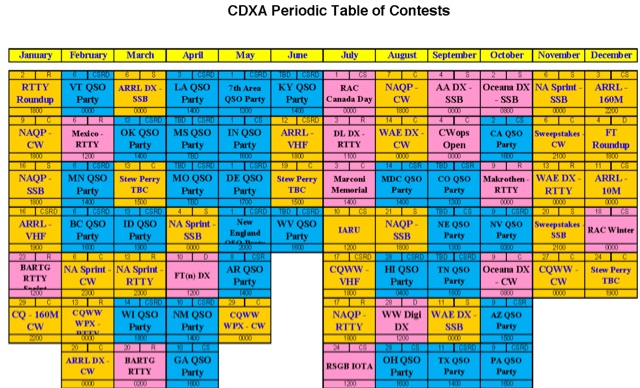 Presents the Carolina DX Association's (CDXA) _Contest Corner_, a dedicated resource for amateur radio contesting activities. It features a curated contest calendar, linking to external resources such as the _WA7BNM Contest Calendar_ and the _ARRL Contest Calendar_, providing a broad overview of upcoming events. The page also details CDXA's internal contest programs, including the "CDXA DX King" and "CDXA DX King Classic" for 2026, with specific links for members to submit their scores. Furthermore, the resource integrates with _3830Scores.com_, encouraging CDXA members to submit their contest results and select the club affiliation for tracking. It provides a direct link to view aggregated scores from participating CDXA members, fostering club competition and recognition. The "CDXA Periodic Table of Contest - 2026" is also mentioned, indicating a structured approach to contest planning for the year.
-
 The Order of Boiled Owls of New York (OBONY) serves as a dedicated hub for amateur radio operators passionate about contesting and DXing. Founded to promote skill development and camaraderie within the competitive ham radio sphere, OBONY members actively participate in major domestic and international contests, striving for top scores and _DXCC_ achievements. The club provides a platform for exchanging operational strategies, technical insights, and logging practices, which are crucial for success in high-stakes events. OBONY's focus extends to fostering a vibrant community where both seasoned contesters and newer operators can learn and grow. They emphasize the importance of ethical operating practices and technical proficiency, contributing to the overall advancement of the amateur radio hobby. Members frequently achieve impressive results, with many logging **thousands of QSOs** during major events and consistently placing well in various categories.
-
 The I2YSB DXpedition Team presents a collection of videos documenting their past DXpedition activities. These visual records offer insights into the operational aspects, equipment deployed, and environmental conditions encountered during various DXpedition events. The resource also contains a specific announcement regarding the cancellation of the planned Ghana AF-084 DXpedition, originally scheduled for April. It further details the refund process for sponsors who had contributed donations for the cancelled operation. The content serves as an archive of DXpedition experiences, showcasing the efforts involved in activating rare or challenging entities. It provides a historical perspective on the team's operations and logistical considerations. The site also functions as a communication channel for important updates concerning future or cancelled DXpedition plans, directly addressing the amateur radio community interested in their activities.
-
 Producers of custom name tags, luggage tags, club badges, Employee Name Tags, Special Event Badges, but also Comtech Amateur Radio Television Transmitters and Receivers D480 filters, Video cameras and accessories.
-
 Examines common health challenges encountered during air travel, offering practical advice for mitigating risks and maintaining well-being. It addresses issues such as _deep vein thrombosis_ (DVT), dehydration, and jet lag, providing actionable strategies for prevention and management. The resource details specific exercises to perform in-flight, recommends hydration techniques, and suggests methods for adjusting sleep cycles to new time zones. It also covers considerations for travelers with pre-existing medical conditions, emphasizing the importance of consulting healthcare providers before long-haul flights. Practical tips for packing essential medications and managing stress during travel are included, aiming to ensure a smoother and healthier journey. The site emphasizes proactive health measures, helping travelers arrive at their destination feeling refreshed and ready for activity, whether for business or pleasure. It does not contain amateur radio content.
-
 Radio Amateurs of Greater Syracuse is an organization involved in promoting public service, fellowship, and ham radio in general, in the Syracuse, NY area. This site provides information, news and events of interest to hams in Central New York.