Search results
Query: web radio
Links: 675 | Categories: 25
Categories
- Antennas > CobWebb
- Internet and Radio > Web Rings
- Internet and Radio > Web Cams
- Internet and Radio > WebSDR
- DX Resources > DX Peditions > 2010 DXpeditions
- DX Resources > DX Peditions > 2011 DXpeditions
- DX Resources > DX Peditions > 2012 DXpeditions
- DX Resources > DX Peditions > 2014 DXpeditions
- DX Resources > DX Peditions > 2017 DXpeditions
- DX Resources > DX Peditions > 2026 DXpeditions
- Ham Radio > Clubs > North America > USA > Arkansas
- Ham Radio > Personal Pages > Brazil
- DX Resources > Contest > Contest Stations
- Manufacturers > Transceivers > Icom
- Shopping and Services > Internet services
- Ham Radio > Personal Pages > Europe > Italy
- Ham Radio > Blogs > Asia > Japan
- Manufacturers > Transceivers > Kenwood
- DX Resources > Ham Radio Awards > Lighthouses Awards
- Internet and Radio > Live streaming
- DX Resources > Clusters > Mobile DX Cluster
- Ham Radio > Personal Pages
- Radio Equipment > Scanners
- Internet and Radio > Tutorials
- Ham Radio > Personal Pages > USA
-
 Amateur radio HSMM High Speed Multimedia, data and voice at ARRL website
 -
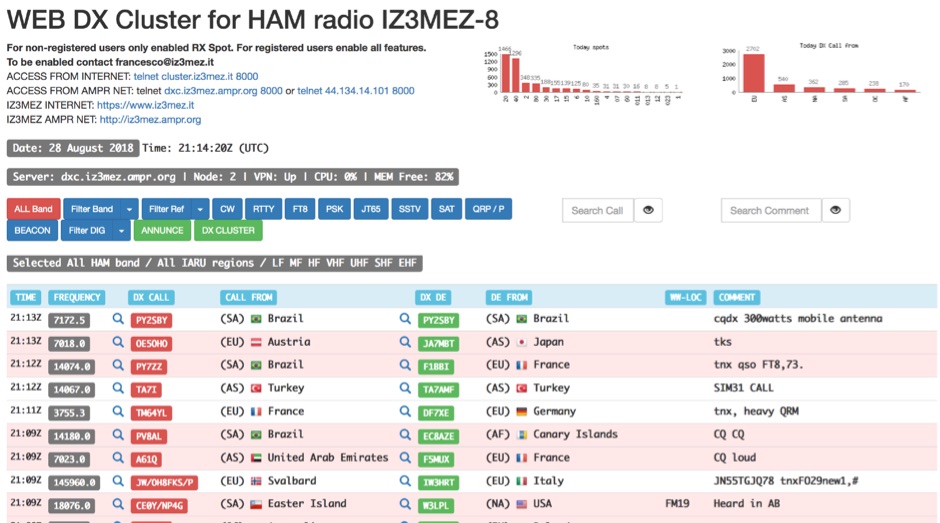 The IZ3MEZ Web DX Cluster presents real-time amateur radio DX spots across 20 distinct frequency bands, spanning from **LF (2190m)** at 135.7 kHz up to **SHF (QO-100)** at 10499 MHz. It displays the DX callsign, frequency, DXCC entity, spotter callsign, and spotter DXCC entity, along with any accompanying comments. The cluster also lists various operating modes such as CW, RTTY, FT8, FT4, FT2, PSK, and SSTV, and supports special operating activities like QRP/P and specific award programs including IOTA, POTA, SOTA, WCA, and JOTA. The cluster's interface provides a dynamic feed of the latest 50 spots, continuously updated with precise timestamps. It offers direct **Telnet protocol** access for users preferring a command-line interface, with configuration instructions provided. The resource also integrates with other spotting networks like RBN and PSK Reporter, enhancing its utility for DXers and contesters seeking propagation information and activity monitoring across a broad spectrum of amateur radio frequencies.
 -
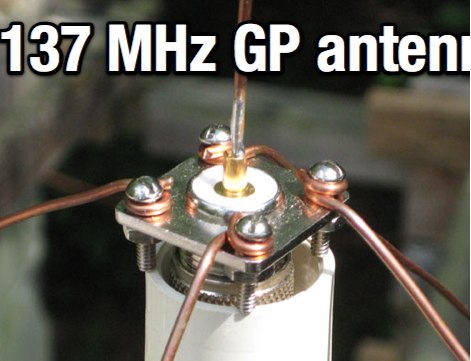 NOAA-19 APT Recption using GNU Radio and a FUNcube Dongle
 -
 QTH.COM by KA9FOX offer classified swap ads for amateur radio and web design along to evoluted web hosting
 -
 Welcome to the KC Club of Fort Worth, W5SH Website. Ham Radio fun for all.
 -
 The official web site for the santa clarita amateur radio club.
 -
 The NCSU Student Amateur Radio Society (W4ATC StARS) is a group of men and women who practice the hobby ofamateur radio. We represent a wide range demographics, of majors, and of interests.
 -
 Home of the Radio Teacher Project Website, study guides, class documents and videos to be used by instructors
 -
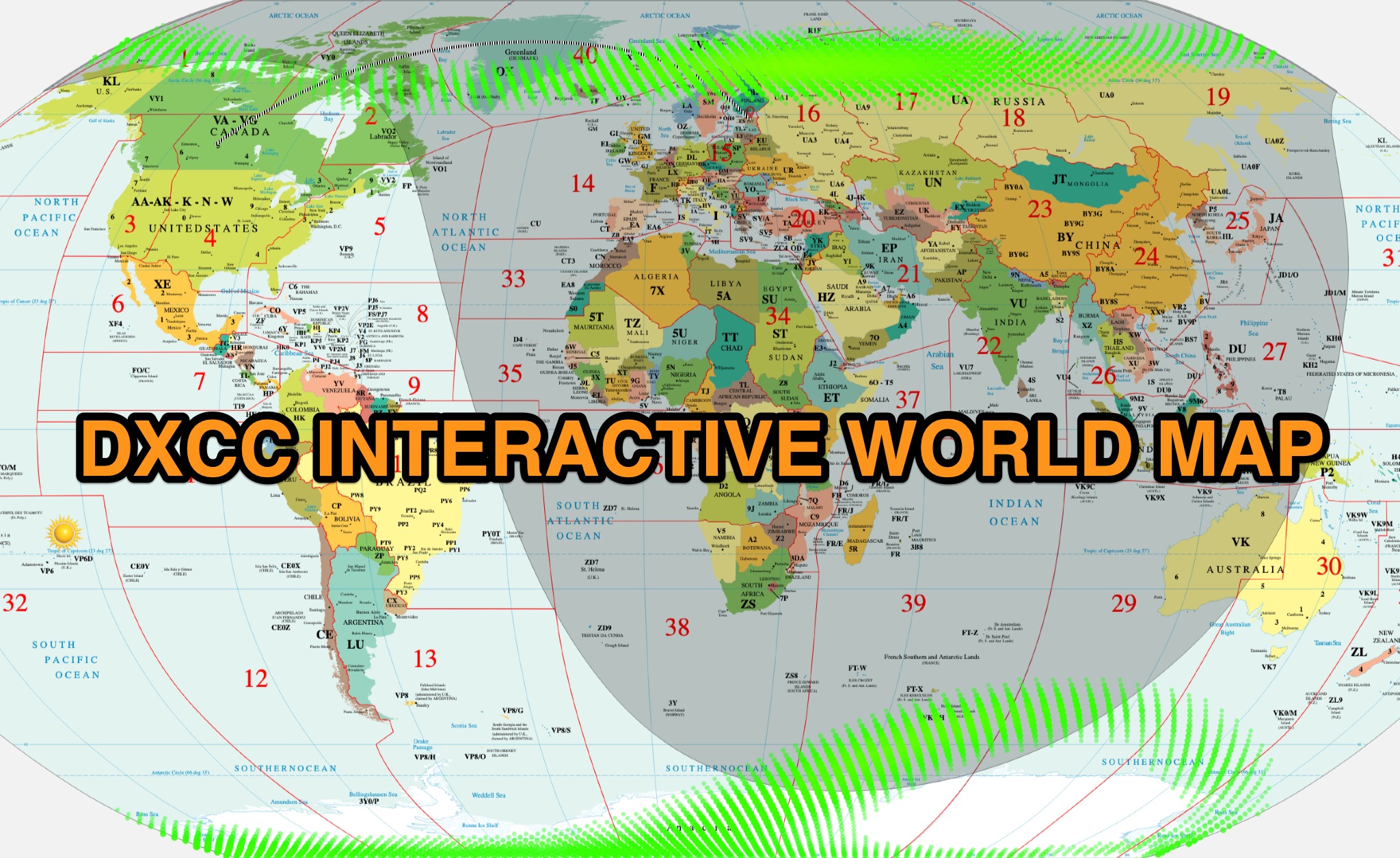 The DXCC World Map web application is a modern and interactive mapping tool designed for shortwave radio enthusiasts. It showcases a high-quality world map along with the Sun's position, sunrise and sunset times, the terminator, coordinates, QTH locator, azimuth, azimuth map, current DXCC list, Aurora, and WWV Geophysical Alert Messages. Additionally, it provides the SFI, X-Ray, Kp, and Ap indices.
 -
 Radio Amateur WEB TV, Streams for and from ATV repeaters, Live streams for and from events, Amateur Webcams from holland
 -
 Managed by k3tkj, offer to ham radio operators free space for web pages and email forwarding.
 -
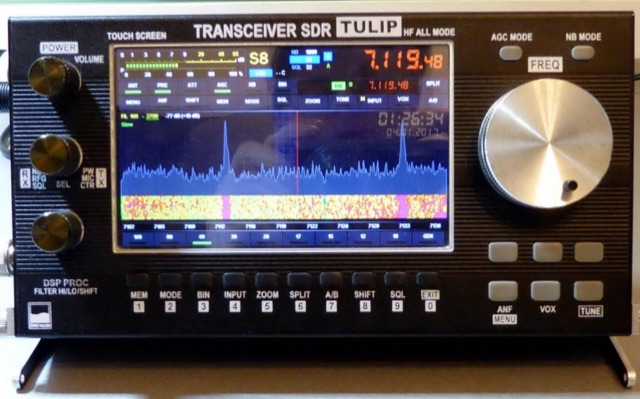 SDR Project for a compact amateur radio software defined radio trasceiver covering HF bands all mode. Website includes schematics, element PCB, pictures, movies, firmware and elements bom.
 -
 Offers irlp echolink node in tulare county california
 -
 IZ5CML, Enrico Giannerini, obtained his amateur radio license in 1998, achieving DXCC contacts with all entities over 18 years of activity. His station, located in Empoli, Tuscany, Italy, focuses on HF and 50 MHz operations, primarily using SSB, CW, and some RTTY. He emphasizes direct radio communication, preferring "human modes" over digital modes like FT8/4, which he views as detaching the operator from the signal. Enrico's operating interests include DXing, IOTA activations, and major HF contests, where he has participated both individually and with teams like IQ5LV and IO5O. Notable activations include Sao Miguel and Flores (CU8, EU-089) in the Azores in 2005, and Antiparos and Paros (EU-067) in Greece in 2006 and 2014. He also contributes to the Hamradioweb forum, promoting good operating practices and publishing the monthly "Dxschedule" for upcoming DX and contest activities. The website includes a blog with articles on DX, ionospheric propagation, and antennas, reflecting his long-standing passion for radio, sparked by the 1980s film "La Tenda Rossa" and years as an SWL.
 -
 This document has been produced by examining the data going into and coming out of the TH-D7 HT from Kenwood.
 -
 TA2MOG (HB9TOW) website. Ham and CB radio pages in Turkish, forum, with a summary English section. Info in visiting Turkey.
 -
 HSC Club official web page
 -
 The site for dxers who like to travel The F in DXFC stands for Feet: countries in which you have stepped foot. This is for licensed radio amateurs who like travelling.
 -
 Ham radio and cb radio italian only web site dedicated to amateur radio and citizens band
 -
 Free forum Nottinghams own ukcb forum, all posts are CB radio related and are part of the ukcb.tripod.com website
 -
 The **Arlington Amateur Radio Club** (K5SLD) website details club activities, including a weekly Taco Tuesday net on their 147.140 MHz repeater with a 110.9 Hz PL tone. The club, organized in July 1955 by 22 hams, also hosts monthly dining events and promotes Community Emergency Response Team (CERT) training through the Arlington Fire Department. Membership renewal information for 2026 dues is prominently featured, with an online payment option and a donation button available on the "Pay Dues" page. Club communications extend to a dedicated Facebook page for members and the wider amateur radio community. The site lists upcoming contests and encourages participation in local events. The 2-meter repeater net is open to all, fostering local camaraderie and technical exchange among hams in the Arlington, Texas area, regardless of club affiliation.
 -
 The alabama historical radio society - come visit our website and museum where we have a large collection of antique radios. our club does coil winding, has a large library, and a wealth of knowledge in our members.
 -
 The _Alessandro Volta RTTY Contest_ is an annual digital mode competition focusing on Radioteletype (RTTY) operation, challenging participants to make contacts across various HF bands. This event typically occurs in January, drawing a global field of operators aiming to maximize their QSO count and multiplier accumulation. The contest emphasizes accurate exchange of signal reports and serial numbers, with specific rules governing single operator, multi-operator, and SWL categories. Participants utilize software like _N1MM Logger+_ or _WriteLog_ to manage their logs and generate Cabrillo files for submission. Scoring is based on points per QSO, multiplied by unique DXCC entities and Italian provinces worked on each band. The contest encourages both seasoned RTTY contesters and those new to digital modes to engage in competitive HF activity, promoting skill development in digital communication. Final results and logs are typically published on the contest website, showcasing top performers and providing detailed breakdowns of scores.
 -
 Amateur Radio, SkyWarn, RACES, ARES, and more
 -
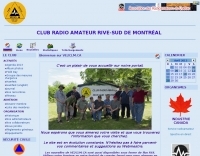 Amateur radio clubs provide essential local support and foster community engagement for radio operators. The VE2CLM website serves as the online presence for the Club Radio Amateur de la Rive Sud de Montreal, offering information about club activities, events, and membership. It details upcoming gatherings such as monthly member meetings and the annual **Hamfest**, a significant event for local hams to connect and exchange gear. The site also features recaps of past events, including a video from **Field Day 2022**, showcasing the club's participation in emergency preparedness exercises and outdoor operations. The resource highlights the club's focus on regular interaction and event organization, with specific dates mentioned for future activities like the April 9, 2026, monthly meeting and the October 18, 2025, Hamfest. By documenting these events, the club demonstrates its commitment to active participation in the amateur radio community. The content provides practical information for members and prospective members interested in local ham radio operations and social events within the Quebec region.
 -
 2012 Ham Radio HK0NA DX Pedition to Malpelo Island, official site with hk0na online log
 -
 Web Page of the Fort Smith Amateur Radio Club
 -
 K2MFF is an NJIT club that has been around since the early 1920's our main focus is to promote the further use and knowledge of Ham Radio
 -
 Office website of the PARK radio club in Halifax, Virginia. Providing emergency communications to Halifax Virginia and surrounding areas.
 -
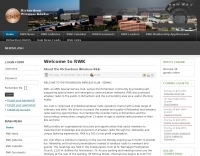 The Richardson Wireless Klub is an ARRL Special Service club of amateur radio operators based in Richardson, TX, USA.
 -
 Official website of blackwood
 -
 Highland Lakes amateur radio club web-site
 -
 The webpage discusses metal fatigue in antenna elements for radio amateurs, offering construction tips and techniques. It covers theory, tricks, and the use of baluns and coils.
 -
 Official web site of the Alaska QRP Club The AK/QRP Club is dedicated to the enjoyment of low power Amateur Radio operations.
 -
-
 This Website is your resource for learning and enhancing your Morse Code / CW Communications skill
 -
 The Union Métropolitaine des Sans-filistes de Montréal (UMS) operates daily nets on **VE2REM** 147.015+ T103.5, **VE2RYV** 146.655- T141.3, and **VE2RVK** 145.430- T141.3, alongside Echolink VE2UMS-L and DMR TG302273. This Montreal-based club, representing hundreds of radio amateurs, provides information for those interested in amateur radio and serves as a communication hub for its members, including a regularly visited ham radio flea market section. The site also highlights significant club initiatives like the AREDN Mesh Network modernization project and an innovative after-school program. The UMS website details upcoming events such as the 2026 sugar shack invitation, Field Day 2025, and monthly meetings scheduled for September 18, 2024. It also features a live log sheet section and a WEB SDR, offering practical tools for members and visitors. The club's president, Bruno VE2VK, extends a welcome, emphasizing the UMS's role in fostering amateur radio in the greater Montreal region, with contact information provided for inquiries.
 -
 Operating where independent media is suppressed, _Radio Free Europe/Radio Liberty_ (RFE/RL) delivers news and information in 27 languages to audiences in 23 countries. This resource primarily functions as a news portal, focusing on geopolitical events, regional conflicts, and human rights issues, particularly in areas like Ukraine, Russia, Iran, Afghanistan, and Central Asia. It features articles, videos, podcasts, and photo galleries, covering topics such as international relations, energy politics, and the impact of conflict on civilian populations, often highlighting the perspectives of local journalists and freelancers in challenging environments. The content frequently addresses the operational context of shortwave broadcasting, though the site itself is a digital news platform. For example, it details the implications of long-distance strikes and regional military capabilities, which are relevant to understanding the strategic importance of various communication methods. The resource also provides insights into the challenges faced by populations in areas with limited access to uncensored information, underscoring the role of independent news organizations in providing alternative narratives.
 -
 The Site contains our story, moments of our activity, notices about radio for any users etc... in italian
 -
 Welcome to Creston Valley Amateur Radio Club web site. Our club is located in Creston, British Columbia, a small town of 5,ooo residents. Creston is in the province of British Columbia, Canada
 -
 Personal web page with some electronic projects like rotator controler AVROT, SWR Mega meter and personal amateur radio information
 -
 Over 1900 ARISS school events have been conducted since 2000, facilitating amateur radio contacts between students and ISS crew members. This resource details the Amateur Radio on the International Space Station (ARISS) program, outlining scheduled contacts, operational procedures, and application processes for educational institutions worldwide. It lists specific upcoming contacts, such as those with Lewis Center for Educational Research in California and Vauban, Ecole et Lycée français de Luxembourg, typically operating on a 145.800 MHz downlink frequency. The content also provides crucial guidelines for radio amateurs, emphasizing the importance of not interfering with scheduled school contacts and utilizing the crossband repeater for general QSOs when available. It clarifies crew availability for casual contacts, noting that astronauts are usually free during personal time, approximately one hour after waking and one hour before sleeping, and often on weekends. Constraints on scheduling, such as avoiding EVA weeks and specific crew rest periods, are also detailed. Furthermore, the resource includes historical statistics on direct versus telebridge contacts, QSL information, and links to related ARISS, AMSAT, ARRL, and NASA websites. It also provides information on applying to host an ARISS contact for schools and youth organizations in various regions, including the United States, Europe, Africa, the Middle East, Canada, Central and South America, Asia, and Australia.
 -
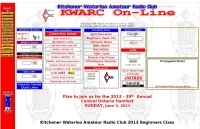 The Kitchener Waterloo Amateur Radio Club (KWARC) website provides a central hub for its members and the broader amateur radio community, detailing club activities, meeting schedules, and special events. It features a monthly newsletter, the _Kilowatter_, which archives club news and technical articles, offering insights into local amateur radio operations and projects. The site also includes information on the club's repeaters, operating on various bands, and details about the annual _Central Ontario Hamfest_. Content covers diverse aspects of the hobby, from general interest articles to specific technical discussions. The resource serves as a primary communication channel for KWARC, facilitating member engagement and disseminating information about club-sponsored activities like field days and public service events. It also lists contact information for club executives and provides resources for new licensees.
 -
 Maintaining vintage Eddystone receivers often presents unique challenges, as detailed by Victor Jenkins in his refurbishment of an EA12, where his deep understanding of RF circuits ensures optimal performance for daily shortwave listening. Similarly, Gerry O’Hara VE7GUH, a prolific contributor to the EUG website and a trustee, meticulously documented his restoration of an Eddystone S830/2, even addressing an unusual instability issue with a follow-up postscript article and YouTube videos demonstrating the fix. His work, along with numerous other articles on the "Restorations" page, showcases a master's approach to bringing vintage sets back to factory specifications or better. Beyond technical restorations, the EUG also shares compelling historical narratives. One such story recounts the discovery of a long-lost 78rpm recording featuring Eddystone Radio Ltd.'s founder, George Stratton Laughton, and other key figures discussing the company's wartime and post-war contributions to shortwave communications. This six-minute BBC production, transcribed into an MP3 file by Peter Carney, offers a rare auditory glimpse into the company's legacy, highlighting its role in supplying equipment to police, ministries, and expatriate British workers. The community aspect thrives through shared experiences, like Roger Trickett's anecdote about his Eddystone EC10, which has been continuously powered for 50 of its 54 years, traveling across continents and enduring various modifications. Another intriguing account from Roy GM4VKI details the "S640 Identity Crisis," where a seemingly standard S640 receiver turned out to be a masterfully engineered 80/20-meter SSB transceiver built into the original chassis by GI3ZX, showcasing incredible ingenuity from a bygone era of amateur radio.
 -
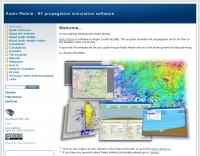 This website is dedicated to Radio Mobile. Radio Mobile is software by Roger Coudé VE2DBE. The program simulates RF propagation and is for free to the amateur radio community. All you want to know about Radio Mobile can be found here.
 -
 The coshocton county amateur radio association official website - club callsign w8cca
 -
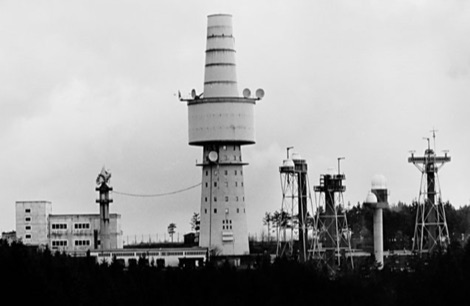 A simplified explanation of decoding West German numbers messages transmissions without a computer.