Search results
Query: SSTV
Links: 89 | Categories: 5
-
 ord- Bretagne France includes info on dx and sstv, in French
-
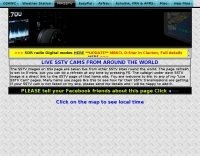 SSTV images on this page are taken live from other SSTV sites round the world.
-
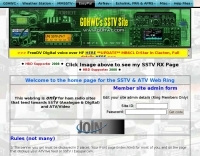 SSTV & ATV "only" Webring. Many members world wide.
-
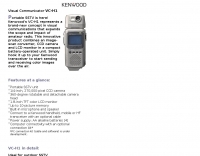 Kenwood Portable SSTV device
-
 MMSTV help pages, describing how to setup and run this sstv program by Andrew O'Brien
-
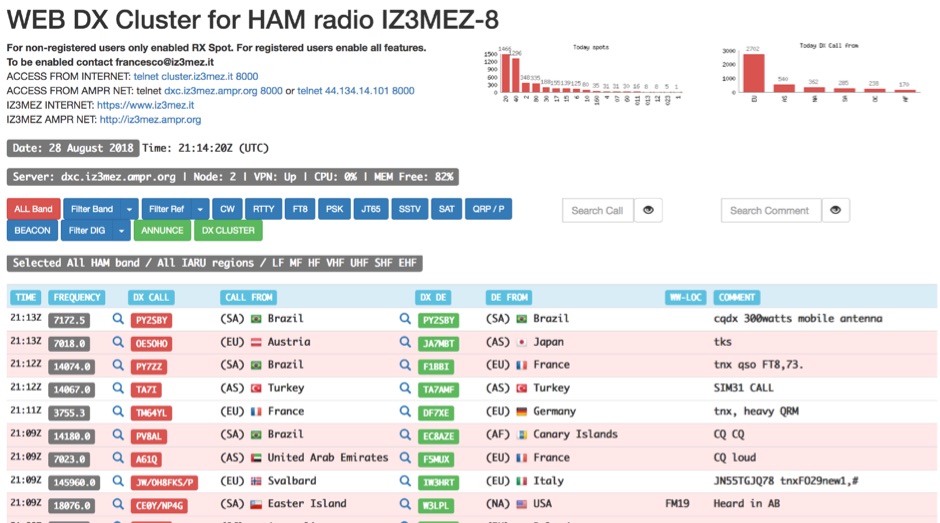 The IZ3MEZ Web DX Cluster presents real-time amateur radio DX spots across 20 distinct frequency bands, spanning from **LF (2190m)** at 135.7 kHz up to **SHF (QO-100)** at 10499 MHz. It displays the DX callsign, frequency, DXCC entity, spotter callsign, and spotter DXCC entity, along with any accompanying comments. The cluster also lists various operating modes such as CW, RTTY, FT8, FT4, FT2, PSK, and SSTV, and supports special operating activities like QRP/P and specific award programs including IOTA, POTA, SOTA, WCA, and JOTA. The cluster's interface provides a dynamic feed of the latest 50 spots, continuously updated with precise timestamps. It offers direct **Telnet protocol** access for users preferring a command-line interface, with configuration instructions provided. The resource also integrates with other spotting networks like RBN and PSK Reporter, enhancing its utility for DXers and contesters seeking propagation information and activity monitoring across a broad spectrum of amateur radio frequencies.
-
-
 Dedicated to SSTV and live reception from all over the world
-
-
 Fifty-three digital modes, including PSK31, RTTY, and JT65, are explored in this resource, providing detailed descriptions of their underlying technologies and typical use cases. It covers error correction methods like ARQ in PACTOR and FEC in JT65, alongside modulation schemes such as FSK and PSK. The content highlights the evolution of digital communication from traditional TNC-based systems to modern sound card implementations, emphasizing the role of personal computers in advancing these modes. Specific modes like AMTOR, PACTOR, and G-TOR are discussed, noting their baud rates and error correction capabilities. For instance, AMTOR operates at 100 baud, while PACTOR offers 200 baud with Huffman compression. The article also delves into newer modes like MFSK16, which uses 16 tones and continuous Forward Error Correction, and Olivia, capable of decoding signals 10-14 dB below the noise floor. Each mode's bandwidth, speed, and resilience to propagation challenges are examined, such as MT63's 1 KHz bandwidth and 100 WPM rate, or Hellschreiber's 75 Hz bandwidth and 35 WPM text rate. The resource also lists predominant USA HF digital frequencies for bands like 160, 80, and 40 meters, specifying segments for PSK31, RTTY, SSTV, and Packet. It includes links to freeware and shareware sound card software such as Digipan, FLDigi, and MixW, enabling amateurs to experiment with these modes.
-
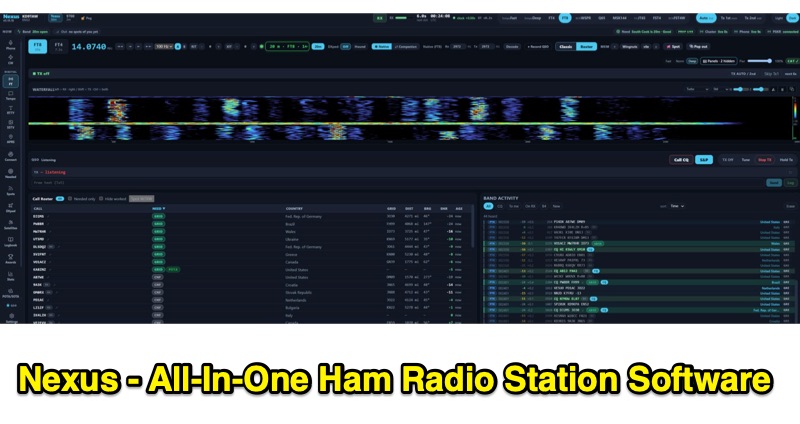 Nexus is a free and open-source ham radio software application, built in Rust by KD9TAW, designed to integrate multiple station functions into a single program. It supports fifteen operating modes, including FT8, FT4, CW, SSB, FM, RTTY, SSTV, and APRS, with both transmit and receive capabilities across Windows, Linux, and Raspberry Pi platforms. The software provides band activity displays with country, distance, and bearing information, a call roster, a 3-D propagation globe with live spots, and alerts for new DXCC, WAS, WAZ, VUCC, and IOTA entities. It also features a native RF panadapter for Icom CI-V and Flex radios, or a live audio scope for other transceivers. Nexus integrates a comprehensive logbook, computes awards offline without requiring an account, and includes repeater search functionality with curated memory packs. It offers CHIRP CSV round-trip compatibility for approximately 1,000 radio models and is compatible with WSJT-X, JTDX, and MSHV via UDP protocol for seamless integration with existing workflows. The application supports ADIF import/export for log data management and provides accessibility features for operators with hearing or visual impairments, including screen reader compatibility and keyboard-navigable interfaces.
-
 M5AML - SSTV, Aerials (antennas), SSTV, Rallies, UK prefixes
-
 A world wide community of online SSTV cams shared and published on worldsstv.com
-
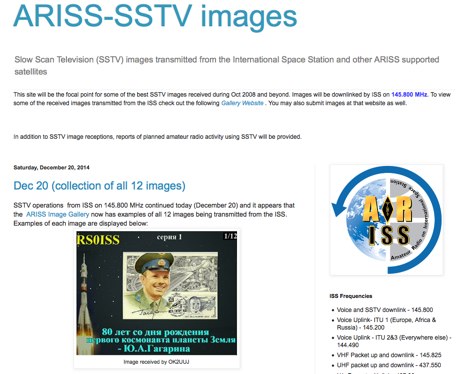 A blog site dedicated to SSTV Slow Scan Television images transmitted from the International Space Station
-
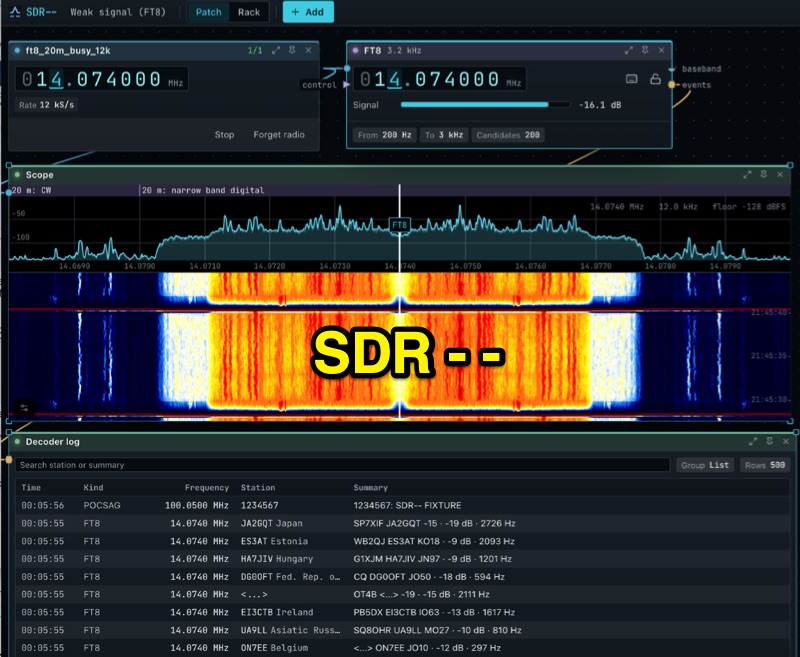 Boasting an FM demodulation rate of **1,235 Msps** and a DMR speed of **369x realtime**, SDR-- is a software-defined radio application designed for patching together radio components across macOS, Windows, and Linux platforms. It facilitates connecting a receiver to various channels, which then feed into speakers, maps, or recorders. The software supports a wide array of audio modes including AM, NFM, SSB, CW, FM stereo, RDS, DMR, FreeDV, D-STAR, Fusion, NXDNP, P25, and dPMR, alongside decoding numerous events and messages such as ADS-B, ACARS, VDL2, HFDLA, AIS, NAVTEX, DSC, POCSAG, FLEX, ERMES, FT8, FT4, WSPR, APRS, RTTY, PSK, ISM sensors, and time signals. Beyond audio and data, SDR-- also handles video modes like SSTV, ATVDVB-S, and DVB-S2. It provides comprehensive displays including spectrum, waterfall, constellation, and map views, all integrated with decoded messages. Advanced features include scanning, signal identification, satellite tracking, direction finding, and passive radar capabilities. The application offers remote control options via REST, WebSocket, MCP, and event forwarding, allowing integration with external tools. It can operate on a desktop computer or be deployed on a server, such as a _Raspberry Pi_, for remote access, providing flexibility for shack setups or antenna-side installations.
-
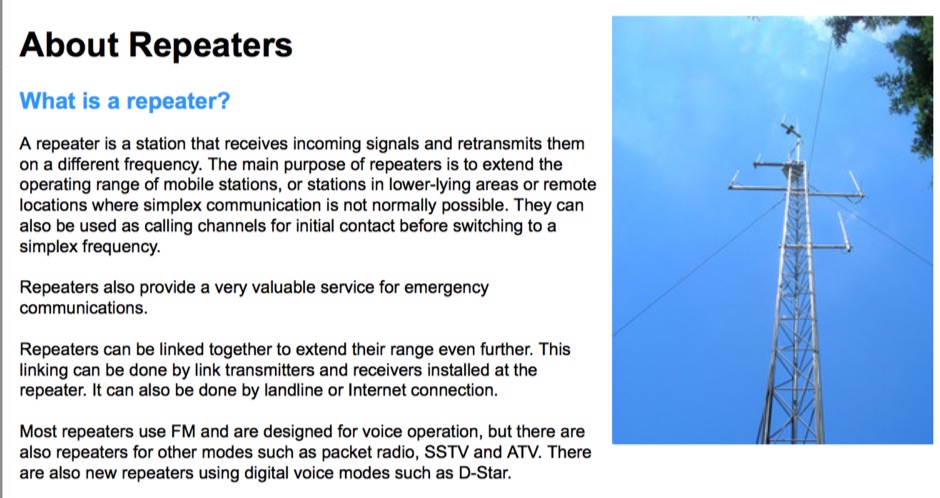 Amateur radio repeaters extend communication range for mobile and remote stations by retransmitting signals on a different frequency, often for emergency communications. The resource details various repeater bands, noting that 2 meters and 70 cm are primary for activity, with 10-meter repeaters offering potential national and overseas coverage. It specifies **18 channels** on 6 meters and **31 channels** on 2 meters, along with a new 70 cm offset of _7 MHz_ adopted in 2015. The content explains how repeaters can be linked via dedicated transmitters/receivers, landlines, or Internet VoIP systems like _IRLP_ and Echolink, enabling global connections. It also describes simplex gateways for multi-band operation and the use of CTCSS subaudible tones for access control and interference mitigation. The document highlights specialized repeaters for modes beyond voice, such as SSTV and ATV, particularly on 70cm and higher bands. Operational guidelines for efficient and courteous repeater use are referenced, along with links to Australian repeater listings and band plans.
-
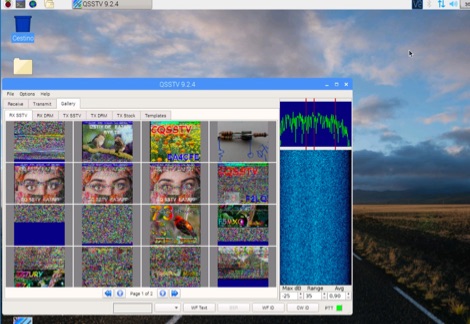 A tutorial on how to setup a receiver capable to decode SSTV signals with a small RaspberryPi version 2 and a RTL-SDR dongle. The author explains how to install the needed software to interface the RTL-SDR and a step by step guide to install the QSSTV software used to decode the signals.
-
 K3AS.com Home Page, Discover SSTV, See K3AS SSTV CAM, Live SSTV Images Received by my Station, View My Station Equipment.
-
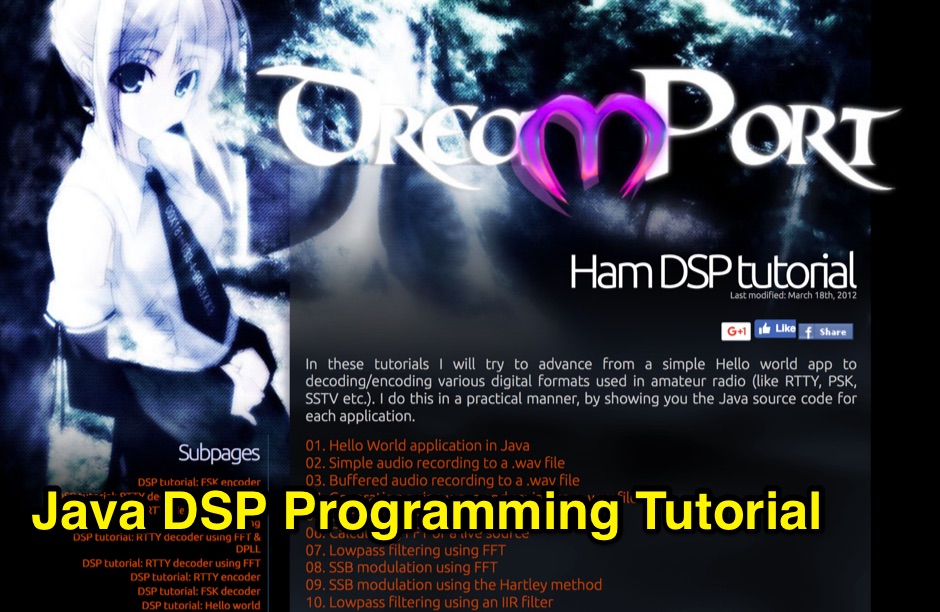 Tutorial about writing a software SSTV modulator/demodulator using slant correction and several improvements. It requires programming language knowledge and programming skills.
-
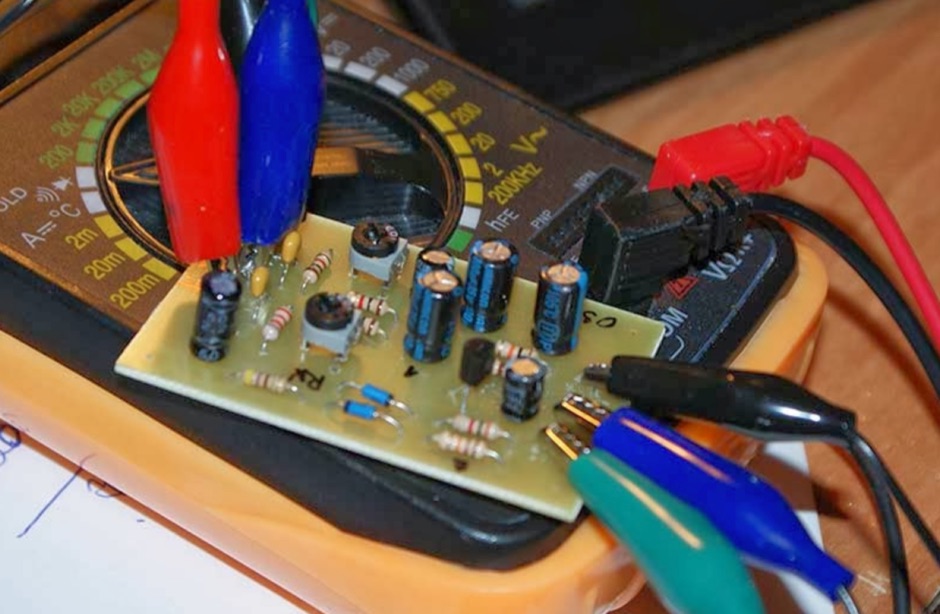 A homemade interface for any android device, allow to receive and trasmitt SSTV PSK RTTY from an android tablet based on the DD7LP original project include demo of a sample DIY kit.
-
 Picture gallery of SSTV images received by DU1IVT Thelma
-
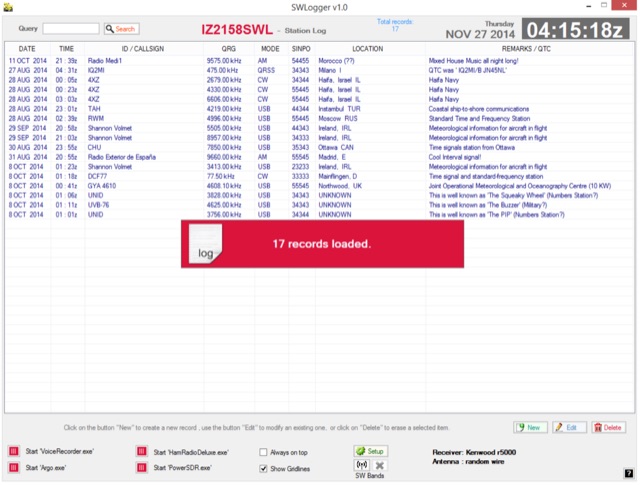 A quick and easy logging application designed for BCL and shortwave listeners, requires a recent Windows OS and .Net Framework
-
 HAMDRM pictures received on 80 meters band at 3733 KHz
-
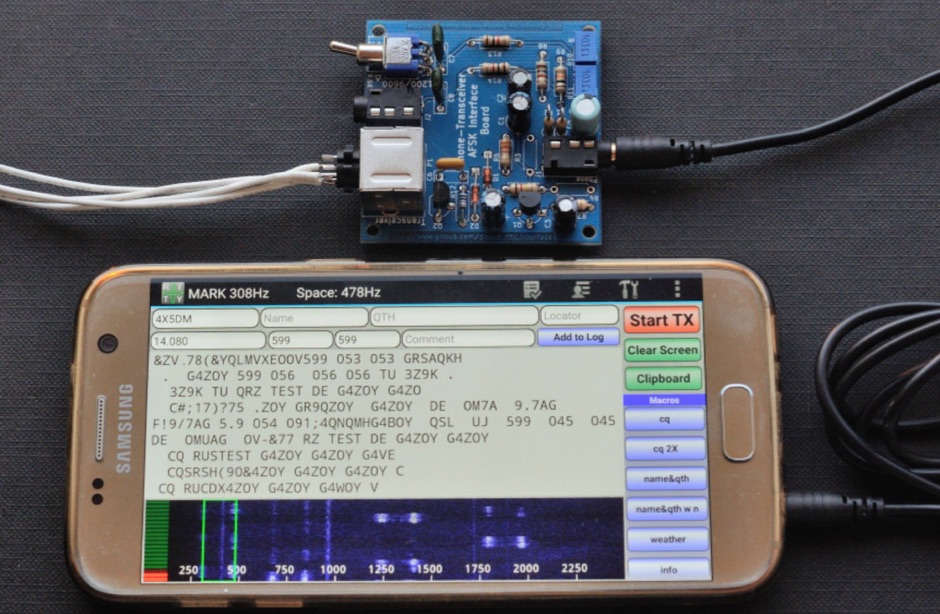 Interface board was for connecting Yaesu FT-817ND transceiver to Android phone or tablet. The board was developed for experimenting with RTTY, SSTV and other digital modes using DroidRTTY, DroidSSTV and other software on an Android phone.
-
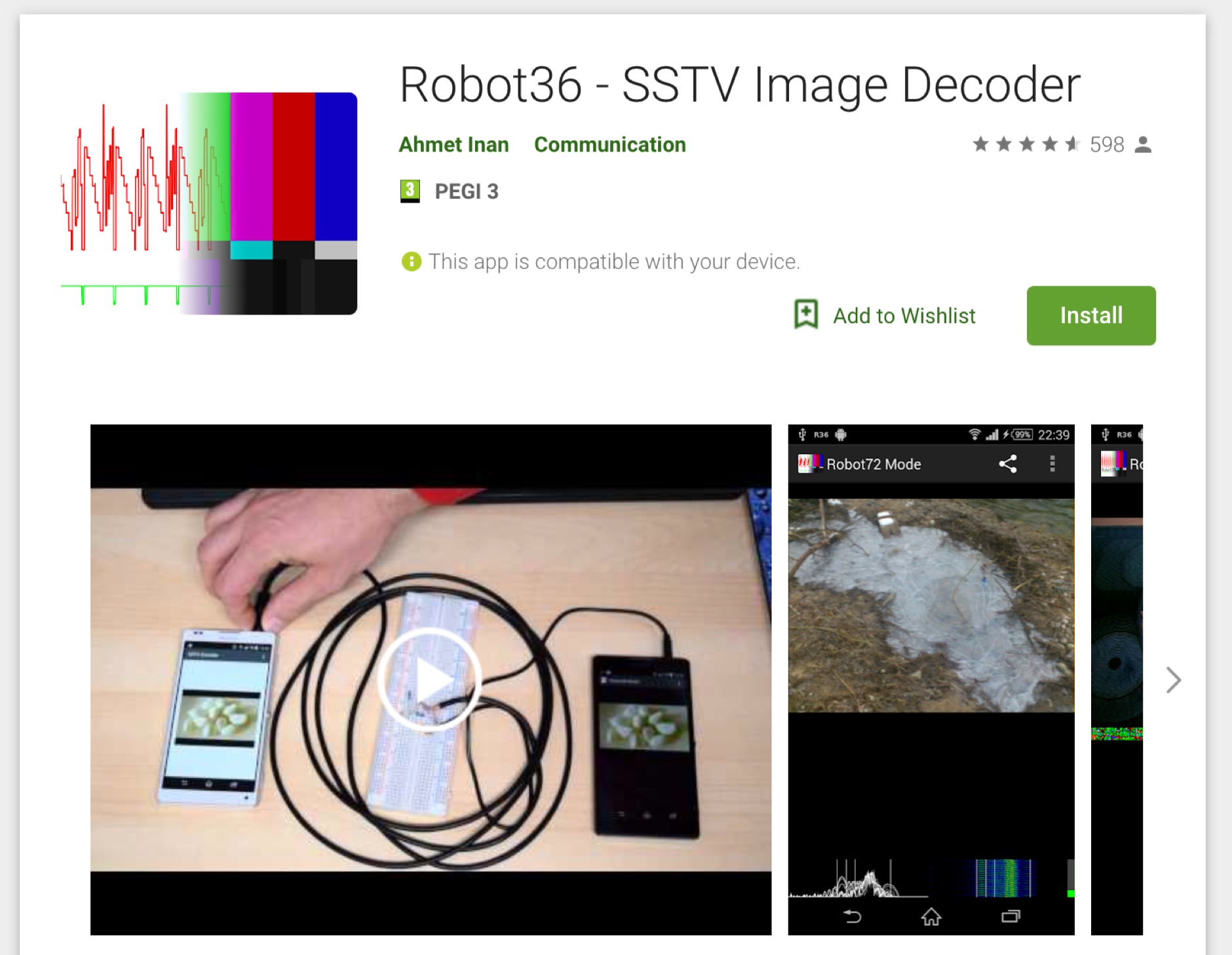 Receive and decode SSTV amateur radio SSTV signals with this small and powerfull SSTV decoder app for Android devices. Requires access to microphone.
-

-
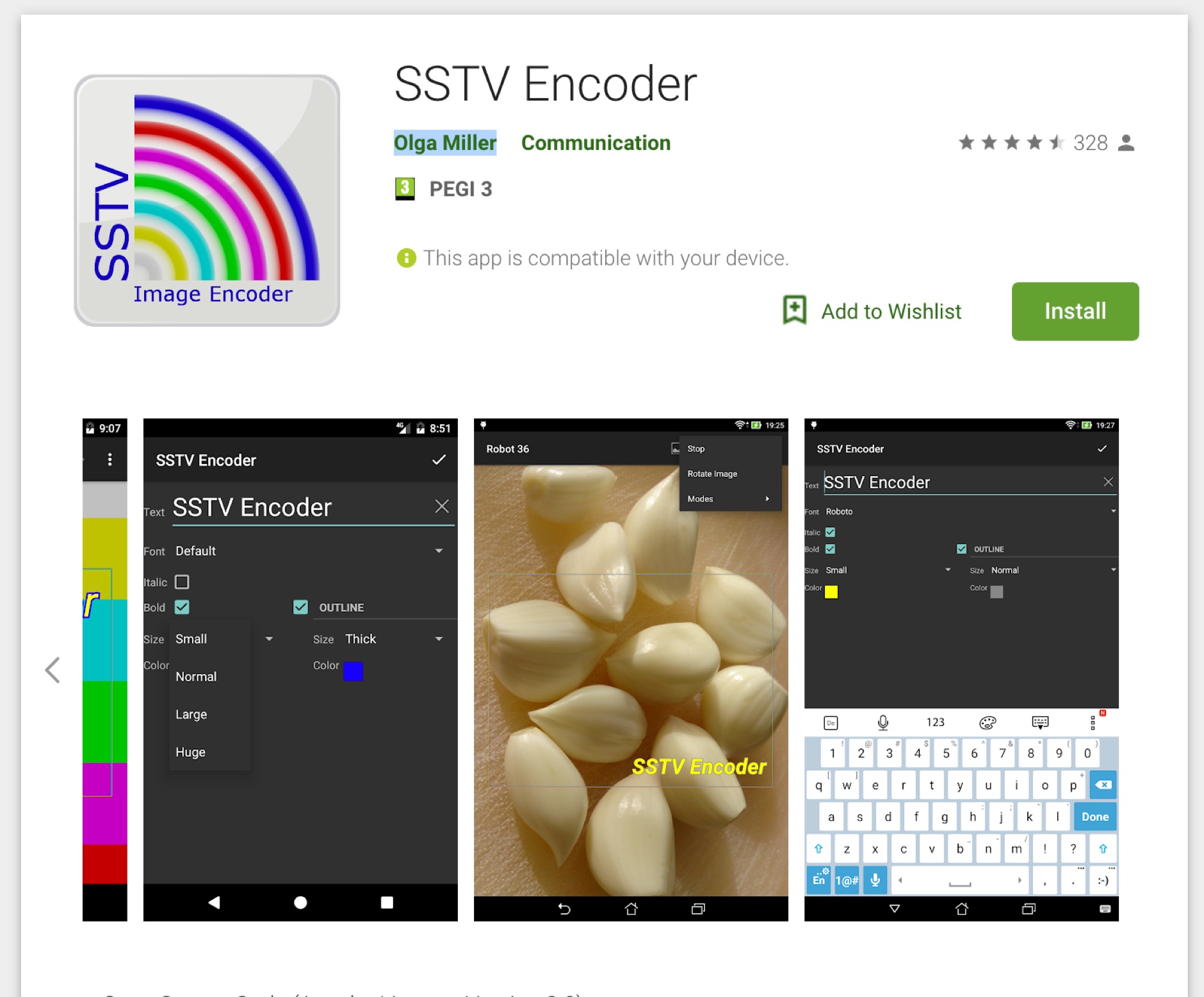 This free app encode pictures in Slow Scan TV SSTV signals. Support the most popular modes Martin 1, Martin 2, Scottie Modes, Robot and Wraase modes. Image editing is even possible with som text overlaying features
-
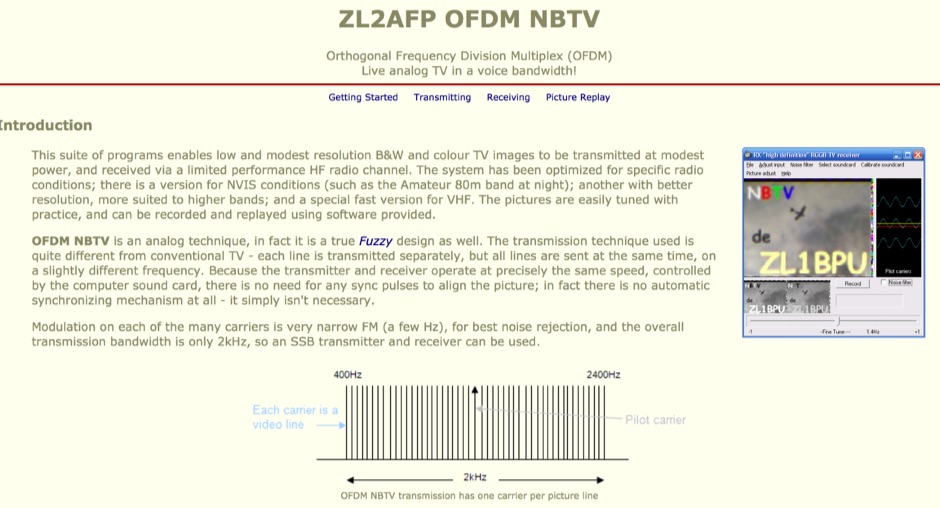 Live webcam images, still pictures and movie clips over an HF SSB channel. NBTV (Narrow Band Television) is a technique with some similarity to SSTV, and some to conventional FSTV
-
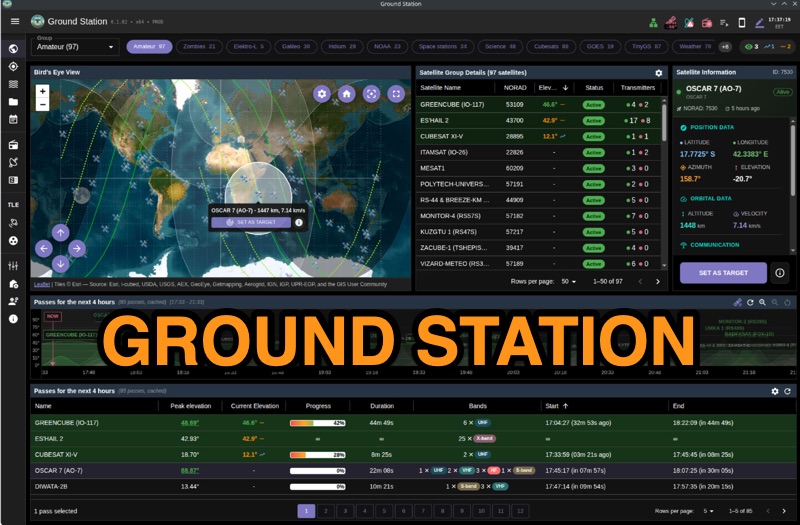 Ground Station offers real-time satellite tracking and radio communication capabilities, primarily for amateur radio operators engaged in satellite operations. It utilizes **TLE data** from sources like CelesTrak and SatNOGS for precise orbital prediction and integrates with various SDR devices, including RTL-SDR, SoapySDR, and UHD/USRP radios, to receive live signals. The software provides automated antenna rotator control and **Hamlib-compatible** rig control with Doppler correction, crucial for maintaining signal lock on fast-moving LEO satellites. It supports IQ recording in SigMF format and decodes several digital modes such as SSTV, FSK, GFSK, GMSK, and BPSK with AX25 USP Geoscan framing. Dedicated interfaces are available for satellite tracking, SDR waterfall displays with live transcription and packet decoding, and telemetry packet viewing. Users can manage TLE data synchronization and SDR hardware, along with browsing decoded outputs through an integrated file browser. An observations dashboard and DSP topology view further enhance the operational experience, providing comprehensive tools for monitoring and analyzing satellite passes.
-
 Small company based in Santa Maria, California, designing and manufacturing electronic products for amateur radio, education, and commercial users. Product line includes APRS devices for real-time vehicle tracking, weather monitoring, and remote telemetry, as well as the ADS-SR1 Simplex Repeater, the ADS-WS1 Weather Station, the SSTVCAM slow-scan TV camera, and GTRANS protocol translator for Garmin FMI.
-
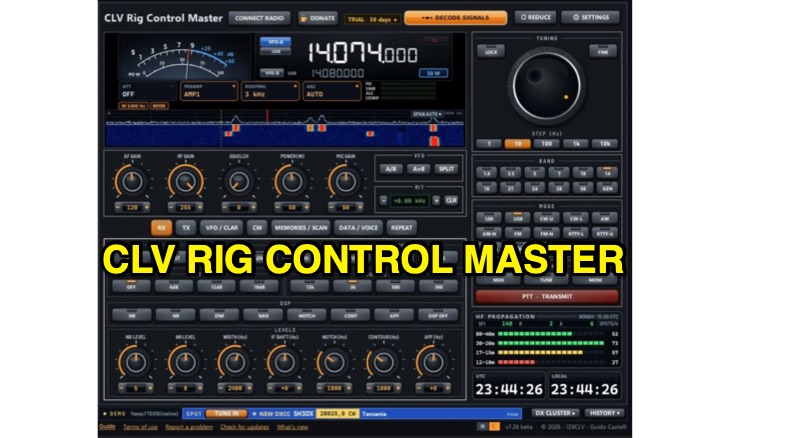 CLV Rig Control Master is a freeware Windows application providing comprehensive **CAT control** for amateur radio transceivers. It directly supports the Yaesu FTDX10 via its Enhanced COM Port and integrates with hundreds of other rigs through **Hamlib**. The software functions as a master, sharing the radio's CAT port with multiple logging and digital mode applications like N1MM Logger+, Log4OM, WSJT-X, and JTDX, thereby eliminating port conflicts. Key features include a large frequency display, analog-style S-meter, PO, SWR, ALC, and COMP bar graphs, along with spectrum and waterfall displays derived from USB audio. It also incorporates decoders for CW, RTTY, PSK31/63, NAVTEX, SSTV, and WEFAX, featuring automatic mode detection and a dedicated CLV-SSTV window supporting 12 SSTV modes. The application provides detailed control over FTDX10 receive and transmit settings, memory channels, and audio/TX profiles. For other radios, it adapts the panel to supported controls, maintaining stable connections even with slower CAT interfaces such as the FT-817. The DX Cluster window includes band and mode filters, Club Log Most Wanted integration, and new DXCC tracking from ADIF logs. Contest features encompass F1-F8 message macros, CW and RTTY transmission from the PC, and ADIF QSO logging. It also displays UTC and local time, alongside HF propagation data sourced from N0NBH, and is compatible with Windows 10 and 11.
-
 The sudden explosion of new digital modes has taken the Amateur Radio world by storm. New modes such as PSK31 FT8 JT65 FSK441, ISCAT as well as established modes such as RTTY, SSTV, Hellschreiber and others have rocketed in popularity. In order to use these modes all that is required is a simple computer-to-radio interface which couples the computer soundcard to the radio
-
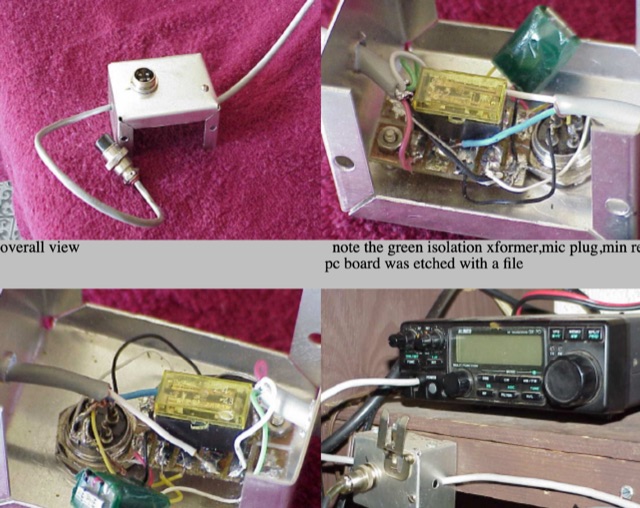 A SSTV interfsace (soundcard) to minimize RF feed back and a soundcard limiter to prevent over driving the soundcard
-
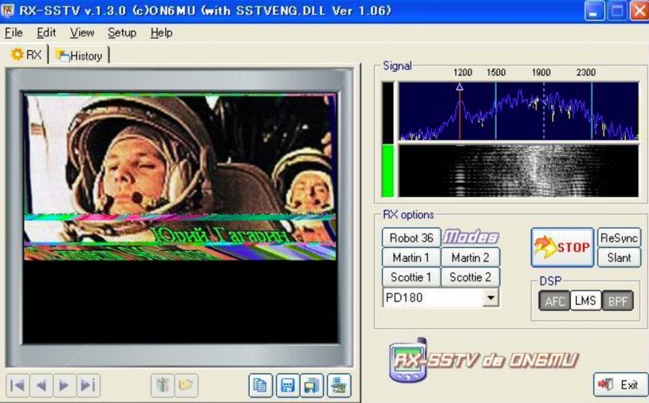 To get this award one should receive and decode at least one picture in the session. The quality of the received image does not have to be perfect, but good enough to be able to identify. The picture does not have to be full. It is acceptable to send just some part of the picture as well.
-
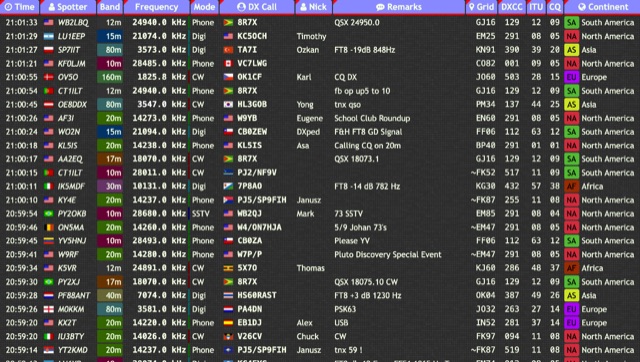 Over 15 amateur radio bands, from 160m to 70cm, are supported by the _DXTRON_ web cluster, providing real-time DX spotting information. This service integrates directly with the _QRZCQ_ API, allowing users to monitor activity across various modes including CW, Phone, Digi, RTTY, SSTV, and SAT. DXTRON displays critical spot data such as timestamp, spotter callsign, frequency, mode, DX call, and remarks, along with geographical details like Grid, DXCC, ITU, CQ zone, continent, and country. Developed by _DO5SSB_, DXTRON v1.42 offers a user-friendly interface for filtering spots by band and mode, catering to both casual DXers and serious contesters. The platform is designed for accessibility, providing a clear overview of current propagation conditions and active stations worldwide. This web cluster is a practical tool for hams seeking to identify rare DX, track contest activity, or simply observe band conditions. Its reliance on the QRZCQ API ensures a consistent flow of up-to-date spotting data, making it a reliable resource for real-time operational awareness.
-
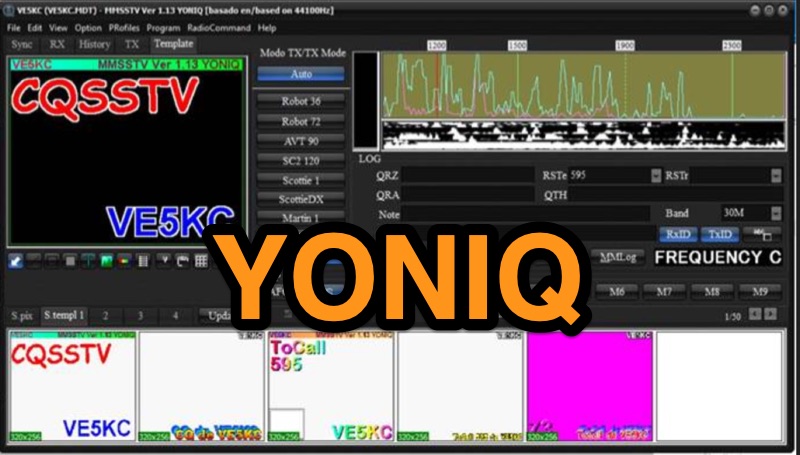 Operating Slow Scan Television (SSTV) often requires specialized software to encode and decode images for transmission over amateur radio frequencies. The _MMSSTV_YONIQ_ project provides an updated iteration of the widely used _MMSSTV_ software, originally developed by JE3HHT, incorporating modern functionalities requested by the SSTV community. This version integrates the _Omni-Rig_ system for seamless transceiver control, supports both Spanish and English interfaces, and enables direct data downloads from QRZ.com, streamlining logging and contact management for operators. The software also includes practical enhancements such as frequency memory storage, compatibility with various digital logbooks, and a visual indicator for image transmission and reception progress. Significant improvements have been made to image reception settings, allowing for more effective decoding even on systems with limited PC resources, though it can be configured for higher performance on modern machines. The development involved new code and modifications to existing source code, released under a GNU license. Installation instructions are provided, noting that the initial setup defaults to Spanish but can be easily switched to English. The project emphasizes its role as a continuation of JE3HHT's original work, aiming to keep SSTV operations current with 21st-century amateur radio practices. Support for new features is available through the MMSSTV forum on Groups.io.
-
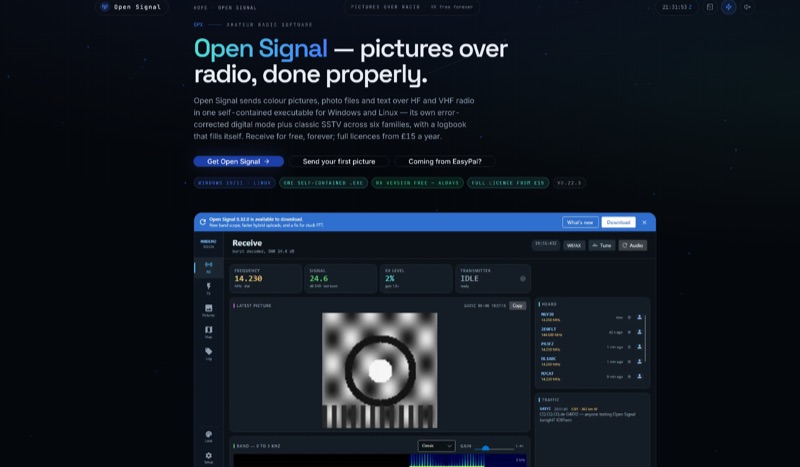 Open Signal, a software application for Windows 10/11 and 64-bit Linux, facilitates the transmission of color pictures, photo files, and text over HF and VHF amateur radio bands. It integrates its own error-corrected OFDM digital picture mode, delivering pixel-exact images in under a minute, with classic analog SSTV across six families: Martin, Scottie, Robot, Wraase, PD, and MMSSTV's MP/MR, featuring automatic VIS mode detection on receive. The application offers four distinct sending methods, including byte-exact JPEG transfer, a hybrid mode utilizing internet for full quality with a short RF link, and its proprietary digital waveform. This self-contained executable eliminates the need for external software like FLDIGI, Hamlib, or virtual audio cables, simplifying setup. It includes a self-filling logbook that integrates with Wavelog/Cloudlog, eQSL, and provides UDP ADIF broadcast. Built-in spotting features include PSK Reporter, DX cluster announcements, and APRS-IS position beacons. The receive-only version is permanently free, while a full license, enabling transmit capabilities and access to the live network, is available for an annual or lifetime fee. The software is actively maintained, unlike EasyPal, which has not seen updates since 2014.
-
 Fram2, the first human spaceflight in polar orbit, launches spring 2025 aboard SpaceX's Falcon 9. Inspired by the polar exploration ship Fram, the mission highlights innovation and exploration. Four astronauts from Europe and Australia will orbit Earth for 3–5 days, including ham radio operator Rabea Rogge, who will transmit SSTV images for an educational competition. Open to students aged 16–25, the contest challenges teams to identify polar-related sites. Fram2 collaborates with ARISS to inspire STEAM learning through space communications.
-
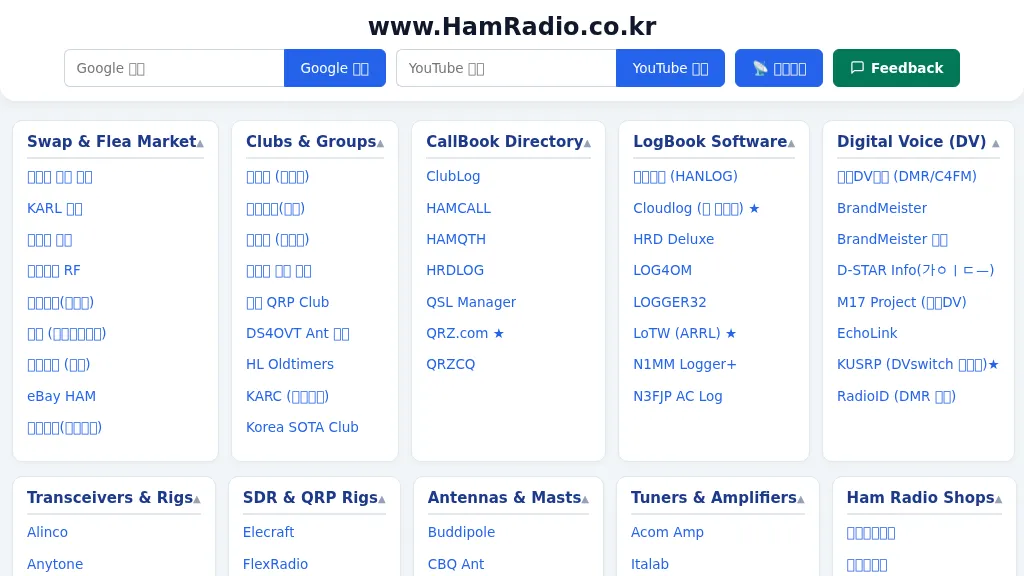 The HamRadio.co.kr portal, maintained by HL3LFB, serves as a comprehensive link directory for amateur radio operators, primarily in South Korea. It categorizes external resources covering a wide array of technical subjects, including SDR and QRP rigs like uBITX and Hermes-Lite 2+, antenna designs from CBQ Ant and JK Antennas, and tuner/amplifier manufacturers such as Acom and LDG. The site also provides links to digital mode software like WSJT-X for FT8/FT4, MMSSTV, and MMTTY, alongside resources for CW operation, electronic components from Digi-Key, and various homebrew project sites like AA5TB Projects and Hans Summers Lab. Practical applications are supported through links to antenna and RF calculation tools, including SimSmith for Smith charts, Coil64 for coil calculations, and calculators for HB9CV, J-Pole, and Magnetic Loop antennas. The portal facilitates operating activities by linking to DX clusters (DX Heat, DX SUMMIT), propagation beacons (IARU HF Beacon, NCDXF Beacon), and award programs like POTA, SOTA, IOTA, and WCA/COTA. It also includes references to official organizations such as KARL and ARRL, QSL managers like LoTW and Cloudlog, and various online marketplaces for ham gear.