Search results
Query: QSL
Links: 2018 | Categories: 14
This query is too generic. Please try adding an additional term to focus your research.
Categories
- Software > QSL
- DX Resources > QSL Bureaus
- DX Resources > QSLing > QSL Galleries
- DX Resources > QSL manager
- Shopping and Services > QSL Printing
- DX Resources > QSLing
- DX Resources > DX Peditions > 2014 DXpeditions
- DX Resources > DX Peditions > 2017 DXpeditions
- DX Resources > Clubs
- DX Resources > DX Peditions
- Internet and Radio > Humor
- Ham Radio > Blogs > Asia > India
- DX Resources > QSLing > International reply coupons
- Ham Radio > Resources
-
 This award is open to all Amateurs and SWLs
-
 The RSGB provides a service for its members to exchange QSL cards at a fraction of the cost of sending them direct.
-
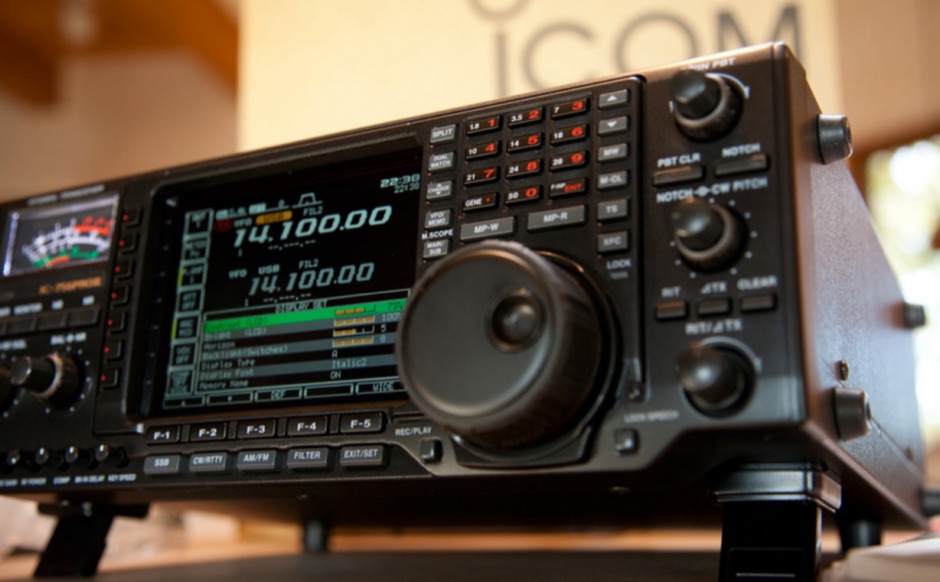 Product information, resources, enhancements and links of the popular ICOM IC-756PRO III
-

-
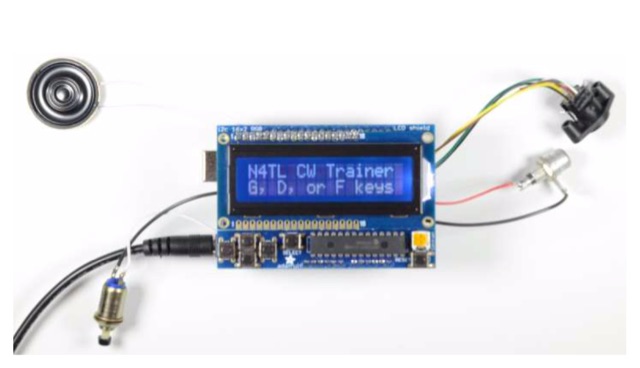 How to build a Simplified Arduino CW Trainer, this is a version that does not need a keyboard.
-
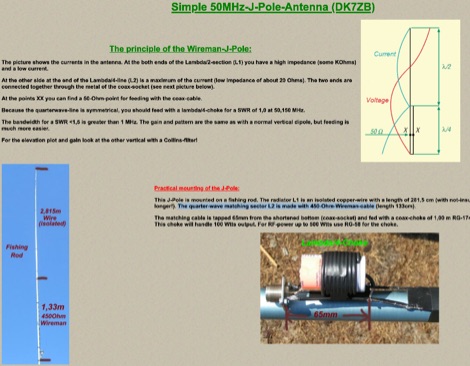 This J-Pole is mounted on a fishing rod. The radiator L1 is an isolated copper-wire with a length of 281,5 cm while the quarter-wave matching sector L2 is made with 450-Ohm-Wireman-cable
-
 DX pedition from Port Stanley, Falkland Islands (SA-002) calls : VP8BUG (digi-modes) and VP8BUH (SSB) QSL only via: manager EB7DX
-
 Amarteur Radio Society Of India, the national society, is issuing Worked Republic of India (WRI) Award to VU and Dx operators.
-
-
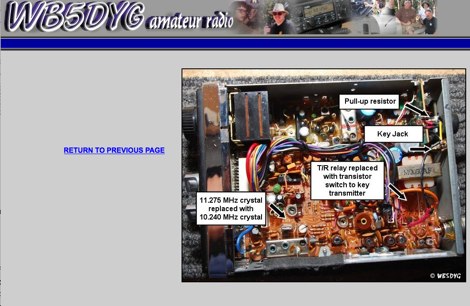 AC7GZ/B is a converted Sharp CB-2460 Citizens Band transceiver operatin on 28.2118 MHz.
-
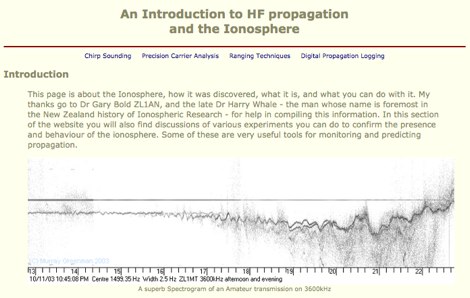 This page is about the Ionosphere, how it was discovered, what it is, and what you can do with it.
-
 A.I.R.A. is chartered by the State of Illinois as a non-for-profit corporation and has been in existence over 21 years
-
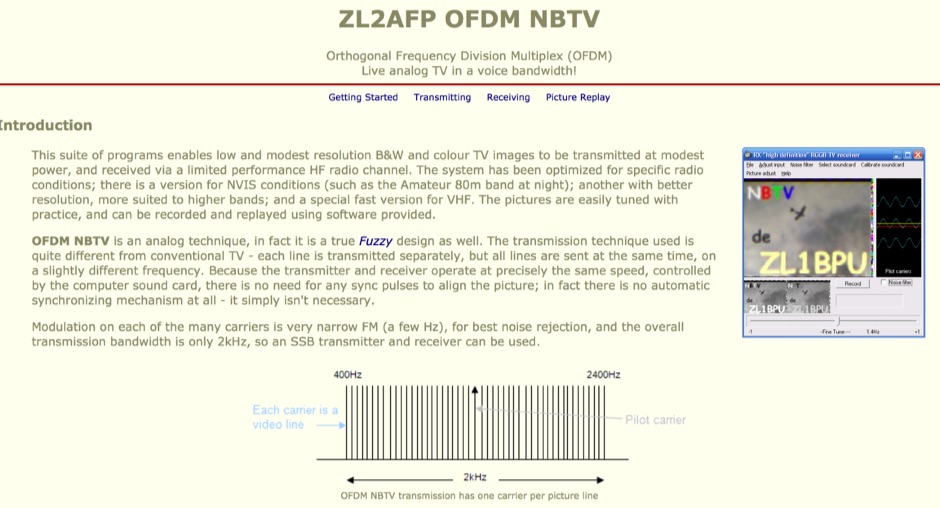 Live webcam images, still pictures and movie clips over an HF SSB channel. NBTV (Narrow Band Television) is a technique with some similarity to SSTV, and some to conventional FSTV
-
 The West Virginia State Amateur Radio Council (WVSARC) operates as a central coordinating entity for amateur radio interests throughout the state. Its primary function involves fostering cooperation among various local clubs and organizations, ensuring a unified voice for the amateur radio community within West Virginia. The council addresses matters pertinent to state-level amateur radio operations, including band plans, emergency communications preparedness, and regulatory issues affecting local hams. Historically, the WVSARC has played a role in organizing statewide events and providing a platform for information exchange among its member clubs. This structure helps to streamline efforts in areas such as public service events, disaster response drills, and the promotion of amateur radio to new licensees. The council's activities contribute to the overall health and growth of the hobby by facilitating communication and resource sharing across the diverse amateur radio landscape of West Virginia.
-
-
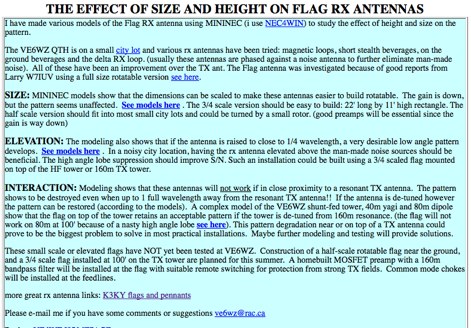 Analysis of flag receiving antennas using MININEC with focus on relation of size and atenna height by VE6WZ
-
 Taken from: Brief History of Amateur Radio in Calcutta-by Avinash Missra, VU2EM
-
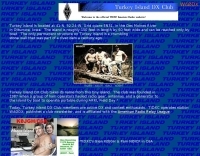 The club was founded in 1987 when a group of ham operators hauled radio gear, antennas, and a generator to the island by boat to operate portable during ARRL Field Day
-
 Details the history and cessation of the Amateur Radio Association of Bahrain (ARAB), operating under the callsign **A92C**. Established in 1970, ARAB functioned as the primary representative body for amateur radio enthusiasts within Bahrain for several decades. The organization facilitated various amateur radio activities and provided a central point of contact for local hams. The resource indicates that ARAB ceased operations due to unspecified circumstances. It explicitly states that the organization is no longer active, marking the end of its long-standing service to the Bahraini amateur radio community. Information regarding a newly formed society, open for membership, is provided, with contact details for Fawaz, **A92AA**, for further inquiries about the successor organization.
-
 Clarifies the intricate process of calibrating the _Elecraft K2_ dial, addressing common user challenges and lively discussions on the Elecraft reflector. Wilhelm, W3FPR, dissects the K2's PLL synthesizer design, chosen for its low phase noise, kit-friendly duplication, and cost-effective components. The resource emphasizes the critical role of the 4000.000 kHz reference oscillator's accuracy during CAL PLL, CAL FIL, and CAL FCTR functions, noting its dependence on temperature and crystal stability for optimal performance. Explaining the K2's frequency display, the document reveals it relies on microprocessor-driven look-up tables generated by CAL PLL for VFO values and CAL FIL for BFO values. In SSB and RTTY, these combine, while CW and CWr modes also factor in the sidetone pitch. The author details inherent limitations, such as the 10 Hz increment resolution of the dial and varying PLL step sizes—from 3 Hz on 160 meters to 10 Hz on 10 meters. BFO increments range from 20 to 35 Hz, collectively limiting practical dial accuracy to within **20 Hz** with diligent effort, or **30 Hz** for a slightly less demanding task. The guide outlines a four-step calibration procedure: setting the reference oscillator, running CAL PLL, running CAL FIL, and setting all BFOs. It highlights the _N6KR Method_ as a particularly easy and accurate approach, requiring only the K2 and a known frequency source like WWV for zero-beating, eliminating the need for external test equipment.
-
 The Zero incoming QSL bureau, serving zero land hams incoming QSL bureau
-
 Alcatel Amateur Radio Association
-
 The YM2XBU Bilkent University Amateur Radio Club website details the club's activities and operational focus within the amateur radio community. It serves as the primary online presence for the university's ham radio enthusiasts, showcasing their involvement in various aspects of the hobby. The site provides insights into the club's station setup, operational modes, and participation in local and international amateur radio events. Club members engage in DXing, contesting, and educational initiatives, fostering practical skills in radio communication and electronics. The _YM2XBU_ club callsign is actively used for on-air operations, contributing to the global amateur radio network. Information regarding membership, meeting schedules, and contact details for _Kagan SIRDAR_ are available, facilitating engagement for students and faculty interested in amateur radio.
-
-
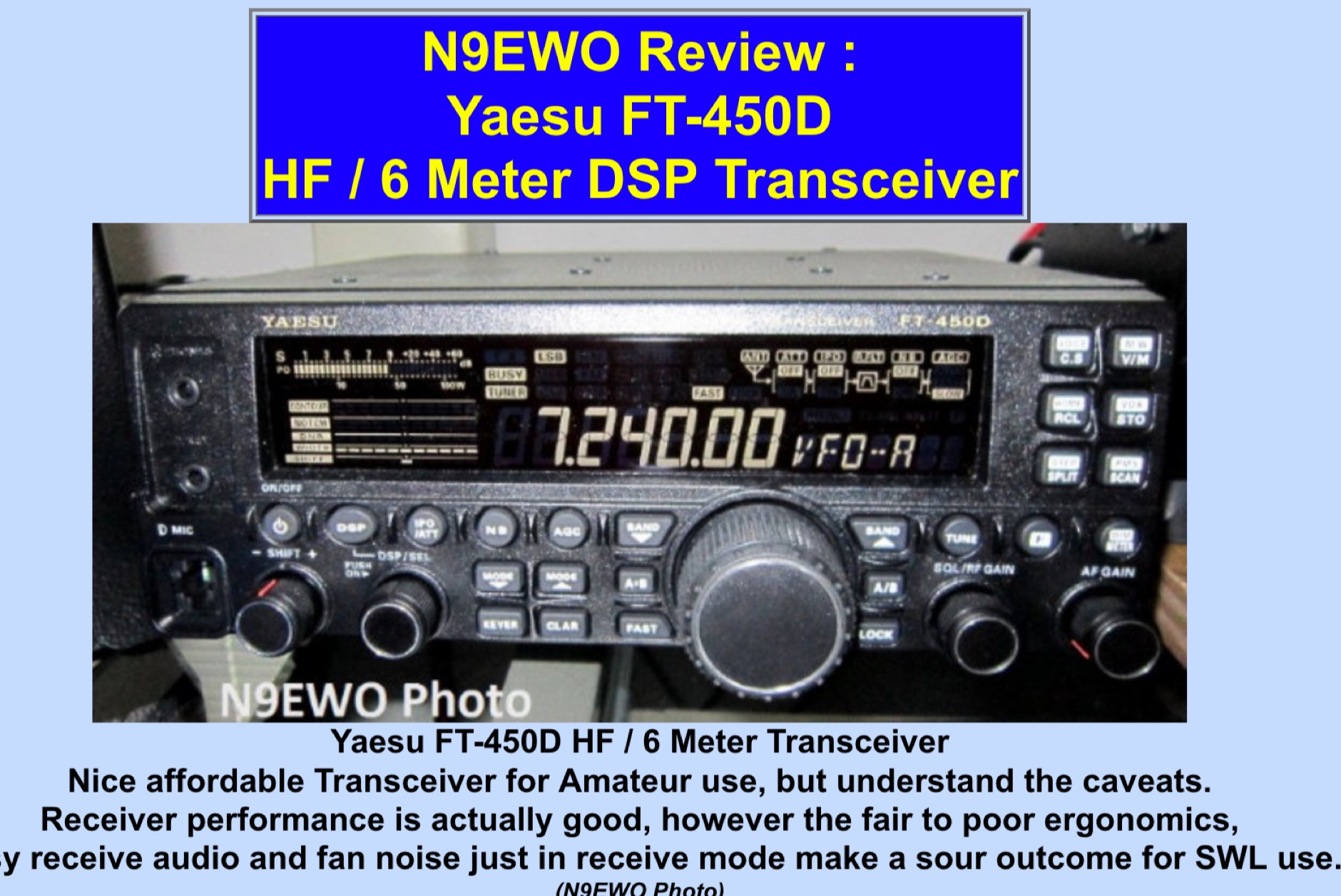 Yaesu FT-450D HF / 6 Meter DSP Transceiver, a nice affordable transceiver for amateur radio use, but understand the caveats.
-
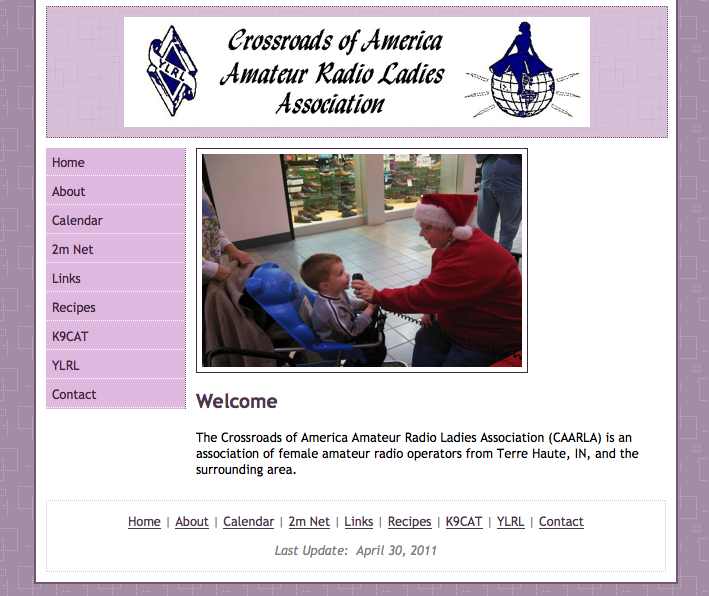 The Crossroads of America Amateur Radio Ladies Association is an association of female amateur radio operators from Terre Haute, IN, and the surrounding area.
-
 The Western Washington Amateur Television Society (WWATS) is a group of amateur radio operators in the Puget Sound area with a common interest in amateur television
-
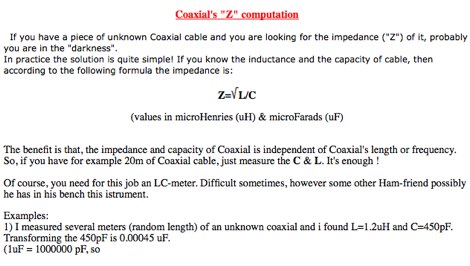 Determining the characteristic impedance (Z) of an unknown coaxial cable, a common challenge for many radio amateurs, can be resolved with a straightforward method. The impedance of a coaxial cable is derived from its inductance and capacitance, and importantly, these values are independent of the cable's length or the operating frequency. This means that measuring a random length of cable, such as 20 meters, provides sufficient data for calculation. The core of this technique involves an LC-meter to obtain the inductance (L) in microHenries (uH) and capacitance (C) in microFarads (uF). The impedance is then calculated using the formula Z = L/C. For instance, a measurement yielding L=1.2uH and C=450pF (0.00045 uF) results in an impedance of 51.6 Ohms, closely matching **RG-58** specifications. Similarly, a TV coaxial cable with L=1.8uH and C=320pF (0.00032 uF) calculates to 75 Ohms. While the accuracy of this method, depending on the LC-meter's tolerance, is approximately 10%, it proves sufficiently precise for practical determination of unknown coaxial cable impedance, as noted by Makis, SV1BSX, who credits Cliff, K7RR, for the formula's dissemination.
-
 A 3 band dipole antenna for 40-80-160 meter bands, It's made with easily available materials and is designed for inverted V mounting. The antenna is shortened for these bands, but still manages to make contacts in 80m and 160m with stations in Canada and the USA. The construction details are provided, including the dimensions of the antenna elements and the traps. The antenna is easy to build and provides good performance in all three bands. In Italian.
-
-
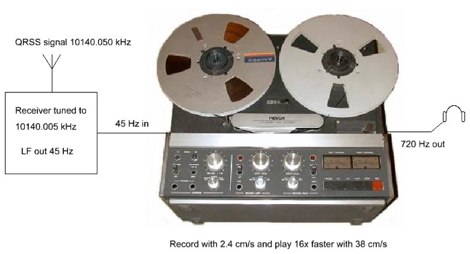 An unique method to listen to QRSS signals is... using an old tape recorder with variable speed
-
-
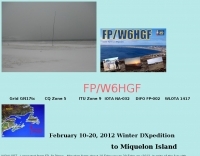 February 10-20, 2012 Winter DXpedition to Miquelon Island
-
 Personal page with homebrewing articles by Y05OYR
-
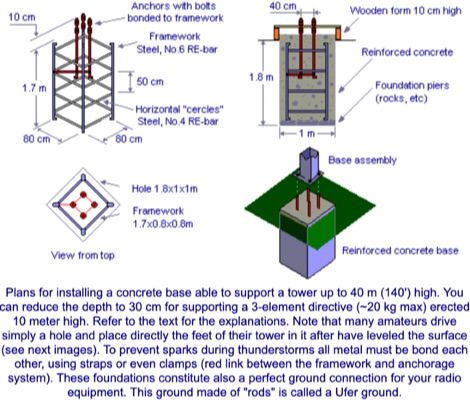 A multiple page article about assembling the antenna system, this section includes informations on constructing of the concrete tower base, starting from setting up correctly the foundations in relation to the antenna height.
-
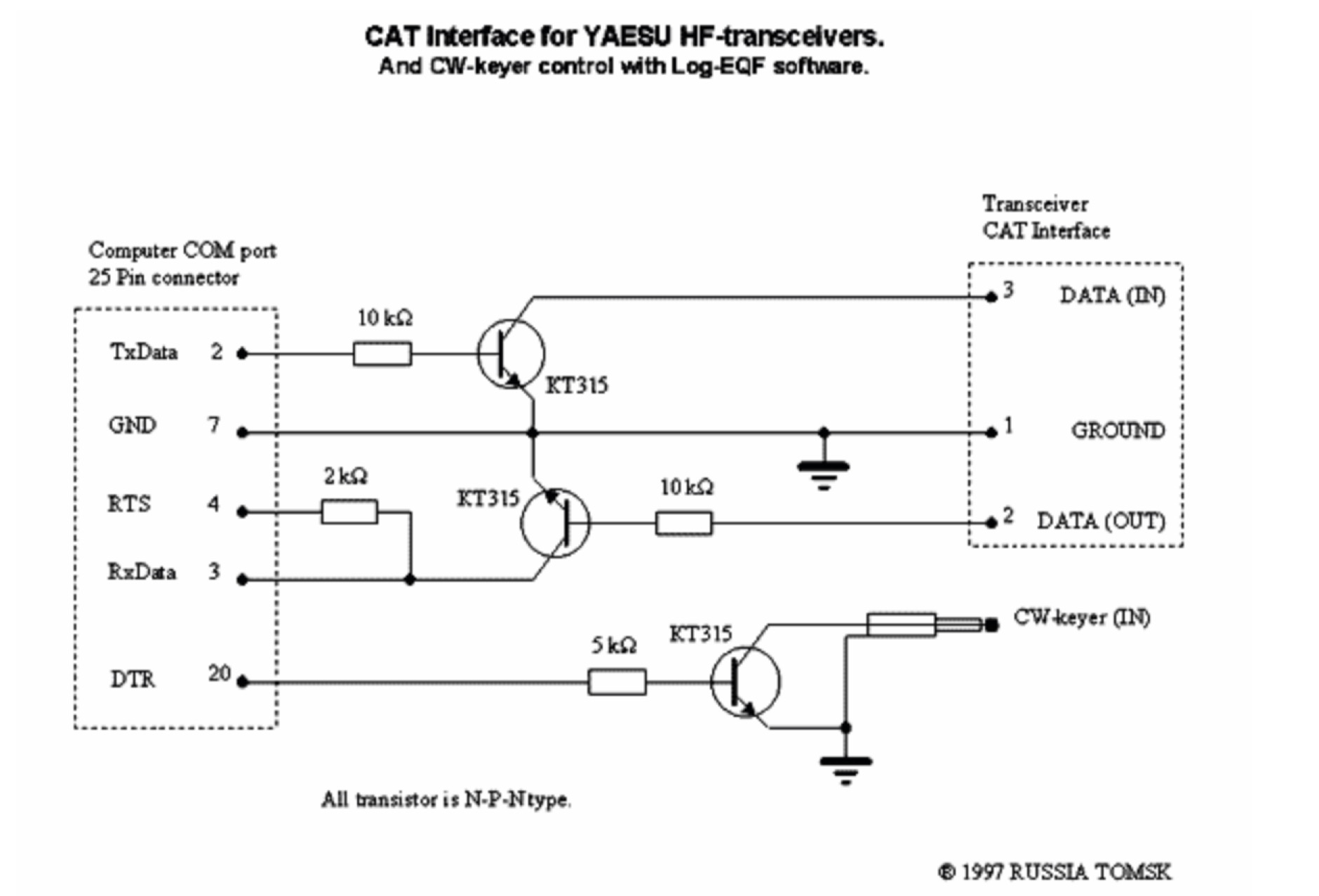 Schematic diagram circuit to build a RS232 serial interface for the Yaesu FT 1000D, works also as CW Keyer control with Log-EQF software. May be used with other Yaesu HF Transceivers.
-
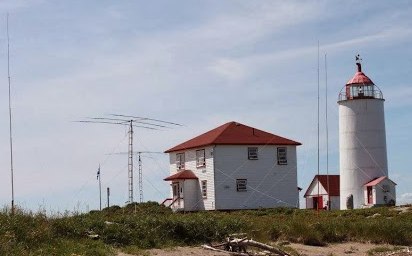 Work any five Province of Québec Lighthouses
-
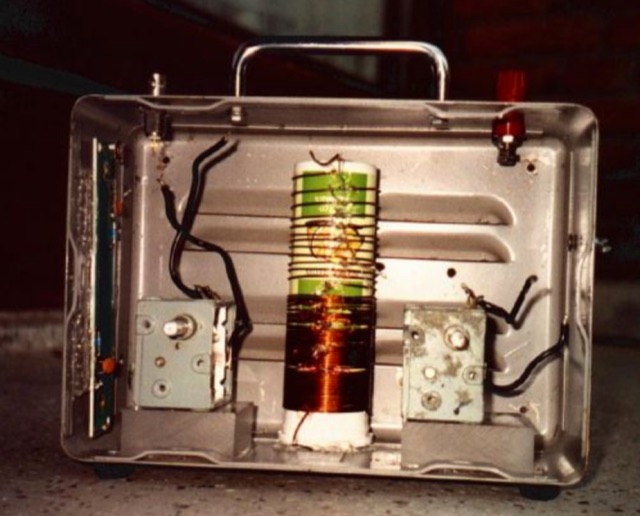 A home made Antenna Tuner made with a simple inductor and a few spare parts. Despite the title, the author succesfully tested this ATU with higher power inputs.
-
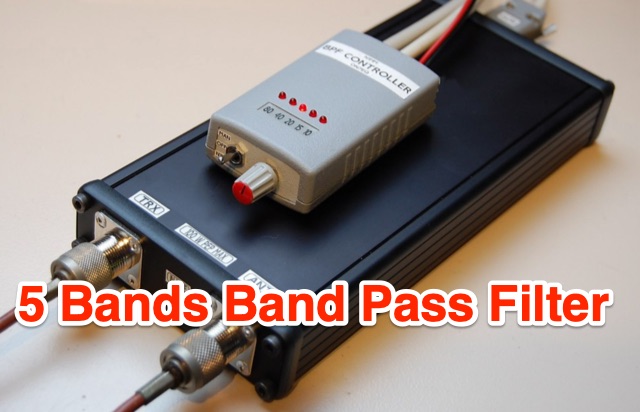 These band filters are based on 3 or 5 sections Butterworth band pass filters, maintaining 50 Ohm impedance, and when built around toroidal inductors, can be made very compact.
-
 Data sheets for most of the major components of the K2
-
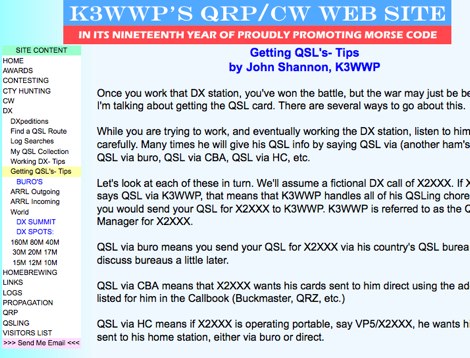 Tips on QSLing. Once you work that DX station, you have won the battle, but the war may just be beginning. I am talking about getting the QSL card. There are several ways to go about this.
-
 The South Milwaukee Amateur Radio Club is an ARRL general-purpose affiliated club with Hams from all interest groups
-
-
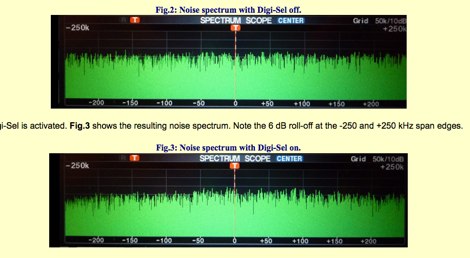 A detailed review of the Icom IC-7700 by VA7OJ/AB4OJ
-
 The Tararua Amateur Radio Club, Branch 06 of the New Zealand Association of Radio Transmitters (NZART) is an incorporated society for Radio Amateurs and interested persons.
-
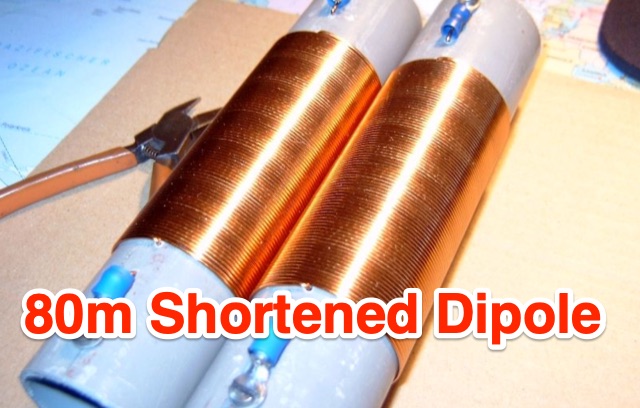 This antenna just requires about 24m of free space instead of 41m that a normal half wave 80m antenna needs to hang up. The so called loaded dipole uses a coil in every dipole arm to electrically lengthen the mechanical too short dipole arms. Every coil has an inductivity of 120 microHenry.
-
-
 Amateurfunk Homepage des DARC Ortsverbands Vaterstetten C01
-
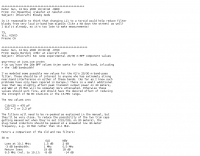 Elecraft K2 mod. Narrower bandpass filter, better stopband attenuation
-
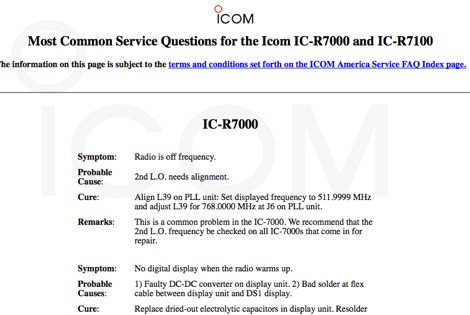 Most Common Service Questions for the Icom IC-R7000 and IC-R7100