Search results
Query: QST review
Links: 33 | Categories: 0
-
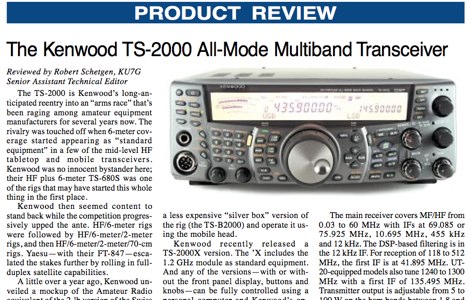 Product review & short takes columns from QST magazine
-
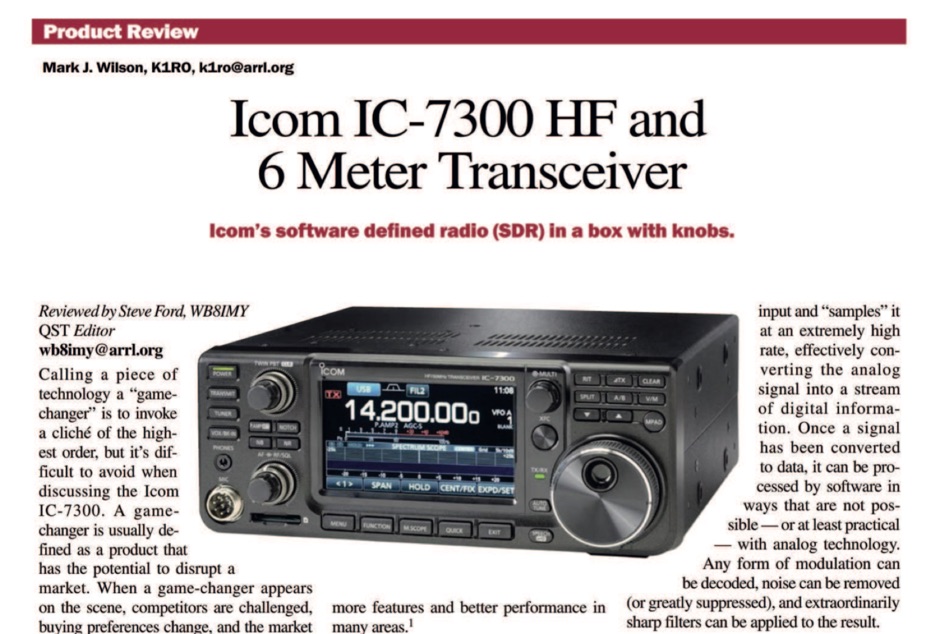 The ICOM IC-7300 is a cutting-edge HF transceiver that has garnered significant attention since its release. This review, published by ARRL in QST, provides an in-depth analysis of its features, performance, and usability. The IC-7300 is known for its direct sampling technology, which enhances its sensitivity and selectivity, making it a favorite among amateur radio operators. The review covers various aspects, including the user interface, audio quality, and overall operational capabilities, providing valuable insights for both new and experienced hams. In addition to its technical specifications, the review discusses the IC-7300's performance in real-world scenarios, such as DXing and contesting. It highlights the transceiver's ability to handle weak signals and its versatility across different modes. The review serves as a helpful guide for those considering the IC-7300 for their station, offering a balanced perspective on its strengths and potential drawbacks. Overall, this review is an essential resource for anyone interested in the ICOM IC-7300 and its place in the amateur radio landscape.
-
 The **ARRL Contest Calendar** presents a detailed schedule of upcoming amateur radio competitions, encompassing both ARRL-sponsored events and significant non-ARRL contests. It provides essential operational details for each entry, such as specific operating periods, eligible bands, and permitted modes, enabling contesters to plan their participation effectively. The resource also links to official rules, soapbox reports, and QST results, offering a comprehensive overview of past and future contest activity. Users can navigate through monthly listings to identify contests of interest, with direct access to detailed information pages for each event. The calendar serves as a central hub for contest operators seeking to confirm dates, understand exchange requirements, and review post-contest analyses. Its utility extends to both seasoned contesters and those new to competitive operating, providing a structured approach to contest participation. The platform integrates various contest-related resources, including links to **Contest Corral** entries for non-ARRL events, ensuring a broad scope of coverage. This aggregation of information streamlines the process of finding contest schedules and associated documentation, making it a practical tool for the amateur radio contesting community.
-
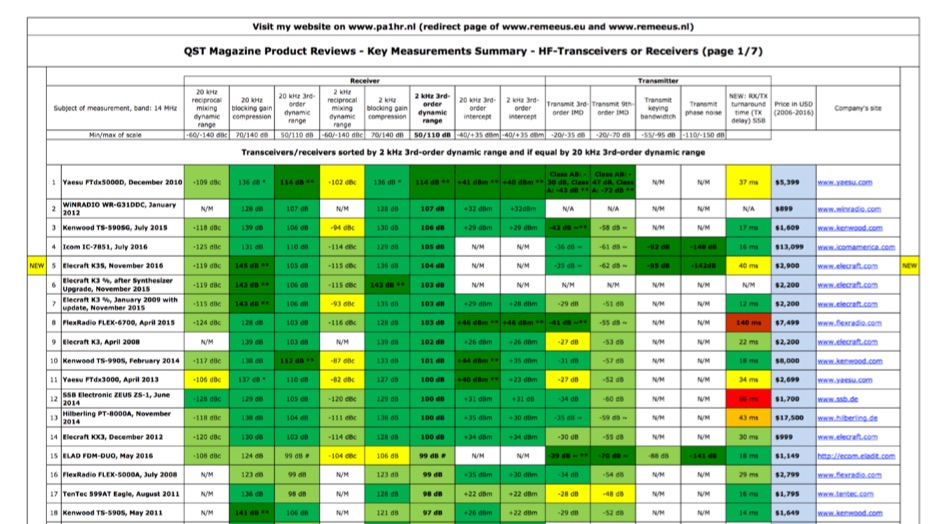 ARRL comparison of HF transceivers, including Elekraft, TenTec,Icom, Yaesu and Kenwood recent transceivers based on QST product reviews
-
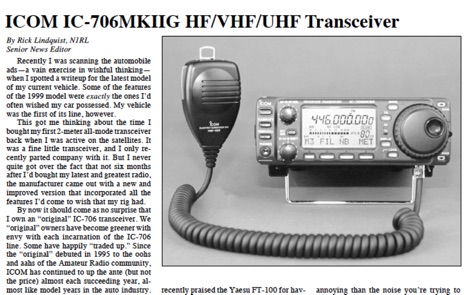 A complete review of Icom IC-706 review published in 1999 by QST
-
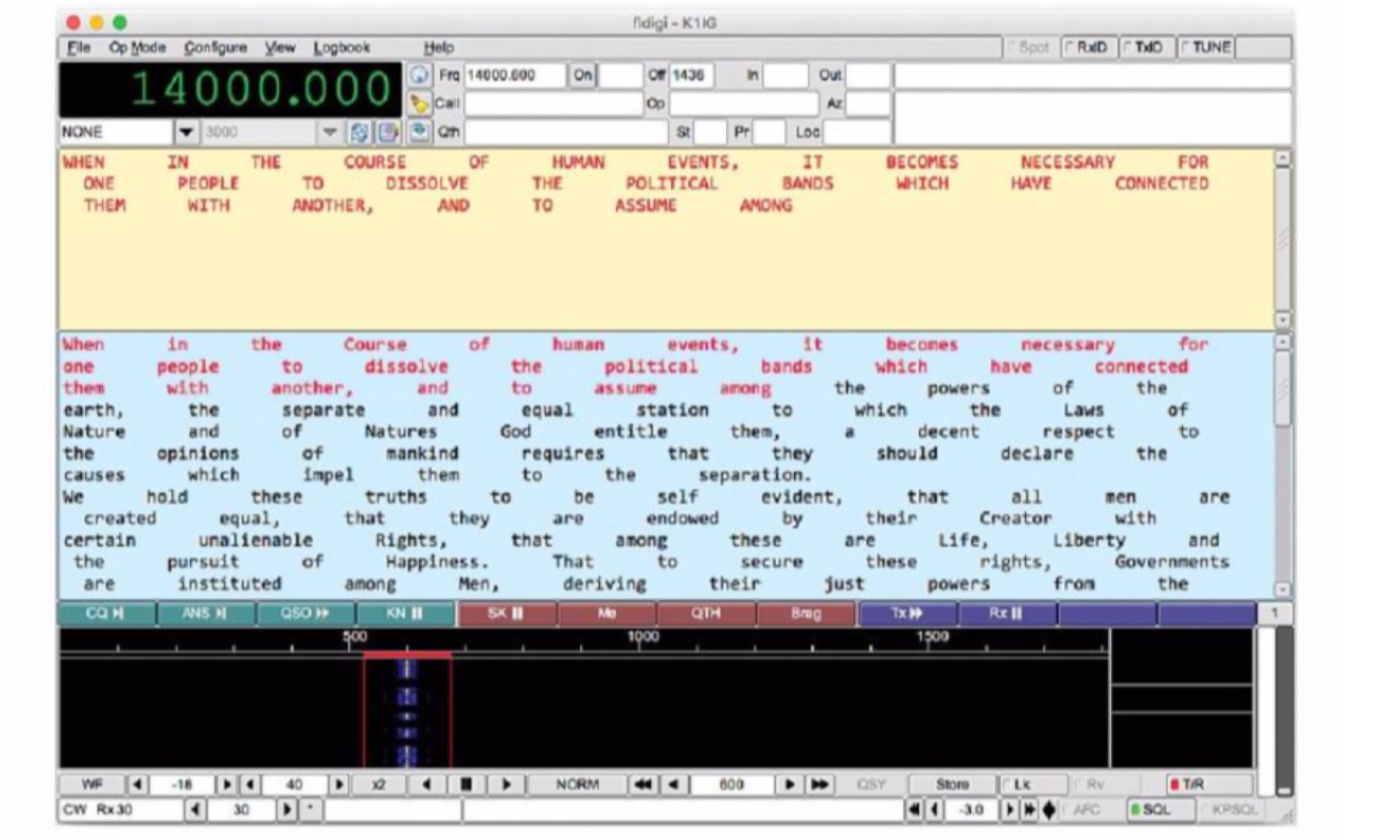 How to Increase your CW speed article by George Allison, K1IG as published on QST
-
 Yaesu FT-817 and MFJ-616 speech intelligibility enhancer product review & short takes columns from QST Magazine
-
 Icom IC-7000 product review
-
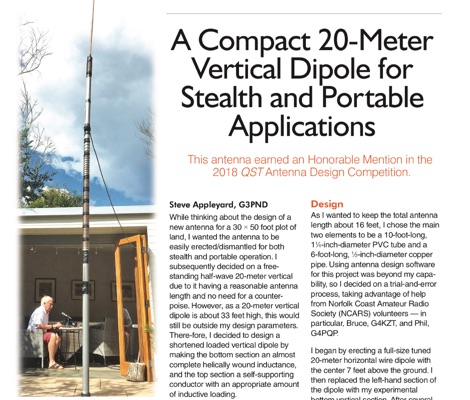 An home made vertical dipole antenna made with simple material. The antenna has a total length of aproximately 16 feet. In this article appeared on June QST 2019, the author explain how he reached the optimal confirugation changing and adjusting the lower part of the antenna, trimming and spacing correctly the copper wire. PDF File to downloas
-
 QST Magazine Product Reviews - Key Measurements Summary - HF-Transceivers or Receivers. Compares Yaesu FTDX5000, Elecraft K3, Flex 5000 and Kenwood TS-590S
-

-
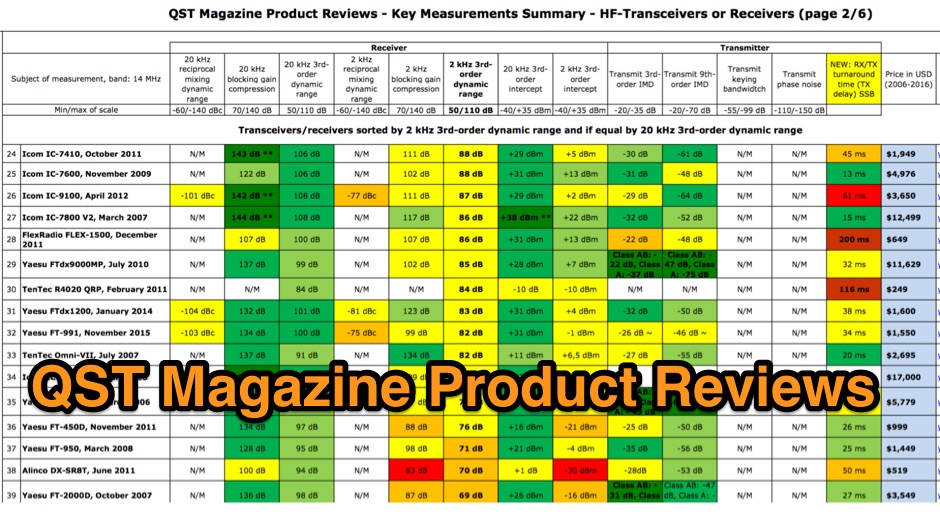 QST Magazine Product Reviews - Key Measurements Summary - HF-Transceivers or Receiver and Linear Amplifiers
-
 Slot cubes are folded skeleton slot antennas with widened, folded dipoles bent into a cube to reduce size. QST Article 12 2019
-
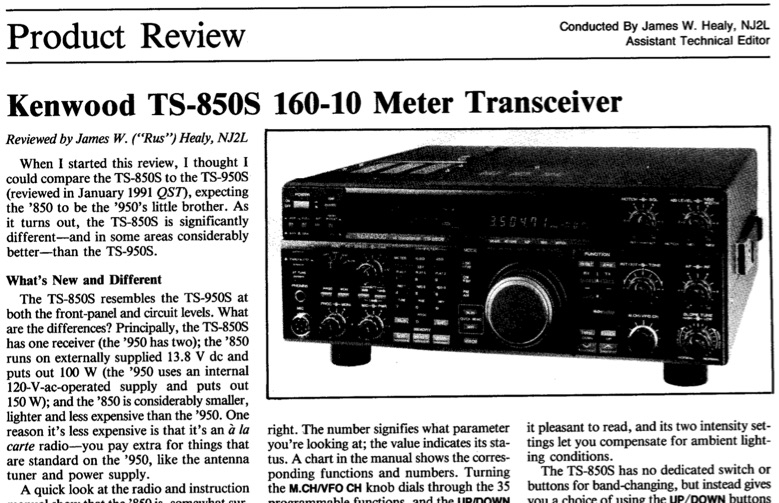 QST Magazine, 1991 July, review of the Kenwood TS-850S 160-10 Meter Transceiver
-
 WR1B review of the Kenwood TS-570D on QST Jan 1997
-
 Demonstrates the principles of effective HF multi-band antenna systems, emphasizing the use of non-resonant antennas, understanding line attenuation, and the proper application of transmatches and baluns. The resource challenges prevalent amateur radio myths, such as the necessity of a 1:1 SWR at the antenna feedpoint and the misconception that reflected power is lost or damages equipment. It cites authorities like Jim Fisk (Ham Radio Magazine) and M. Walter Maxwell (W2U, QST's "Another Look At Reflections" series) to support its arguments, providing historical context and technical explanations for these long-held beliefs. The article details how to combine non-resonant antennas with appropriate feedlines and matching devices to achieve broad-band operation. It compares coaxial cable losses with those of balanced open-wire lines, illustrating how ladder line can significantly reduce attenuation and handle higher impedances, enabling an 80-meter dipole to operate effectively across multiple HF bands. Practical guidance is offered on transmatch operation, explaining impedance matching principles and debunking the idea that tuners merely "fool" the transmitter. It also clarifies the function and potential misapplication of baluns, particularly transformer-type baluns, in the presence of high SWR.
-
 This is a QST Article published in January 1982 by W1FB D. Demaw and HH Beverage and is a complete review of the original article published in 1922, which updates and reivew the beverage antenna theory and developlment, explaining the antenna design of transformers and gives accurate reports on antenna general performance.
-
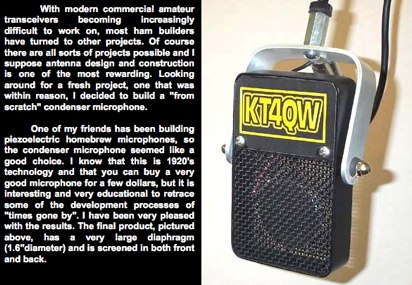 A december 2003 QST article to Build a condenser microphone that will perform like the costly commercial units by KT4QW
-
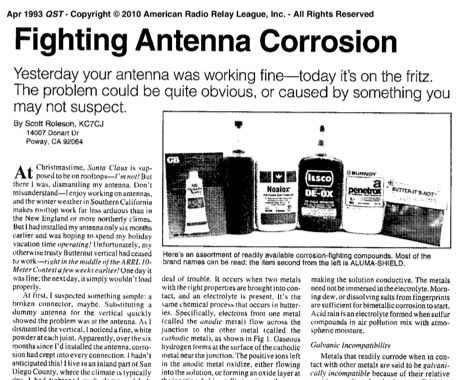 How to make proper maintenance of your antenna. Fighting Antenna Corrosion is a QST article published in 1993 that helps on antenna maintenance works
-
 Designed to handle audio signal interfacing as well as transmit/receive switching Reviewed by Steve Ford, WB8IM
-
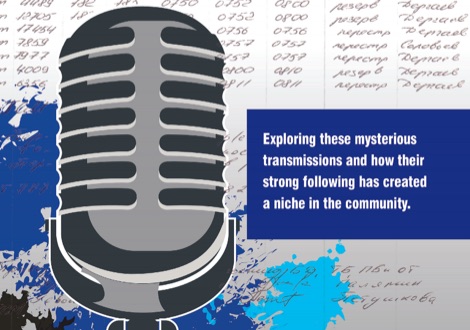 Exploring these mysterious transmissions and how their strong following has created a niche in the community. Free article in PDF Format from QST November 2019
-
 Kenwood TS-590S QST review comments and table comparison vs Elecraft K3
-
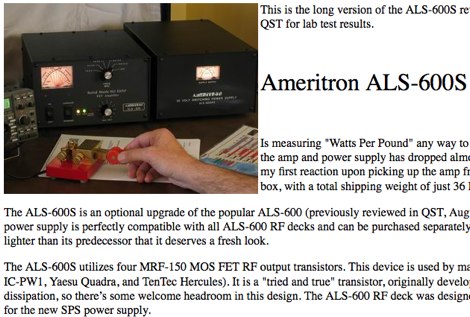 ALS-600S review, an abbreviated version of this review first appeared in the March 2005 issue of QST. See QST for lab test results.
-
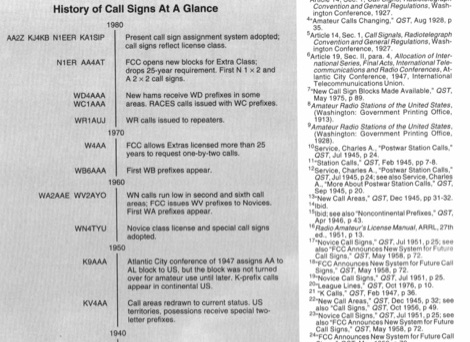 QST article from May 1994 about history of call signs from the very beginning to present system. Article explains call sign allocations, call areas, prefixes for novices and prefixes like K WA WB WD, callsigns during and after the world war II and other curiosities on US Call signs.
-
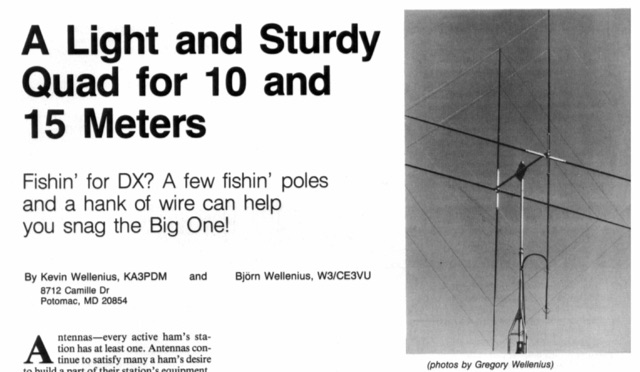 A light and sturdy Quad for 10 and 15 meters. Basic Quad antenna design considerations. Building and assembling a dual band HF QUAD antenna, designing and joining cross-arms and boom, assembling spreader and element wire installation notes. QST article.
-
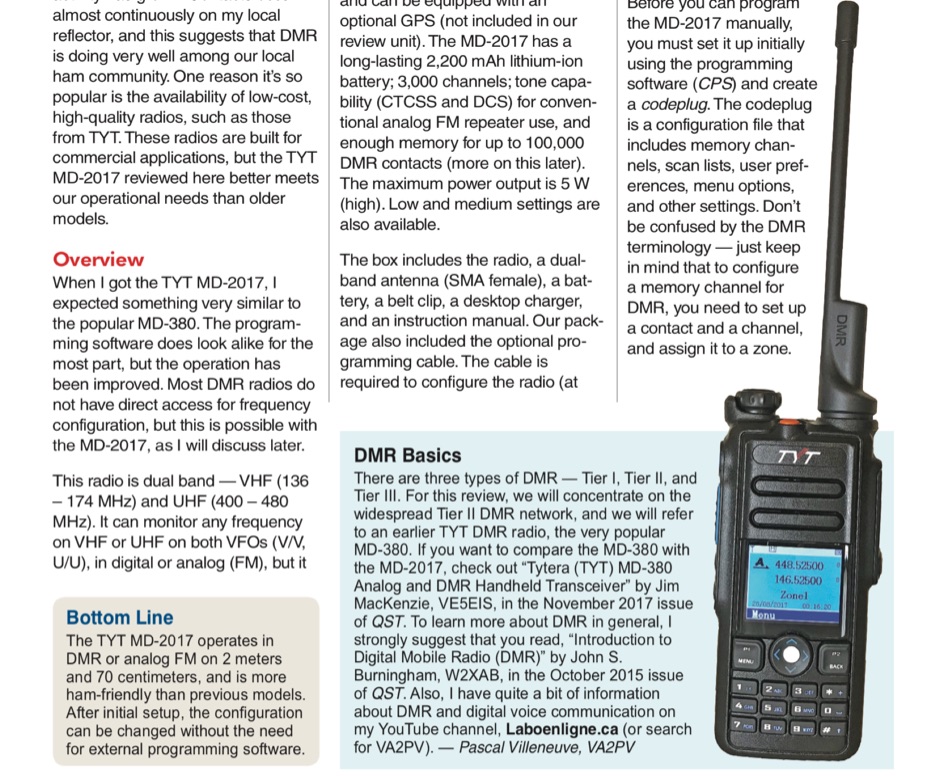 TYT MD-2017 Dual-Band Analog and DMR Handheld Transceiver Reviewed by Pascal Villeneuve, VA2PV
-
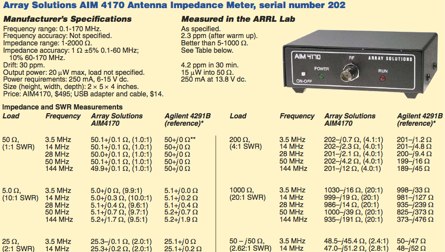 Array Solutions AIM 4170 Antenna Impedance Meter, QST Review
-
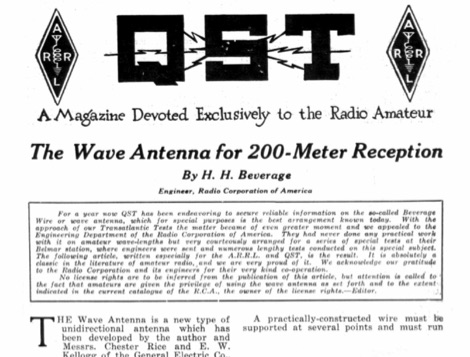 A QST Article published in November 1922 is about the origin of Beverage antennas, an unidirectional antenna type that was discovered and experimented for the first time in that period. This article is the introduction to beverage antenna theory, by the homonimous autho H. H. Beverage.
-
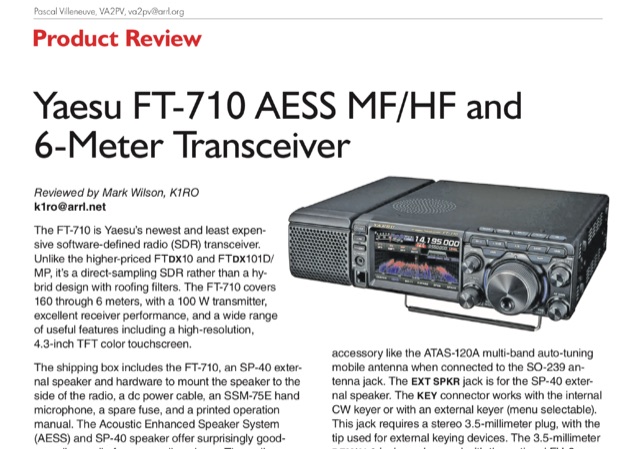 Yaesu FT-710 AESS MF/HF and 6-Meter Transceiver review on QST
-
 Practice these operating techniques so you will be ready to capture that 100-point bonus on Field Day. QST Article
-
 Yaesu FTDX101D HF and 6-Meter Transceiver ARRL QST review
-
 QST is the monthly membership journal of ARRL. Each issue is your source for equipment reviews, technical tips, projects, and news.
-
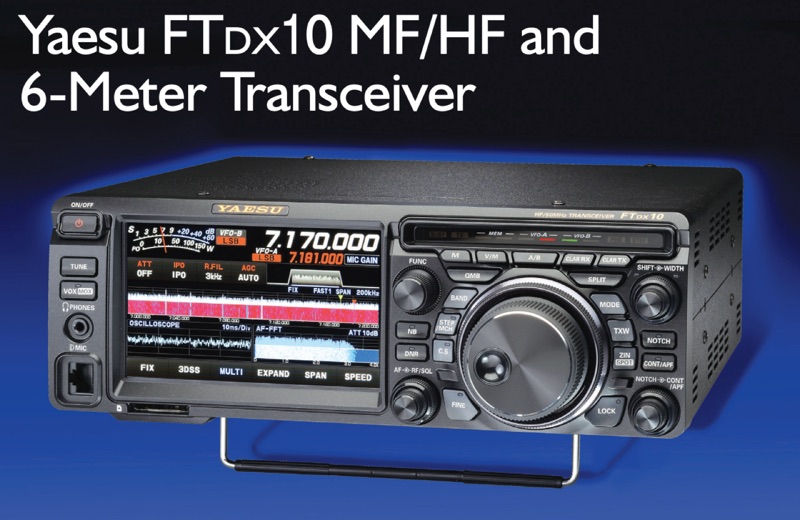 The Yaesu FTDX10 MF/HF and 6-meter transceiver, a 100-watt rig, is designed to bring high-performance receiver architecture to the intermediate-price class. It offers continuous receive coverage from 30 kHz to 75 MHz and transmit capabilities across all amateur bands from 160 through 6 meters, including five preset CW and SSB channels on 60 meters. The transceiver supports AM, FM, SSB, CW, and digital modes, with integrated decoders for CW, RTTY, and PSK31, making it a versatile station for various operating preferences. Physically, the FTDX10 measures 3½ × 10½ × 10½ inches and weighs 13 pounds, requiring a 20–25 A DC power supply for full 100 W output. Its front panel features a 5-inch TFT color touchscreen and a large VFO knob, complemented by an SD memory card slot for recording audio and saving settings. Rear panel connectivity includes a single SO-239 antenna port, multiple USB ports for CAT control and peripherals, and DIN jacks for external digital mode hardware and linear amplifiers, though it lacks a dedicated low-noise receive antenna provision. ARRL Lab tests confirm excellent receiver performance, with blocking dynamic range exceeding 137 dB at 2 kHz spacing and robust IMD dynamic range figures. The hybrid receiver design incorporates selectable roofing filters at 500 Hz, 3 kHz, and 12 kHz, along with two preamplifiers and various attenuation levels, allowing operators to tailor reception characteristics to challenging band conditions. Transmitter performance is also rated very good, with low transmit phase noise.