Search results
Query: nts test
Links: 436 | Categories: 7
-
 The EACW Club, a Spanish amateur radio organization, focuses primarily on the promotion and practice of _Morse code_ (CW) within the amateur community. Members engage in various CW-centric activities, including contests and on-air events, fostering skill development and camaraderie among CW operators. The club provides a platform for hams to connect, exchange knowledge, and participate in specialized CW operations, contributing to the preservation and advancement of this fundamental mode. Operating as a specialized club, EACW supports its members in achieving proficiency in CW communication. Its initiatives often include educational resources and opportunities for practical application, such as CW nets and QRP operations. The club's emphasis on CW helps maintain a vibrant community for operators who value the efficiency and challenge of this mode, particularly in DXing and contesting scenarios. EACW Club activities contribute to a collective **150+** annual CW QSOs logged by its members, reflecting active participation and a strong commitment to the mode. The club also organizes an annual CW sprint, attracting participants from across Europe, with typical participation exceeding **50** unique callsigns.
 -
 The South African Radio League (SARL) serves as the national representative body for amateur radio in South Africa, holding membership in the International Amateur Radio Union (IARU). It actively promotes the hobby, coordinates national amateur radio activities, and provides essential services to its members, including advocacy for spectrum allocation and regulatory liaison with ICASA. The organization frequently publishes updates relevant to the ZS amateur community, such as "HF Update with ZS4BS" and reports on events like the "ZS6STN Field day." SARL supports various aspects of amateur radio, from contesting and DXing to technical experimentation and emergency communications. The league's website lists upcoming events and news, ensuring members stay informed about national and international amateur radio developments. Its focus encompasses all amateur bands, with recent updates highlighting HF activities. The league's digital presence, including its canonical URL _mysarl.org.za_, provides a central hub for South African hams. The site frequently updates with news, event schedules, and technical information, reflecting an active and engaged amateur radio community.
 -
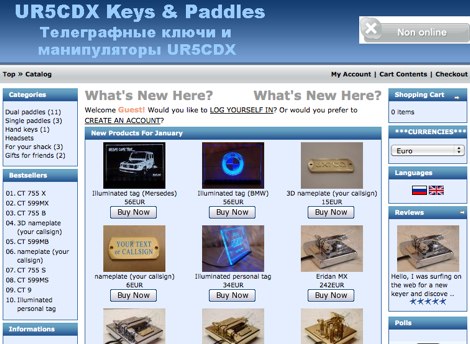 Showcasing a range of precision-engineered Morse code paddles, UR5CDX emphasizes craftsmanship in both dual and single paddle designs. Each key, such as the _Eridan MX_ or _CT 73 MB_, is engineered for optimal performance, catering specifically to the needs of CW operators. The paddles are not merely tools; they reflect the artistry inherent in ham radio equipment, with options for personalization like _Callsign engraving_ and _3D nameplate_ tags. The commitment to quality is evident in the materials used and the precision of the mechanics, ensuring reliable operation during contests or casual QSOs. Yury, UR5CDX, also engages with the community, sharing insights on the manufacturing process and the impact of current events on production timelines, fostering camaraderie among operators who appreciate the nuances of Morse code communication.
 -
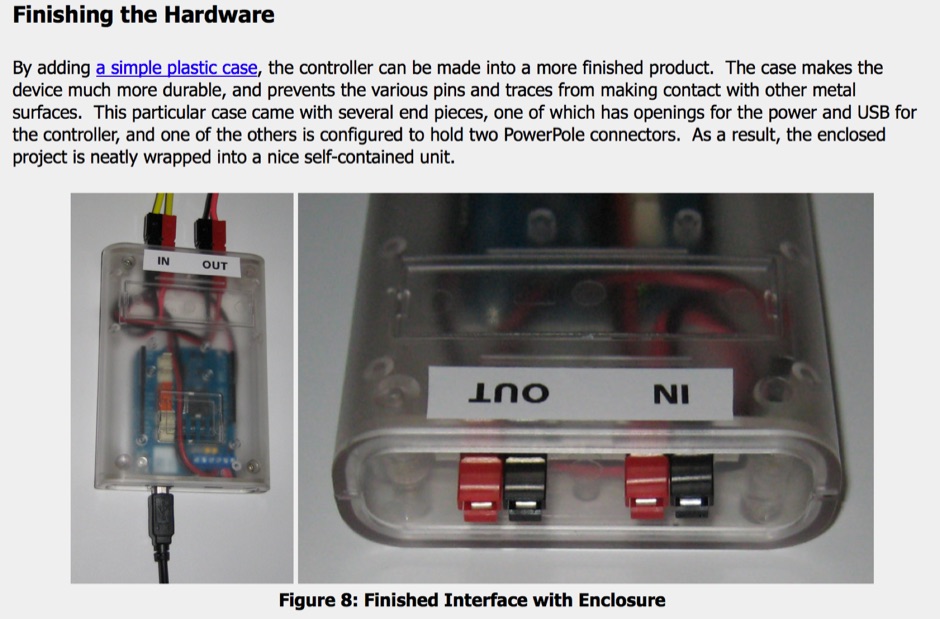 A system designed to automatically tune small transmitting magnetic loop antennas, particularly beneficial for **contest operations** where rapid frequency changes are common. The core of the system involves a PC-based control application, AutoCap, written in C#, which monitors antenna SWR via an external meter and commands a motor interface to adjust the loop's variable capacitor. The software is compatible with Windows and Linux via the Mono framework, offering a graphical user interface for monitoring system status, SWR, power, and motor commands. Key components include one or more magnetic loop antennas equipped with DC or stepper motors for capacitor adjustment, an SWR meter with data output (such as the Telepost LP-100A or a homebrew serial/USB SWR meter), the AutoCap PC software, and a motor interface. The most effective motor interface utilizes an **Arduino-based controller** with custom firmware, providing precise control over both simple DC motors and stepper motors, and supporting features like motor braking for finer adjustments. The system allows for configurable SWR thresholds, pulse widths, and motor effort settings to optimize tuning speed and resolution. Optional radio integration provides frequency hints, enabling the algorithm to learn the relationship between motor actions and resonant frequency, thereby speeding up initial tuning responses. The software also supports antenna profiles, allowing operators to save and recall specific configurations for different loops, including accumulated frequency hint data.
 -
 Used test equipment, used electronic test equipment, refurbished test equipment and other pre-owned electronic test and measurement equipment to buy or rent.
 -
 Pioneer supplier in the radio parts field, and electronic components, alternative power products, kits, test equipment and computer components.
 -
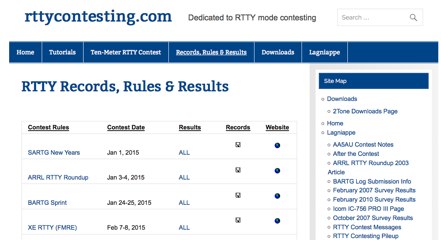 Compiles a detailed calendar of RTTY contests, providing essential information for digital mode enthusiasts. It lists contest dates, links to official rules, and often includes historical results and records, enabling operators to plan their contesting schedule and review past performances. The resource covers a wide array of RTTY events, from major international contests like the _ARRL RTTY Roundup_ and _CQ WW RTTY_ to smaller, regional competitions. Operators can quickly identify upcoming RTTY contests, review specific rules for each event, and access historical data to gauge competition levels. For example, the site details the _BARTG RTTY Sprint_ and the _SARTG New Years_ contest, offering a centralized hub for RTTY contesting information. This resource is particularly useful for those aiming to improve their digital contesting skills or track their progress against established **records**.
 -
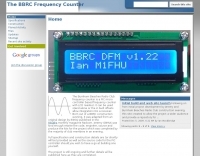 Accurate frequency measurement is crucial for amateur radio operators, particularly when building or troubleshooting transceivers and test equipment. This resource details the construction of a _PIC microcontroller_-based frequency counter, providing a practical solution for precise frequency display. The design incorporates an LCD readout, offering clear visual feedback of measured frequencies. The counter can operate as a standalone unit, useful for general bench testing, or be integrated directly into a receiver. Its built-in offset functionality allows for seamless integration, enabling the display of the received signal frequency rather than the intermediate frequency. The project focuses on accessible components and construction techniques, making it suitable for homebrew enthusiasts. Key features include a measurement range up to **50 MHz** and a compact form factor.
 -
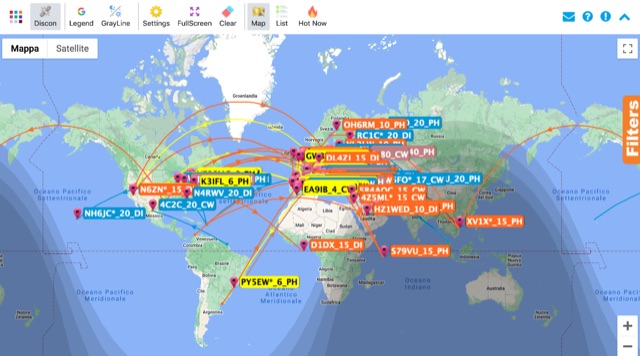 Monitoring real-time amateur radio activity is essential for DXers and contesters seeking rare contacts or tracking propagation. This online service aggregates DX spots from various **DX Cluster** networks, presenting them visually on a world map. Users can observe new spots as they appear, facilitating quick identification of active stations and potential openings. The platform offers filtering capabilities, allowing operators to narrow down displayed spots by specific bands such as 160m, 80m, 40m, 20m, 10m, and even VHF/UHF segments like 70cm and 23cm. Further refinement is possible by selecting the source continent of the spotter or the continent of the DX station, which assists in strategic operating. The service also includes a "Hot Now" list, highlighting currently active stations with recent spots. This dynamic display supports informed decision-making for pursuing **DX contacts** across different bands and geographical regions.
 -
 Presents the Holy Cluster, a contemporary DX cluster service offering real-time amateur radio spot data. This platform integrates a dynamic graphical map to visualize current contacts, enhancing situational awareness for DXers and contesters. Developed by an Israeli group of developers and supported by the Israeli Association of Radio Communication (IARC), the Holy Cluster aggregates DX spots from various sources, including traditional telnet clusters, the Reverse Beacon Network (RBN), and PSK Reporter, providing a comprehensive view of band activity. The cluster's design emphasizes a user-friendly interface for monitoring DX activity across multiple bands, including dedicated support for JOTA (Jamboree On The Air) operations. Its aggregation capabilities allow operators to quickly identify propagation openings and active stations, streamlining the process of making two-way radio contacts. The integration of RBN and PSK Reporter data offers insights into propagation conditions and station reception reports, which can be invaluable for optimizing antenna direction and operating strategies.
 -
 Over 45 years of dedicated work by Robert Sherwood, NC0B, culminated in a wealth of technical insights, particularly concerning **receiver performance** and the intricacies of transceiver design. The site provides access to numerous presentations from events like Dayton Contest University and W4DXCC, covering topics such as optimizing rig performance, the evolution of lab testing, and the impact of roofing filters on transmitted IMD and receiver characteristics. These resources offer detailed analyses and practical advice for serious operators and contesters. While product manufacturing, including the SE-3 MK IV synchronous detector and various Drake R-4C accessories like roofing filters and cooling kits, has ceased, the legacy of technical documentation remains. The site details specific products like the Icom IC-781 and R-9000, and offers insights into 455 kHz mechanical and crystal filters, along with DSP protection strategies. Crucially, the site features extensive receiver test data, allowing radio amateurs to compare the performance of various transceivers. This data, often presented in white papers and slide shows, includes detailed measurements and explanations of key performance metrics, serving as a valuable reference for understanding and selecting high-performance HF gear.
 -
 Francisc Grunberg, YO4PX, shares his insights and translations on various amateur radio topics through his blog. Content includes historical perspectives on ham radio, detailed accounts of _DXpeditions_, and discussions on ethical operating practices for DXing and contesting. The site also offers practical advice, such as suggestions for navigating pile-ups and improving contesting strategies. The blog delves into the intricacies of the hobby, providing guidance for operators aiming to improve their skills and understanding. It covers subjects like Codes of Conduct for amateur radio and lists the **most wanted DXCC entities**, offering a valuable resource for those pursuing awards. Francisc's contributions reflect his extensive experience, providing a unique perspective on the amateur radio landscape.
 -
 The ÖVSV website provides extensive resources for Austrian radio amateurs, including details on its nine **Landesverbände** (regional sections) and the Austrian Military Radio Society (AMRS). It features information on licensing, legal frameworks, and **band plans** for both HF and VHF/UHF operations. The site also covers various amateur radio activities such as contests (HF, VHF/Microwave, Alpe-Adria, SOTA, ARDF), technical projects like WRAN, and educational content explaining what amateur radio is and how to become a licensed operator. Recent news items highlight events like the "Laa Funk '26" exhibition, the "OE5XLM" club station's participation in the CQ WW Contest, and the "International Marconi Day 2026" activation by "OE26M" from Küniglberg. The site lists upcoming events, including a 160m OE-Aktivitätsrunde, a seminar on Baluns/Ununs, and various club meetings and flea markets. Membership is facilitated through regional sections, and the site emphasizes amateur radio's role in independent communication during crises.
 -
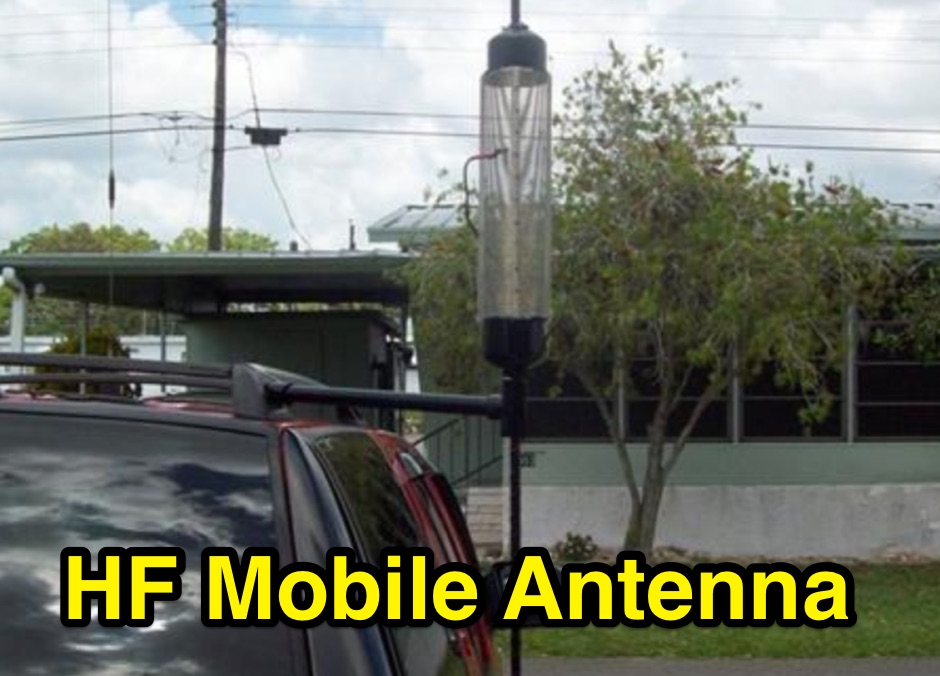 Constructing a mobile HF antenna presents unique challenges, particularly when aiming for multiband operation and robust mechanical stability. This project details N1GY's adaptation of the KM4IE $20 antenna and the _Texas Bugcatcher_ design, focusing on practical build considerations and on-the-road performance. The author shares insights from winding coils on 2-inch PVC forms and integrating a salvaged fiberglass core from an old Hamstick-style antenna to enhance structural integrity, preventing potential failures from stress on PVC joints. N1GY's build includes a custom matching coil and a commercially sourced MFJ loading coil, carefully integrated into the design. The article provides specific tap settings for bands from 75 meters to 15 meters, achieving SWRs as low as **1.2:1** on 40 meters and **1.6:1** on 75 meters. Mechanical testing involved driving at speeds up to 70 MPH on Interstate routes, confirming the antenna's durability and the effectiveness of its PVC brace system. Further modifications address real-world usability, such as simplifying antenna removal for car washes. The ground strap was updated with a Power Pole connector, and the brace attachment to the luggage rack was converted to wing nuts, reducing removal time from 30 minutes to approximately _five minutes_. This iterative design process highlights practical solutions for mobile HF operation.
 -
 This resource presents a domain name for sale, specifically _Kl7aa.com_, for $995, with an option for a 24-month payment plan at $41.46 per month. The page details the purchasing process, including immediate domain access, zero percent financing, and secure shopping. It also outlines the transfer process to other registrars like _GoDaddy_, clarifies what is included with the domain purchase (only the domain name, not hosting or web design), and explains how to maintain WhoIs privacy protection. The content includes testimonials from buyers like Dann Berg and Greg Shepard, highlighting smooth transactions and quick domain delivery. It also provides information on HugeDomains' 30-day money-back guarantee and frequently asked questions regarding domain transfers, access post-purchase, and payment plans. The page emphasizes the importance of a web address and lists other similar domains for sale, such as _Kl35.com_, alongside quick stats about the domain's length and structure.
 -
 Test Equipment Connection Buys, Sells, Trades, Rents and repairs quality used test equipment.
 -
 This resource presents a domain name for sale, Grandicelli.com, which was previously associated with an HF-VHF-UHF-SHF digital monitoring site, Wavecom Decoder tools, Winradio and DRM decoders, a WD3000 Direction Finding System, Radioraft software, and a PFSL3000 Integrated HF-VHF-UHF signal monitoring system. The current page functions as a sales portal, providing information on the domain's price of $695, with an option for a 24-month payment plan at $28.96 per month with 0% interest. The page outlines the purchasing process, including quick delivery of the domain within one to two hours, and details the transfer procedure to registrars like GoDaddy. It also highlights customer testimonials regarding the ease and speed of domain acquisition through HugeDomains, emphasizing the 30-day money-back guarantee and secure shopping experience. The resource clarifies that only the domain name is included, with hosting and web design services needing to be sourced separately.
 -
 HB9BZA's LoTW users list, originally compiled since 2005 from DX-Cluster and user submissions, now primarily leverages the official ARRL full users list released on July 29th, 2017. This resource details 228,012 calls across 340 current DXCC entities, with the latest update noted on March 2, 2026. It offers various formats, including a full list, text versions, and breakdowns by country, providing valuable insights into LoTW participation for DXers. While the ARRL's official list with "last upload" dates diminished the original list's unique utility, HB9BZA's site continues to offer statistics and user counts by country, which remain of interest. The author, HB9BZA, expresses gratitude to contributors who helped maintain the list's accuracy over many years, achieving an impressive 96.4% match with the ARRL's data before the official release. Knowing which stations are LoTW active encourages more hams to join the system, demonstrating that even rare DXCC entities like Ducie Island or Heard Island can be confirmed quickly. For instance, HB9BZA recounts a 36-minute QSL confirmation for a 3A2MW contact. The list also integrates with the RXCLUS packet radio/telnet client, enhancing DXCC award tracking by identifying LoTW participants and utilizing upload dates for alarms.
 -
 Presents the construction of a 2-meter **Skeleton Slot Yagi** stack, detailing the design process and practical considerations for VHF operation. The author shares insights from building and testing this antenna, emphasizing its performance characteristics for local and extended range contacts. The project outlines the specific dimensions and materials used, providing a clear path for other radio amateurs to replicate or adapt the design for their own stations. The resource covers the unique aspects of the Skeleton Slot radiator, explaining how its geometry contributes to gain and pattern control. It includes discussions on impedance matching and feedline considerations crucial for optimizing power transfer and minimizing SWR. The article draws on real-world testing, offering practical results that validate the theoretical design. This project serves as a valuable reference for those interested in custom VHF antenna solutions.
 -
 A 200 kHz bandwidth digital transmission system for image transfer in the Amateur Service is under development, specifically targeting VHF allocations. John B. Stephensen, KD6OZH, leads this project under an FCC Special Temporary Authority (STA) valid until September 10, 2006, authorizing emissions up to 200 kHz bandwidth in the 50.3-50.8 MHz segment. Current regulations typically limit bandwidths to 20 kHz on VHF amateur bands, making this STA crucial for testing wideband digital modes. The modem, a modified **OFDM** (Orthogonal Frequency Division Multiplexed) unit, was initially tested on the 70-cm band. It splits a high-rate data stream into multiple low-rate subcarriers to mitigate multipath echoes. The system uses a DCP-1 card with a Xilinx XC3S400 FPGA and Oki Semiconductor ML67Q5003 microcontroller. The transmitter, located at 36d 46m 30s N, 119d 46m 22s W, generates 150 WPEP into an 8 dBi gain vertical antenna, while the mobile receiver uses a Ham-stick. Three data formats for 50, 100, and 200 kHz channels are being tested, with encoded data rates of 96, 192, and 384 kbps. Verilog code for the VHF OFDM modem is 95% simulated, with modifications from the UHF version including increased filter coefficient precision and a change from Ungerboeck **TCM** to BICM for improved performance over fading paths. Final tests will involve one-way over-the-air measurements of bit error rates and coverage area.
 -
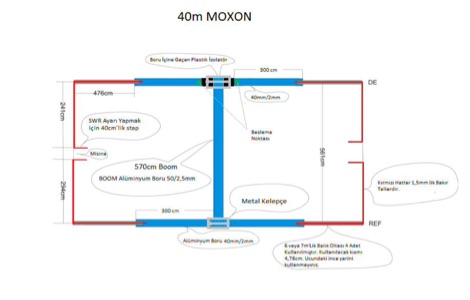 Constructing an effective directional antenna for the 40-meter band presents unique challenges due to its physical size requirements. This resource details the homebrew construction of a 2-element _Moxon_ Yagi antenna specifically designed for 7 MHz operation. The author, TA7OM, provides a visual guide to building this antenna, showcasing the boom, element mounting, and feedpoint connections through a series of high-resolution photographs. While textual descriptions are minimal, the imagery clearly illustrates the mechanical aspects of the antenna's assembly. The _Moxon_ rectangle design offers a compact footprint compared to a full-size Yagi, making it a practical choice for many hams with limited real estate. The visual documentation allows builders to replicate the antenna's structure, including the use of PVC pipe for element support and the method for spacing the driven and reflector elements. The project emphasizes practical construction techniques for achieving a directional pattern on a challenging HF band, suitable for DXing and contesting.
 -
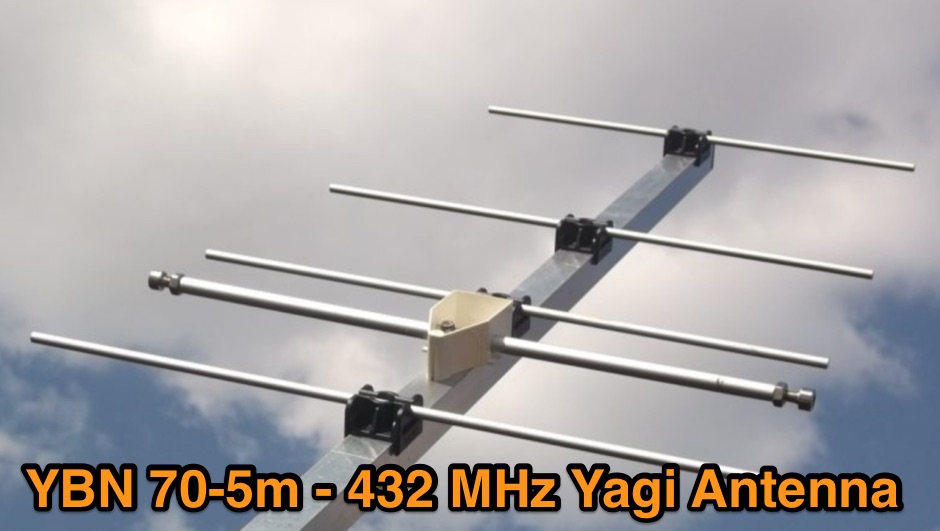 5 Element Yagi with Conventional Driver, this little Yagi has a high F/B, which makes it quite useful as a contest stack.
 -
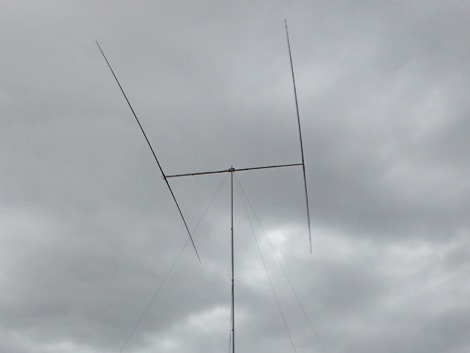 This antenna was designed for the CQ WW CW 2009 at EA8URL. All elements are made out of fishing rods with an insulated copper cable fixed on the rods by cable ties. Both fishing rods and cable are UV resistant.
 -
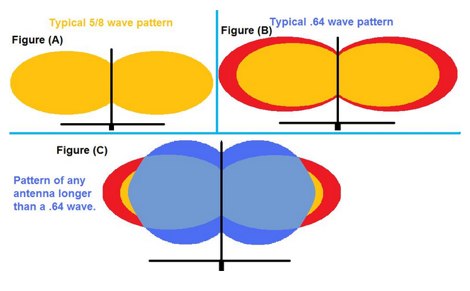 The .64 wavelength antenna is presented as a single-element design offering superior gain, specifically noted for achieving at least 0.8 dB/d more gain towards the horizon compared to a 5/8 wave element. The discussion emphasizes identifying specific hardware revisions, defining clear operating goals for various signal paths like receiving, transmitting, and data, and establishing a baseline measurement before any modifications. This methodical approach ensures accurate assessment of antenna performance. Practical application involves a structured testing methodology where only one variable is altered at a time to ensure valid comparisons. The article suggests exploring related technical paths, referencing components like the R820T Rafael Micro and Mirics MSI3101 SDR USB Dongle, and encourages a holistic view of the radio system from antenna to operator. This systematic process helps hams optimize their antenna systems for improved DXing and contesting.
 -
 Amateur Radio Club in Edinburgh. Founded in 1949 with twice monthly meetings and a range of activites including talks, DF hunts, vists and contesting.
 -
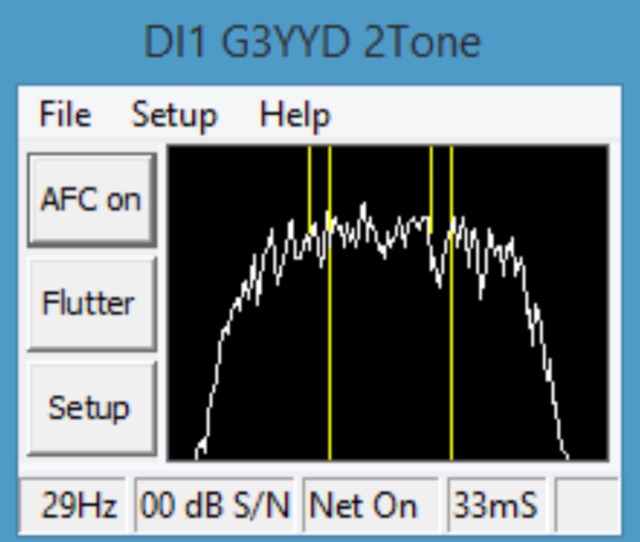 Operating RTTY digital mode, this resource provides access to various versions of the _2Tone_ software engine, specifically designed for decoding and encoding RTTY signals. It details the evolution of the software, highlighting a significant technical requirement change where versions 24.09b through 26.01a necessitate a PC CPU with the AVX instruction set, a crucial detail for operators considering system compatibility. The page lists numerous historical and current releases, enabling users to select a version compatible with their hardware and operating environment. The utility of 2Tone lies in its ability to interface with established amateur radio programs such as _N1MM Logger+_, WriteLog, and QARtest, enhancing their RTTY capabilities. While specific performance metrics like decoding accuracy or WPM limits are not quantified on this page, the availability of multiple versions, including those without AVX requirements, suggests a commitment to broad user accessibility. The software's integration with major contest logging applications indicates its primary application in competitive RTTY operations, where reliable decoding is paramount for achieving high scores.
 -
 cq-contest reflector comments about the performance of the EWE receive antennna collected by KA9FOX
 -
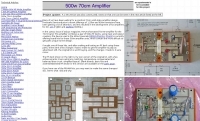 Constructing a high-power 70cm solid-state amplifier presents unique challenges, particularly when aiming for 500 watts output using modern LDMOS devices. This resource details the author's experience building a 70cm amplifier based on a _Freescale MRFE6VP5600H_ transistor, initially from an RFHAM kit. It meticulously outlines the necessary modifications to achieve advertised performance, including optimizing input and output matching, correcting bias circuitry, and ensuring proper output balun connections for stability. The author shares specific adjustments, such as trimming the prototyping board for better transistor fit, drilling additional mounting holes for improved heat sinking, and replacing original matching capacitors with a single _20pf MIN02 metal mica_ for superior output. A critical fix involved jumpering gate decoupling pads to balance the push-pull transistor halves, which increased output to 580W and improved IMD. The resource also highlights a crucial correction to the output balun connection, initially reversed in the _Dubus_ article schematic, which resolved intermittent stability issues. Test results are provided, showing input power, output power, and drain current at 50V, demonstrating the amplifier's performance after modifications. This practical account offers valuable insights for hams undertaking similar high-power UHF amplifier projects, especially those working with LDMOS devices and kit-based constructions.
 -
 Nightly Talk Around Net sparked many new ideals and has promoted Amateur Radio in our area with things like, ARES, Skywarn Classes, Field Day, VE testing, Internet and other events that bring our Hams together as one big family.
 -
 The Icom AH-4 autotuner operates efficiently across multiple HF bands, providing seamless automatic tuning for antennas from 3.5 MHz to 54 MHz. Its robust design allows for outdoor installation, making it suitable for field operations and fixed stations. The unit interfaces with Icom transceivers via a control cable, enabling automatic band switching and tuning. The AH-4 is capable of handling up to 120 watts of RF power, ensuring compatibility with most amateur radio setups. Its weather-resistant casing and compact form factor make it a versatile choice for operators requiring reliable performance in diverse environments. Field tests demonstrate the AH-4's ability to maintain low SWR across its operational range, enhancing signal quality and transmission efficiency. Compared to manual tuners, the AH-4 offers significant time savings and ease of use, particularly in rapidly changing band conditions. Its integration with Icom radios simplifies operation, eliminating the need for manual adjustments. The autotuner's performance is consistent with other high-end models, providing a cost-effective solution for amateur operators seeking dependable tuning capabilities without sacrificing performance.
 -
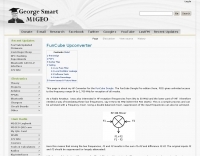 Details the construction of an **HF converter** designed by M1GEO, George Smart, specifically to extend the frequency range of the FunCube Dongle Pro (FCD) for amateur radio reception. The FCD natively covers 64 to 1,700 MHz, but this project enables reception from 0 Hz to 64 MHz by up-converting signals to the FCD's operational range. It employs a **double-balanced mixer** with a 100 MHz local oscillator (LO) to translate incoming HF signals; for instance, a 1 MHz signal appears at 101 MHz within the FCD's passband. The design incorporates a 7th-order Chebyshev low-pass filter with a 62 MHz cutoff frequency at the input to mitigate image frequencies, ensuring cleaner spectral presentation. George provides the schematic, PCB masks, and Gerber files for replication, noting that Far Circuits also offers PCBs. The resource includes test results for the low-pass filter and measurements of LO leakage, identifying -36.8 dBm at 100 MHz as a potential sensitivity concern. M1GEO discusses potential improvements, such as adjusting the mixer's LO drive, adding a balance pot, or incorporating a post-mixer high-pass filter to reduce LO breakthrough. Audio recordings from 40m and 17m demonstrate the converter's performance with WRplus SDR software.
 -
 Optimizing weak signal reception on the HF bands, particularly in the presence of strong local QRM, often necessitates specialized receiving antenna systems. This resource details the _HI-Z Antennas_ product line, focusing on phased vertical arrays designed for superior noise rejection and directivity. It covers components such as the 4-Square and 8-Element array controllers, which allow for rapid switching of receive patterns, and dedicated low-noise preamplifiers to improve system sensitivity. The site also presents various bandpass filters, crucial for mitigating out-of-band interference and enhancing the dynamic range of the receiver. The HI-Z systems are engineered to provide significant front-to-back and side rejection, often yielding **20-30 dB** of attenuation to unwanted signals, which is critical for DXing and contesting. Users can achieve a notable reduction in local noise, allowing for the discernment of signals that would otherwise be buried. The array controllers facilitate quick pattern changes, enabling operators to null out interference or peak weak signals from distant stations, effectively extending the reach of their receive capabilities by improving the signal-to-noise ratio.
 -
 Local amateur radio clubs often serve as vital hubs for hams to connect, share knowledge, and participate in group activities. The Orleans County Amateur Radio Club (OCARC), operating under the callsign WA2DQL, provides a focal point for amateur radio operators in Albion, New York, and the surrounding Orleans County area. These organizations frequently host events, offer technical assistance, and foster camaraderie among members, supporting various aspects of the hobby from contesting to emergency communications. OCARC's activities include discussions on proposed Technician class privileges for **80, 40, and 15 meters**, indicating an interest in regulatory changes affecting entry-level licensees. The club also promotes the use of online tools like _Radio Mobile Online_ for antenna pattern analysis and _VOACAP Online_ for propagation predictions, aiding members in optimizing their station performance. Furthermore, OCARC highlights participation in _Parks On The Air_ (POTA) events, such as the Erie Canal Bicentennial Celebration in 2025, encouraging outdoor operations and public engagement with amateur radio.
 -
 Presents the Scranton Pocono Amateur Radio Club (SPARK), K3CSG, highlighting its status as one of Pennsylvania's most senior ARRL-affiliated clubs. The club, also known as the Abington Amateur Radio Club, maintains a consistent presence in the local amateur radio community. It provides a platform for radio enthusiasts to engage in various aspects of the hobby, including operating events and technical discussions. The resource details the club's historical background and its ongoing commitment to fostering amateur radio interest and skill development among its members. The club's activities often encompass participation in field days, local nets, and support for emergency communications. Members frequently operate on HF and VHF/UHF bands, utilizing various modes for local and DX contacts. The club's callsign, K3CSG, is regularly active during club events and contests, representing its collective efforts in amateur radio.
 -
 The 80 metre fox-or/test transmitter is a small low power transmitter which is designed to be used as an alignment aid for running up 80 metre foxhunt or ARDF receivers. It is also usable as a micro transmitter for fox-or-ing events.
 -
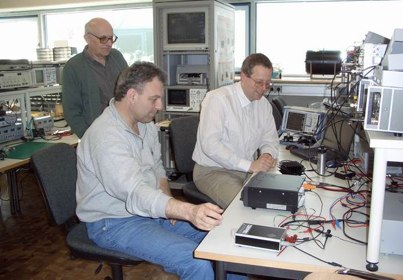 Report on tests done on VHF Radios to understand which are best suited for 144 MHz operation in large signal environments like VHF contests
 -
 Operating the _Icom IC-746_ HF/VHF transceiver often presents specific technical questions, and this resource compiles a comprehensive Frequently Asked Questions (FAQ) document in an ASCII text format. It details common inquiries and solutions related to the rig's functionality, accessories, and potential modifications. The content is structured into distinct sections addressing general information, power supplies, antennas, microphones, keyers, amplifiers, TNC integration, and optional IF filters. The FAQ provides practical guidance on topics such as configuring the internal automatic antenna tuning unit (ATU), selecting appropriate power supplies, and understanding microphone pin-outs. It also delves into advanced subjects like computer control via CI-V, wiring for PSK31 operation, and troubleshooting common issues like low S-meter readings on 2m FM or loose tuning shafts. Specific questions cover the installation of optional IF filters, comparing Inrad versus Icom filters, and optimizing filter combinations for various modes. Furthermore, the document outlines various hardware and firmware modifications, including those for increasing monitor volume, replacing LCD driver transistors, and implementing a "poor man's TCXO." It even touches upon untested modifications, such as replacing PIN diodes in the demodulator. The FAQ also lists manual errata and discrepancies, offering a robust knowledge base for IC-746 owners seeking to optimize their station or resolve operational challenges.
 -
 Applied instruments manufactures test and measurement equipment for the broadband telecommunications industry. products include carrier generators, signal level meters, rf switches, spectrum analyzers and a return alignment system.
 -
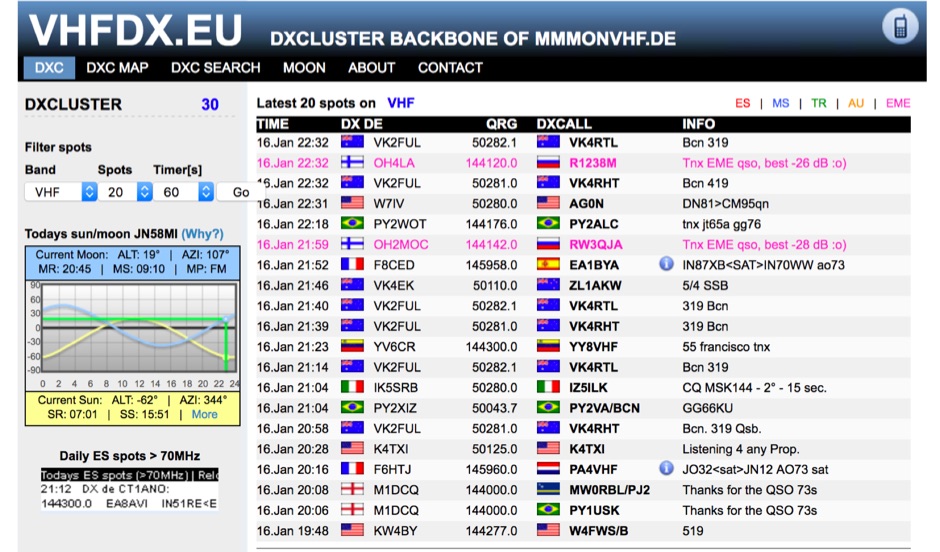 Presents the VHFDX.EU web cluster, a specialized resource for VHF, UHF, and microwave DX spotting. It details the cluster's functionality, including real-time spot aggregation and a DXCluster Map interface for visualizing activity. The resource highlights its integration with the MMMonVHF backbone, ensuring a robust data flow for monitoring band openings and propagation events across higher frequencies. It also references reviews of the ON4KST and N0UK chat systems, which are frequently used in conjunction with VHF DX operations. The platform offers a mobile-optimized view for on-the-go access to DX spots, catering to portable and mobile operators. It further provides daily ES (Sporadic E) spot summaries, a critical feature for VHF operators tracking this specific propagation mode. The cluster serves as a central point for operators to share and receive information on rare grid squares, contest activity, and general band conditions above 50 MHz.
 -
 The Araucaria DX Group, based in Brazil, functions as an amateur radio club specializing in **DXpeditions**, **contesting**, and organizing various related events. The group actively sponsors contests and provides resources for DX enthusiasts. Its primary focus is on facilitating and participating in long-distance radio contacts and competitive operating events, contributing to the global amateur radio community. The group's activities include coordinating expeditions to rare DX entities, participating in major international contests, and fostering skill development among its members. By sponsoring events, the Araucaria DX Group supports the growth of amateur radio in South America, encouraging participation in competitive operating and promoting the pursuit of DX. The group's initiatives aim to enhance operational proficiency and expand the reach of amateur radio communications.
 -
 The ARRL Contest Results Database serves as a centralized repository for official scores and detailed breakdowns from numerous ARRL-sanctioned operating events. This resource typically features comprehensive listings of participants, their submitted logs, and final standings across different categories, modes, and bands. It allows hams to review their performance, compare results with other operators, and analyze contest trends over time, providing valuable insights into competitive amateur radio. Historically, the database has showcased the efforts of thousands of contesters, from single-operator entries to multi-operator, multi-transmitter stations. While the current status indicates scores are not immediately available, the database's primary function is to archive and present the outcomes of events like the ARRL DX Contest, Sweepstakes, and Field Day. This historical data is crucial for tracking individual progress, identifying top performers, and understanding the competitive landscape within the amateur radio community.
 -
 OBARC is an active organization participating in field day, various operating events, special events and contests
 -
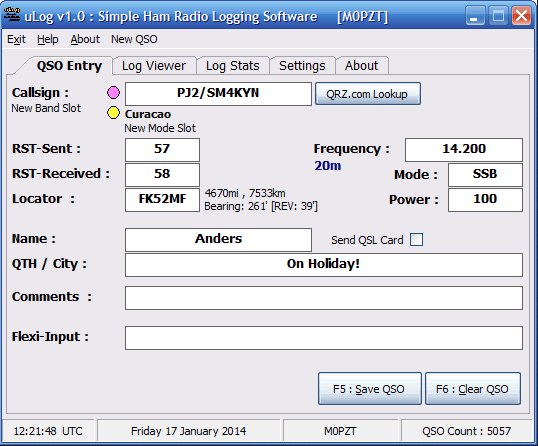 Demonstrates the design and functionality of _uLog_, a Windows-based logging application for amateur radio operators. The resource details its core purpose as an easy-to-use logbook, emphasizing its streamlined interface that provides only the basic fields necessary for efficient QSO entry. It positions _uLog_ as a practical alternative to more complex logging software, catering to operators who prefer simplicity and speed in their logging workflow without an abundance of advanced features. The application's utility is highlighted by its focus on fundamental logging tasks, distinguishing it from comprehensive contest loggers or DX cluster clients. While not explicitly comparing it to other specific software, the description implies its niche for everyday logging rather than specialized operating events. Its design philosophy prioritizes quick data input, making it suitable for casual operating or for those who desire a minimalist approach to maintaining their station log.
 -
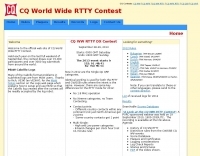 Rules of CQ World Wide RTTY Contest. The CQ World Wide RTTY DX Contest take place last full week-end of September, inviting amateur radio operators globally to connect across various CQ zones and countries. Participants will operate on five designated bands: 3.5, 7, 14, 21, and 28 MHz, exchanging RST reports and zone numbers. Scoring is based on QSO points multiplied by zone, country, and QTH multipliers. The contest encourages innovation in operating strategies while adhering to established rules to ensure fair competition among entrants.
 -
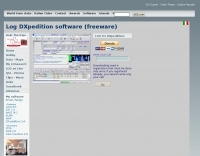 Presents a dedicated logging solution for amateur radio DXpeditions, addressing the unique operational demands of remote or temporary stations. This freeware Windows application provides essential tools for managing QSO data, ensuring accurate record-keeping during high-volume operations. The software supports efficient entry and retrieval of contact information, crucial for verifying DXCC credit and submitting contest logs. It streamlines the process of logging contacts, which is vital when operating from rare entities or during intense pile-ups, helping operators maintain focus on making contacts rather than complex data management. The application aims to simplify the logistical challenges associated with DXpedition logging.
 -
 A 2x3-foot laminated world map product is detailed, offering customization for amateur radio operators. Each map features two distinct views: one centered on the operator's specific station location and another precisely centered on its _antipode_. Countries are clearly labeled, complemented by a tabular listing of all countries. The map integrates a standard latitude/longitude grid alongside concentric circles that delineate distance increments radiating outward from the operator's QTH. Personalization includes the operator's name, callsign, and location printed directly on the map. This custom mapping service provides a unique visual aid for DXing and propagation analysis, allowing operators to quickly ascertain beam headings and distances from their station. The dual-view presentation, particularly the antipodal centering, offers a practical reference for understanding long-path propagation and identifying potential DX opportunities. The inclusion of distance circles and personalized station data makes it a tailored tool for daily operating and contest planning, distinct from generic world maps.
 -
 New and refurbished test and measurement instruments
 -
 The M0PLK multiband delta loop antenna project details the construction of a non-resonant, bidirectional antenna designed for 20-10m operation, requiring an external antenna tuner. The design utilizes two 5.65m aluminum tubes arranged at right angles, with 2x 2.80m antenna wires converging into a 2.30m ladder line, feeding a 1:4 balun. The resource provides a comprehensive parts list, including specific dimensions for aluminum tubes (25mm, 20mm, 16mm outer diameter), DX-Wire FS2, and custom 3D-printed components like a middle insulator, tube end caps, and ladder line spacers, with STL files provided. Construction steps cover base plate fabrication from a 300x300x4mm aluminum sheet, balun assembly, tube preparation with slits and threaded holes, and wire attachment with strain relief. Initial VSWR measurements are presented, indicating performance in line with expectations across the target bands. The author reports successful SSB test QSOs to the USA on 10, 12, 15, 17, and 20m immediately after completion. The project highlights the antenna's bidirectional pattern, noting the need for a lightweight, remote-controlled rotator to fully utilize its directional capabilities. Comparisons are drawn to the Cobweb antenna, with the M0PLK design cited for its reduced local QRM pickup. The article references external sources, including M0AWS's detailed report and PC modeling, along with other construction variants and commercial assembly instructions, providing a robust foundation for replication.
 -
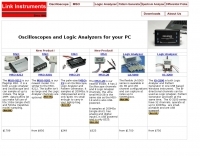 Pc based test and measurement equipment and instrumentation: digital oscilloscope, logic analyzer and spectrum analyzer.
 -
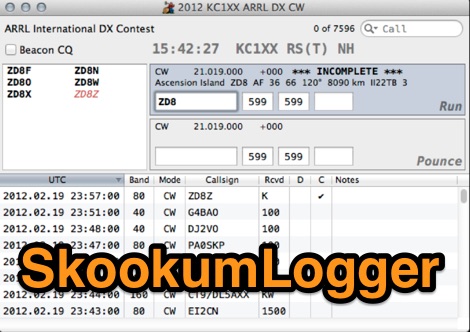 SkookumLogger is a free contest logging program for Mac OS X 10.7 or later, supporting CW and SSB events on the six HF contest bands plus 6m, 4m, 2m, and 70cm