Search results
Query: radio equipment
Links: 319 | Categories: 62
Categories
- Shopping and Services > Radio Equipment Repair
- Radio Equipment
- Radio Equipment > Radio Equipment Reference
- Shopping and Services > Antique Radios
- Manufacturers > Digital and Packet Radio
- Manufacturers > Digital Mobile Radio
- Ham Radio
- Shopping and Services > Ham Radio Insurance
- Operating Modes > Radio Direction Finding
- Manufacturers > Radio Direction Finding
- Shopping and Services > Test equipment
- Manufacturers > Test Equipment
- Technical Reference > Test Equipment
- Technical Reference > Radio Direction Finding
- Shopping and Services > Aeronautical
- Internet and Radio > Auctions
- Shopping and Services > Regional > Australia
- Shopping and Services > Bags and Cases
- Shopping and Services > Batteries
- Radio Scanning > Beginner's guides
- Operating Aids > Beginner's Guides
- Shopping and Services > Regional > Canada
- Internet and Radio > Classifieds
- Ham Radio > Disabilities
- Manufacturers > Electronic Components
- Shopping and Services > Electronics
- Ham Radio > Personal Pages > Europe
- Internet and Radio > Forums
- Ham Radio > Regional > Italy > Forums
- Shopping and Services > Regional > Europe > France
-
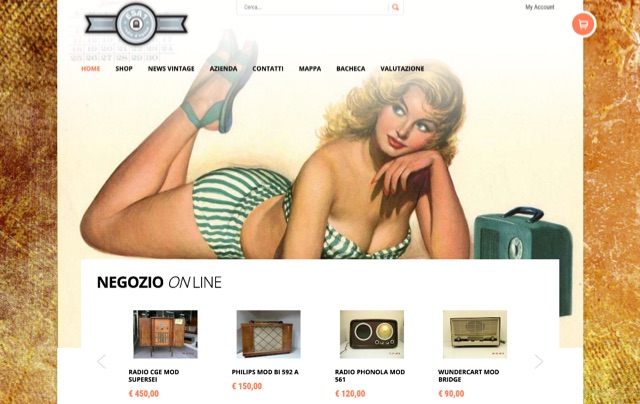 ESA1 features a state-of-the-art workshop capable of performing repairs, calibrations, and restorations on antique radios, jukeboxes, and gramophones. We return your vintage equipment to you in the best and most original condition possible. ESA1 is based in Italy.
-
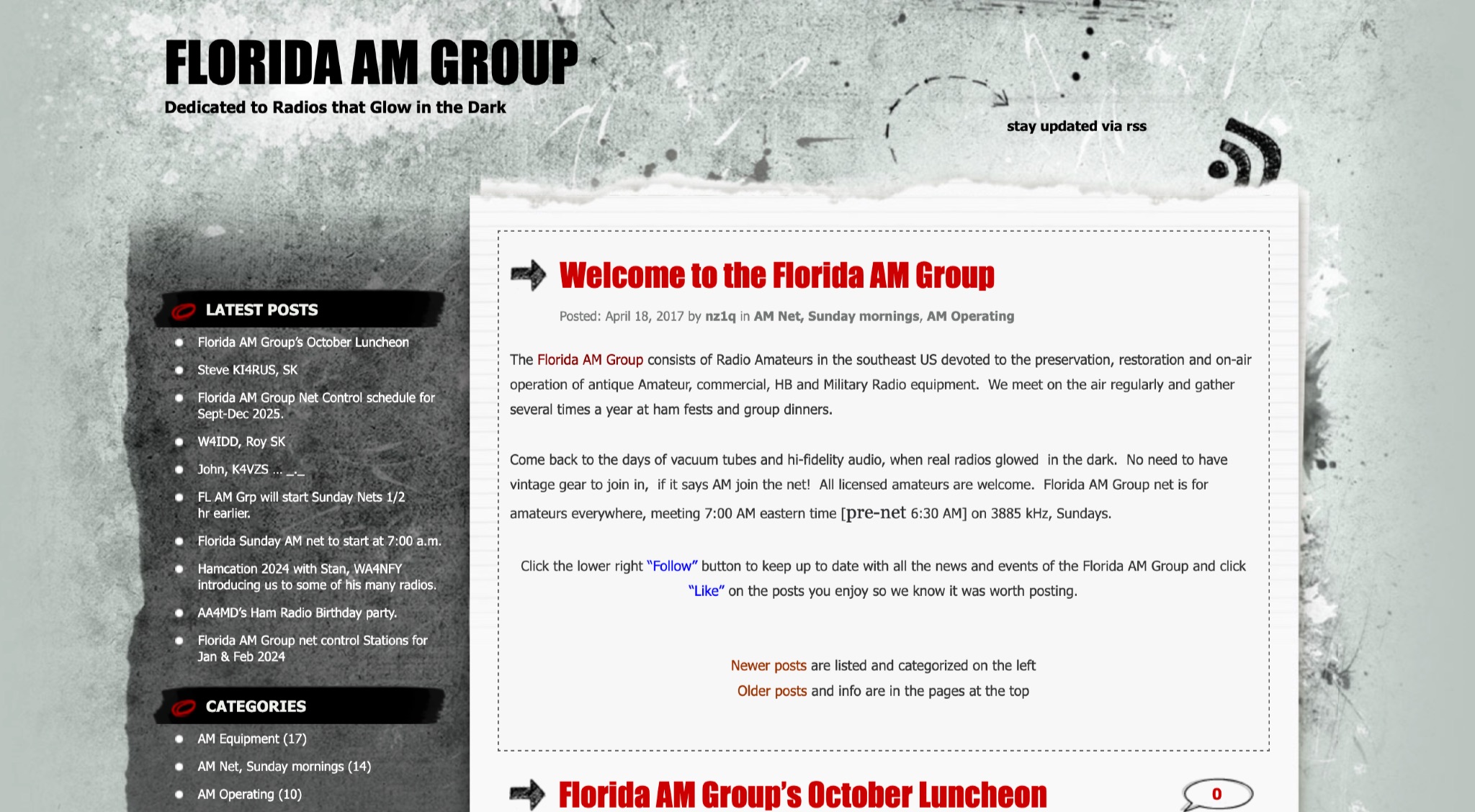 The Florida AM Group operates a weekly Amplitude Modulation (AM) net on 3885 kHz every Sunday morning, with a pre-net starting at 6:30 AM Eastern Time and the formal net at 7:00 AM. This group focuses on the preservation, restoration, and on-air operation of antique Amateur, commercial, homebrew (HB), and Military Radio equipment, emphasizing **Amplitude Modulation** (AM) mode. Participants are encouraged to use AM mode, regardless of whether they possess vintage gear, fostering a community around classic radio operation and the distinctive high-fidelity audio associated with **vacuum tube** equipment. The net utilizes NetLogger software for check-ins and round table management, providing a structured environment for participants. The group regularly publishes net control schedules, listing operators like NZ1Q, K1HH, and W3XM, and organizes various in-person events such as Hamcation gatherings, luncheons, and boat anchor swap meets. These activities facilitate eyeball QSOs and equipment exchanges, reinforcing the community aspect beyond on-air operations. The Florida AM Group also provides contact information for net control volunteers and shares news, including SK (Silent Key) announcements for members like Steve KI4RUS and Roy W4IDD, highlighting the group's long-standing camaraderie and shared passion for AM radio.
-
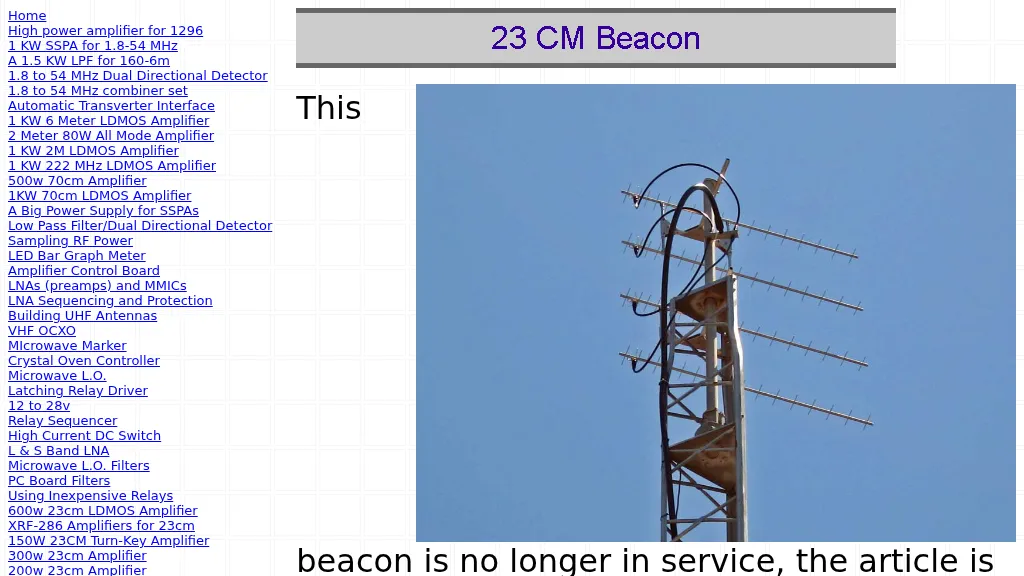 The W6PQL 23cm Beacon Project describes a **1296 MHz** beacon designed for microwave propagation studies and equipment testing, capable of 30 watts output. It utilizes a PIC 16F628A microcontroller to generate CW and FSK keying for a crystal oscillator, followed by a series of frequency doublers and triplers to reach the target frequency. The final power amplification stage employs a Mitsubishi M57762 module, providing a robust 10-watt RF output. The design emphasizes stability and reliability for continuous operation, with the microcontroller code, written in assembly, provided for customization of the beacon's callsign and message. Originally located in CM97am and aimed at 140 true, the beacon used four 4-foot Yagis stacked vertically for a total ERP of 3kW. The article includes schematics, parts lists, and construction notes to guide builders, along with antenna pattern measurements. Although the beacon itself is no longer in service as of August 2010, the detailed documentation remains a valuable reference for amateur radio operators interested in building similar **microwave** projects or understanding beacon operation.
-
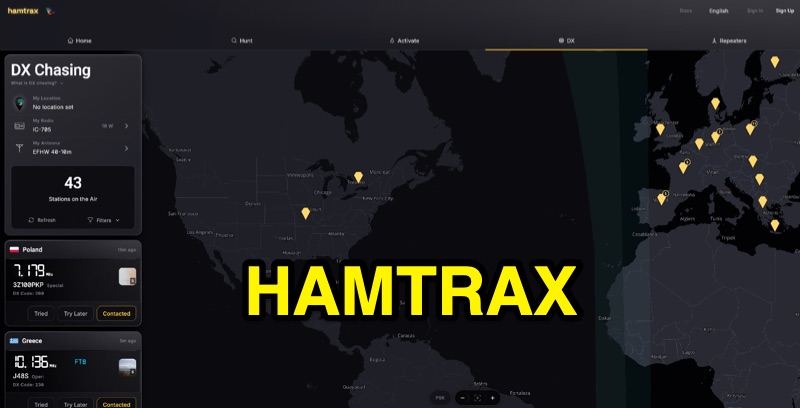 Hamtrax provides a modern logging solution for amateur radio operators, specifically tailored for _Parks on the Air_ (POTA) activations and hunting. It integrates real-time POTA spots, enabling users to quickly identify and log contacts with active stations. The platform supports organized contact folders, allowing operators to manage their QSOs efficiently, whether for POTA, DX, or repeater operations. The application facilitates comprehensive record-keeping beyond just contact details, incorporating fields for equipment, photos, and field notes. This feature set helps document the full context of each contact, which is particularly useful for activators operating from various park locations. The system also supports _ADIF_ import and export, ensuring interoperability with other logging software and services like _LoTW_ and _QRZ_. Available across web, iOS, and Android, Hamtrax offers a flexible logging experience for hams in the shack or out in the field. The service includes a free tier, with an optional Pro subscription for advanced features.
-
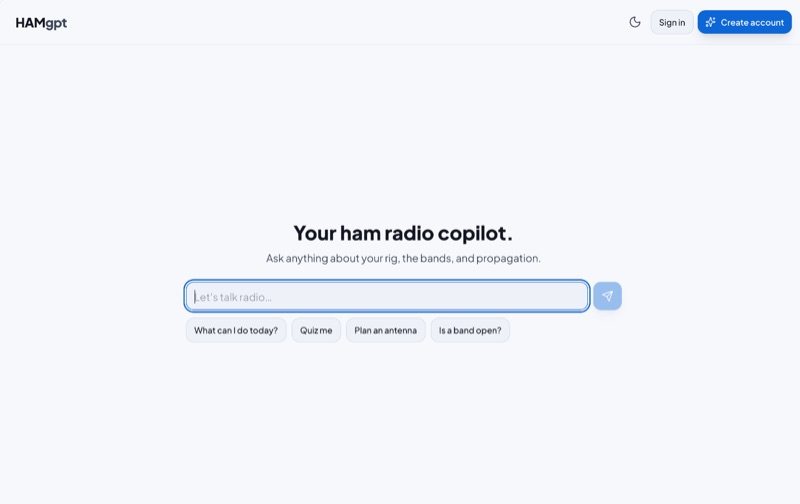 HAMgpt offers a personalized amateur radio experience, leveraging AI to provide real-time operational guidance. It integrates live propagation data, current band conditions, and operator-specific context, including callsign, QTH, license class, and station equipment, to deliver relevant answers. The system can identify open HF, VHF, and UHF bands, suggest workable DXpeditions and POTA/SOTA activations, and provide accurate repeater offsets and CTCSS/DCS tones for local repeaters. Unlike general-purpose chatbots, HAMgpt avoids fabricating frequencies or license privileges, instead relying on actual data for its responses. It supports antenna design calculations for various types like Yagi, dipole, vertical, and magnetic loop antennas, offering to-scale dimensions. The platform also assists with license exam preparation and provides satellite pass predictions tailored to the user's location. It supports multiple countries, including the United States (FCC Technician, General, Extra), Canada, the United Kingdom, Australia, Japan, and Argentina, incorporating their specific band plans and power limits.
-
 A podcast dedicated to the technical aspects of amateur radio, featuring in-depth discussions on homebrewing, test equipment, and project building.
-
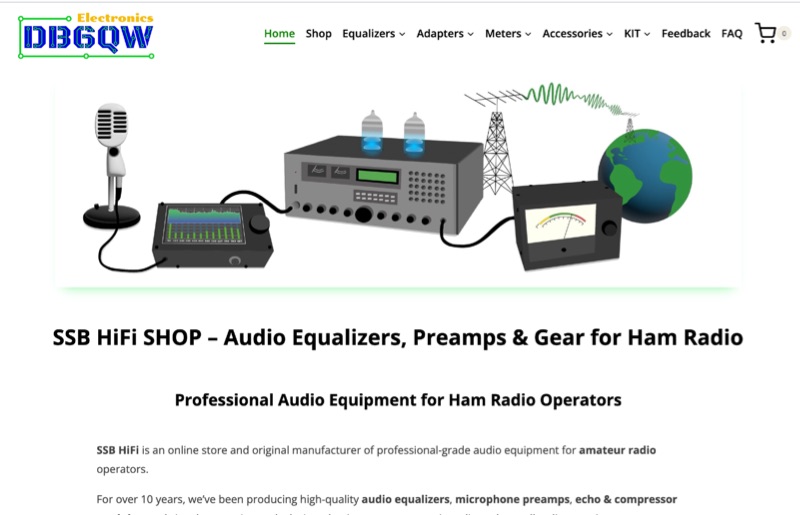 Optimizing on-air audio for SSB, DXing, and contesting operations is addressed through a range of specialized audio processing equipment. The offerings include multi-band equalizers, specifically 5-band, 8-band, 10-band, and 12-band units, some integrated with features such as compressors, echo effects, noise gates, and phase rotation capabilities. These devices are engineered to interface with common amateur radio transceivers, with explicit compatibility noted for models like the Yaesu FT-DX10, FT-DX101D, FT-1000MP, FT-DX5000, Collins HF-380, and Flex 6300, alongside analog S/P meters for Icom rigs. The product line focuses on enhancing microphone audio characteristics, supporting XLR dynamic microphones for improved signal clarity and presence. The manufacturer, DB6QW Electronics, emphasizes direct support and a 100% manufacturer's warranty, reflecting confidence in product quality and operational reliability. This resource details specific audio processing tools designed to refine the transmitted audio signal, providing operators with granular control over their voice characteristics for competitive and casual amateur radio communications.
-
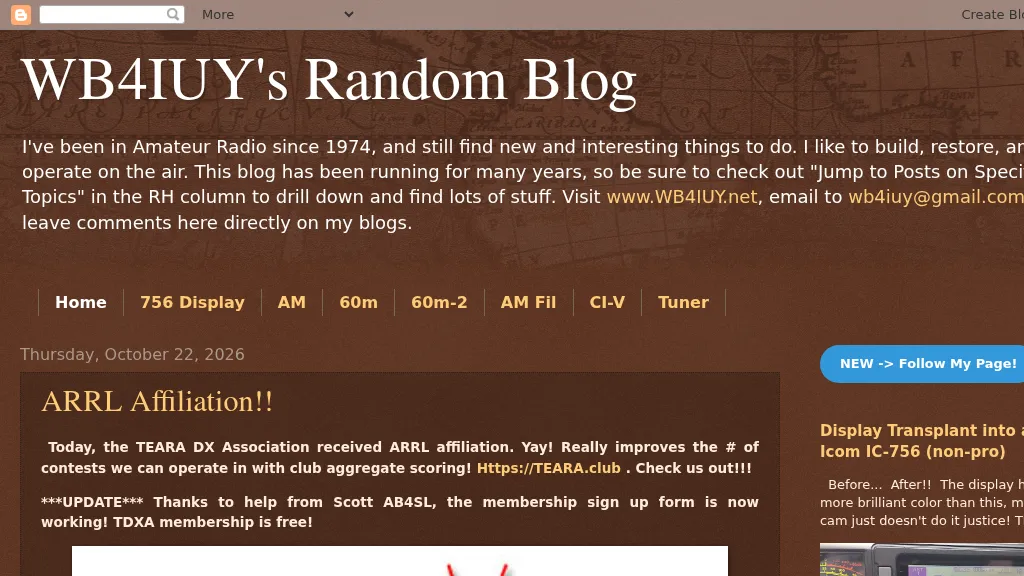 WB4IUY's Random Blog chronicles the author's extensive experience in amateur radio, spanning since 1974. The content primarily focuses on the restoration, building, and repair of radio equipment and amplifiers, alongside various other related projects. Readers can navigate through years of accumulated posts by utilizing the "Jump to Posts on Specific Topics" feature located in the right-hand column. The blog serves as a repository for practical knowledge and hands-on experience, detailing specific technical challenges and solutions encountered during equipment overhauls. It provides a historical perspective on amateur radio gear, offering insights into maintaining and extending the operational life of vintage and modern transceivers. The author, WB4IUY, shares personal projects and technical observations, fostering a community resource for fellow hams interested in the technical aspects of the hobby.
-
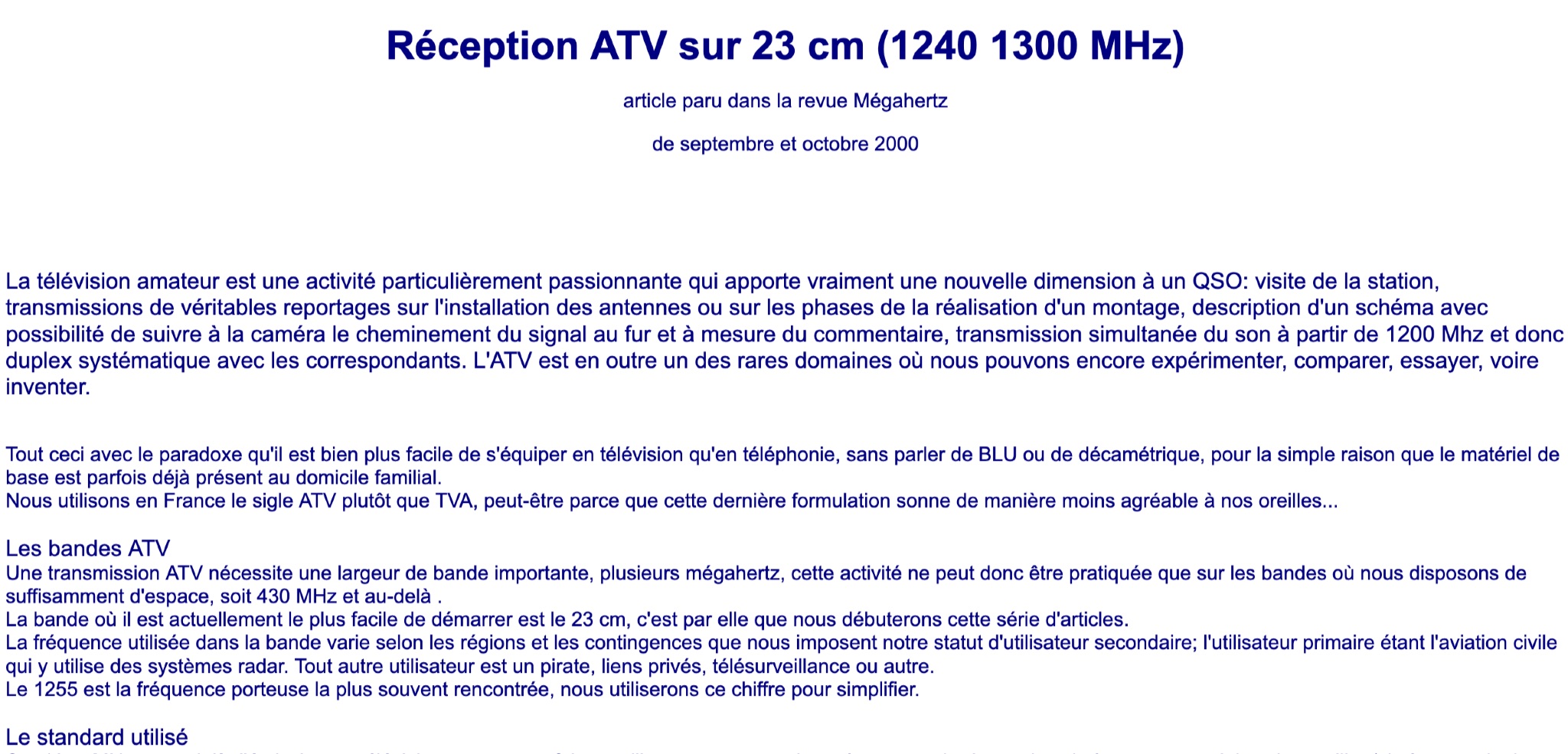 Learn about Amateur Television (ATV) on the 23 cm band (1240-1300 MHz) in this article from the September and October 2000 issue of Mégahertz magazine. Discover how ATV adds a new dimension to QSOs by allowing hams to visit stations, transmit real reports on antenna installations, follow signal paths on camera, and have simultaneous sound transmission. Explore the world of ATV experimentation, comparison, and innovation, made easier by existing equipment in many ham radio operators' homes. Find out about the ATV bands, bandwidth requirements, and the 23 cm band as a starting point for ATV activities.
-
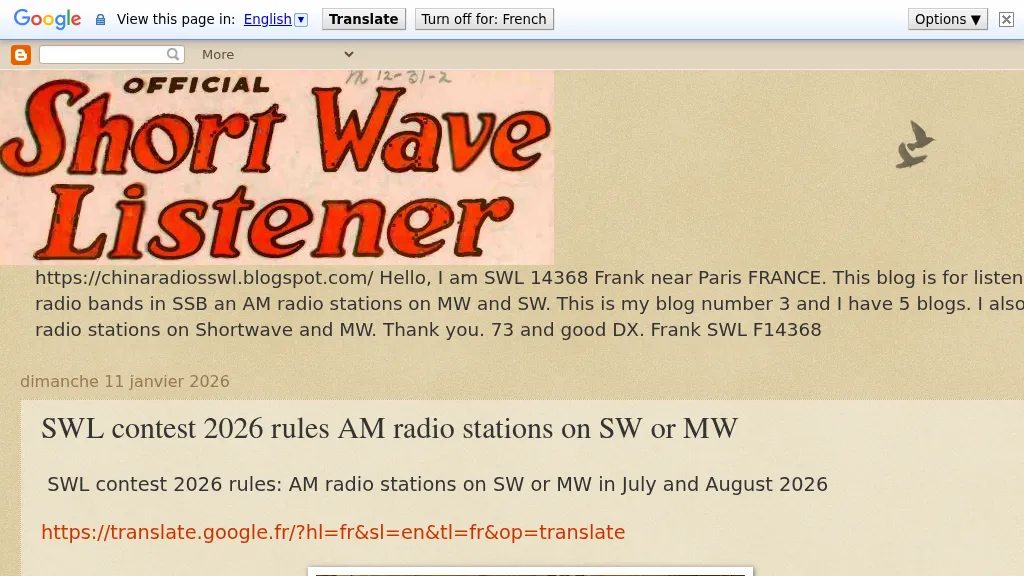 Define the SWL contest 2026 as an event for monitoring a variety of languages on _medium wave_ (MW) and _shortwave_ (SW) AM radio stations. Participants can utilize either traditional radio receivers or _WEB SDR_ platforms to log their findings. The contest encourages the use of both analog and digital methods to maximize the diversity of languages captured. The contest rules specify that entries must include detailed logs of the stations received, including frequency, time, and language identified. Logs should be submitted in a standardized format to ensure consistency and accuracy in judging. The use of WEB SDR is particularly highlighted for its ability to access distant stations that may not be reachable with local equipment. The contest is open to all SWL enthusiasts worldwide, with a focus on European WEB SDR access. The event aims to foster a deeper understanding of global broadcasting patterns and linguistic diversity. Participants are encouraged to explore various bands within the MW and SW spectrum, enhancing their skills in signal identification and language recognition. The contest offers a unique opportunity to engage with the global SWL community and share insights into the art of listening.
-
 This presentation explores the practice of QRP (low-power) amateur radio operation in outdoor settings. It guides operators to identify their specific objectives for portable operations, which inform equipment and antenna choices. The discussion covers considerations including portability, operating modes, power requirements, and weather resistance. Various antenna designs are examined, from vertical configurations to dipoles and end-fed options, with emphasis on deployment practicality in public spaces. The presentation concludes with practical advice on selecting operating locations, RF safety, and resources for equipment and community support for QRP enthusiasts.
-
 The XW4DX DXpedition website documents the amateur radio operation from Laos, a country ranked #98 on Clublog's Most Wanted list. This resource provides insights into the planning and execution of a significant DXpedition, including antenna choices like _Hexbeams_ at 14m, a 4-square for 40m, and a top-loaded vertical for 160m. The team, comprising operators such as _F4BKV Vincent_ and _F2DX Patrick_, focused on challenging paths, particularly towards the North American East Coast, where Laos is #41 most wanted. Operational constraints included prohibitions on 6m, 30m, 60m, and 80m bands within Laos, necessitating a focus on other HF frequencies, especially 160m and 40m. The expedition utilized up to five stations simultaneously, with equipment transportation being a major logistical challenge, partially mitigated by direct shipments from _Spiderbeam_ and donor support. The expedition ran from November 16th to 27th, 2023, with the complete XW4DX log uploaded to LoTW by December 23rd, 2023. This site serves as a historical record of their efforts to put Laos on the air for DXers worldwide.
-
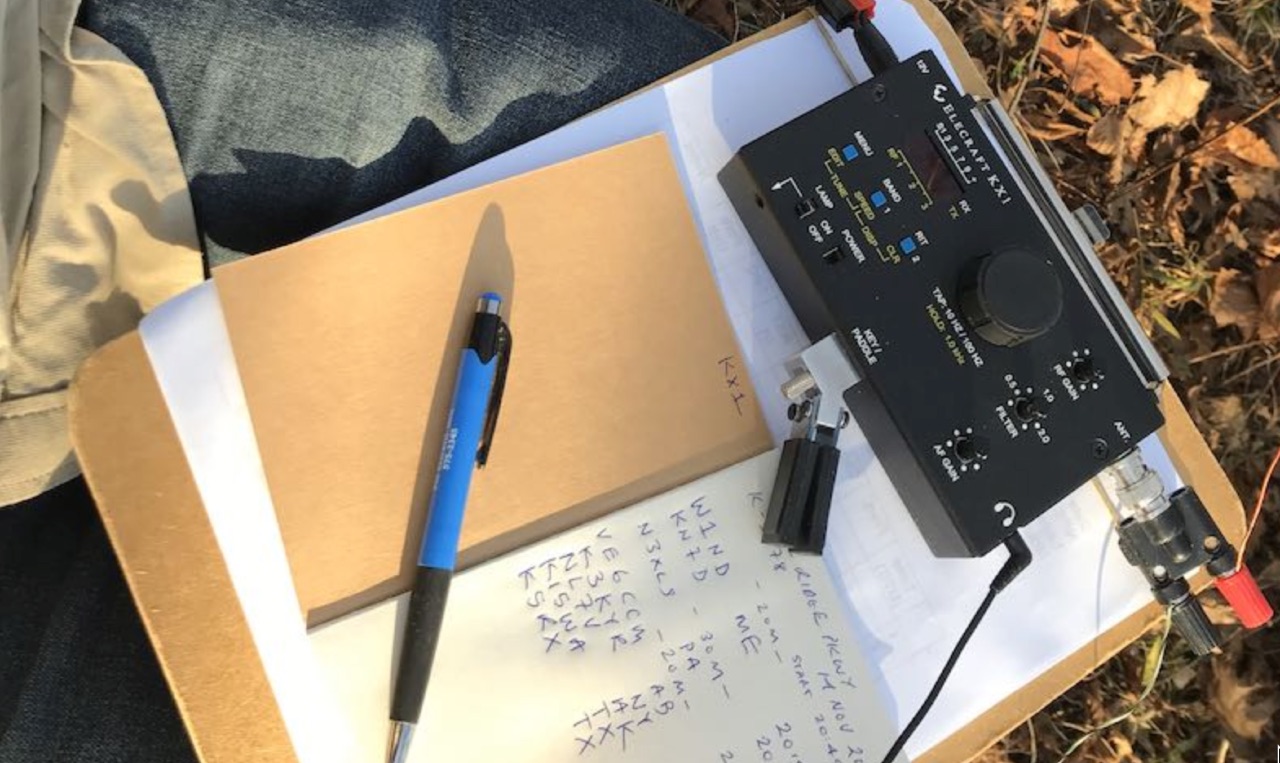 This page provides tips and advice for ham radio operators interested in activating park sites for the Parks On The Air (POTA) program. The author shares insights on how to find accessible parks in Western PA and beyond, emphasizing the importance of starting with historic sites and national parks. The content offers guidance on setting up equipment and getting on the air for POTA activations, making it a useful resource for beginners and experienced POTA operators looking to expand their park options.
-
 Over 15 years of field experience informs the product selection at Hamshop South Africa, focusing on gear that performs reliably in diverse outdoor environments. The shop emphasizes purpose-built equipment, including proven coax assemblies and robust masts, all designed to meet the unique demands of portable operations across the region. Every item is curated to ensure durability and functionality for activations in parks, on summits, or during rapid field deployments. The inventory is specifically tailored for the South African amateur radio community, prioritizing portability and ruggedness. This ensures operators have access to gear that can withstand challenging conditions, from dry bushveld to coastal humidity, without compromising performance. Products are selected based on their ability to support effective and enjoyable amateur radio activities in various outdoor settings, reflecting a deep understanding of what works in the field.
-
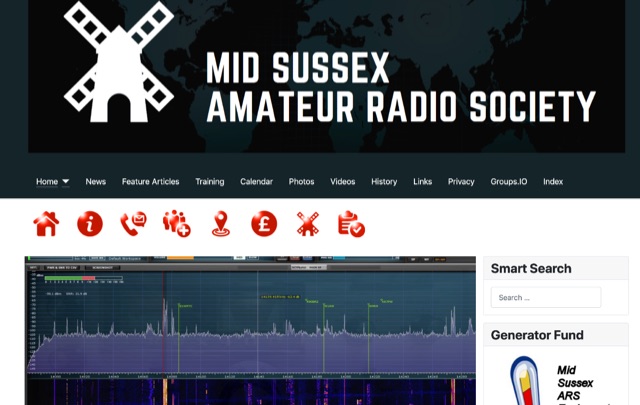 Mid Sussex ARS is an RSGB-affiliated club and meets at its headquarters in Burgess Hill on the 2nd and 4th Friday of each month. They organize various activities ranging from talks by members or guest speakers, evenings on the air using their shack's latest SDR equipment, training evenings and used equipment sales. As well as scheduled club nights, they run many outdoor activities throughout the year, including direction-finding contests, town days, social evenings and Special Event Stations. They even have their own free online training academy!
-
 EDR-Aalborg was started in 1939 as an association for active radio amateurs. The purpose is to create unity between current amateurs and to give the new ones a good start. The club has radio equipment for HF, VHF and UHF, with all types of modulation. The club's radios can of course only be used by licensed amateurs.
-
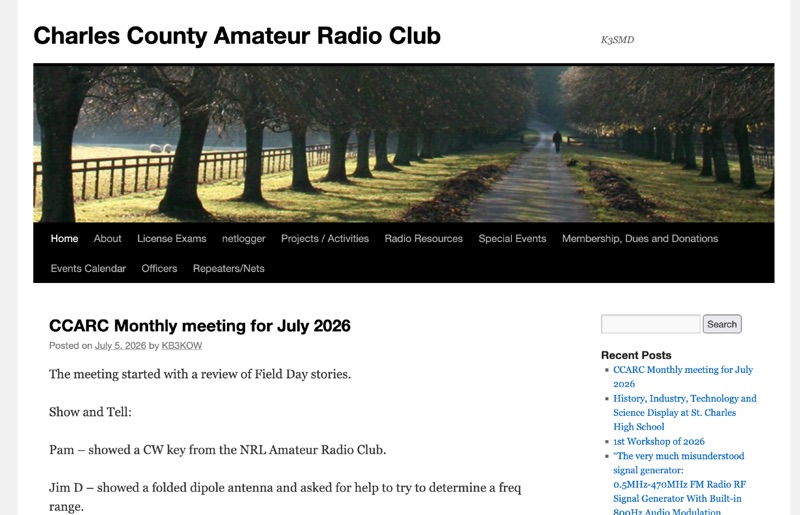 The Charles County Amateur Radio Club (K3SMD) website documents the diverse activities and technical explorations undertaken by its members. It features detailed recaps of monthly meetings, often including "Show and Tell" segments where members present projects like folded dipole antennas, LED moth lights, and multi-band QRP radios such as the _uBITX6_ and Bitx-40. The resource also covers community engagement efforts, including participation in the HITS Expo and STEAM Festival, where the club demonstrated Morse code, Digital Amateur TV, and basic electronics to the public, achieving an **87% success rate** in Morse code decoding by youth participants. Technical workshops and presentations are a recurring theme, detailing hands-on sessions for soldering kits and configuring DMR HTs. Advanced topics include discussions on CI-V for remote rig control and practical experiments with solar panel interfacing for portable operations, addressing challenges like inrush current and voltage regulation with buck/boost converters. One article describes troubleshooting a solar charging system that crashed when current jumped from 4 amps to **6 amps**. Further content includes demonstrations of test equipment like a 0.5-470 MHz RF signal generator, evaluating its performance with various QRP transceivers. The site also provides educational sessions on observational astronomy and amateur satellite operations, covering essential equipment, Kepler data, and the Doppler effect for Low Earth Orbit (LEO) satellites, offering practical insights for new and experienced operators.
-
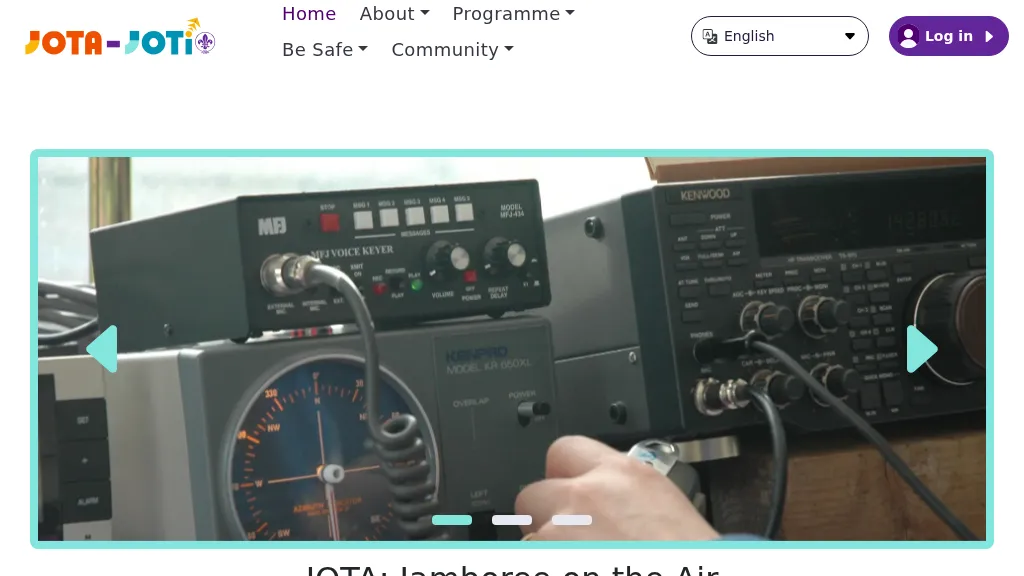 Jamboree on the Air (JOTA) is an annual Scouting event held on the third full weekend of October, coinciding with Jamboree on the Internet (JOTI). This global event facilitates communication among Scouts worldwide using amateur radio, enabling participants to exchange Scouting experiences and ideas over short-wave signals. It serves as an educational platform for Scouts to learn about wireless radio techniques and basic electronics. Participation necessitates the support of at least one licensed amateur radio operator or a local amateur radio club. National amateur radio organizations can assist in locating local operators. Licensed operators, having passed technical examinations, may host Scouts at their stations, transport equipment to Scout headquarters, or establish temporary stations in various locations. Depending on national regulations, Scouts may speak directly over the air, or special permission might be required, with the licensed operator making contacts on their behalf. Operators are encouraged to familiarize themselves with Scouting principles to facilitate more informative and engaging exchanges.
-
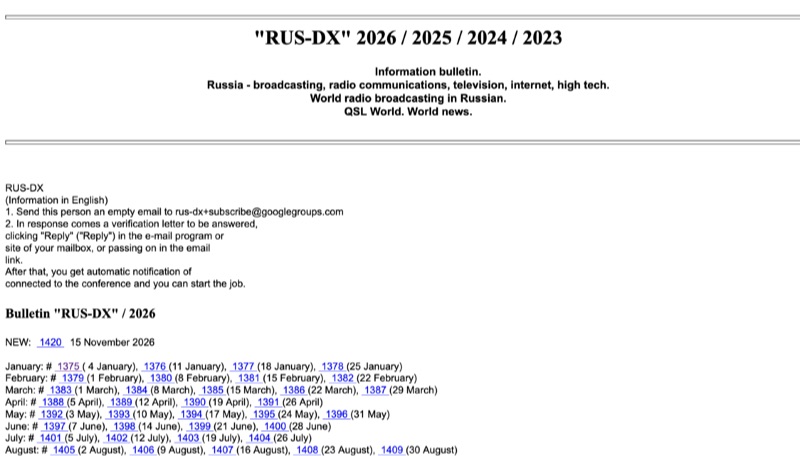 Accessing the RUS-DX PLUS Bulletin reveals a landing page that serves as a gateway to both Russian and English versions of the bulletin. This resource primarily functions as a newsletter, disseminating updates relevant to the amateur radio community. It focuses on general ham radio topics and DX-related activities, rather than specific technical measurements, equipment modifications, or detailed schematics. The content is presented in a textual format, offering news and announcements without performance data or software downloads. The bulletin acts as a communication channel for general amateur radio interest, without specifying particular operating modes like **FT8** or **CW**, or frequency bands such as 20 meters or 40 meters. The information is structured as a collection of articles or announcements, providing a concise overview of current events and interests within the ham radio world.