Search results
Query: DARC
Links: 87 | Categories: 1
Categories
-
-

-
 The Deutscher Amateur Radio Club (DARC) invites radio amateurs world wide to participate in the annual WAE-DX-Contest. CW SSB and RTTY Contests
 -
-
 SSTV Fundamentals, frequencies in use for SSTV and many SSTV related infos, includes Fax basics
 -
 Home page of the Dallas Amateur Radio Club, located in Dallas, Texas. The DARC is one of the oldest clubs in the country, founded in 1914.
 -
 MDARC has a membership of over 300 dedicated hams and is one of the largest amateur radio clubs in California.
 -
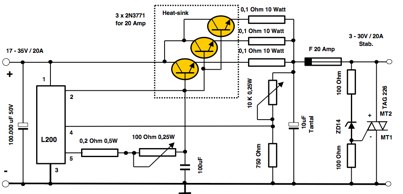 Power supply from 3 to 30 V with an L200 IC by dl5dbm
 -
-
 The Deutscher Amateur-Radio-Club (DARC) e.V. serves as the largest association for radio amateurs in Germany and Europe, structured into 24 districts and approximately 960 local chapters nationwide. Its core mission involves fostering amateur radio and establishing favorable conditions for the Amateur Radio Service. The DARC actively participates in international affairs as a member of the **International Amateur Radio Union (IARU)**, ensuring German interests are represented on a global scale. Recent activities include the announcement of the FUNK.TAG in Kassel for April 25, 2026, and the HAMCamp at **HAM RADIO** in Friedrichshafen from June 26-28, 2026, offering discounted participation for young operators up to 27 years old. The club also supports special events, such as a short-term award and special callsign DB15ØWG to commemorate the 150th anniversary of the Weimar–Gera railway line, active from April 1 to June 30. Regular updates, like the Deutschland-Rundspruch 11/2026, cover topics from the status of 70 MHz band permissions to satellite deployments like Ten-Koh 2, and contest results such as the WWA YL event. Propagation forecasts, including Kp indices and solar flux values, are provided by Hartmut Büttig, DL1VDL, offering insights into HF conditions and Gray-Line DX opportunities. The DARC also reports on district elections and space-related events like the Bochumer Weltraumtag, highlighting the diverse engagement of its members.
 -
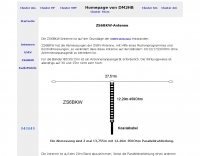 Operating a ZS6BKW antenna often involves understanding its lineage from the _G5RV_ design, with specific modifications by ZS6BKW to optimize performance on several bands. Through computational analysis and field measurements, the antenna's dimensions were refined to allow operation on 10, 12, 17, 20, and 40 meters without an antenna tuner. For 80, 30, and 15 meters, a tuner is necessary, though efficiency on 30 and 15 meters is noted as not particularly high. The physical configuration consists of two 13.755-meter radiating elements fed by a 12.20-meter section of 450-ohm ladder line. Tuning the antenna on the 20-meter band is critical, and any deviation in the ladder line's characteristic impedance necessitates recalculating the element lengths. The design is also referenced in the 12th edition of _Rothammel's Antennenbuch_, page 219. Proper common mode current suppression is crucial at the transition from ladder line to coaxial cable. This can be achieved with a common mode choke, such as several turns of coax wound into a coil or over a ferrite toroid like an Amidon T130. While a 1:1 balun is an option, it may introduce issues.
 -
-
-
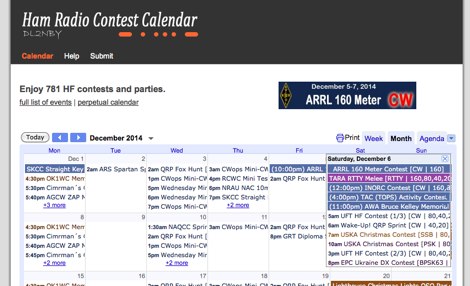 The DL2NBY Contest Calendar, leveraging the Google Calendar system, presents approximately 400 **HF amateur radio contests**, detailing their dates and rules. It covers a broad spectrum of operating modes, including CW, SSB, and various digital modes like RTTY. The calendar integrates contest information from major organizations such as ARRL and DARC, providing a centralized repository for contest operators. This resource offers the capability to integrate contest events directly into a user's personal Google Calendar, streamlining contest planning. It functions as a comprehensive schedule, allowing operators to review upcoming events and prepare for participation across different bands and modes. The calendar's structure facilitates quick access to contest specifics, aiding in strategic contest operation.
 -
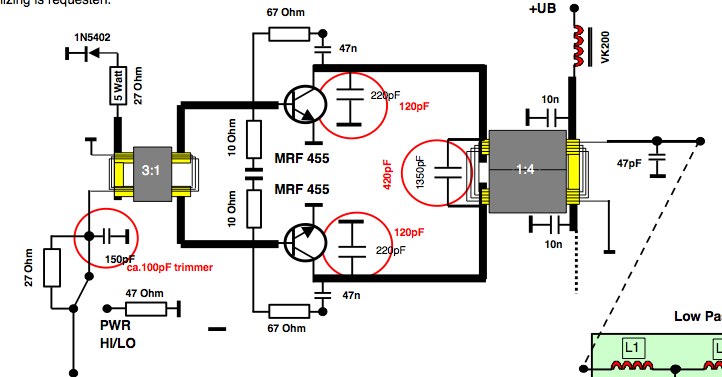 Converting a ZETAGI B303 power amplifier for 50 MHz usage
 -
 Article using a full wave delta loop antenna at low height, feeding methods, performance reports on 1984 QST article by W1FB and W1SE
 -
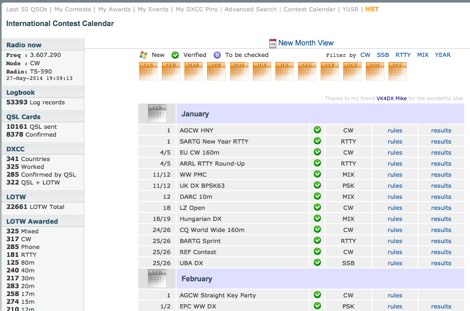 The HB9DHG Contest Calendar aggregates contest information, offering direct links to official rules and past results for various amateur radio competitions. It features a curated list of events, with a focus on HF and digital mode contests, ensuring that operators can quickly access relevant details for upcoming and historical events. The calendar is regularly updated to reflect the latest contest schedules and rule changes. Each entry typically includes the contest name, dates, and a direct link to the sponsoring organization's page, such as ARRL or DARC, where full regulations and scoring information are available. This resource streamlines the process of finding contest specifics, which is crucial for effective pre-contest planning and post-contest analysis. Validation and checking of contest information are emphasized, providing a reliable source for operators planning their contest activity throughout the year. The calendar supports both CW and SSB modes, alongside various digital modes.
 -
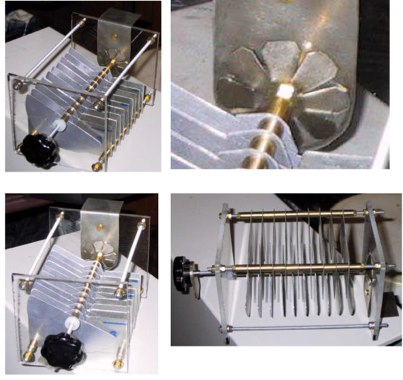 Building a high voltage (5KV), variable plate capacitor (17 to 220pF)
 -
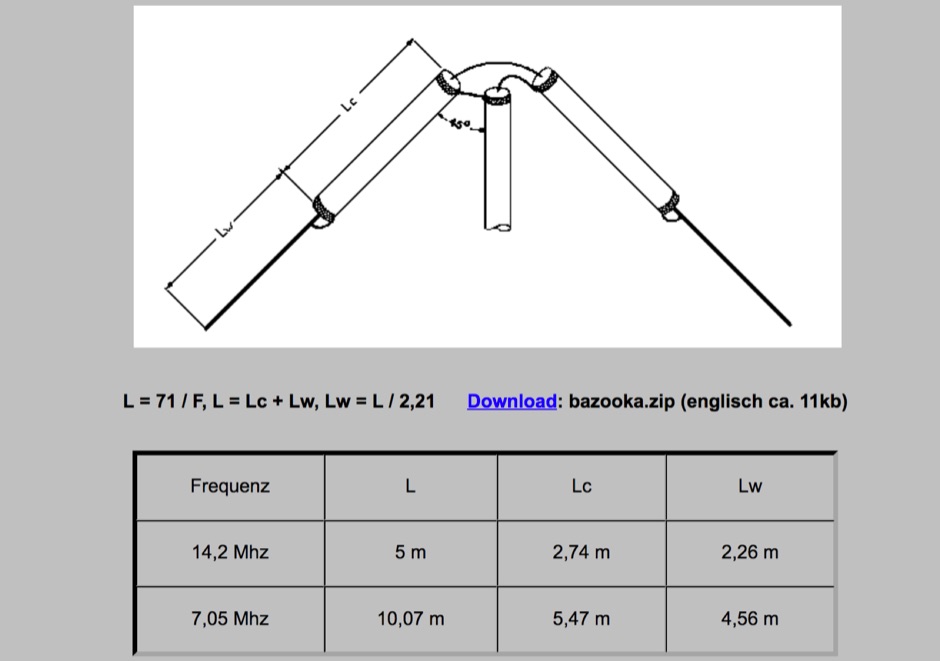 A bazooka antenna design in German with dimensions for 20m and 40m band with RG174 coax cable stronger than the common RG58
 -
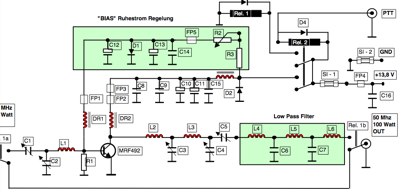 6-Meter Solid-State 100W Linear Amplifier complete documentation German and English
 -
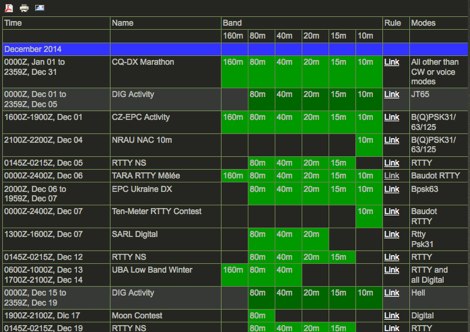 The _HF Digital Contest Calendar_ provides a monthly schedule of amateur radio contests specifically for digital modes on HF bands. It lists various RTTY contests and other digital mode events, offering a structured overview for contesters. The calendar includes details relevant to participation in events such as those organized by ARRL and DARC. This resource assists operators in planning their contest activities, focusing on the digital segment of the HF spectrum. It serves as a quick reference for upcoming digital mode competitions, facilitating preparation for these operating events. The calendar aims to consolidate information on digital contests, which often feature specific exchange requirements and scoring methodologies.
 -
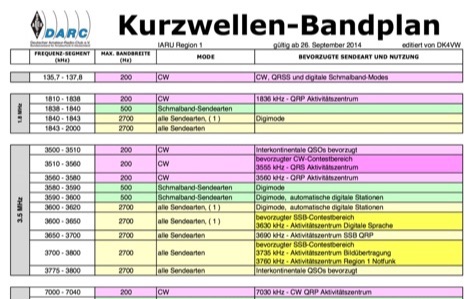 Kurzwellenbandplane der IARU Region 1 available in german and in english
 -

-
 The Broward Amateur Radio Club was founded in 1946 and received their ARRL Charter of Affiliation March 2, 1949 and is now one of the largest clubs in the South Florida area today.
 -

-
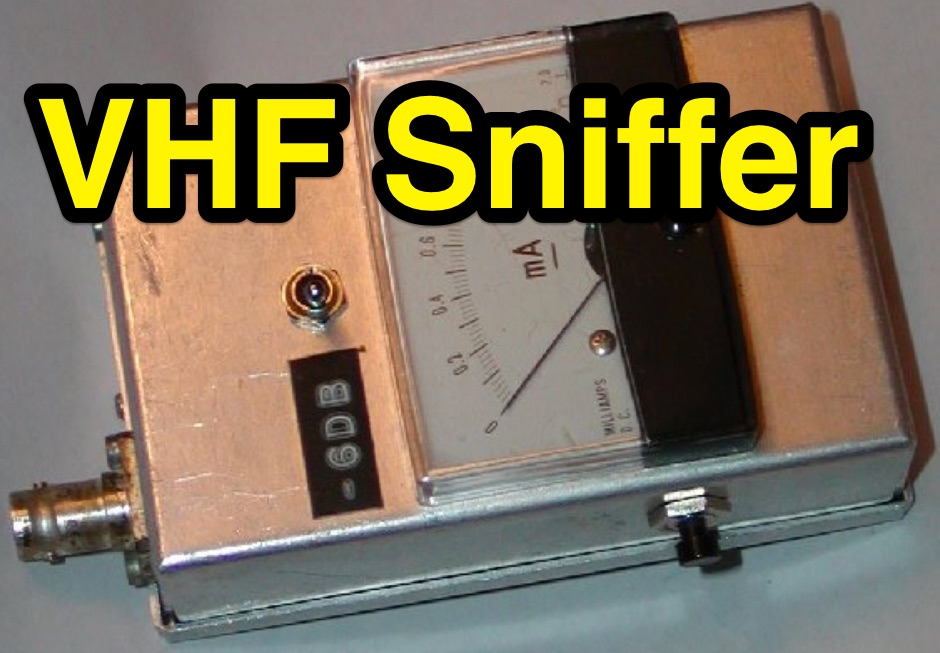
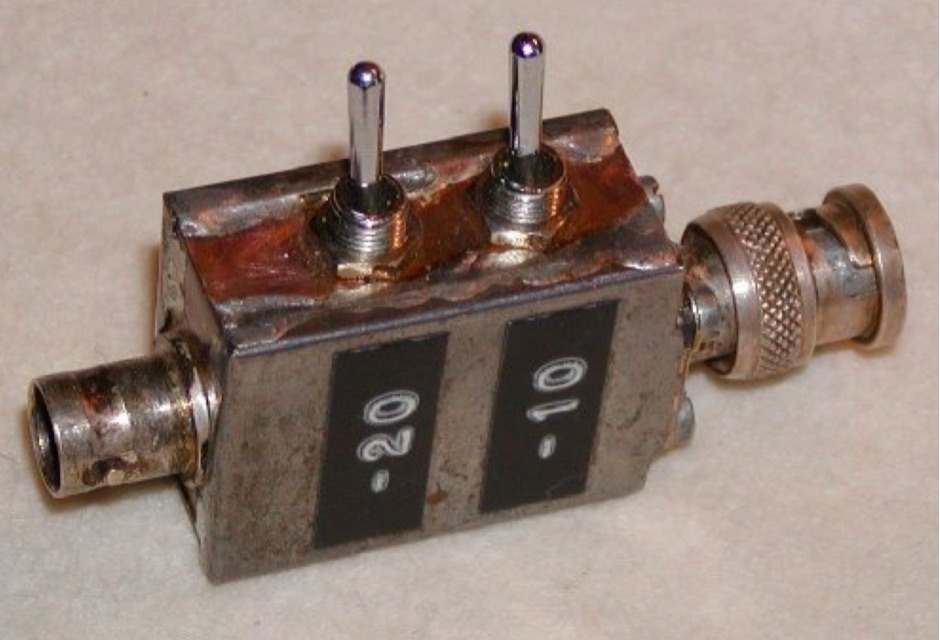 Construction of attenuator, suitable for fox hunts at 144mhz
 -
 Building EH Antennas at Gemran radio club station house, by Matthias DH4FAW
 -
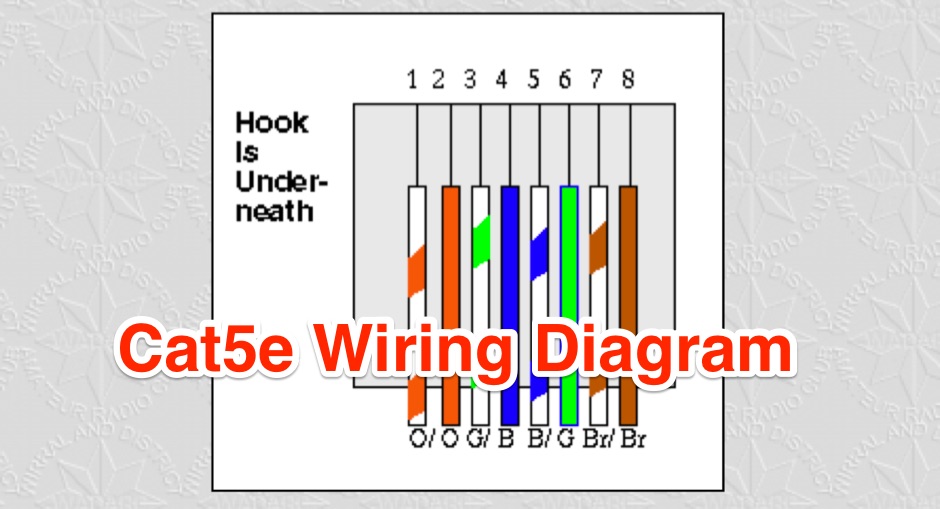 CAT5 T-568B Colour Code for RJ-45 Plug
 -

-
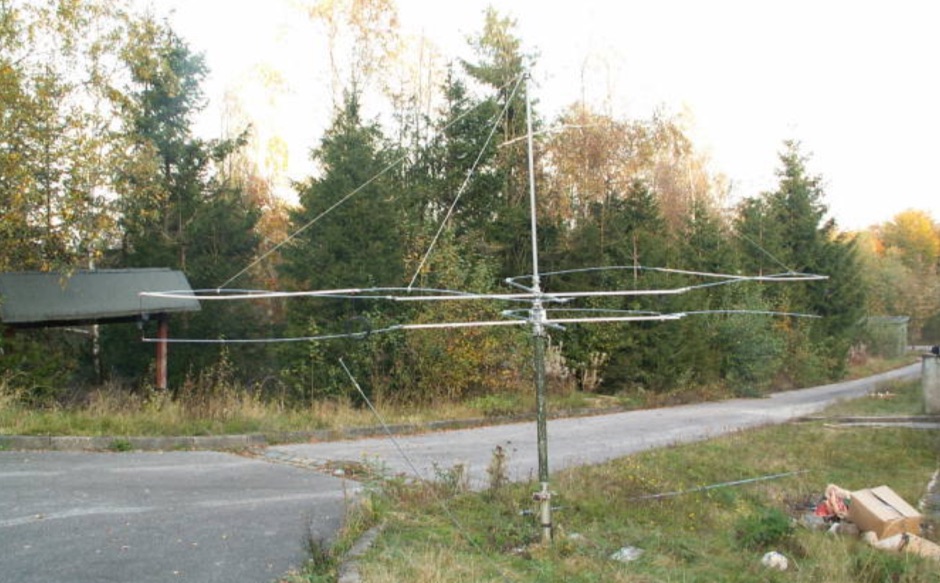 A portable swiss quad antenna project made with components and parts that can be dismounted, in German
 -
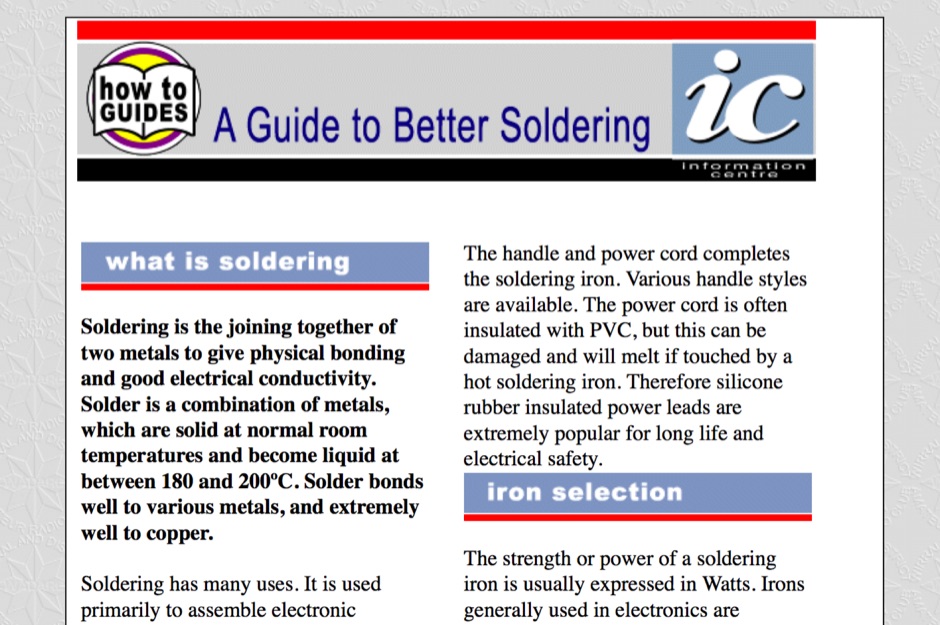 Basic guide on soldering techniques, tips and tricks
 -

-
 Introduction digital atv in the 70 cm band
 -
-
 Accessing this interface provides entry to one of the largest databases for amateur radio voice repeaters, encompassing over 8000 entries from more than 60 countries. The resource supports both desktop and mobile access, with a default display based on browser type, or forced via a "force" parameter (e.g., relais.dl3el.de?force=mobile). Users input a QTH-locator to find local repeater information. The database integrates FM-Funknetz servers and hotspots, potentially creating duplicate entries but ensuring new FM-Funknetz repeaters are immediately displayed. DMR repeater information, including status and talkgroup configurations, is sourced directly from DMR+ / ircDDB and Brandmeister systems, with real-time updates for active and default talkgroups. C4FM/Wires-X installations, particularly MMDVM-based gateways not listed in Yaesu's database, are identified through Brandmeister dashboard descriptions, marked with "W-x" or "W-x#MMDVM" for manual entries. D-Star repeater data from ircddb or QuadNet2 is also incorporated, with entries marked (i), (o), or (d) for manual additions. An APRS interface allows searching by callsign, using Sassan, DL3NCK's database, and offers a mobile-friendly, auto-refreshing display that follows an APRS station. Output data can be generated in GPX format for offline smartphone maps or CSV for spreadsheet applications. The database also attempts to determine valid repeater offsets based on IARU region and frequency, indicated by a "." after the frequency.
 -
 The DARC DX Newsletter (aka DX-Mitteilungsblatt) is an important source of information for the active DXer. It is published on a weekly basis in German and English and keeps the readers up to date about current and planned DX activities.
 -
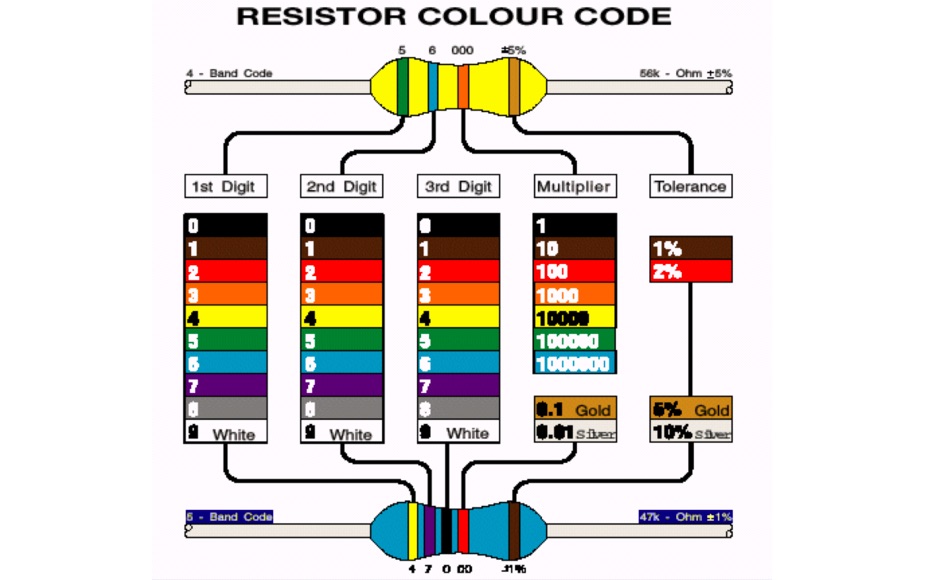 How to understand resistor colour codes
 -
 ARDF-Funksportreferats im DARC
 -
 28.2575 MHz Beacon from Lake Constance water works Germany
 -
 Serving the Big Bend area of west Texas
 -
 The Delmarva Amateur Radio Club is located in Salisbury, Maryland
 -
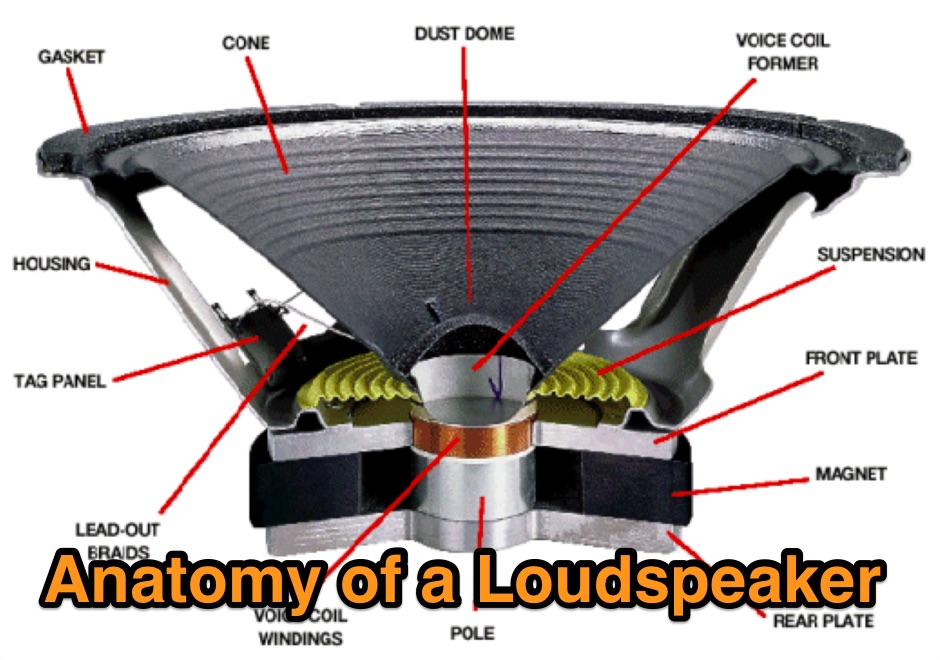 There are a number of important technical issues relating to the matching of speakers to amplifiers, and to the wiring of multiple speaker systems
 -
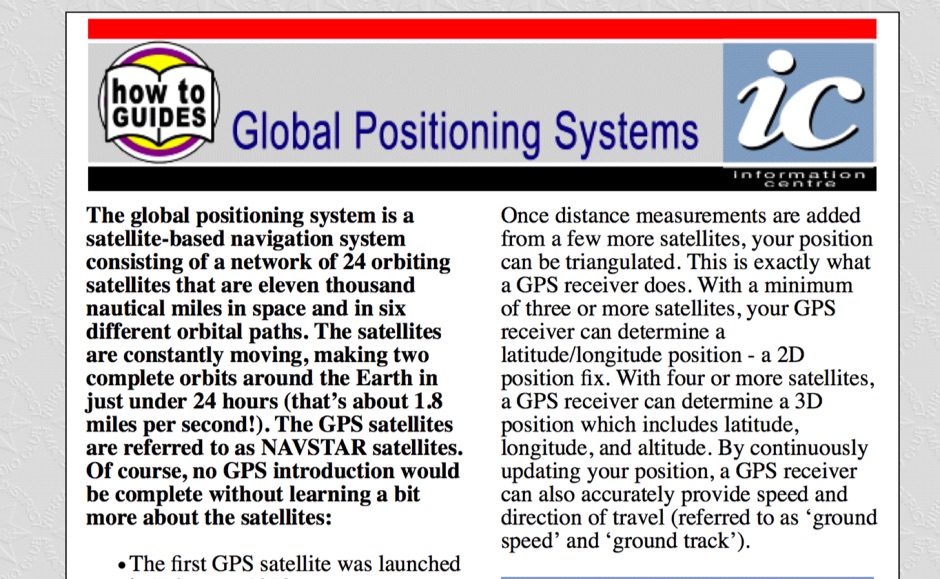
-
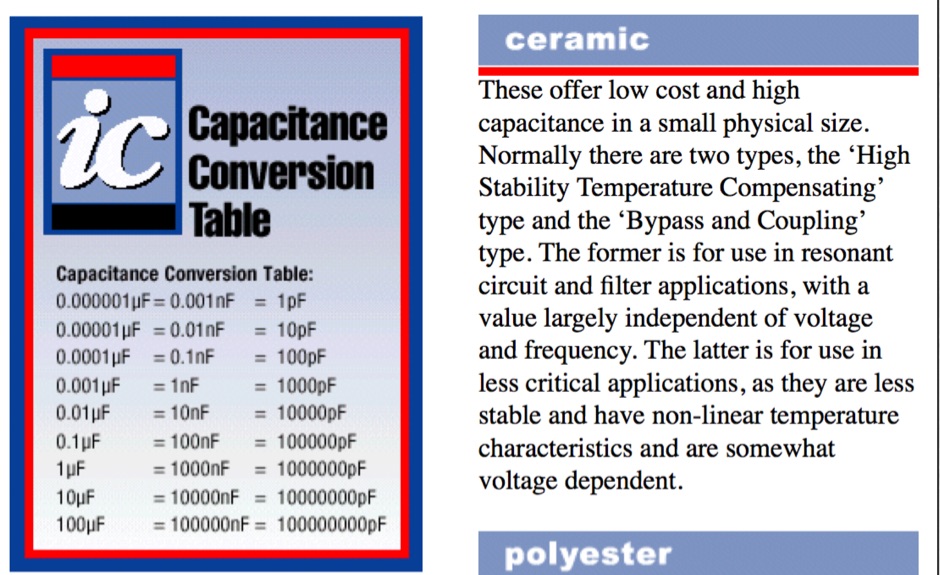 About capacitors, a complete guide to capacitors types and various characteristics
 -
 Basic electronic circuit laws, capacitors, resistors, power circuits examples
 -

-
 A basic article on audio cables, electrical wiring, cable lenght, data cables.
 -
 German Amateur Radio Station DO8ER / DN7ML - DOK H05 Celle DARC / Wettersonden Hankensbüttel Germany (JO52HR)