Global Positioning System (GPS) Information for Hams
Find practical information and technical details on GPS, including how it works, antenna construction, and applications for amateur radio operators.

The Global Positioning System (GPS) is fundamental for many amateur radio activities, providing precise location and timing data essential for modern operations. Hams use GPS for everything from mobile station tracking to accurate frequency synchronization, especially for digital modes and satellite operation. Understanding how GPS works, its signal characteristics, and system segments is key for integrating it effectively into a ham radio setup.
Operators often delve into the technical aspects of GPS, including signal processing and antenna considerations. Resources cover the basics of GPS operation, detailed looks at system time and frequencies, and practical advice for handling and installing GPS antennas. Some hams even undertake antenna projects, experimenting with amplified designs or building homebrew GPS trackers for mobile applications, often adapting them for specific amateur radio needs.
-
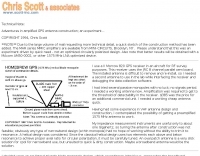 Adventures in amplified GPS antenna construction; an experiment
 -
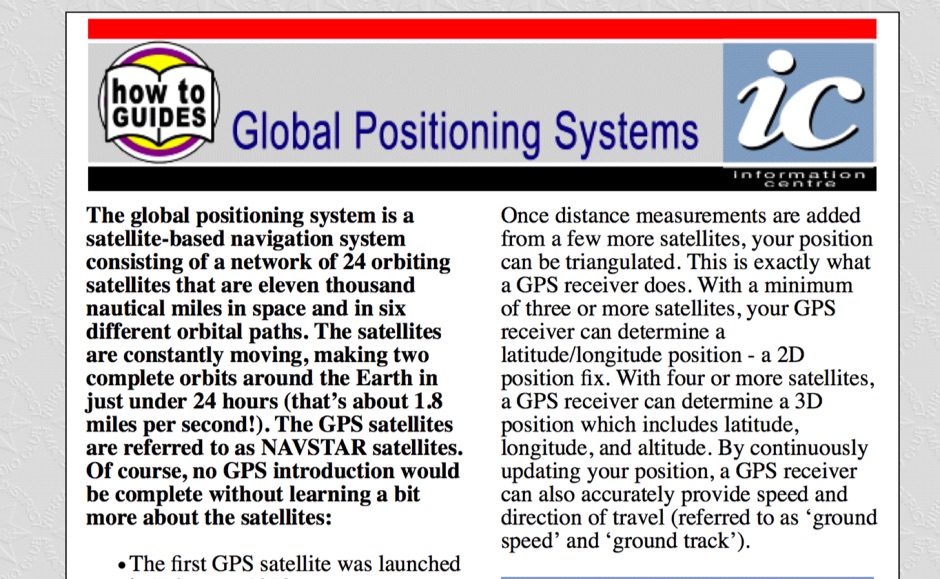 How GPS works
 -
 GPS information and thorough product reviews
 -
 Differential Global Positioning Service (DGPS) is a land-based augmentation system that receives and processes signals from orbiting GPS satellites, calculates corrections from known positions and broadcasts these corrections via a Medium Frequency (MF) Transmitter to DGPS users in the Broadcast Site's coverage area.