Search results
Query: code q
Links: 562 | Categories: 26
Categories
- Software > Decoders
- Operating Modes > Morse code > Learning Morse Code
- Operating Modes > Morse code
- Technical Reference > Arduino > Morse Code
- Technical Reference > Morse Code Decoder
- Software > Morse Code Decoders
- Technical Reference > Morse Code Oscillator
- Operating Modes > Morse code > Morse Code Practice Audio Files
- Software > Morse Code Training
- Operating Aids > Phonetics and codes
- Software > Android
- Operating Modes > Morse code > Clubs
- Radio Equipment > Contest Hardware
- Software > Developer Resources
- Software > Digital Voice
- Software > DSP
- Operating Modes > Morse code > High Speed CW
- Manufacturers > Memory Keyers
- Operating Modes > Morse code > Morse Key Collections
- Technical Reference > Morse Keys
- Operating Modes > Morse code > Morse operating guides
- Software > Legacy Systems > MS DOS
- Software > Legacy Systems > PalmOS
- Software > Legacy Systems > Pocket PC
- Radio Scanning > Police Scanning
- Operating Modes > QRSS
-
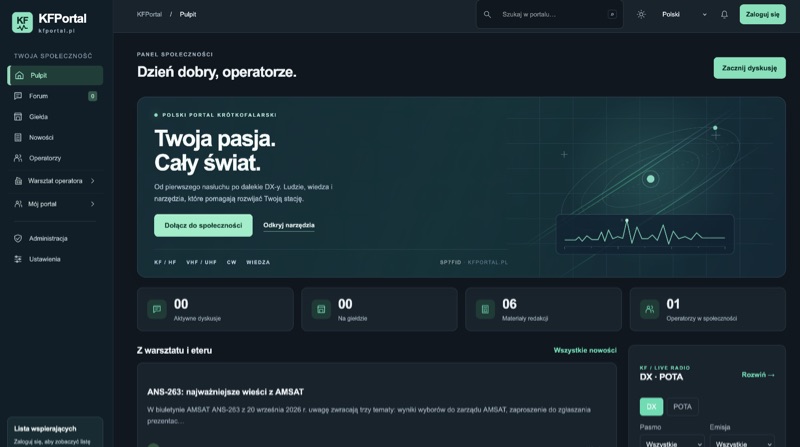 Over 20 news items and announcements are regularly featured on KFPortal, a Polish-language amateur radio community platform. It serves as a central hub for both licensed operators and shortwave listeners, providing a robust platform for discussion through its forums, a marketplace for equipment classifieds, and a source for current radio news. The site also hosts a searchable library of manuals, which is particularly useful for troubleshooting older gear, alongside various operator tools and Morse code training resources. Beyond its core community features, KFPortal offers a dual-language interface, supporting both Polish and English users. This accessibility broadens its reach, allowing a wider audience to engage with content, including updates from organizations like _AMSAT_ concerning SSTV transmissions from the _International Space Station_ and coordination efforts for projects such as UNNE-1B. The portal regularly features news items, such as the recognition of Murray Niman with the Roy Stevens Memorial Trophy and reports from significant events like the 27th IARU Region 1 Conference in Vienna.
 -
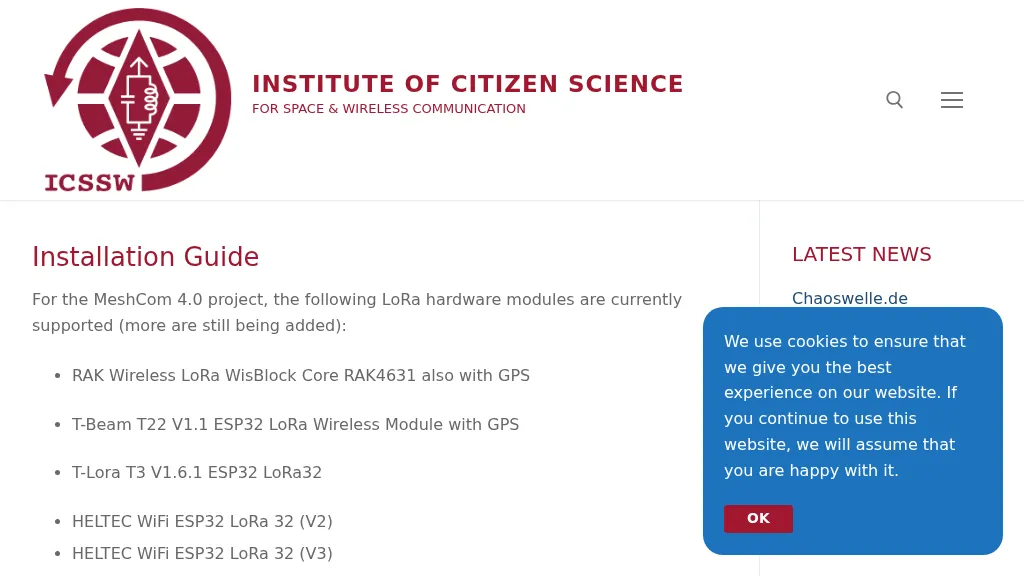 The resource provides a technical installation guide for _MeshCom 4.0_, an amateur radio mesh networking project utilizing LoRa hardware modules. It systematically covers the setup process for several supported devices, including the RAK Wireless LoRa WisBlock Core RAK4631, T-Beam T22 V1.1, T-Lora T3 V1.6.1, HELTEC WiFi ESP32 LoRa 32 (V2 and V3), HELTEC E290, ESP32 / E22 modules, and the T-deck from Lilygo. The guide specifies support for the **EU433** frequency band, ensuring amateur radio compatibility, and details the use of an online flash tool for ESP32 modules and an embedded drive for RAK modules. It further describes accessing the MeshCom 4.0 Dashboard and Map functionalities, crucial for network visualization and management. Firmware configuration for ESP32 modules is meticulously outlined, covering essential parameters such as setting callsigns, country codes, and gateway parameters via a serial console like PuTTY. Commands for activating gateway mode, setting internet IP addresses, and configuring WLAN SSID and password for modules with WLAN capability are provided, enabling modules to function as either clients or gateways within the MeshCom network.
 -
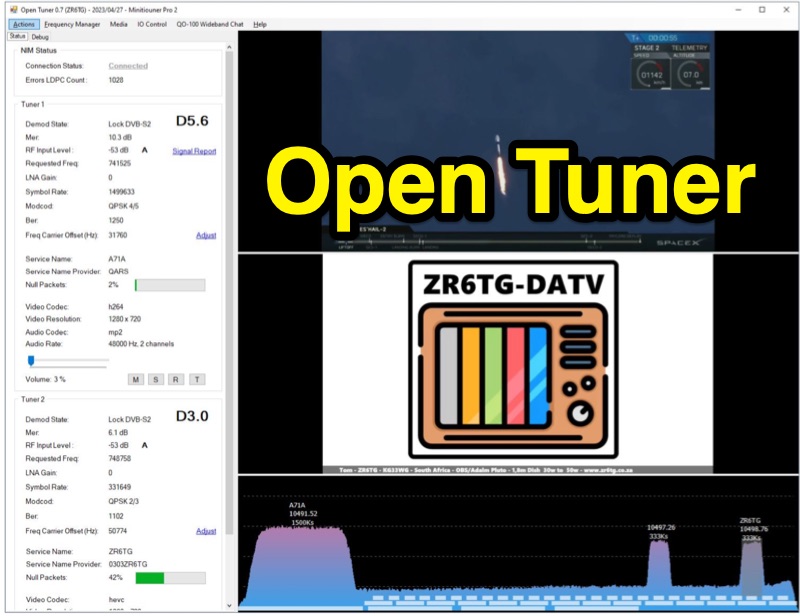 Version 0.7 of Open Tuner, released on April 27, 2023, marked a significant milestone by introducing proof-of-concept dual tuner functionality for the BATC Minitiouner. This C# client, inspired by Heather Lomond's _Longmynd_ project, aims to leverage both tuners and demodulators within the NIM module, a capability crucial for advanced Digital Amateur Television (DATV) operations on QO-100 and terrestrial links. My own experience with DATV often involves juggling multiple receive paths, so a unified client like this simplifies the workflow considerably. Further enhancing its utility, version 0.9 (February 11, 2024) integrated support for the Raspberry Pico, utilizing Colin (G4EML)'s _PicoTuner_ firmware. This offers a more accessible and cost-effective alternative to the traditional FTDI module, streamlining dual tuner setups with a single USB cable. The project's evolution reflects a practical approach to overcoming hardware availability challenges. The software is developed using Visual Studio 2019/2022 and .NET Framework 4.7.2, requiring specific Nuget packages like VLC/Websocket and an ffmpeg folder for full operation. It's an active, community-driven effort, with the source code openly available on GitHub for contributions and bug reporting, embodying the collaborative spirit of amateur radio development.
 -
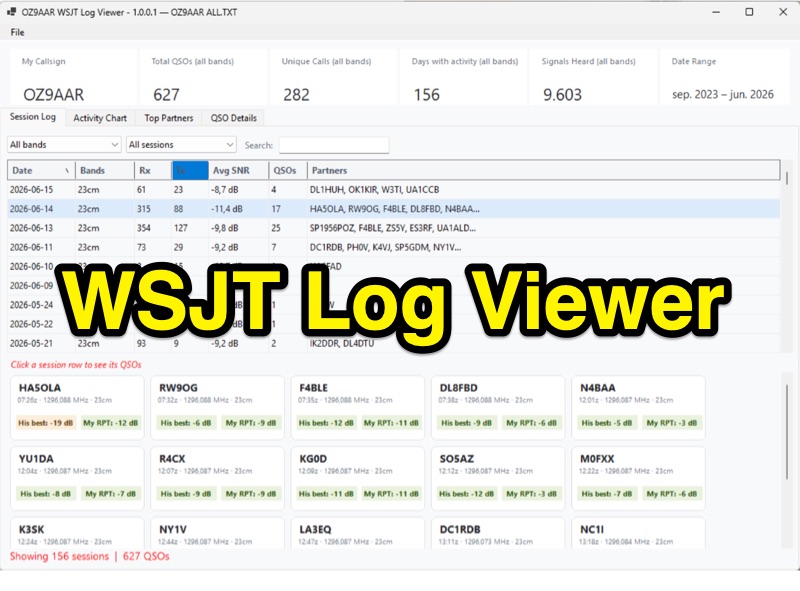 The WSJT Log Viewer, version 1.0.0.10 as of 2026-08-02, is a freeware Windows application developed by Carsten Groen (OZ9AAR) for analyzing signal strengths from WSJT digital mode contacts. It processes the ALL.TXT log file generated by WSJT-X, extracting and presenting data from decoded TX and RX messages. Initially designed for EME operations on 70cm and 23cm, the software has expanded to include all HF bands, 6m, 4m, 2m, 1.25m, 70cm, 23cm, 24GHz, and 47GHz. Key features include displaying total QSOs, unique callsigns, days with activity, and signals heard, with filtering options by band and completed QSOs. The application also monitors the ALL.TXT file for live updates every two seconds, reflecting new decodes in real-time. Users can view session logs, activity charts showing daily signal counts and decoded signals, and a "Top Partners" tab listing the 25 most frequent contacts. The software provides detailed QSO information, including best received SNR and sent reports, with graphical representations of SNR over time. It supports multiple "My Callsign" entries within a single ALL.TXT file and offers a function to generate a text list of initials worked per band. The program is distributed as a single executable file, requiring no installation, and stores its configuration in a LogViewer.cfg file, allowing for different setups via command-line arguments.
 -
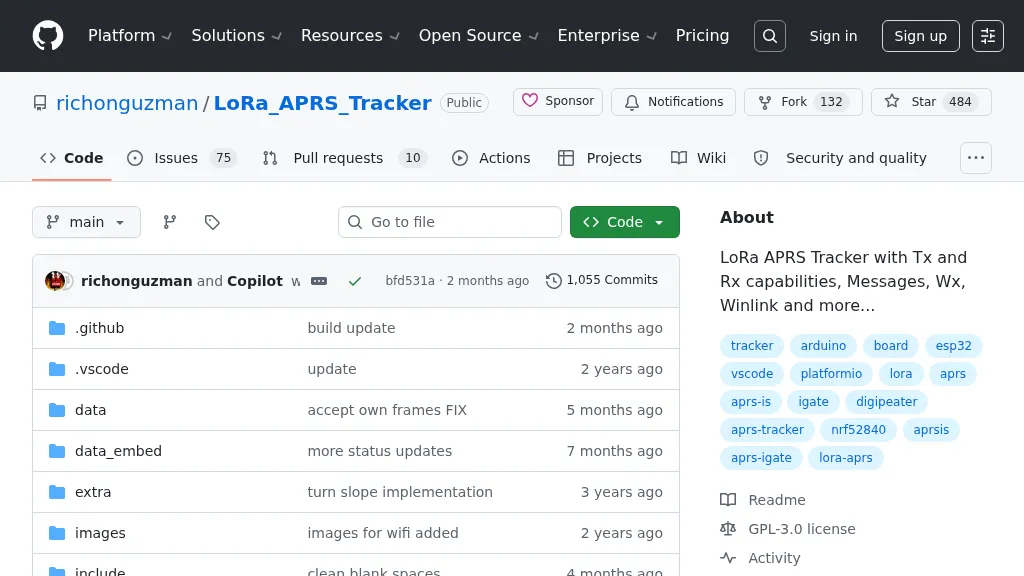 Demonstrates a LoRa APRS Tracker project featuring a comprehensive menu system for message management, weather requests, and monitoring nearby trackers. The device supports adjustable display eco mode and screen brightness, optimizing power consumption by dynamically changing processor speed from 240MHz to 80MHz. GPS beacons are encoded for efficient RF transmission, and an OLED screen displays altitude, speed, course, _BME280_ weather data, or new message counts, along with recently heard stations. Bluetooth connectivity enables operation as a TNC with Android (APRSdroid) or iPhone (APRS.fi app), providing LED and sound notifications for transmissions and received messages. The integrated BME280 module facilitates weather data display and transmission, with Winlink mail support via _APRSLink_. The tracker can switch between **three major LoRa APRS frequencies** worldwide, offering versatile global operation.
 -
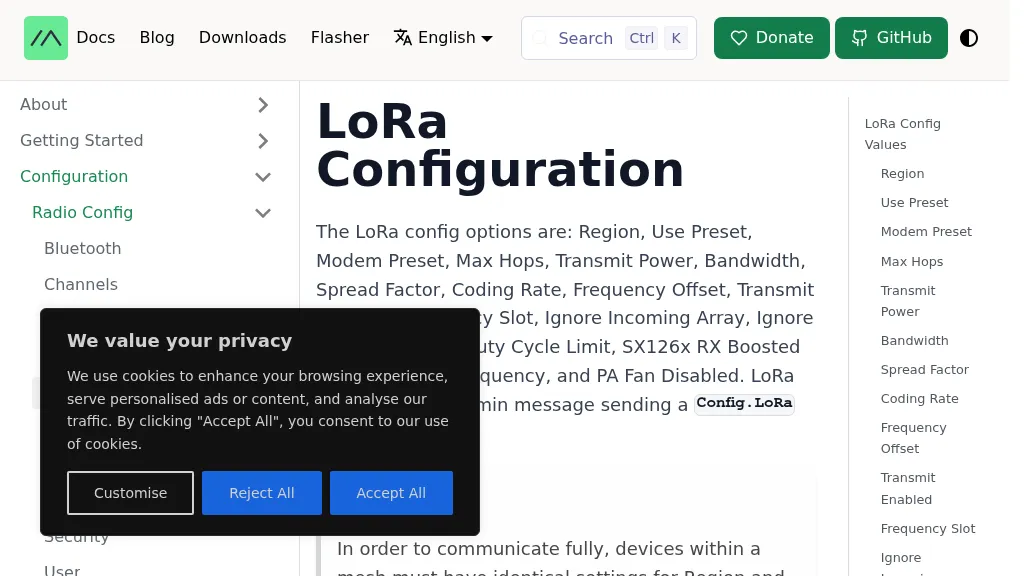 The Meshtastic documentation outlines critical LoRa configuration parameters for node operation, emphasizing regulatory compliance. It details settings such as Region, Modem Preset, Max Hops, Transmit Power, Bandwidth, Spread Factor, Coding Rate, and Frequency Offset. A comprehensive table provides region codes, frequency ranges (e.g., US **902.0 - 928.0 MHz**), duty cycles, and power limits (e.g., EU_433 **12 dBm**) for numerous countries, including the US, EU, China, and Japan, alongside a 2.4 GHz band option. It explicitly states that devices within a mesh must share identical _Region_ and _Modem Preset_ settings for full communication. Modem Presets, like _LONG_FAST_ (the default), optimize for either speed or range, directly impacting network congestion and message delivery delay. For instance, SHORT_TURBO offers the fastest speed and shortest range, while VERY_LONG_SLOW provides the longest range but is less reliable for mesh formation. The document also highlights specific duty cycle limitations, such as the 10% hourly limit for EU_433 and EU_868 regions, and provides command-line interface (CLI) examples for configuring these parameters.
 -
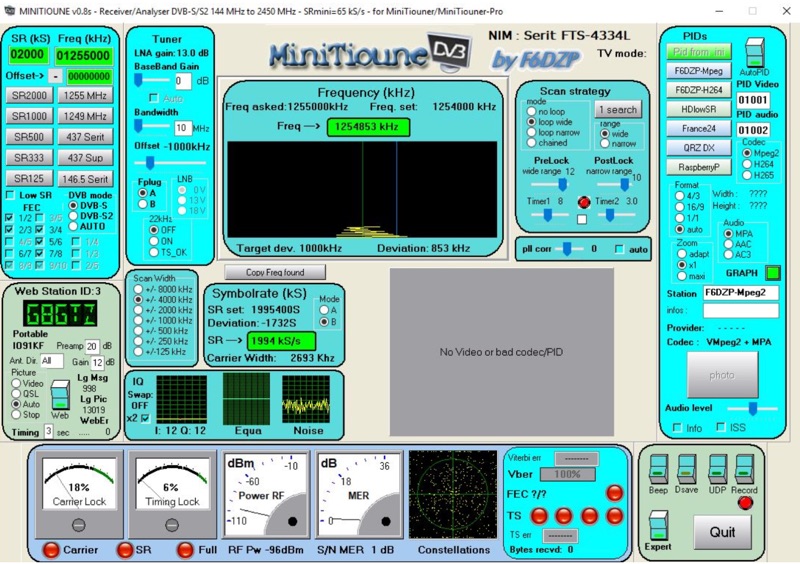 Receiving Digital Amateur Television (DATV) signals requires specialized software to interface with hardware tuners and decode the video stream. The _MiniTioune_ software, developed by F6DZP, serves this purpose, providing a Windows-based application for DVB-S and DVB-S2 reception and analysis. It is designed to work in conjunction with _MiniTiouner_ hardware, enabling hams to monitor DATV transmissions, including those from the QO-100 geostationary satellite. The resource outlines the initial setup process, including connecting the MiniTiouner hardware via a high-quality USB2 mini cable and running diagnostic test software. It details how to configure essential parameters such as symbol rate (SR), FEC rate, and DVB mode for various signal sources, from domestic satellite dishes to local DATV transmitters. Troubleshooting steps for common issues like "no video displayed" are also provided, often pointing to corrupted software filters or incorrect _Auto PID_ settings. Advanced features like the Web monitor for remote signal reporting and integration with _VLC_ media player for more tolerant decoding of non-DVB compliant signals are covered. The document also references a comprehensive user guide by W6HHC for the _MiniTiouner-Express_ system, which utilizes the same software, offering further in-depth assistance for operators.
 -
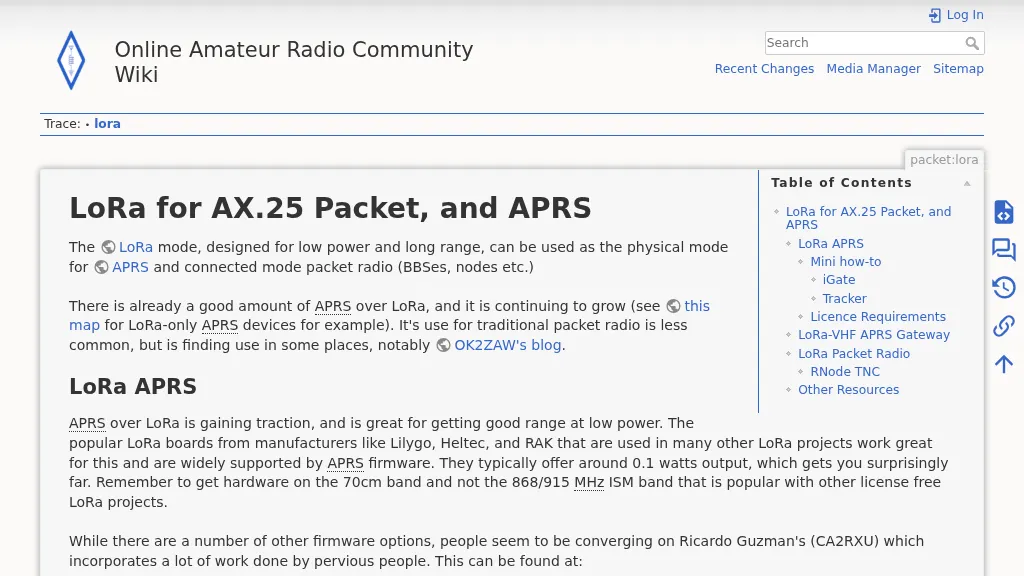 The resource details the use of LoRa for AX.25 packet radio and APRS, focusing on practical implementation. It specifies UK LoRa APRS frequency and modulation settings: **439.9125 MHz**, 125kHz bandwidth, SF12, and CR 4/5. The content provides a mini how-to for setting up an iGate using VS Code and _Platformio IDE_, with specific instructions for a Lilygo LoRa32 V2.1_1.6 board, including configuration for Wi-Fi, beaconing, and APRS-IS passcode. It also covers tracker setup using a Lilygo T-Beam Supreme, detailing firmware flashing and configuration for mobile operation. The guide differentiates LoRa APRS from traditional connected-mode packet radio, explaining why common LoRa APRS firmware is unsuitable for full AX.25 packet due to its TNC2-style payload structure. It explores alternative solutions for true LoRa packet radio, such as using an _RNode_ TNC or Raspberry Pi LoRa TNCs, and provides commands for RNode firmware installation and configuration for serial KISS operation. The resource also touches upon licensing requirements for unattended Digipeaters in the UK, noting the need for ETCC coordination and MB7Uxx callsigns.
 -
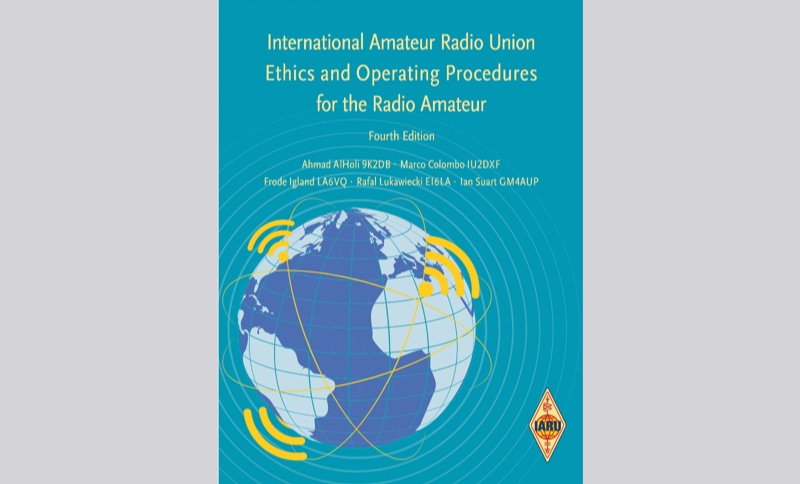 Presents the 4th edition of the IARU Region 1 Ethics and Operating Procedures for the Radio Amateur, a fully rewritten guide published in July 2026. It establishes a shared basis for respectful and effective communication within the amateur radio community, building upon over fifteen years of prior work. The document details the purposes of amateur radio, principles of non-interference, electromagnetic compatibility, and station safety. It specifies operating procedures, including listening practices, adherence to IARU and national band plans, appropriate transmission content, use of Q-codes, and the phonetic alphabet. The guide provides instructions for conducting QSOs across phone, CW, and various digital modes. Specific sections address managing pileups, participating in contesting, engaging in DX and DXpedition operations, operating portable or mobile, and conducting station testing. Further sections cover VHF and UHF operating considerations, ensuring a comprehensive resource for both experienced operators and those new to the hobby.
 -
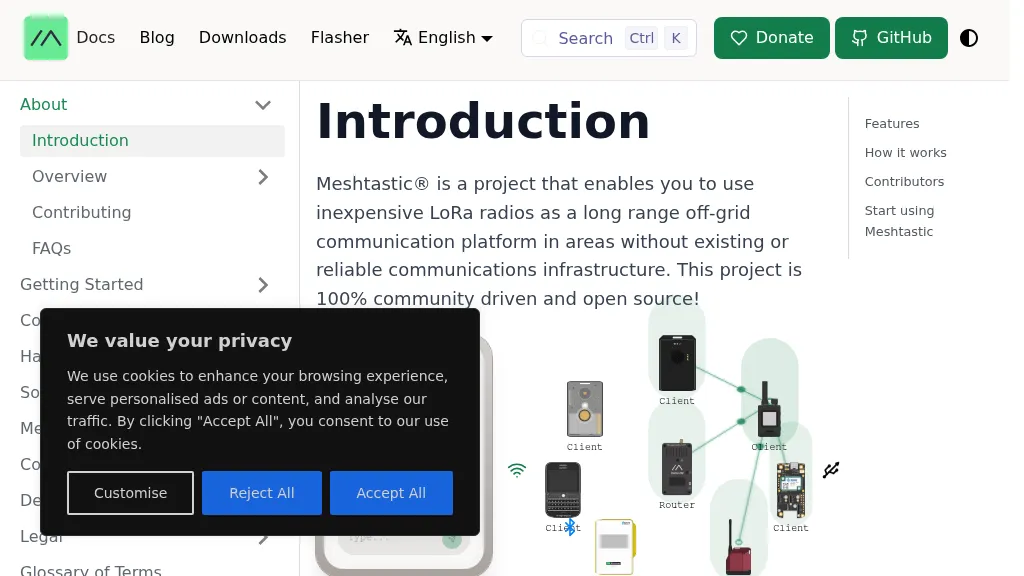 The Meshtastic project leverages _LoRa_ radio protocol to establish a long-range, off-grid communication platform, functioning as a decentralized mesh network. It facilitates sending and receiving text messages using inexpensive LoRa radios, eliminating reliance on traditional infrastructure or a smartphone for core mesh communication. Key features include encrypted communication, extended battery life, and optional GPS-based location services, with radios designed to rebroadcast messages to ensure delivery across the mesh. This system has demonstrated a record range of **331km** and is entirely community-driven and open source, with its codebase hosted on GitHub. Unlike conventional amateur radio, Meshtastic operates on LoRa frequencies generally accessible without specific licenses. Each Meshtastic radio can pair with one phone for message exchange, and support is provided by volunteers.
 -
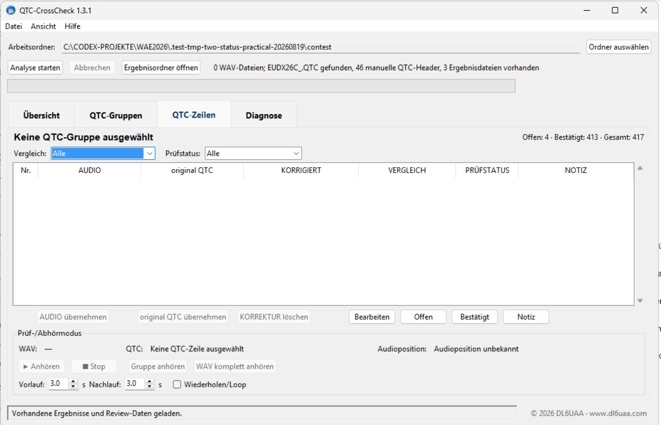 QTC-CrossCheck 1.5.0 is a free offline Windows tool for reviewing WAEDC CW QTC traffic. It analyzes QTC groups from local WAV recordings and supports comparison with UCXLog QTC data. Integrated audio playback helps verify individual QTC rows and resolve discrepancies. The portable application requires no installation or internet connection. Download the Windows ZIP archive and extract it fully before running QTC-CrossCheck.exe. A SHA-256 checksum is provided for download verification.
 -
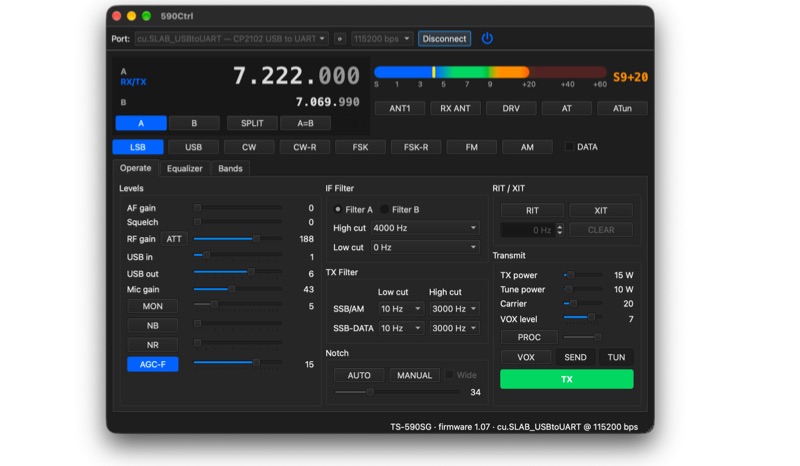 This GitHub repository hosts 590Ctrl, a desktop control panel application designed for the Kenwood TS-590SG transceiver. The software enables control of the radio over a USB connection. It is developed for macOS and Linux operating systems, utilizing the Qt 6 framework and C++ programming language. The repository structure includes directories for documentation, resources, scripts, source code, and tests. Key files such as .gitignore, CMakeLists.txt, LICENSE, and README.md are also present. The project has a commit history of 22 commits. This tool is intended for amateur radio operators who use the Kenwood TS-590SG and prefer a computer-based control interface on macOS or Linux platforms.