Search results
Query: http
Links: 15220 | Categories: 0
This query is too generic. Please try adding an additional term to focus your research.
-
 Free Ham Radio web server with Voice-over-IP technology for ham radio in Russia.
 -
 Errante's virtual ground Balun, a state-of-the-art high power HF balun family.
 -
 Accurate calibration of your receiver and sound card is necessary for good results with the weak signal modes in use at LF. Modern receivers with master oscillators that are synthesized to provide all conversion frequencies greatly simplify the process. This article describes a method of making the necessary measurements and adjustments to an ICOM R75 receiver and a sound card, using the ARGO software
 -
 Morse code trumps SMS in head-to-head speed texting combat
 -
 The RARC is the oldest ARRL affiliated club in Virginia. Founded in 1929 by Ted Mathewson, W4FJ one of the earliest Ham Radio Operators licensed by the FCC.
 -
-
 Noise eliminating products. Remove unwanted background noise and interference leaving only the speech. Clear communications, listen stress free. Dsp noise cancellation solutions.
 -
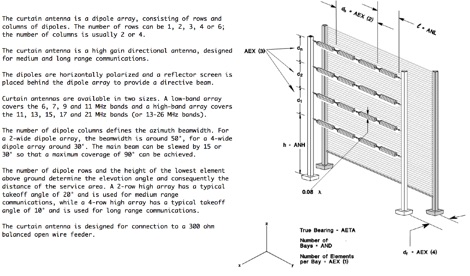 An antenna for shortwave radio broadcasting consisting of rows and columns of dipoles, is a high gain directional antenna, designed for medium and long range communications.
 -
-
 International Organization working for a complete 11 mt. band, Radio Foundation G. Marconi's Memory
 -
 A personal review about the Yaesu FT-817
 -
 Iphone App with list of nearby repeaters in the UK, along with details of input and output frequencies, a map, and a handy bearing arrow for each repeater.
 -
 The resource details the construction of a multiband trap-style Inverted-V antenna designed for operation on 3.5 MHz, 7 MHz, 14 MHz, 21 MHz, and 28 MHz. It presents specific winding data for the traps, including the number of turns, wire gauge, and coil former dimensions, crucial for achieving resonance on the target bands. The document provides a parts list and a diagram illustrating the antenna's physical layout and trap placement. It outlines the process for building the traps using PVC pipe formers and specifies the required capacitor values for each trap. The design emphasizes a practical approach to achieving multiband operation with a single feedline, a common goal for HF operators with limited space. The document includes a table with antenna segment lengths for each band, allowing for precise replication of the design. It also offers insights into tuning and adjustment, ensuring the antenna performs optimally across the designated amateur radio bands.
 -
 slowrx is a Linux shortwave listener tool for receiving SSTV using a sound card by OH2EIQ.
 -
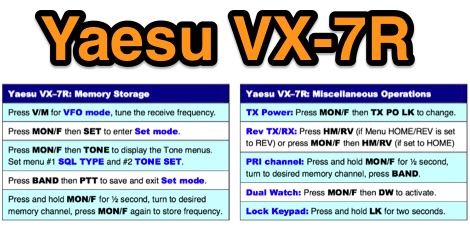 Printable Quick Reference Card for Yaesu VX-7R
 -
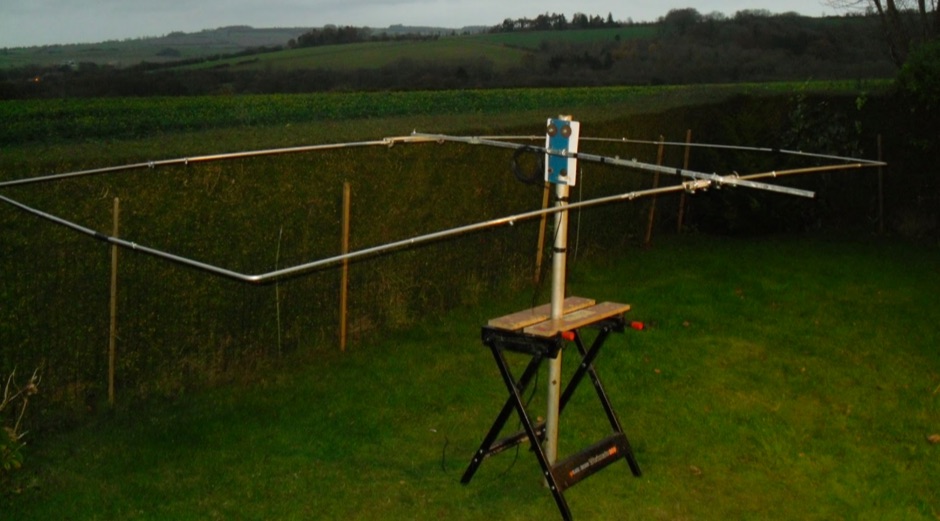 Useful hints & tips on building a 10 and 17 meter Moxon Antenna
 -
 Meteor scatter, gives quick view over meteor scatter and scatter events on vhf, lists email addresses of vhf radio amateurs qrv in meteor scatter
 -
 The early 20th century saw significant advancements in wireless communication, culminating in the first successful transatlantic radio signal. This historical account details Guglielmo Marconi's pioneering efforts, from his initial experiments with electromagnetic waves to his patented wireless system in 1900. It describes the technical challenges of long-distance radio transmission, particularly the prevailing belief that radio waves would be lost due to the Earth's curvature over vast distances. On December 12, 1901, Marconi established a receiving station in Newfoundland, Canada, utilizing a _coherer_ and balloons to elevate the antenna. Signals, consisting of the Morse code letter "S" (pip-pip-pip), were transmitted from Poldhu, Cornwall, England. The successful reception of these faint but distinct signals across **1,700 miles** confirmed Marconi's theories, marking an epoch in communication history. This achievement demonstrated the viability of global wireless communication, paving the way for future developments in radio technology.
 -
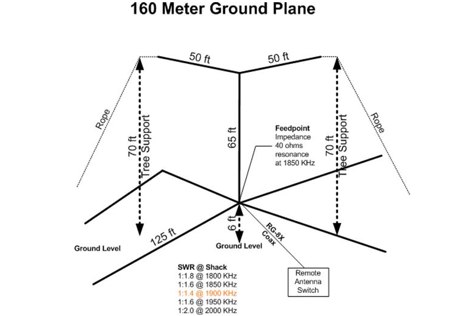 The 160 meter ground plane is constructed from #10 stranded insulated wire available in most hardware stores. The feedpoints / tiepoints use PVC pipe T-sections Article by W1TR
 -
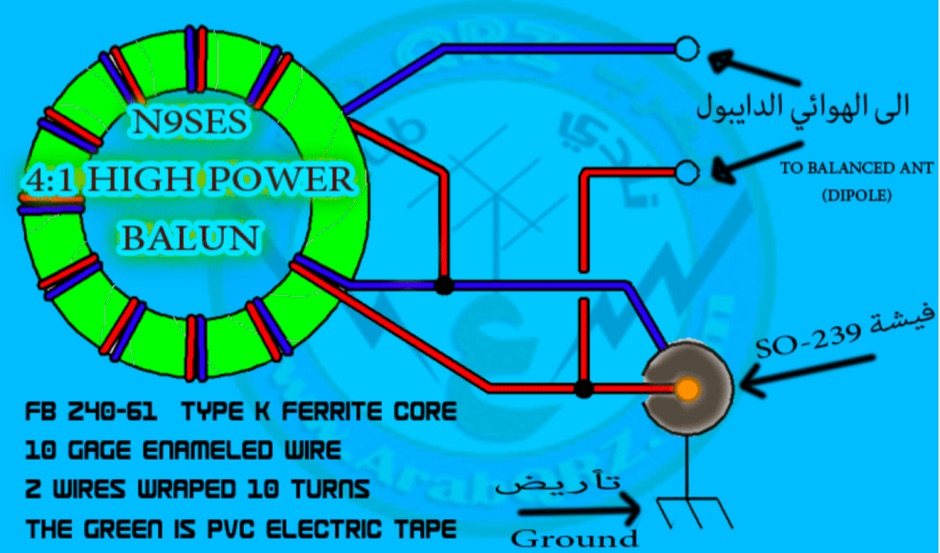 A home made 4:1 Ferrite QRO Bal-un with a FB 241-61 Type K
 -
 a website by vu2fd with theory lessons, details on rules and regulations and planty of homebrew projects for radio amateurs, java calculators.
 -
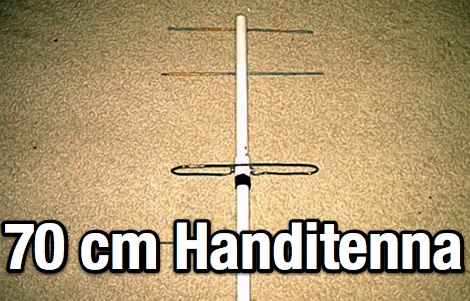 A homemade 70cm handitenna made with a PVC pipe
 -
 For owners or potential owners of the Icom IC-V85 Handheld Transceiver.
 -
 Mitigating RF noise in a mobile operating environment, particularly within a _Jeep TJ_ vehicle, presents unique challenges due to the vehicle's electrical system and chassis characteristics. This resource details practical methods for identifying and suppressing various forms of radio frequency interference (RFI) that can degrade receiver performance for both CB and amateur radio transceivers. It covers common noise sources such as ignition systems, alternators, fuel pumps, and computer modules, explaining how these components generate broadband or specific frequency noise that impacts radio communications. The guide offers actionable solutions, including proper grounding techniques, the strategic use of ferrite beads and toroids on power and data lines, and the installation of bypass capacitors. It discusses the effectiveness of different filtering strategies for DC power lines and antenna feedlines, illustrating how a clean power supply and shielded cabling can significantly reduce conducted and radiated noise. The information presented helps operators achieve a lower noise floor, improving signal-to-noise ratio and enabling clearer reception of weak signals, which is crucial for effective mobile DXing or local ragchewing.
 -
 Antennas for asset tracking, navigation and remote monitoring GPS, GSM, GPS/GSM, Satellite Radio, WLAN
 -
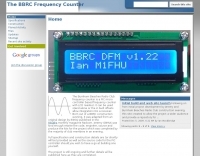 Accurate frequency measurement is crucial for amateur radio operators, particularly when building or troubleshooting transceivers and test equipment. This resource details the construction of a _PIC microcontroller_-based frequency counter, providing a practical solution for precise frequency display. The design incorporates an LCD readout, offering clear visual feedback of measured frequencies. The counter can operate as a standalone unit, useful for general bench testing, or be integrated directly into a receiver. Its built-in offset functionality allows for seamless integration, enabling the display of the received signal frequency rather than the intermediate frequency. The project focuses on accessible components and construction techniques, making it suitable for homebrew enthusiasts. Key features include a measurement range up to **50 MHz** and a compact form factor.
 -
 The Premier MidWest DX Convention, Illinois.
 -
 MacOSX real-time precision signal / waveform generator. Uses native Mac sound Out capabilities.
 -
 Aanarad Trabzon department turkey
 -
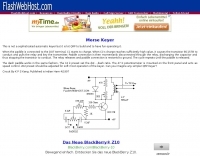 This is not a sophisticated automatic keyer but it is lot QRP to build and to have fun operatin
 -
-
 Shelby amateur radio club's VHF emergency net is open to all within the repeater's coverage area. 146.880 and 147.345 are the repeater frequencies. Shelby Radio Club is the sponsor of the Shelby hamfest.
 -
 Features, functions, a howto and opinions by Jason Buchanan - N1SU
 -
 Fixing the IC-7000 noisy audio that can occur when IC-7000 audio output is connected to Hi-Fi earphones or external speaker.
 -

-
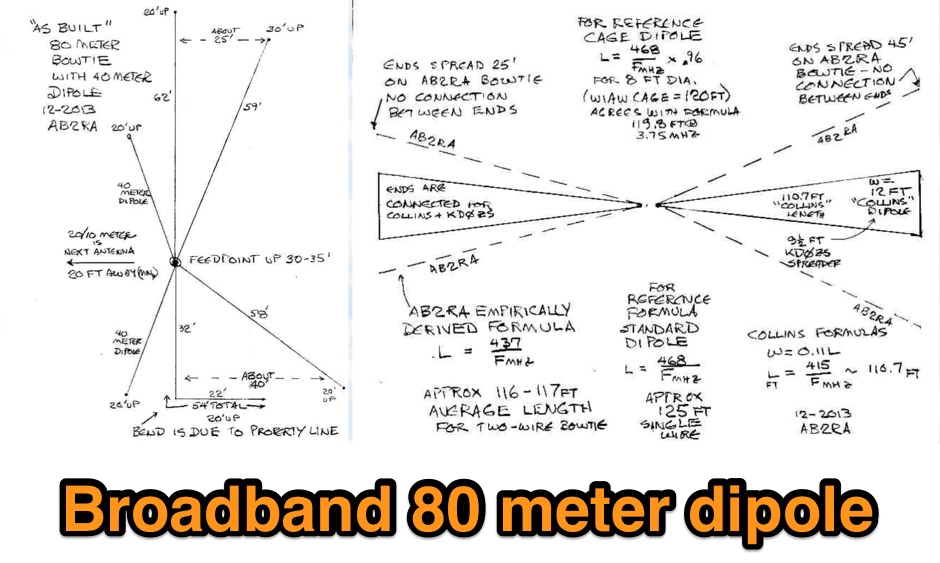 The AB2RA bowtie 80 meter antenna includes also a 40 meter dipole
 -
 Cliped tools items for electronics
 -
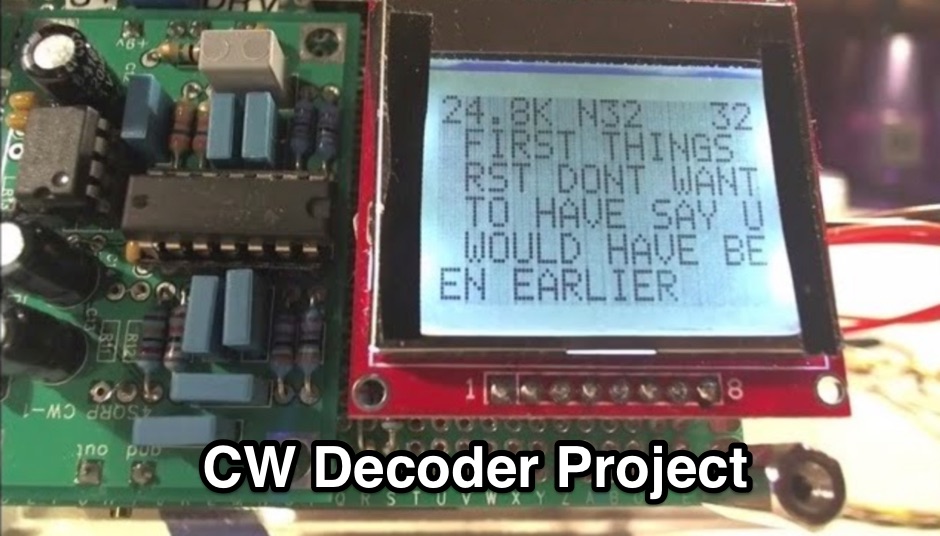 W5UXH version of OZ1JHM Morse Code decoder project
 -
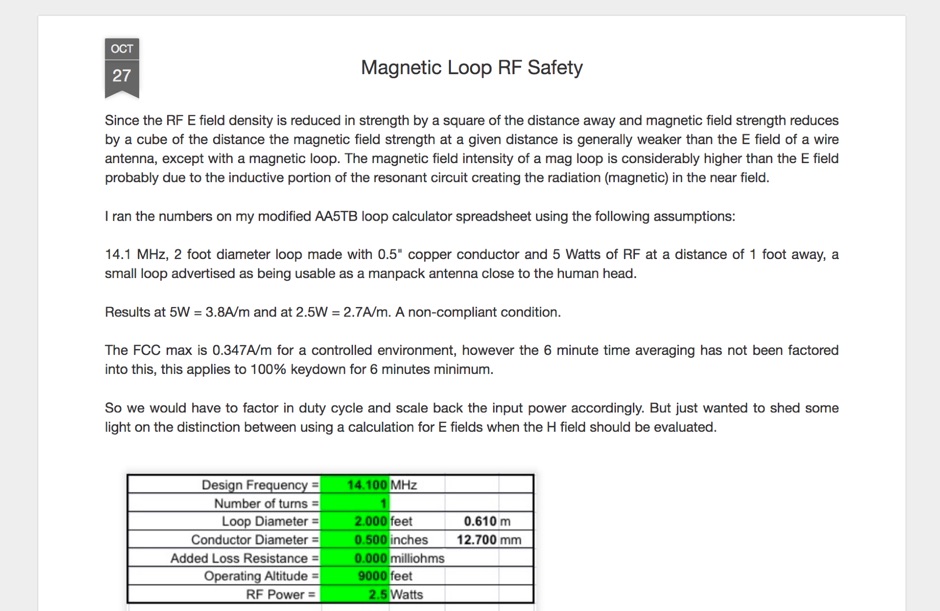 Operating magnetic loop antennas requires careful consideration of RF safety, particularly regarding near-field magnetic field intensity. This resource presents calculations for magnetic field strength (H-field) at various distances from a magnetic loop, emphasizing that the H-field is significantly higher than the E-field in the near-field region due to the inductive nature of the radiating element. It provides specific formulas and examples for determining safe operating distances based on power levels and loop dimensions, crucial for compliance with RF exposure limits. The analysis compares calculated H-field values against FCC and ICNIRP maximum permissible exposure (MPE) limits for controlled and uncontrolled environments. It demonstrates that even at QRP power levels (e.g., 5W), the H-field can exceed MPE limits within a few feet of the antenna, necessitating greater separation distances than often assumed for electric field considerations. The practical application of these calculations helps amateur radio operators configure their stations to ensure personnel safety and regulatory compliance when deploying compact, high-Q magnetic loop antennas.
 -
 HSCW/WSJT meteorscatter/path simulator a first attempt at trying to model meteorscatter events and simulate their transmission characteristics
 -

-

-
 Hose Company 1 East Rockaway Fire Department Official Page. Scanning FDNY & East Rockaway Fire
 -
 This site is dedicated to the repair, restoration, preservation and sale of old collectable radios, both bakelite and wood.
 -
-
 Yaesu transceiver vx-170 water proof test
 -
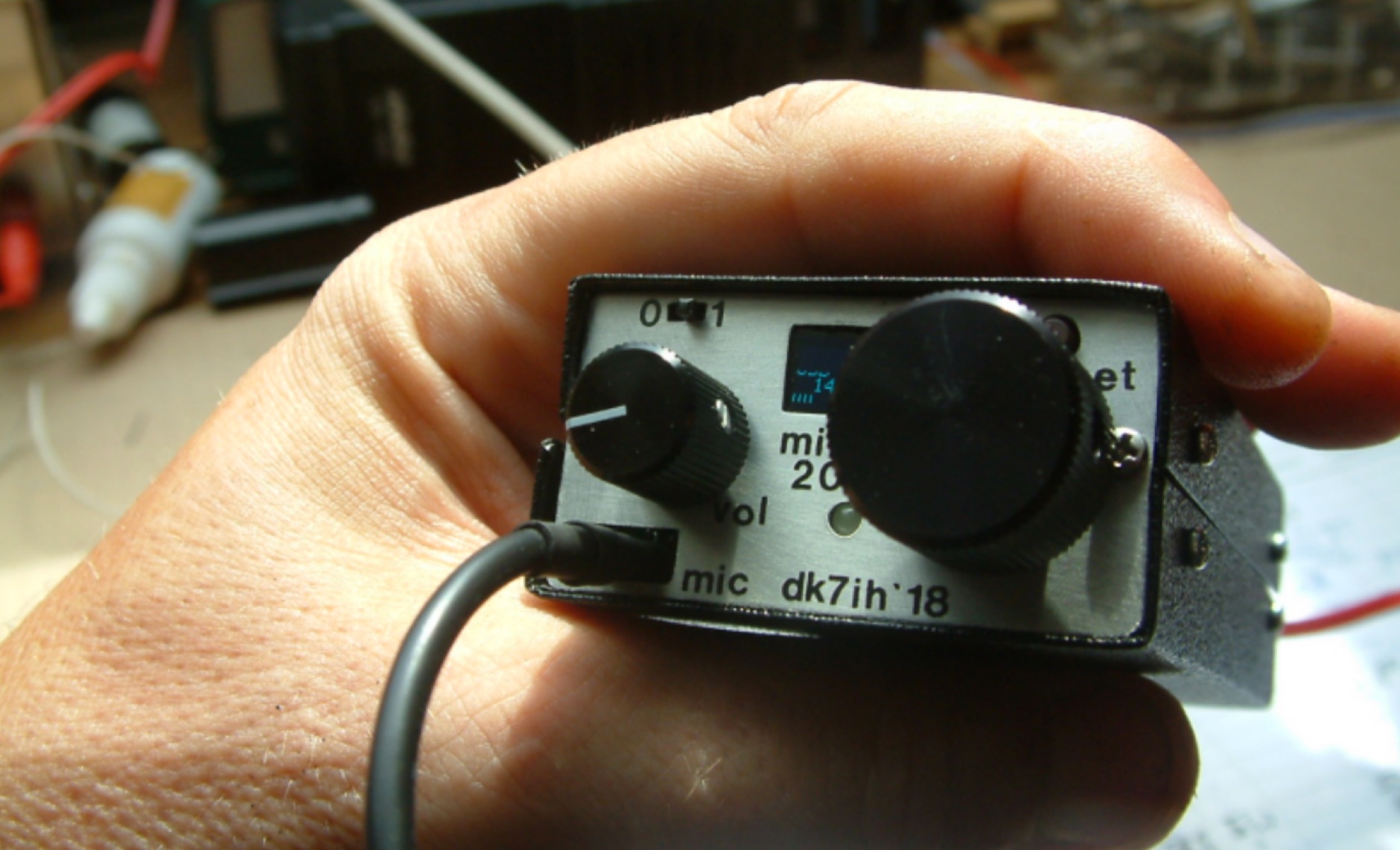 A family of small size QRP SSB transceivers for the 15 MHz. Includes a cigarette pocket size QRP transceiver and a larger shirt-pocket transceiver.
 -

-
 The NIDXA is an active DX club affiliated with the ARRL. NIDXA runs the W9 Incoming QSL bureau, a DX Packet Cluster, and the world famous W9DXCC convention.
 -
 Spipral antenna principle by a concept of Bill Petlowany, K6NO. Tak Antennas are based on this principle, using spirals as dipole linear wires.