Search results
Query: radio amateur
Links: 3252 | Categories: 310
Categories
- Radio Equipment > Amateur Radio Accessories
- Operating Modes > Amateur Radio Astronomy
- Manufacturers > Amateur Radio Maps
- Operating Aids > Beginner's Guides > What Amateur Radio is
- Operating Modes > Stealth Amateur Radio
- Operating Modes > Ham Radio Balloons
- Technical Reference > Ham Radio Go Kits
- Shopping and Services > Ham Radio Insurance
- Ham Radio > Ham Radio News
- Internet and Radio
- Operating Modes > NPR New Packet Radio
- Technical Reference > Programming Radio
- Manufacturers > Radio Direction Finding
- Internet and Radio > Radio Gateways
- Ham Radio > Radio Scouting
- Operating Aids > Radio Spectrum
- Shopping and Services > Remote Radio
- Operating Modes > Amateur Television
- DX Resources > Beacons > 10 meter beacons
- DX Resources > DX Peditions > 2010 DXpeditions
- DX Resources > DX Peditions > 2011 DXpeditions
- DX Resources > DX Peditions > 2012 DXpeditions
- DX Resources > DX Peditions > 2014 DXpeditions
- DX Resources > DX Peditions > 2015 DXpeditions
- DX Resources > DX Peditions > 2016 DXpeditions
- DX Resources > DX Peditions > 2017 DXpeditions
- DX Resources > DX Peditions > 2018 DXpeditions
- DX Resources > DX Peditions > 2019 DXpeditions
- DX Resources > DX Peditions > 2020 DXpeditions
- DX Resources > DX Peditions > 2021 DXpeditions
-
 Founded in 2000 by Jim Weidner, K2JXW, the ARLHS is the only society devoted exclusively to Maritime Communications and Ham Radio, Lighthouses and Lightships
-
 Friends & Amateur Radio Communications Enthusiasts
-
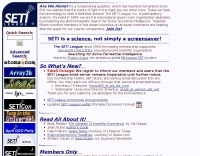 The SETI League, Inc., founded in 1994, focused on participatory science, developing technology to seek definitive answers to the question of extraterrestrial intelligence. The organization operated in five dozen countries across all seven continents, maintaining the quest for cosmic companions through the efforts of its 1500 members. Although the organization shuttered its virtual doors after thirty years in 2024, the website remains for educational and historical purposes, documenting past research and activities. Key technical resources include the _SETI League Mini-Manual_ for constructing a 12 GHz radio telescope under $200, and software like _SETIFox for Windows_ and _Radio Eyes_ for radio astronomy sky viewing. The site also features _Project Argus_ detections, moonbounce signal detections, and space probe signal detections, providing concrete examples of amateur radio astronomy applications. Publications such as the quarterly newsletter _SearchLites_ and various articles by Dr. SETI (H. Paul Shuch, Ph.D.) are available, alongside information on the Third Penn State SETI Symposium in 2025. The site also offers insights into hydrogen line emission observations, presented in time domain, frequency domain, waterfall, and surface plot formats.
-
 The C.A.R.E.N. Club is one of the oldest amateur radio clubs in Arkansas, dating back to the late 1950s. Just as the name implies, the C.A.R.E.N. Club is the state leader in emergency communications, SKYWARN, Amateur Radio Emergency Service (ARES), Radio Amateur Civil Emergency Service (RACES).
-
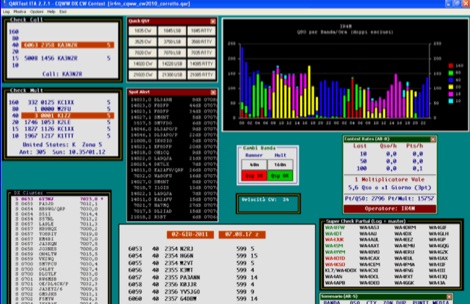 Free Windows contest logging software, initially designed for the ARI 40-80 contest supports all major world wide contests. QARtest supports dx cluster, radio control interface and many new features. Can be used for most popular amateur radio contests. Works from Windows XP to Windows 10.
-
 Rotors and rotor controllers for amateur radio polish manufacturer.
-
 Hams or amateur radio operators and CB operators usually cannot have ideal grounds, but with some care and planning they can have nearly perfect systems
-
 Formed in 1955 is an incorporated Amateur Radio club dedicated to the promotion of DX information and operating by members residing in the Willamette Valley and Southwest Washington.
-
 Club and Repeater Network in Central Florida
-
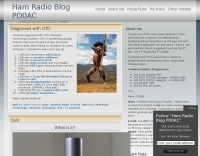 The BTech DMR-6X2 dual-band DMR handheld radio is thoroughly reviewed, detailing its features and performance for amateur radio operators. This resource covers the radio's capabilities for both VHF and UHF frequencies, supporting Tier II DMR digital and FM analog modes. It highlights key specifications such as its **136-174 MHz** and **400-480 MHz** frequency ranges, CTCSS/DCS, DTMF, 2-TONE, and 5-TONE signaling, and its _digital simplex repeater_ function. The review provides a comprehensive unboxing experience, listing included accessories like two Li-Ion batteries (2100 and 3100 mAh), a programming cable, and a 37-page English user guide. It also specifies the radio's physical dimensions of 5.1 x 2.4 x 1.5 inches and weights of 9.9 oz with the 2100 mAh battery and 10.8 oz with the 3100 mAh battery, offering practical insights for hams considering this transceiver.
-
 Over 15 years of operational notes are documented on the AA6E Station Log, covering diverse amateur radio topics. The blog presents detailed accounts of station setup, antenna experiments, and digital mode operations, often featuring specific equipment like the _Ten-Tec Orion_ transceiver. It includes practical discussions on **station grounding techniques** and insights into PSK31 Morse code communication. The resource provides a chronological record of Martin Ewing's amateur radio activities, offering firsthand perspectives on equipment performance and operational challenges. Content often includes technical observations and solutions developed through practical experience, such as optimizing antenna systems for various bands. Specific entries detail contest participation and DX chasing, providing context for operational decisions and results.
-
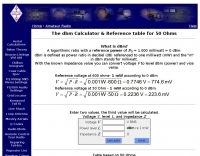 Understanding power measurements in RF systems is crucial for amateur radio operators, particularly when evaluating antenna performance or transmitter output. This online resource provides a _dBm calculator_ and a comprehensive reference table specifically tailored for 50 Ohm impedance environments. The calculator allows users to convert between dBm, milliwatts (mW), and volts (V), facilitating quick power level assessments. It clarifies that dBm represents a logarithmic ratio with a reference power of **1.000 milliwatt**, equating to 0 dBm. The accompanying reference table extends this utility by presenting a range of pre-calculated values, which can be particularly useful for field operations or rapid design checks without needing to perform manual calculations. The resource distinctly focuses on the practical application of dBm in amateur radio contexts.
-
 The purpose of this web page is to try to investigate some of the issues around ICOM IC-746PRO reported by many radio amateurs through out the world; and unfortunately not properly taken care of by ICOM.
-
 West Tennessee amateur radio society
-
 This resource, intended to present historical score records for the _ARRL International DX Contest_, currently displays a "Page not found" error. The page's original purpose was to document top scores and records for both Phone and CW segments of the contest, offering a historical perspective on competitive amateur radio operating. Without the content, no specific technical details regarding past contest results, callsigns of record holders, or score breakdowns can be extracted. The resource's current state prevents any analysis of score comparisons, operational strategies of top stations, or the evolution of contest performance over time.
-
 The CES Wireless Technologies website details a range of **GPS fleet tracking** solutions designed for mobile information systems. It highlights offerings such as dispatch and mapping software, Automatic Vehicle Location (AVL) systems, and mobile data display terminals. The platform also mentions support for Automatic Number Identification (ANI) and Continuous Tone-Coded Squelch System (CTCSS) functionalities, indicating integration with two-way radio communication protocols. Specific products include GPS tracking devices and associated software for fleet management, emphasizing features like real-time location monitoring and operational efficiency. The site positions itself as a manufacturer in this specialized domain, catering to commercial and public safety sectors requiring robust mobile data solutions. While the page title mentions "Ham Radio Directory" categories, the content primarily focuses on commercial GPS and fleet management technologies, not amateur radio applications. The listed products are geared towards professional mobile radio (PMR) environments rather than typical ham radio operations.
-
 The Chattooga - Walker amateur radio club
-
 Homepage of the OS/2 and eComStation enabled Radio Amateurs, the HAM/2s. Reference site for OS/2 ham radio users,
-
 Association of radio amateurs devoted to the promotion of interest in amateur radio communications in the National Capital Area
-
 The QSY Society is a group of amateur radio enthusiasts dedicated to having FUN with the hobby, while still fulfilling the stated goals of the amateur radio service. The majority of our membership comes from the Mid-Hudson region of New York State
-
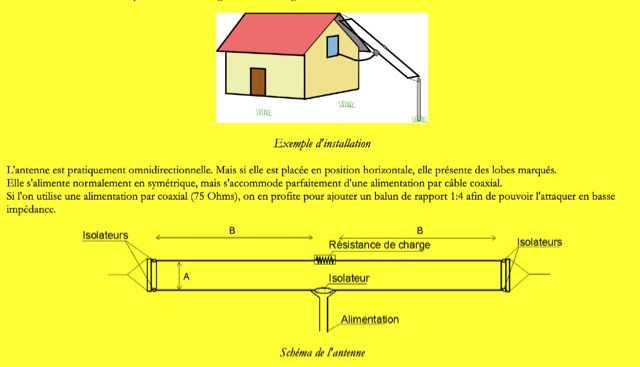 W3HH wide-band wire antenna Article in French. The W3HH antenna, also known as the Terminated Folded Dipole (T2FD), is a compact, broadband antenna for amateur radio. It operates at an angle of 20 to 40 degrees and covers frequencies from 3 to 30 MHz. The antenna features a total length of one-third of the wavelength at its lowest frequency and is fed using a 1:4 BALUN transformer for impedance matching. A termination resistor around 390 Ω optimizes performance, making it suitable for various amateur radio applications while being easy to construct and install.
-
 D-star amateur radio systems, your source for d-star digital amateur radio. D-Stars users website
-
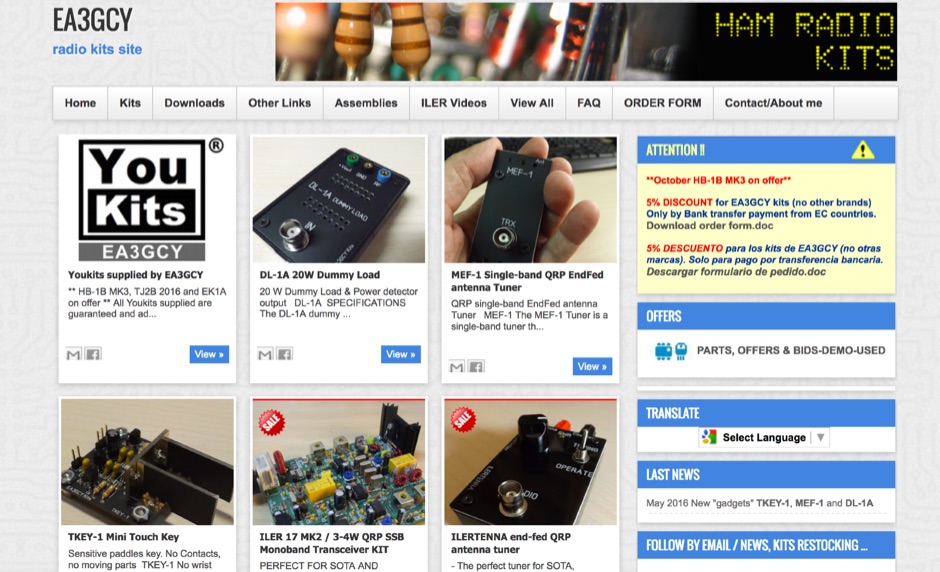 Amateur radio kits online shop, includes Mini Touch Key, QRP HF SSB and CW transceiver kits
-
 The mid florida dx association was formed in february 2005. to promote friendship and cooperation among amateur radio (wireless) operators primarily
-
 Belgium radio club, weekly news bulletin. Regular times qrv from lightship Westhinder III.
-
 European Radio Amateurs' Organization (EURAO) QSL Bureaus Network with the strong commitment to make available, whenever possible, to all radio amateurs their QSLs at no extra cost other than shipping and handling, without any kind of restriction
-
 The loma pioneer repeater club - lprc provides 2 meter vhf and 440 uhf amateur radio and emergency communication for the san francisco and monterey bay areas from a repeater on mt loma prieta. aprs digipeater available.
-
 Here you will be able to access all of the information regarding our amateur radio disaster relief communications organization, its divisions and volunteer members
-
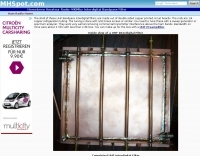 Homebrew Amateur Radio 440Mhz Interdigital Bandpass Filter
-
 A DX and Contest Minded Amateur Radio Club Serving the California Coast North of the Golden Gate Bridge
-
 A Mailing list for Greek Radio Amateurs from all over the world.
-
 This is multi multi radio amateur contest station oh2u which have won three european champions
-
 Fellowship for all Amateur Radio Operators of Rockingham County. Home of the N4IV repeater system. Licensing classes, testing, ARES, and Skywarn
-

-
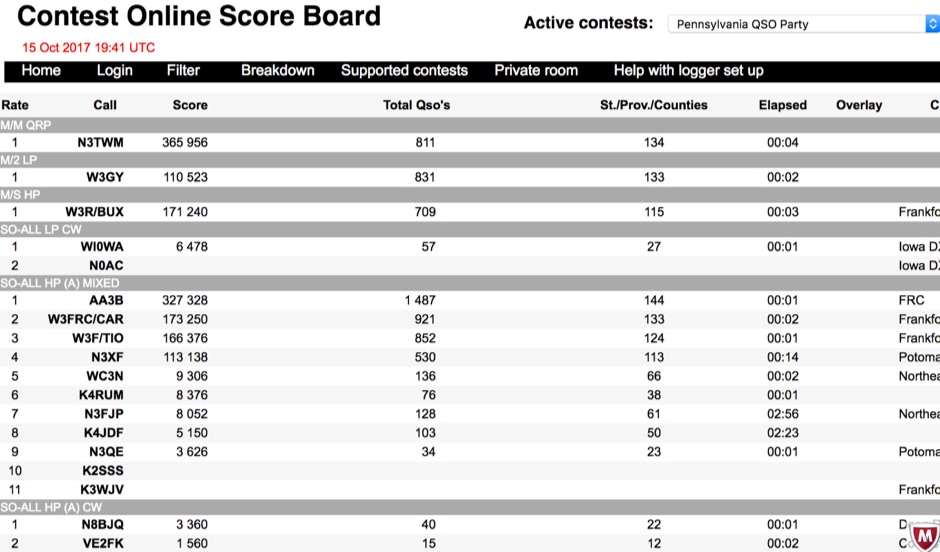 Aggregating real-time contest scores, this online scoreboard serves as a central hub for participants and spectators to monitor live progress during amateur radio competitions. It directly interfaces with widely used contest logging programs, collecting score data as operators make contacts. The platform then processes and displays these scores on dedicated contest pages, offering an immediate overview of standings. Supporting a diverse range of **DX contests**, the system accommodates various operating modes and rulesets. It facilitates score tracking for events like the YB DX RTTY, RSGB Commonwealth (BERU), EA PSK63, and the South America 10 Meter contest, among others. This functionality allows contesters to gauge their performance against competitors instantaneously, fostering dynamic participation. The scoreboard's integration with multiple contest log software applications ensures broad compatibility, making it accessible to a significant portion of the contesting community. It provides a crucial service by centralizing score visibility, enhancing the competitive experience for **amateur radio operators** worldwide.
-
 Amateur radio operators seeking local community and emergency communications involvement often look for active clubs. The Rock River Radio Club (RRRC) provides a platform for hams in Wisconsin to participate in weekly nets and monthly meetings, fostering camaraderie and operational readiness. Their activities include regular ARES/RACES nets, which are crucial for maintaining proficiency in emergency communication protocols and equipment. The club hosts weekly nets on both VHF/UHF and HF bands, allowing members to practice various modes and frequencies. These include a Monday evening net on the Juneau Repeater at _146.64 MHz_ (PL 123.0) and a Thursday evening net on the Knowles Repeater at _442.975 MHz_ (PL 123.0). An HF net operates on Saturdays at **3.947 MHz**, with an additional ARES/RACES net on Sundays at **3.967 MHz**. Monthly club meetings are held on the first Tuesday of each month at 7 PM in Randolph, Wisconsin, providing a consistent gathering point for members and prospective hams. The club also engages in public demonstrations, such as those at the Experimental Aircraft Association (EAA) Dodge County Chapter Fly-In, showcasing amateur radio to a broader audience.
-
 The Stanford Amateur Radio Club (W6YX) consists of about 50 students, staff, faculty, alumni, and community members.
-
 Offer a wide variety of activities, including instruction to prospective new Amateurs, and classes for upgrades to General and Extra
-
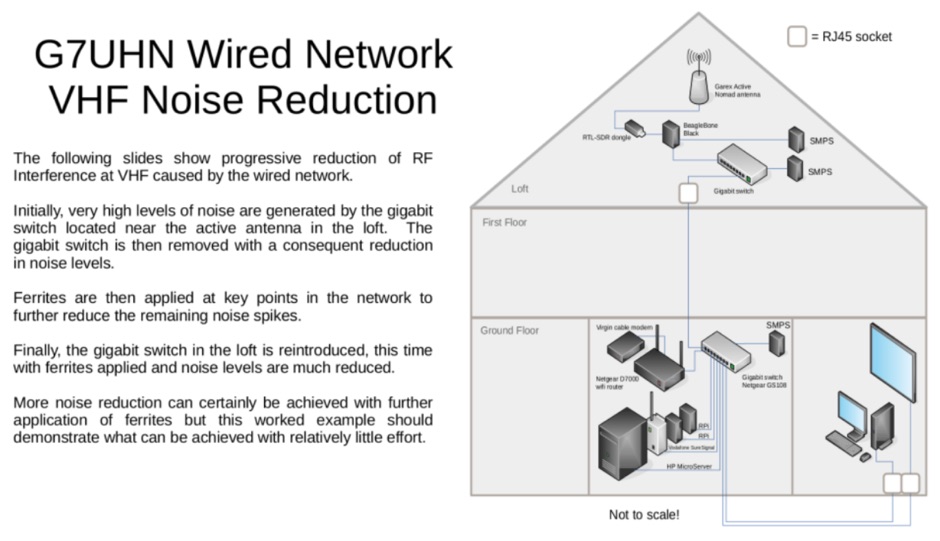 How to reduce and eliminate the RF interference at VHF caused by the wired network
-
 An amateur radio organization dedicated to furthering the amateur radio hobby. It consists of members from Oakland, Alameda, Piedmont and other cities in the immediate area.
-
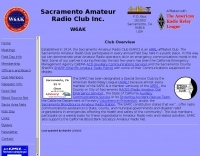 Presents the Sacramento Amateur Radio Club (W6AK), detailing its long-standing presence in the amateur radio community since 1914. The club's affiliation with the **ARRL** is highlighted, indicating its adherence to national amateur radio standards and participation in broader organizational activities. Content includes recent operational activities, such as participation at the Yolo County Fairgrounds, and social gatherings like meet-and-greets at East Portal Park, fostering member engagement. The resource also provides insights into the club's governance, listing current board members and their **call signs**, including the President Mike McDermott (KF6RUQ) and Vice President Jay Ballinger (N6SAC). Information on past elections and board position fillings offers transparency into the club's operational structure. The site functions as a central hub for club news and event announcements, reflecting its role in coordinating local amateur radio endeavors.
-
 The CAT and audio interface version 3 project by PA5CA presents a comprehensive solution for integrating amateur radio transceivers with computer sound cards, facilitating digital mode operation and CAT control. It includes detailed schematics for the interface circuitry, illustrating the isolation transformers for audio paths and optocouplers for CAT data lines, ensuring robust electrical separation between radio and PC. The resource also provides PCB layouts, enabling constructors to fabricate their own boards for this specific design. The project outlines the component selection and assembly process, emphasizing the use of readily available parts to build a reliable interface. It addresses common challenges in sound card interfacing, such as ground loops and RF interference, through its isolated design. This construction guide offers practical insights into building a functional interface, making it suitable for hams interested in DIY radio accessories for digital modes like FT8, RTTY, and PSK31.
-
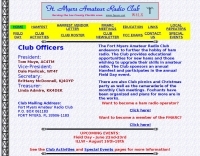 Fort Myers Amateur Radio Club is located in Fort Myers Florida. FMARC has around 300 ham radio operators.
-
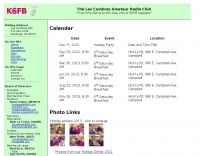 The Las Cumbres Amateur Radio Club "From the Sierra to the Sea, this is K6FB repeater"
-
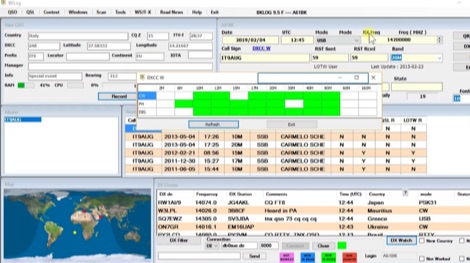 BKLog is a versatile log book and contest program designed specifically for amateur radio operators. Developed in VB.NET, it offers a user-friendly interface and a range of features that cater to both casual and competitive hams. Users can log their contacts, manage contest entries, and utilize automatic CW sending, making it a valuable tool for any operator. One of the standout features of BKLog is its integration with DX Cluster access, allowing users to stay updated on DX spots and enhance their operating experience. Additionally, it supports uploads to popular online QSL services such as QRZ, LoTW, and Club Log, streamlining the QSL process for users. With regular updates and improvements, BKLog continues to evolve, ensuring it meets the needs of the amateur radio community. Whether you're a seasoned contester or a newcomer to logging, BKLog provides the essential tools to enhance your ham radio experience. Its compatibility with Windows makes it accessible to a wide range of users, and its ongoing development ensures that it remains relevant in the ever-changing landscape of amateur radio.
-
-
 The article, "Using 75 Ohm CATV Coaxial Cable," details methods for employing readily available 75-ohm CATV hardline in standard 50-ohm amateur radio setups. It addresses the inherent impedance mismatch and practical considerations, such as connector compatibility, for hams seeking cost-effective, low-loss feedline solutions. The resource specifically contrasts common 50-ohm cables like RG-8, RG213, and _LMR-400_ with 75-ohm hardline, highlighting the latter's lower loss characteristics, particularly at VHF and UHF frequencies. It explores two primary approaches to manage the impedance difference: direct connection with an acceptable SWR compromise and precise impedance transformation. The direct connection method acknowledges that a perfect 1:1 SWR is not always critical, especially when using low-loss coax. For impedance transformation, the article explains the use of half-wavelength sections of coax to reflect the antenna's 50-ohm impedance back to the transmitter, noting its single-frequency effectiveness. It also briefly mentions transformer designs using toroid cores and a technique involving two 1/12 wavelength sections of feedline for broader bandwidth. The content further clarifies the concept of _velocity factor_ for calculating electrical versus physical cable lengths, providing a generic formula for precise length determination. It notes that while half-wave matching is practical for 10 meters and above, it can result in excessively long runs for lower bands like 160 meters, potentially adding **250 feet** of cable. The article also mentions achieving a usable bandwidth of 28.000 MHz up to at least **28.8 MHz** on 10 meters with specific transformation techniques.