Search results
Query: on line radio
Links: 657 | Categories: 31
Categories
- Shopping and Services > CB Radio Stores
- Shopping and Services > Ham Radio Stores
- Internet and Radio
- Antennas > Resonant Feedline Dipole
- Internet and Radio > Online Receivers
- DX Resources > DX Peditions > 2014 DXpeditions
- Manufacturers > Amplifiers
- Shopping and Services > Regional > Australia
- Manufacturers > Baluns
- Technical Reference > Radio Frequency Interference > BPL
- Software > Browser extensions
- Technical Reference > Calculators
- DX Resources > Callsigns
- Internet and Radio > Chat
- DX Resources > Contest > Contest Rules
- Operating Aids > Distance & Bearing
- Software > Filter Design
- Software > Log Analysis
- DX Resources > Logs
- DX Resources > Logs Search Services
- Antennas > Feed Lines > Open Wire
- Internet and Radio > Other Resources
- Technical Reference > Radio Frequency Interference > PLT
- DX Resources > QSL manager
- Operating Modes > Satellites > Real Time Tracking
- Software > RF Coverage Mapping
- Technical Reference > RF Safety
- Shopping and Services > Scanner stores
- DX Resources > Sked
- Internet and Radio > Social Networks
-
 WorldRadio Article on Petlowany antennas base on this principle: if a length of wire is wound into a spiral-shaped coil and excited by a radio frequency current connected to the innermost portion of the coil, it will then, and only then, exhibit RF characteristics that closely approximate those of a resonant linear wire of the same length
 -
 409 Shop is an Ham Radio and electronics online shop based on Hong Kong deliver worldwide. Ham Radio transceivers, batteries, swr meters, antennas and other ham radio accessories. Currently the shop seems to be out of business
 -
 ARRL Laboratory Expanded Test-Result Report Kenwood TS-2000 prepared by American Radio Relay League, Inc. Technical Department Laboratory in pdf format
 -
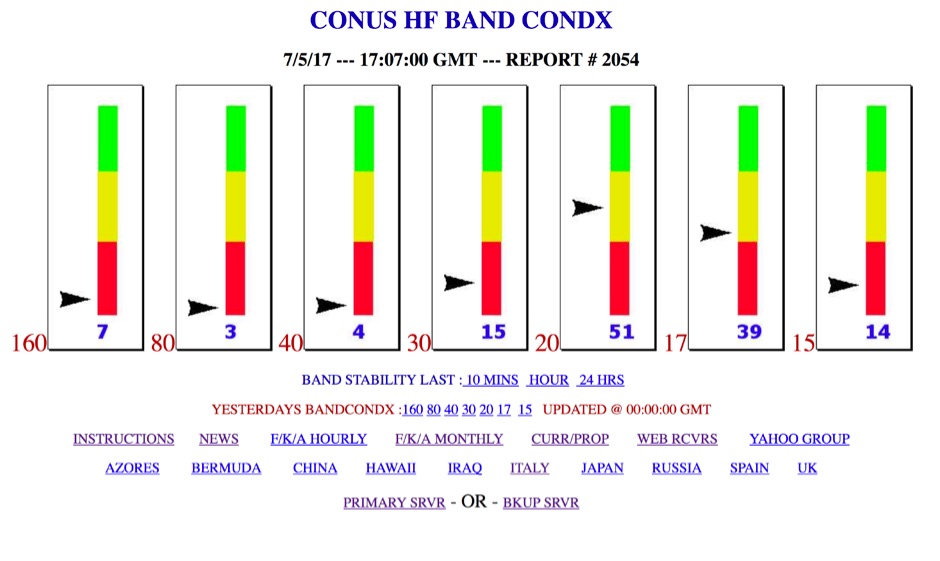 Current HF band conditions online report and graphs. This page provides band condition information to CW and SSB Contesters. It can also be of benefit to other Radio Amateurs to determine band condtions for Nets and casual QSO
 -
 Advanced QRP Low Cost Mosfets HF Linear Amplifier with schematics, IMD, gain data and more. Six articles about amateur radio.
 -
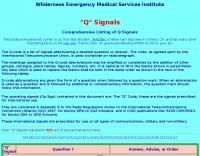 This resource presents over 100 Q-signals, each with its corresponding question and answer format, as standardized by the International Telecommunication Union. The content delineates how these abbreviations can be expanded with additional groups, call signs, place names, or numerical data to provide specific context. It clarifies that a question mark following an abbreviation or its complementary information transforms it into a query. The document highlights that these operating signals, or Op Sigs, are prescribed for international use across all communication types, including military and non-military applications. It references their inclusion in Appendix 9 to the Radio Regulations Annex of the International Telecommunications Convention (Atlantic City) 1947 for QRA to QUZ blocks, and ICAO publications Dec 6100-COM/504/1 for QAA to QNZ blocks. The page specifically marks Q-signals of particular interest to amateur radio operators in red. The utility of Q-signals for concise communication in radiotelegraphy is evident, providing a structured method for conveying complex information efficiently. The resource serves as a practical reference for operators needing to quickly interpret or formulate messages using standardized codes, particularly beneficial for CW operation and international contacts.
 -
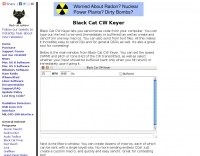 The **Black Cat CW Keyer** is a macOS application designed for amateur radio operators to transmit Morse code directly from their computer. It provides functionality for typing text to be sent, either immediately or buffered, and allows for the creation and transmission of pre-defined messages via single-key shortcuts. This software addresses the need for a flexible and accessible CW keying solution, particularly for Mac users who might find fewer dedicated ham radio applications compared to other operating systems. It integrates basic text-to-CW conversion, offering a straightforward interface for generating Morse code signals. Operators can utilize the Black Cat CW Keyer for various CW activities, including casual QSOs, contesting, or beacon operation. Its ability to buffer text allows for smoother transmission, while the single-key macro feature streamlines repetitive message sending, such as CQ calls or contest exchanges. While specific comparisons to other CW keying software are not detailed, its macOS focus provides a niche solution for Apple users. The program's utility lies in its direct approach to computer-based CW transmission, making it a practical tool for those seeking a dedicated **CW keyer** on the Macintosh platform.
 -
 CB Radios And Antennas, Marine Radios, Scanners, Radar Detectors. Online store and repair service
 -
 Illustrates the global distribution of **DX-Cluster** nodes through an interactive map interface, enabling radio amateurs to visualize and access real-time DX spots. The resource provides direct TELNET and HYPER links for each node, facilitating immediate connection to various clusters for up-to-the-minute propagation information and station activity. This visual approach simplifies the process of locating and connecting to a suitable DX-Cluster, whether for local or international DXing. Amateurs can use this tool to quickly identify active clusters in different geographic regions, which is particularly useful for **DXpedition** planning or contest operations. The direct links streamline access, bypassing manual configuration for many cluster types. It serves as a practical aid for operators seeking to monitor band conditions, find rare DX, or participate in competitive operating events by leveraging aggregated spotting data.
 -
 Presents an online callsign lookup service, QRZ.RU Callbook, which offers a searchable database for amateur radio operators. The resource details its extensive collection, including more than 50,000 records for **CIS (Commonwealth of Independent States)** callsigns and over 1,400,000 international entries. It enables users to search for existing callsign records and facilitates the creation of new entries, contributing to a dynamic and expanding repository of amateur radio data. The platform's primary function is to serve as a **callbook**, providing contact information and other details associated with specific amateur radio callsigns. Access to detailed information within the database is available to registered users, indicating a tiered access model for its comprehensive data. The service is maintained by Sergey, UA9OTY, ensuring a degree of accountability and expertise in its operation.
 -
 For amateur radio operators seeking a specific call sign, RadioQTH offers a specialized online service to track FCC vanity license applications. The platform provides detailed listings of ham call signs from the FCC database, indicating those becoming available for vanity requests on specific dates. Users can access links to future availability, view recently granted vanity applications, and check the current status of applications already filed with the FCC. The data is sortable by call prefix, district, or suffix, facilitating a targeted search for desired call signs. This resource leverages real-time FCC data to assist hams in navigating the vanity call sign application process. It serves as a practical tool for predicting when a call sign might be obtainable, which is crucial for operators planning to upgrade or personalize their station identity. The site's functionality helps users monitor the progress of their own applications or identify potential call signs for future acquisition, streamlining a process that can otherwise be quite opaque.
 -
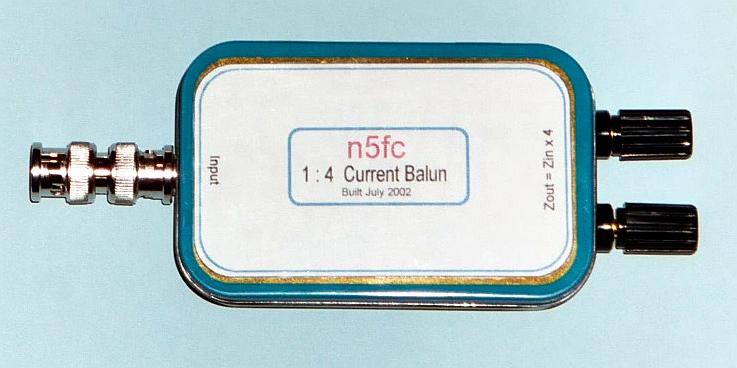 This project is intended to aid in tuning a balanced antenna or feedline that has a high impedance 100-600 ohms
 -
 Constructing a linear focus parabolic antenna for WiFi operation involves precise metalwork, as detailed in this project. The author, AB9IL, shares a build that can be completed in a few hours, emphasizing the hands-on process of shaping and assembling metal components. This design aims to provide enhanced signal range for 2.4 GHz wireless networks, a common challenge in many ham shacks and home setups. The project outlines the practical steps required, from initial measurements to the final assembly, including cutting, bending, and bolting various metal parts. While specific gain figures are not provided, the parabolic design inherently offers significant _directional gain_ compared to omnidirectional antennas, making it suitable for point-to-point links or extending network coverage over distances. The construction process focuses on readily available materials and basic shop tools, aligning with the DIY spirit prevalent in amateur radio. This antenna project is presented as a straightforward build, requiring attention to detail in fabrication to achieve optimal performance.
 -
 Theory, Modeling, and Practical Applications By W5JCK, presentation in PDF File. This presentation focuses on Near-Vertical Incidence Skywave (NVIS) antennas, which are crucial for short-range radio communications, particularly in military and emergency contexts. It explores NVIS theory, antenna models, and installation criteria while debunking common myths about reflectors. Key topics include usable frequency bands, optimal installation heights, and the impact of soil quality on performance. The presentation outlines the best bands for daytime and nighttime use, emphasizing the importance of understanding propagation characteristics to enhance communication effectiveness within 200 to 300 miles.
 -
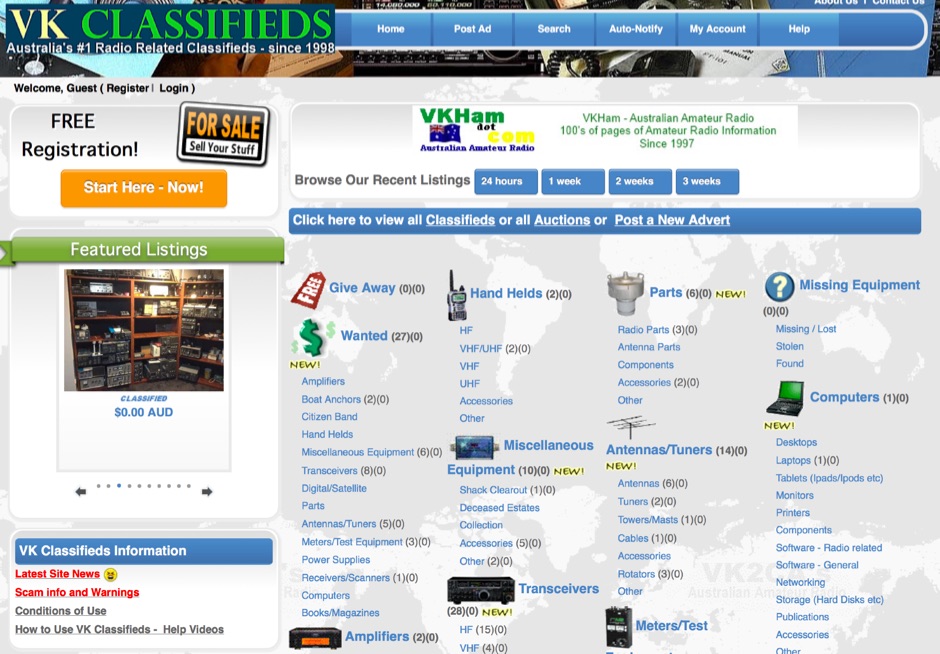 Australia's busiest radio related classifieds site. Free instantly online adverts from the VK/ZL area.
 -
 The G5RV antenna, a popular multi-band wire antenna, typically employs a center-fed design with a specific length of 300-ohm or 450-ohm open-wire line acting as an impedance transformer, feeding a coaxial cable run to the shack. Its overall length for 80-10 meters is approximately 102 feet (31 meters) for the flat-top section, with a 34-foot (10.36 meter) matching section. The original design by Louis Varney, G5RV, aimed for efficient operation on 14 MHz (20 meters) as a 3-half-wave antenna, with the matching section providing a good match to 50-ohm coax on that band. While the G5RV offers multi-band capability, its performance varies across bands, often requiring an antenna tuner for optimal SWR on bands other than 20 meters. The matching section's length is critical for its impedance transformation properties, influencing the feedpoint impedance presented to the coaxial cable. Variations like the G5RV Junior and ZS6BKW utilize different flat-top and matching section lengths to optimize performance for specific band sets or to achieve a lower SWR without a tuner on certain bands, demonstrating the adaptability of the basic G5RV concept.
 -
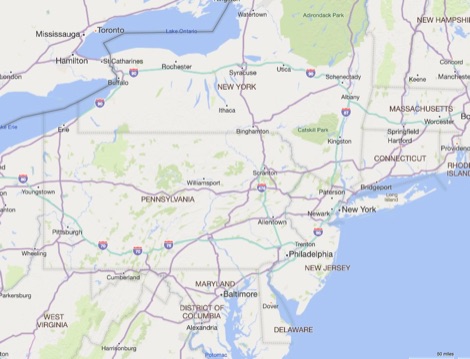 Amateur Radio Ham Radio Maidenhead Grid Square Locator Map online. This map allow just a point and click to determine dynamically the correct six characters locator. Other functions allow to calculate the distances among two given locators, or coordinates. Hover over map, specify grid, or enter latitude and longitude to show grid and/or calculate distance. Map is powered by Bing Maps.
 -

-
 Online shop based in hong kong offer batteries mic speakers adaptors programming cables earpieces telescopic antennas handheld antennas desktop chargers handheld speakers. Kenwood Icom Yaesu and Alinco dealer
 -
 Online UK CB Radio shop specialising in UK CB Radio and 10m Amateur radio equipment. Scanners and multiband receivers also available.
 -
 Managing extensive amateur radio contact logs efficiently requires specialized software that integrates various operational aspects. Aether provides a macOS-native logging solution, designed from the ground up using Apple's Cocoa, to streamline QSO entry, organization, and retrieval for Mac users. It supports modern macOS technologies and offers an intuitive interface, aligning with the user experience expected on Apple platforms. The application includes features such as automatic dupe checking, which quickly identifies previous contacts with a station, and awards tracking, indicating if a new contact is needed for specific operating awards. Aether also integrates rig control via RS-232, automatically populating frequency, mode, and power data from supported Elecraft, Icom, Kenwood, Yaesu, and some TEN-TEC transceivers. This automation reduces manual entry errors and speeds up the logging process. Furthermore, Aether offers comprehensive QSL management, including synchronization with eQSL.cc and Logbook of The World, and the ability to print QSO detail and address labels for paper QSLs. It also incorporates automatic callbook lookup from sources like QRZ.com and HamQTH.com, and calculates distance and beam heading, with Google Maps integration for visualizing contact locations. Full ADIF and Cabrillo import/export capabilities ensure compatibility with other logging software and contest submission platforms.
 -
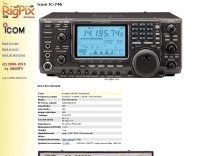 The RigPix database entry provides a comprehensive technical overview of the Icom IC-746 amateur HF/VHF transceiver, detailing its operational parameters and physical characteristics. It specifies the transmit frequency ranges across 10-160 meters plus WARC bands, 50-54 MHz, and 144-146/148 MHz, alongside receive coverage from 0.03-60 MHz and 108-174 MHz. The resource outlines supported modes including AM, FM, SSB, CW, and RTTY, noting a tuning step resolution down to 1 Hz and a frequency stability of ±5 ppm. Key electrical specifications are presented, such as a 13.8 VDC power supply requirement, current drain figures for RX (1.8-2 A) and TX (Max 20 A), and RF output power ranging from 5-40 W for AM and 5-100 W for FM, SSB (PEP), and CW. The entry details the triple conversion superheterodyne receiver system, listing IF frequencies at 69.01 MHz, 9.01 MHz, and 455 KHz, along with sensitivity ratings for various modes and bands. Transmitter section specifics include modulation systems and spurious emission levels. Additional features like a built-in auto ATU, electronic keyer, simple spectrum scope, DSP, and CI-V computer control are noted. The page also lists related documents, modifications, and an extensive array of optional accessories, including various filters, microphones, and external tuners, providing a complete profile of the IC-746.
 -
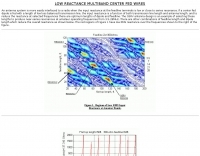 An antenna system is more easily interfaced to a radio when the input reactance at the feedline terminals is low or close to series resonance
 -
 Presents the design and construction of the OK2FJ Bigatas, a portable, automatically tuned vertical antenna covering 80 through 10 meters. It details two distinct control systems: one utilizing BCD band data from Yaesu FT-857/897 transceivers, and another employing voltage level sensing for the Yaesu FT-817. The resource provides specific instructions for building the antenna's radiating element, loading coil with switchable taps, and the control circuitry, emphasizing the use of readily available components. The article outlines the physical construction of the antenna, including the use of duralumin tubes for the radiator and a PVC tube for the coil form. It specifies coil winding details, tap points, and the integration of radial wires for ground plane operation. The control electronics section provides schematics and component lists for both the BCD decoder (using a 74LS42 IC) and the voltage comparator (using an _LM3914_ bargraph driver), enabling rapid, automatic band switching without the minute-long tuning delays common in other systems. Crucially, the antenna achieves rapid band changes, with typical SWR values centered on common operating segments, such as **3.7 MHz** for 80m SSB. It also discusses modifications for CW operation on 80m and the trade-offs between antenna efficiency and full-range automatic tuning on higher HF bands, where manual adjustment of radiator length is suggested for optimal performance on 15m, 12m, and 10m. The resource includes construction photos and a discussion of cable requirements for reliable operation.
 -
 LogDDM, a freeware logging application, supports the tracking of over **100** different awards, including _DXCC_, WAZ, and WAS, directly within its interface. This software facilitates comprehensive log management for amateur radio operators, integrating functionalities such as a built-in callbook lookup, real-time packet cluster access, and direct rig control for various transceivers. It also offers robust import and export capabilities, primarily utilizing the ADIF format, which is essential for submitting logs to award sponsors or transferring data between different logging platforms. Developed by Giorgio, IV3DDM, the program is designed to streamline the logging process, allowing hams to efficiently record contacts and manage their QSL information. It provides a centralized hub for operational data, from initial QSO entry to final award application. Key features include detailed QSL management, support for multiple operating modes, and a user-friendly interface, making it a practical tool for daily operating and contest logging.
 -
 The DXrobot, operational since 1999, offers a free, non-commercial service primarily for the VHF ham radio community. It specializes in automatic real-time E-skip warnings for **144 MHz** in both Europe and North America, delivered via email or SMS. Additionally, the system provides automatic aurora alerts for _50, 70, and 144 MHz_ openings through the same notification methods. Beyond real-time alerts, the DXrobot facilitates the reception of the latest DX-cluster spots via email, a feature useful for operators without immediate WWW or cluster access. The service also displays recent E-skip and aurora spots detected by the DXrobot on 50, 70, and 144 MHz, with updates every five minutes. Historical data includes lists of all DX spots from the previous day on 50, 70, and 144 MHz, updated daily. Key propagation data, such as MUF timeline, Solar X-rays, Geomagnetic Field, and Estimated Kp index, are also presented.
 -
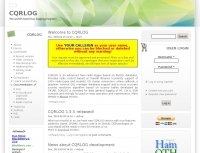 Linux-based amateur radio logging software, _CQRLOG_, integrates a Firebird database for robust data management and offers radio control via _Hamlib_ libraries. It provides essential features for DXers and contesters, including DX cluster connectivity, _QRZ_ callbook lookup, a grayline map, and support for the ON6DP QSL manager database. The application incorporates a country resolution algorithm, developed by OK1RR, which is noted for its accuracy in identifying DX entities. The software's design prioritizes operational ease and maintenance, making it suitable for active logging. Its country resolution algorithm, based on meticulously maintained country tables, aims to minimize errors in DXCC credit. The integration of _Hamlib_ ensures compatibility with a wide array of transceivers, simplifying rig control for various operating modes and contest scenarios.
 -
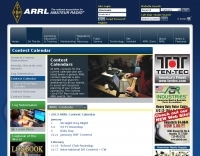 The **ARRL Contest Calendar** presents a detailed schedule of upcoming amateur radio competitions, encompassing both ARRL-sponsored events and significant non-ARRL contests. It provides essential operational details for each entry, such as specific operating periods, eligible bands, and permitted modes, enabling contesters to plan their participation effectively. The resource also links to official rules, soapbox reports, and QST results, offering a comprehensive overview of past and future contest activity. Users can navigate through monthly listings to identify contests of interest, with direct access to detailed information pages for each event. The calendar serves as a central hub for contest operators seeking to confirm dates, understand exchange requirements, and review post-contest analyses. Its utility extends to both seasoned contesters and those new to competitive operating, providing a structured approach to contest participation. The platform integrates various contest-related resources, including links to **Contest Corral** entries for non-ARRL events, ensuring a broad scope of coverage. This aggregation of information streamlines the process of finding contest schedules and associated documentation, making it a practical tool for the amateur radio contesting community.
 -
 On line shop for amateur radio, cb radio, marine, satellite and scanner supplies based in UK
 -
 This project outlines the construction of a 3-element reversible quad antenna specifically designed for the 40-meter band. The materials required include pushup towers, pressure-treated posts, insulated wire, and various electrical components such as relays and a balun. The construction process is straightforward, beginning with the installation of the posts in a straight line, followed by the assembly of the antenna elements and their elevation to the desired height. The antenna's design allows for directional signal reception, making it ideal for operators looking to enhance their communication capabilities on the 40-meter band. The project includes detailed instructions on tuning the antenna for optimal performance, ensuring that operators can achieve the lowest SWR possible. Additionally, the design can be adapted for other bands by extrapolating dimensions, providing versatility for amateur radio enthusiasts. Overall, this reversible quad antenna project is suitable for both beginners and experienced operators, offering a practical solution for improving signal strength and directionality in 40-meter communications.
 -
 Demonstrates a very fast and effective logbook solution for amateur radio, **HAM-LOG** by HB9CQV, which operates as freeware and supports multiple languages including German and English. This application is designed to be self-running, even from USB devices, making it a portable option for hams on the go. Its database capacity is practically unlimited, capable of handling up to a billion QSOs, a significant advantage for active DXers and contesters. The software offers multi-user networking capabilities and integrates with popular digital mode programs like MixW2, FLDigi, and MMVARI through DDE connections or clipboard/INI-file transfers. It streamlines QSO logging by saving entries directly from these programs and supports import/export via **ADIF** for compatibility with other tools such as MMSSTV. HAM-LOG also connects to DX Atlas and Ham-Cap for enhanced operational awareness. Further enhancing its utility, HAM-LOG includes automatic callsign lookup on QRZ.com and supports eQSL.cc for electronic QSLing. The resource also details two smaller utilities: an Online Callbook DLL for MixW, which automatically populates names from QRZ.com into MixW log entries, and an Online Callbook LookUp command-line tool that writes callsign and name data to an INI-file, both requiring QRZ.com credentials.
 -
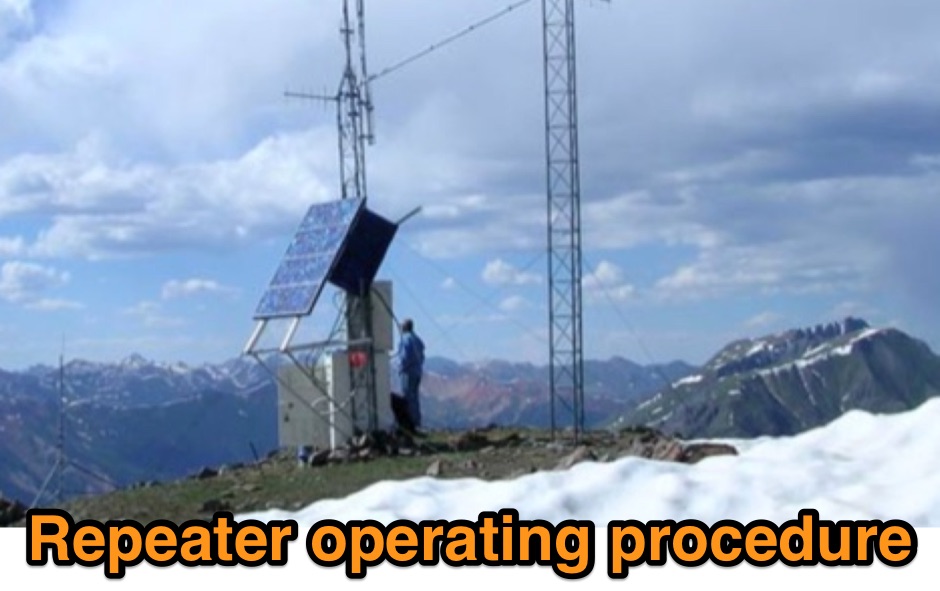 Outlines recommended operating procedures for amateur radio repeaters, detailing best practices for general on-air conduct. It emphasizes using simplex when possible, monitoring the frequency before transmitting, and maintaining concise, thoughtful transmissions to avoid monopolizing the repeater. The resource also stresses the importance of legal identification, such as the Canadian requirement at the beginning and end of a contact and every thirty minutes of operation. Furthermore, the article provides specific instructions for **autopatch** operation, including access codes and the necessity of brief calls, while cautioning against misuse for long-distance calls or commercial purposes. It highlights the financial support expected from regular users to maintain repeater infrastructure. Finally, the guide differentiates between permanently linked repeaters, which offer extended coverage, and **code access linked repeaters**, explaining the sequence of identification and code entry required to establish and terminate links for broader communication.
 -
 The Bundesnetzagentur's online tool provides a direct interface for searching **German amateur radio callsigns**, enabling users to retrieve specific details associated with licensed operators. The system utilizes a web-based form where users input a callsign to query the official German amateur radio database. This resource is built on Microsoft Visual Studio .NET 7.1 with Visual Basic .NET 7.1, indicating a mature and stable backend for data retrieval. This callsign lookup service facilitates rapid verification of German stations, which is particularly useful for **DXers** confirming contacts or for contesters needing to cross-reference logs. Unlike broader international callbooks, its focused scope on German licensees ensures high accuracy and direct access to official data. The tool's simplicity and direct functionality make it an efficient utility for any amateur radio operator interacting with German stations.
 -
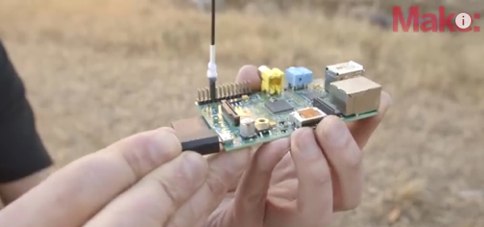 The project outlines the process for constructing a low-power FM broadcast transmitter using a Raspberry Pi Zero, a simple wire antenna, and battery power. It details the software installation steps for PiFM and MPG123, essential for generating and transmitting audio. The resource provides instructions for configuring the Raspberry Pi to broadcast FM signals, including command-line operations for initiating transmission and playing audio files. It specifically focuses on the Raspberry Pi Zero's capabilities for this application, highlighting its cost-effectiveness and minimal hardware requirements. The content presents a practical, hands-on approach to creating a basic FM transmitter, suitable for short-range, experimental broadcasting. It includes guidance on testing the FM output and ensuring proper operation of the software components. The project emphasizes the use of readily available components and open-source software to achieve functional RF output.
 -
 Online shopping, Programming Software, Icom, Yaesu, Kenwood, Istron, HyGain, MFJ, cat cables interfaces and other radio control cables.
 -
 Win-EQF provides a comprehensive logging solution for amateur radio operators, integrating station control and DX resource management within a single application. It supports various operating modes and offers features for efficient logbook management, essential for contesters and DXers alike. The software is designed to streamline the process of recording contacts and managing station operations, which is crucial for achieving awards like **DXCC** or **WAZ**. Operators can utilize Win-EQF to maintain detailed records of their QSOs, track award progress, and interface with other station hardware. Its robust logging capabilities ensure accurate data capture for every contact, from basic information to specific contest exchanges. The program also facilitates the use of external DX resources, helping operators identify and pursue rare DX entities. This tool is particularly useful for those seeking to optimize their station workflow and enhance their overall operating experience.
 -
 Radio City features a wide selection of amateur radio equipment from Kenwood, Icom, Yaesu, MFJ and a host of other manufacturers. Visit the store in Mounds View or shop here, online.
 -
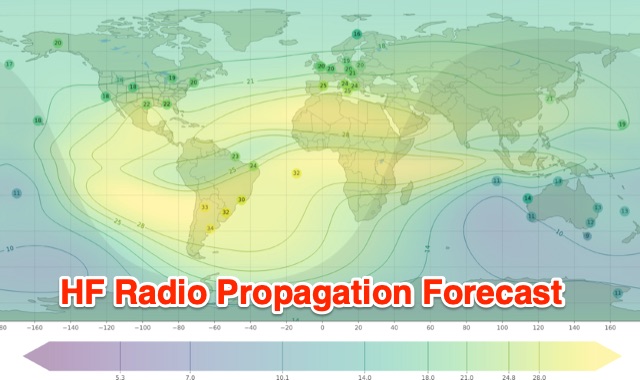 Understanding high-frequency (HF) skywave propagation is crucial for amateur radio operators seeking to optimize long-distance communications. This resource details the fundamental principles of HF radio propagation, including the properties of electromagnetic waves, the characteristics of various HF bands, and distinct propagation modes such as skywave, ground wave, and line-of-sight. It places significant emphasis on the ionosphere's pivotal role in refracting HF waves, explaining how solar activity directly influences ionospheric conditions and, consequently, propagation paths. The resource integrates real-time monitoring capabilities, featuring dynamic charts and data from DX clusters, WSPRnet, and the Reverse Beacon Network, which allow users to track current band activity and propagation conditions globally. It also delves into advanced topics like Near Vertical Incidence Skywave (NVIS) and gray line propagation, providing insights into ionosonde data and various propagation prediction models. The site presents a detailed analysis of solar-terrestrial interactions, geomagnetic indices, and space weather phenomena, illustrating their direct impact on HF communication reliability. Practical tools and applications are highlighted, including real-time QSO planners, online Maximum Usable Frequency (MUF) maps, and alerts for solar flares or geomagnetic storms. The guide systematically breaks down complex concepts into accessible chapters, offering a structured approach to learning about ionospheric regions, diurnal and seasonal effects, and the interpretation of propagation indicators like foF2, MUF, and Lowest Usable Frequency (LUF). This makes it a robust reference for hams aiming to deepen their technical understanding and improve operational effectiveness.
 -
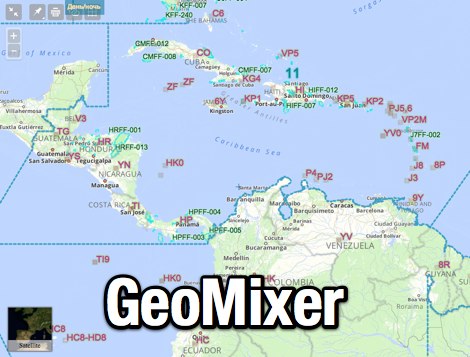 Amateur Radio Maps online mixer of different selectable layers, including DXCC references, IOTA references, ITU and WAZ Zones. Works with most web browsers make heavy javascript usage.
 -
 Sales CB Radios and accessories online
 -
 Over **10 million** antennas and flags have been sold worldwide by Firestik Antenna Company, a veteran-owned manufacturer specializing in both CB and amateur radio communication products. Their offerings include a range of antennas, mounting accessories, and coaxial cables, designed for various mobile and fixed applications. The company provides technical support and maintains a network of dealers for product availability. Firestik products are known for their fiberglass construction, which is evident in their _Firestik_ and _Firefly_ antenna lines. The company also produces unique items like the "342 mile per hour Firestik flag," highlighting their diverse manufacturing capabilities beyond just radio antennas. They emphasize their commitment to quality and customer service, including direct technical assistance. The company is located in Tempe, Arizona, and operates under the registered trademark of _Pal International Corporation_. They actively protect their brand, including variations like Firestick and Firestix, ensuring proper representation of their products in the market.
 -
 VQLog 3.1 - 782 is a shareware logbook program designed for Windows operating systems (95, 98, NT, 2000, ME, XP, Vista, 7, 10, or later), supporting resolutions of 800x600 or higher. It can also operate on macOS and Linux via virtualization software like Virtual PC for MAC, Oracle VirtualBox, or VMware. The software facilitates QSO access by date, callsign, prefix, square, DXCC, and other parameters, offering robust import capabilities for ADIF, Cabrillo, and ASCII files from various contest and logbook programs. Key features include comprehensive award tracking for DXCC, WAZ, WAC, WPX, WAS, IOTA, TPEA, DIE, VUCC, 100EACW, and up to 30 user-defined awards. It generates customizable summaries and graphical statistics for QSO activity, DX contests, Most Wanted Squares (MWS), propagation openings, and prefixes. VQLog supports DX-Spot reception and processing from DX-Cluster and PSK-Reporter with programmable warnings, integrates with callbook services like QRZ.COM and Buckmaster's CD, and offers online lookup. Electronic QSL and log upload support extends to LoTW, eQSL.cc, Clublog, and DXMAPS, with real-time updates for online logs. The program provides extended QSO information for VHF-DXers, including separate TX/RX frequencies, start/end times, propagation modes, and specific entry fields for MS, EME, and Tropo. CAT support for rig control and interfaces with ARSWIN and PstRotator for azimuth/elevation control are also included.
 -
 Accessing current contact information for amateur radio operators is crucial for QSLing, award tracking, and general communication within the Ham Radio community. This online tool provides a specialized callbook service, focusing exclusively on Croatian (9A) amateur radio operators who maintain active membership with the Hrvatski Radioamaterski Savez (HRS). It functions as a centralized database, allowing users to look up specific 9A call signs and retrieve associated information, primarily for verification purposes within the Croatian amateur radio scene. The utility of such a focused callbook lies in its direct relevance to local and regional operating activities, including contests, nets, and emergency communications within Croatia. While not a global callbook like QRZ.com or HamQTH, it serves a vital role for Croatian hams and those seeking to confirm contacts with 9A stations, ensuring data accuracy by linking entries directly to HRS membership status. This targeted approach streamlines the process of verifying Croatian amateur radio licenses and membership details.
 -
 The Deutscher Amateur-Radio-Club (DARC) e.V. serves as the largest association for radio amateurs in Germany and Europe, structured into 24 districts and approximately 960 local chapters nationwide. Its core mission involves fostering amateur radio and establishing favorable conditions for the Amateur Radio Service. The DARC actively participates in international affairs as a member of the **International Amateur Radio Union (IARU)**, ensuring German interests are represented on a global scale. Recent activities include the announcement of the FUNK.TAG in Kassel for April 25, 2026, and the HAMCamp at **HAM RADIO** in Friedrichshafen from June 26-28, 2026, offering discounted participation for young operators up to 27 years old. The club also supports special events, such as a short-term award and special callsign DB15ØWG to commemorate the 150th anniversary of the Weimar–Gera railway line, active from April 1 to June 30. Regular updates, like the Deutschland-Rundspruch 11/2026, cover topics from the status of 70 MHz band permissions to satellite deployments like Ten-Koh 2, and contest results such as the WWA YL event. Propagation forecasts, including Kp indices and solar flux values, are provided by Hartmut Büttig, DL1VDL, offering insights into HF conditions and Gray-Line DX opportunities. The DARC also reports on district elections and space-related events like the Bochumer Weltraumtag, highlighting the diverse engagement of its members.
 -
 Ham Radio On line shop, kenwood yaesu icom alincon ten tec dealer, antenna rotors, antennas, antenna mounts, microphones, antenna mas, receivers and scanners based in Essex England Uk
 -
 Applying for an FCC vanity call sign requires navigating the _Universal Licensing System_ (ULS) database to identify available call sign blocks and specific desired combinations. The process involves submitting an online application via the FCC website, ensuring all instructions are meticulously followed to avoid rejection. Typical processing time for a vanity call sign application is approximately **18 days**, after which the ULS database reflects the updated license grant. Operators often seek vanity call signs for various reasons, including aligning with a new license class, desiring a shorter call sign for CW efficiency, or simply preferring a more memorable phonetics. The resource emphasizes self-application to avoid third-party service fees, directing users to verify availability through tools like Vanity HQ. Key steps include selecting a primary call sign and several alternates, ensuring the chosen call sign conforms to FCC rules for the operator's license class. Payment can be made online or via check, with prompt submission critical to prevent application dismissal.
 -
 HD Communications Corp specializes in **RF and microwave amplifiers** engineered for demanding communication, defense, and industrial applications. Their product line includes precision-built, high-power solutions, along with RF connectors, filters, HF cables, and various accessories. The company also supplies tower hardware, valves, and tubes, catering to a broad spectrum of radio frequency infrastructure needs. Beyond amplifiers, HD Communications offers a range of **RF filters**, including low-pass filters, antenna filters, and solutions for RFI/TVI mitigation. Their inventory encompasses essential components like coaxial cable and various connector types, supporting both amateur radio and professional installations. The company operates as a manufacturer and vendor, providing direct sales of its specialized RF products.
 -
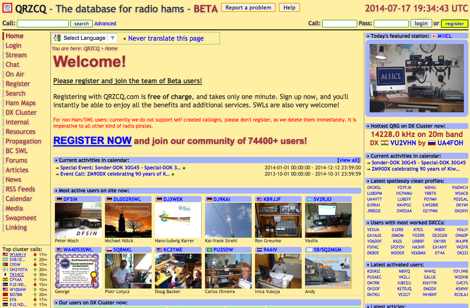 QRZCQ.com provides a centralized online platform for amateur radio operators, integrating a global callsign database with DX Cluster functionality. The service features real-time DX spotting, filtering capabilities for specific bands (e.g., 160m, 80m, 40m, 20m, 15m, 10m), and specialized filters for awards like IOTA, SOTA, WWFF, and QRP activity. It also includes a logbook, QSL manager lookup, contest calendar, and various ham radio articles and news feeds, supporting a wide range of operating activities and information retrieval. The platform aggregates data from multiple sources, offering a dynamic view of on-air activity and callsign information. Users can register for free to access additional services, including a personal logbook, buddy lists, and chat features, fostering community interaction among over 198,600 registered users. The DX Cluster displays recent spots with frequency, DX call, spotter, and remarks, covering bands from VLF to VHF. Beyond DX spotting, the site provides resources such as repeater directories, propagation information, and a swapmeet, making it a multi-faceted tool for both casual browsing and serious DXing or contesting. The service also highlights active users, latest news, articles, and videos, keeping the content fresh and relevant.
 -
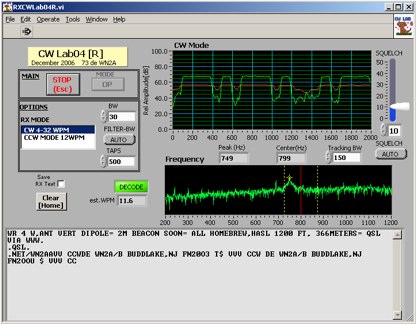 Deciphering weak or noisy **CW** (Continuous Wave) signals often presents a challenge for amateur radio operators, particularly in contest environments or during DXpeditions. CWLab04X addresses this by providing a software solution that leverages **DSP** (Digital Signal Processing) capabilities of a soundcard to decode Morse code. It functions as both a receiver and a sender, supporting traditional CW and a unique "CCW" mode designed to enhance copyability of signals struggling against high noise floors. The program offers two installation methods: a Windows-specific installer for straightforward setup or a zipped package compatible with Windows and Linux systems running Wine. Users must first download and review the accompanying PDF documentation, CWLab04.pdf and CWLab04_Hardware.pdf, which detail the software's operation and the necessary soundcard interface circuit. The hardware PDF outlines a direct connection from the receiver audio output to the soundcard input, with optional conversion of the soundcard output for hard-keying or microphone input. CWLab04X is intended as an operational aid rather than a replacement for skilled human copy, particularly highlighting the effectiveness of its CCW mode in adverse signal conditions. The software was last revised in April 2009, with installation requiring the LV Runtime 602.