Search results
Query: AI
Links: 752 | Categories: 158
This query is too generic. Please try adding an additional term to focus your research.
Categories
- Technical Reference > AI Ham Radio
- Operating Modes > Aircraft scatter
- Software > Aircraft scatter
- Antennas > Theory > Antenna Gain
- Radio Equipment > Antenna Analyzers > Array Solutions AIM 4170D
- Ham Radio > Clubs > North America > USA > Hawaii
- Radio Equipment > HF YAGI Antennas > Hy-Gain TH3JR
- Internet and Radio > Mailing Lists
- Ham Radio > Clubs > North America > USA > Maine
- Antennas > Morgain
- Operating Aids
- Shopping and Services > Radio Equipment Repair
- Radio Scanning > RailRoad
- Antennas > Repair and Maintenance
- Shopping and Services > Regional > Europe > Spain
- Ham Radio > Clubs > Europe > Spain
- Ham Radio > Regional > Ukraine
- Ham Radio > Clubs > Europe > Ukraine
- Software > Morse Code Training
- Antique Radios > Repair and Restoration
- Technical Reference > Repeater > Repeater Maintenance
- DX Resources > Beacons > 10 GHz Beacons
- DX Resources > DX Peditions > 2010 DXpeditions
- DX Resources > DX Peditions > 2015 DXpeditions
- DX Resources > DX Peditions > 2016 DXpeditions
- DX Resources > DX Peditions > 2017 DXpeditions
- DX Resources > DX Peditions > 2018 DXpeditions
- DX Resources > DX Peditions > 2022 DXpeditions
- DX Resources > DX Peditions > 2024 DXpeditions
- DX Resources > DX Peditions > 2025 DXpeditions
-
 Ham Radio at its best in the Lakes Area of Brainerd, MN, USA
-
 Provider of supplemental emergency communications for the Greater Cumberland, Maryland tri-state area, and promoter of amateur radio in the community.
-

-
 Kingston, Ontario, Canada A RAC Affiliated Club
-
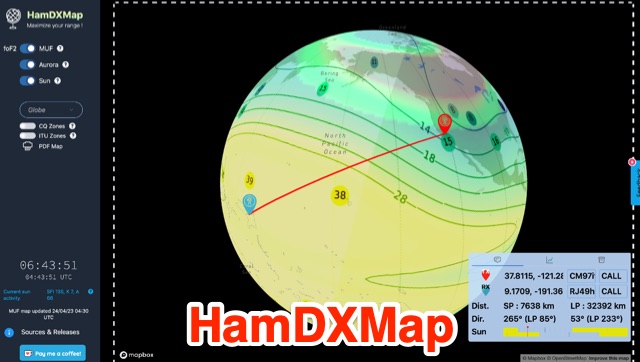 _HamDXMap_ provides propagation analysis and operational aids, integrating real-time data with historical logging capabilities. The platform displays Maximum Usable Frequency (MUF) and foF2 response curves, with a horizontal bar indicating live VFO frequency from _Win-Test_ via Gateway software. It supports _VOACAP_ 24-hour propagation predictions for Short Path (SP) and Long Path (LP) tabs, factoring in monthly smoothed sunspot numbers. The minimum bounce altitude for propagation calculations is **50 km**. The tool features a _ClubLog_-sourced DXCC Most Wanted ranking in voice, telegraphy, and digital categories, displayed in callsign pop-ups and DXpedition lists. Users can import contest logs in ADIF format, visualizing QSOs on the map with adjustable line and point parameters. A playback function allows contest replay at speeds from **1x to 100x**. An _IOTA_ (Islands on the Air) layer displays island group definitions and confirmation percentages, indicating RSGB activation evidence requirements. _HamDXMap_ integrates over 1100 online SDR receivers from three networks, updated daily, with access links and a favorites function. It tracks current and future DXpeditions planned over the next 45 days, sourced from _The Daily DX_, _DX 425 News_, _DX World_, _Les Nouvelles DX_, and _NG3K_. Real-time weather information, including temperature, wind, and pressure, is displayed in DXCC country and RX/TX position pop-ups.
-
 Notes on the Troubleshooting and Repair of Small Switchmode Power Supplies
-
 Describes Atlantic Tower Services (ATS), a company specializing in antenna tower erection and maintenance, operating from Orlando, Florida. ATS offers a range of services including site maintenance, structural repairs, system modifications, and complete tower installations for various communication needs. The company emphasizes its capability to handle diverse tower projects, from routine inspections to complex upgrades, ensuring structural integrity and optimal performance for amateur radio and commercial installations. ATS focuses on delivering reliable infrastructure solutions, supporting the backbone of communication systems. Their service portfolio covers critical aspects of tower ownership, addressing both preventative care and reactive solutions for existing structures. They are equipped to manage projects involving different tower types and heights, adhering to safety standards and operational best practices. Services include **site maintenance** and _structural modifications_.
-
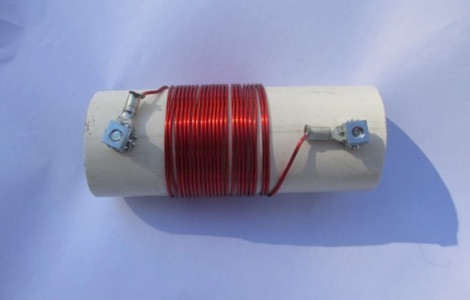 How to home made antenna traps with material you can easily find, and how to properly tune it.
-
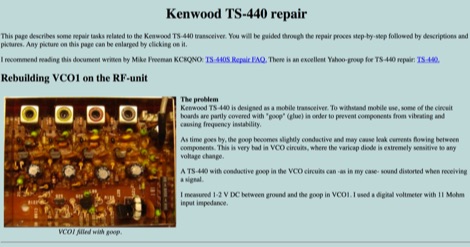 This page describes some repair tasks related to the Kenwood TS-440 transceiver.
-
 eHam reviews of the Ameritron AL-811H HF power amplifiers
-
-
 Ten-Tec Pegasus reviews aka Jupiter
-

-
 Demonstrates the complete design and development process for a **Low Noise Microwave Amplifier** (LNA), beginning with conceptual design and progressing through prototyping. The tutorial series covers the initial stages of a single-ended first gain stage, focusing on critical parameters such as noise figure, gain, and stability. It systematically details the theoretical underpinnings and practical considerations for achieving optimal performance in microwave frequency applications. This resource provides a structured approach to LNA construction, enabling radio amateurs and RF engineers to understand the iterative steps involved in realizing high-performance receive-side amplification. It offers insights into component selection, impedance matching networks, and the measurement techniques required to validate design specifications, particularly for **microwave** band operation where noise performance is paramount.
-
 Professional CB Radio Repair. Have repaired CB Radios and 10 Meter Radios for over 30 years
-
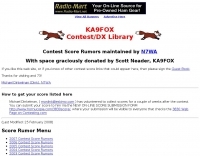 This resource compiles claimed scores, often referred to as "rumor scores," for numerous amateur radio contests, providing a historical snapshot of competitive activity from 1993 through 2007. It lists entries for prominent events such as _CQWW CW_, _ARRL Sweepstakes_, _IOTA Contest_, and various _NAQP_ events, categorized by year and contest. Each entry typically includes the contest name and the month/year of operation, allowing users to quickly navigate to specific contest periods. The site also references the _3830 Web Page_ on Contesting.com as the primary submission portal for these claimed scores. The collection offers a unique perspective on contest participation and performance trends over more than a decade, preceding the widespread adoption of real-time score reporting systems. While not official results, these rumor scores provided early indications of top performers and overall activity levels for a wide array of HF and some VHF contests, including _ARRL 10M_ and _CQWW VHF_. The historical data can be useful for analyzing past contest popularity, identifying consistently strong operators, or simply reminiscing about earlier competitive eras in amateur radio.
-
 Antenna directivity and gain are fundamental concepts for any radio operator, as this article from _Electronics Notes_ explains. Real-world antenna designs, unlike theoretical isotropic radiators, do not radiate equally in all directions; their radiation patterns are often visualized using **polar diagrams**. These diagrams illustrate how power is focused in desired directions, crucial for both transmitting and receiving applications. The article clarifies how antenna performance is identical for both transmission and reception, a key principle for understanding antenna specifications. Operators often encounter terms like _beamwidth_, which defines the angle where power falls to half its maximum level, or -3dB. Understanding this parameter is vital for accurately orienting directional antennas like a Yagi. The discussion also differentiates between antenna gain expressed in dBd (decibels over a dipole) and dBi (decibels over an isotropic source), noting that dBi figures will always be **2.1 dB** higher than dBd. This distinction is critical when comparing antenna specifications to ensure an accurate assessment of performance. Furthermore, the article touches on the front-to-back ratio, another important metric for directional antennas, and the balance between maximizing forward gain and achieving an optimal front-to-back ratio.
-
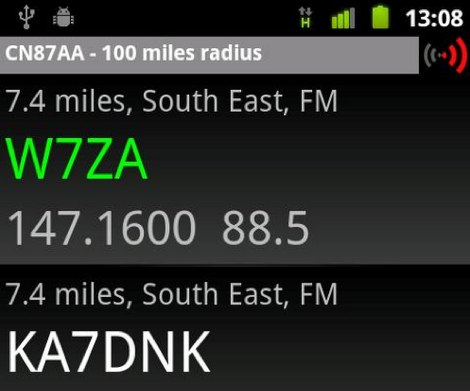 Enables every Ham to easily find repeaters across the the World, USA, Canada, Mexico and over 35 other countries, for free and without a network connection using the RepeaterBook Directory.
-
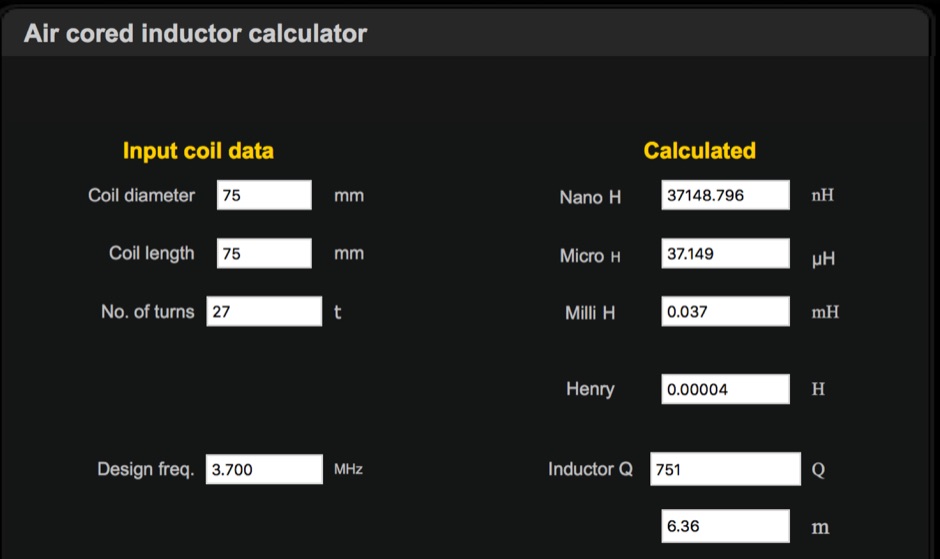 Online calculator for Input coil data, LC Resonant Frequency and L match
-
 Ferrite components for the electronics industry
-
 UV-3R reviews at eham.net
-
 The Wireless Society of Southern Maine is a ham radio club serving the Portland, Westbrook, Gorham, and Scarborough, areas in Southern Maine.
-
 Eham reviews of the dual band kenwood TH-D7a/e series handheld transceiver
-
-
-
 Reviews of the popular portable HF transceiver by Elecraft
-
 1500 watts PEP SSB is the power handling capability of the MFJ-989C HF Antenna Tuner, a popular choice among amateur radio operators. Users have shared a wide range of experiences, with some praising its durability and performance over decades of use, while others criticize its build quality and accuracy. The tuner features a built-in dummy load, SWR-wattmeter, and a balun for balanced line feeders, making it versatile for various antenna setups. However, discrepancies in RF power readings and SWR measurements have been noted, with some users finding the dual scale meter to be off by about 20% compared to a Bird wattmeter. Long-term users report that the MFJ-989C performs well with proper antenna setups, but caution against tuning at high power without initial adjustments at lower power levels. Some have experienced issues such as arcing when exceeding 400 watts, while others have had no problems even at higher power levels. The roller inductor and capacitors are functional, though some users have had to perform maintenance like tightening screws or cleaning components to ensure reliable operation. Despite mixed reviews, the MFJ-989C remains in production, suggesting continued demand. It's a tuner that requires careful handling and possibly some DIY fixes to achieve optimal performance.
-
 Automatic 144MHz E-skip Warnings via Email for European Region
-
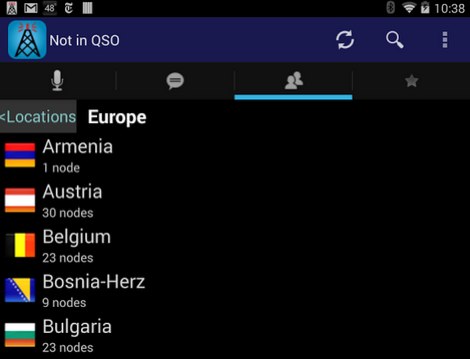 Android Echolink client to connect to the echo link network
-
 PS8RF beacon tx in 7.035 Mhz with 3 W
-
 eHam users review of the Ten-Tec Orion transceiver
-
 This site features Samuel M. Goldwasser's latest and greatest "Notes on the Troubleshooting and Repair of..." series of comprehensive repair guides for consumer electronics equipment and other household devices.
-
 Presentation station,contest,portable,techniques,bidouilles,balises,relais,radioamateurs,swl,technique,infos,reglementation
-
 You can find all about awards and dx in argentina
-
-
 John Shannon, K3WWP article on basics of learning morse code using a straight key.
-
 Kootenai County's general interest club.
-
-
 The WAU award is issued by the "RadioAmator" magazine for contacts with amateur radio stations in all regions of Ukraine, cities of Kiev and Sevastopol made after 01.01.1993.
-
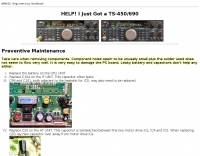 Kenwood TS-690S Preventive Maintenance
-
 An inverted V Dipole antenna for HF bands, working on 10 20 40 and 80 meters band. PDF Presentation
-
-
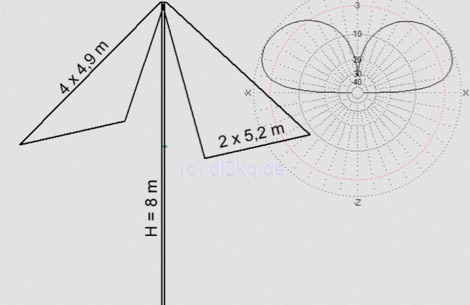 This antenna is a vertical loop antenna mounted on a 8 meters high grounded mast with an input impedance of 50 Ohms without a matching device
-
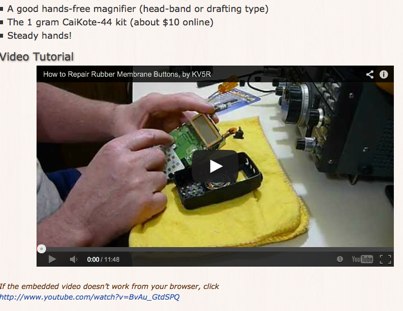 How to restore conductivity to your rubber membrane buttons by KV5R
-
 Supplier of RF, Microwave, & Wireless passive coaxial components, including Coaxial Attenuators, Adapters, Cables, DC Blocks, Terminations, & Connectors
-
 TT's Jottings-Blog of VU2SWX, Travails of an Indian Geek
-
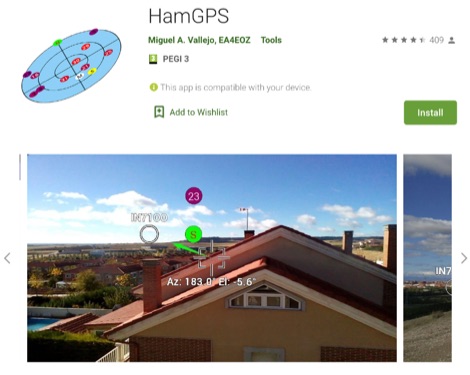 Display your current Maidenhead locator with 10 digit precision. It also computes bearing and distance to a set of target locations using locator or latitude / longitude. Useful to align antennas in VHF / UHF / microwave DX activities. No network or fancy maps usage, so it can be used even in remote locations.
-
 Founded by a small group of young hams in East St. Louis, Illinois, the W9AIU Egyptian Radio Club serves as a local amateur radio organization. The club's origins trace back to meetings held in Herb Wilhelm's, W9APX, dry cleaning shop, indicating a grassroots beginning for this community group. It operates as a typical ham radio club, fostering camaraderie and likely supporting various aspects of the hobby for its members. As an amateur radio club, W9AIU likely engages in activities such as local nets, field day operations, and perhaps provides licensing support or technical discussions. Such clubs are crucial for new hams seeking mentorship and for experienced operators looking to participate in group activities like contesting or public service communications. The club's presence in Illinois suggests a focus on local and regional amateur radio initiatives.