Search results
Query: qsl.net
Links: 1905 | Categories: 0
This query is too generic. Please try adding an additional term to focus your research.
-
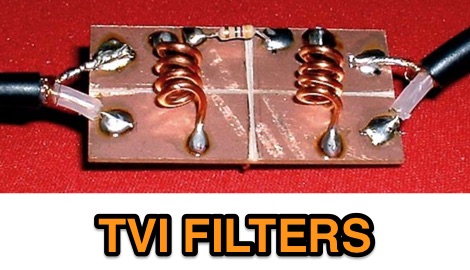 High pass filter schematics for TVI and examples of finished filters
 -
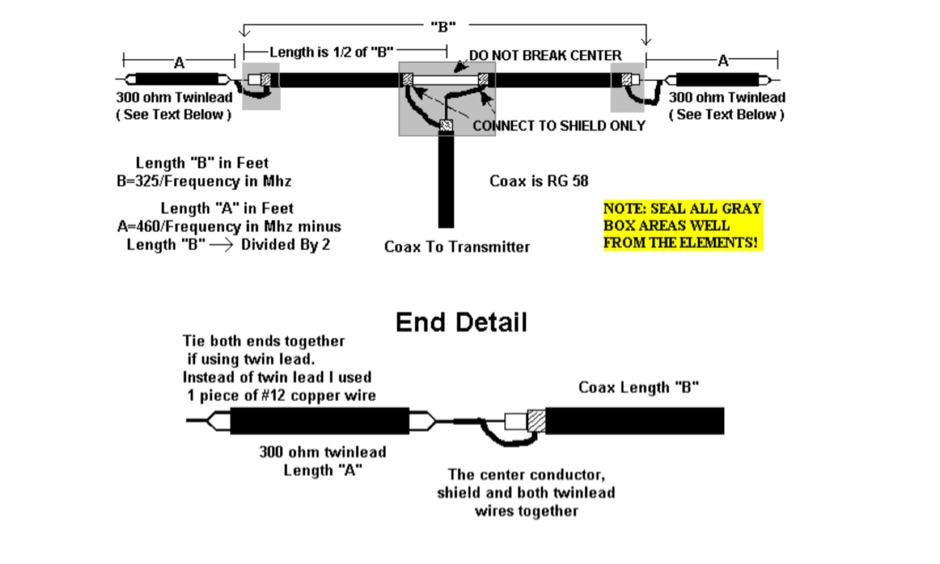 The Double Bazooka Dipole is a very efficient single band antenna which is very quite,and does not require the use of a balun. This antenna consists of coax (RG58) with the shield split at the center and the feedline attached to the open ends.
 -
 We intend for this page to tell our story as well as be a resource for other "hams"
 -
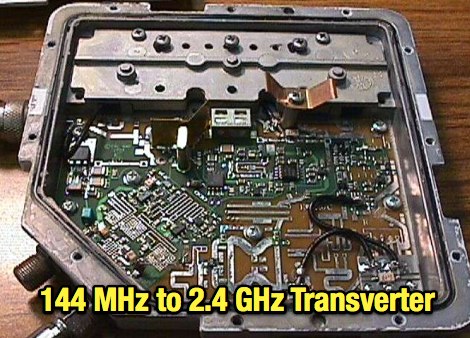 A home made project, scan and monitor the 2.4 GHz band using a common MMDS downconverter.
 -
 An home made cw transceiver by PA2OHH
 -
 conversion of low band VHF AWA 25M-22 carphone onto 6 metres.
 -
 Mounting on Roof or at Ground Level? Why ground plane antenna works better at lower level.
 -
-
 Article by VU2GT about VHF antennas, how to evaluate performances and models.
 -
 ZS6YI modifications for the Icom IC7000
 -
 Over 130 years after its inception, Morse Code remains a fundamental skill for many amateur radio operators, enabling efficient QRP operations, DXing, and contesting. This resource provides an in-depth look at the **Koch Method** of Morse training, a widely adopted technique that emphasizes high-speed character recognition from the outset. It details how this method can significantly accelerate proficiency, moving beyond traditional, slower learning approaches. The site also delves into the rich history of amateur radio, presenting articles such as "Radio on the Rio," which chronicles local ham activity in Socorro, New Mexico. Another piece, "The Russian Woodpecker," recounts the Cold War-era efforts of hams to counter Soviet over-the-horizon radar interference on the HF bands. Furthermore, the resource explores the fascinating intersection of ham radio and radio astronomy, highlighting the direct lineage between amateur experimentation and the development of modern radio telescopes like the **Very Large Array (VLA)**. It also includes an introduction to the 6-meter band, often called "The Magic Band," detailing its unique propagation characteristics and suitability for no-code licensees seeking long-distance contacts.
 -
 based on an FT-1000MP Reflector discussion with Bill Heinzinger, W9OL, 15/16 November 2002
 -
 Freeware , 3.8 MB executable that allows the conversion of some old DBF log files (DXLog, EasyLog, LogPlus, TopLog, TurboLog TotalHAM92) to the ADIF Format by TRX-Manager authors
 -
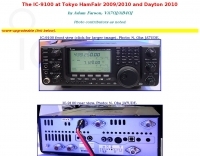 Firsts pictures of Icom IC-9100 taken at Tokyo HamFair 2009
 -
 SARA provides emergency communications for the City of Saratoga as well as for community events.
 -
 Interesting article by WY3A explaining benefits of operating CW
 -
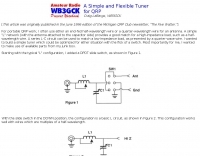 A Simple and Flexible Tuner for QRP Craig LaBarge, WB3GCK
 -

-
 The GM4JJJ VHF and EME pages document David's extensive work in Earth-Moon-Earth (EME) communication, specifically on the 144 MHz band, and his involvement in amateur radio astronomy. The resource details his station setup and operational experiences, providing insights into the technical challenges and rewards of bouncing signals off the moon. It offers a glimpse into the specialized equipment and techniques required for successful EME contacts, a niche but highly rewarding aspect of amateur radio. David's content shares practical applications and field results from his EME endeavors, which can be particularly useful for hams contemplating or actively pursuing moonbounce operations. The information, while not a step-by-step guide, implicitly compares the complexities of EME with more conventional VHF/UHF operations, highlighting the significant power and antenna gain necessary to overcome path losses. This resource serves as a testament to the advanced capabilities achievable in amateur radio.
 -
 Program which will allow you easy migration from logPlus to another logging software. Tested with Logger by K4CY so let me know it you have problem ADIF import to other software.
 -
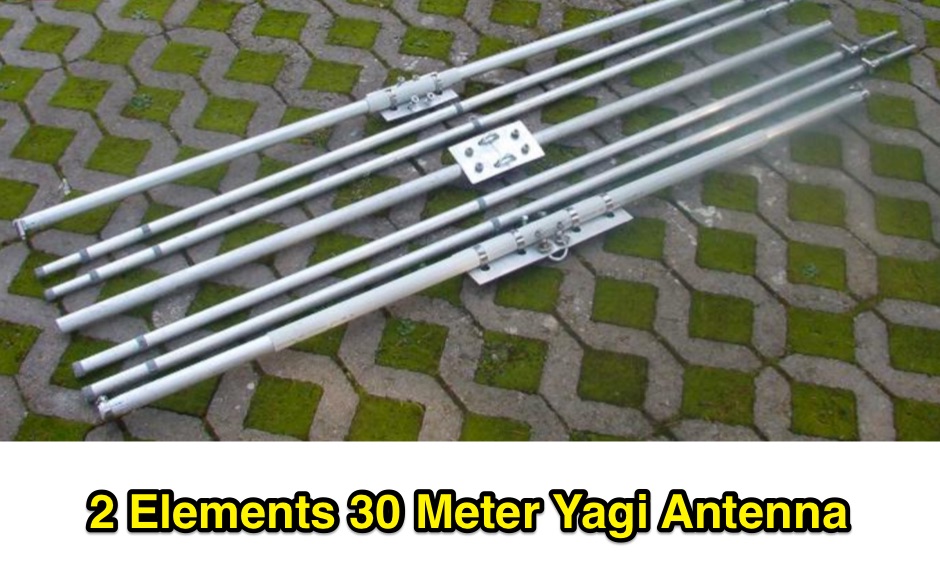 Dimensions and EZNEC plots for a 2 Element 30 meter Yagi antenna with 28 Ohm featuring 4.3 dBd Gain and a 16dB F/B with a good bandwidth.
 -
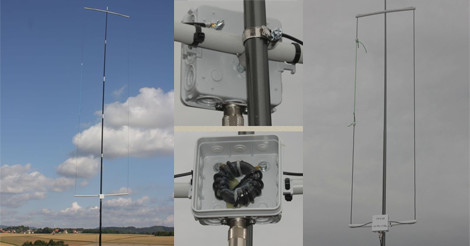 C-Poles for 20m and 6m, it is a folded half-wave dipole with an asymmetrical tapped 50-Ohm-point in the lower part of the antenna. Design hints by DK7ZB
 -
 Ham Radio software and software for the average computer user
 -
 OE-information, firsts list, 250+ links to 6m pages and resources by OE4WHG
 -
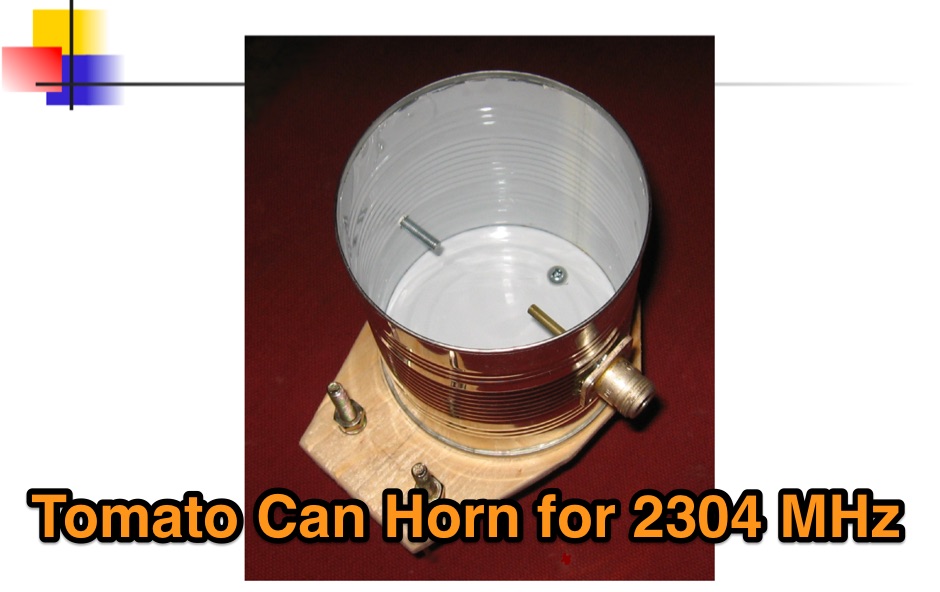 A Tomato Can Horn antenna for 2304 MHz by Steve Kavanagh
 -
 The Cumberland Valley Amateur Radio Club (CVARC) has maintained a presence since **1956**, supporting amateur radio operations in South Central Pennsylvania. This resource, while serving as a redirect, indicates the club's long-standing commitment to the hobby within its local community. It points to an updated cyberhome, suggesting ongoing activity and a desire to keep members and interested parties informed about club functions and events. The club's continued online presence, despite a website migration, highlights its dedication to fostering amateur radio. The redirect mechanism ensures that visitors can locate the current _club website_ for information on meetings, activities, and local ham radio support. Such continuity is vital for community organizations, providing a stable point of contact for hams in the Cumberland Valley region.
 -
 Radiowave propagation in the medium and high frequency spectrum in DOC format
 -
 News of latest radio activity, initial contacts list, recordings of EME signals, information about station, and overview of latest projects.
 -
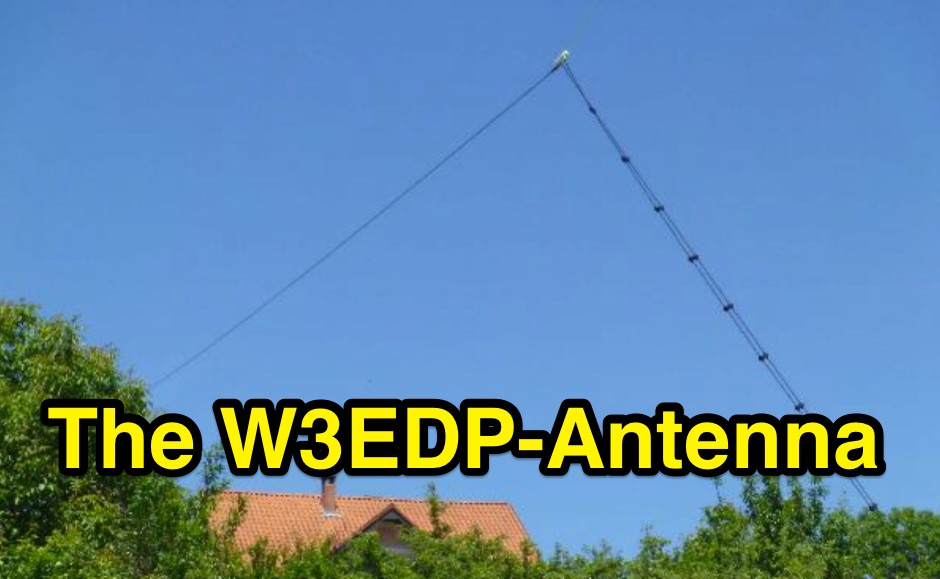 Hints for building a W3EDP-Antenna, includes the construction of the 1:4-balun by DK7ZB
 -
 Modifications and improveents for the realistic DX-100L HF receiver by ON6MU
 -
 Amateur radio multi language QSO with translation in several languages. How to conduct a QSO in a foreign language including english
 -
 Bandplans, Beacons and many useful info on VHF operations
 -
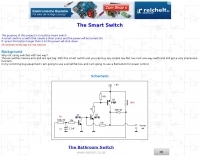 The purpose of this project is to build a smart switch A smart swith is a swith that needs a short press and the power will be turned ON.
 -
-
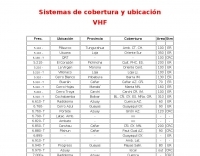 Presents a comprehensive listing of VHF and UHF repeater systems operating within Ecuador, detailing their operational frequencies and geographical coverage. The resource includes specific entries for locations such as _Guayaquil_, Cuenca, and Manta, alongside their respective frequency pairs. For instance, the Cerro Azul repeater in Guayaquil operates on **6.760- T**, indicating a transmit offset, while the Sta. Elena system utilizes a 26.660 MHz transmit frequency. The data provides essential information for local and visiting amateur radio operators seeking to utilize regional repeater infrastructure. It delineates coverage areas using two-letter provincial abbreviations, such as AZ for Azuay and GY for Guayas, facilitating route planning and mobile operation. This compilation is particularly useful for those engaged in local communications or emergency preparedness within the Ecuadorian amateur radio community, offering a practical guide to available repeater assets.
 -
-
 Home page about ham radio generally, but with info about APRS and Packet.
 -
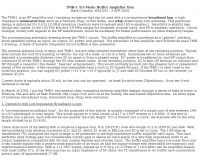 The TMB-1 is an RF amplifier unit / receiving accessory that can be used with a low-impedance broadband loop, a high-impedance terminated loop (such as a Pennant, Flag, or Kaz Delta), and whip (telescoping rod) antennas.
 -
 "Shows who is ""active"" on VHF in EI, Solar Auroral and Tropo information, Vhf logs and maps."
 -
-
 F.A.R.G. The Friends of Amateur Radio Group Home Page.A fraternal organization dedicated to the advancement of Amateur Radio. Many links , Club roster.
 -
 A Weather ATV Repeater project I am currnetly working on.
 -
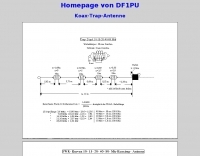 A multiband coax trapped dipole for 10-80 meters bands by DF1PU
 -
 A PIC Programmer for Windows, support for dsPIC, PIC10F, new PIC12F6xx family, PIC16F9xx, PIC18F
 -
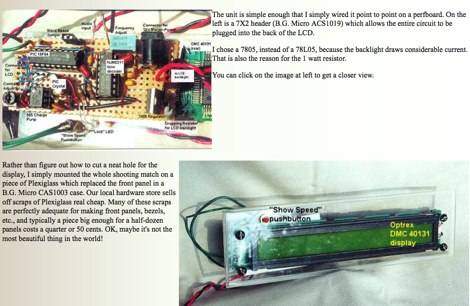 A PIC based morse code decoder circuit
 -
 Articles for amateur radio newsletters aimed at new hams by WD4BIS
 -
 Presents a detailed compilation of **6-meter** voice repeaters operating within the 53-54 MHz segment across Australia (VK) and New Zealand (ZL), providing essential data for local and visiting radio amateurs. Each entry specifies the repeater's output and input frequencies, its assigned callsign (where applicable), the primary service area, current operational status (e.g., operational, under construction, scrapped), and a **Maidenhead grid locator**. The resource also includes the date the repeater was last heard or updated, offering insights into its recent activity. This listing is meticulously maintained by VK2KFJ, who updates entries based on personal observations and confirmed reports from other operators. It serves as a practical reference for hams seeking to utilize the 6-meter band for local communication via repeaters, particularly for those engaged in mobile or portable operations within the specified regions. The data helps operators configure their transceivers correctly for accessing these vital communication hubs. Beyond the repeater details, the page also notes common 6-meter FM voice simplex frequencies, such as the 52.525 MHz international call frequency, and lists historical packet simplex frequencies, though their current operational status is uncertain. This comprehensive approach ensures that operators have a broad overview of 6-meter activity in VK and ZL.
 -
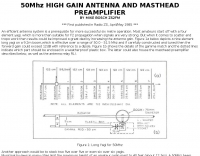 An high gain long yagi antenna, seven elements, for six meters band
 -
 Many Hams suffer from a cruel obsessive-compulsive disorder. They're driven to achieve the lowest possible SWR even when it is not necessary by WB8IMY
 -
 IC8POF's How To index, Hamradio mods, Crazy PA Tuner project (transform any manual amplifier in an automatic one).