Earth-Moon-Earth (EME) Moonbounce for Ham Radio
Find resources and guides for EME moonbounce operations, including station setup, software, and operating procedures for amateur radio.

Earth-Moon-Earth (EME), often called Moonbounce, is a challenging amateur radio activity where operators bounce radio signals off the Moon to communicate with other stations on Earth. This mode requires high power, sensitive receivers, and large antenna arrays to overcome path losses, making it a true test of a station's capabilities and an operator's skill in weak signal work. EME activity spans VHF, UHF, and microwave bands, with many hams building specialized equipment for these demanding QSOs.
Hams interested in EME can find resources covering everything from beginner guides for small stations to advanced operational procedures for digital EME. Many operators share their experiences, station setups, and audio recordings of Moonbounce signals. Tools like EMECalc help predict signal levels and optimize station performance. The WSJT software suite, including protocols like JT65, is widely used for its ability to decode extremely weak signals, making EME contacts more accessible.
-
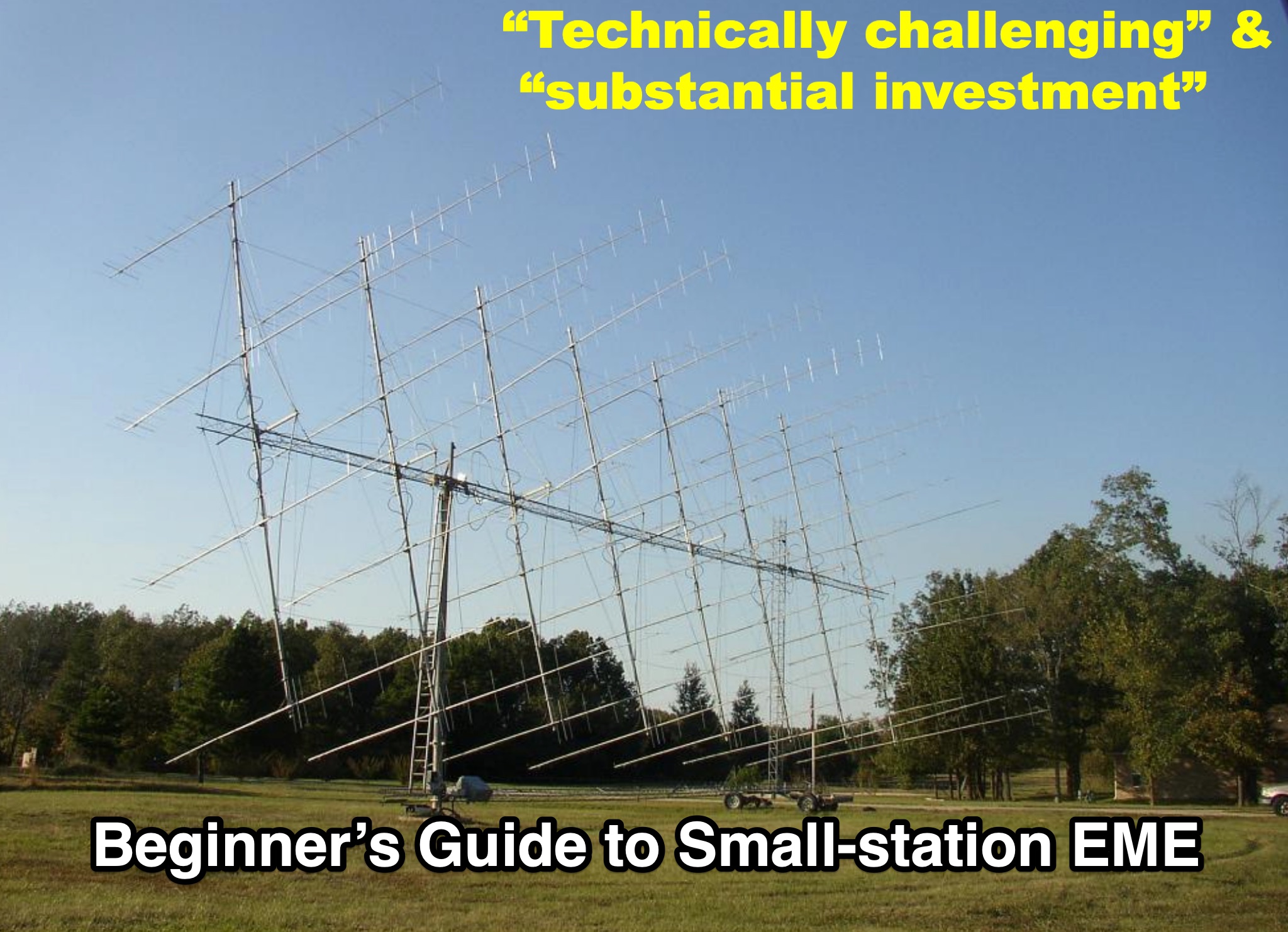 A PDF presentation by K4MSG detailing how to initiate Earth-Moon-Earth (EME) operations with a small station, focusing on accessible equipment and digital
 -
 A collection of newsletters focused on EME (Earth-Moon-Earth) DXing, specifically covering 432 MHz and higher bands, with news and experiences.
 -
 432 MHz EME low noise amplifier. Circuit, components and image by Christoph Petermann DF9CY
 -
 Argo is a freeware Windows application for decoding MTHELL, Slow CW (QRSS, DFCW), and other weak signal modes, useful for EME.
 -
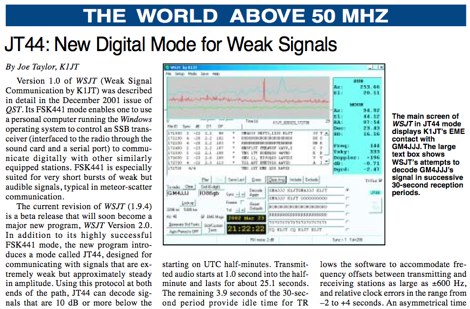 Moon bounce EME, meteor scatter and weak signal operations, introduction by ARRL.
 -
 DK5AI amateur radio station active on EME and SSTV.
 -
 Collection of various Dubus articles in PDF format
 -
 Images of VHF UHF antennas
 -
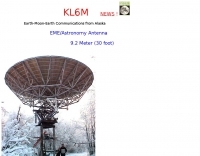 Eme operations from Anchorage, Alaska by KL6M ex AL7OB
 -
 Explore operational data for EME (Earth-Moon-Earth) communications, focusing on VHF, UHF, and microwave propagation techniques.
 -
 This page contains Contributions to a Discussion on the Moon-Net about the Application of Digital Signal Processing (DSP) Methods in Moonbounce.
 -
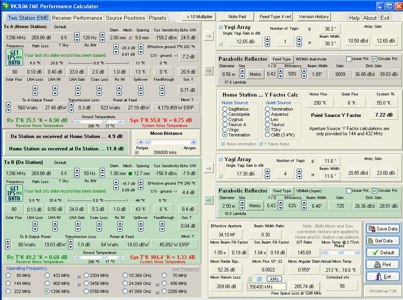 EmeCalc predict your own Moon echo, level of Sun noise, moon noise and more by VK3UM
 -
 F1FLA's personal page details the construction of the FLA25HV antenna, specifically designed for Earth-Moon-Earth (EME) communications.
 -
 News of latest radio activity, initial contacts list, recordings of EME signals, information about station, and overview of latest projects.
 -
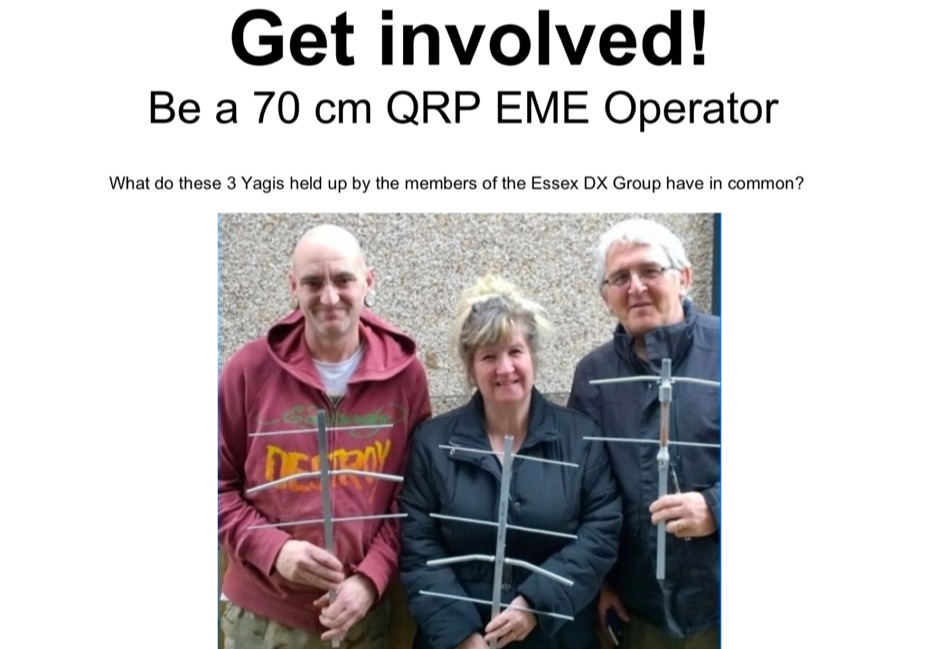 Get involved with 70cm Earth Moon Earth communications it is easier than you think, EME promotional Flier
 -
 A very brief introduction to microwaves, by Thomas D. Williams, Ph.D., radio amateur WA1MBA
 -
 Amateur Radio operation and weak signal detection pages by AF9Y
 -
 EME operation news, typical moonbounce audio recordings
 -
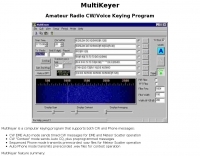 MultiKeyer is a Windows-based software for CW and Phone keying, supporting EME, Meteor Scatter, and contest operations with timed messages and WAV file
 -
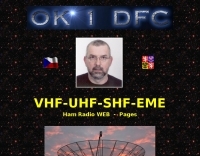 EME traffic and 144 MHz up operations
 -
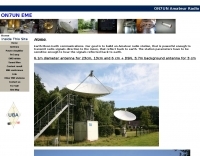 Great pages about EME, including how to get started in EME
 -
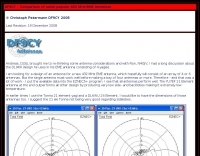 Comparison of some popular 432 MHz EME antennas by DF9CY
 -
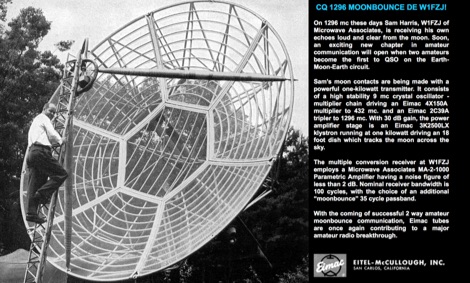 The first EME history was written in 1944 when first EME echoes were received on 564 MHz by German Wurzmann radar according to the article by Dr. Ing. W. Stepp.
 -
 A Collection of EME Reflector Antennas and YAGI Arrays.
 -
 Microwave general web site by G3PHO
 -
 Rotation-Shift Keying description, imlementation and test results. Orthogonal BPSK, Twist Modulation, Moon Bounce
 -
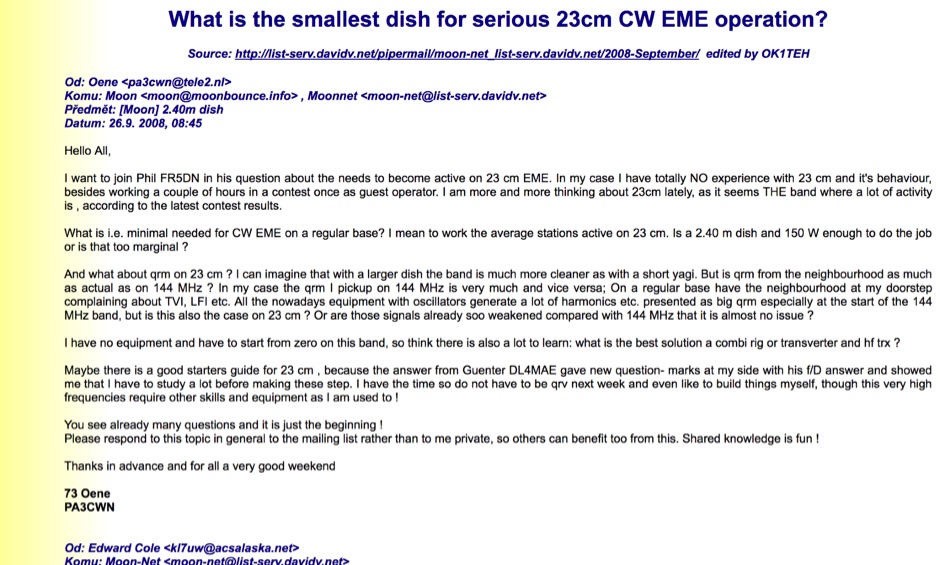 What is the smallest dish for serious 23cm CW EME operation?
 -
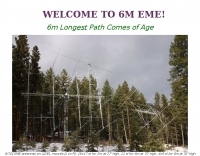 Making EME contacts on six meter band. An US Experience using a pair of 8 yagi arrays for the 50 Mhz.
 -
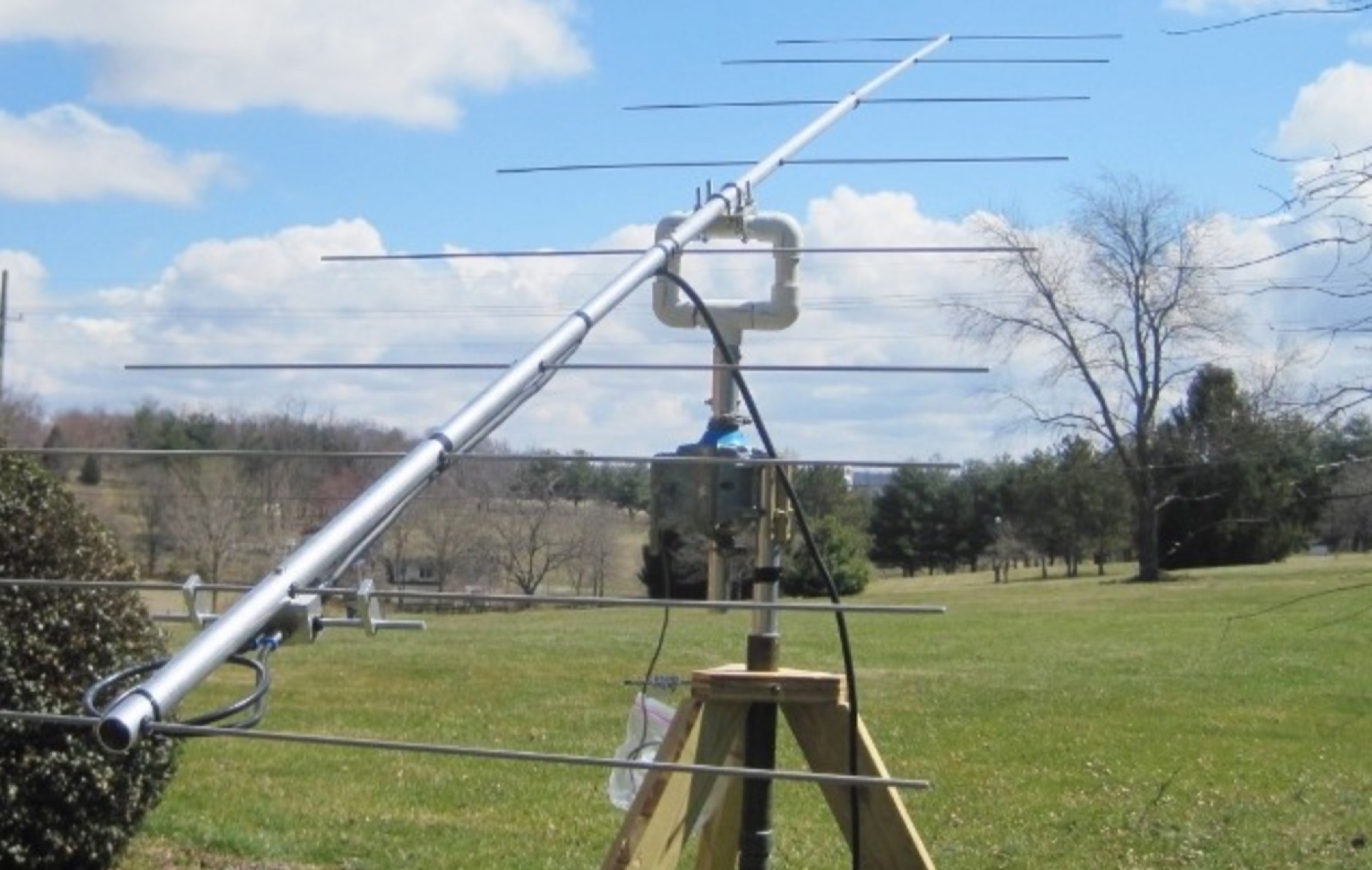 The purpose of this article is to provide radio amateurs with enough background information to understand the technical challenges involved in small-station digital EME on the 144 and 432 MHz bands.
 -
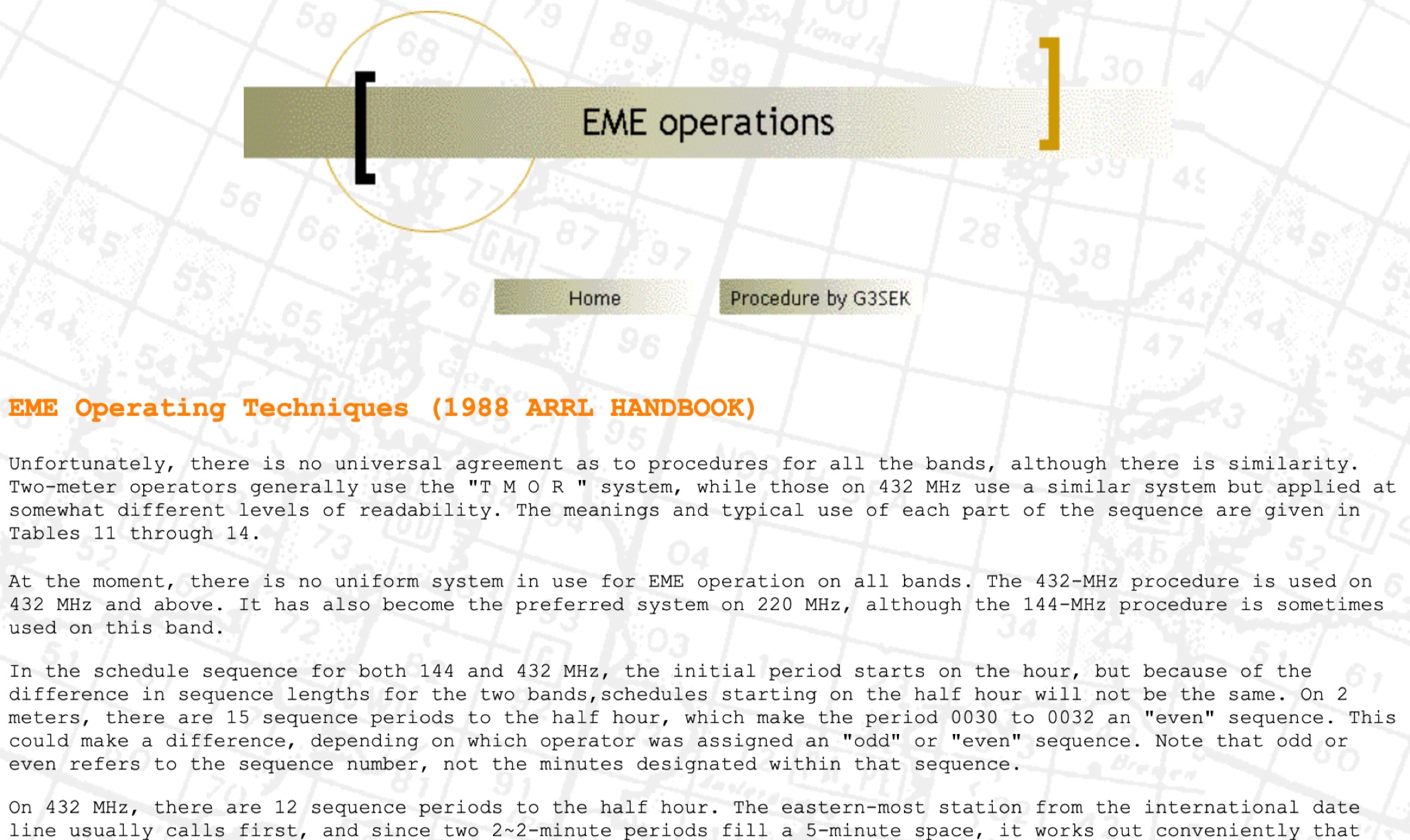 Learn EME operating techniques for 432 MHz and above, including procedures and scheduling.
 -
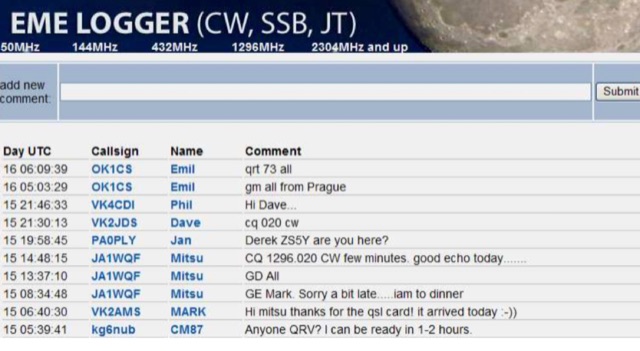 A complete guide to start operating EME. In this document, that is the result of several years of experimenting, the author summarize the steps to begin on Earth-Moon-Earth communications
 -
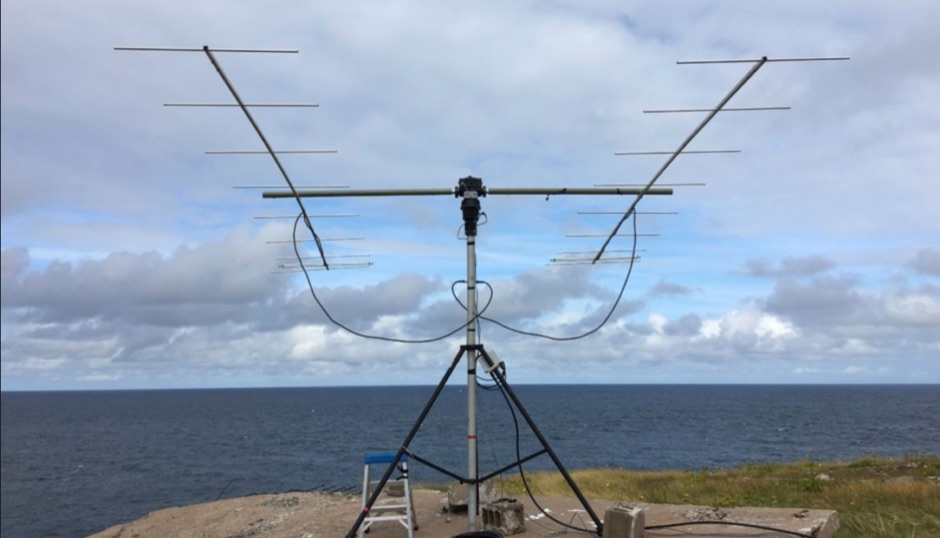 Moonbounce is the ultimate long path DX. It is exciting and allows you to literally work the world on VHF and UHF. It is not as difficult as you may think. Here is how to get started on this most exciting mode
 -
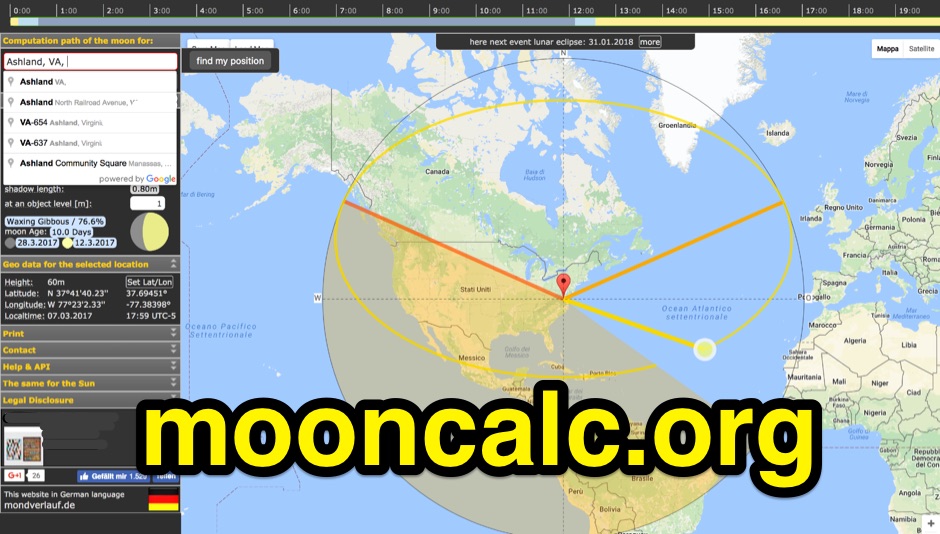 Mooncalc shows the motion of the Moon and Moon phase for a particular day at a particular location. You can see the moon positions for moon rising, selected time and Moonset.
 -
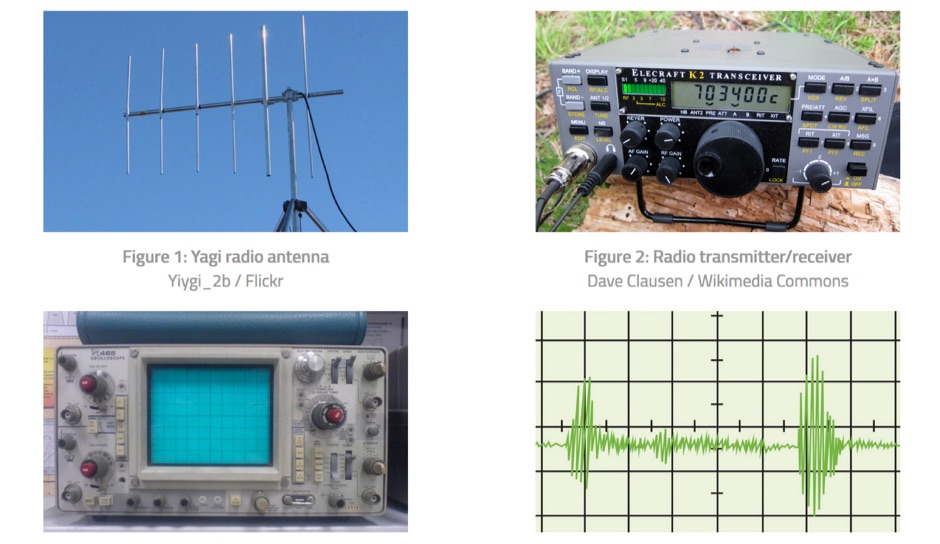 Using a simple calculation, measure the distance between Earth and the Moon with the help of a local amateur radio station