Horn Antenna Designs and Construction Resources
Find schematics, dimensions, and project guides for building horn antennas for various microwave frequencies and applications.

Horn antennas are a specialized type of microwave antenna, often used by hams for satellite operation, EME, or other weak-signal work on the UHF and microwave bands. These antennas are essentially flared waveguides, designed to efficiently radiate electromagnetic waves with high gain and directivity. Operators frequently build horn antennas for specific frequencies, such as 2.4 GHz or 2304 MHz, to achieve precise beam patterns and minimize losses in their station setup.
Many hams experiment with horn antenna projects, often starting with simple designs like the popular 'tomato can horn' for higher frequencies. Resources in this category provide detailed design principles, construction guides for various horn types, and calculators to determine optimal dimensions for specific bands. You can find information on general circular-waveguide-horn antenna design, dual-mode horns for 10 GHz, and even tools like the 802.11b Horn Antenna Designer to help with your antenna projects.
Related Categories
-
 This Antenna is not really practical for AO-40 reception, but horn antennas have a number of qualities useful in microwave antenna testing and noise figure measurements.
 -
 The Horn reflector antenna at Bell Telephone Laboratories
 -
 About basics of the horn antenna used for many rf microwave antenna applications.
 -
 Horn Antennas theory and principles
 -
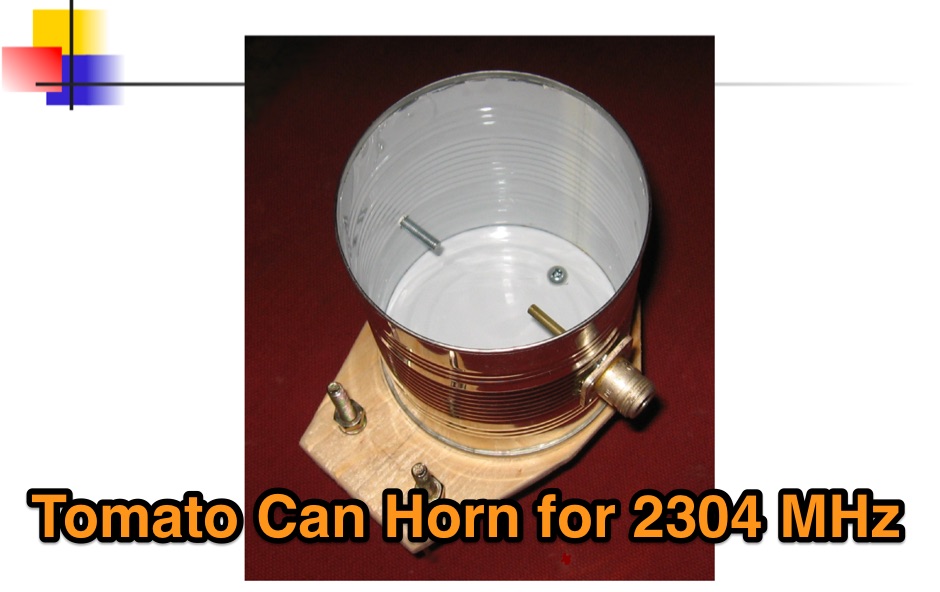 A Tomato Can Horn antenna for 2304 MHz by Steve Kavanagh
 -
 Dual mode horm antenna for 10 GHz nu G3PH0
 -
 A Horn antenna by WE3HHT
 -
 Antenna design for Horn Antennas
 -
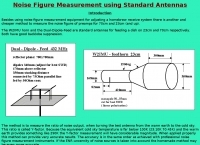 Measuring noise fiugre on the W2IMU horn and the dual-dipole-feed