Search results
Query: net
Links: 3282 | Categories: 40
This query is too generic. Please try adding an additional term to focus your research.
Categories
- Antennas > 40M > 40 meter Magnetic Loop Antennas
- DX Resources > Nets > Emergency Nets
- Internet and Radio
- Operating Modes > Internet Linking
- Manufacturers > Antennas > HF > Magnetic Loop
- DX Resources > Nets
- Operating Aids > Phonetics and codes
- Internet and Radio > Social Networks
- Technical Reference > Vector Network Analyzer
- Software > Vector Network Analyzer
- Software > Internet Linking
- Shopping and Services > Internet services
- Antennas > Magnetic Loop
- Antennas > 20M
- Ham Radio > Clubs > North America > USA > Alaska
- Operating Modes > Internet Linking > AllStarLink
- Operating Modes > AM
- Software > Audio Streaming
- DX Resources > Beacons
- Operating Modes > Packet Radio > Clubs
- DX Resources > Clusters
- DX Resources > County Hunting
- Operating Modes > DMR
- Software > DX Cluster
- Software > Linux > DX Cluster Clients
- Operating Modes > Internet Linking > EchoLink
- Operating Modes > HSMM
- Operating Modes > Internet Linking > IRLP
- Ham Radio > Clubs > North America > USA > Nevada
- Internet and Radio > News Groups
-
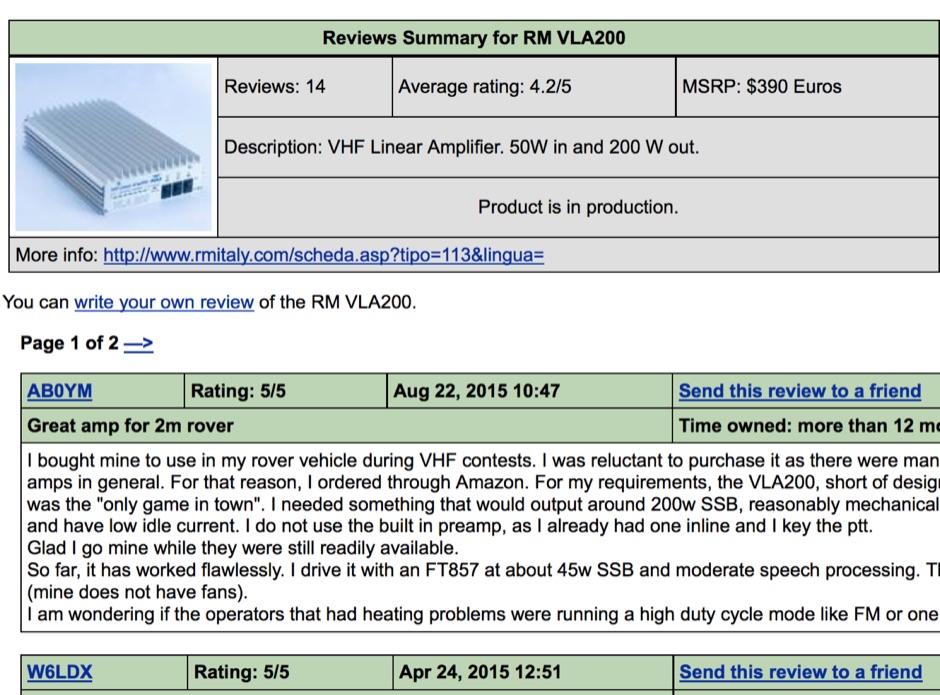 eHam reviews of the RM VLA 200 VHF RF power amplifier
 -
 A 3 band dipole antenna for 40-80-160 meter bands, It's made with easily available materials and is designed for inverted V mounting. The antenna is shortened for these bands, but still manages to make contacts in 80m and 160m with stations in Canada and the USA. The construction details are provided, including the dimensions of the antenna elements and the traps. The antenna is easy to build and provides good performance in all three bands. In Italian.
 -
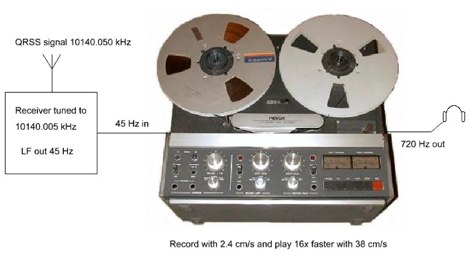 An unique method to listen to QRSS signals is... using an old tape recorder with variable speed
 -
 February 10-20, 2012 Winter DXpedition to Miquelon Island
 -
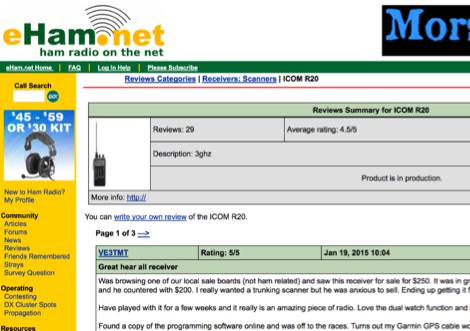 eHam.net reviews of the Icom IC-R20 wideband receiver
 -
-
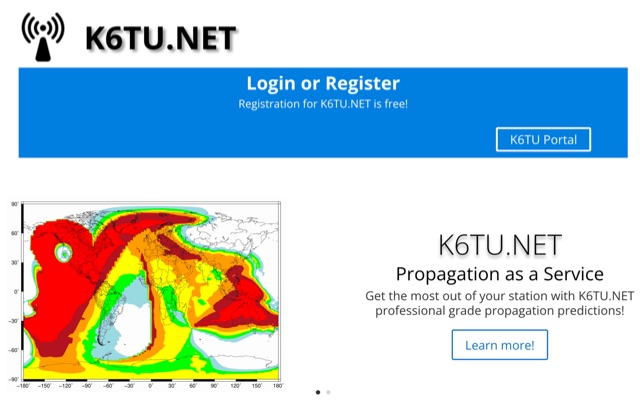 Get the most out of your station with K6TU.NET professional grade propagation prediction, and model your antenna performance over actual terrain using high resolution elevation data
 -
-
 Personal page with homebrewing articles by Y05OYR
 -
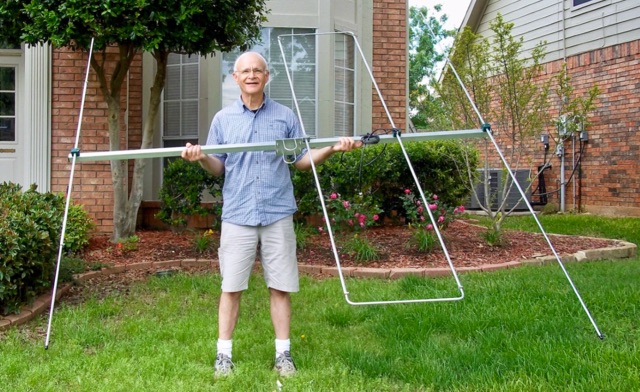 Getting Started on the Magic Band is a very exaustive article about operating the six meters band. It covers several aspects of operations, techniques, tips and guidelines on getting started on the six meters band.
 -
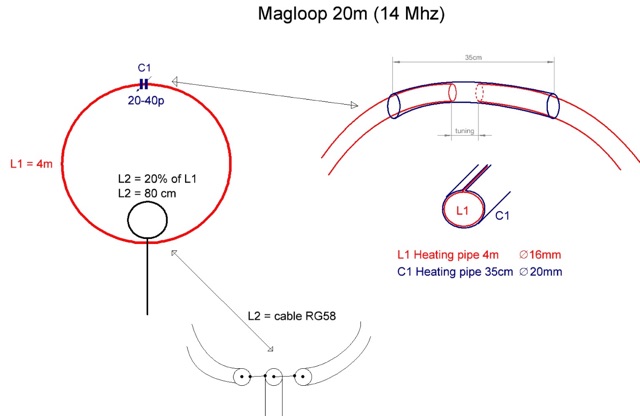 A magnetic loop antenna designed for 14 MHz. This kind of antennas is also known as STL, small transmitting loop and can be an excellent solution when you are not allowed to put antennas on your roof
 -
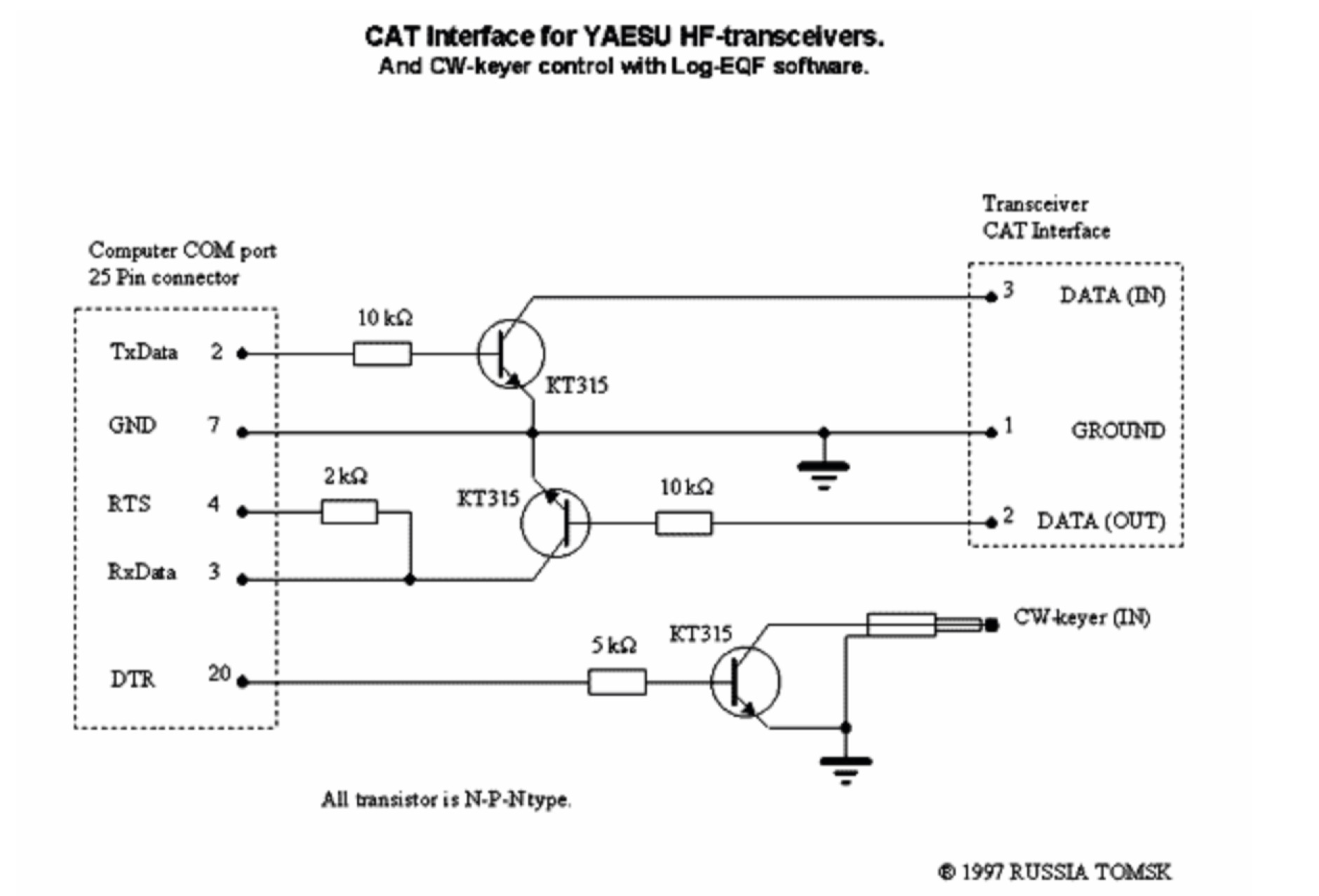 Schematic diagram circuit to build a RS232 serial interface for the Yaesu FT 1000D, works also as CW Keyer control with Log-EQF software. May be used with other Yaesu HF Transceivers.
 -
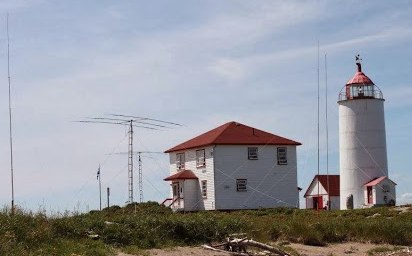 Work any five Province of Québec Lighthouses
 -
 Fast growing Amateur Radio Club with many varied interests, Two time Canadian Field Day champions. We welcome new Amateurs and especially those wanting to become Amateurs, we have one of the best instructors in the lower mainland and 3 volunteer examiners
 -
 Fast Scan Amateur Television in Alabama, Arizona, Northern California Southern California, Georga, Illinois, Indiana, Kentucky, New Mexico, Nevada, Texas, Washington, Delaware, Maryland, New Jersey, and Pennsylvania
 -
 Free to download PDF book about operating The VHF/UHF bands written in the early to mid-1990s by a team of experienced VHF/UHF DXers and equipment developers, in an effort to pass on their knowledge and stimulate further developments.
 -
 Amateurfunk - Ortsverband P47 Wendlingen am Neckar
 -
 eHam users review of the Icom IC-R75 receiver
 -
 The Salvation Army Team Emergency Radio Network (SATERN) is a vital resource for amateur radio operators involved in emergency communications. This network facilitates the coordination of communication during disasters, ensuring that vital information can be relayed effectively. SATERN operates through a series of nets that connect operators across various regions, allowing for real-time updates and support during emergencies. Participation in SATERN not only enhances your skills as an amateur radio operator but also contributes to community resilience. Operators are trained to handle emergency traffic and provide assistance to those in need. By joining SATERN, you become part of a dedicated team that prioritizes safety and communication in times of crisis. The network encourages regular participation in drills and training sessions to ensure readiness when real emergencies arise.
 -
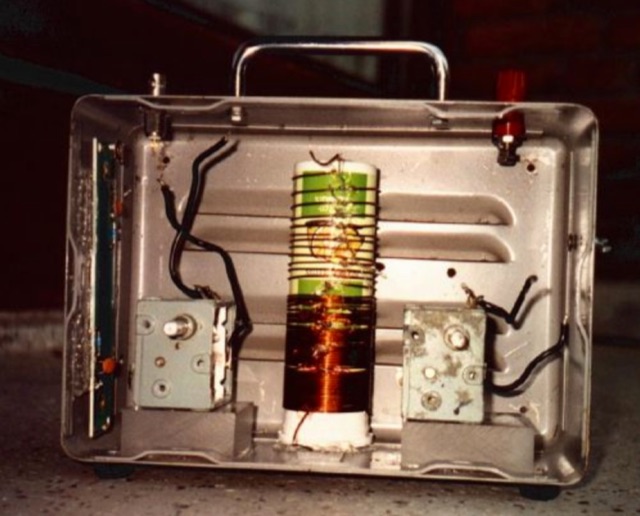 A home made Antenna Tuner made with a simple inductor and a few spare parts. Despite the title, the author succesfully tested this ATU with higher power inputs.
 -
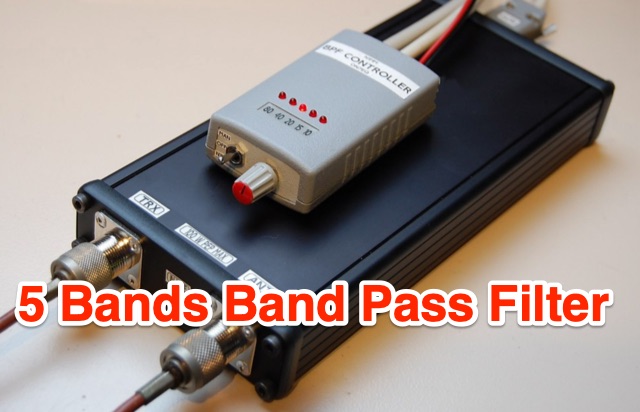 These band filters are based on 3 or 5 sections Butterworth band pass filters, maintaining 50 Ohm impedance, and when built around toroidal inductors, can be made very compact.
 -
 N4PAL 10 Meter, 28.214MHz Radio Beacon Site Information and Siginal Report Logging
 -
 The website for VA3XPR is intended to provide users with information about the VA3XPR repeater, plus news and information related to ham radio digital voice communications.
 -
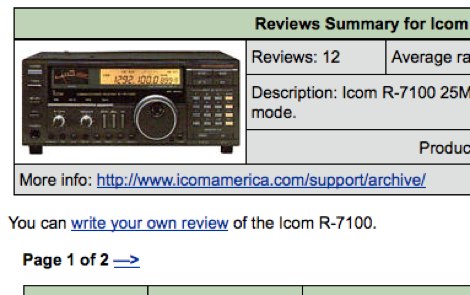 eHam reviews of the Icom IC R7100 VHF UHF receiver
 -
 SDARC The Swindon and District Amateur Radio Club England UK
 -
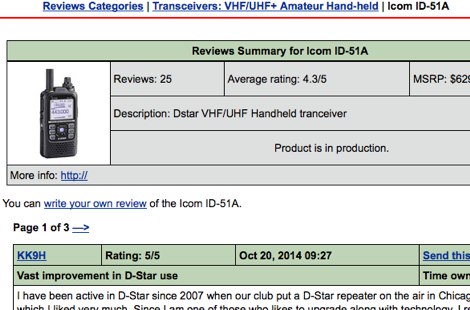 Reviews of the Icom ID-51A handheld dual band transceiver
 -
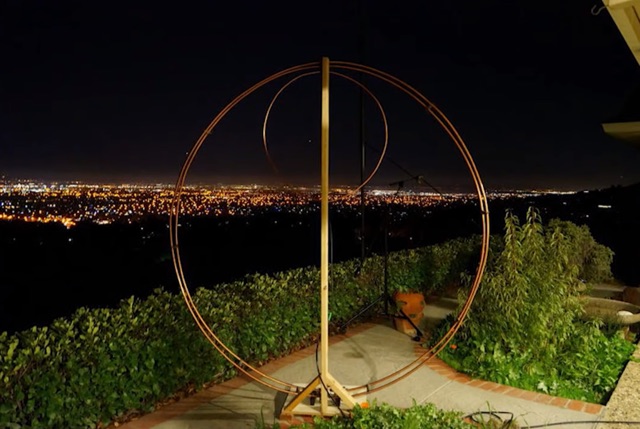 Jeri Ellsworthhas started a video series devoted to building a magnetic loop antenna for the 160- and 80-meter bands. The first video, included after the break, is an overview of the rationale behind a magnetic loop
 -
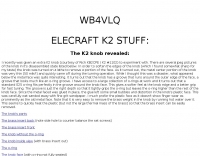 Data sheets for most of the major components of the K2
 -
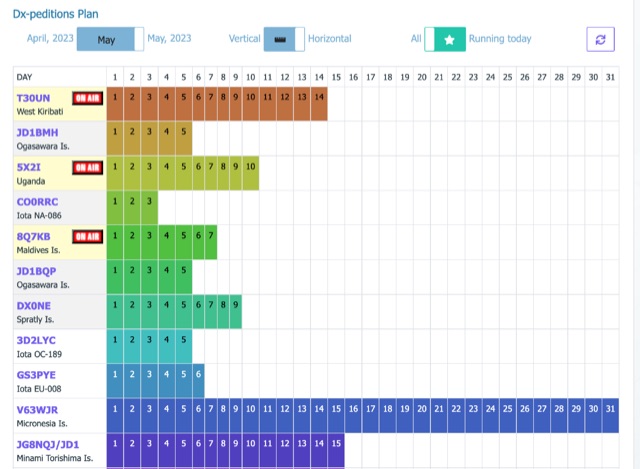 Ham365 let you follow the main DX-peditions on a dedicated calendar page that shows the schedule of all monthly expeditions, running dxpeditions and even shows the dxpeditions reported on their users logs or cluster spots.
 -
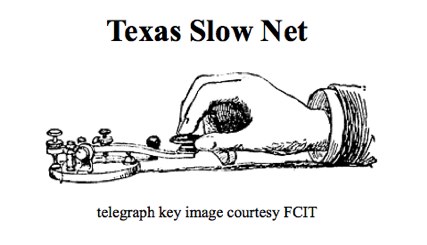 The Texas Slow Net (TSN) operates daily at 7:45 PM local time on 3570 KHz, serving as a dedicated traffic handling training net within the National Traffic System. It specifically caters to operators aiming to enhance their **International Morse Code** skills and learn proper CW traffic net procedures. Each session incorporates a traffic handling lesson delivered as a radiogram to all participants, reinforcing practical application. The resource provides guidance on effective Morse Code learning, emphasizing sound recognition over visual dot/dash counting, suggesting characters be sent at 15 words per minute with adjusted spacing. It recommends listening to W1AW code practice transmissions, setting goals with ARRL's Code Proficiency Program qualifying runs, and regular participation in NTS traffic nets. The content also references the ARRL's Public Service Communications Manual, particularly Section 2, which details the **National Traffic System**.
 -
-
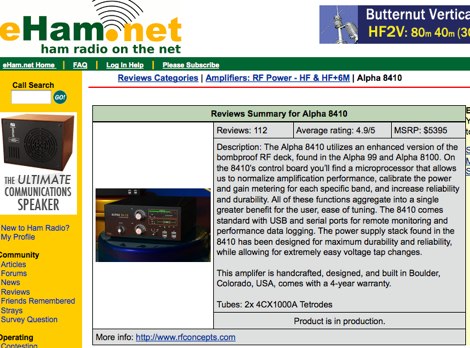 eHam reviews of Alpha 8410 HF power amplifier
 -
 Ham Radio & technology for people with disabilities
 -
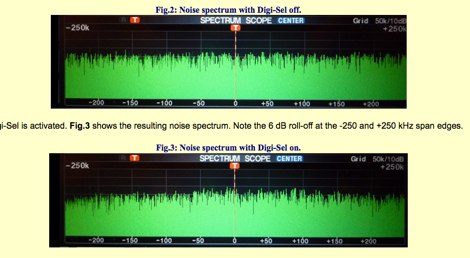 A detailed review of the Icom IC-7700 by VA7OJ/AB4OJ
 -
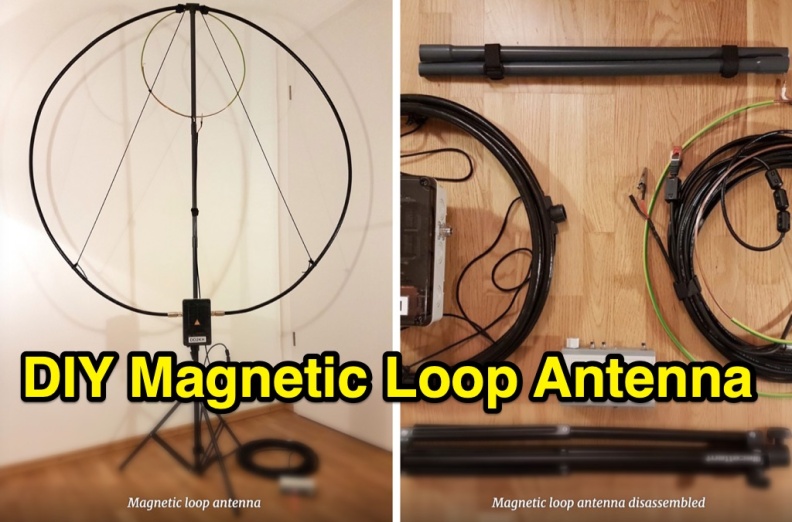 This tutorial provides detailed instructions for constructing a DIY magnetic loop antenna, ideal for amateur radio operators seeking efficient short wave communication. The design features a remote tuning system utilizing an Arduino and RC servo, making it suitable for indoor use where larger antennas cannot be installed. Magnetic loop antennas are compact and can operate effectively in confined spaces, but they do require careful handling due to the high voltages and currents they generate during operation. Users should possess the necessary technical skills to implement this project safely. The tutorial includes a comprehensive overview of the antenna's theory, specifications, and mechanical design. It outlines the components needed, including a Soviet-made variable capacitor and a digital RC servo for tuning. Safety precautions are emphasized, as the antenna can produce several kilovolts of voltage and high currents. The project is not certified for safety, and users are advised to proceed at their own risk. The tutorial also provides diagrams and explanations of the antenna's operation, making it a valuable resource for both beginners and experienced operators looking to enhance their setup.
 -
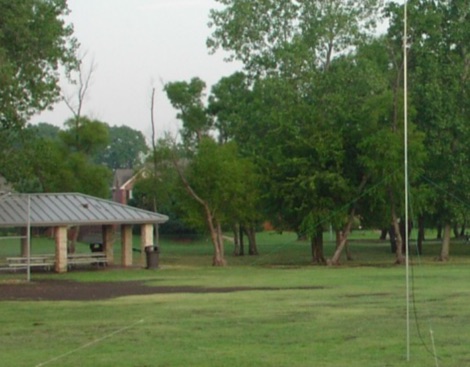 This Field Day Vertical Antenna project is the result of many years of attending various field day sites and realizing that what was needed is a simple, easy to assemble vertical antenna. The design of this Field Day Antenna is not very novel and leverages ideas from Butternut verticals and ARRL publications. The one essential requirement was that the antenna can be raised by just one person. The design of this Field Day Antenna is an above ground mounted ground plane vertical.
 -
 The South Milwaukee Amateur Radio Club is an ARRL general-purpose affiliated club with Hams from all interest groups
 -
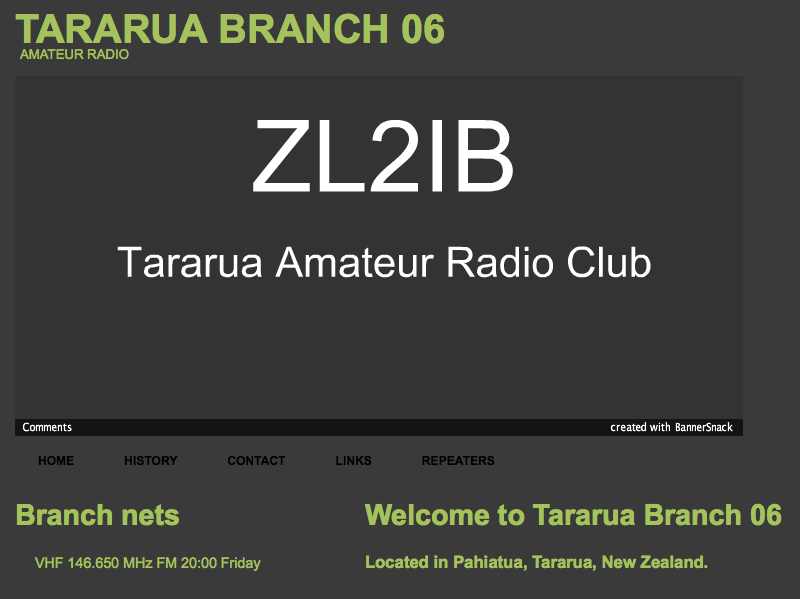 The Tararua Amateur Radio Club, Branch 06 of the New Zealand Association of Radio Transmitters (NZART) is an incorporated society for Radio Amateurs and interested persons.
 -
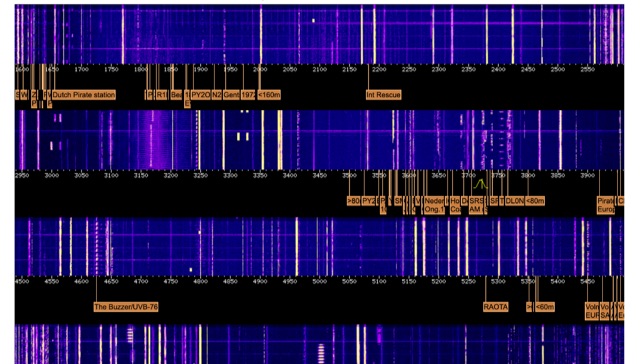 Presents a live **WebSDR** service, SO8OO WebSDR Polska, originating from a quiet QTH in southeastern Poland. The setup employs an RSP1A receiver coupled with a **Loop On Ground (LoG)** antenna, specifically chosen to minimize local QRM and provide a clean listening environment. This configuration is particularly effective for weak-signal reception, a critical factor for DXers and those interested in monitoring distant stations. Operators can access a broad spectrum, including VLF, the entire 160-10m amateur bands, 11m CB, Volmet, and even the enigmatic UVB-76. The inclusion of QO-100 monitoring capabilities further extends its utility, catering to satellite enthusiasts. My own field results with similar LoG antenna setups confirm their excellent noise rejection characteristics, making this WebSDR a valuable resource for evaluating band conditions and listening to signals that might otherwise be masked by urban noise.
 -
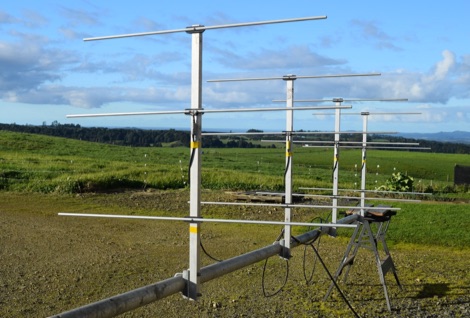
-
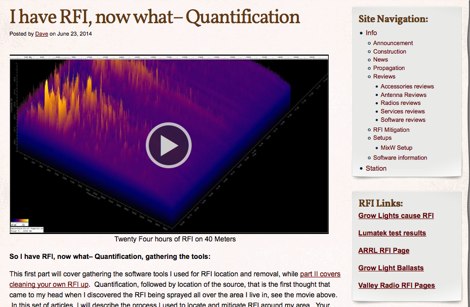 This article will cover gathering some software tools used for RFI location and removal.
 -
 Elecraft K2 mod. Narrower bandpass filter, better stopband attenuation
 -

-
 The Davis County Amateur Radio Club (DCARC) serves as a focal point for licensed amateur radio operators in Davis County, Utah, fostering community and promoting radio communication interests. Members engage in various aspects of the hobby, including local nets, public service events, and technical discussions. The club's activities often involve supporting emergency communications preparedness and providing opportunities for skill development among its members. DCARC maintains a presence in the local ham radio scene, facilitating contacts and knowledge exchange. They frequently participate in events like _Field Day_ and offer resources for those interested in obtaining or upgrading their amateur radio licenses. The club also supports local repeaters, ensuring reliable VHF/UHF communication infrastructure for the region. Their website, dcarc.net, provides information on club meetings, upcoming events, and contact details for prospective members.
 -
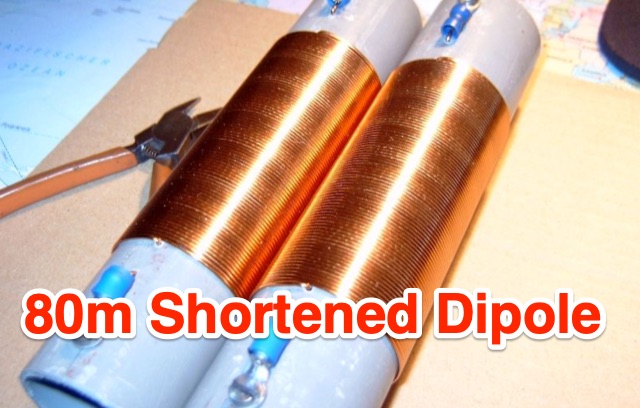 This antenna just requires about 24m of free space instead of 41m that a normal half wave 80m antenna needs to hang up. The so called loaded dipole uses a coil in every dipole arm to electrically lengthen the mechanical too short dipole arms. Every coil has an inductivity of 120 microHenry.
 -
 Amateurfunk Homepage des DARC Ortsverbands Vaterstetten C01
 -
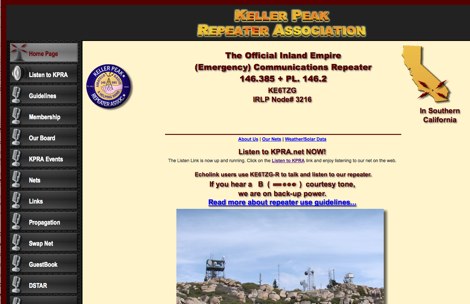 Keller peak repeater association, operate an open amateur radio repeater in the San Bernardino, California, mountains.
 -
 VHF repeater located in bedale north yorkshire
 -
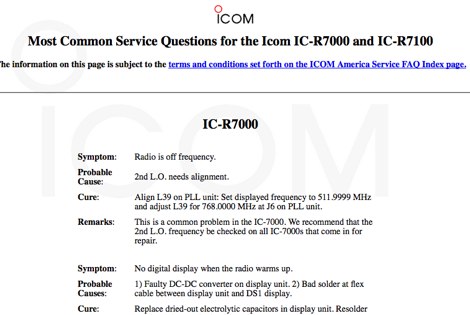 Most Common Service Questions for the Icom IC-R7000 and IC-R7100
 -
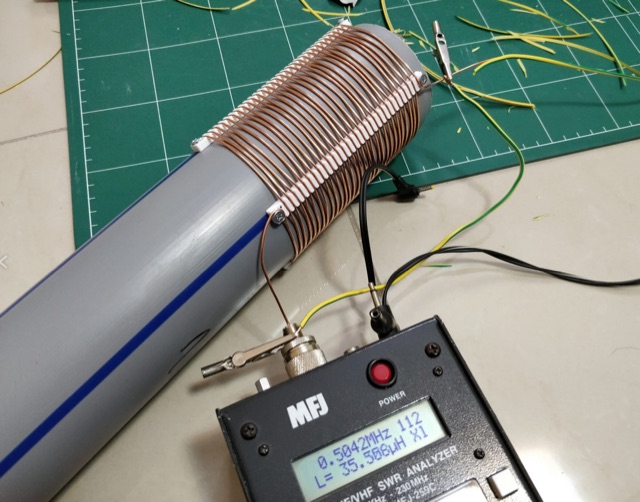 This article shares the author's experience with building antennas. After putting a large magnetic loop project on hold, they decided to try a base-loaded vertical antenna. The author explains how they chose to design a new antenna from scratch, aiming for a frequency of 7 MHz. They describe the calculations needed to find the right coil inductance and how they used 3D-printed parts for the construction. The article wraps up with results from their initial tests, showing good communication on different bands and highlighting the success of their design.