Search results
Query: project design
Links: 362 | Categories: 17
Categories
- Software > Circuit Design
- Technical Reference > 3D Printed Projects
- Software > Front Panel Design
- Software > PCB Design
- Antennas > 20M
- Antennas > 2M
- Manufacturers > Arduino
- Manufacturers > Front Panel
- Technical Reference > Keyers
- Antennas > Log Periodic
- Antennas > Receiving
- Technical Reference > Receivers > Regenerative Receiver
- Antennas > Resonant Feedline Dipole
- Antennas > Satellite
- Antennas > Traps
- Antennas > Vertical
- Antennas > VHF UHF
-
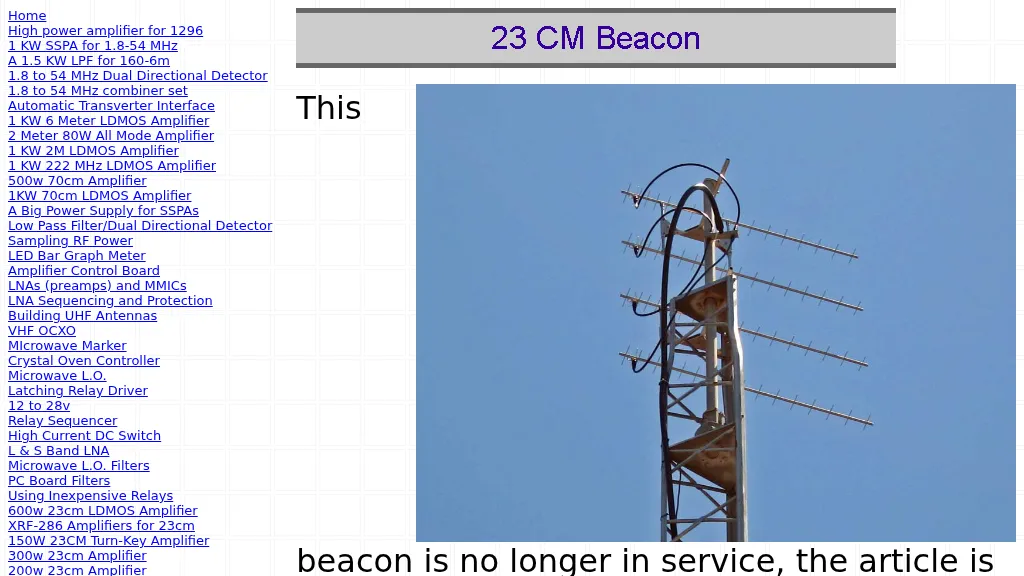 The W6PQL 23cm Beacon Project describes a **1296 MHz** beacon designed for microwave propagation studies and equipment testing, capable of 30 watts output. It utilizes a PIC 16F628A microcontroller to generate CW and FSK keying for a crystal oscillator, followed by a series of frequency doublers and triplers to reach the target frequency. The final power amplification stage employs a Mitsubishi M57762 module, providing a robust 10-watt RF output. The design emphasizes stability and reliability for continuous operation, with the microcontroller code, written in assembly, provided for customization of the beacon's callsign and message. Originally located in CM97am and aimed at 140 true, the beacon used four 4-foot Yagis stacked vertically for a total ERP of 3kW. The article includes schematics, parts lists, and construction notes to guide builders, along with antenna pattern measurements. Although the beacon itself is no longer in service as of August 2010, the detailed documentation remains a valuable reference for amateur radio operators interested in building similar **microwave** projects or understanding beacon operation.
-
 The article details how to eliminate Radio Frequency Interference (RFI) from the Behringer HA400 headphone amplifier when used in ham radio setups. While the HA400 is praised for its quality and affordability, it was not designed for RF environments, causing distortion when used with a 500-watt radio station. Initial attempts using clamp-on ferrites on the headphone and power cables only partially resolved the issue. Upon opening the unit, the author discovered the circuit lacked RF bypassing components. The solution involved installing 0.1μF (104) capacitors at key points in the circuit: the power supply input, audio circuits, and op amp inputs. This modification, combined with the external ferrites, completely eliminated the RFI problem, making the unit suitable for ham radio operations.
-
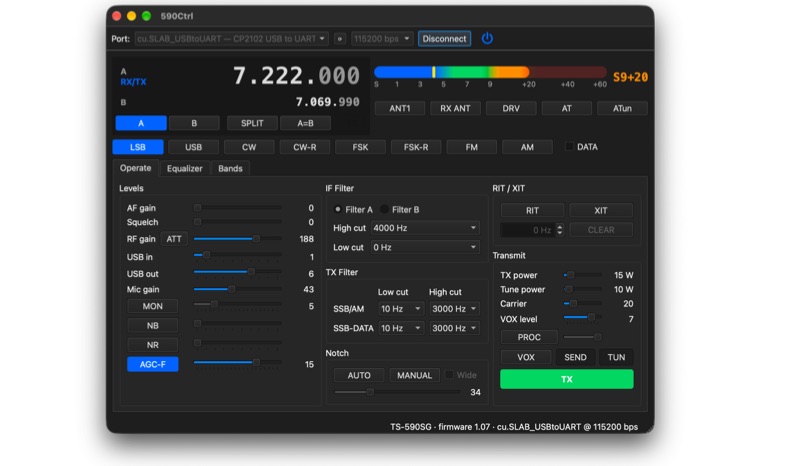 The **590Ctrl** application provides a dedicated desktop control panel for the _Kenwood TS-590SG_ HF transceiver, specifically designed for macOS and Linux operating systems. Developed using the Qt 6 framework and C++, this software facilitates direct control of the radio via a USB connection, offering an alternative to the transceiver's front panel. The GitHub repository details its structure, including directories for documentation, resources, scripts, source code, and tests, indicating a well-organized development effort with a history of **41 commits**. Amateur radio operators utilizing the TS-590SG on macOS or Linux will find this tool particularly useful for integrating their radio into a computer-centric shack environment. It streamlines operations by allowing software-based adjustments and monitoring, which can be advantageous during contesting or DXing sessions where quick parameter changes are crucial. My own experience with similar control software confirms the efficiency gains, especially when managing multiple logging applications or digital mode interfaces simultaneously. The project's open-source nature also invites community contributions and further development, potentially expanding its feature set beyond basic control functions.
-
 The Yaesu VX-6R USB Programming Interface is a reliable solution for programming the Yaesu VX-6R handheld radio using USB. Based on the FT232RL chip, it replaces older RS232 interfaces and USB converters, ensuring stable communication. The design integrates a buffering circuit with a Sparkfun breakout board, featuring TX and RX LEDs for easy monitoring. The compact interface connects to the radio via a four-pin header, with a solder bridge option for radios requiring separate data lines. This setup has proven reliable and versatile, allowing the FT232RL to be repurposed for other projects.
-
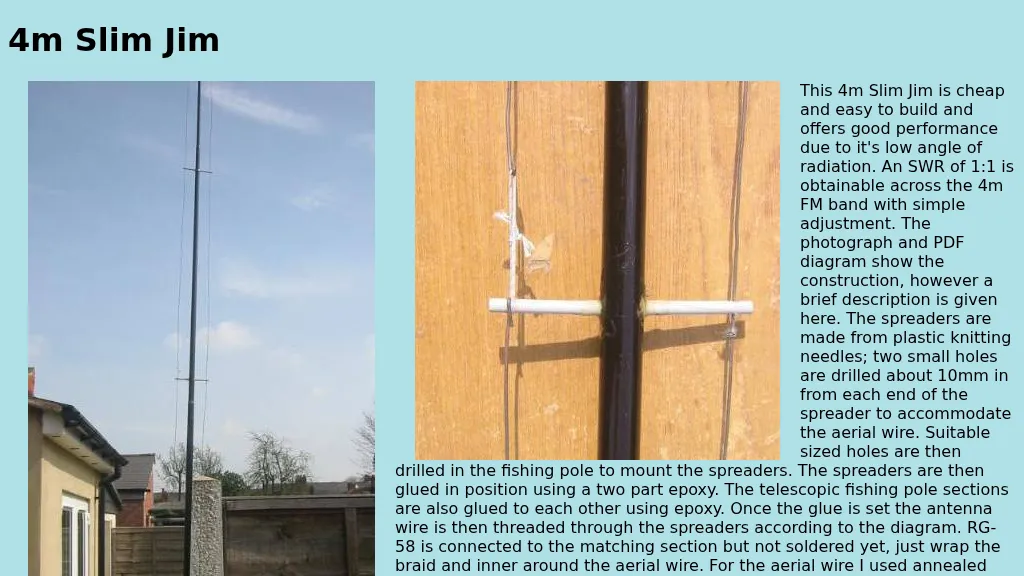 The 4m Slim Jim antenna project provides a construction guide for a low-cost, high-performance aerial designed specifically for the 70 MHz FM band. This design achieves a 1:1 SWR across the 4m FM band with straightforward adjustment of the feed point, utilizing RG-58 coax. Its low angle of radiation contributes to effective signal propagation. Construction involves using plastic knitting needles as spreaders and a telescopic fishing pole for support, with components secured using two-part epoxy. Annealed bare single-core copper wire forms the radiating element. The setup process includes raising the antenna at least 3 meters above ground for tuning, adjusting the RG-58 feed point for optimal SWR, and then soldering connections. Waterproofing is achieved with yacht varnish. The design emphasizes low wind resistance for durability, making it suitable for exposed outdoor installations. A PDF construction diagram is available to supplement the written instructions.
-
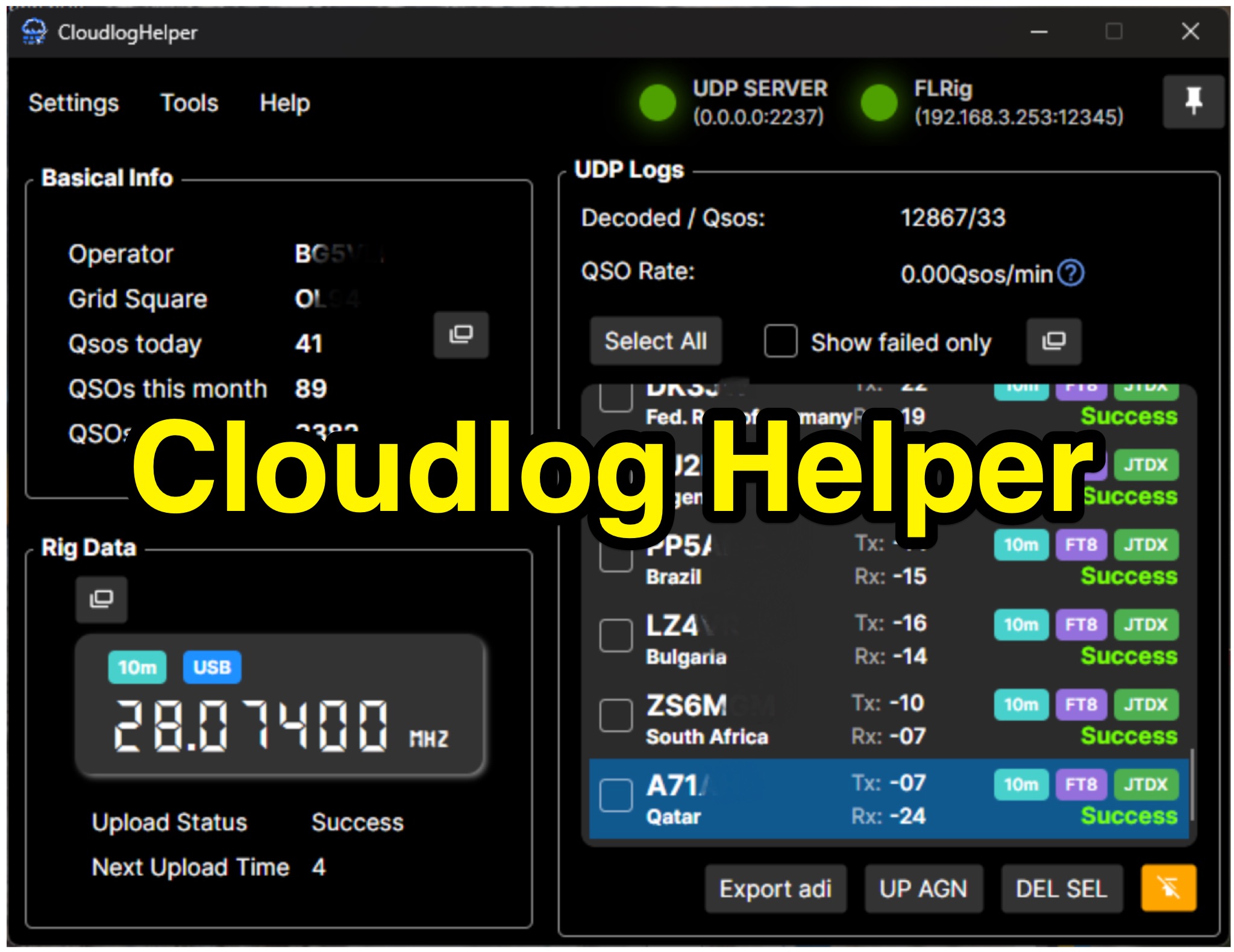 Cloudlog Helper addresses the need for streamlined, automated logging of amateur radio contacts, particularly for operators utilizing digital modes like FT8 or those with limited system resources. This utility syncs real-time rig data and QSO information to various logging platforms, including _Cloudlog_ and Wavelog, supporting mainstream transceivers. It integrates seamlessly with popular digital mode software such as JTDX and WSJT-X, ensuring that contact details are captured and uploaded without manual intervention. Operators can compile the software themselves and configure essential settings, including their Maidenhead locator, Cloudlog server address, API key, and station ID. The application's design prioritizes efficiency and portability, making it a practical solution for hams who prefer automated logging processes. While an unofficial community project, Cloudlog Helper provides a robust framework for automating the often-tedious task of logging, supporting multiple logging services beyond its primary integration. It offers a direct method for hams to maintain accurate and up-to-date logbooks with minimal effort, potentially improving their DXCC or other award tracking by ensuring no QSO is missed.
-
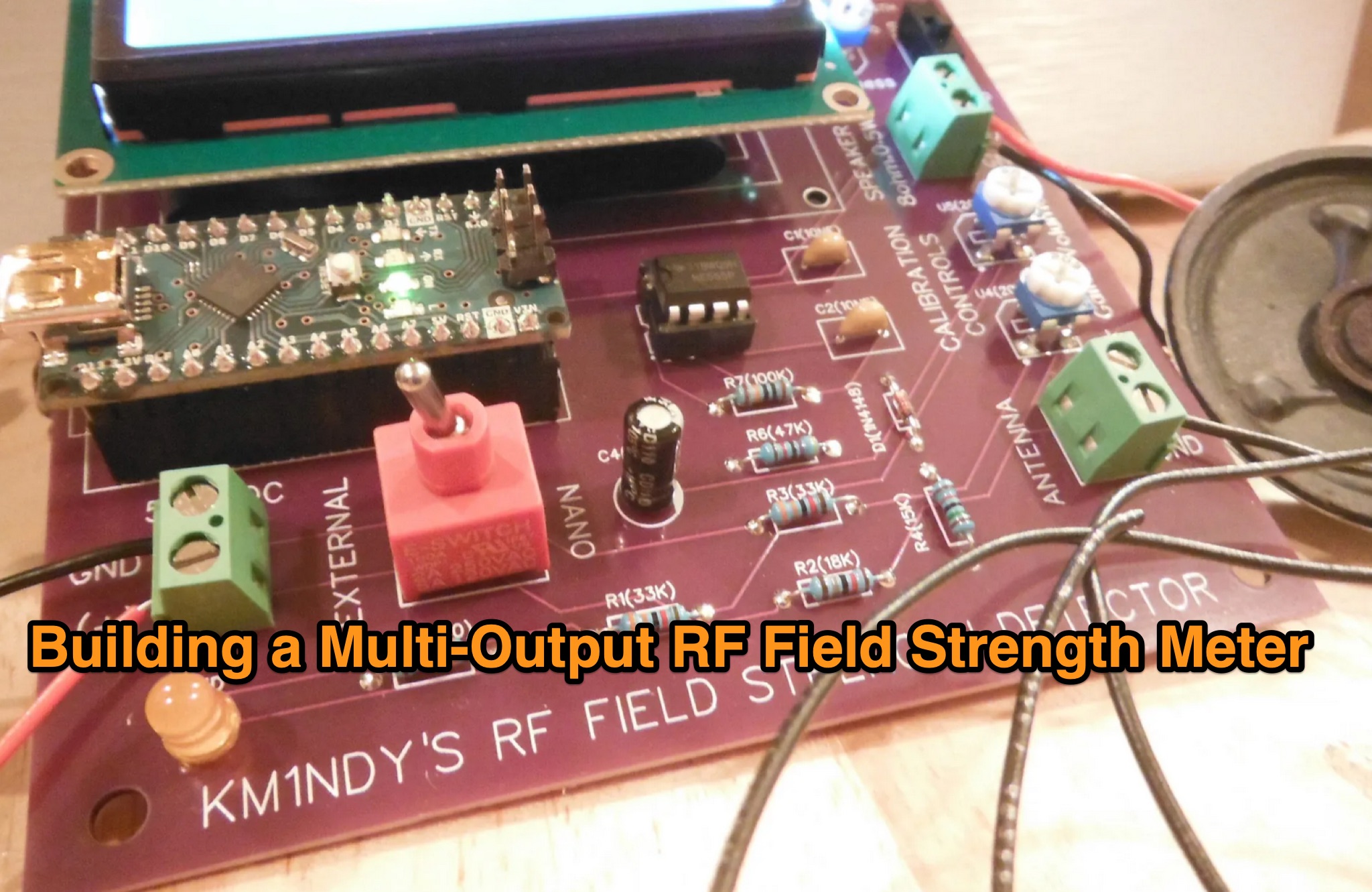 This article describes a DIY RF field strength meter project inspired by VK3YE's "The Squeakie" design. The device, built around a 555 timer IC and a 1N4148 diode, converts RF signal strength into audible tones with proportional pitch. The author enhanced the original design by adding volume control, LED indication, and digital readout capabilities using an Arduino Nano and LCD display. The completed project functions as a versatile RF detection tool, suitable for antenna testing and fox hunting, while offering multiple output methods: audio, visual, and digital measurement display.
-
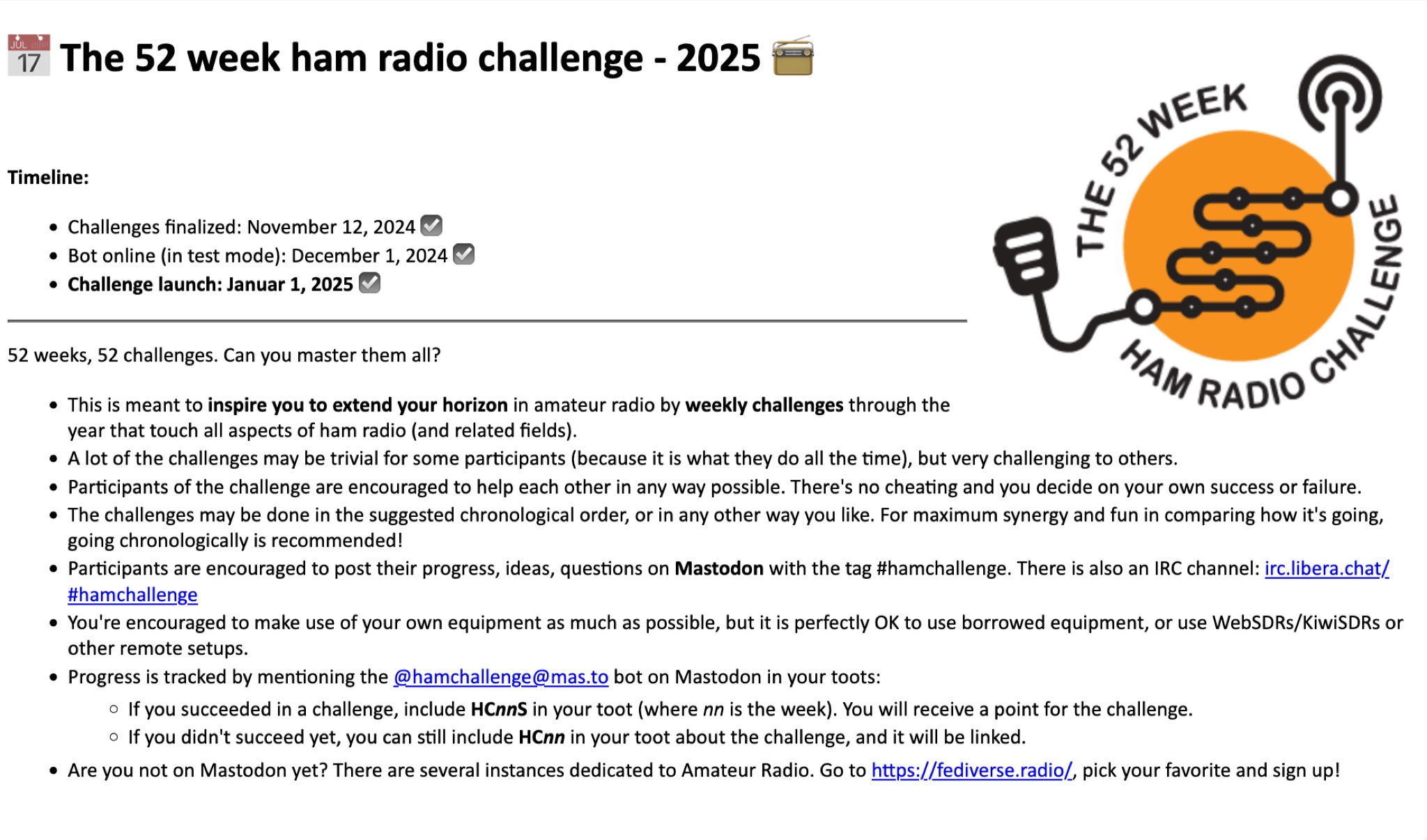 The 52 Week Ham Radio Challenge offers hams a year-long series of 52 challenges to test and improve their skills. Created by Fabian Kurz, DJ5CW, this project includes bonus challenges that can be substituted for missed or failed tasks. The challenges cover a range of topics and activities related to ham radio operation, providing a fun and educational way for hams to enhance their knowledge and expertise. Whether you are a beginner or an experienced operator, this challenge is designed to engage and motivate ham radio enthusiasts throughout the year.
-
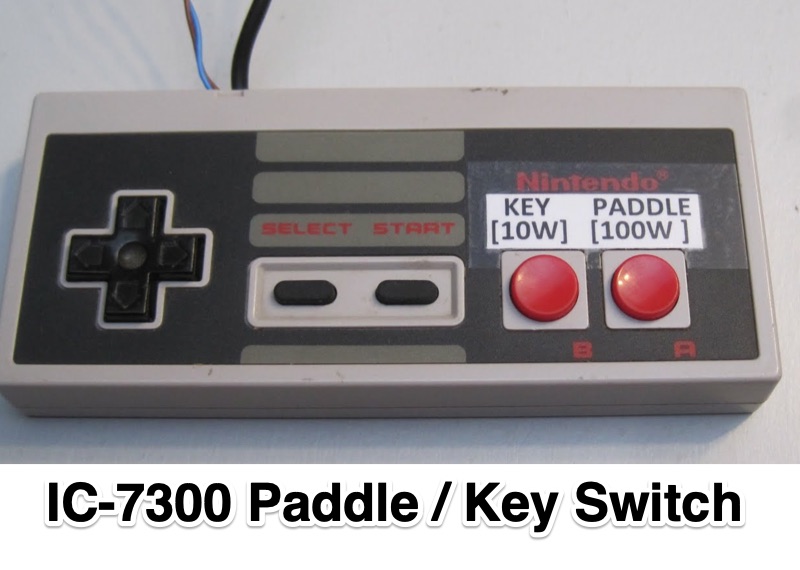 Demonstrates an **Arduino-based** solution for the Icom IC-7300 transceiver, specifically addressing the operational inconvenience of switching between a CW paddle and a straight key. The project leverages the IC-7300's **CI-V bus** (Computer Interface 5) to provide instant keyer type selection and two preset power levels, bypassing the rig's menu system which otherwise requires eight button presses. This implementation utilizes the 3.5mm CI-V connector, leaving the USB port free for CAT control and the internal soundcard, a critical design choice for integrated station setups. The system's utility is particularly evident for CW operators who frequently alternate between keying methods during contesting or general operating. The article details the hardware setup, including an Arduino Nano, a 3.5mm jack for CI-V, and pushbuttons for control. An update in 2023 expanded the project to incorporate an 8-button Nintendo controller, enhancing user interface flexibility and demonstrating the adaptability of the initial design for further customization and feature integration.
-
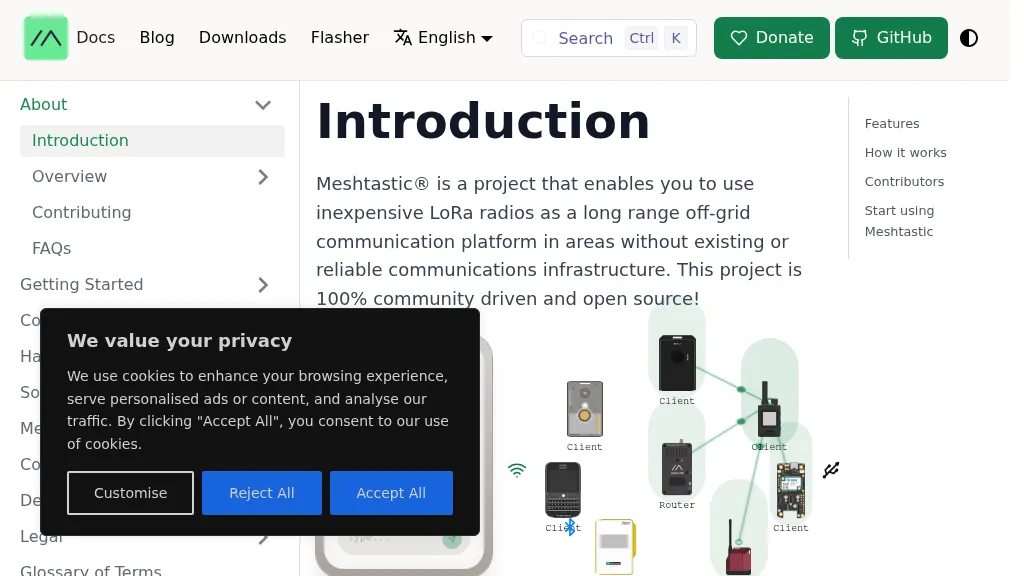 The Meshtastic project leverages _LoRa_ radio protocol to establish a long-range, off-grid communication platform, functioning as a decentralized mesh network. It facilitates sending and receiving text messages using inexpensive LoRa radios, eliminating reliance on traditional infrastructure or a smartphone for core mesh communication. Key features include encrypted communication, extended battery life, and optional GPS-based location services, with radios designed to rebroadcast messages to ensure delivery across the mesh. This system has demonstrated a record range of **331km** and is entirely community-driven and open source, with its codebase hosted on GitHub. Unlike conventional amateur radio, Meshtastic operates on LoRa frequencies generally accessible without specific licenses. Each Meshtastic radio can pair with one phone for message exchange, and support is provided by volunteers.
-
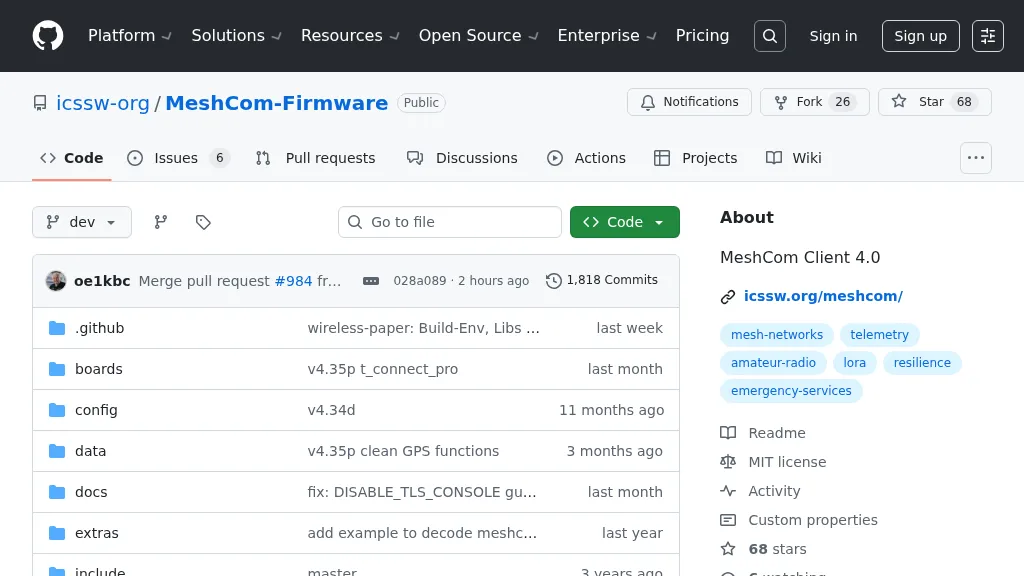 For amateur radio operators seeking resilient, off-grid communication, the _MeshCom_ firmware provides a robust solution for text-based messaging over a mesh network. Utilizing LoRa modulation and the APRS protocol, this firmware is designed for low-energy consumption and cost-effective hardware, primarily operating in the 70cm band. Nodes, identified by amateur radio callsigns, can send short text messages to all participants or directly to specific callsigns, functioning as repeaters to extend network reach. The system supports automatic status and position messages, with optional sensor data for WX-Data and Telemetry. MeshCom nodes can be configured as gateways to HAMNET or the internet, enhancing connectivity options. The project emphasizes a self-building and self-healing mesh network architecture, crucial for emergency communication scenarios. Operating frequencies include **433.175 MHz** (EU, USA, Africa), 439.9125 MHz (UK), and 433.925 MHz (Norway). The firmware is compatible with hardware platforms such as ESP32/LoRa modules, RAK-WISBLOCK, and ESP32-DEV4/E22-LoRa, offering a flexible deployment for various amateur radio applications.
-
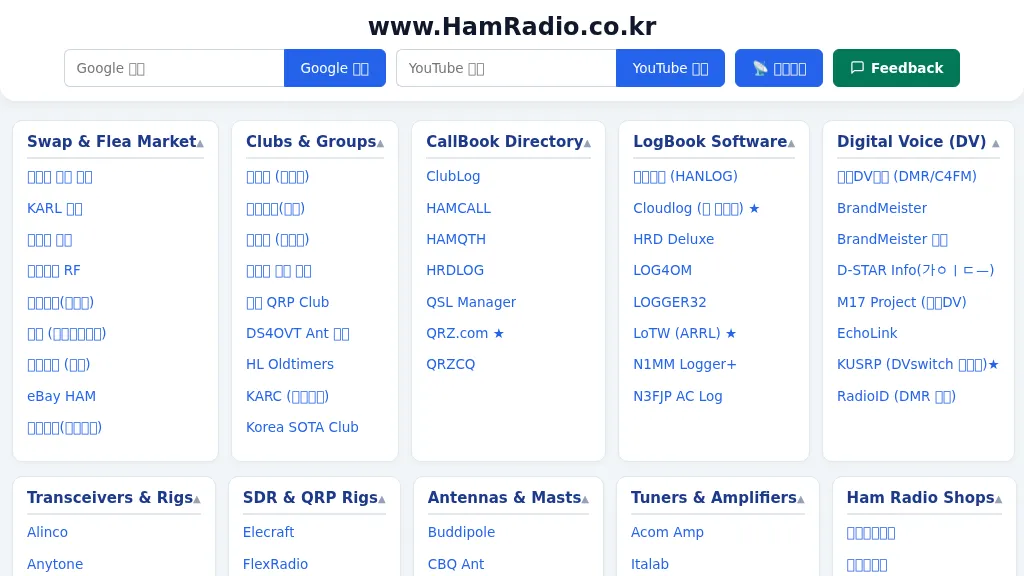 The HamRadio.co.kr portal, maintained by HL3LFB, serves as a comprehensive link directory for amateur radio operators, primarily in South Korea. It categorizes external resources covering a wide array of technical subjects, including SDR and QRP rigs like uBITX and Hermes-Lite 2+, antenna designs from CBQ Ant and JK Antennas, and tuner/amplifier manufacturers such as Acom and LDG. The site also provides links to digital mode software like WSJT-X for FT8/FT4, MMSSTV, and MMTTY, alongside resources for CW operation, electronic components from Digi-Key, and various homebrew project sites like AA5TB Projects and Hans Summers Lab. Practical applications are supported through links to antenna and RF calculation tools, including SimSmith for Smith charts, Coil64 for coil calculations, and calculators for HB9CV, J-Pole, and Magnetic Loop antennas. The portal facilitates operating activities by linking to DX clusters (DX Heat, DX SUMMIT), propagation beacons (IARU HF Beacon, NCDXF Beacon), and award programs like POTA, SOTA, IOTA, and WCA/COTA. It also includes references to official organizations such as KARL and ARRL, QSL managers like LoTW and Cloudlog, and various online marketplaces for ham gear.