Extended Single Sideband (ESSB) for Ham Radio Operators
Find resources and guides for setting up and optimizing your ESSB audio for high-fidelity amateur radio transmissions.

Enhanced Single Sideband, or ESSB, focuses on transmitting high-fidelity audio on the amateur radio bands. Unlike standard SSB, which typically limits audio bandwidth to about 2.9 kHz for efficiency, ESSB aims for a wider, more natural sound. This often involves careful adjustment of audio processing equipment and transceiver settings to achieve a broader frequency response, making voice transmissions sound richer and clearer to the receiving station. Operators pursuing ESSB often experiment with various microphones, equalizers, and compressors to optimize their audio chain.
Hams interested in ESSB can find detailed guides on configuring their transceivers and external audio gear. Many resources provide specific setup recommendations for popular rigs like the Yaesu FT-Series or Kenwood TS-Series, detailing how to achieve a wider audio bandwidth without causing splatter or interference to adjacent frequencies. Operators can also learn about the technical aspects of transmitter bandwidth and intermodulation distortion, ensuring their ESSB signals remain clean. Some sites offer audio samples and interviews, allowing hams to hear the difference ESSB makes in on-air QSOs.
-
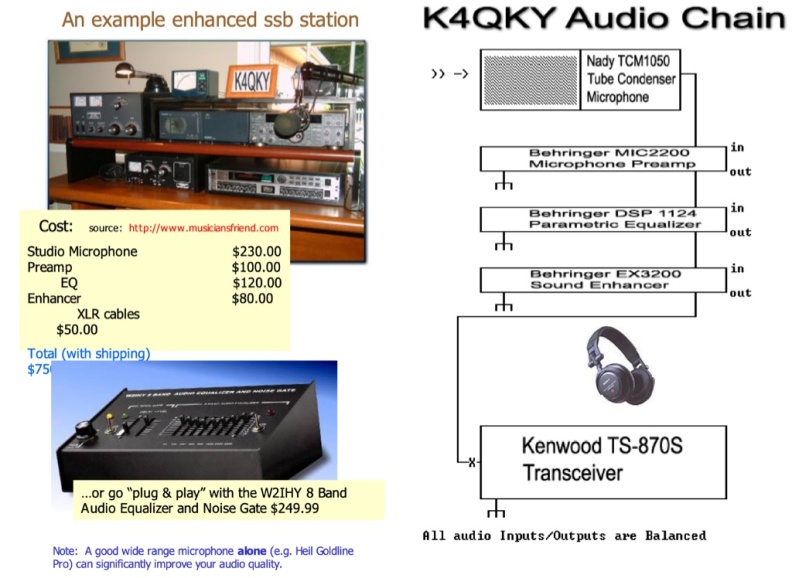 Explore the nuances of Enhanced SSB Audio in this informative presentation.
 -
 About SSB Audio by N4KC
 -
 How to produce great audio using your SSB rig and outboard equipment. Step by Step instructions.
 -
 NU9N recomendations for processed SSB, ESSB, AM Hi-Fi, Mid-Fi, Amateur Radio Audio Setup for transmiters, receivers and Amateur Radio Recording/Playback
 -
 Audio setting and improvements for Yaesu FT-2000 by k6jrf
 -
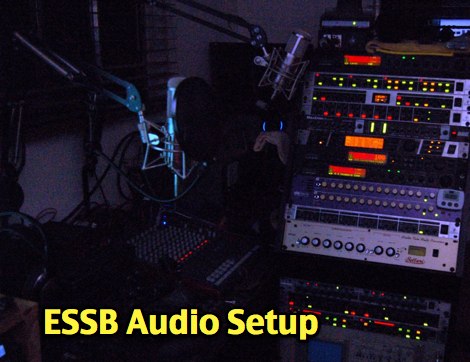 The eSSB Audio Page at K6HP web site
 -
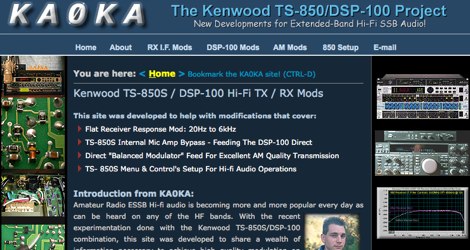 KA0KA ESSB with the Kenwood TS-850/DSP-100 project
 -
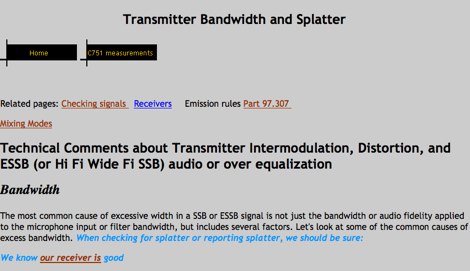 Technical Comments about Transmitter Intermodulation, Distortion, and ESSB (or Hi Fi Wide Fi SSB) audio or over equalization by W8JI
 -
 Extended Single SideBand is any SSB transmission that exceeds the audio bandwidth of common 2.9kHz SSB J3E modes by essb.us
 -
 A web site dedicated to the voodoo audio crew, a group of ESSB enthusiasts