Amateur Radio HF Operations and Band Guides
Find resources and guides for operating on High Frequency (HF) amateur radio bands, including propagation and band characteristics.

HF operations are central to amateur radio, allowing hams to make QSOs across continents and oceans using various bands. Unlike VHF/UHF, HF propagation is heavily influenced by solar conditions and the ionosphere, enabling long-distance DX contacts or local communication depending on frequency and time of day. Operators often spend time understanding these propagation characteristics to maximize their station's reach.
Newcomers to HF can find resources explaining the unique characteristics of each band, detailing which frequencies are best for daytime or nighttime use, and how to work split mode. There are also guides that compare HF operating in different geographic regions, like Hawaii versus the mainland, highlighting how local conditions affect signal paths. Hams can also find information on international spectrum requirements for key bands, such as the 7 MHz segment, which is vital for global amateur radio activity.
-
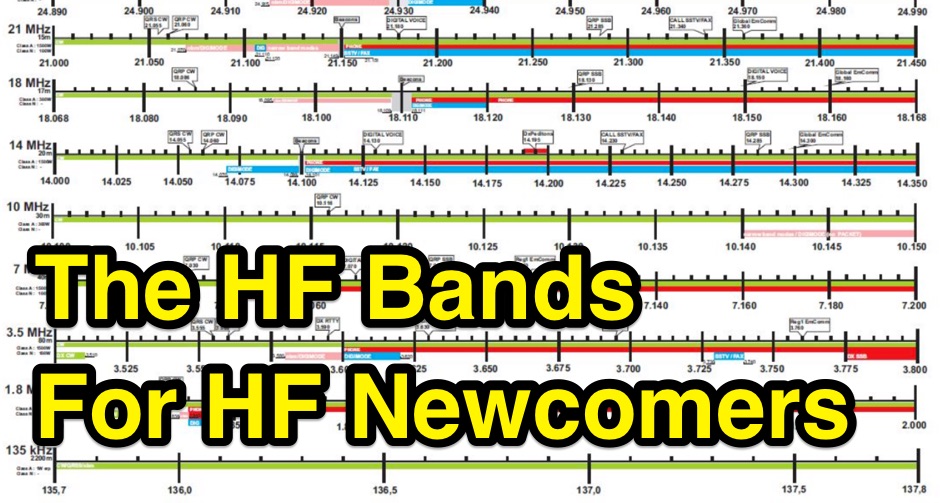 The HF ham bands can be mysterious. Some work at night, some during the day. Some seem to be good for long distance contacts while some are better for nearby contacts. Even worse, they change tremendously from hour to hour and day to day. An overview on operating on HF amateur radio bands
 -
 An information paper by the International Amateur Radio Union. The amateur service seeks the return to an exclusive, worldwide allocation of no less than 300 kHz in the vicinity of 7 MHz.
 -
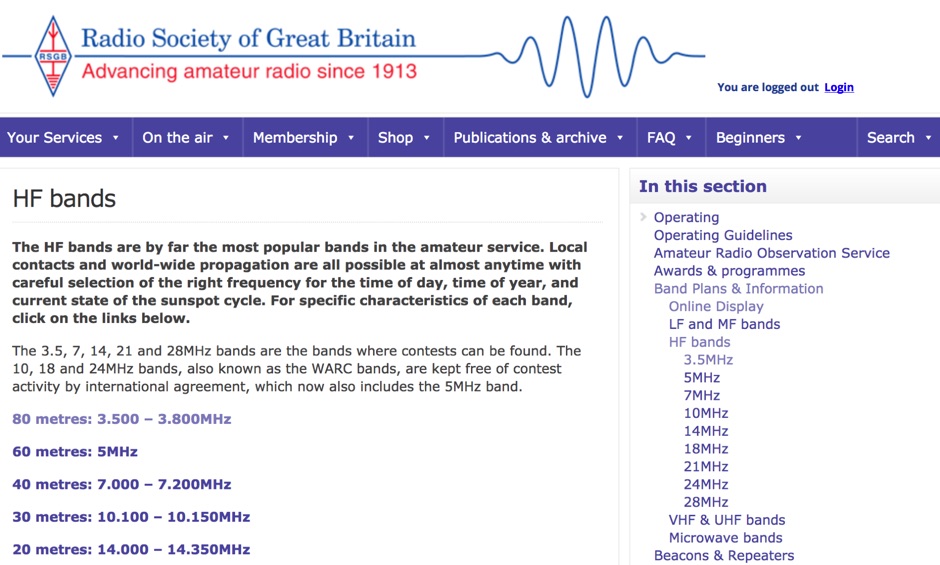 A review of the HF ham radio bands, considere by far the most popular bands in the amateur service. HF bands offer local QSOs and world-wide propagation are all possible at almost anytime with careful selection of the right frequency for the time of day, time of year, and current state of the sunspot cycle.
 -
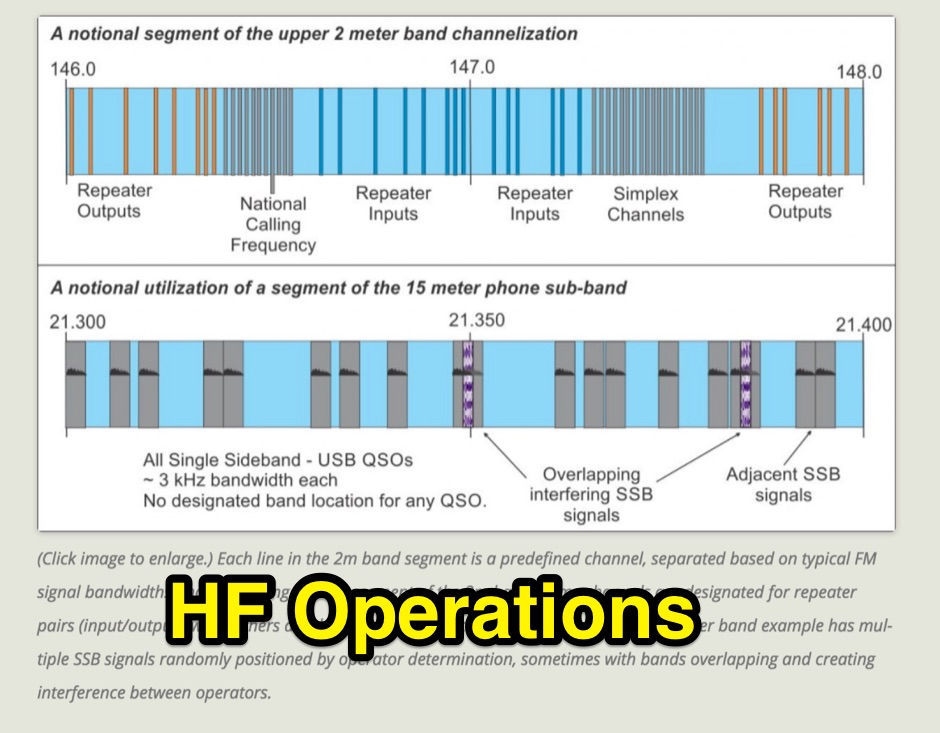 A complete guide on using the HF amateur radio bands, and the differences with VHF, using filters, influence of solar weather, the split mode and phonetic alphabets.