Search results
Query: new
Links: 798 | Categories: 30
Categories
- Ham Radio > Ham Radio News
- Ham Radio > Clubs > North America > Canada > New Brunswick
- Ham Radio > Clubs > North America > USA > New Hampshire
- Ham Radio > Clubs > North America > USA > New Jersey
- Ham Radio > Clubs > North America > USA > New York
- Shopping and Services > Regional > New Zealand
- Ham Radio > Clubs > New Zealand
- Ham Radio > Clubs > North America > Canada > Newfoundland & Labrador
- Ham Radio > News Casts
- DX Resources > Newsletters
- Operating Modes > NPR New Packet Radio
- Shortwave Radio > SWL DX Newsletters
- Internet and Radio > News Groups
- DX Resources > DX Peditions > Announcements
- Ham Radio > Clubs > ARRL
- Operating Aids > Beginner's Guides
- Shortwave Radio > Beginner's guides
- Internet and Radio > Classifieds
- Internet and Radio > Humor
- Ham Radio > Licensing
- Ham Radio > Clubs > North America > USA > Louisiana
- Ham Radio > Blogs > Oceania
- Shopping and Services > Test equipment > Oscilloscope
- Shopping and Services > Parts & Surplus
- Internet and Radio > Podcast
- Shortwave Radio > Press Services
- Technical Reference > Radio Mods
- Ham Radio > Clubs > North America > USA > Rhode Island
- Shortwave Radio > SWL Resources
- Shopping and Services > Test equipment
-
 HamRadioSchool.com combines traditional textbook learning with modern online tools. Their approach focuses on building conceptual understanding rather than just memorizing answers. The site offers structured courses with clear learning paths, video tutorials, and interactive quizzes. Their materials are particularly strong on electronics theory fundamentals. The site also maintains an active blog with tips for new operators and explanations of confusing exam topics.
 -
 Morse News reads RSS/Atom messages and translates them into Morse code, playable as CW radio tones, spark-gap sounds, telegraph clicks, or via a physical telegraph sounder. It supports Farnsworth effects, natural American Morse timing, and realistic audio enhancements. Twitter integration allows user-generated Morse messages.
 -
 The NRC Archives feature past DX News and DX Audio Service publications, offering a glimpse into the "Heyday" of BCB DX. Subscribe to DX News for essential information, 20 bulletins annually, and membership privileges with discounted NRC products. New visitors can download a free sample copy of DX News
 -
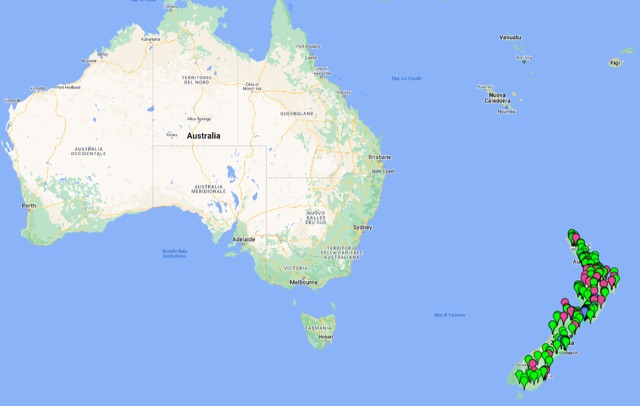 A list of HF VHF UHF Beacon list from New Zealand. All beacons from 20m to 3cm
 -
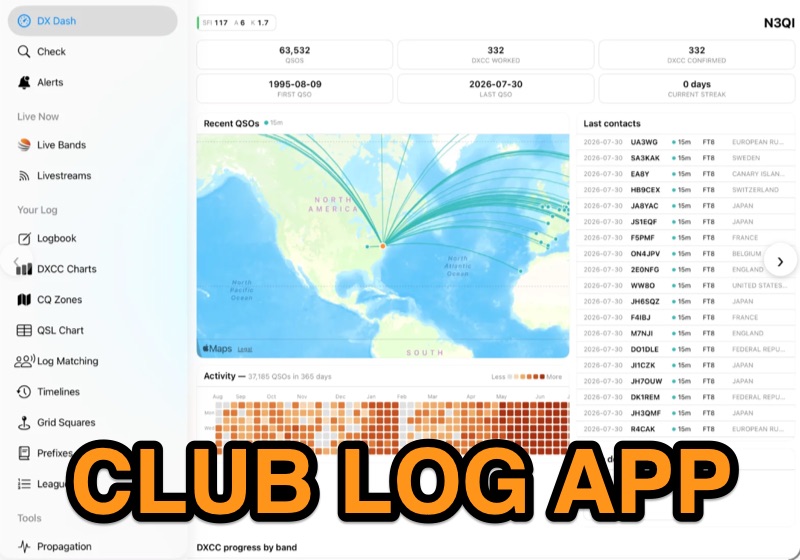 Examines the Club Log mobile application, detailing its functionality for **DXCC** and **DXCC Challenge** enthusiasts on HF and 6 meters, across SSB, CW, and data modes. The application provides real-time push notifications by monitoring live QSO activity across the entire Club Log database, cross-referencing it with the user's specific needs for new entities or band-mode slots. Users can also pin specific callsigns to receive immediate alerts when those stations become active on the air. The resource highlights the app's ability to replicate most clublog.org website features natively on mobile devices, including international translations for 22 languages. It also integrates an offline logbook that synchronizes with the online platform when connectivity is available. The app requires a Club Log account and supports real-time logging from external software or offers an integrated logbook tool for direct QSO submission. Further, the page explains the subscription model necessary to sustain the app's development and operational costs, particularly for the innovative real-time alerting system. It clarifies how subscriptions are managed through App Store or Google Play, with pricing varying by region.
 -
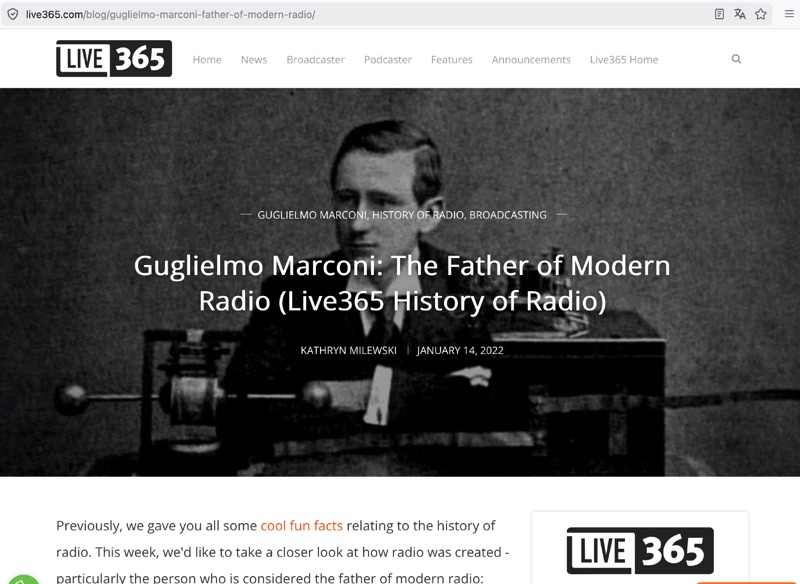 Tracing the foundational work of Guglielmo Marconi, this article details his early laboratory experiments in 1895, where he successfully transmitted wireless signals over 1.5 miles. It highlights his 1896 patent for a wireless telegraphy system in England and subsequent demonstrations, including signal transmissions up to 6.4 km (4 miles) on Salisbury Plain and nearly 14.5 km (9 miles) across the Bristol Channel. Marconi's work built upon the mathematical theories of _James Clerk Maxwell_ and the experimental results of _Heinrich Hertz_, proving the practical feasibility of radio communication. The resource further chronicles the formation of The Wireless Telegraph & Signal Company Limited in 1897 and Marconi's relentless efforts to popularize radiotelegraphy. A significant milestone was the 1901 transatlantic reception of the Morse code letter "S" from Poldhu, Cornwall, at St. John's, Newfoundland, using a kite-supported wire antenna, defying contemporary mathematical predictions about Earth's curvature limiting range. This achievement underscored the global potential of radio. The article also touches upon Marconi's later discoveries, such as the "daytime effect" concerning atmospheric reflection of radio waves, and his 1902 patent for a magnetic detector, which became a standard wireless receiver. His contributions earned him a Nobel Prize in 1909.
 -
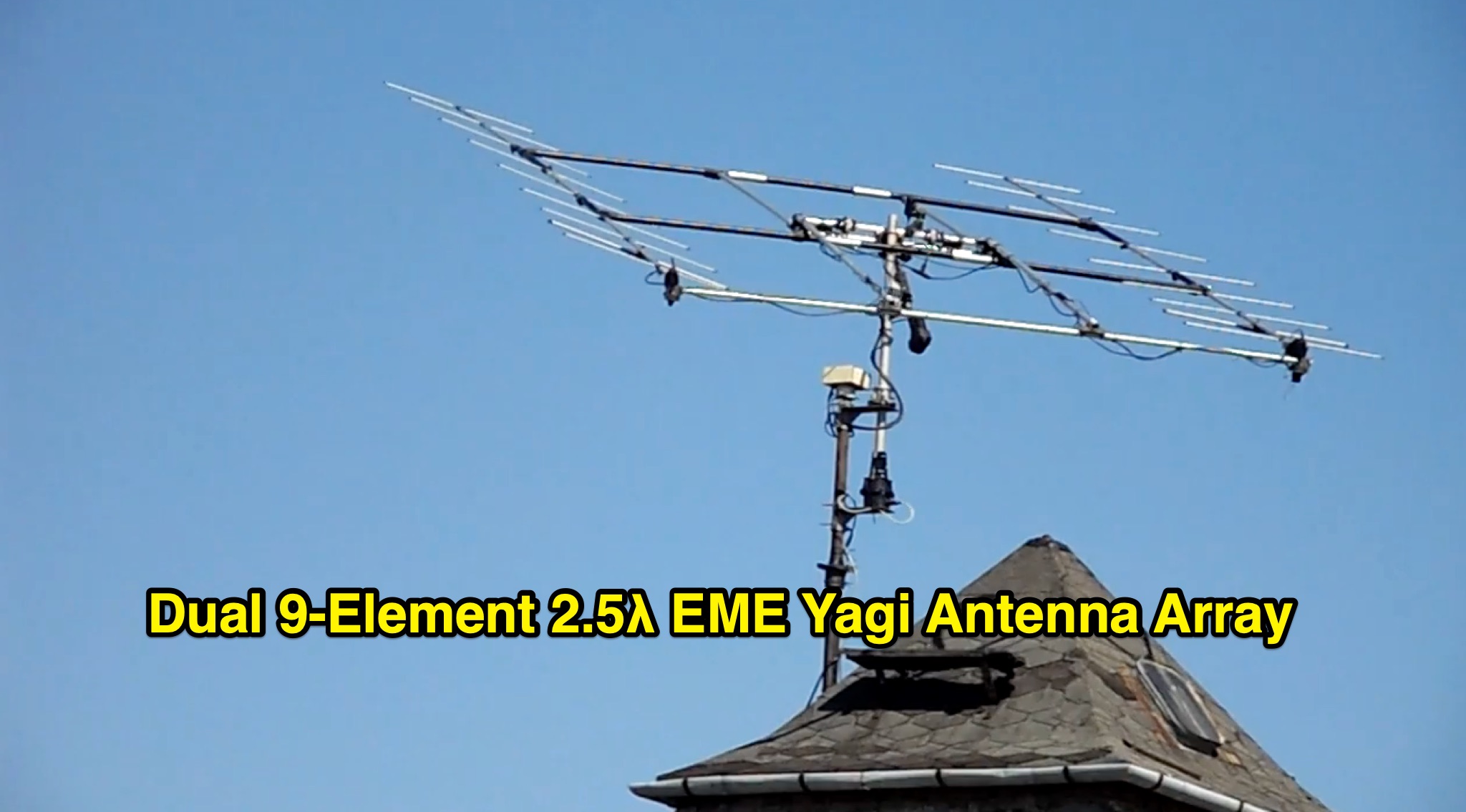 This project describes a high-performance EME antenna array consisting of two home-designed 9-element Yagis, each about 2.5 wavelengths long, combined into a 25-ohm system and matched to 100 ohms using 9/4λ sections of 50-ohm coax. The array supports rotatable polarity from 0° to 180°, allowing both horizontal and vertical polarization to optimize moonbounce performance under varying conditions. Despite operating for years without a balun—something another designer called “disastrousâ€â€”the system has delivered strong results, including copying very weak DX such as VK3KH at about -25 dB with only 120 W (around 2 kW ERP). The builder continues to refine the mechanics, having installed new gear motors and an upgraded follow-up control system in 2011.
 -
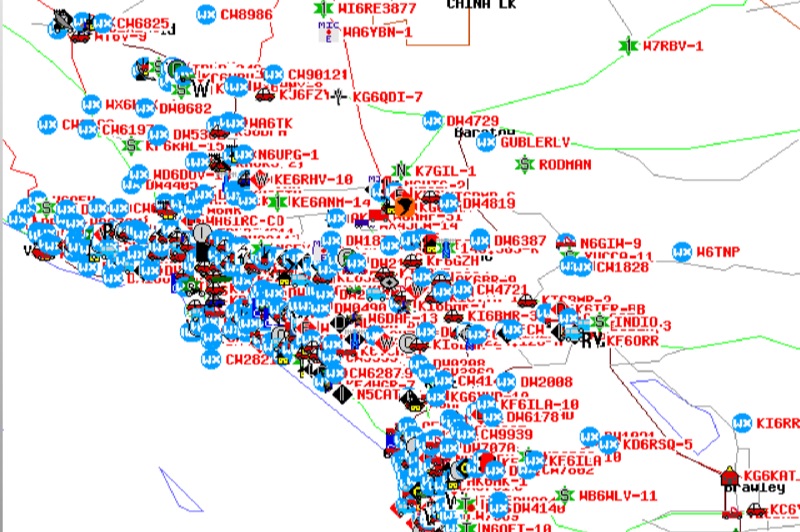 Demonstrates the Automatic Packet Reporting System (APRS) as a radio-based system for real-time tactical data exchange, leveraging the internet for messages, alerts, and bulletins to enhance situational awareness. It explains how APRS displays data on a map, integrating objects with GPS coordinates, weather stations, and alerts, clarifying its primary function as vehicle tracking despite broader capabilities. The document traces APRS development from the late 1980s by Bob Bruninga, WB6APR, through its evolution from Connectionless Emergency Traffic System (CETS) to Automatic Position Reporting System, and finally to Automatic Packet Reporting System with widespread GPS availability. Specific functionalities covered include real-time position and status reporting, message and bulletin exchange, weather data, DF bearings, RF connectivity plots, and local object display. Newer features like Global Email, CQSRVR, APRStt (APRS touchtone) for DTMF-based position reporting on frequencies like 146.58 MHz, and AVRS (Automatic Voice Relay System) for callsign-to-callsign linking via Echolink or IRLP, particularly with transceivers like the D710, are detailed. The resource also mentions AI-FI (APRS WIFI) for laptop integration and the use of the AX.25 protocol on 144.390 MHz in North America. It further describes the role of digipeaters and Internet Gateway stations (IGates) in transporting packets and connecting the on-air APRS network to the APRS Internet System (APRS-IS). The document explains APRS as a random ALOHA network, emphasizing channel loading considerations.
 -
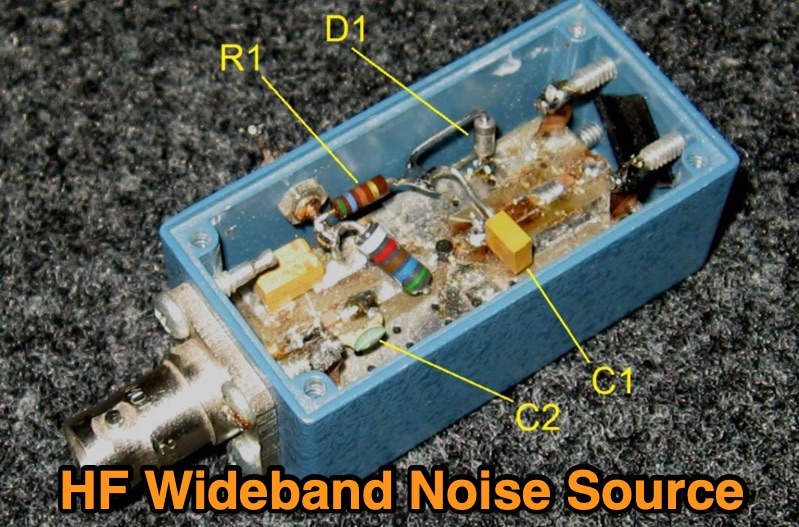 Details the construction of a **wideband noise source** for HF filter alignment, specifically targeting transceivers such as the Elecraft K2. The design modifies a Down East Microwave (DEMI) MMIC amplifier board, part number MMICPCB, by integrating a 1N4735A zener diode, 560-ohm resistors, and 4.7 nF, 10 nF, and 22 µF capacitors. This modification enables the board, originally configured for a MAR-6 MMIC (with MAR-1 as an alternative), to generate noise suitable for procedures like the K2's "CAL FIL" function. The resource provides a **schematic** and a comprehensive bill of materials, including specific component values for replication. It outlines the practical steps involved, such as removing the input connector and integrating the new components into the existing MMIC amplifier board layout. The output is optimized for wideband HF applications, ensuring compatibility with various filter alignment tasks. This project focuses on practical implementation, demonstrating how to repurpose readily available components for a critical test instrument. It offers a cost-effective alternative to commercial noise sources, leveraging existing amateur radio hardware for enhanced station maintenance and performance.
 -
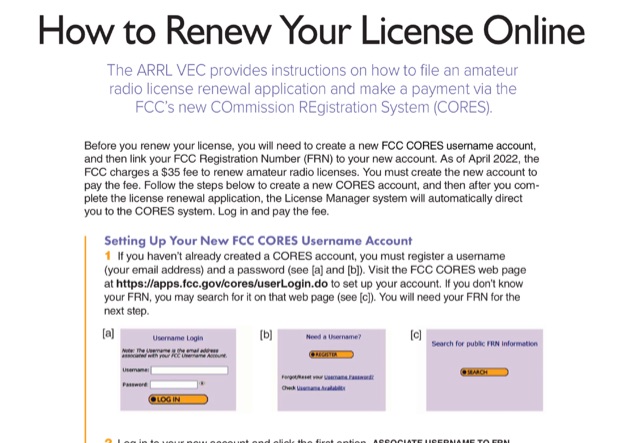 This document provides a comprehensive guide on renewing an US amateur radio license through the Federal Communications Commission (FCC) using the new COmmission REgistration System (CORES). Published on QST October 23, it outlines the necessary steps for creating a CORES account, associating it with a Federal Registration Number (FRN), and completing the renewal application. Key points include the requirement of a $35 fee for the renewal process, which must be paid online after the application is submitted. The guide emphasizes the importance of logging into the FCC License Manager system during the renewal window and provides instructions on how to navigate the renewal process, including obtaining confirmation and access to the renewed license. Additionally, it offers contact information for FCC support and links to further resources for assistance.
 -
 The article describes ongoing issues with a new TS590s transceiver, including intermittent reception and transmission failures. After a repair diagnosed as a "Control Unit interruption," the problem persisted. The author discovered the cause was a poorly crimped CN601 connector on the Control Unit board, leading to signal loss when moved. Soldering the connector resolved the issue. Similar problems reported by other users suggest a potential defect in the cables, pointing to a possible manufacturing issue.
 -
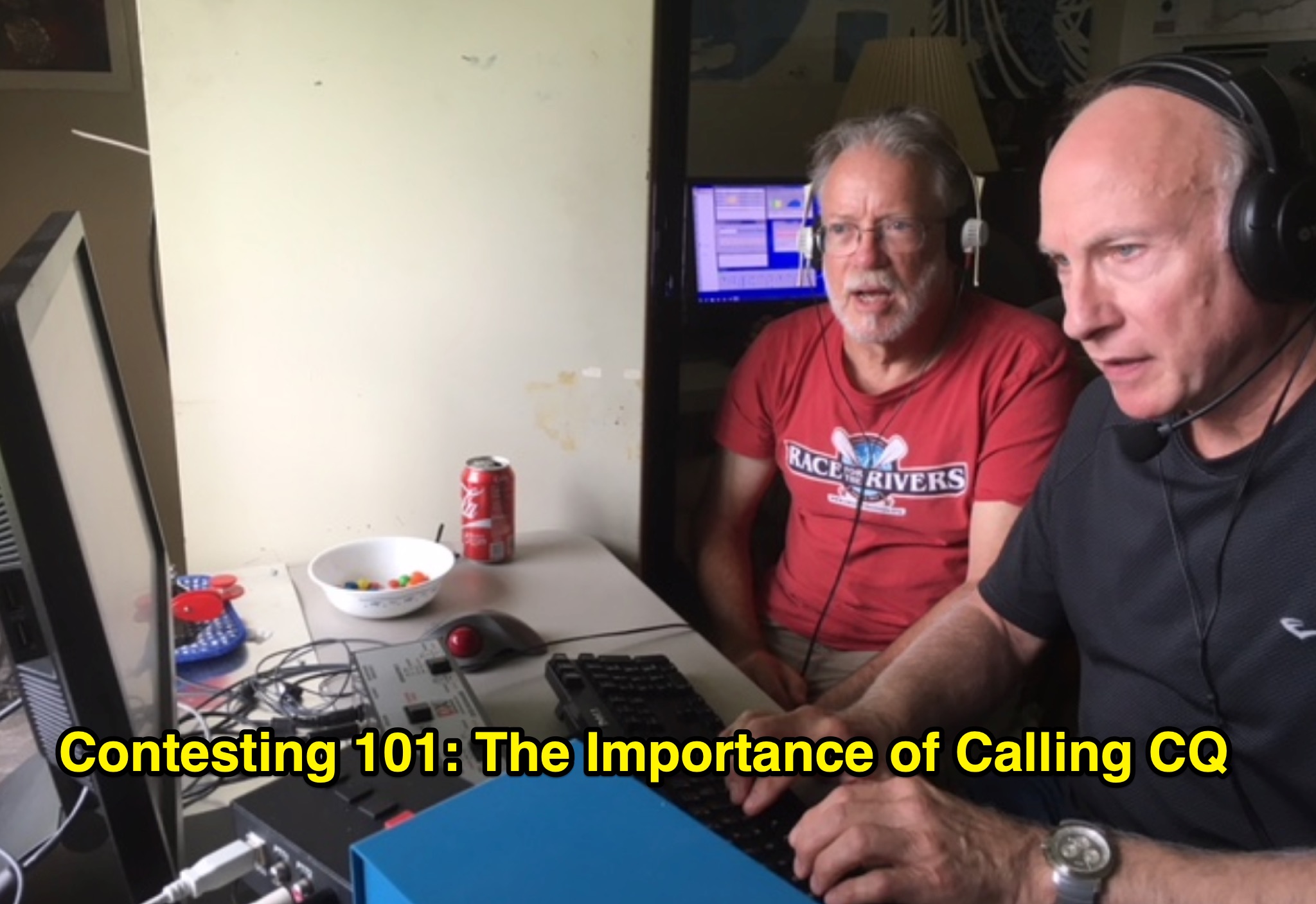 Join Kirk Pickering, K4RO, as he delves into the importance of calling CQ in amateur radio contesting. Learn about the debate over spotting assistance and why developing tuning and identifying skills is crucial for contest operators, especially newcomers. Discover valuable insights on how to enhance your contesting experience and maximize your success.
 -
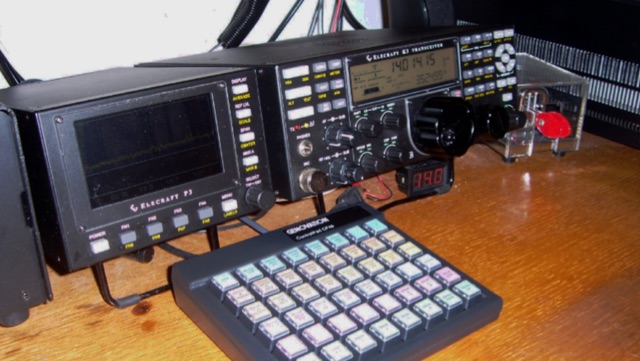 Integrating a Genovation keypad with the Elecraft K3 is for anyone looking to enhance their radio setup. Author shares his journey from initial confusion to successful implementation, detailing key insights, particularly about the importance of device identification. The update from Genovation simplifies the process significantly, allowing users to select USB mode without firmware changes. With practical tips and a clear template for programming, this resource is invaluable for both new and seasoned users aiming to optimize their K3 experience.
 -
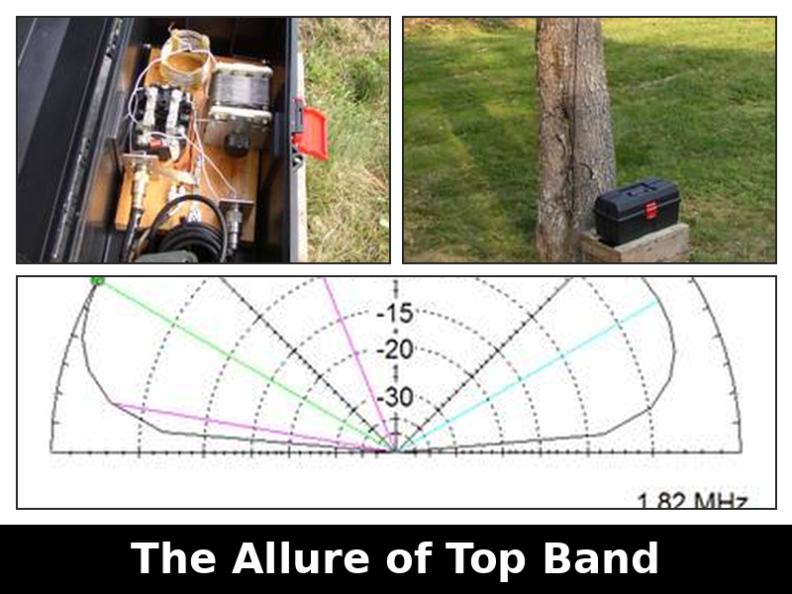 Demonstrates the design and modeling of a **160m** vertical antenna, dubbed the "WindoVert," specifically for urban amateur radio operators with limited space. The resource covers the theoretical underpinnings of antenna height and radiation patterns, using EZNEC software to analyze current distribution and 3D radiation patterns for various configurations, including a Marconi-style "T" antenna. It details the integration of existing antenna components, such as a Carolina Windom balun and line isolator, into the new vertical setup, and the practical measurement of feedpoint impedance using an antenna analyzer. The article further explores the challenges of achieving low-angle radiation on Top Band, emphasizing the critical role of radial systems and mitigating ground loss. Author VE1ZAC presents EZNEC models illustrating the impact of lumped components and discusses the practical considerations of resonant frequency adjustment and impedance matching for **QRP** operation. The text details the calculation of required loading coil inductance and capacitance, and shares field results, including successful DX contacts on 160m and unexpected excellent performance on 30m.
 -
 This page explores the World Wide Flora and Fauna (WWFF) and Parks on the Air (POTA) programs, highlighting their shared goals, distinctive features, and how they complement each other. It is designed for park enthusiasts who enjoy participating in both programs, offering insights, tips, and resources to maximize enjoyment and success in portable operations from natural areas. Whether you're new to park activations or a seasoned operator, this guide celebrates the opportunities offered by both WWFF and POTA, fostering appreciation for all aspects of amateur radio in nature.
 -
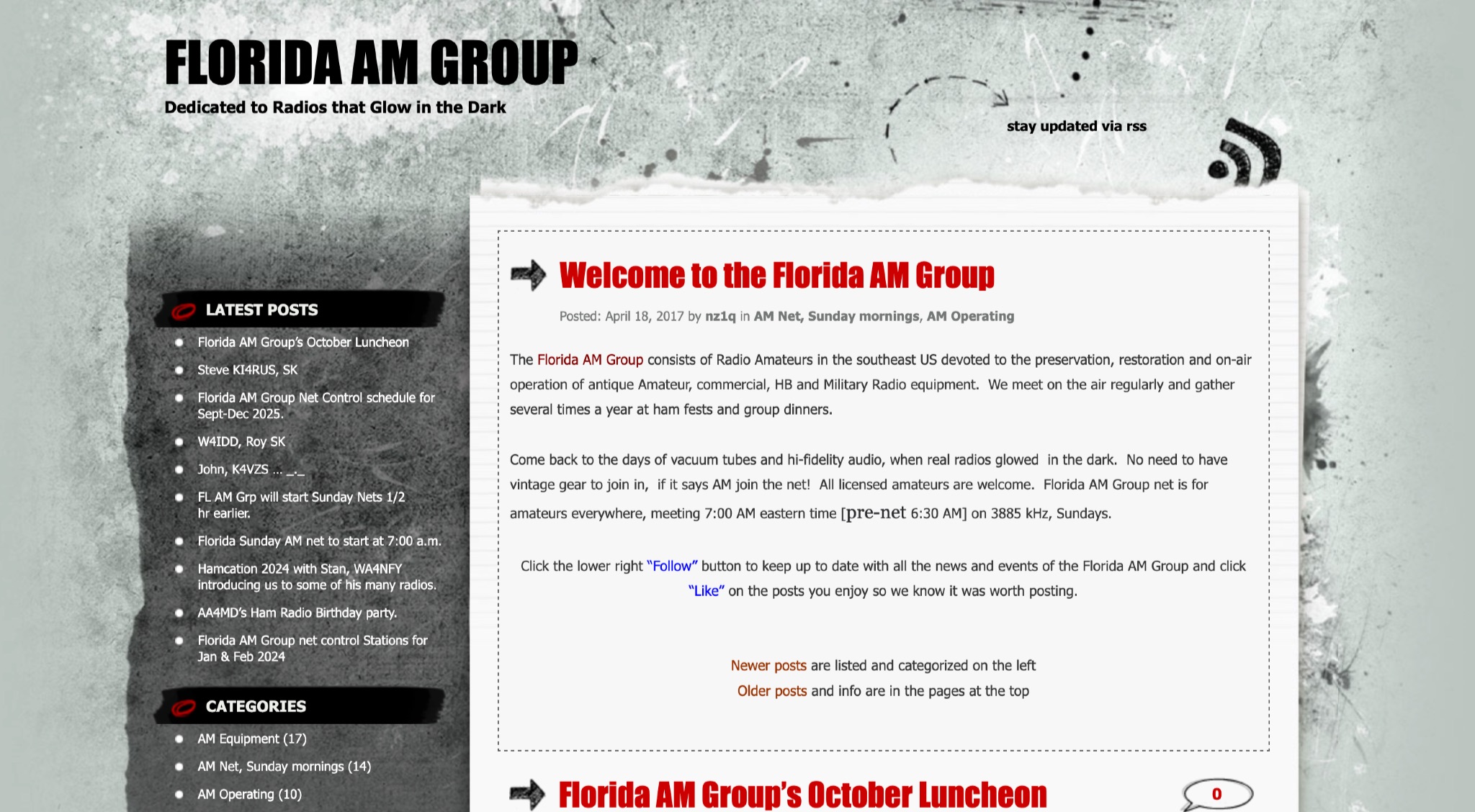 The Florida AM Group operates a weekly Amplitude Modulation (AM) net on 3885 kHz every Sunday morning, with a pre-net starting at 6:30 AM Eastern Time and the formal net at 7:00 AM. This group focuses on the preservation, restoration, and on-air operation of antique Amateur, commercial, homebrew (HB), and Military Radio equipment, emphasizing **Amplitude Modulation** (AM) mode. Participants are encouraged to use AM mode, regardless of whether they possess vintage gear, fostering a community around classic radio operation and the distinctive high-fidelity audio associated with **vacuum tube** equipment. The net utilizes NetLogger software for check-ins and round table management, providing a structured environment for participants. The group regularly publishes net control schedules, listing operators like NZ1Q, K1HH, and W3XM, and organizes various in-person events such as Hamcation gatherings, luncheons, and boat anchor swap meets. These activities facilitate eyeball QSOs and equipment exchanges, reinforcing the community aspect beyond on-air operations. The Florida AM Group also provides contact information for net control volunteers and shares news, including SK (Silent Key) announcements for members like Steve KI4RUS and Roy W4IDD, highlighting the group's long-standing camaraderie and shared passion for AM radio.
 -
 Presents detailed expedition charts and statistics for the **XX9W** DXpedition, covering operating time, total QSOs, unique calls, and duplicate QSOs. The resource provides comprehensive band and mode breakdowns, including FT8, SSB, CW, and FM, across 80m, 40m, 30m, 20m, 17m, 15m, 12m, 10m, 6m, 2m, and 70cm. Users can access DXCC statistics by band and mode, daily QSO totals, and multiband QSO statistics. Continent-by-mode and continent-by-band breakdowns are also available, detailing activity from Africa, Asia, Europe, North America, Oceania, and South America. The platform also tracks the expedition's impact on user totals, showing new band, new mode, new band + new mode, new slot, and new DXCC contacts.
 -
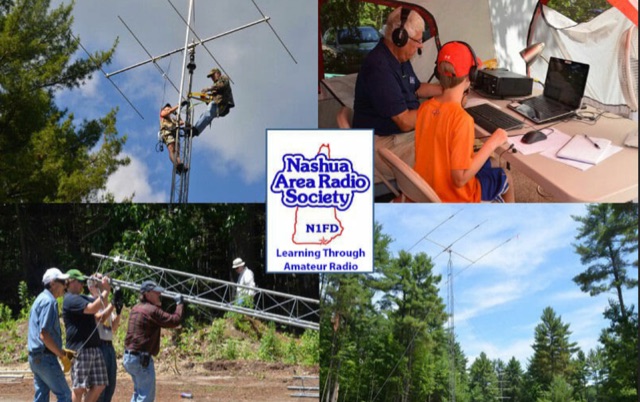 The Nashua Area Radio Society is a group of New England Ham Radio enthusiasts with a wide range of interests. Amherst, NH.
 -
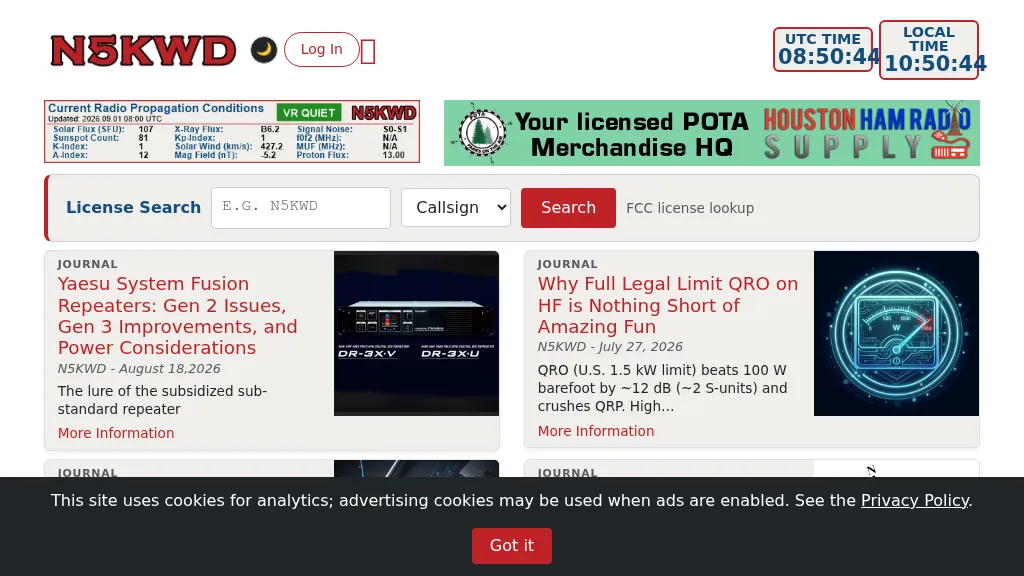 The N5KWD website, maintained by David C. Taylor, presents a personal station page for an Extra Class amateur radio operator. It serves as a digital logbook and resource hub, offering insights into his on-air activities and technical pursuits. Visitors can find a **ham radio journal** detailing operating experiences, along with current news relevant to the amateur community. Beyond personal updates, the site incorporates practical tools such as online calculators for various radio applications and calendars for upcoming events like contests or hamfests. This blend of personal narrative and utility reflects a common approach among hams sharing their passion and knowledge. Furthermore, the platform showcases several **amateur radio projects**, providing details on construction, modifications, or experiments undertaken by N5KWD. This content appeals to those interested in homebrewing and technical aspects of the hobby, offering inspiration and practical examples.
 -
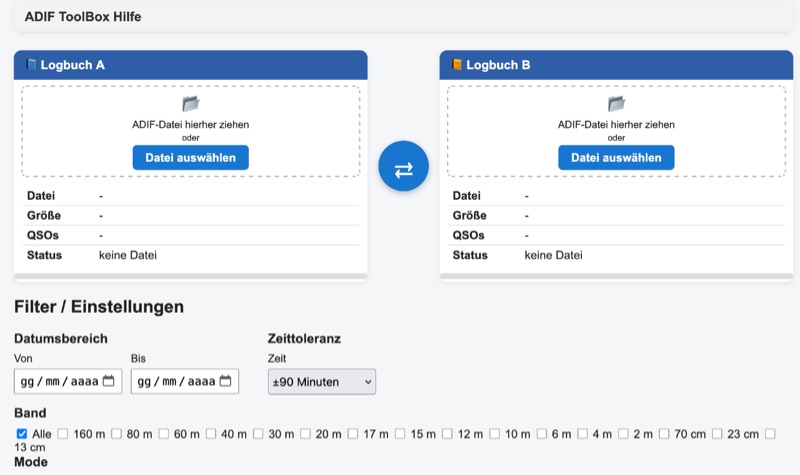 The DH1DA ADIF-ToolBox, version 1.0.0.0, released on August 29, 2026, provides a utility for managing amateur radio logs. It enables users to compare two **ADIF** files, identify differences, and filter QSOs based on criteria such as date, band, and mode. The software also supports merging ADIF files and exporting the filtered or merged results into a new ADIF file, streamlining logbook management for contesters and DXers. This web application features a graphical user interface (GUI) that simplifies logbook analysis. It is designed to handle standard ADIF data, allowing for efficient manipulation of QSO records. The tool's primary functions include a detailed comparison view, flexible filtering options, and robust export capabilities. Contact information for the developer, DH1DA, is provided, indicating direct support for the application. The tool is categorized under Software/Log Converters, emphasizing its role in ADIF data manipulation.
 -
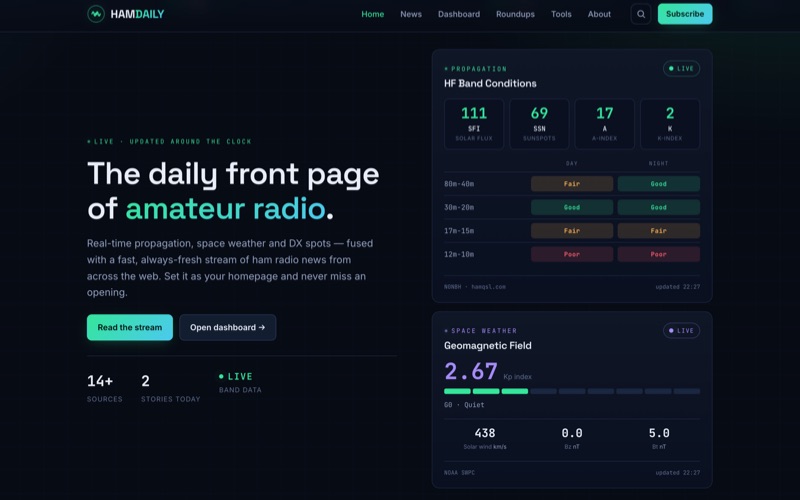 HamDaily presents a **real-time dashboard** for amateur radio operators, integrating live propagation data, current space weather conditions, and a continuously updated stream of DX, POTA, and SOTA spots. The platform also curates news headlines and articles from more than 16 distinct amateur radio sources, offering a centralized hub for daily information. Beyond its real-time data feeds, HamDaily includes practical tools such as practice exams for licensing, a Morse code trainer, a repeater finder, and satellite pass predictions, catering to both active operators and those preparing for their licenses. The resource distinguishes itself by fusing diverse data streams into a single, cohesive interface, allowing operators to quickly assess band openings and relevant activity. The "Today's Roundup" section provides a daily digest of featured articles, ranging from technical insights like "My one-day Tech class 'bag of tricks'" by KB6NU to operational accounts such as QRPer's "Eight Parks, One Missing Mast, and the Midnight Sun: A CW-Only POTA Trek." This aggregation of content, combined with **live band data** and Kp index readings, offers a comprehensive operational awareness tool for the ham radio community.
 -
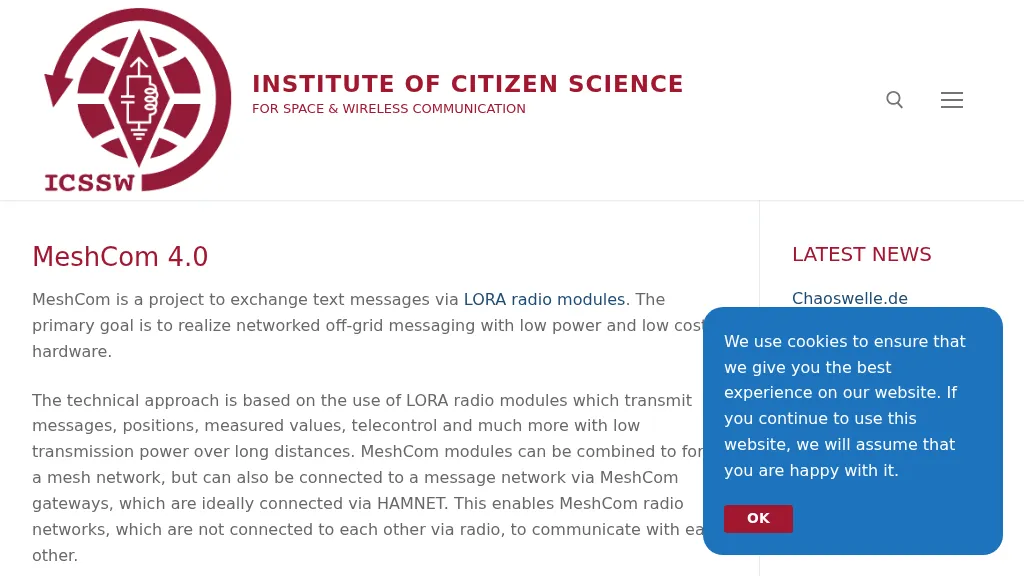 MeshCom 4.0 facilitates off-grid text messaging and data exchange via _LoRa_ radio modules, operating on low-power, low-cost hardware to establish networked communication capabilities. The system transmits messages, GPS positions, sensor values, and telecontrol data over significant distances with minimal power consumption. MeshCom modules can autonomously form a mesh network or integrate into a broader message network through MeshCom gateways, which ideally connect via _HAMNET_ to link disparate radio networks. Recent updates include MCMAP features, support for Lilygo T-Connect-Pro, and new firmware for T-ECHO, enhancing the system's versatility. The project provides basic specifications, detailed protocol information, and installation instructions for MeshCom 4.0, including guides for RAK WisBlock and HELTEC V3 hardware. Firmware and companion Android/iPhone applications are available for download, supporting a range of **10-20 km** line-of-sight communication.
 -
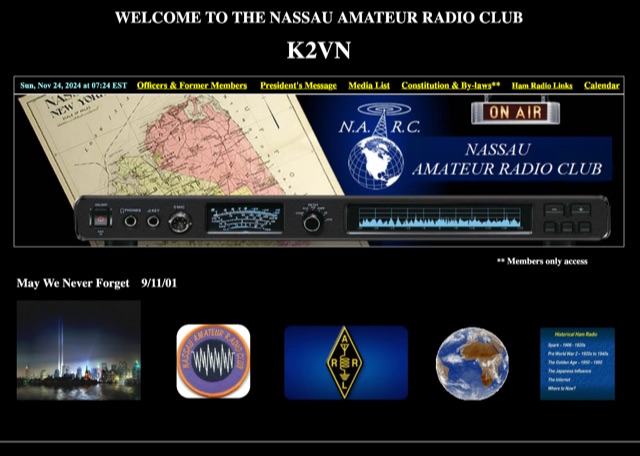 The Nassau Amateur Radio Club (NARC), a Special Service Club of the ARRL, focuses on Ham Radio education to train skilled radio operators for emergency communications, foster international goodwill, and advance the radio art. Based in Nassau County on Long Island, the club is affiliated with the New York City-Long Island Section of the ARRL Hudson Division.
 -
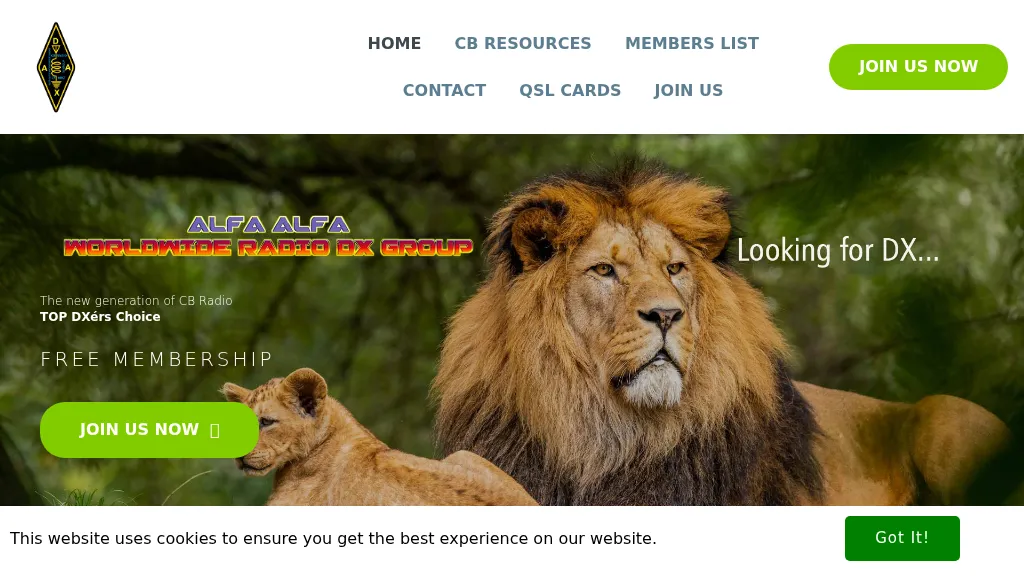 The Alfa Alfa (AA) DX Group, established on March 1, 1974, in the Netherlands, is presented as the pioneering Dutch 27mc DX group. It details the group's historical significance, particularly its revolutionary use of the '000' club callsign (19AA000) which influenced international 11-meter group callsign structures. The resource outlines the group's re-establishment in 2024, inviting new active CB operators and _Short Wave Listeners_ (SWL) to join its ranks, emphasizing a free worldwide membership model. Membership requirements are specified, focusing on active participation with an assigned AA callsign. The group provides QSL card management services, with options for direct QSL requests requiring **3 USD** and a Self-Addressed Envelope, or **4 USD** via PayPal for expenses. It also mentions upcoming initiatives like an _AA DX Contest_ and an award program, with sections for certificates and plaques currently under construction. The site also lists useful CB resources, including an 11M DX Cluster and an 11M Callsign Database, and provides contact information for the founder, 19AA001 Mr. Theo, and the Worldwide QSL Manager, 178AA001 Mr. Emil, based in Bulgaria.
 -
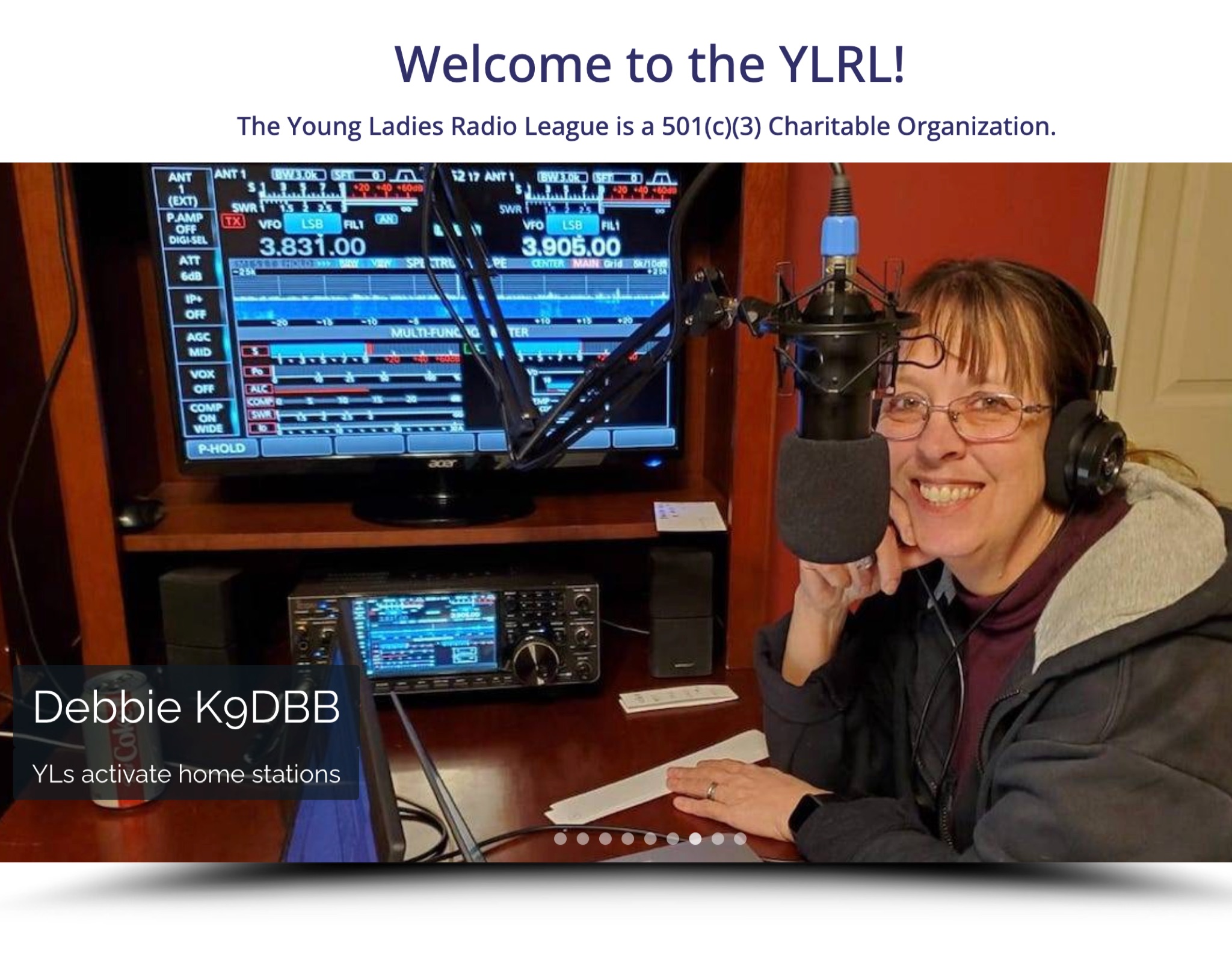 The Young Ladies' Radio League, also known as YLRL, is an organization founded by women in 1939 with the goal of connecting and supporting female ham radio operators worldwide. From beginner classes to scholarships, YLRL offers resources and a community for women of all ages and backgrounds interested in ham radio. The website provides information on membership, upcoming events, and helpful tips for renewing licenses and getting on the air. Whether you're a seasoned ham or just starting out, YLRL is dedicated to empowering and supporting women in the world of amateur radio.
 -
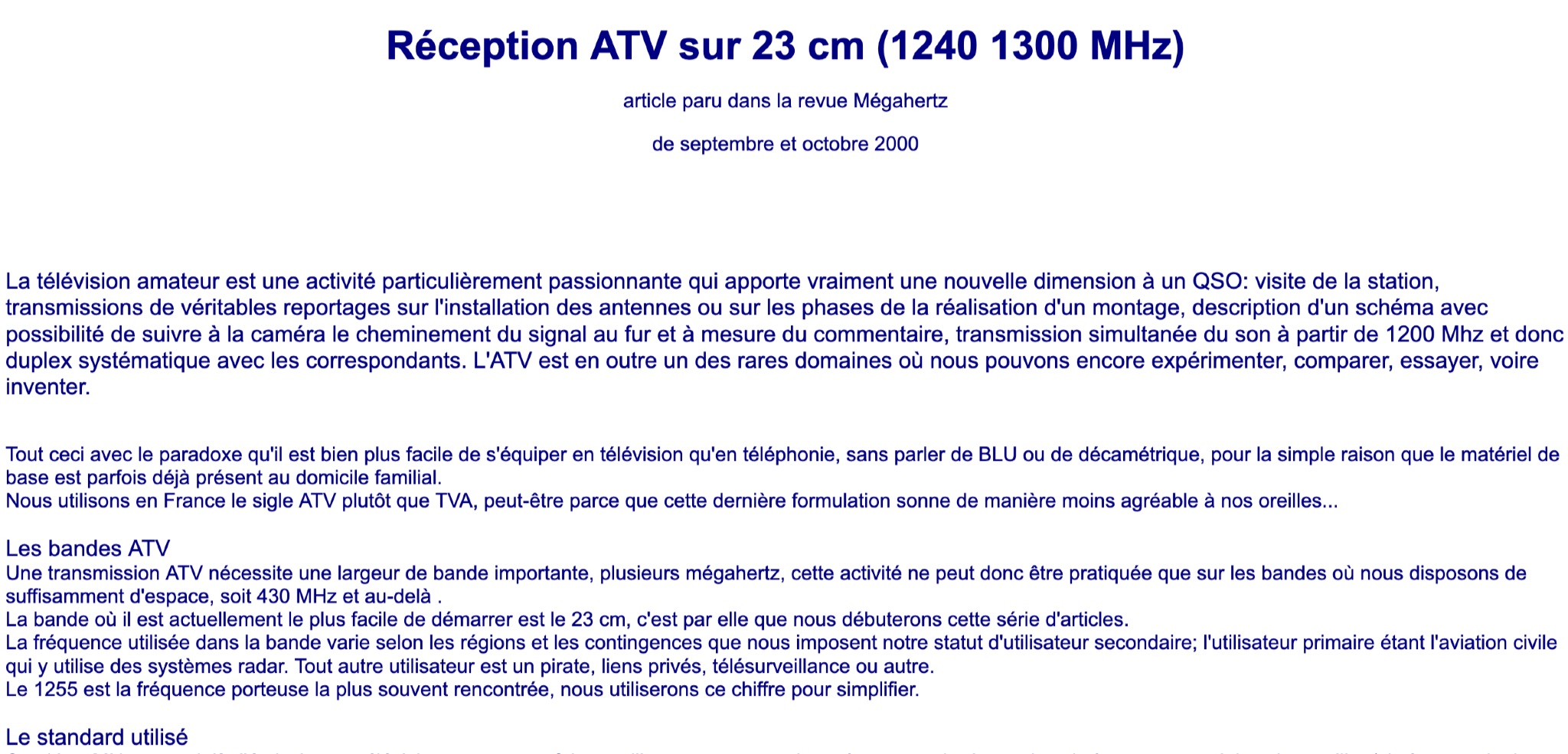 Learn about Amateur Television (ATV) on the 23 cm band (1240-1300 MHz) in this article from the September and October 2000 issue of Mégahertz magazine. Discover how ATV adds a new dimension to QSOs by allowing hams to visit stations, transmit real reports on antenna installations, follow signal paths on camera, and have simultaneous sound transmission. Explore the world of ATV experimentation, comparison, and innovation, made easier by existing equipment in many ham radio operators' homes. Find out about the ATV bands, bandwidth requirements, and the 23 cm band as a starting point for ATV activities.
 -
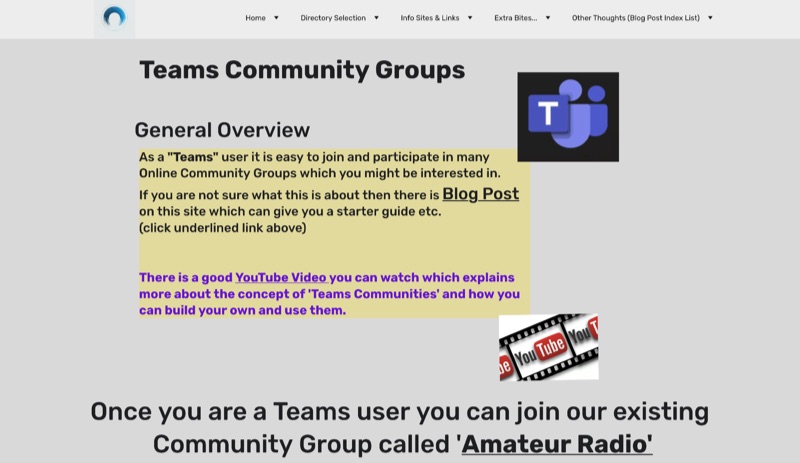 The **Amateur Radio** community on Microsoft Teams provides a platform for hams to connect through chat and video calls. It features five distinct channels, facilitating structured discussions on various topics, akin to a community forum without advertisements. Users can schedule events for group video chats or engage in one-on-one calls, with user status indicators showing availability. The platform supports sharing messages, files, and both video and audio communications within a defined group. An open video chat room is also available, accessible even to non-community members, allowing broader participation. The resource details how to join the existing 'Amateur Radio' community group and provides links to a blog post and a YouTube video for new users to understand Teams Communities.
 -
 The **CubeSat** standard, developed by California Polytechnic State University (Cal Poly) and Stanford University, facilitates frequent and affordable access to space for small satellites. This resource serves as a central hub for the CubeSat community, offering a comprehensive directory of active and past CubeSat projects, technical specifications, and educational materials. It details the standardized dimensions and mass constraints for these pico-satellites, which typically range from 1U (10x10x10 cm, 1.33 kg) to 12U configurations, enabling their deployment as secondary payloads on various launch vehicles. The site also provides insights into mission planning, component selection, and regulatory considerations for amateur radio satellite operations. Operators and developers can utilize the project directory to research existing CubeSat missions, understand their communication protocols, and identify potential collaboration opportunities. The platform's forum section allows for direct engagement with other enthusiasts and experts, fostering knowledge exchange on topics such as **AMSAT** frequency coordination, telemetry decoding, and ground station setup. This collaborative environment supports the development of new CubeSat projects, promoting innovation in amateur radio satellite communication and space exploration.
 -
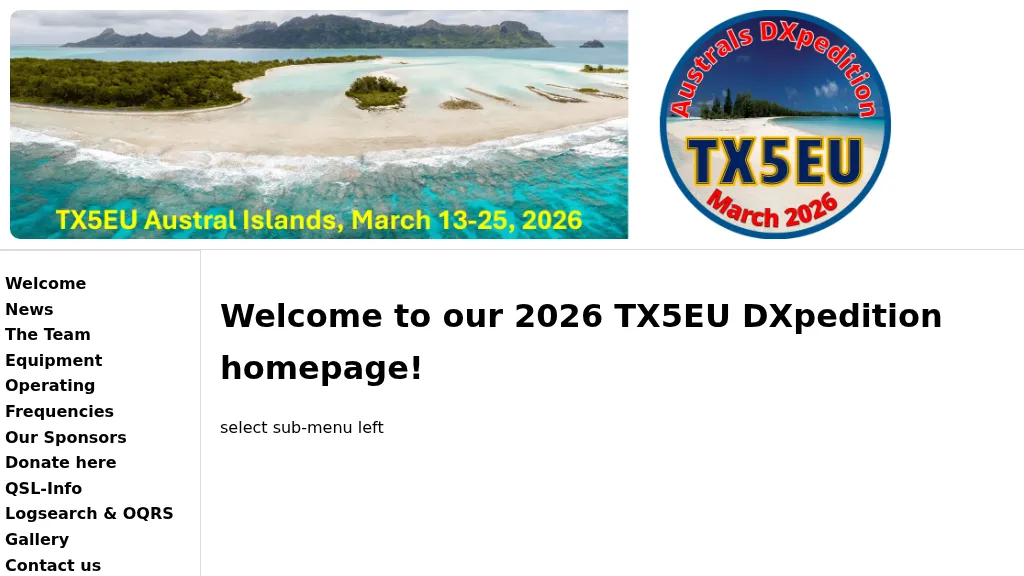 TX5EU 2026 DXpedition to Raivavae Island, **OC-114**, within the Austral Islands, providing a detailed account of the German/Dutch team's operations. The resource outlines the participation of operators such as DL2AWG Guenter, PA2KW Evert, and DK2AMM Ernoe, who engaged in CW, SSB, RTTY, and various digital modes. It documents the real-world challenges encountered, including significant equipment failures and antenna damage to 80/60m, 30m, and 10m verticals due to adverse storm conditions. The page offers timely news updates on the expedition's progress, noting repairs to a power amplifier's 10/12m bandpass filter, which enabled three stations to utilize amplification. Earlier reports highlighted power failures and the loss of multiple power amplifiers, necessitating one station to operate barefoot FT-8 with 100W. The team's persistent efforts to repair antennas as weather permits are also detailed, reflecting the dynamic nature of remote island operations.
 -
 A blog that provides news and updates about CubeSats, as well as information about CubeSat-related events and projects.
 -
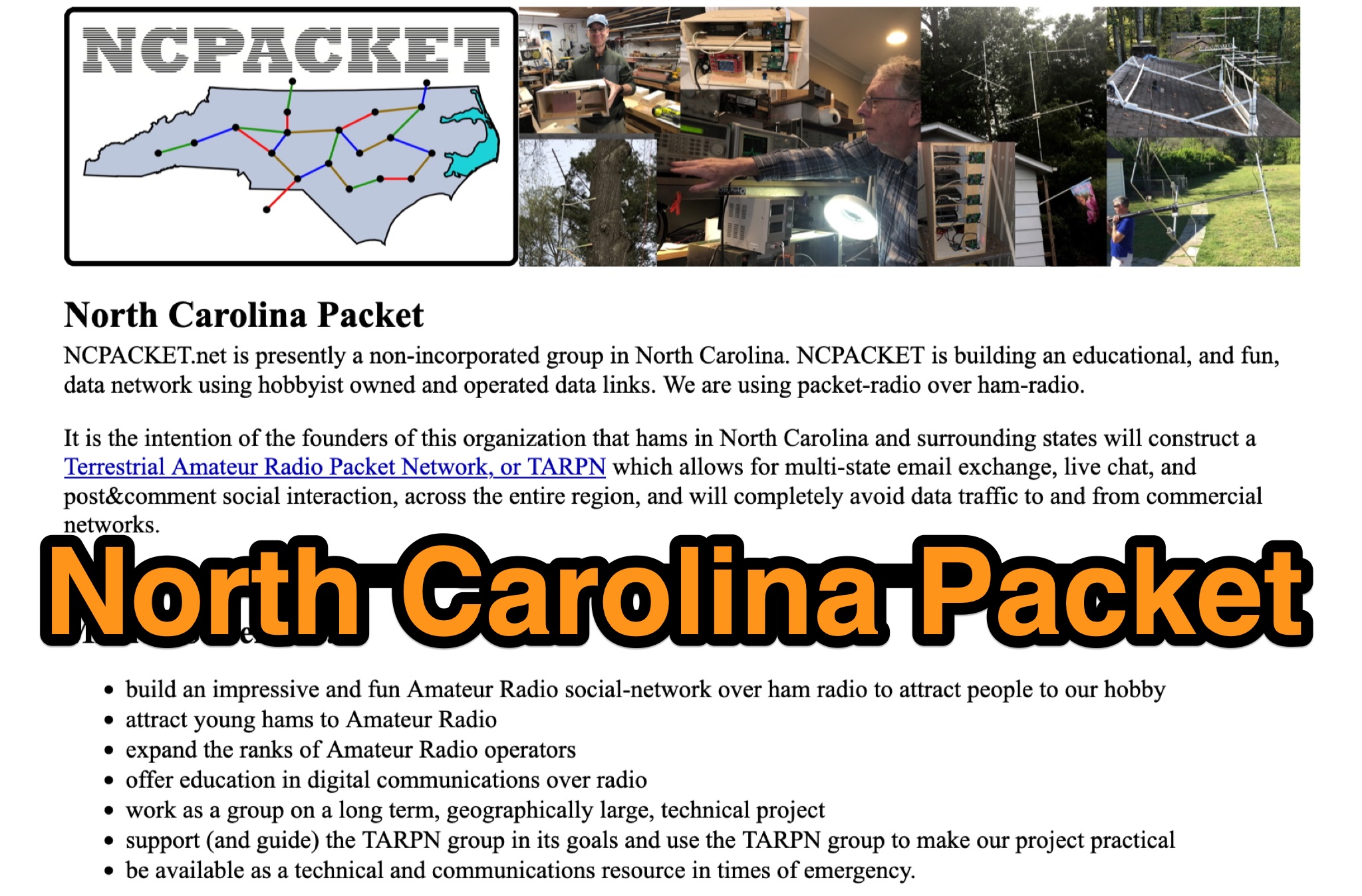 Learn about North Carolina Packet Voice nets and NCPACKET YouTube videos. Get your NCPACKET Callsign Badge to wear at ham club meetings and hamfests. Explore Hamfest Photos and NCPacket news. Discover the North Carolina TARPN Nodes mission statement and the benefits of being off the grid. Find out why TARPN is a great option and compare it with Winlink, APRS, ARES, and MARS. Learn how to build the NCPACKET network, including information on repeater sites and other key components.
 -
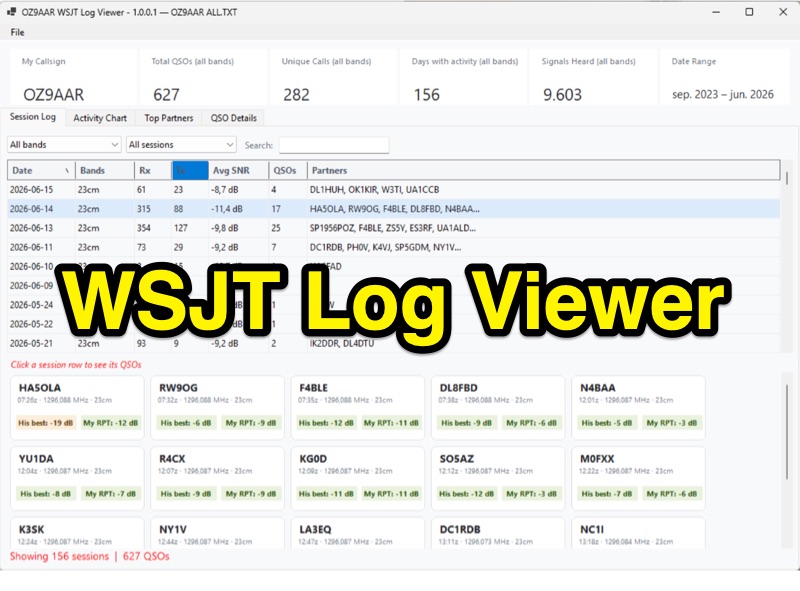 The WSJT Log Viewer, version 1.0.0.10 as of 2026-08-02, is a freeware Windows application developed by Carsten Groen (OZ9AAR) for analyzing signal strengths from WSJT digital mode contacts. It processes the ALL.TXT log file generated by WSJT-X, extracting and presenting data from decoded TX and RX messages. Initially designed for EME operations on 70cm and 23cm, the software has expanded to include all HF bands, 6m, 4m, 2m, 1.25m, 70cm, 23cm, 24GHz, and 47GHz. Key features include displaying total QSOs, unique callsigns, days with activity, and signals heard, with filtering options by band and completed QSOs. The application also monitors the ALL.TXT file for live updates every two seconds, reflecting new decodes in real-time. Users can view session logs, activity charts showing daily signal counts and decoded signals, and a "Top Partners" tab listing the 25 most frequent contacts. The software provides detailed QSO information, including best received SNR and sent reports, with graphical representations of SNR over time. It supports multiple "My Callsign" entries within a single ALL.TXT file and offers a function to generate a text list of initials worked per band. The program is distributed as a single executable file, requiring no installation, and stores its configuration in a LogViewer.cfg file, allowing for different setups via command-line arguments.
 -
 AA DX Group was founded in March 1, 1974 in The Netherlands. Our members was more than 10000 from all over the World. Because during the years many of our members became "Silent Keys" or they are not active on the air anymore, we deceide to make new fresh group and to delete all old database. So, we are the new - old Alfa Alfa DX Group and you are welcome to be our member. We make avaiable all Alfa Alfa numbers for new and active CB members and SWL ( Shrot Wave Listeners ). Alfa Alfa World Wide DX Radio group is looking or ACTIVE CB Operators and SWL stations ! The New AADX team in in 2024 Main base in 178AA000 178AADX000 in Belgaria
 -
 Bear Bait Radio Club is dedicated to educating new ham radio enthusiasts while having fun. We emphasize emergency preparedness, community service, storm watching/reporting, and wilderness search and rescue.
 -
 We are a non-profit amateur ham radio association located in the rural Lakes Region of New Hampshire. We actively promote 2 way radio, also known as ham radio. Our members are friendly and knowledgeable. If you are a first time visitor and are curious about this great hobby, we provide testing for ham licenses, have fun get-togethers, and are ARES affiliated for emergency communications. We also are home to 6 repeaters. Three are located on Bennett Hill in Ossipee, one on Mt. Rowe in Gilford and two on New Durham Ridge, New Hampshire.
 -
 With the reputation of being the most active amateur radio club in Hampshire, we support enthusiasts, experienced and new, with monthly meetings and summer field events. Free to visit!
 -
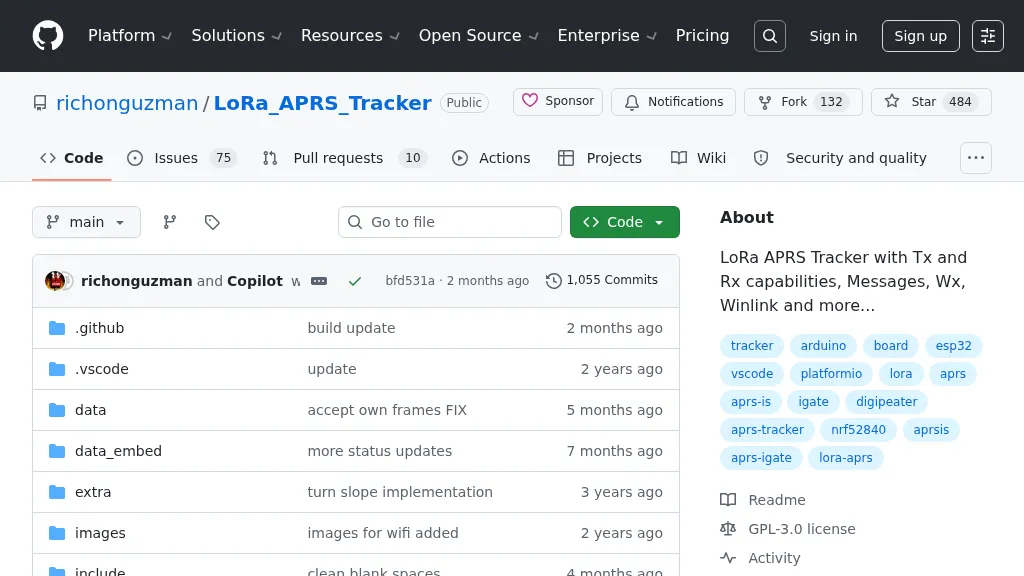 Demonstrates a LoRa APRS Tracker project featuring a comprehensive menu system for message management, weather requests, and monitoring nearby trackers. The device supports adjustable display eco mode and screen brightness, optimizing power consumption by dynamically changing processor speed from 240MHz to 80MHz. GPS beacons are encoded for efficient RF transmission, and an OLED screen displays altitude, speed, course, _BME280_ weather data, or new message counts, along with recently heard stations. Bluetooth connectivity enables operation as a TNC with Android (APRSdroid) or iPhone (APRS.fi app), providing LED and sound notifications for transmissions and received messages. The integrated BME280 module facilitates weather data display and transmission, with Winlink mail support via _APRSLink_. The tracker can switch between **three major LoRa APRS frequencies** worldwide, offering versatile global operation.
 -
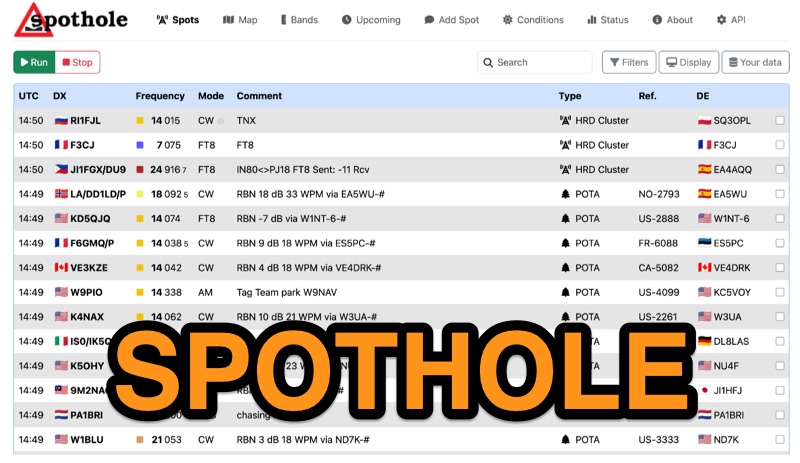 Spothole aggregates real-time amateur radio spots from various sources, including traditional **DX clusters** and specialized outdoor activity programs like POTA and SOTA. The platform provides a highly customizable web interface where users can configure display options such as DX and DE continents, local time, and a 'ping' notification for new spots. Users can also adjust the number of spots displayed and select from several UI color schemes, including PSK Reporter and Ham Rainbow. The tool integrates with external callbook services like QRZ.com and HamQTH, allowing users to remember login credentials for seamless data reloading. A distinctive feature is the ability to input a personal grid square and manage lists of 'worked' and 'wanted' callsigns. Wanted callsigns, entered as space- or comma-separated lists, receive a gold highlight when a matching DX callsign appears in the spot feed, aiding in targeted DXing efforts. Beyond the interactive web interface, Spothole offers a universal JSON **API**, enabling developers to build custom applications leveraging its aggregated spotting data.
 -
 We are excited to share the news about the inaugural URC DX RTTY Contest, organized by the Unicom Radio Club! We would greatly appreciate your support in spreading the word within the RTTY community.
 -
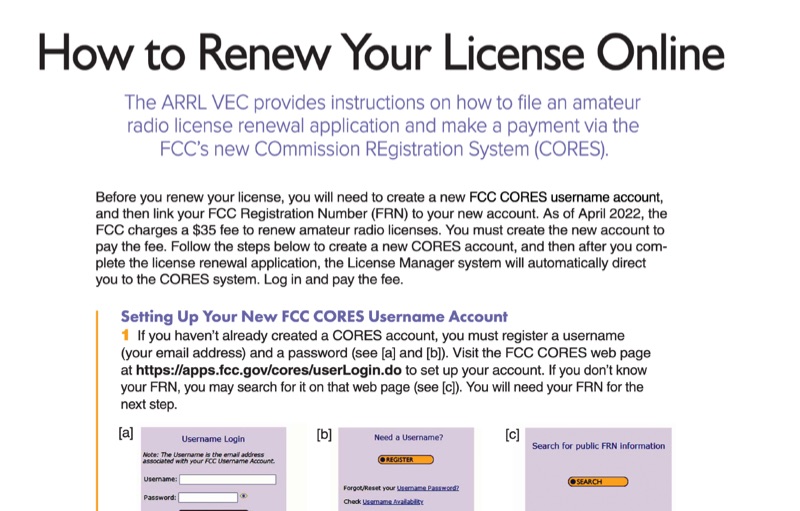 This resource provides a procedural guide for renewing an amateur radio license online through the FCC's COmmission REgistration System (CORES) and Universal Licensing System (ULS). It details the steps for creating a new FCC CORES username account, linking an FCC Registration Number (FRN) to the account, and managing FRN passwords. The document outlines the process for submitting a renewal application via the FCC ULS License Manager system, including payment of the **$35** renewal fee. Instructions cover license renewal eligibility within **90 days** before expiration and during the 2-year grace period post-expiration. The guide specifies the use of the FCC CORES web page at `https://apps.fcc.gov/cores/userLogin.do` for account setup and the FCC ULS License Manager system at `https://wireless2.fcc.gov/UlsEntry/licManager/login.jsp` for application submission. The process concludes with receiving an email from the FCC containing a link to the official license, valid for 30 days.
 -
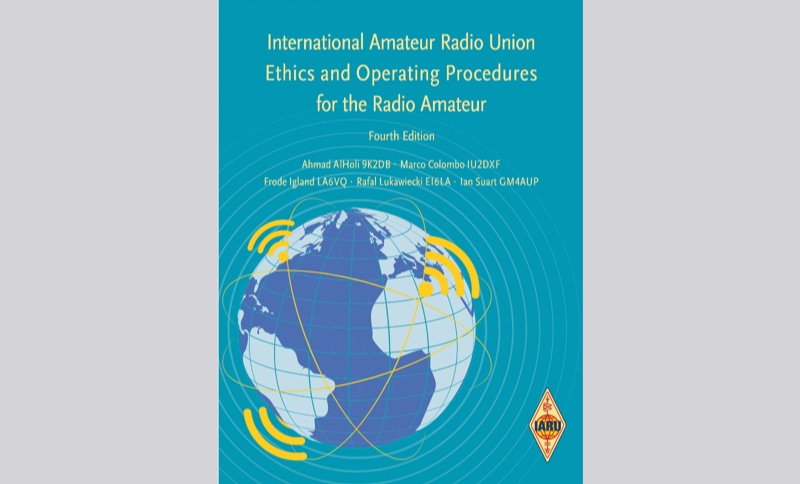 Presents the 4th edition of the IARU Region 1 Ethics and Operating Procedures for the Radio Amateur, a fully rewritten guide published in July 2026. It establishes a shared basis for respectful and effective communication within the amateur radio community, building upon over fifteen years of prior work. The document details the purposes of amateur radio, principles of non-interference, electromagnetic compatibility, and station safety. It specifies operating procedures, including listening practices, adherence to IARU and national band plans, appropriate transmission content, use of Q-codes, and the phonetic alphabet. The guide provides instructions for conducting QSOs across phone, CW, and various digital modes. Specific sections address managing pileups, participating in contesting, engaging in DX and DXpedition operations, operating portable or mobile, and conducting station testing. Further sections cover VHF and UHF operating considerations, ensuring a comprehensive resource for both experienced operators and those new to the hobby.
 -
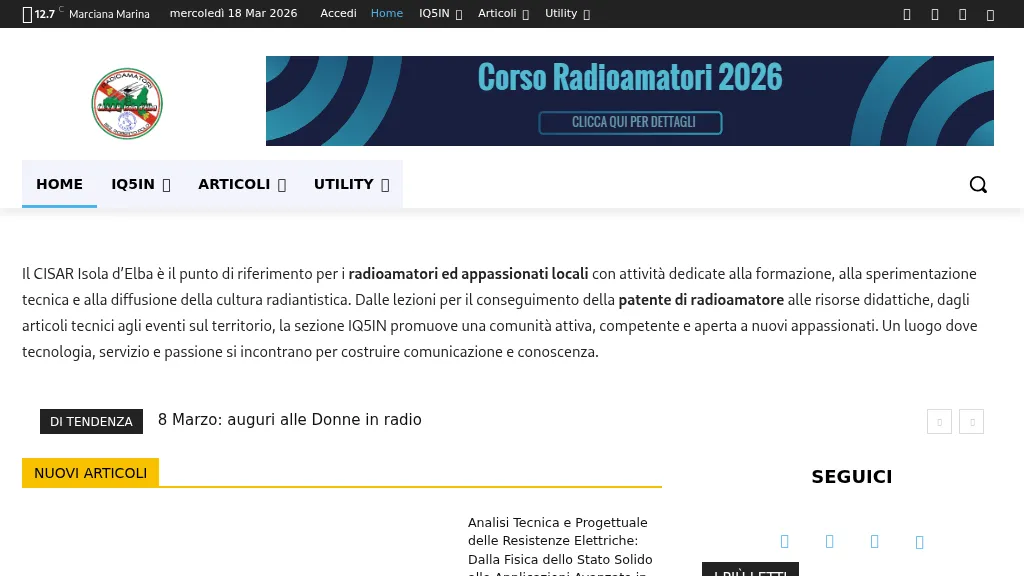 Presents the CISAR Isola d'Elba (IQ5IN) club, detailing its role as a central point for local radio amateurs and enthusiasts. The club focuses on educational activities, technical experimentation, and fostering radio culture within the community. It provides resources for obtaining an amateur radio license, offers various didactic materials, and publishes technical articles. The IQ5IN section actively promotes a knowledgeable and engaged community, welcoming new enthusiasts through local events and practical guides. Recent content includes discussions on the role of radio amateurs during wartime, an in-depth analysis of electrical resistors from solid-state physics to RF applications, and a comprehensive guide to the UHF amateur band in Italy, covering its characteristics and uses.
 -
 The page discusses how Parks on the Air (POTA) in Canada offers ham radio operators the chance to set up portable stations in parks and nature reserves, combining radio communication with outdoor exploration. It also covers the World Wide Flora and Fauna (WWFF) program, which operates globally and complements POTA activities. Both programs provide unique challenges and opportunities for operators to expand their skills and connect with fellow enthusiasts worldwide. Whether you're a seasoned ham radio operator or new to the hobby, participating in POTA and WWFF can offer an exciting and rewarding experience, fostering a sense of community among radio enthusiasts who share a love for nature and communication.
 -
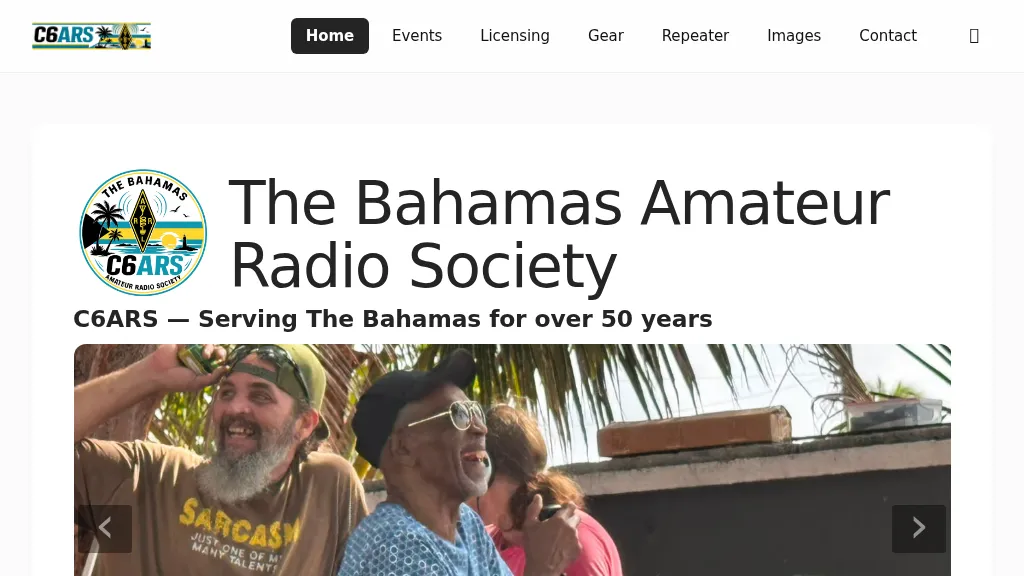 The Bahamas Amateur Radio Society (C6ARS) serves as the primary amateur radio club for the Bahamian archipelago, providing a hub for operators interested in DXing, portable operations, and emergency communications. The society actively participates in Parks on the Air (POTA) activations monthly, deploying portable stations to various parks and protected areas to put The Bahamas on the air for global hunters. Additionally, C6ARS engages in the annual ARRL Field Day, setting up off-grid stations powered by batteries, solar, and generators to practice emergency preparedness and operating skills. C6ARS also offers licensing assistance and mentorship for new operators, highlighting amateur radio's role as a STEM education platform through practical applications in physics, electronics, mathematics, and computing. The club emphasizes resilient emergency communication, particularly crucial for an island nation in the hurricane belt, demonstrating how trained operators can maintain vital communication links when conventional infrastructure fails. Their regular off-grid activations serve as rehearsals, ensuring readiness for disaster response.
 -
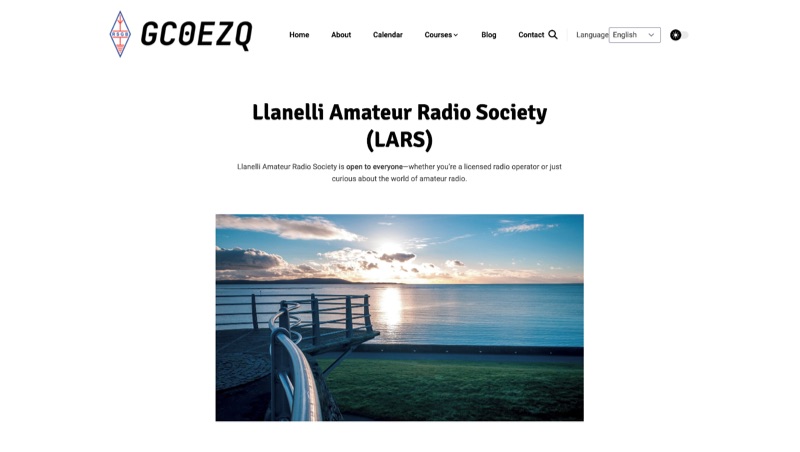 The Llanelli Amateur Radio Society (LARS) website details the club's offerings for both licensed operators and those new to amateur radio, including shortwave listeners and individuals pursuing Foundation, Intermediate, or Full licenses. It highlights opportunities to learn radio techniques, explore digital modes such as C4FM, D-Star, DMR, and FreeDV, and participate in contests and social events. The club aims to foster a supportive environment for experimentation and knowledge sharing among its members. Member testimonials illustrate practical applications, such as a new licensee making a 1000km contact via a repeater after being inspired by space exploration, and another quickly passing the RSGB Foundation exam. The site also features accounts of members progressing to Intermediate and Full licenses, with one Full license holder continuing to learn new modes like CW and digital, and engaging in activities like Parks on the Air (POTA).
 -
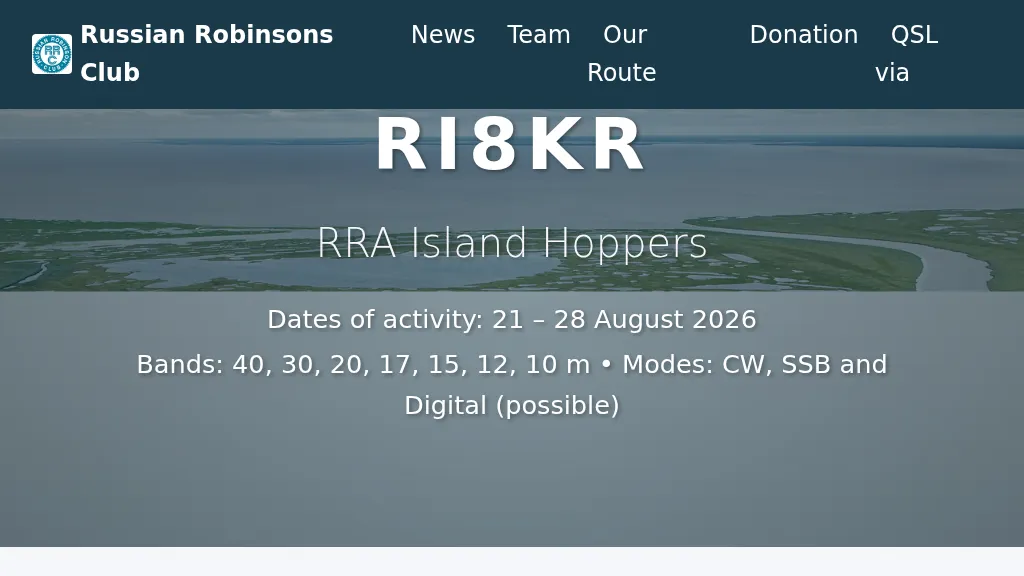 Presents the RI8KR RRA Island Hoppers DXpedition, detailing its schedule from August 21 to 28, 2026, and its objective to activate four new island groups in the Ob Bay of the Kara Sea. The expedition targets specific Russian River Club (RRC) references: RR-06-66 (Ob River Delta Islands West), RR-06-67 (Ob River Delta Islands North-West), RR-06-68 (Ob River Delta Islands North), and RR-06-69 (Ob River Delta Islands Center/North). Operators Vladimir, RK8A, and Igor, UA3EDQ, will operate on 40, 30, 20, 17, 15, 12, and 10-meter bands using CW, SSB, and potentially Digital modes. Three of these activations contribute to IOTA AS-109, an entity not activated since 2013. The page provides QSL information via RZ3EC (Eugene Shelkanovtsev, P.O. Box 70, Orel 302028) and online platforms including RRAWARD.RU, LoTW, RDAWARD.RU, and CFMRDA.RU. It lists supporters of the expedition, acknowledging contributions from various amateur radio operators. Recent updates confirm the purchase of airplane and boat tickets for the team's travel to Salekhard and Salemal/Panayevsk, indicating active preparation for the August 2026 operation.
 -
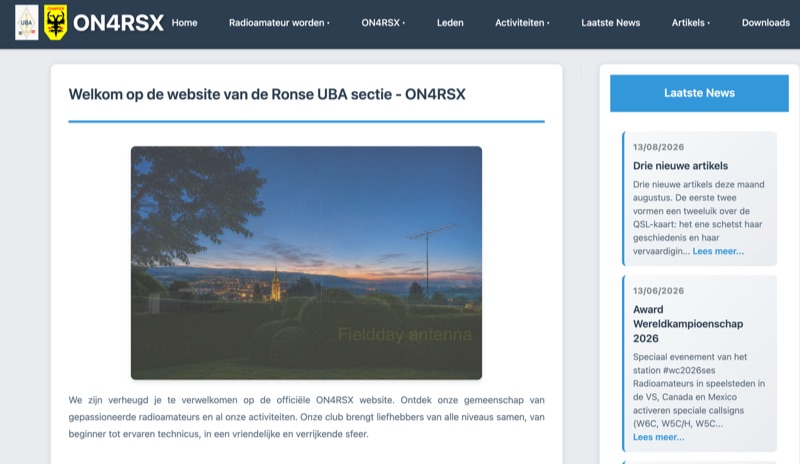 The ON4RSX website serves as the official online presence for the UBA Ronse/Renaix amateur radio club, providing information on its community and activities. It outlines the club's engagement across various amateur radio facets, including **HF**, VHF, UHF, digital modes, antenna construction, propagation studies, and general electronics. The site highlights past DXpeditions, such as the _OJ0V Market Reef_ operation, and mentions participation in contests, offering insights into the club's operational focus and technical interests. The resource details the club's commitment to fostering a welcoming environment for operators of all experience levels, from beginners to seasoned technicians. It implicitly compares the breadth of activities available to members, covering both theoretical knowledge development and practical application in areas like antenna building. The site's content structure suggests it functions as a central hub for club news, event announcements, and potentially educational materials, supporting members in expanding their radio knowledge and sharing their passion.
 -
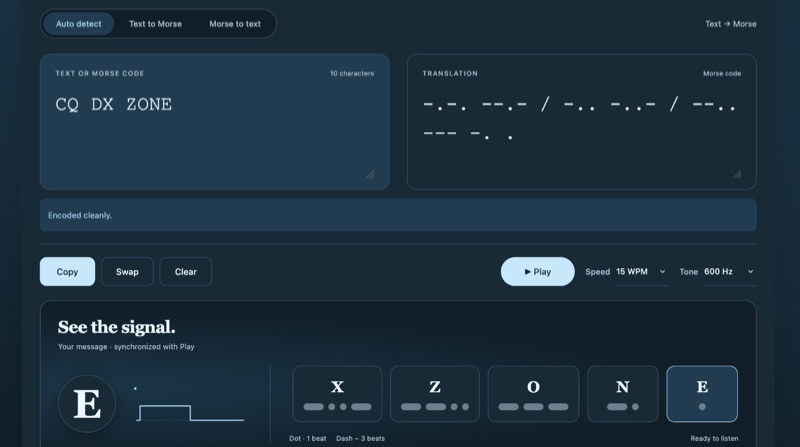 Txtopia provides a browser-based Morse code translator that converts plain text to International Morse Code and decodes Morse back into text, supporting various Unicode dot and dash representations. The tool automatically detects translation direction, normalizes common input variations like middle dots (·), bullets (•), em dashes, and underscores, and explicitly flags unsupported characters or ambiguous sequences with visible placeholders rather than silently dropping them. It accepts spaces, tabs, newlines, and pipes as letter separators, and slashes or blank lines for word boundaries, recording collapsed separators for user review. Users can adjust playback speed from 5 to 40 WPM and tone frequency from 300 to 1000 Hz for CW practice, with playback adhering to international Morse timing. The application operates entirely client-side, ensuring user input remains in the browser without server transmission. It includes a comprehensive reference for the supported Morse alphabet, numbers, and punctuation, aiding in learning and verification. The tool is suitable for checking game clues, verifying tattoo designs, and transcribing messages for ham radio CW practice.