Search results
Query: receive audio
Links: 97 | Categories: 1
Categories
-
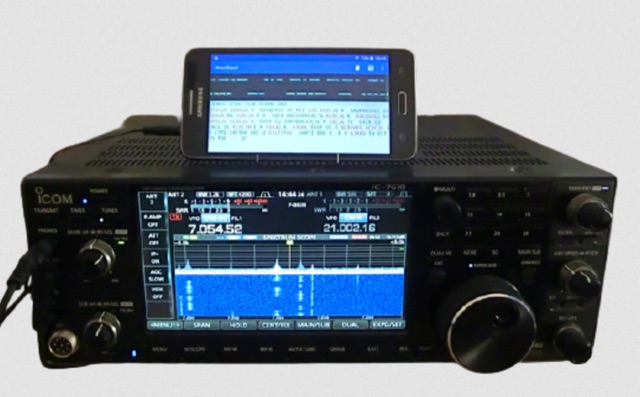 MorseExpert 1.15 decodes Morse Code audio to text, leveraging algorithms from CW Skimmer for optimal performance on weak, fading signals amidst interference on amateur radio bands. It processes audio from the device's built-in microphone or an external radio receiver via cable, optionally highlighting Ham callsigns and keywords. The application features a waterfall display with a bandwidth of 200-1200 Hz, decodes frequencies between 300-1100 Hz, and supports keying speeds from 12-45 WPM with automatic CW pitch detection. Recent updates include support for Android 15, edge-to-edge mode, improved stability, and a pause decoding button. A premium version offers an ad-free experience and user-selected text colors. Users can switch between General Text mode and Ham Radio QSO mode, which enhances word segmentation and highlights callsigns. The app also includes a frequency lock mode, text selection capabilities for copying, sharing, or saving decoded text, and provides guidance on reducing acoustic echo and constructing an audio attenuator for optimal radio interfacing.
-
 Designed to handle audio signal interfacing as well as transmit/receive switching Reviewed by Steve Ford, WB8IM
-
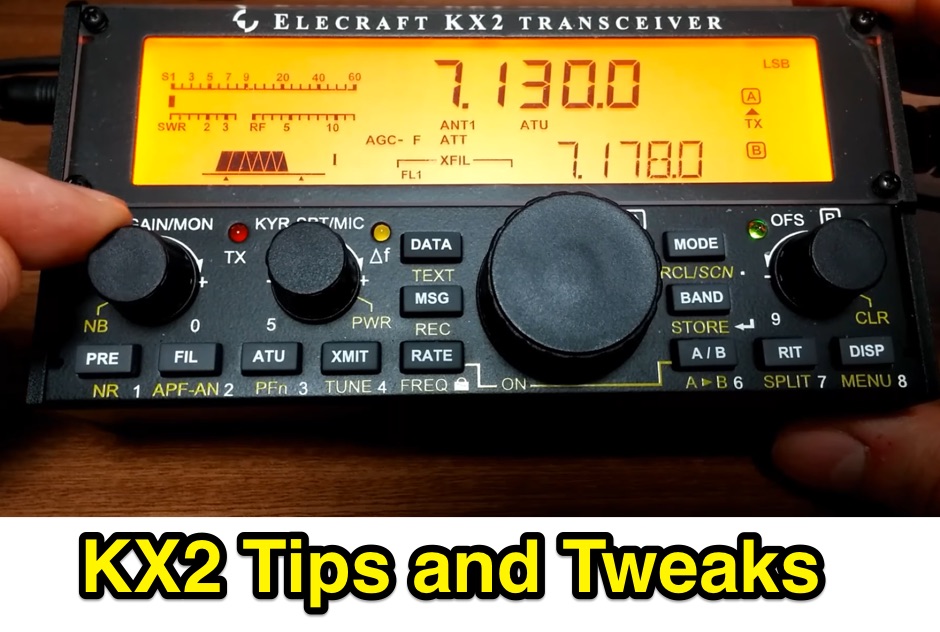 The 7-minute, 52-second video, published on December 31, 2016, by TheStingyHam, details several methods for optimizing receive audio on the **Elecraft KX2** QRP transceiver. It specifically addresses challenges encountered on the 40-meter band, a common haunt for QRP operators, while also noting that 15m and 20m operations might benefit from different settings, such as combining the preamp with receive EQ and RF gain adjustments. Key moments highlighted in the video include specific adjustments for noise reduction, filter settings, signal attenuation, and receive equalization. These techniques are demonstrated to help operators extract clearer signals from a noisy band, a critical skill for successful portable operations and DXing with low power. The author, drawing from field experience, suggests that while the tips are primarily aimed at 40m, the underlying principles of careful audio and RF gain management are broadly applicable across the HF spectrum, enhancing the overall QRP operating experience.
-
 The IFR-100 PMR446 radio, developed by ICIT Co., Ltd., incorporates a unique _private speaker_ function. This feature enables users to receive communications discreetly, preventing audio from being broadcast aloud from the radio's internal speaker. Instead, the operator can hear transmissions exclusively through a connected earpiece or similar accessory, facilitating private talk mode operations. ICIT Co., Ltd. positions itself as a primary developer and manufacturer of PMR446 equipment within Korea. Their product line emphasizes innovative features designed to enhance user privacy and operational flexibility in short-range, license-free radio communications. The company's focus is on delivering specialized two-way radio solutions. The resource highlights the company's manufacturing capabilities and its commitment to developing distinct functionalities for the PMR446 market. It underscores their role in providing specific communication tools for users requiring secure and private audio reception.
-
 Fixing notice subtle distortion on SSB receive audio on the Yaesu FT-1000D
-
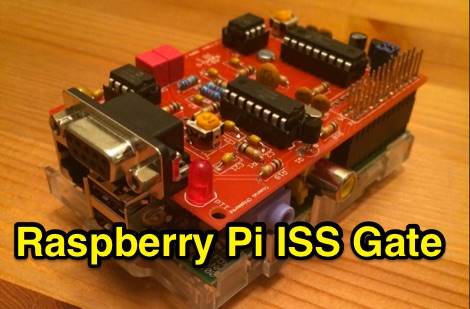 This project is an APRS iGate for digipeater aboard the ISS. As the ISS pass over the iGate location, the TNC decoded the audio tones and creates data packets the Raspberry Pi can receive.
-
 The review details the Elecraft KX3 S/N 963, noting its delivery on July 31 and primary use as a base rig, alongside initial portable operations. It highlights the transceiver's performance across various modes and bands, including observations on its receiver sensitivity and transmit audio quality. Specific operational scenarios, such as field deployments and integration with different antenna systems, are discussed, providing practical insights into the rig's capabilities. The author evaluates the KX3's user interface, menu navigation, and overall ergonomic design for both casual and intensive operating sessions. Attention is given to features like the internal ATU, power consumption during transmit and receive, and the clarity of the display under varying light conditions. Comparisons are drawn to other portable QRP transceivers, emphasizing the KX3's distinctive attributes. Key takeaways include assessments of the _KX3_'s suitability for _RaDAR_ operations and general QRP DXing, based on real-world contacts and signal reports. The article offers a balanced perspective on the transceiver's strengths and areas where users might need to adapt their operating style, making it a useful reference for prospective owners.
-
 Jose B Rivera, N2LRB, shares his initial experiences with the Icom IC-7300, recounting a shift from skepticism to appreciation for the transceiver. He details how the radio's impressive Sherwood Engineering test results, ranking it #12, significantly influenced his decision, especially considering its competitive price point against higher-end options like the Elecraft K3s. The review highlights the IC-7300's strong receive capabilities, a key factor in N2LRB's purchasing decision, and notes the advantages of its SDR architecture for future updates. He describes the straightforward setup process, from unboxing and connecting PowerPole connectors to making a first contact with N0HQ, a special event station. N2LRB expresses satisfaction with the radio's clear audio and ease of tuning, even if the pan-adapter's utility for his operating style remains to be fully explored. He concludes that the IC-7300 offers exceptional value, providing SDR features and receive performance comparable to more expensive rigs at half the cost.
-
 First released around 1995 and significantly redesigned as QWTelnet 2, this software provides a dedicated interface for monitoring DX-Cluster traffic via Telnet. It integrates a **SOTAwatch parser** with configurable audio alerts, allowing operators to receive notifications for specific search patterns in DX-Cluster remarks without constant screen attention. The application also supports parsing for **GMAwatch (German Mountain Award)**, providing alerts for German Mountain Award activations. QWTelnet 2.4.0, released on 07-APR-2012, runs on Windows (tested on W7) and is distributed as a ZIP file containing the `qwtelnet.exe` executable. It does not require a formal installation process; users simply extract and run the program. The software can display DX information for single bands, integrate with the Reverse Beacon Network, and link to external web resources for DXCC and SOTA information. It also supports local reference files for IOTA, WFF, and RDA awards, which users must source and place in the `qwtelnet/files` directory. For IOTA data, users can convert `IOTA.CSV` from UCX-Log or `DX4WIN_IOTA.TXT` into `iota.csv`. WFF and RDA reference files are directly sourced from their respective websites.
-
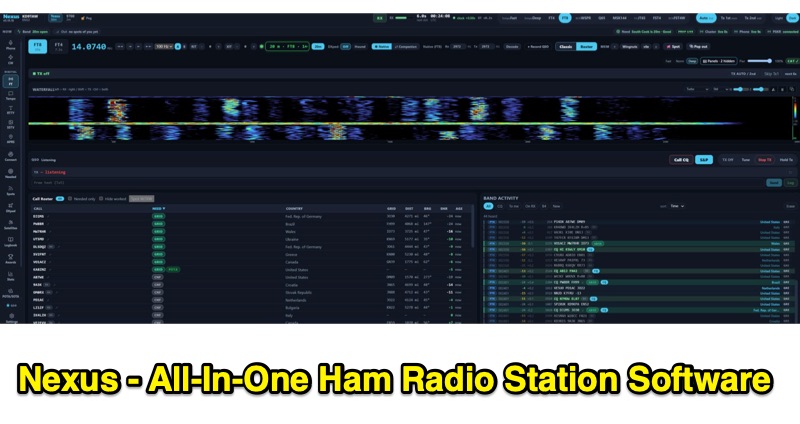 Nexus is a free and open-source ham radio software application, built in Rust by KD9TAW, designed to integrate multiple station functions into a single program. It supports fifteen operating modes, including FT8, FT4, CW, SSB, FM, RTTY, SSTV, and APRS, with both transmit and receive capabilities across Windows, Linux, and Raspberry Pi platforms. The software provides band activity displays with country, distance, and bearing information, a call roster, a 3-D propagation globe with live spots, and alerts for new DXCC, WAS, WAZ, VUCC, and IOTA entities. It also features a native RF panadapter for Icom CI-V and Flex radios, or a live audio scope for other transceivers. Nexus integrates a comprehensive logbook, computes awards offline without requiring an account, and includes repeater search functionality with curated memory packs. It offers CHIRP CSV round-trip compatibility for approximately 1,000 radio models and is compatible with WSJT-X, JTDX, and MSHV via UDP protocol for seamless integration with existing workflows. The application supports ADIF import/export for log data management and provides accessibility features for operators with hearing or visual impairments, including screen reader compatibility and keyboard-navigable interfaces.
-
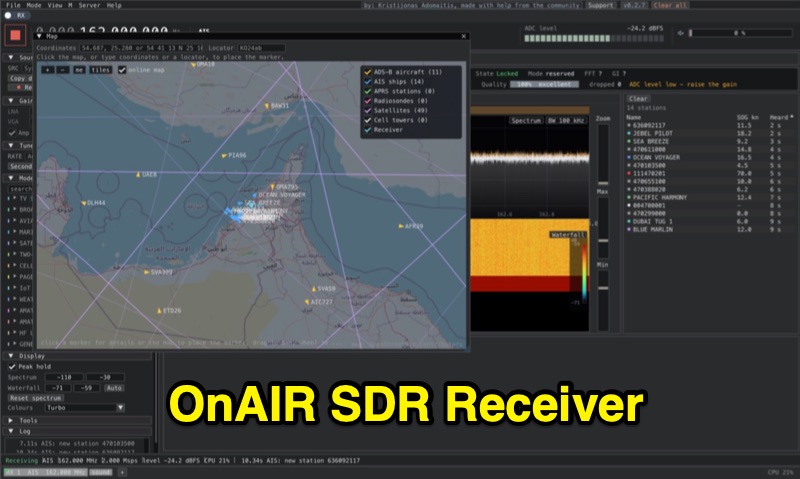 The OnAir SDR receiver application, hosted on GitHub, supports a broad range of digital and analog modes across macOS, Windows, and Linux platforms. It decodes various digital TV standards like DVB-T/T2, DVB-C, DVB-S/S2, ATSC, ISDB-T, and DTMB, alongside broadcast audio formats such as DAB+, FM, and DRM. For aviation enthusiasts, it processes ADS-B, ACARS, and VDL2 signals, while also offering satellite reception and GNSS capabilities. Amateur radio operators benefit from its support for modes including FT8, PSK31, and CW, in addition to general digital voice decoding and cell tower monitoring. A built-in spectrum analyzer provides visual analysis of received signals. The project demonstrates active development, evidenced by over **1,750 commits** to its codebase. OnAir is designed for compatibility with popular SDR hardware, including _HackRF_, RTL-SDR, Airspy, SDRplay, BladeRF, LimeSDR, Pluto, and USRP devices. This wide hardware support makes it a versatile tool for radio enthusiasts and professionals working with various SDR platforms.
-
 LA6EIA Ole's DX-blog details shortwave listening (SWL) and amateur radio DX operations from Norway, providing insights into propagation conditions and station reception. The blog frequently features specific reception reports, often including details such as frequency, mode, and signal strength, alongside observations of various broadcast and utility stations. It documents the author's personal experiences in chasing DX, offering a practical perspective on radio propagation and equipment performance. The content includes logs of received stations, sometimes accompanied by audio clips or screenshots of waterfall displays, illustrating successful decodes or strong signal captures. This resource presents a chronological record of DX achievements and challenges, reflecting the dynamic nature of radio propagation across different bands and times. The blog distinguishes itself by its focus on real-world SWL and amateur radio DXing from a Nordic QTH, offering a unique regional perspective on global radio phenomena. It serves as a personal journal of radio exploration, highlighting specific callsigns, frequencies, and operational details encountered during DX sessions.
-
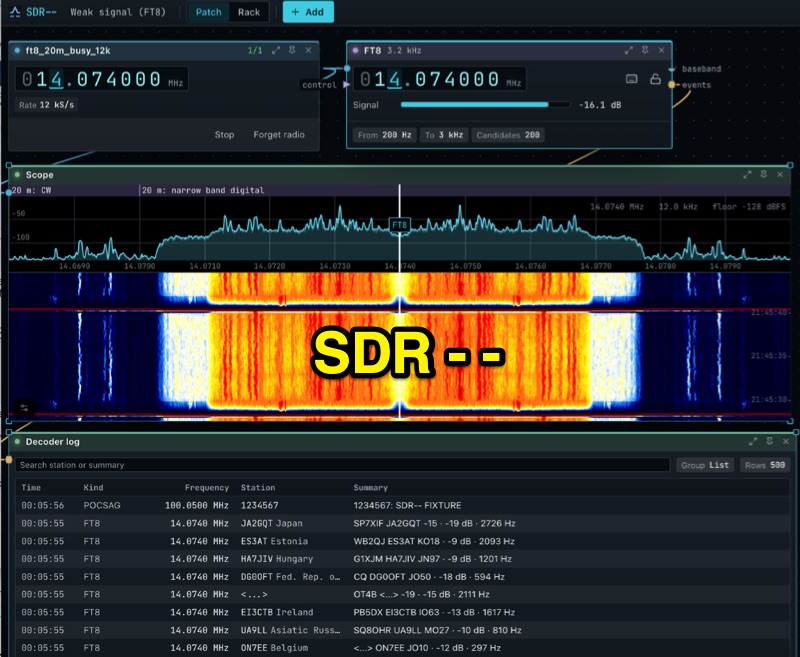 Boasting an FM demodulation rate of **1,235 Msps** and a DMR speed of **369x realtime**, SDR-- is a software-defined radio application designed for patching together radio components across macOS, Windows, and Linux platforms. It facilitates connecting a receiver to various channels, which then feed into speakers, maps, or recorders. The software supports a wide array of audio modes including AM, NFM, SSB, CW, FM stereo, RDS, DMR, FreeDV, D-STAR, Fusion, NXDNP, P25, and dPMR, alongside decoding numerous events and messages such as ADS-B, ACARS, VDL2, HFDLA, AIS, NAVTEX, DSC, POCSAG, FLEX, ERMES, FT8, FT4, WSPR, APRS, RTTY, PSK, ISM sensors, and time signals. Beyond audio and data, SDR-- also handles video modes like SSTV, ATVDVB-S, and DVB-S2. It provides comprehensive displays including spectrum, waterfall, constellation, and map views, all integrated with decoded messages. Advanced features include scanning, signal identification, satellite tracking, direction finding, and passive radar capabilities. The application offers remote control options via REST, WebSocket, MCP, and event forwarding, allowing integration with external tools. It can operate on a desktop computer or be deployed on a server, such as a _Raspberry Pi_, for remote access, providing flexibility for shack setups or antenna-side installations.
-
 When assembling a robust shack, the quality of interconnects often determines overall system integrity and signal fidelity. Neutrik, with over 50 years in the connectivity sector, specializes in professional-grade connectors that withstand rigorous use in entertainment and industrial applications. Their product range includes XLR, speakON, powerCON, and opticalCON series, which are frequently adapted by hams for critical station infrastructure, particularly in contesting or DXpedition environments where reliability is paramount. Amateur radio operators often repurpose these durable connectors for antenna switching matrices, audio interfaces for digital modes, or power distribution systems. The robust locking mechanisms and high-quality contact materials found in Neutrik products ensure stable connections, minimizing intermittent faults that can plague field operations or even fixed station setups. This attention to mechanical and electrical integrity aligns well with the demands of high-power RF environments and sensitive receive chains. While primarily serving the pro-audio and video markets, the engineering principles behind Neutrik's designs translate directly to the needs of radio amateurs seeking superior performance and longevity from their cabling and connection points. Their commitment to innovation, as highlighted by their 50-year journey, suggests a continuous evolution of products that could benefit future amateur radio applications.
-
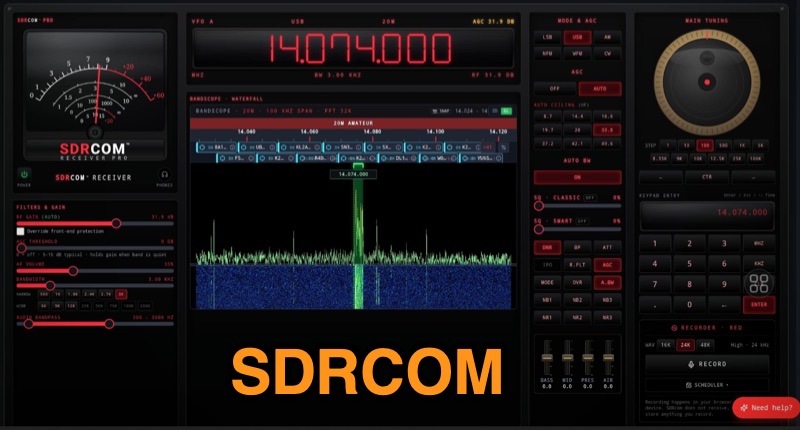 The SDRcom platform provides a unique browser-native Software Defined Radio experience, emulating a traditional radio with a physical VFO dial, switches, and an analog meter. It integrates a high-resolution 64k FFT waterfall display, supporting essential modes like AM, FM, SSB, and CW. The **SDRcom Blue** version interfaces with SDRplay® receivers via a local WebSocket, while the free **Red Lite** version supports RTL-SDR V3/V4 dongles through WebUSB, including basic audio EQ and 100 memory slots, along with FT8 decoding. For advanced operators, the Red Pro version expands capabilities with 1000 memory slots, upgraded high-resolution waterfalls, and enhanced W4PAH FT8, FT4, and WSPR decoder engines. It also incorporates 4-band DSP noise reduction and an intelligent band scanner, proving beneficial for weak-signal work. The Network edition extends functionality to access hundreds of global remote SDRs, and an ADS-B aircraft decoding feature with 3D positioning and mapping is also available. All SDRcom applications are designed to run directly in a web browser, eliminating the need for any software installation. This approach simplifies access and setup for radio enthusiasts, from casual SWLs to dedicated digital mode operators, allowing immediate engagement with the airwaves.
-
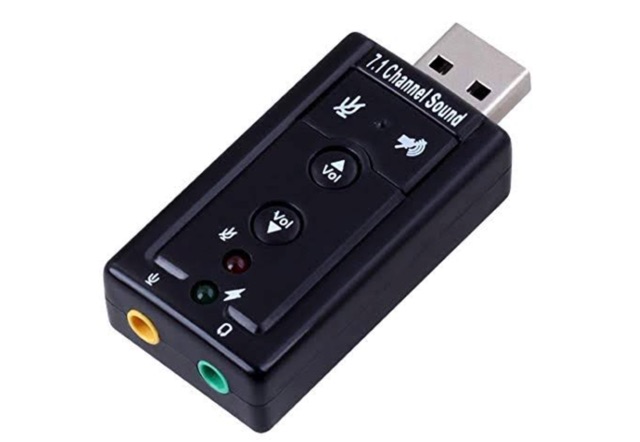 This project is a USB Audio, Serial and PTT interface for rigs that does not directly support digital modes provided by applications such as FLDIGI, WSJT-X and JS8CALL. Plug these interface devices into your Windows or Linux laptop or Raspbian Raspberry Pi and you can send and receive digital tones to/from your rig and automate the frequency and mode control and PTT control.
-
 An improved version of the audio interface commonly used to connect a computer soundcard to a transceiver\'s receive and transmit audio circuits
-
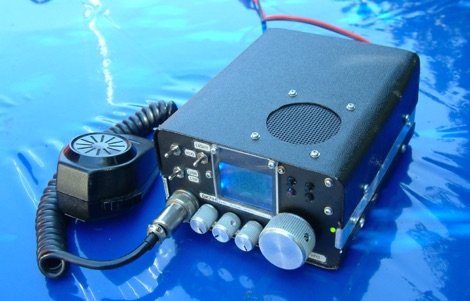 This article describes the construction of a high performance transmitter and receiver for SSB (voice) communication covering the 14MHz (20 meters) high frequency amateur radio band with output range 15 to 20 watts and a top audio sound quality both on transmit and receive.
-
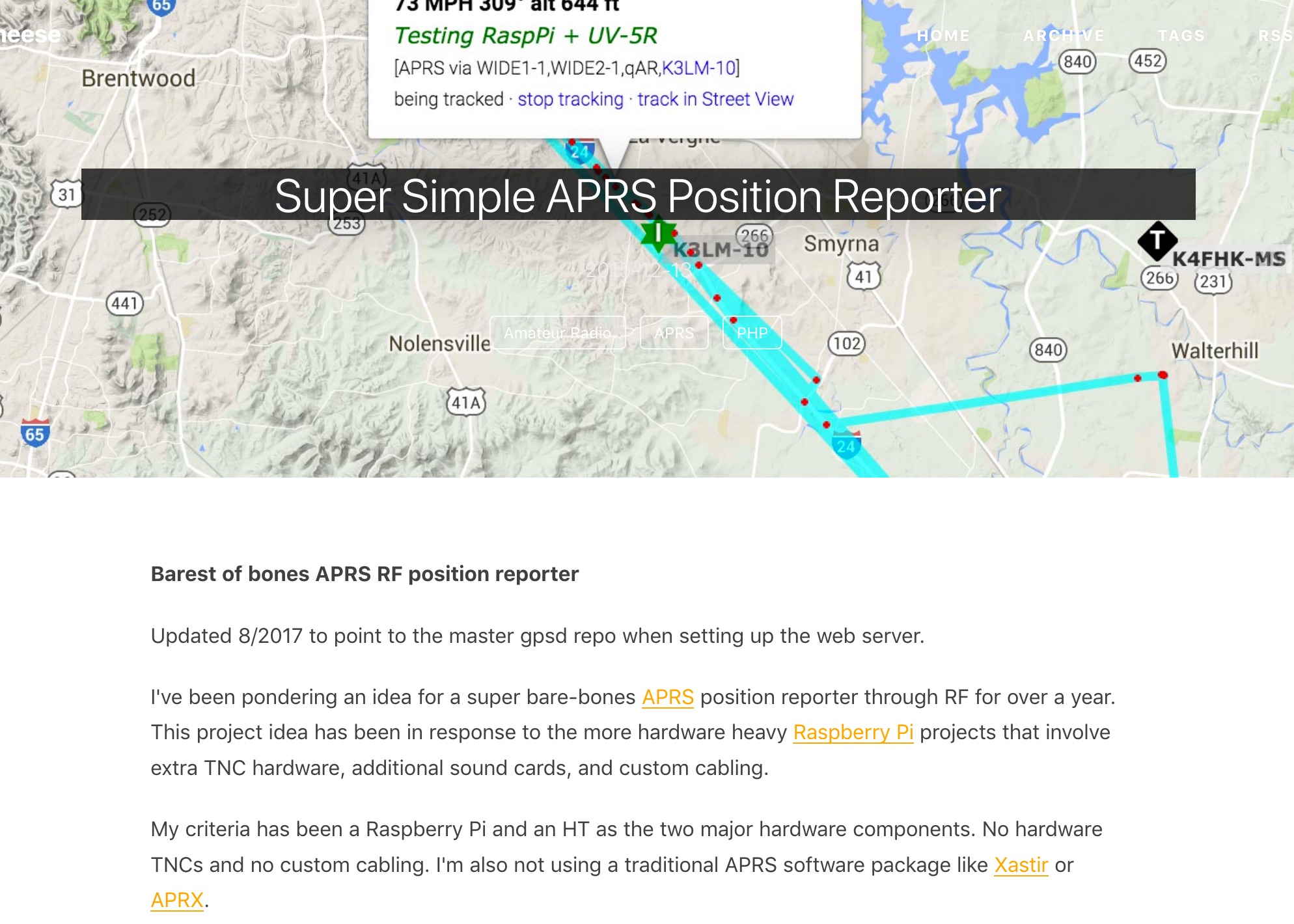 Barest of bones APRS RF position reporter using a Raspberry Pi B+, USB GPS receiver, Baofeng UV-5R, and a mono 3.5mm audio cable between the Pi and the radio
-
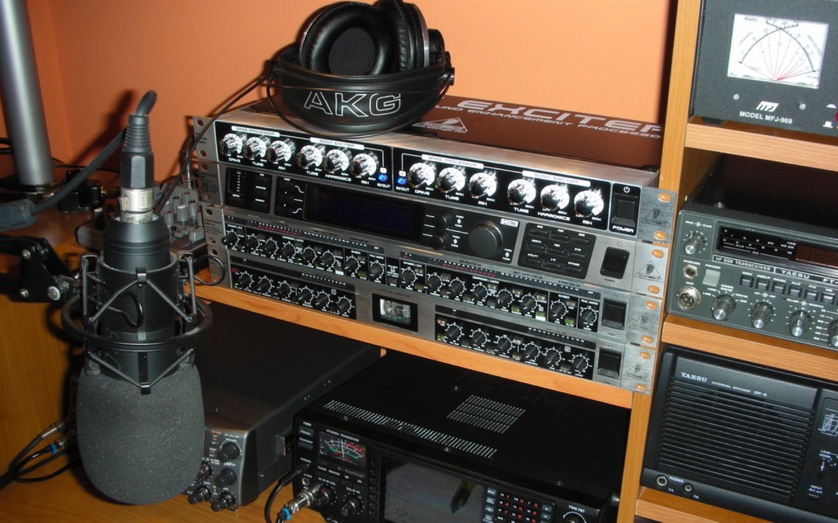 Sending the Audio from the Receiver to the Recorder, from the Recorder to the EQ, and sending the Audio from the EQ or Recorder to the Transmitter
-
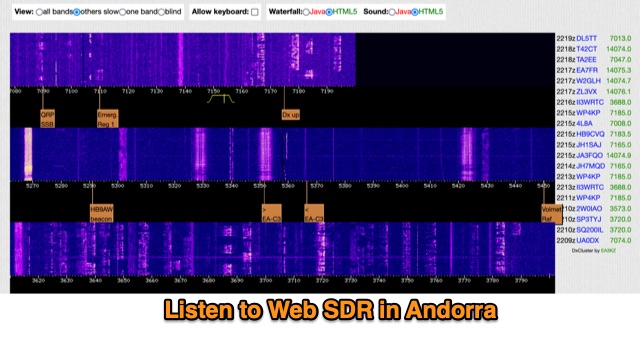 Presents a web software defined radio service hosted by the ARDAM amateur radio club in Ordino, Andorra, situated at an altitude of 1,400 meters in the Pyrenees. The system incorporates four FunCubeDonglePro+ receivers, providing access to the 60m, 40m, 20m, and 80m amateur bands. These receivers are connected to a dipole antenna oriented East/West, enabling users to monitor signals, check their own transmissions, or simply enjoy general ham radio listening from this unique QTH. The interface provides a waterfall display, frequency tuning, and signal strength plotting, with options for both Java and HTML5 WebAudio, though Java is noted as a requirement for full functionality on some browsers. The resource details the operational aspects, crediting PA3FWM for the underlying software and C31CT and EA3KZ for system operation and maintenance, ensuring 24/7 availability. It also includes a significant section outlining the ARDAM association's ongoing disputes with the URA (Unió de Radioaficionats Andorrans) regarding amateur radio regulations, CEPT licensing for foreign visitors, and the installation of a VHF-DMR repeater, highlighting the challenges faced by ARDAM in promoting amateur radio in Andorra.
-
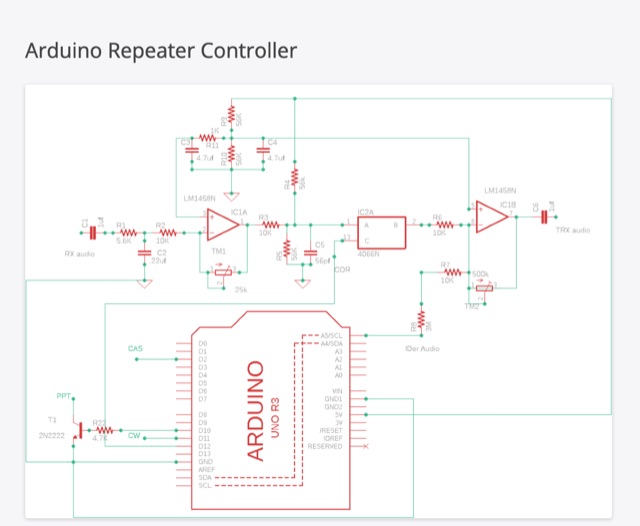 This blog article introduces an updated repeater controller project utilizing the Arduino UNO. It includes a CW identifier, and the ID message can be customized using hex codes. The author offers a Windows command line program for easier message coding and provides a link for download. The controller features three adjustable timers for IDer, Timer-out, and Squelch-tail. The article also mentions the use of an audio switch to control audio levels between the receiver and transmitter. Detailed instructions and code files are available on the author's website for both version 1 and version 2 of the Arduino repeater controller. The project aims to enhance repeater functionality and audio management in ham radio operations.
-
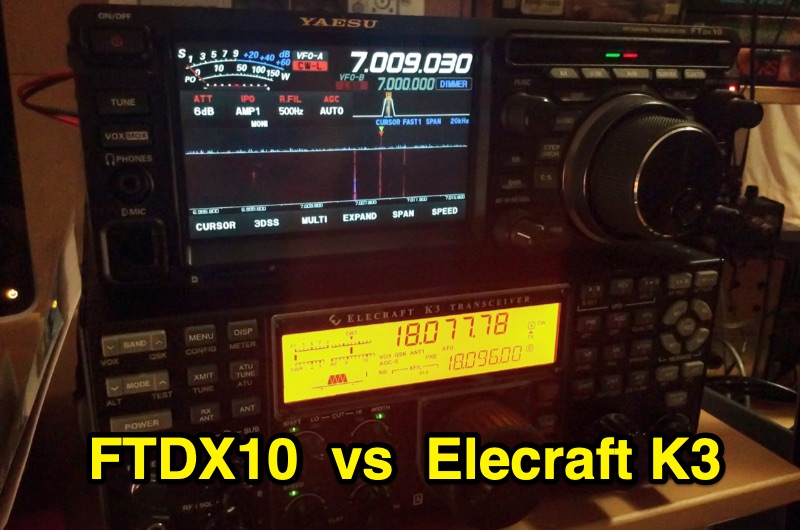 Evaluates the Yaesu FTDX10 receiver performance against an Elecraft K3 (serial #216) during the NAQP CW contest, specifically assessing weak signal reception adjacent to strong signals. Testing involved a 300 Hz bandwidth, Audio Peak Filter (APF) activation, 6 dB attenuation, and preamplifier deactivation to simulate challenging operating environments. The FTDX10's adjustable APF, offering NARR, MED, and WIDE settings, is directly compared to the K3's single APF setting. Observations highlight the FTDX10's superior suppression of a strong signal at X+100Hz, demonstrating less bleed-through into the passband compared to the K3, even with the K3's 500Hz roofing filter engaged. This indicates improved dynamic range and selectivity in the FTDX10's receiver architecture under high-intensity signal conditions. The analysis also briefly notes transmit T/R relay noise characteristics, providing a comprehensive, albeit concise, technical comparison of these two popular HF transceivers.
-
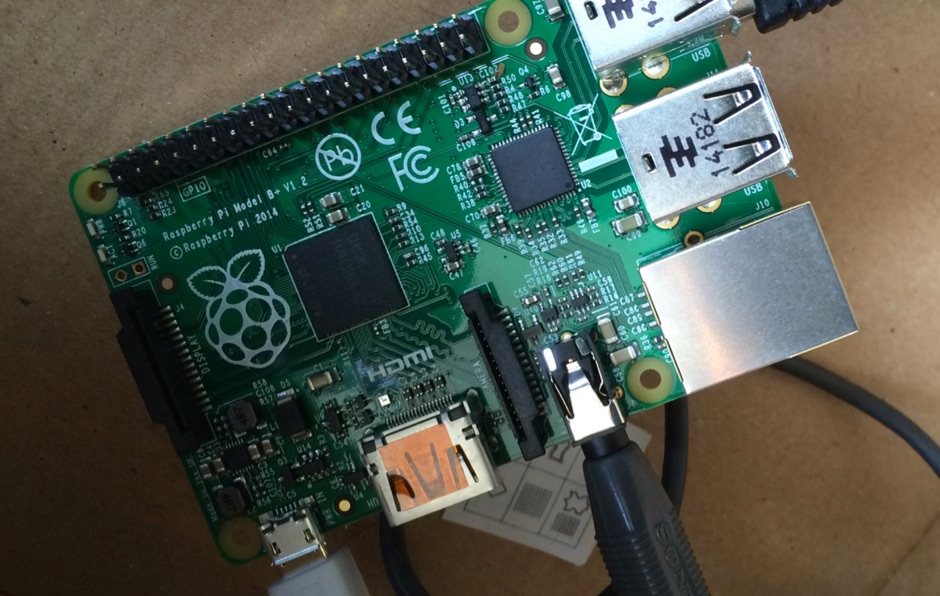 Super Simple APRS Position Reporter. This project idea has been in response to the more hardware heavy Raspberry Pi projects that involve extra TNC hardware, additional sound cards, and custom cabling. This APRS position reporter is done using a Raspberry Pi B+, USB GPS receiver, Baofeng UV-5R, and a mono 3.5mm audio cable between the Pi and HT.
-
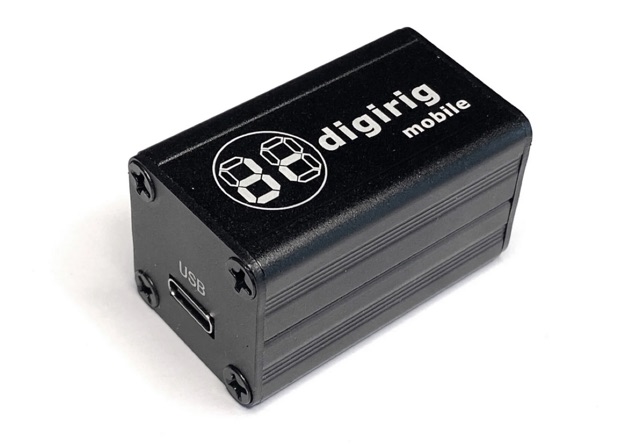 Digirig is an open-source integrated digital modes interface for amateur radio. As a differentiating feature, Digirig only requires a single USB connection to the computer with all the digital goodness packed in a single small enclosure. The internals include a USB hub, audio codec, a fully featured serial CAT (Computer Aided Transceiver) interface, and potentially other modules such as GPS receiver for time synchronization.
-
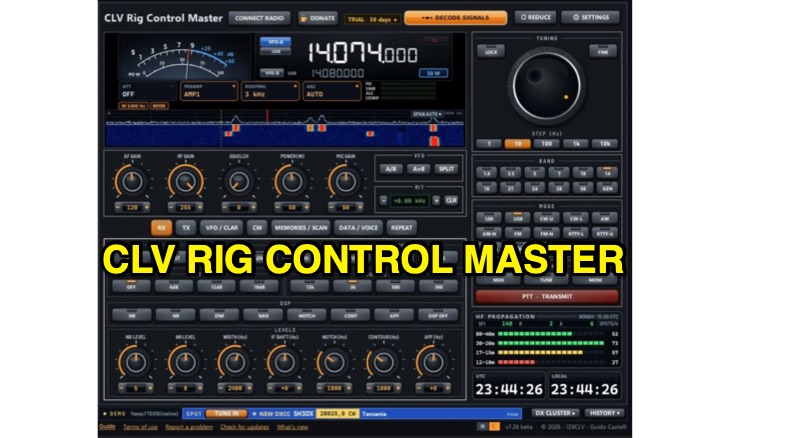 CLV Rig Control Master is a freeware Windows application providing comprehensive **CAT control** for amateur radio transceivers. It directly supports the Yaesu FTDX10 via its Enhanced COM Port and integrates with hundreds of other rigs through **Hamlib**. The software functions as a master, sharing the radio's CAT port with multiple logging and digital mode applications like N1MM Logger+, Log4OM, WSJT-X, and JTDX, thereby eliminating port conflicts. Key features include a large frequency display, analog-style S-meter, PO, SWR, ALC, and COMP bar graphs, along with spectrum and waterfall displays derived from USB audio. It also incorporates decoders for CW, RTTY, PSK31/63, NAVTEX, SSTV, and WEFAX, featuring automatic mode detection and a dedicated CLV-SSTV window supporting 12 SSTV modes. The application provides detailed control over FTDX10 receive and transmit settings, memory channels, and audio/TX profiles. For other radios, it adapts the panel to supported controls, maintaining stable connections even with slower CAT interfaces such as the FT-817. The DX Cluster window includes band and mode filters, Club Log Most Wanted integration, and new DXCC tracking from ADIF logs. Contest features encompass F1-F8 message macros, CW and RTTY transmission from the PC, and ADIF QSO logging. It also displays UTC and local time, alongside HF propagation data sourced from N0NBH, and is compatible with Windows 10 and 11.
-
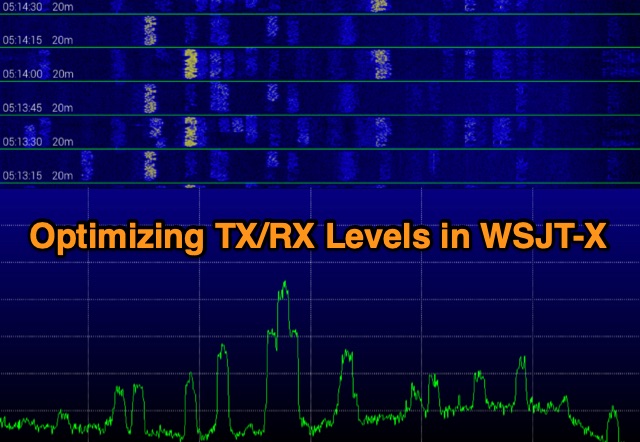 Exploring digital radio modes, the author rethinks how to adjust transmit and receive levels in WSJT-X. Despite effective communication using Yaesu's settings, a new procedure aims for better performance. For RX, set audio device levels to 100%, disable AGC, and adjust RF gain. For TX, enable "Remember power settings" and adjust power output to avoid ALC engagement. This method ensures reliable communication without signal degradation, enhancing dynamic range and minimizing noise.
-
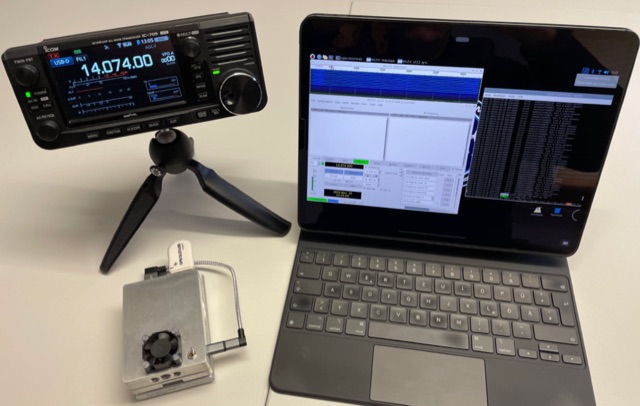 The IC-705 has a built-in server to to send and receive audio and radio control via WLAN. This allows the IC-705 to be connected directly to the user’s computer without the need for an additional server computer. Perfect to run e.g. digital operation modes completely cordless.
-
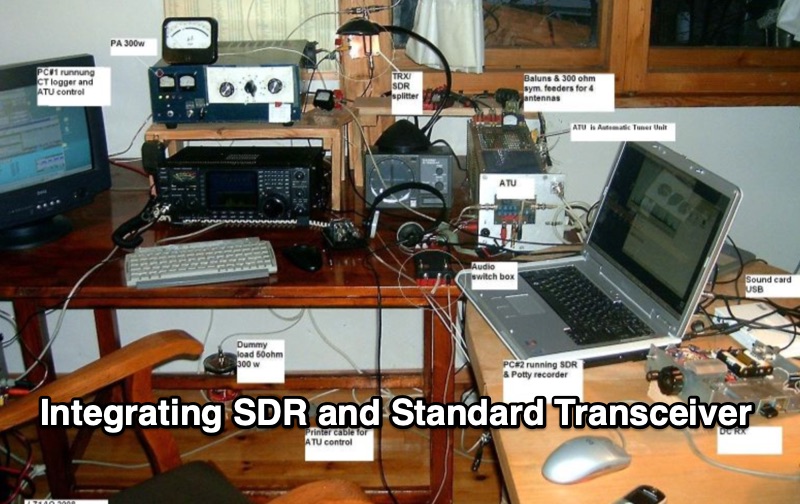 Integrating a _Software Defined Radio_ (SDR) into an existing ham radio setup involves connecting it with a standard transceiver (TRX), power amplifier (PA), and antennas. The core component is a splitter box that facilitates the connection between the TRX and the SDR, allowing for simultaneous operation without modifying existing equipment. In receive mode, the splitter ties the antenna inputs of both the TRX and a direct conversion receiver (DC RX) together. During transmission, the DC RX input is grounded via a fast telecom relay controlled by the transceiver's -SEND signal, incorporating a 10ms delay for safety. The splitter box includes a 3.7 dB input attenuator for impedance matching and acts as a protective fuse for the DC RX input. Ground loops are mitigated using common mode balun transformers, while the DC RX input is insulated with a broadband transformer. An audio switch box complements the setup, enabling users to listen to either the main transceiver, the SDR output, or both simultaneously. This configuration ensures noise immunity and safety, with the splitter housed in a screened box made from PCB material. On-air tests, such as the CQ WW 160m CW DX Contest, demonstrate the system's effectiveness, showcasing the SDR's ability to handle crowded band conditions with superior selectivity and dynamic range. The SDR's narrow bandwidth filters and waterfall display provide significant advantages, allowing operators to detect weak signals amidst strong interference. The integration of SDR with conventional radios offers enhanced operational flexibility and performance in challenging environments.
-
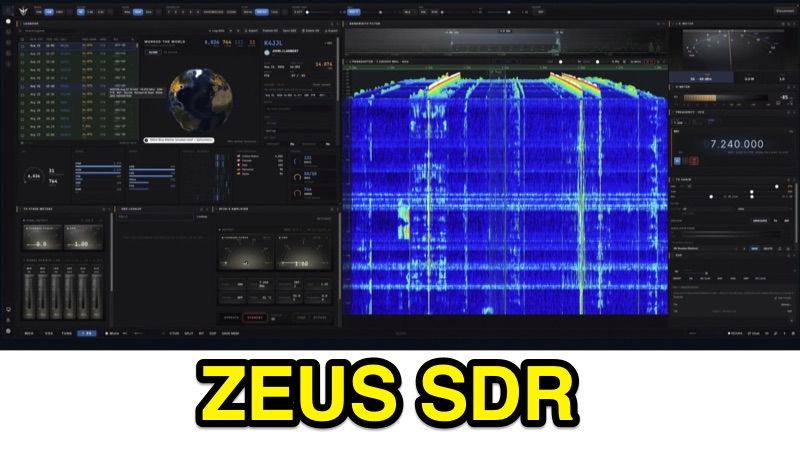 Demonstrates ZeusSDR, a WebGL-native station console for _OpenHPSDR_ radios, including Hermes-Lite 2 and ANAN-class transceivers. The software integrates a 2D and 3D WebGL/WebGPU panadapter with click-to-tune functionality, alongside native FT8/FT4 and FreeDV digital voice modes, eliminating the need for external software like WSJT-X or virtual audio cables. It features a protected transmit chain with SWR-trip and TX-timeout, and supports _PureSignal_ linearization on Protocol 2 for enhanced signal quality. The console incorporates a broadcast TX chain with a noise gate, 10-band EQ, compressor, exciter, bass, reverb, and VST3/Audio Unit hosting for advanced audio processing. A comprehensive logbook is included, offering contact history, a 3D NASA globe, DX radar, and analytics for DXCC/WAS/grids, with ADIF and LoTW integration. Amplifier panels for RF2K-S, KPA500, and SPE Taurus are also provided. ZeusSDR supports both OpenHPSDR protocols (P1 + P2) and utilizes WDSP from Thetis. It is available for Windows, macOS, and Linux, with a public listening feature allowing others to view live waterfalls and use virtual receivers with Zeus DSP, including NR, NB, ANF, AGC, and filters. The software is open-engine, following the PowerSDR–OpenHPSDR–Thetis lineage.
-
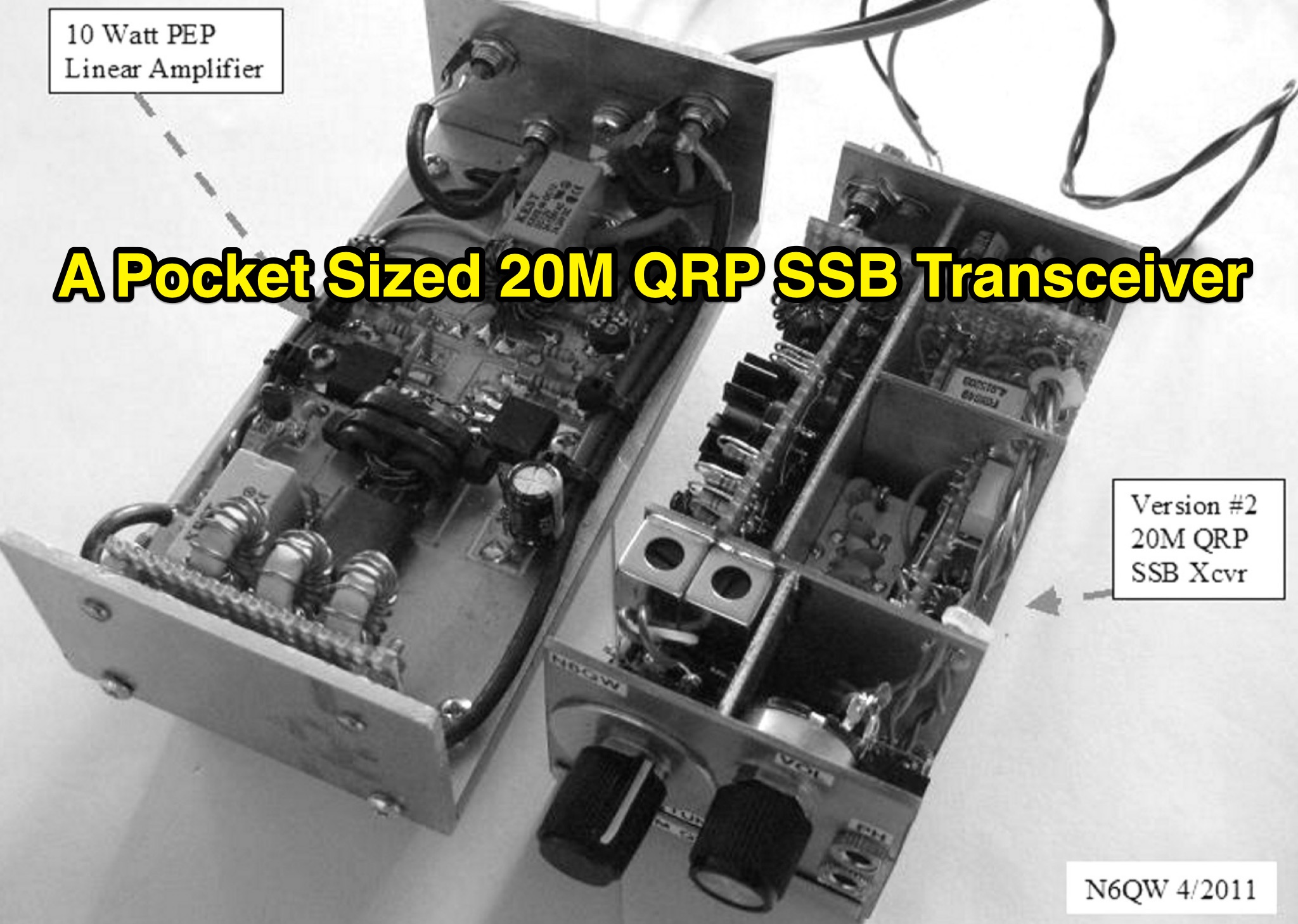 This article details the design and construction of a compact 20-meter QRP SSB transceiver by Pete Juliano, N6QW, measuring just 2 x 4 x 2 inches—small enough for a shirt pocket. Inspired by a 1963 QST design and refined from a prior version, it employs bilateral circuits, a 4.9152 MHz homebrew crystal filter, switched-crystal VXO for 60 kHz coverage (14.160-14.220 MHz), and standard components like ADE-1L mixers and IRF510 PA for 1W output. Key innovations include a double-sided PCB skeletal frame for shielding and isolation, Vectorboard sub-assemblies, and ultra-miniature relays. The bilateral receiver/transmitter shares stages, omitting AGC for simplicity, while a W3NQN LPF and optional 10W external amp enable DX contacts. Tune-up focuses on crystal matching and bias for linearity. Videos on YouTube demonstrate performance, confirming excellent stability and audio. Total cost nears $100, prioritizing portability over features like CW.
-
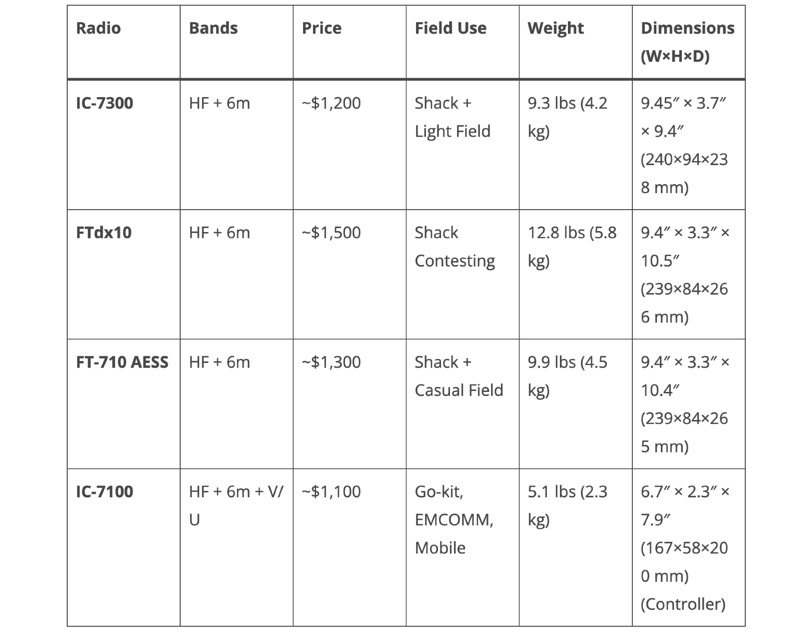 The page presents a collection of blog posts tagged with "yaesu-ftdx10" from the VE3IPS WordPress site. It serves as an index for content related to the Yaesu FTdx10 transceiver, often in comparison with other popular HF rigs like the Icom IC-7300 and Yaesu FT-710 AESS. The aggregated content details specifications such as 100W output power and various SDR architectures. Specific articles linked from this tag page likely delve into operational aspects, including receiver performance, audio clarity, and user interface characteristics of these transceivers. Mentions of features like the IC-7300's real-time spectrum scope and USB integration, or the FTdx10's roofing filters and contest-proven Contour and DNR filters, indicate a focus on technical distinctions. The resource also highlights limitations, such as the basic 3:1 internal tuner in some models and the absence of VHF/UHF coverage in the IC-7300. The Yaesu FTdx10's superheterodyne and SDR approach, along with its placement on the Sherwood Engineering receiver performance list, are key points of discussion within the linked posts.
-
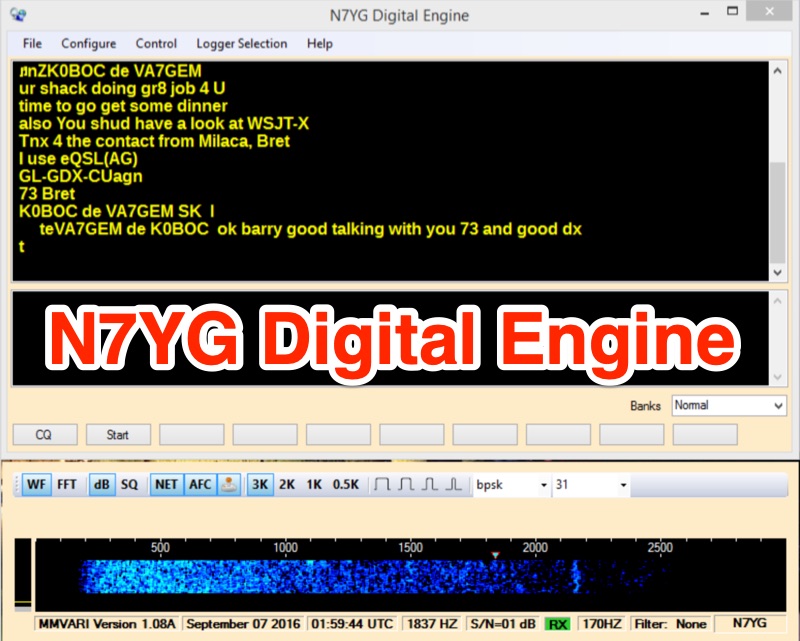 The N7YG Digital Engine, functions as a streamlined digital modem, supporting **PSK**, **RTTY**, and **MFSK** modes. It eliminates many ancillary logging and awards features found in other software, focusing instead on providing a dedicated digital interface. The software is specifically engineered to complement the N3FJP logging suite, offering a simple digital modem with a floating waterfall display that can coexist on the same screen as the logger. The application includes support for PSK Reporter, EXTFSK, TinyFSK, and K1EL Winkey FSK, enhancing its utility for various digital operations. Key features comprise a separate waterfall window, a main GUI with operational controls, receive and transmit display areas, and 10 Macro Buttons across 10 user-definable macro banks, totaling 100 macros for general and contesting use. Configuration options include sound card selection, digital gain (0-32767), AFC Level (0-100), AFC Width (in Hz), and COM Port TX keying for VOX/SignaLink or direct port control. Input and Output Mixer buttons provide direct access to OS audio mixer controls for precise level adjustments. The software is digitally signed with a security certificate, aiming to prevent conflicts with antivirus programs.
-
 The RTL-SDR tuner dongle is a popular tool for amateur radio enthusiasts, transforming a $10 device into a wide-band software-defined radio. This guide outlines using the RTL-SDR as a full-band pan-adapter for conventional receivers, focusing on hardware setup and software integration with HDSDR. Future sections will address RTL-SDR performance compared to native receivers, enhancing digital mode operations with virtual serial ports and audio cables.
-
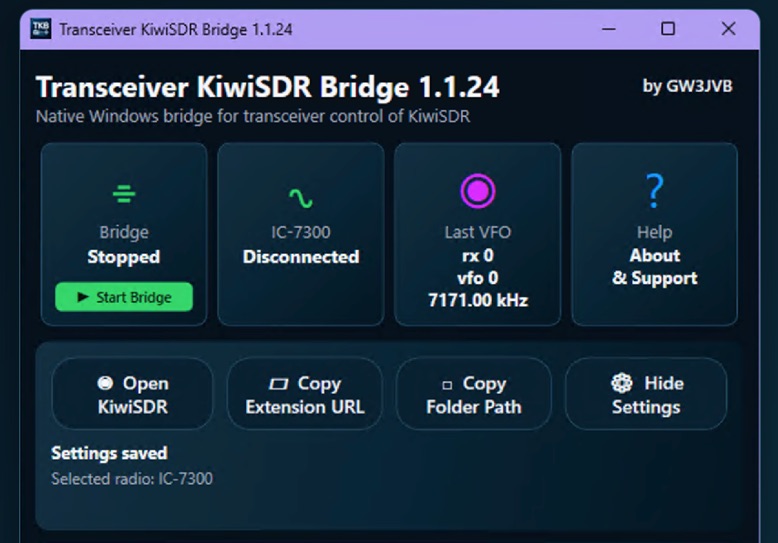 Demonstrates a practical solution for remote reception, the Transceiver-KiwiSDR Bridge, a free Windows utility by GW3JVB. This software links a local amateur radio transceiver to a remote **KiwiSDR** receiver, allowing the KiwiSDR to automatically track the transceiver's VFO frequency and mode. This capability proves invaluable for mitigating local noise, enhancing reception, or simply leveraging the superior receive capabilities of a remote station located globally. The bridge supports a diverse range of transceivers through COM port/CAT connections or **TCI** over a network. Specific compatibility extends to popular models like the Icom IC-7300, systems utilizing the TCI Protocol (such as Thetis, Expert Electronics, Apache Labs ANAN, and Hermes Lite 2), and many radios supported by Hamlib. Experimental Yaesu CAT options are also included, broadening its utility for various shack configurations. Key features encompass automatic mode changes, updates to RX filter bandwidth, and even IC-7300 PBT/filter adjustments. The application integrates a browser extension for Chrome, Brave, and Microsoft Edge, and offers an optional KiwiSDR audio mute during local transmission, ensuring a seamless operating experience. The compact view keeps the interface unobtrusive, with full settings readily accessible.
-
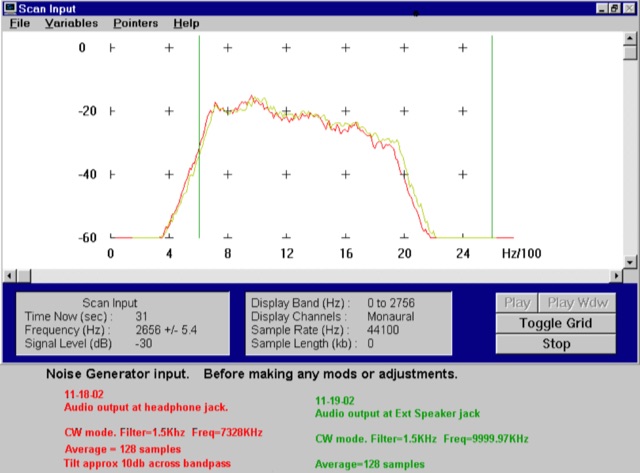 Spectrogram, a PC-based audio frequency spectrum analyzer available from Visualization Software, aids ham radio enthusiasts in aligning receivers like Elecraft K2. Versions are downloadable, with an intuitive interface and customizable parameters. Tutorials by experts like Tom Hammond and John Grebenkemper offer additional guidance.
-
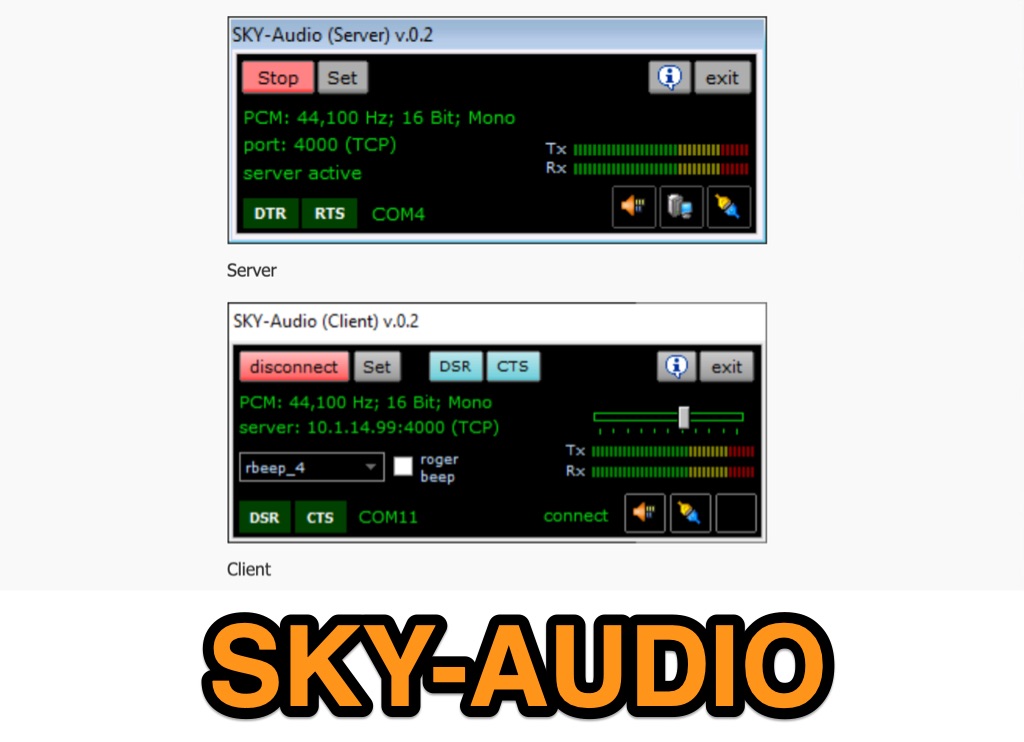 SKY Audio is a duplex remote audio software for Windows, allowing two-way audio transmission between devices. Users can send and receive audio, as well as engage in PTT functionality. The program offers low audio latency and the ability to configure connection settings. The freeware software can be downloaded from the provided link.
-
 Amateur Television (ATV) is a ham radio technology that transmits and receives broadcast-quality video and audio. It utilizes existing standards for commercial television and can be used for various purposes including experimentation, entertainment, and public service events. ATV signals can be relayed over long distances using repeaters and are capable of transmitting live video from locations like the International Space Station. The article explores how to get started with ATV, highlighting its ease of use and suitability for beginners in ham radio. The future of ATV appears promising with advancements in digital and narrowband transmission techniques.
-
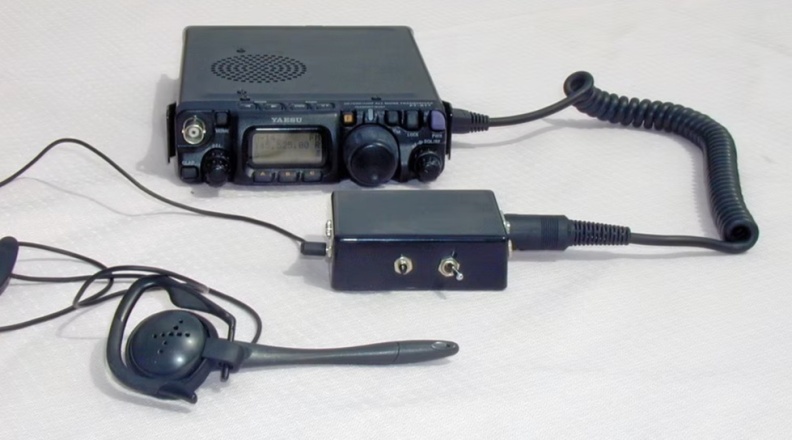 This online project documentation details the construction of a hands-free microphone interface unit designed for _mobile_ amateur radio operation. The curriculum covers the integration of electret microphone elements with amateur radio transceivers, specifically addressing **VHF** band communication. It outlines the circuitry for a switch box that provides an interface between various radio models and microphone types. The guide specifies the inclusion of a **1750 Hz** tone-burst generator for accessing amateur radio repeaters, an operational protocol for many VHF systems. Design considerations include the reduction of ambient vehicle noise through an adjustable audio input level control. The project provides schematics and wiring diagrams for connecting the interface unit to specific amateur radio transceivers, including the Yaesu FT-817. It addresses the selection and adaptation of readily available electret microphone and earpiece assemblies, initially sourced from mobile phone accessories, and later from dedicated headset units. The design incorporates a control mechanism for radio functions, enabling hands-free operation during _mobile_ excursions. Circuit details cover power supply considerations for the electret microphone and signal routing for both transmit audio and received audio monitoring. The documentation specifies component selection for the switch box, ensuring compatibility with common amateur radio microphone input impedances and output levels. This includes considerations for PTT line switching and audio path isolation. DXZone Focus: Online Project Documentation | Hands-Free Mobile Microphone Interface | Electret Microphone Integration | 1750 Hz Tone-Burst Generation
-
 The ICOM IC-R75, introduced in 1999, operates on 13.6 Volts DC and measures 241 by 94 by 229 mm. Its coverage spans from 30 kHz to 60 MHz, making it a versatile receiver for various bands. The review details available accessories, including optional filters and the **UT-106 DSP module**, which significantly enhances signal processing capabilities. Performance comparisons are drawn against other notable receivers such as the Drake R8B and earlier ICOM models, providing context for its audio quality and overall functionality. User feedback is integrated, offering practical insights into its daily operation and reception characteristics across the spectrum. This analysis offers an in-depth look at the IC-R75's technical capabilities and features, serving as a valuable reference for operators interested in this **legacy receiver**.
-
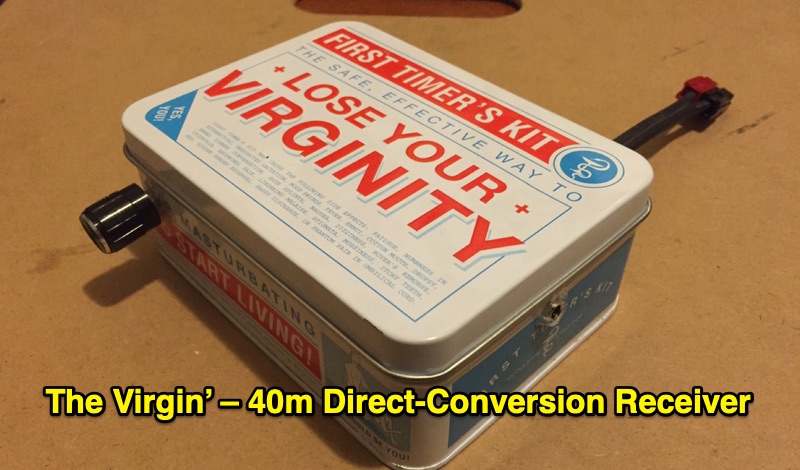 Demonstrates the construction of 'The Virgin', a **direct-conversion receiver** specifically designed for the 40m amateur radio band. This project, completed in February 2016, features a fixed operating frequency determined by a crystal oscillator, requiring a physical crystal change to alter the reception frequency. The design incorporates two integrated circuits and a power regulator, emphasizing simplicity with a single control knob. The author details the initial design, subsequent modifications to the front end, and troubleshooting steps addressing common issues like audio motorboating and power supply instability. The resource presents the final design of the receiver, reflecting the author's first experience building such a unit between December 2015 and February 2016. It offers practical insights into basic circuit construction and the iterative process of refining a homebrew radio project. The content is particularly relevant for those interested in fundamental receiver principles and hands-on **QRP** transceiver building.
-
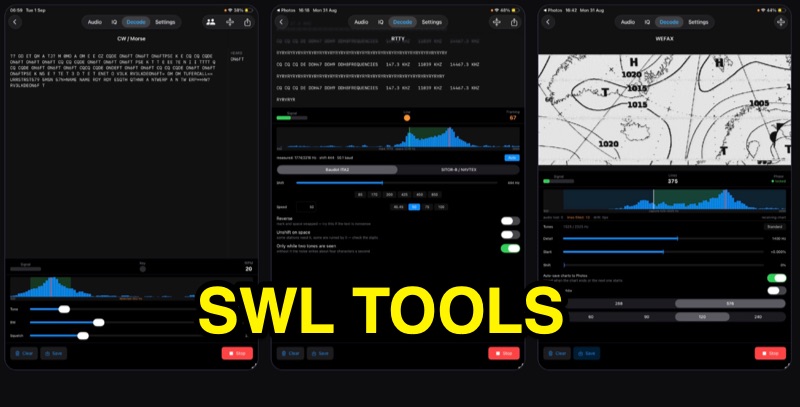 SWLTools, an iOS application for iPhone and iPad running iOS 17+, provides real-time decoding of various digital modes. It automatically locks onto CW tones, measures sending speed, and collects callsigns, distinguishing valid entries from misreads for a reliable log. For RTTY and SITOR-B, the app allows users to set shift and speed, then automatically tunes to the two tones for text reception, supporting marine bulletins, press agencies, and NAVTEX. The application also decodes WEFAX, building charts line by line for direct saving to the photo library, and processes ACARS aircraft messages, including CRC checks for data integrity and mapping of position reports. Beyond decoding, SWLTools integrates a GPU-accelerated FFT spectrum analyzer, a scrolling waterfall display with frequency cursors, and an adjustable FIR bandpass filter to isolate signals. It supports IQ signal analysis from receivers via two-channel audio interfaces, correcting mirror images. Flexible audio input options include the built-in microphone, USB audio dongles, and Bluetooth sources, with diagnostics for audio routing and buffer status. The app records audio, plays it back, and converts recordings into shareable videos, while decoded texts and charts are also savable and shareable, with all timestamps in UTC.
-
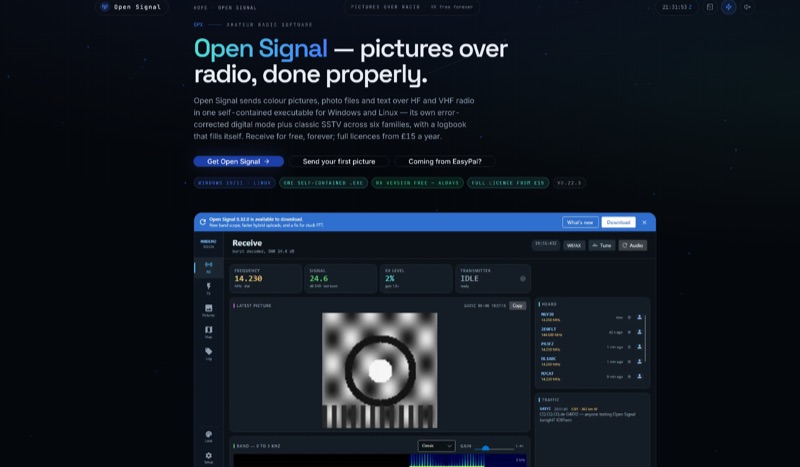 Open Signal, a software application for Windows 10/11 and 64-bit Linux, facilitates the transmission of color pictures, photo files, and text over HF and VHF amateur radio bands. It integrates its own error-corrected OFDM digital picture mode, delivering pixel-exact images in under a minute, with classic analog SSTV across six families: Martin, Scottie, Robot, Wraase, PD, and MMSSTV's MP/MR, featuring automatic VIS mode detection on receive. The application offers four distinct sending methods, including byte-exact JPEG transfer, a hybrid mode utilizing internet for full quality with a short RF link, and its proprietary digital waveform. This self-contained executable eliminates the need for external software like FLDIGI, Hamlib, or virtual audio cables, simplifying setup. It includes a self-filling logbook that integrates with Wavelog/Cloudlog, eQSL, and provides UDP ADIF broadcast. Built-in spotting features include PSK Reporter, DX cluster announcements, and APRS-IS position beacons. The receive-only version is permanently free, while a full license, enabling transmit capabilities and access to the live network, is available for an annual or lifetime fee. The software is actively maintained, unlike EasyPal, which has not seen updates since 2014.
-
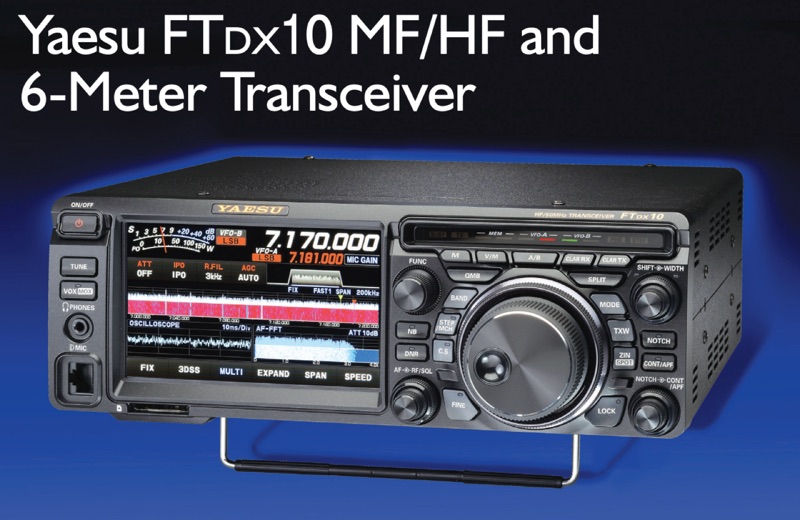 The Yaesu FTDX10 MF/HF and 6-meter transceiver, a 100-watt rig, is designed to bring high-performance receiver architecture to the intermediate-price class. It offers continuous receive coverage from 30 kHz to 75 MHz and transmit capabilities across all amateur bands from 160 through 6 meters, including five preset CW and SSB channels on 60 meters. The transceiver supports AM, FM, SSB, CW, and digital modes, with integrated decoders for CW, RTTY, and PSK31, making it a versatile station for various operating preferences. Physically, the FTDX10 measures 3½ × 10½ × 10½ inches and weighs 13 pounds, requiring a 20–25 A DC power supply for full 100 W output. Its front panel features a 5-inch TFT color touchscreen and a large VFO knob, complemented by an SD memory card slot for recording audio and saving settings. Rear panel connectivity includes a single SO-239 antenna port, multiple USB ports for CAT control and peripherals, and DIN jacks for external digital mode hardware and linear amplifiers, though it lacks a dedicated low-noise receive antenna provision. ARRL Lab tests confirm excellent receiver performance, with blocking dynamic range exceeding 137 dB at 2 kHz spacing and robust IMD dynamic range figures. The hybrid receiver design incorporates selectable roofing filters at 500 Hz, 3 kHz, and 12 kHz, along with two preamplifiers and various attenuation levels, allowing operators to tailor reception characteristics to challenging band conditions. Transmitter performance is also rated very good, with low transmit phase noise.
-
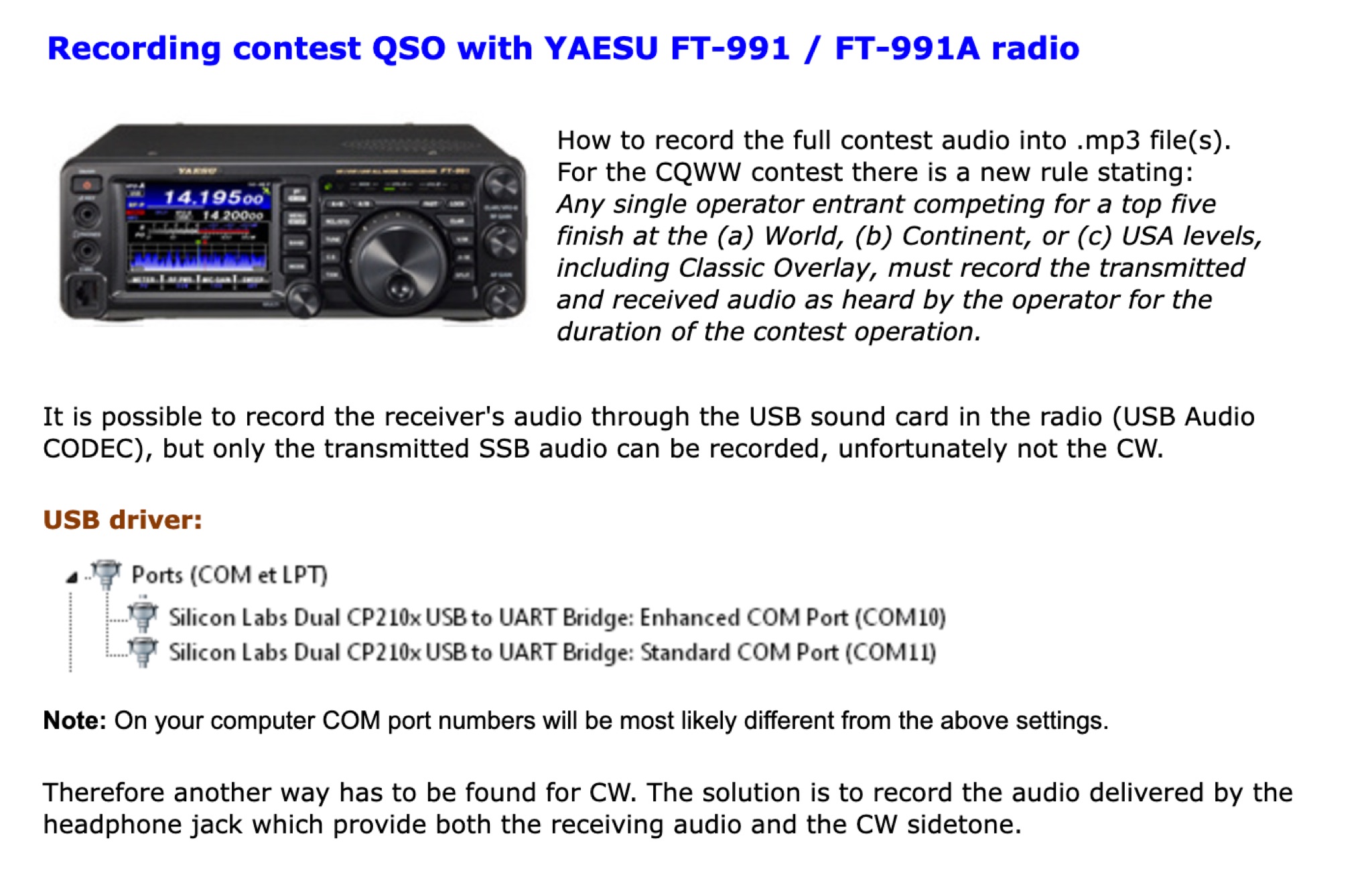 How to record the full contest audio into .mp3 file(s). t is possible to record the receiver's audio through the USB sound card in the radio (USB Audio CODEC), but only the transmitted SSB audio can be recorded, unfortunately not the CW.
-
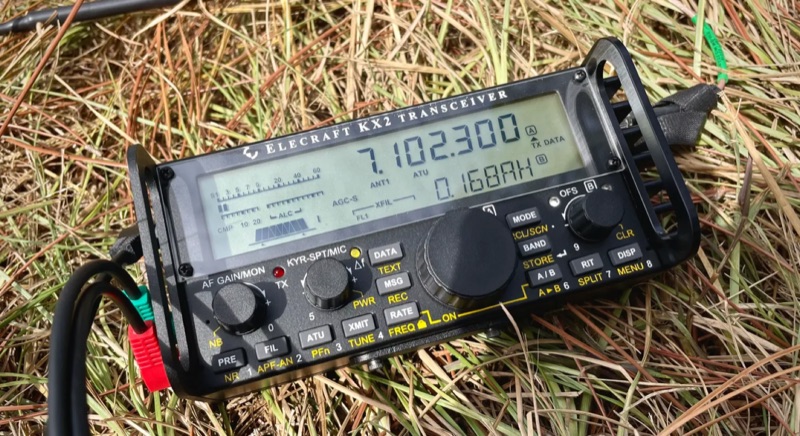 The Elecraft KX2 portable HF transceiver, weighing exceptionally light due to its stamped sheet metal exoskeleton, integrates a 2.5 AH internal lithium-ion battery and an internal tuner, significantly reducing the need for external accessories in a portable HF kit. An add-on board released earlier allows for internal charging, enhancing convenience for field operations. The transceiver's power consumption is efficient, making the internal battery practical for extended use, and its compact form factor is a key advantage for operators prioritizing minimal weight and bulk. Initial user interactions with the KX2 involved familiarization with controls and resolving an audio distortion issue, which was traced to a monitor function left active by a previous owner, quickly rectified by consulting the well-written manual. The resource also notes a Digirig interface issue, resolved by correcting jumper settings, enabling serial rig control. The KX2's data mode operation, while described as an afterthought, is found usable, though it shares mic gain settings between the hand mic and data interface, requiring careful computer audio output adjustment. A notable characteristic of the KX2's data handling is the lack of receive audio monitoring when a data mode interface is connected via the headphone jack, necessitating reliance on waterfall displays for channel clearance. This contrasts with traditional methods of listening for clear channels. The article also mentions the KX2's use of pin diode switching for silent TX during data operations and suggests further work on TX/RX EQ and voice compression settings to optimize 10W voice performance.
-
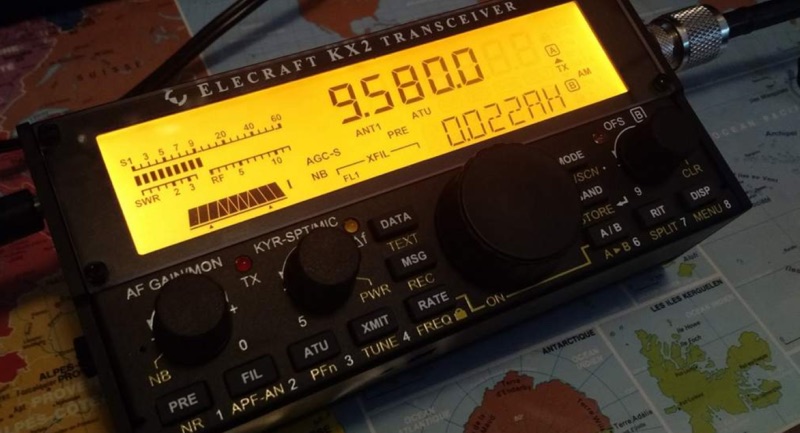 Operating the Elecraft KX2 in the field reveals its strengths as a **QRP transceiver**, particularly for activations like NPOTA. The author, K4SWL, recounts his initial skepticism about acquiring a KX2, already owning both the KX1 and KX3, but ultimately found its compact form factor and feature set compelling for portable use. He details the process of learning the KX2's menu system, noting differences from the KX3, and praises the comprehensive Elecraft owner's manual for navigating these nuances. K4SWL's experiences with the KX2 during numerous NPOTA activations highlight its quick deployment and effective internal options, such as the LiPo battery and the **KXAT2 internal ATU**. He shares an anecdote from the W4DXCC conference where the KXAT2 successfully matched a 20-meter hex beam on 40 meters at 10 watts, a task the Icom IC-7300's internal tuner could not accomplish. This demonstrates the KX2's robust tuning capabilities for varied field antenna setups. The review also touches on the KXPD2 keyer paddle, noting its improved design over the KX1's primitive paddles, despite a higher price point. K4SWL provides audio comparisons of the KX2's general coverage receiver in AM mode against an LnR Precision LD-11, showcasing its impressive shortwave broadcast listening capabilities, while acknowledging its designed limitations for mediumwave reception.