Search results
Query: html
Links: 2646 | Categories: 0
This query is too generic. Please try adding an additional term to focus your research.
-
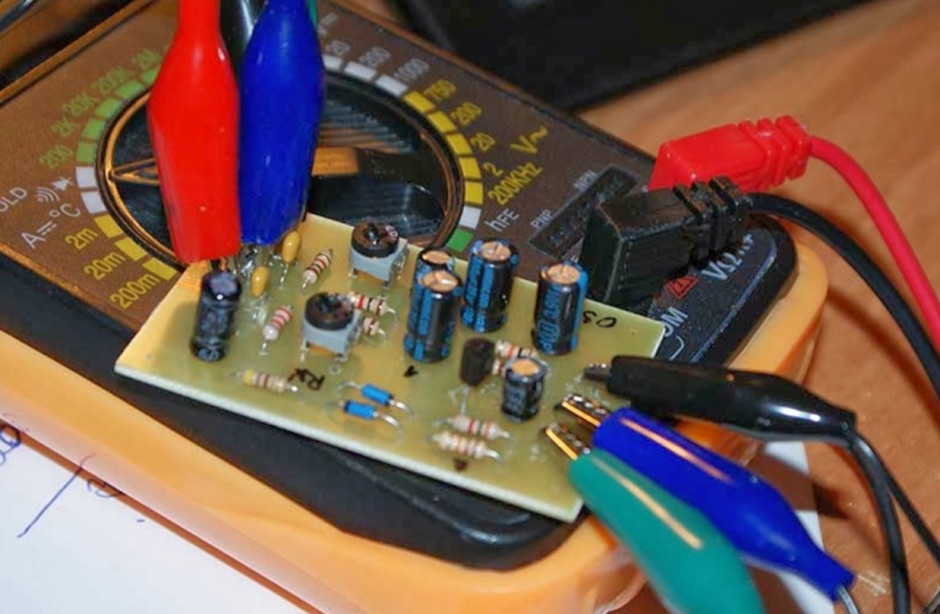 A homemade interface for any android device, allow to receive and trasmitt SSTV PSK RTTY from an android tablet based on the DD7LP original project include demo of a sample DIY kit.
 -
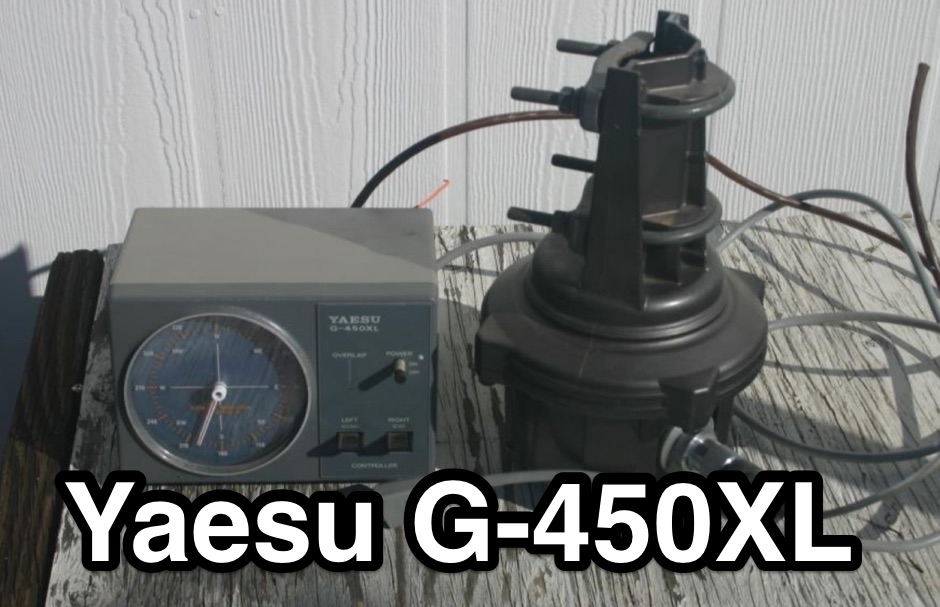 An old usenet posting about the Azimuth Indicator Problem of the popular Yaesu G-450XL Rotator
 -
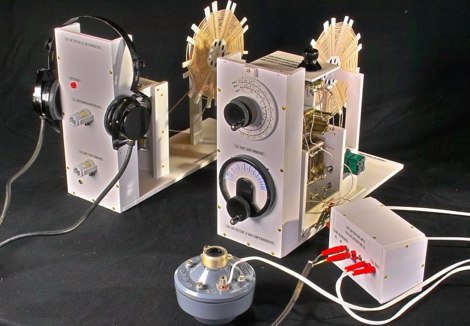 Crystal radio home made projects by DL2XM
 -
 An SDR project, MDSR modulator-demodulator software radio, made using an inexpensive converter and a pc. MDSR has a transceiver and a receiver converters.
 -

-
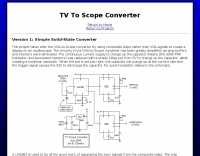 This project takes after the VGA-to-Scope converter by using composite video rather than VGA signals to create a display on an oscilloscope.
 -
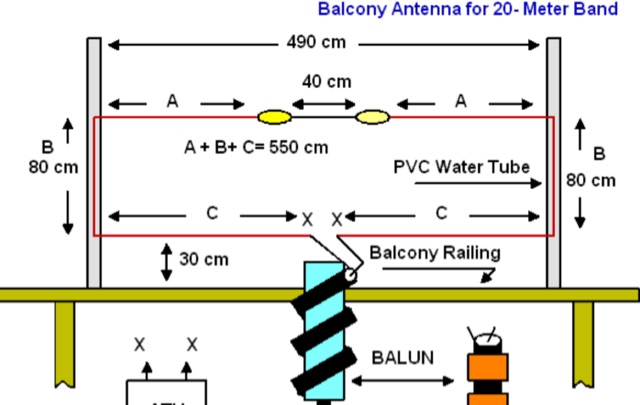 Antenna may be made practically from any wire (strand, solid) having a reasonable diameter 0.5 2.0 mm (24- 12 AWG). Antenna may be installed at any balcony of 3 to 6 meter length.
 -

-
 Thoughts build a solid state legal-limit amplifier for amateur radio use.
 -
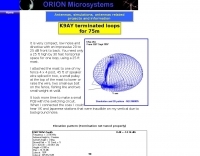 It is very compact, low noise and directive with an impressive 20 to 25 dB front to back
 -
 Working from a small apartment-balcony on all bands with a small antenna
 -
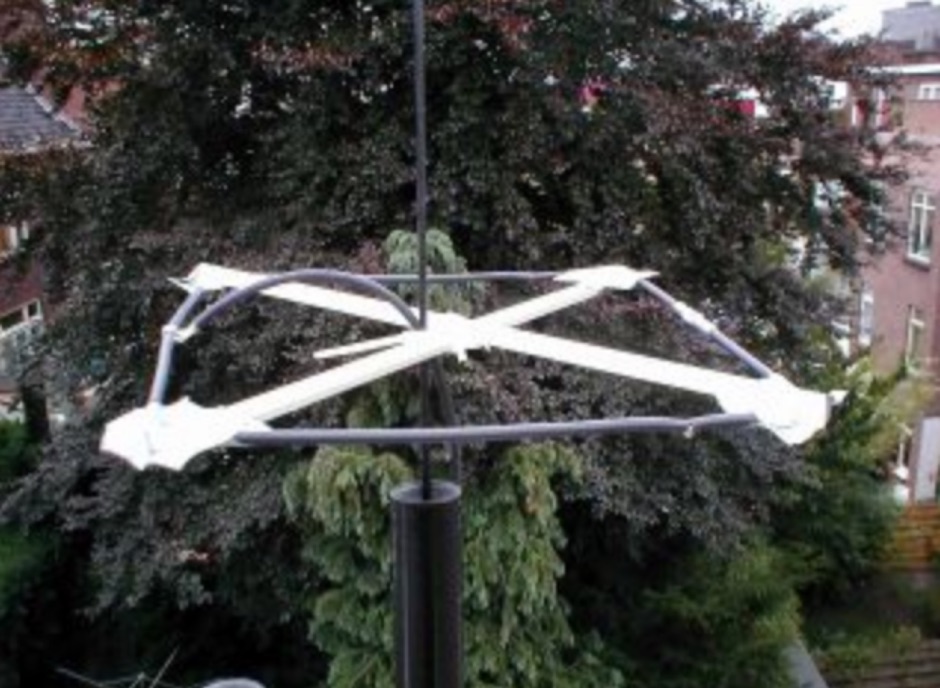 Sort of similar to the one of the 6m omni. Instead of using twin-lead, this design makes use of a more or less regular double bazooka antenna (coaxial dipole). Your attention shall be drawn to the available standart literature, such as Rothammel. In order to "compute" the dimension, Karl Rothammel mentioned that the total length of the dipole shall be 95% of the free-space wavelength. The short-circuit bridges (closing the folded dipole) are to be placed at a distance-fraction being equal to the velocity factor of the coax cable used, which will be 66% using RG-58 or RG174.
 -
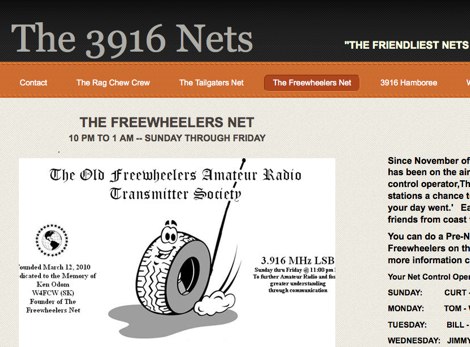 Since November of 1998, The Freewheelers Net has been on the air on 3.916 MHz
 -
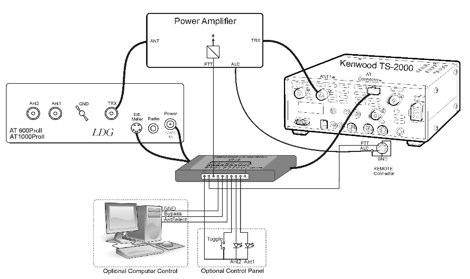 An universal antenna tuner interface, the Kenwood Remote LDG Tuner Interface by af6sa
 -
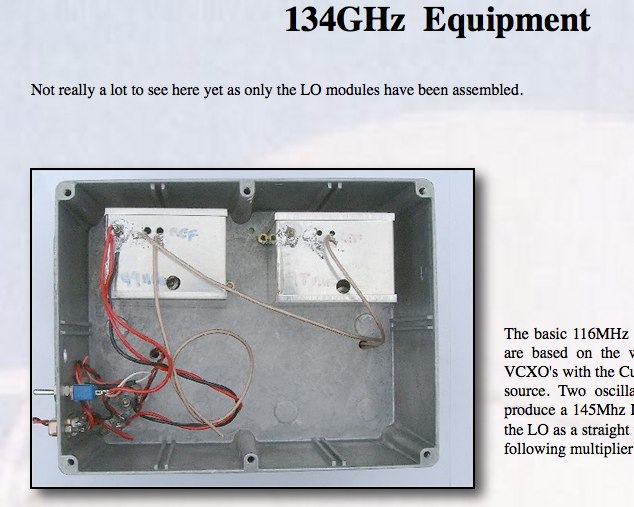 Developing operational amateur radio equipment for the 134 GHz band presents significant technical challenges, particularly in frequency generation and stability. This resource details the construction of a 134 GHz system, outlining its architecture with separate transmit (Tx) and receive (Rx) modules, each employing a local oscillator (LO) and RF head units. The system utilizes a dual Flann 50 GHz lens-type horn antenna configuration for optimal signal coupling. The transmit path incorporates an LMX2541 synthesizer chip operating at approximately 2.8 GHz, referenced by a 10 MHz double-oven Morion OCXO for exceptional stability. This signal is multiplied through a series of stages (X4, then X2) to generate a 22.4 GHz signal, which subsequently drives a dual series diode multiplier to produce the final X6 signal for 134 GHz operation. The receive side features an anti-parallel diode mixer coupled to a 144 MHz transceiver via a preamplifier, ensuring effective downconversion. Operational mode is CW, achieved by keying a multiplier stage. The project includes images of the Tx and Rx head units and describes a successful 3.5 km test with G8ACE, demonstrating stable signal tones due to PLLs locked to OCXOs at both ends, confirming the system's robust performance.
 -
 Build a digital AC voltmeter to measure the output range from 0 to 150VAC with reasonable accuracy
 -
-
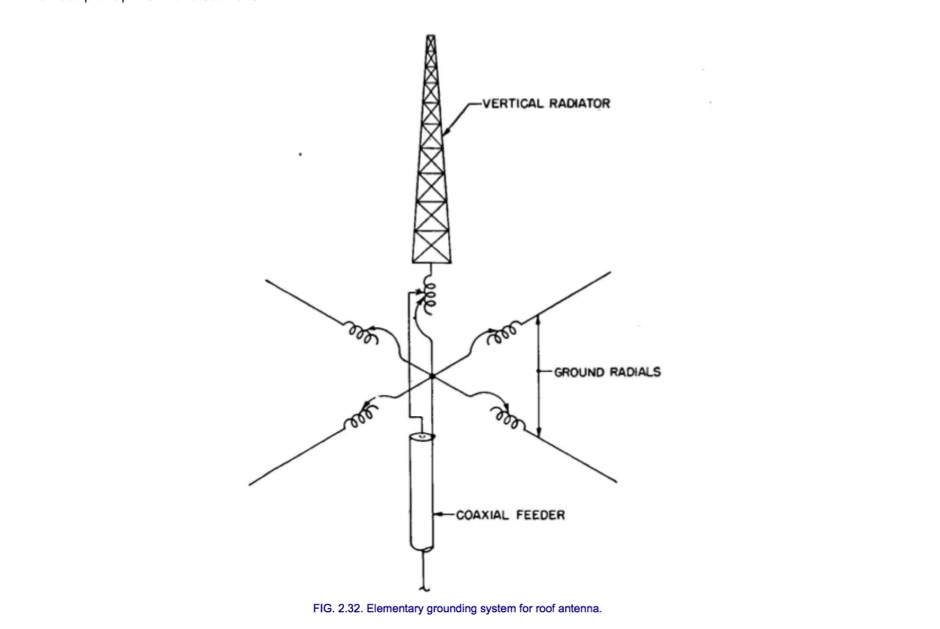 When a broadcast antenna is to be placed on top of a building, there are special problems of feeding and grounding. The radiator is usually electrically short, that is, much less than one-quarter wavelength high.
 -
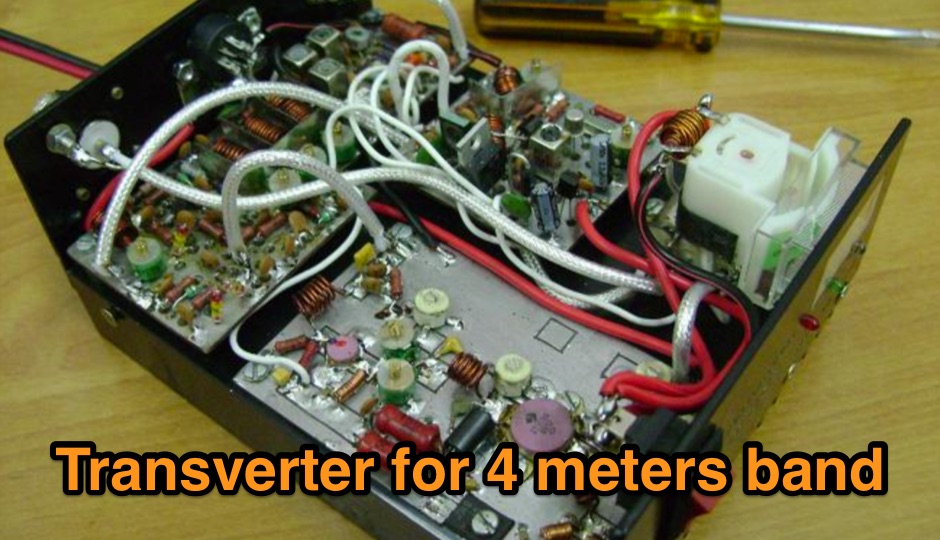 A 70 MHz Transverter project with a block diagram and schematics
 -
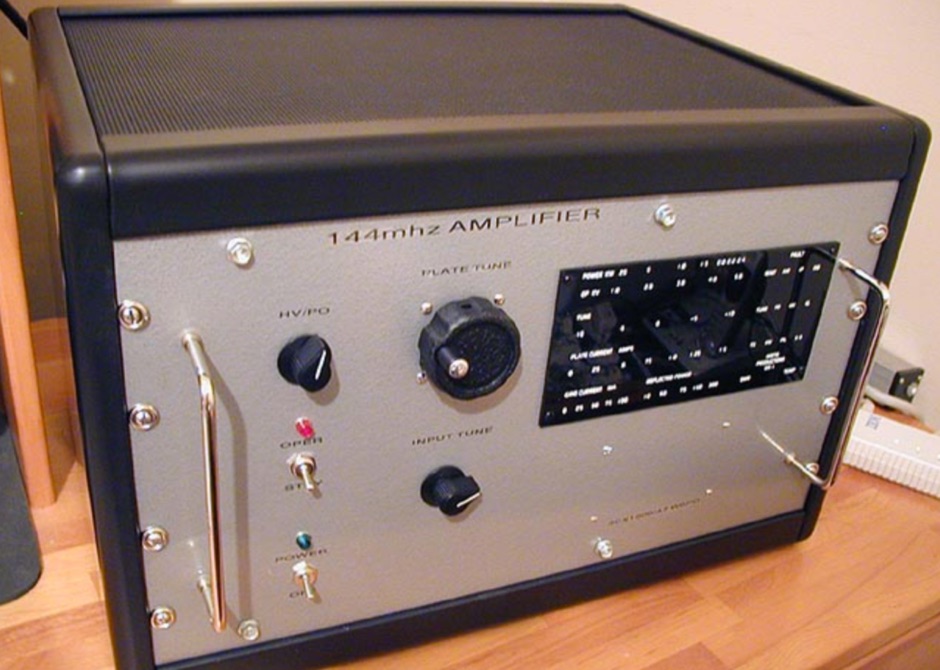 A 3CX1500/A7 8877 144mhz W6PO amplifier, that running a little over 4kv on the plate, this Amp will do over 2kw out.
 -
 A little gadget was found in an article in QST, made with 1 pair of powerpole connectors a resistor and two leds
 -
 The wire antenna described in this page provides much stronger signal strength while staying within the concept of a dummy load antenna.
 -
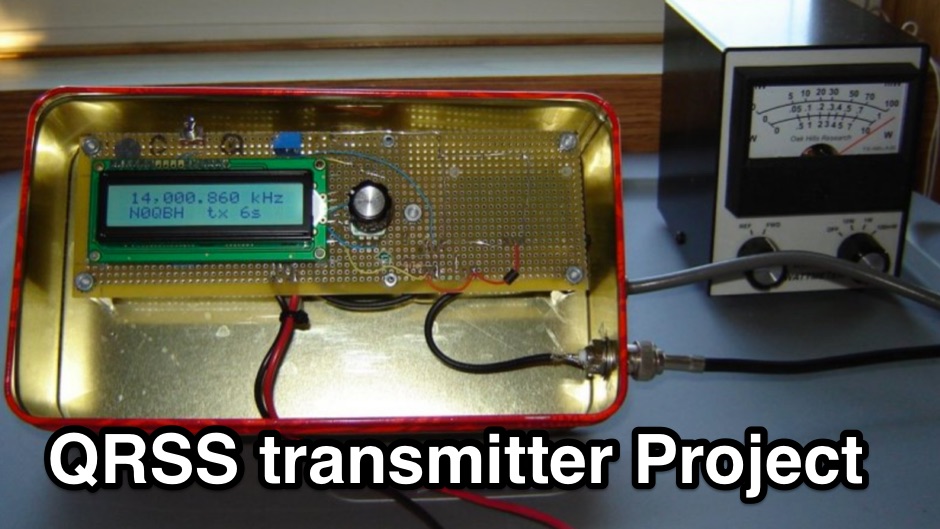 The N0QBH QRSS project page, a couple of projects using available kits for improved frequency and timing stability. A configurable DDS VFO 100mW transmitter with LCD display and a modified Hans Sommers 40m 100mW transmitter
 -
-
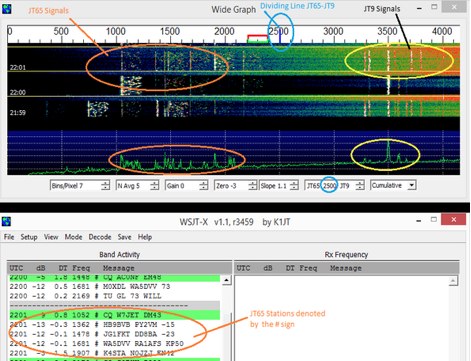 Guide to JT65A and JT9 via WSJT-X Software by Andy K3UK
 -
-
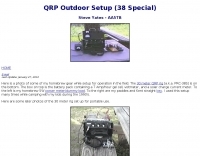 AA5TB portable station for 30 meter QRP operations
 -
-
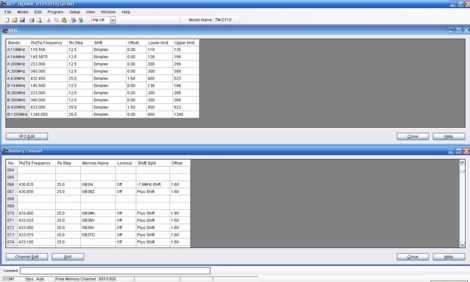 Official Kenwood memory control program for TM-V71A / TM-V71E TM-D710A / TM-D710E RC-D710
 -

-
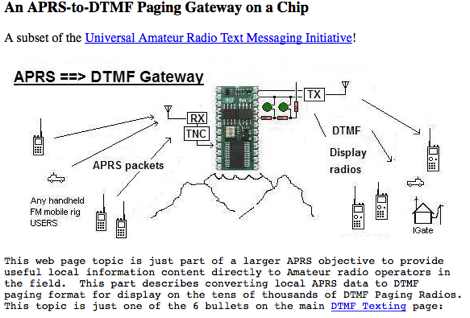 Converting local APRS data to DTMF paging format for display on the tens of thousands of DTMF Paging Radios.
 -
 LDE articles and reports about long delayes radio echoes by DF5AI
 -
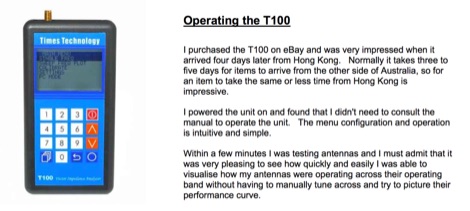 Times Technologies Vector Impedance Analyzer Review
 -
 Amateur radio station c31lj andorra 28.256 MHz
 -
 Collins Collector Clubs, Nets, Magazines & Lists
 -
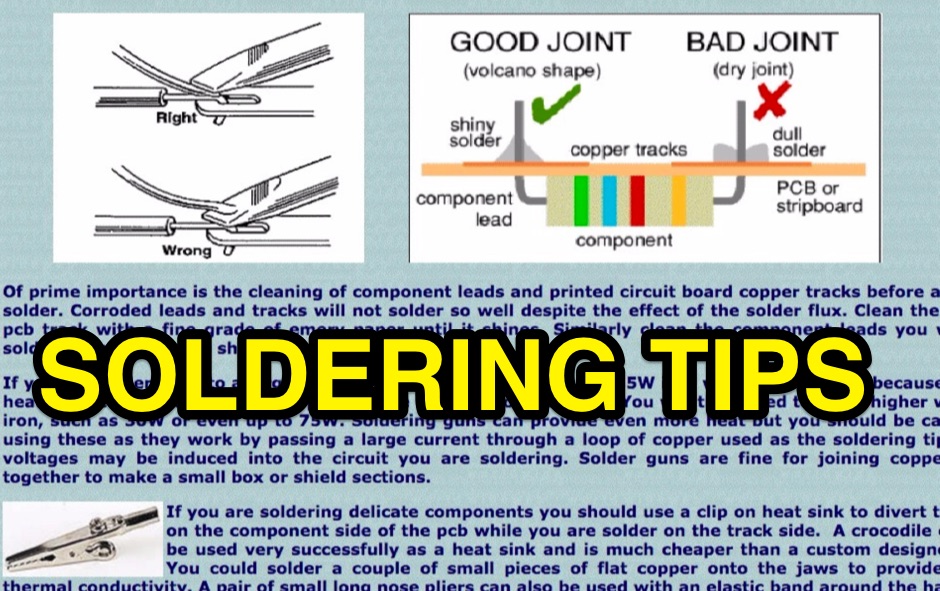 Soldering Tips and tricks by George Szymanski, DU1GM
 -
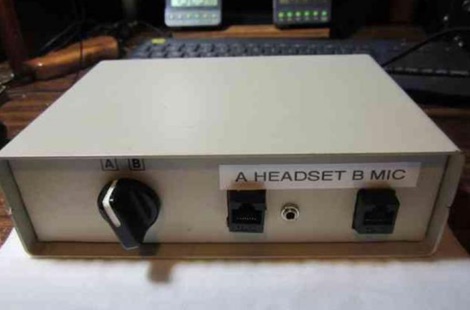 A 15-pin data switch, typically a rotary-knob type designed for DB-25 connectors, forms the basis for this microphone selector project. The resource details the conversion process, which involves replacing the original DB-25 connectors with **RJ-45** or **RJ-12** jacks to accommodate modern amateur radio microphones. It specifically addresses wiring for radios like the Icom IC-706 series (including the IC-7000 and IC-703) and Yaesu transceivers such as the FT-857, FT-897, FT-817, FT-7800, FT-7900, FT-8800, FT-8900, FTM-100, and FTM-400. The design ensures all microphone lines are switched straight through, with separate contacts for external speaker/headphone jacks, allowing simultaneous switching. The project emphasizes the practical application of switching between a headset for net control and a hand mic for rag-chewing without repeatedly plugging and unplugging cables. It highlights modifications to the original concept, such as eliminating a separate PTT jack by integrating PTT into headset cables and building the external speaker cable directly into the selector. The article provides guidance on managing the non-color-coded wiring often found in these data switches by soldering wires one by one from old to new connectors, ensuring correct pin alignment. This approach simplifies the conversion, making it accessible for hams seeking a functional and cost-effective mic switching solution.
 -
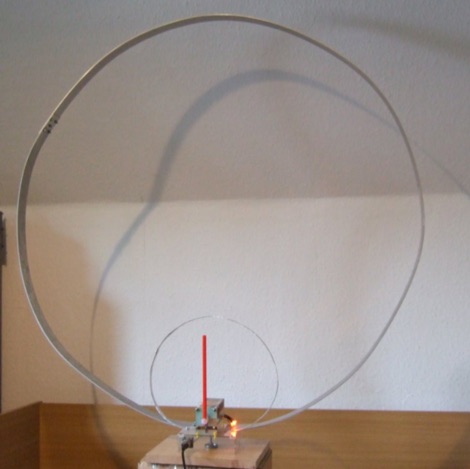 A home made magnetic loop for HF Bands. This small and compact loop is designed to support small power transmissions on HF bands, from 7 MHz to 21 MHz
 -
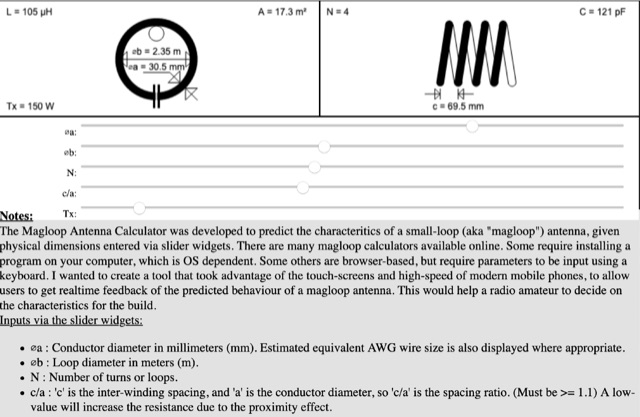 The Magloop Antenna Calculator was developed to predict the characteritics of a small-loop (aka magloop) antenna, given physical dimensions entered via slider widgets. This magnetic loop antenna calculator works also on most mobile devices, adjusting sliders and calculating dimensions in real time.
 -
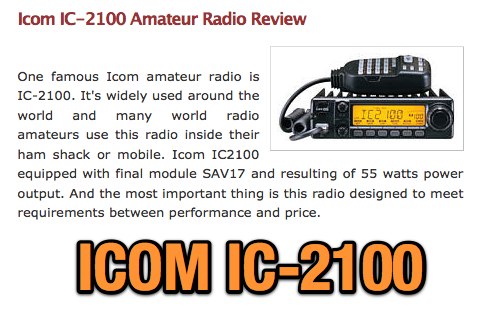 Review of the popular Icom IC-2100 VHF ham radio transceiver by YB3TD
 -
 PC serial port (RS-232 DE9) pinout connection
 -
 Spanish amaterur and cb radio classified ads
 -
 This battery charger circuit is regulated and adjustable to make this circuit able to charge the mosto NiCAD battery.
 -
 DF0WD DL4YHF Longwave Station include a linear transverter and antenna tuner
 -
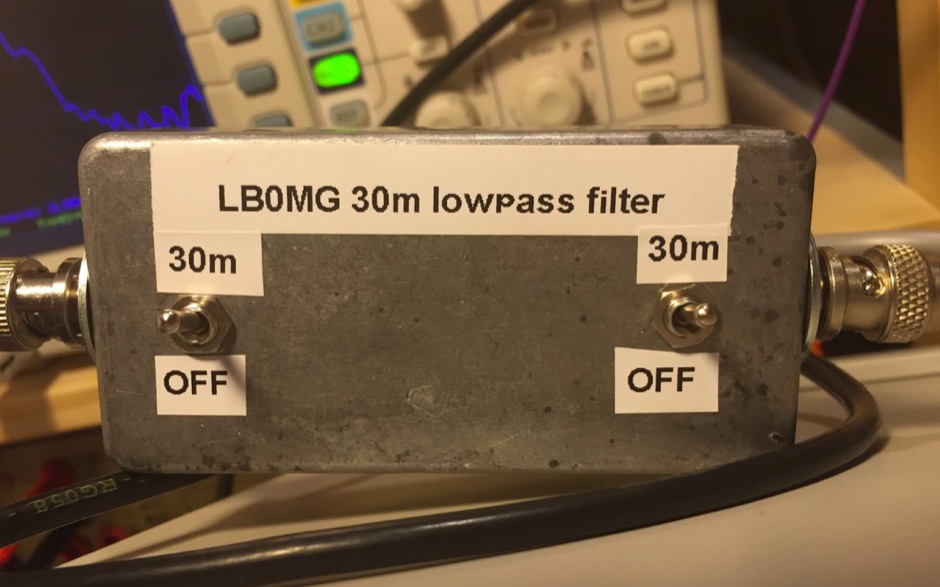 30m lowpass filter for the Softrock Ensemble RXTX tranceiver.
 -
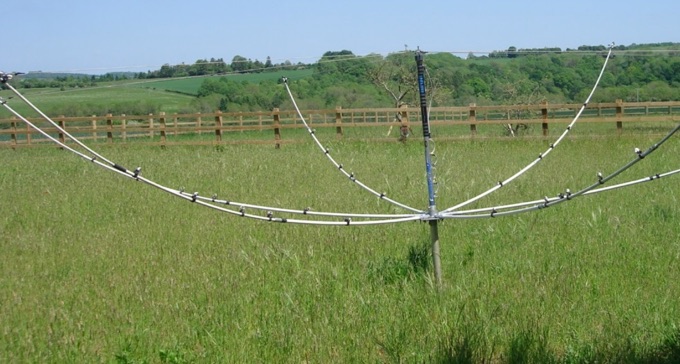 Useful tips on building cobweb antennas. Since I've done so many posts on the Cobweb antennas I thought it best to separate them on a different page so that potential Cobweb builders can see all the posts together. Hopefully this will make planning and building easier.
 -
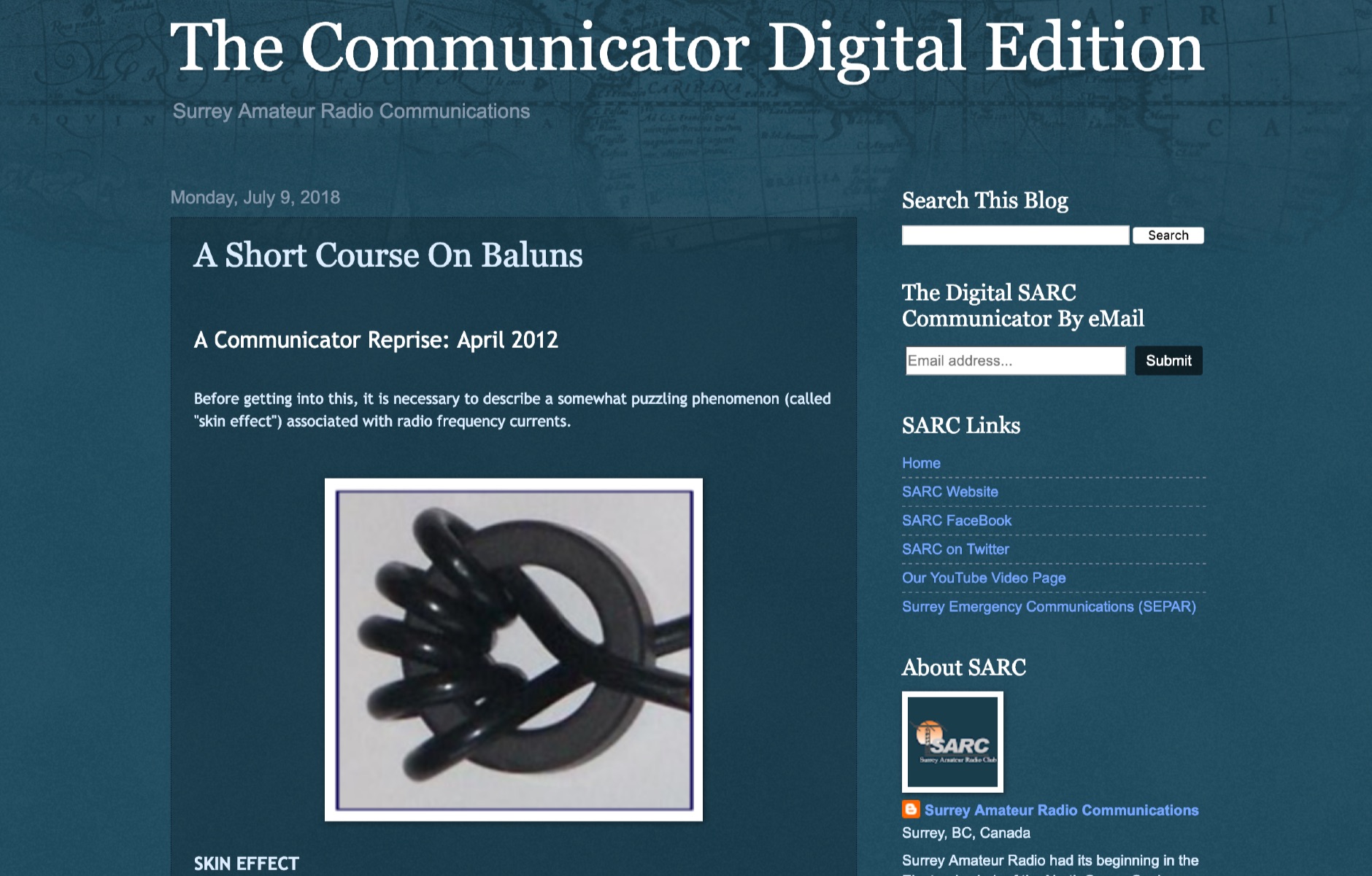 An interesting article on basics about Baluns, intoducing the skin effects on radio frequency currents and its effects on receiving and trasmitting article by VE7FO
 -
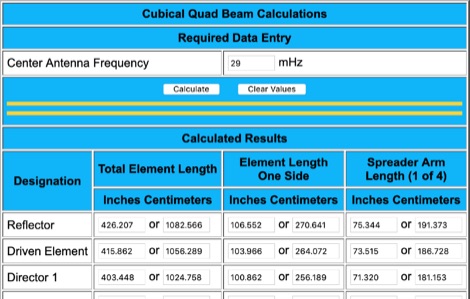 Cubical Quad Antenna On-line Calculator helps on defining the size of each element and spreader. Simply give the resonating frequency and it will calculate size of each element.
 -
 Over 100 currently valid callsigns for the Bailiwick of Guernsey are listed, encompassing full, intermediate, and foundation licenses, alongside special event and club station calls. The resource clarifies various callsign types, such as 2U0*** for intermediate licensees with a 50-watt limit and GU0*** for full licensees operating up to **400 watts**. This detailed compilation also includes specific QSL routing instructions for visiting operators and past residents, often referencing their home callsigns like _G4DIY_ or _DJ8NK_. The callbook further acknowledges "silent keys," providing a respectful record of former Guernsey amateurs, complete with their callsigns and dates of passing where available. It also lists local repeaters and provides important QSL bureau information, noting that only US dollar bills are accepted for direct QSLs, not English stamps or Euros. For full addresses, the resource directs users to _QRZ.com_, emphasizing that the provided information is offered in good faith.
 -