Hellschreiber Operating Mode for Amateur Radio
Find software, frequencies, club information, and technical details for the unique Hellschreiber digital mode.

Hellschreiber is a unique digital mode that transmits text as a series of short, vertical lines, creating a visual representation of characters. Developed by Rudolf Hell, it's known for its robustness under challenging propagation conditions, making it effective even when signals are weak or noisy. Hams enjoy Hellschreiber for its distinctive sound and visual display, which sets it apart from other digital modes like FT8 or PSK31.
Operators interested in Hellschreiber can find various resources, including freeware decoding programs like IZ8BLY Hellschreiber for Windows, which help visualize the received text. There are also dedicated groups, such as the Feld-Hell Club, that promote the mode and suggest common frequencies for Hellschreiber activity. Many sites offer detailed explanations of how Hellschreiber works, covering its various formats and historical context, often with examples of on-air QSOs.
Related Categories
-
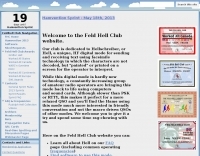 Club dedicated to the world of Hellschreiber
 -
 An introduction to PSK31, MT63, and Hellschreiber, John DeGood NU3E Trenton Computer Festival in PDF
 -
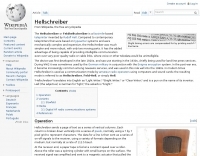 Wiki page of the Hellschreiber or Feldhellschreiber facsimile teleprinter by Rudolf Hell
 -
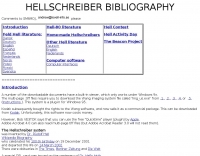 Multilanguage documents about Hellschreiber
 -
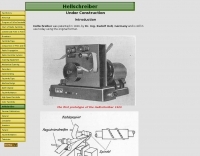 Pictures of Hellschreiber machines as projected by Rudolf Hell
 -
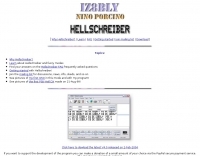 Freeware Hellschreiber decoding program for windows by Nino Porcino
 -
 Exaustive introduction to PSK31 and Hellschreiber by Bob Rushby
 -
 Hellschreiber is an interesting ham radio mode developed back in the 20s. It is a bit strange and different, but fun. I'll explain what it is, then I make a couple contacts during the Hellschreiber contest.
 -
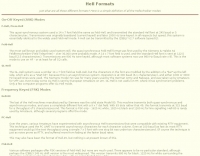 Here is a simple definition of all the Hellschreiber modes