Search results
Query: qsl
Links: 2097 | Categories: 14
This query is too generic. Please try adding an additional term to focus your research.
Categories
- Software > QSL
- DX Resources > QSL Bureaus
- DX Resources > QSLing > QSL Galleries
- DX Resources > QSL manager
- Shopping and Services > QSL Printing
- DX Resources > QSLing
- DX Resources > DX Peditions > 2014 DXpeditions
- DX Resources > DX Peditions > 2017 DXpeditions
- DX Resources > Clubs
- DX Resources > DX Peditions
- Internet and Radio > Humor
- Ham Radio > Blogs > Asia > India
- DX Resources > QSLing > International reply coupons
- Ham Radio > Resources
-
-
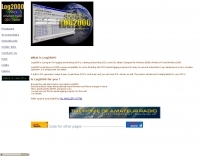 Log2000 provides a structured environment for amateur radio operators to manage their contact records. This software facilitates the logging of two-way radio contacts, a fundamental aspect of the hobby, by capturing essential QSO data such as callsigns, dates, times, bands, and modes. It also supports the generation and printing of QSL cards and labels, streamlining the process of confirming contacts for awards and personal record-keeping. The program was specifically developed for Windows 95/98, Windows NT, and Windows 2000 operating systems. Its feature set includes tools for searching logs, generating various reports, and managing award progress. While tailored for earlier Windows versions, Log2000 offers core logging functionalities that remain relevant for basic station management.
 -
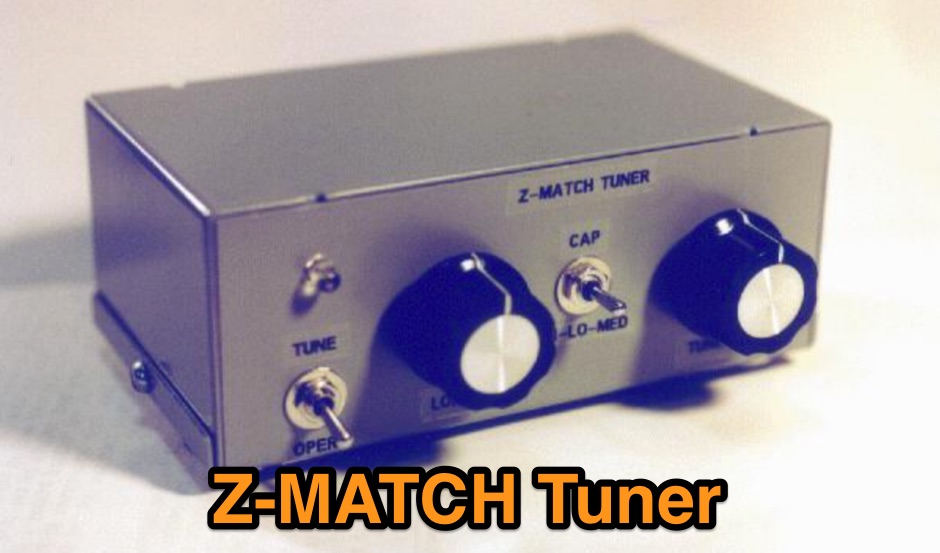 A home made antenna tuner based on the W6JJZ basic concept that ,atches balanced loads without the use of lossy baluns, can provide band-pass filtering and harmonic attenuation.
 -
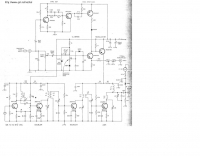
 The Elecraft K2 transceiver requires specific modifications for optimal soundcard digital mode operation, particularly for PSK31. The original article, circa 2001, details initial challenges with manual PTT and speech compression settings. A key modification involves adding headphone audio and a compression disable signal to the K2's microphone jack, utilizing pins 4 and 5. The **COMP0** signal, active low, is shorted to ground via a non-inverting open collector switch circuit, comprising two resistors and two transistors, mounted on the SSB board near U3. This circuit provides effective control of an analog signal line with good noise immunity. The switchbox itself repurposes a computer COM port switch, using only two of its original connectors and four of the nine poles. It integrates a microphone preamplifier, a PTT circuit built with 'flying leads' construction, and RCA jacks for soundcard connections. A trimpot adjusts the audio drive to the K2. The central DB9 connector links to the K2's mic connector via a shielded RS232 serial cable, ensuring proper grounding and signal routing. An external footswitch PTT jack is also included. Further enhancements include a **noise-canceling microphone** preamp based on a QST December 2000 article, adapted for Heil mic elements. This preamp, built with pseudo-Manhattan style construction, provides a gain of approximately 2 by changing emitter resistors (R9 and R16) from 680 ohms to 330 ohms. A 10-ohm series resistor and 47 µF capacitor on the +5V supply mitigate noise spikes.
 -
 XLS file with technical specifications about ham radio transceivers
 -
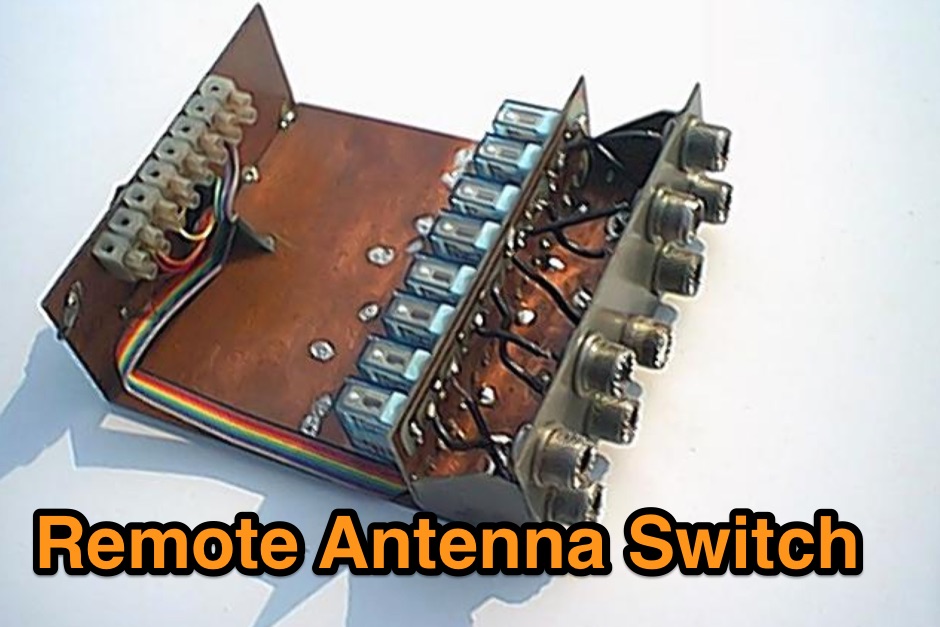 Benefits in implementing a remote antenna switching system and a sample remote antenna switch project
 -
 Complete introduction to Shortwave radio, includes Qsl gallery, Propagation, Beacons, Contest, Begginers guide, in Spanish
 -
 BQ9P Interactive Logbook 1998 DXpedition to Pratas Island
 -
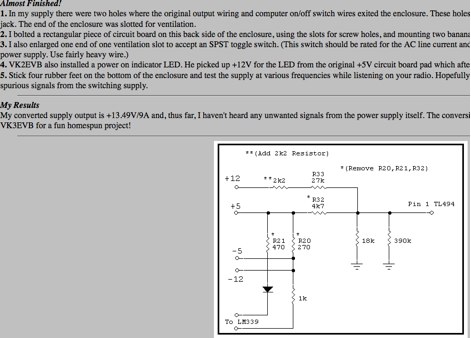 Converting a PC Switching Power Supply to 13.5V by AA3SJ
 -
 Info and specifications on my three beacons on 10 and 6 meter bands. You will find also informations on the propagation for these two band.
 -
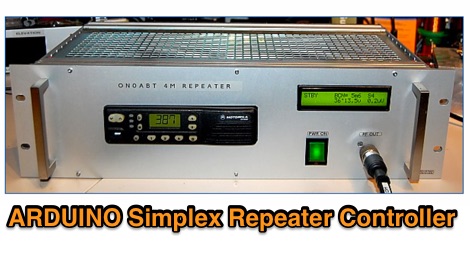 This project hereby presented is a complete HAM radio simplex 'smart' repeater, built around a Motorola GM-350/950, Arduino NANO board and a WINBOND audio recording integrated circuit
 -
-
 Web pages of TRAC istanbul city branch
 -
 Free Logbook conversion program that allows the conversion of some old DBF log files (DXLog, EasyLog, LogPlus, TopLog, TurboLog TotalHAM92) to the ADIF Format, 3.8Mb ZipFile
 -
-
-
 Transmission Line equations for Windows. Written in Visual C++. This program provides the most comprehensive analysis of a transmission line by w9dmk
 -
 The purpose of this article is to describe in detail the Morse code keys made by the Brown Brothers Machine Company (BBMC), to aid the serious key collector in identifying each model made by this fine company.
 -
-
 Analyzing a decade of contest operations and QSLing from March 1993 to March 2003, K5ZD presents data on QSO totals by band and mode, QSL error rates, and DXCC progress. The article details the author's methodology of only answering incoming QSLs, which allowed for a study of call copying error rates, found to be between 0.8% and 1.7%. These error rates correlate with typical contest log checking reports (UBN/LCR). The data also tracks the percentage of QSOs confirmed by QSL cards annually, averaging 12.1% over the ten-year period, with a steady rate of 14-15% in earlier years. Specific statistics include a total of 215,653 QSOs logged, with 26,184 QSLs received. The article identifies the top 33 countries for incoming QSLs, accounting for over 87% of the total, with Japan, Germany, Spain, and Belgium being prominent. It also touches upon the potential of ARRL's Logbook of the World (LoTW) for instant confirmations, while noting potential error rate implications. The author's station, initially a barefoot setup with a Hygain multi-band vertical, evolved into a fully operational contest station by October 1993, utilizing DX4WIN for logging.
 -
-
 Fast Scan Amateur Television in Southern California, Nevada, Arizona, New Mexico, Indiana and soon in Illinois.
 -
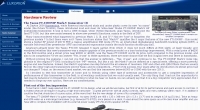 The Yaesu FT-1000MP Mark-V, introduced at Dayton 2000 Hamvention, features a higher RF power of **200 W PEP** and a Class-A amplification SSB mode at 75 W. Key enhancements include an _Interlocked Digital/Analog Bandwidth Tracking system (IDBT)_, a Variable Front-End Filter (VRF) preselector, and improved ergonomics, notably a multi-function shuttle jog dial. This model, a successor to the 1996 FT-1000 and FT-1000MP, was designed to compete with high-end transceivers, despite its retail price of $4200 initially. The transceiver's physical dimensions are 406 x 135 x 348 mm (16 x 5.3 x 13.7 inches) with a weight of 14 kg (31 lbs), making it substantial. Its rear panel offers over 20 connections, including power, external DSP speaker, BAND DATA I/O, ALC, and multiple interface jacks for DVS-2, Packet, and RTTY. The unit also provides two keyer inputs, a DB9M serial interface for CAT, and two PL female antenna connectors, plus additional receive antenna jacks. Despite its advanced internal architecture, including two independent receivers with their own IF filters and AGC loops, the display technology, utilizing fluorescent discharge rather than LCD, contributes to an older aesthetic. The control panel is extensive, featuring 92 knobs and buttons, alongside numerous LED indicators for various modes and functions.
 -
 Club activities, news and newsletter Ham Chatter Online features a member each month. Field Day pictures, etc. Home of VOA transmitter sites. Club calls, W4AMC & W1VOA Greenville, NC
 -
 About ham radio hobby with hundreds of related links
 -
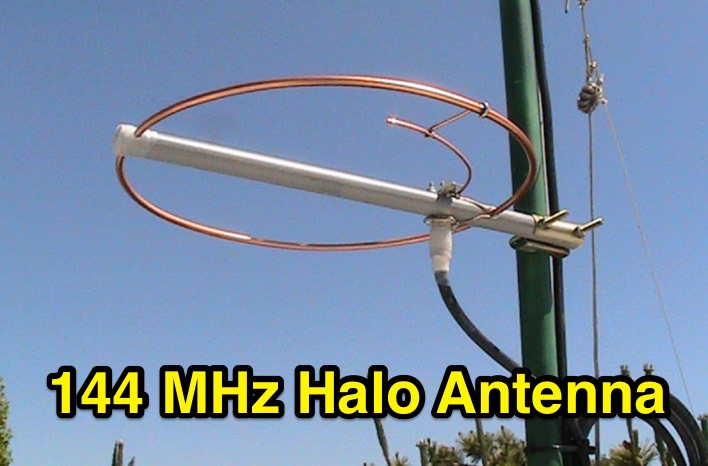 Construction and analysis of a low cost omnidirectional horizontally polarized antenna for 144 MHz, including notes on halo antenna stacking
 -

-
-
 Reduces line noise on TS-850
 -
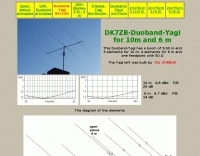 This Duoband-Yagi has a boom of 3.60 m and 3 elements for 10 m 4 elements for 6 m and one feedpoint with 50 Ohm
 -
 A simple low-power broadcast-type circuit, using a crystal oscillator integrated circuit and an a collector modulated AM oscillator
 -
 The Kenwood TS-570D(G) transceiver (I), by Thierry Lombry, ON4SKY
 -
-
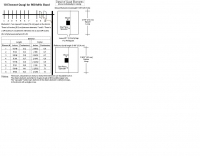
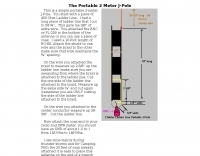 This is a simple portable 2-meter J-Pole antenna. You start with a piece of 450-Ohm Ladder Line
 -
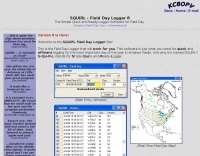 Demonstrates the _SQUIRL Field Day Logger_, a specialized software tool designed for efficient contact logging during the annual ARRL Field Day event. The resource details its core functionality, which includes real-time logging to easily readable text files, with filenames structured by callsign, band, and mode (e.g., K8DAA-20M-SSB.txt). It highlights features such as a real-time history grid of previous contacts, a dynamic USA and Canada map displaying contact locations, and a duplicate checker that provides audio notifications and pre-fills class/section data for previously worked stations. The software also includes an ADIF export function, enabling users to transfer logs to other general-purpose logging programs. The software's design emphasizes simplicity and ease of use, allowing for rapid on-the-spot training, as noted by users like W4CMB. It supports various operating systems, including Windows 98 through 8, and has been successfully run on Linux via _Wine_. Key usability enhancements include a "double-size" feature for improved readability and a "Space Mode" for quick field navigation. The version history indicates continuous development from 2001 to 2013, with significant additions like the real-time Field Day Map in 2003 and ADIF export in 2004, which allows for seamless integration with other logging platforms.
 -
 Homepage of Hong Kong's elite group of DX'ers
 -
 A lightweight portable vertical antenna for 40m
 -
 Allows you to automaticaly upload ARGO screen captures to your webpage in a convenient way. by ON7YD
 -
 VHF, ms, aurora, es, photos, audio, link, soft and more.
 -
 Links and sources of information about our club in Ventura County, California
 -
 The Smith Chart program with its extensive Help files. Written in Visual C++ ver 1.5, it runs in Windows 3.1 and later by w9dmk
 -
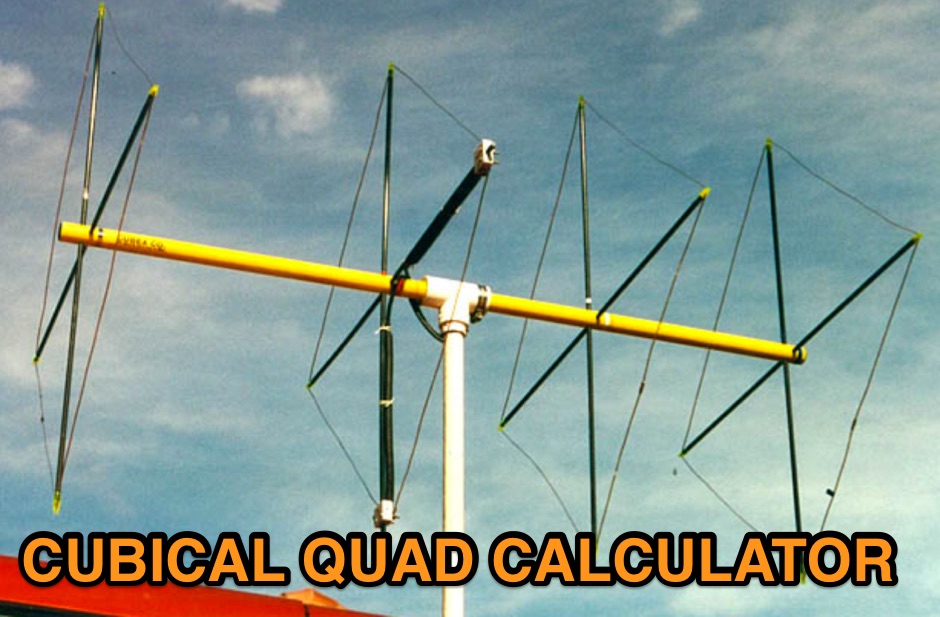 An online javascript calculator for cubical quad antennas, simply input the resonating frequency to calculcate up to a five element quad antenna. This quad antenna calculator let you determine the total length of each element and spacing among elements.
 -
 QSL Information Pages QIP for BC-DXers - more than 50000 qsl logs from more than 10000 BC-DX radio stations
 -
 Dedicated to 50MHz and 144MHz. Online 2m and 6m logs. Real Audio sound clips of Tropo, Aurora, Sporadic E, Meteor Scatter, TEP and F2 Propagation.
 -
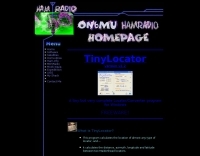 This free program calculates the location of any locator. It calaculates the distance, azimuth, longitude and latitude between two Maidenhead locators. Converts longitude/latitude coordinates to Maidenhead locator Converts Maidenhead locator to longitude/latitude coordinates
 -
 QSL printing service based Bulgaria and managed by LZ1JZ, offer from single color to full color qsl cards.
 -

-
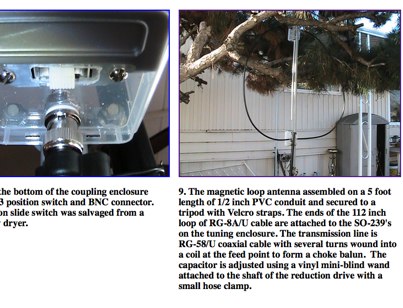 Here is a well documented plan of a 20m-10m compact magnetic loop antenna. Article includes lots of pictures and technical details published by KP4MD
 -
 JL is a free contest logger written entirely in Java. Run under Windows, Linux, Solaris, and MacOS X by W1JQ
 -
 conversion of low band VHF AWA RT-85 transceiver down to 6 metres.