Search results
Query: rent
Links: 730 | Categories: 11
Categories
- Ham Radio > Clubs > Europe > Italy > Trentino Alto Adige
- DX Resources > Shack Rental
- Antennas > Baluns > 1 to 1 Balun
- Antennas > Feed Lines > Choke
- Ham Radio > Ham Radio News
- DX Resources > QSLing > QSL Galleries
- Operating Modes > Satellites > Real Time Tracking
- DX Resources > Contest > Contest Rules > RTTY
- Radio Equipment > Scanners
- Shortwave Radio > Schedules
- Software > Virtual Audio Software
-
 Aspiring radio amateurs in the United Kingdom preparing for their licensing examinations can utilize this resource, which offers mock exam questions covering the Foundation, Intermediate, and Advanced license levels. The site provides access to question pools, including associated images, designed for use with _Moodle_ learning management systems requiring PHP and MySQL. These question sets are available for non-commercial deployment by UK amateur radio clubs and organizations, facilitating local training initiatives. The original online mock test service ceased operations in August 2018 due to maintenance overhead. The current iteration serves as a repository, allowing other organizations to download the question databases. This approach enables broader access to the exam preparation material, supporting the UK amateur radio community in achieving licensing qualifications. The resource does not offer direct online testing but directs users to other sites, such as _Radio Tutor_, that implement these question banks.
 -
 Used test equipment, used electronic test equipment, refurbished test equipment and other pre-owned electronic test and measurement equipment to buy or rent.
 -
 Guest house with acomodation for 3 more people in Uruguay
 -
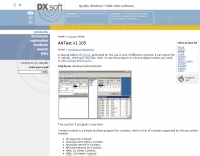 A special edition of AALog, optimized for the use in a lot of different contests. It can export file in Cabrillo, .SUM and .ALL files, ADIF. To use this program in CW and digital modes you need to use CwType and TrueTTY.
 -
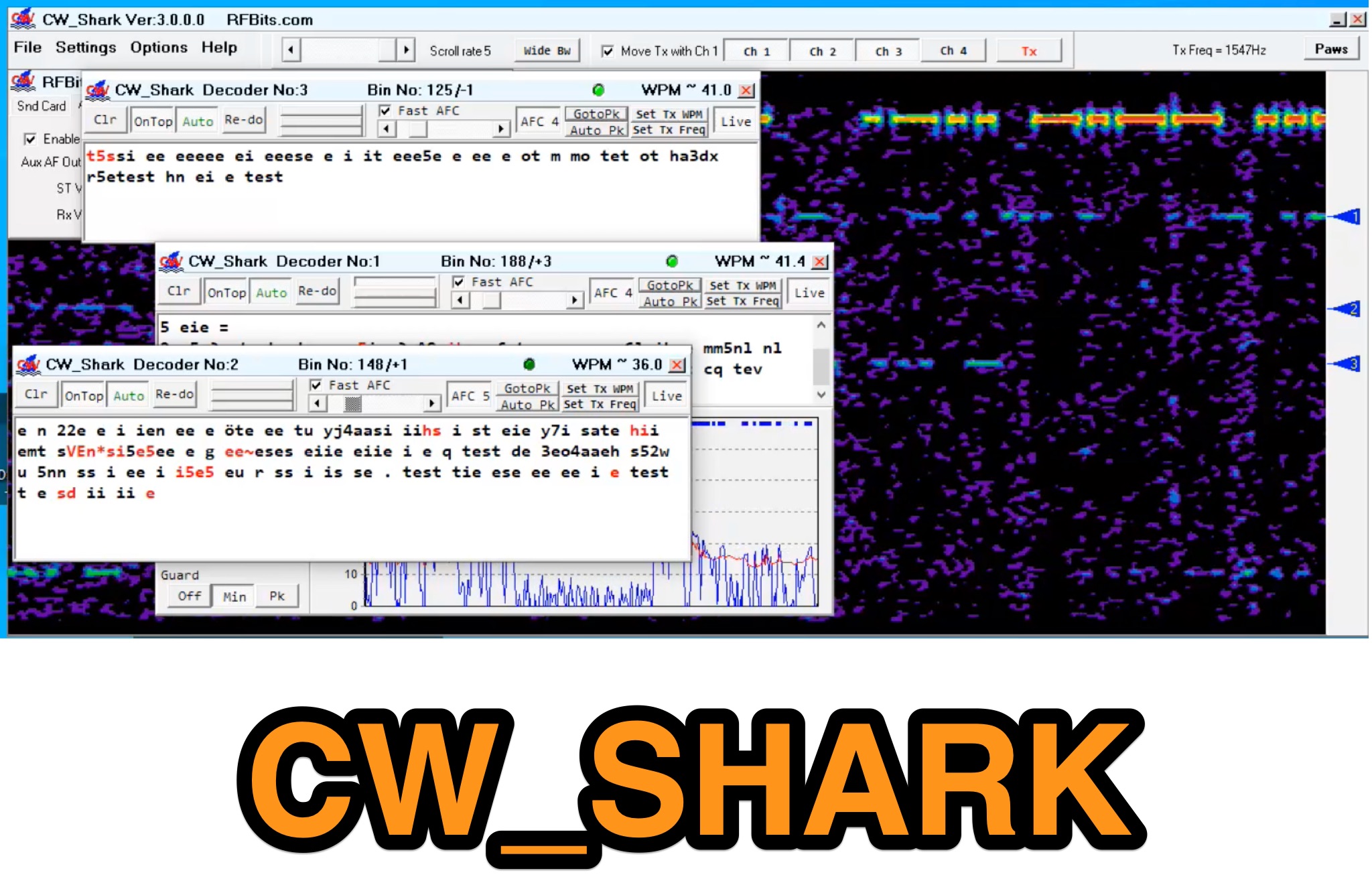 Demonstrates the capabilities of CW_Shark, a dedicated 32-bit Windows application for Morse code operations. This software facilitates the analysis, decoding, and encoding of CW signals, providing hams with a versatile tool for various aspects of amateur radio communication. It supports four distinct modes: Decode Only, Keyboard QSO, Straight or Paddle Key QSO, and Straight or Paddle Key Practice, catering to different user needs from passive listening to active keying. Operators can utilize the Decode Only mode for signal analysis, while the Keyboard QSO mode allows for text-based interaction. The Straight or Paddle Key QSO mode offers a direct interface for traditional keying, enabling real-time communication. For skill development, the Straight or Paddle Key Practice mode provides a structured environment to hone Morse code proficiency. CW_Shark integrates essential functions for CW enthusiasts, supporting both learning and active participation in Morse code exchanges. Its focused design aims to assist operators in mastering and enjoying the art of _CW communication_.
 -
-
 Mitigating RF noise in a mobile operating environment, particularly within a _Jeep TJ_ vehicle, presents unique challenges due to the vehicle's electrical system and chassis characteristics. This resource details practical methods for identifying and suppressing various forms of radio frequency interference (RFI) that can degrade receiver performance for both CB and amateur radio transceivers. It covers common noise sources such as ignition systems, alternators, fuel pumps, and computer modules, explaining how these components generate broadband or specific frequency noise that impacts radio communications. The guide offers actionable solutions, including proper grounding techniques, the strategic use of ferrite beads and toroids on power and data lines, and the installation of bypass capacitors. It discusses the effectiveness of different filtering strategies for DC power lines and antenna feedlines, illustrating how a clean power supply and shielded cabling can significantly reduce conducted and radiated noise. The information presented helps operators achieve a lower noise floor, improving signal-to-noise ratio and enabling clearer reception of weak signals, which is crucial for effective mobile DXing or local ragchewing.
 -
 For radio amateurs seeking to identify or verify callsigns from Bosnia and Herzegovina, an online callbook service offers a direct search utility. This resource focuses exclusively on the _T9_ prefix, allowing users to input a specific callsign and query a dedicated database. It serves as a historical reference for contacts made prior to its last update. The utility provides a straightforward interface for callsign lookups, presenting results based on data compiled up to _July 31, 2000_. While the information is static and not current, it remains useful for confirming older contacts or for historical research within the amateur radio community. The service is maintained by _Boris Knezovic, T93Y_, offering a focused resource for this specific geographic region.
 -
 PACTOR-III is a software upgrade for existing PACTOR-II modems that provides a new data transmission mode for improved speed and robustness. PACTOR-III is not a new modem or hardware device. Most current PACTOR-II modems are upgradeable to use PACTOR-III via a software update since PACTOR-II firmware accommodates the new PACTOR-III software
 -
 This resource examines the appropriate use of /M (mobile) and /P (portable) suffixes in amateur radio callsigns, specifically within the context of the UK Amateur Radio Licence. It addresses common ambiguities and challenges in determining operational status, such as operating from a summit or while walking. The discussion references the licence version in force before February 21, 2024, noting that while current regulations recommend but do not specify suffix use, the prior definitions remain relevant for understanding common practice. The content dissects key sections of the licence, including "Notes to the licence" (d)(i-iii) which outlines /A, /P, and /M usage based on location, and "Temporary Location" (jj) which defines /P operations. It also clarifies "Mobile" (17(1)(x)) as operating in or on a vehicle, on a pedestrian, or on a vessel on inland waters. The author provides examples and recommendations for choosing between /M and /P when both might apply, such as when operating from a parked car with a deployed mast or using a handheld on a summit. Historical notes from M1MAJ, G8ADD, and G6MZX are included, tracing the evolution of suffix rules from pre-BR68 days to the 1977 licence version. These historical perspectives highlight how past regulations have influenced current interpretations and persistent myths regarding /M usage. The resource emphasizes making an informed choice based on the licence and communicating the station's operational circumstances clearly.
 -
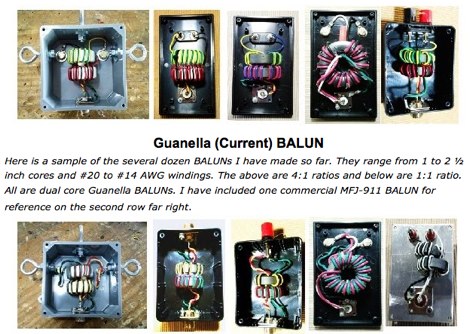 An interesting article on guanella baluns that cover several aspects of homebrewing 1:1 and 4:1 current baluns by KN9B
 -
 Supplying over 2000 different vacuum tube types, valves, grid caps, sockets and capacitors. It is easy for Antique collectors, Ham radio operators, audio enthusiasts, broadcast enthusiasts and amateur radio hobbyists to buy, sell and trade vacuum tubes, electron tubes, audio tubes, valves, grid caps, sockets and capacitors
 -
 The K-Com website, originally intended for RFI rejection products, currently hosts content for a Nigerian football betting platform. The site promotes wagering on live EPL, NPFL, and UCL matches, offering competitive odds and instant OPay and bank payouts. It highlights features such as a **99 sign-up bonus** for new players, daily deposit rewards, and VIP cashback, alongside a mobile-friendly interface and NLRC licensing. The platform provides a demo hall with _1,000,000 demo credits_ for guest players to test strategies without registration. It emphasizes secure and reliable gameplay, instant withdrawals, and multi-game access, claiming over 100,000 active players. The content includes user testimonials and an FAQ section addressing game access, registration, promotions, and mobile compatibility, but contains no information related to amateur radio or RFI filters.
 -
 In the VLF portion of the spectrum it is easy to listen to the emissions created by the Earth itself. These emissions are generated by many different mechanisms and are often beautiful to listen to. Coverage on LF and MF frequencies
 -
 The QRPSPOTS.com domain, once a dedicated resource for QRP operators to share real-time DX spots, has undergone a significant transformation. Previously, it served the amateur radio community by providing a platform for DX spotting, including features like a telnet cluster, web cluster, JOTA cluster, and integration with RBN and PSK Reporter data. This functionality was specifically tailored to the QRP operating mode, allowing hams running low power to find and share contacts effectively across various bands. However, the current iteration of the website, as observed, no longer presents any amateur radio content. Instead, it displays information related to a Chinese educational institution, featuring sections like "About Us," "Talent Training," "Teaching and Research," and "International Exchange." The site also lists academic notices, enrollment information for international professional qualifications, and details about CPA and ACCA project classes. This shift indicates that the domain has been repurposed, moving away from its original ham radio utility. The Four State QRP Group, which previously sponsored the QRP Spots service, is no longer associated with the content presented on this URL.
 -
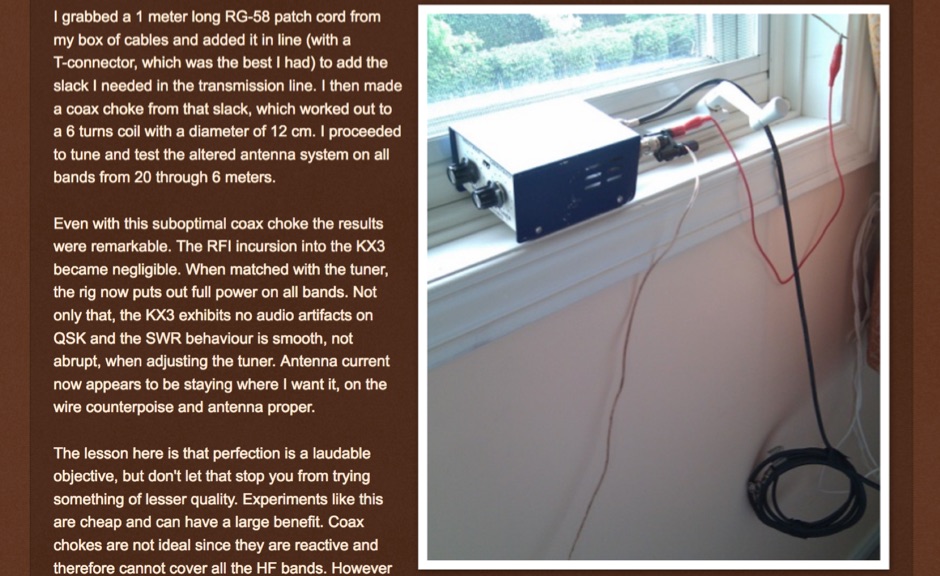 Stop common-mode current when transmitting with an end-fed antenna. Unbalanced antennas are very prone to currents on the outside of the coax.
 -
 This resource presents a domain name for sale, Grandicelli.com, which was previously associated with an HF-VHF-UHF-SHF digital monitoring site, Wavecom Decoder tools, Winradio and DRM decoders, a WD3000 Direction Finding System, Radioraft software, and a PFSL3000 Integrated HF-VHF-UHF signal monitoring system. The current page functions as a sales portal, providing information on the domain's price of $695, with an option for a 24-month payment plan at $28.96 per month with 0% interest. The page outlines the purchasing process, including quick delivery of the domain within one to two hours, and details the transfer procedure to registrars like GoDaddy. It also highlights customer testimonials regarding the ease and speed of domain acquisition through HugeDomains, emphasizing the 30-day money-back guarantee and secure shopping experience. The resource clarifies that only the domain name is included, with hosting and web design services needing to be sourced separately.
 -
 Test Equipment Connection Buys, Sells, Trades, Rents and repairs quality used test equipment.
 -
 Presents a detailed resource for DXers interested in Non-Directional Radiobeacons (NDBs), MF, HF, and VHF propagation beacons, and various other radiobeacon types. The site offers access to downloadable information files, including an Abbreviations List, NDB List Country List, and NDB Publications List, which serve as foundational materials for newcomers to the hobby of beacon monitoring and DXing. It covers specialized topics such as DGPS beacons, GMDSS DSC mode, and NAVTEX mode, with dedicated sections providing in-depth explanations. A Beacon Photo Gallery showcases diverse radiobeacon types from around the globe, offering visual context for different systems encountered in the field. The platform also facilitates participation in unique monthly Coordinated Listening Events (CLEs), providing guidelines and schedules for these activities. The resource outlines various associated Groups.io lists, including the primary NDB List for radiobeacons (NDBs, Propagation Beacons, VOR systems), the DGPS List for DGPS DXing, Time Signals, LORAN, and WeFAX modes, and specialist groups like NavtexDX and DSC List for GMDSS-DSC. It details how to join these communities for further engagement and information exchange.
 -
 A 200 kHz bandwidth digital transmission system for image transfer in the Amateur Service is under development, specifically targeting VHF allocations. John B. Stephensen, KD6OZH, leads this project under an FCC Special Temporary Authority (STA) valid until September 10, 2006, authorizing emissions up to 200 kHz bandwidth in the 50.3-50.8 MHz segment. Current regulations typically limit bandwidths to 20 kHz on VHF amateur bands, making this STA crucial for testing wideband digital modes. The modem, a modified **OFDM** (Orthogonal Frequency Division Multiplexed) unit, was initially tested on the 70-cm band. It splits a high-rate data stream into multiple low-rate subcarriers to mitigate multipath echoes. The system uses a DCP-1 card with a Xilinx XC3S400 FPGA and Oki Semiconductor ML67Q5003 microcontroller. The transmitter, located at 36d 46m 30s N, 119d 46m 22s W, generates 150 WPEP into an 8 dBi gain vertical antenna, while the mobile receiver uses a Ham-stick. Three data formats for 50, 100, and 200 kHz channels are being tested, with encoded data rates of 96, 192, and 384 kbps. Verilog code for the VHF OFDM modem is 95% simulated, with modifications from the UHF version including increased filter coefficient precision and a change from Ungerboeck **TCM** to BICM for improved performance over fading paths. Final tests will involve one-way over-the-air measurements of bit error rates and coverage area.
 -
 HB9BZA's LoTW users list, originally compiled since 2005 from DX-Cluster and user submissions, now primarily leverages the official ARRL full users list released on July 29th, 2017. This resource details 228,012 calls across 340 current DXCC entities, with the latest update noted on March 2, 2026. It offers various formats, including a full list, text versions, and breakdowns by country, providing valuable insights into LoTW participation for DXers. While the ARRL's official list with "last upload" dates diminished the original list's unique utility, HB9BZA's site continues to offer statistics and user counts by country, which remain of interest. The author, HB9BZA, expresses gratitude to contributors who helped maintain the list's accuracy over many years, achieving an impressive 96.4% match with the ARRL's data before the official release. Knowing which stations are LoTW active encourages more hams to join the system, demonstrating that even rare DXCC entities like Ducie Island or Heard Island can be confirmed quickly. For instance, HB9BZA recounts a 36-minute QSL confirmation for a 3A2MW contact. The list also integrates with the RXCLUS packet radio/telnet client, enhancing DXCC award tracking by identifying LoTW participants and utilizing upload dates for alarms.
 -
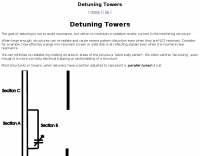 The goal of detuning is not to avoid resonance, but rather to minimize re-radiation and/or current in the interfering structure.
 -
 This resource provides a unique historical audio archive of 50 MHz DX contacts, documenting significant F2 and Es propagation events experienced by PA2S (formerly PA2HJS) since 1978. The collection includes recordings of beacons and two-way QSOs with stations across North America, South America, Asia, Australia, Europe, and Africa. Specific entries detail contacts with rare DX entities such as ZS6PW, VE1AVX, C5AEH, J52US, TR8CA, LU8MBL, VK8ZLX, and various Japanese stations, often noting the mode (SSB or CW) and propagation type. The archive also highlights challenging pile-up situations and frustrating near-misses during major openings. The recordings, initially in RealAudio format for solar cycles 21 and 22 and later in MP3 for cycle 23, offer a practical illustration of 6-meter band conditions over several solar cycles. The content allows hams to listen to actual signals from different continents, observing signal characteristics like typical TEP fading from 5H3RA or strong F2 backscatter from OZ1BVW. It provides a comparative perspective on propagation effectiveness between solar cycles, noting that cycle 23, while not as robust as previous cycles, still yielded interesting openings. The archive serves as a valuable educational tool for understanding real-world 50 MHz DXing and propagation phenomena.
 -
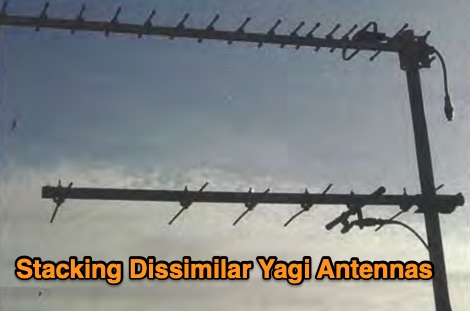 In this article the author provides some guidelines on how to solve a common problem when stacking different types of yagi antennas on the same mast, limiting the effects on gain and radiation pattern of both antennas
 -
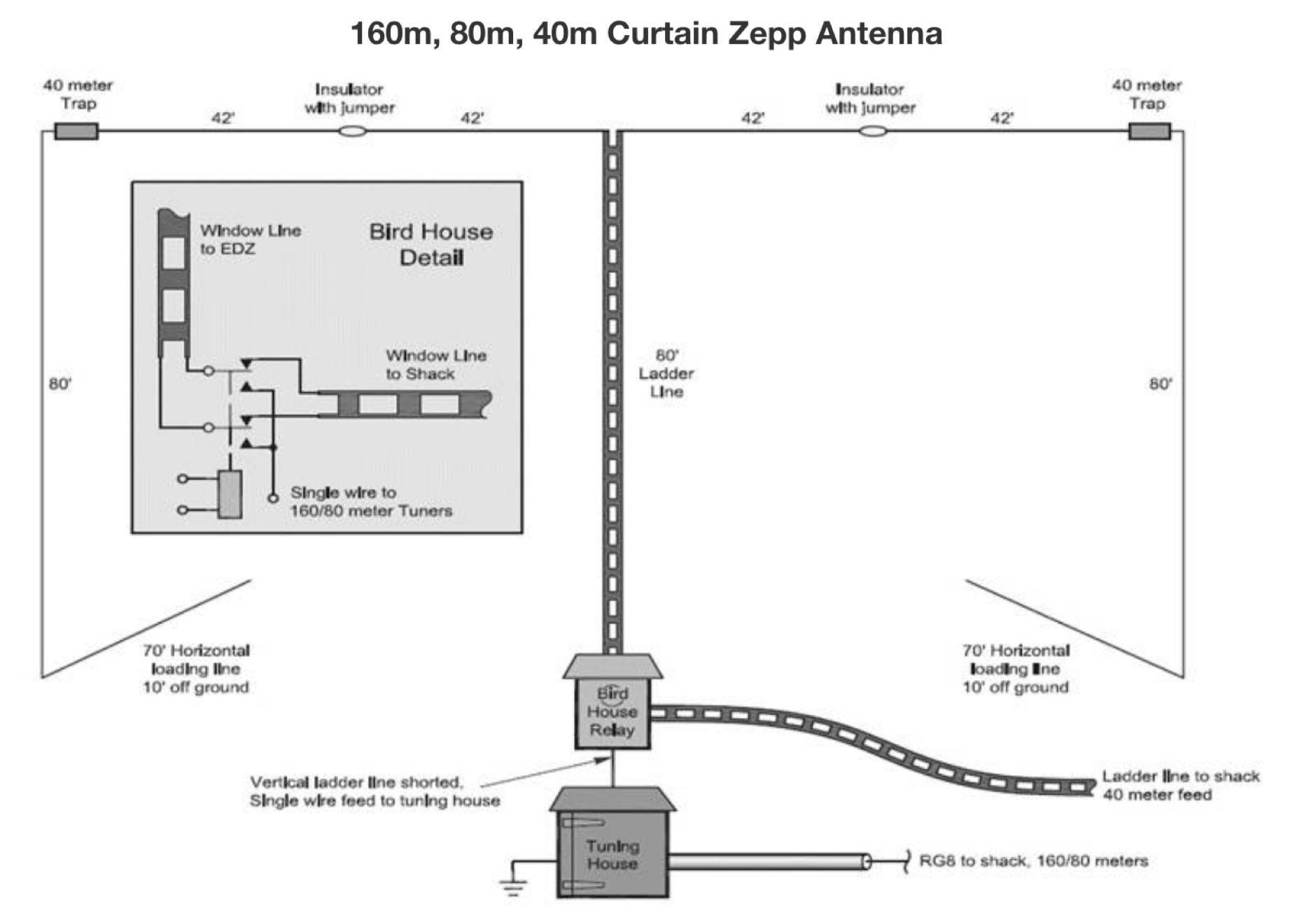 22 Different Wire Antennas for the 160 Meter Band, Random Length Radiator Wire, delta loop, loop antennas, off-centered antennas, sloper, dipoles, Z antenna, Zepp and Clothesline Antennas
 -
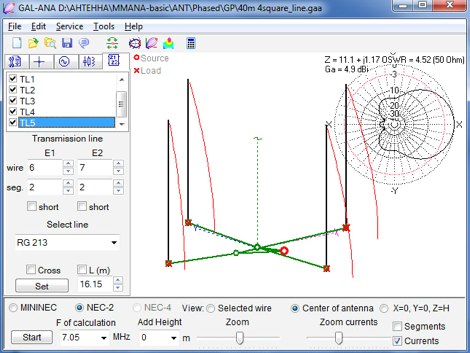 GAL-ANA is an Antenna-Analyzing Tool software, based on NEC2/MININEC3m engines currently available in demo mode for download
 -
 Presents the Holy Cluster, a contemporary DX cluster service offering real-time amateur radio spot data. This platform integrates a dynamic graphical map to visualize current contacts, enhancing situational awareness for DXers and contesters. Developed by an Israeli group of developers and supported by the Israeli Association of Radio Communication (IARC), the Holy Cluster aggregates DX spots from various sources, including traditional telnet clusters, the Reverse Beacon Network (RBN), and PSK Reporter, providing a comprehensive view of band activity. The cluster's design emphasizes a user-friendly interface for monitoring DX activity across multiple bands, including dedicated support for JOTA (Jamboree On The Air) operations. Its aggregation capabilities allow operators to quickly identify propagation openings and active stations, streamlining the process of making two-way radio contacts. The integration of RBN and PSK Reporter data offers insights into propagation conditions and station reception reports, which can be invaluable for optimizing antenna direction and operating strategies.
 -
-
 Live audio of the National Hurricane Center’s Skywarn Nets. This live feed covers several different states, and locations throughout the US including: TX, LA, MS, AL, FL, GA, SC, NC, VA, MD, DE, PA, NJ, NY, CT, RI, MA, VT, and ME
 -
 Approximately 190–209 words of content are available, including previously unreleased **radio intercepts** from the Russian army during the Battle for Kyiv, with confirmed authenticity. The platform provides extensive news coverage, video reports, and analytical content focusing on Ukraine and international affairs, frequently publishing exclusive materials. Recent articles cover topics such as emergency power outages in Kyiv, discussions on Iran's nuclear program, and Belgium's policy regarding temporary protection for children born after Russia's full-scale invasion. The site also features in-depth investigations into Russian military losses, the political isolation of Hungary within the EU, and mental health advice for coping with wartime stress. Timely updates are provided throughout the day, detailing events such as drone incidents in Lithuania and proposed restrictions on military personnel's access to gambling in Ukraine. The platform offers a variety of multimedia content, including video and photo reports on events like the double explosion in Bucha and search operations for victims of the Volyn tragedy. Editorial selections delve into topics such as parliamentary elections in Slovenia, internal political conflicts in Ukraine, and the export of Ukrainian drones to the Middle East, alongside historical analyses and opinion pieces from various contributors, often featuring expert commentary and reader engagement. The content is primarily focused on current events and geopolitical analysis, with a strong emphasis on the **Ukrainian conflict**.
 -
 Technical Correspondence, QST, July 1990 - Why even "perfect" phased array element currents don't produce perfect patterns.
 -
-
 Contains stories, pictures, audio files of all previous expeditions and current ones.
 -
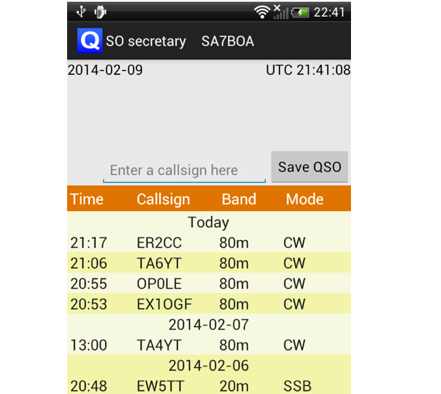 Special logging program, optimized for mobile, portable, and field operations. This software exports data in the ADIF which then may be imported into your general logging software, or online services. Currently available for Android.
 -
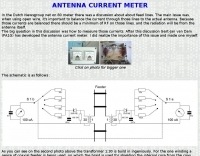
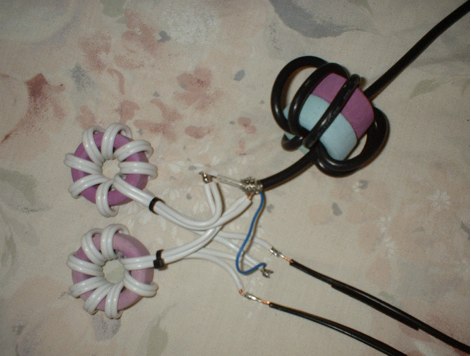 A 1:4 current balun made with 2 4C65 cores by PA1G in Dutch
 -
 Wolverine Power Systems provides generators, rental, service and repair located in Holland, Michigan.
 -
 Oakcallsigns.com specializes in custom-crafted oak call signs, presenting various designs for amateur radio shacks. The resource showcases different styles, including standard call sign plaques and options featuring iconic ham radio silhouettes like the _D-104_ microphone. Each item is described with pricing, ranging from $15.00 to **$25.00**, and includes details on shipping and seller reputation. The platform highlights the craftsmanship involved, emphasizing personalized scroll-saw work on each oak piece. It details the seller's positive feedback rating of **99.4%** from over 10,000 transactions, indicating a reliable source for these unique accessories. The site also provides information on the number of units sold for specific designs, such as 2,338 for the standard call sign gift and 554 for the smaller personalized version. This commercial offering focuses on decorative and personalized items for the ham radio enthusiast, distinct from operational equipment. It serves as a direct retail channel for custom shack adornments.
 -
 pythonProp is a collection of Python scripts designed to plot files produced by VOACAP. The package currently contains two scripts, both of which make use of the matplotlib library
 -
 This is a group for CBers, Sidebanders, Amateurs and Freebanders. Items to be discussed are CB, Skip, Skeds, DX communications, SSB, export radios, Radio equipment, mods, ham radio, repairs, electronics, CW, PSK31, RTTY, digital, and different radio shops.
 -
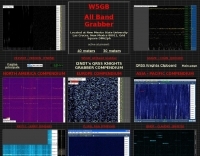 Observing extremely slow CW (QRSS) signals requires specialized reception and display techniques, often involving long-term signal integration to make faint traces visible. This resource compiles numerous screenshots from active QRSS grabbers globally, providing a visual record of signal propagation and operational activity on specific amateur bands. Each entry typically includes the callsign of the grabber station, its grid square, and often the band being monitored, such as 40 meters or 30 meters. The compendium presents a diverse array of grabber outputs, with examples from North America, Asia-Pacific, and Europe. Notable stations featured include _W5GB_ at New Mexico State University, _VE1VDM_ in Canada, and _I2NDT_ (the author's own grabber). The collection illustrates the unique visual signatures of QRSS transmissions, where signals appear as faint lines or patterns against a noise floor, often over extended periods. The utility of such a collection lies in its ability to demonstrate real-world QRSS signal characteristics and the geographical distribution of active grabber sites. It serves as a historical snapshot of QRSS activity, allowing operators to compare signal traces and observe propagation phenomena across different continents.
 -
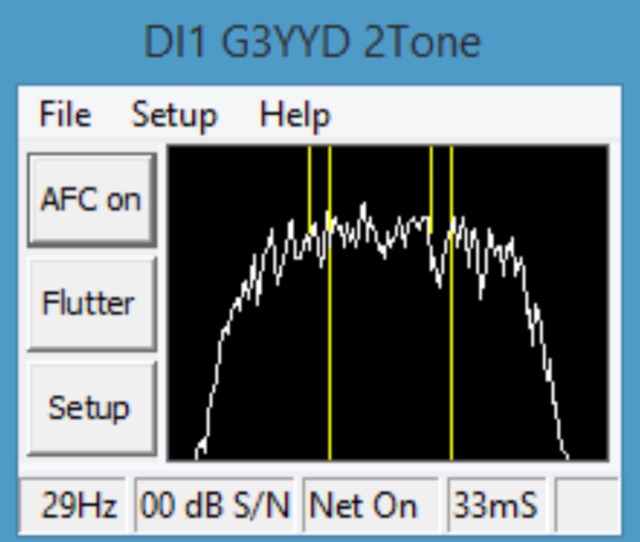 Operating RTTY digital mode, this resource provides access to various versions of the _2Tone_ software engine, specifically designed for decoding and encoding RTTY signals. It details the evolution of the software, highlighting a significant technical requirement change where versions 24.09b through 26.01a necessitate a PC CPU with the AVX instruction set, a crucial detail for operators considering system compatibility. The page lists numerous historical and current releases, enabling users to select a version compatible with their hardware and operating environment. The utility of 2Tone lies in its ability to interface with established amateur radio programs such as _N1MM Logger+_, WriteLog, and QARtest, enhancing their RTTY capabilities. While specific performance metrics like decoding accuracy or WPM limits are not quantified on this page, the availability of multiple versions, including those without AVX requirements, suggests a commitment to broad user accessibility. The software's integration with major contest logging applications indicates its primary application in competitive RTTY operations, where reliable decoding is paramount for achieving high scores.
 -
 Domino is the name given by the developers to a family of IFK coded coherent phase single tone MFSK keyed modes, using sequential tone-pairs in two alternate fields arranged as orthogonal but interleaved tone sets.
 -
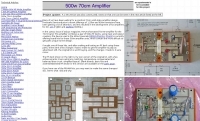 Constructing a high-power 70cm solid-state amplifier presents unique challenges, particularly when aiming for 500 watts output using modern LDMOS devices. This resource details the author's experience building a 70cm amplifier based on a _Freescale MRFE6VP5600H_ transistor, initially from an RFHAM kit. It meticulously outlines the necessary modifications to achieve advertised performance, including optimizing input and output matching, correcting bias circuitry, and ensuring proper output balun connections for stability. The author shares specific adjustments, such as trimming the prototyping board for better transistor fit, drilling additional mounting holes for improved heat sinking, and replacing original matching capacitors with a single _20pf MIN02 metal mica_ for superior output. A critical fix involved jumpering gate decoupling pads to balance the push-pull transistor halves, which increased output to 580W and improved IMD. The resource also highlights a crucial correction to the output balun connection, initially reversed in the _Dubus_ article schematic, which resolved intermittent stability issues. Test results are provided, showing input power, output power, and drain current at 50V, demonstrating the amplifier's performance after modifications. This practical account offers valuable insights for hams undertaking similar high-power UHF amplifier projects, especially those working with LDMOS devices and kit-based constructions.
 -
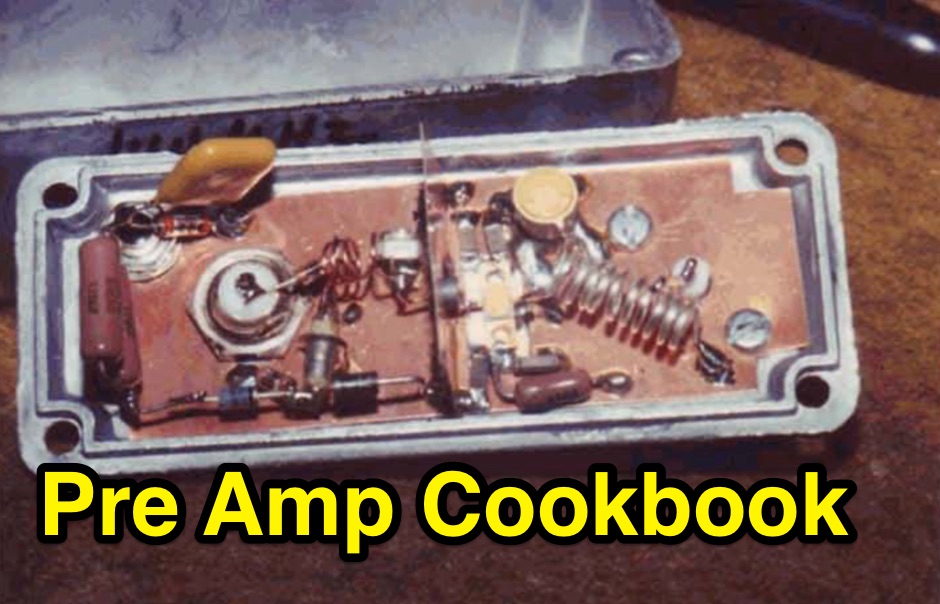 There are many designs for building preamps each with their own advantages and disvantages. In this PDF Article author reviews several different types.
 -
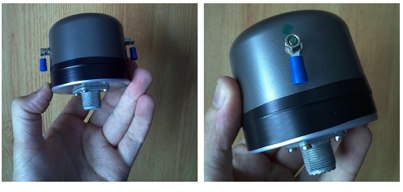 Presents a construction project for a 1:1 current balun, specifically detailing the _Sorbie Balun and Bottle Choke_ design. The resource outlines the winding technique, employing 4+4 turns of mini coaxial cable on a large ferrite core, and provides insights into the physical assembly. It includes specific material recommendations, such as the type of ferrite and coaxial cable, crucial for achieving the desired impedance transformation and common-mode current suppression. The content covers the practical steps involved in building the balun, from preparing the coaxial cable to securing the windings on the ferrite toroid. It also discusses the integration of the balun into an antenna system, emphasizing its role in maintaining pattern integrity and reducing RF interference in the shack. The resource offers a clear, step-by-step approach, making the project accessible for homebrewers. Illustrations and photographs accompany the text, visually guiding the builder through each stage of construction. The article concludes with performance expectations and considerations for deployment, ensuring the constructed balun functions effectively across the intended frequency range.
 -
 Sonogram is a highly flexible audio spectrum analyzer for the analysis of sound, music and speech signals in the frequency-domain using different algorithms.
 -
 The current, the voltage, the impedance, the bandwidth, the polarization, and how the earth influences the famous radiation pattern.
 -
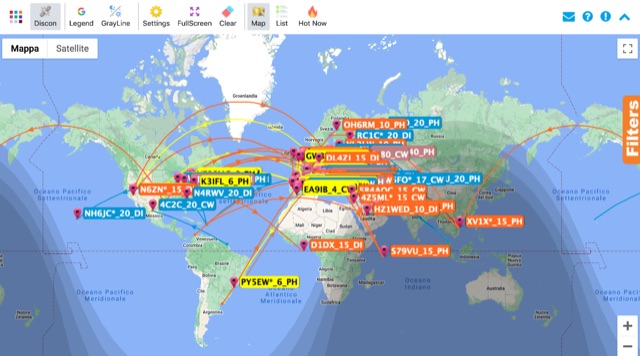 Monitoring real-time amateur radio activity is essential for DXers and contesters seeking rare contacts or tracking propagation. This online service aggregates DX spots from various **DX Cluster** networks, presenting them visually on a world map. Users can observe new spots as they appear, facilitating quick identification of active stations and potential openings. The platform offers filtering capabilities, allowing operators to narrow down displayed spots by specific bands such as 160m, 80m, 40m, 20m, 10m, and even VHF/UHF segments like 70cm and 23cm. Further refinement is possible by selecting the source continent of the spotter or the continent of the DX station, which assists in strategic operating. The service also includes a "Hot Now" list, highlighting currently active stations with recent spots. This dynamic display supports informed decision-making for pursuing **DX contacts** across different bands and geographical regions.
 -
-
 Updated list of postage costs and conditions in different parts of the world by K4HB