Radio Astronomy Resources
Explore resources for amateur radio astronomy enthusiasts.

Amateur radio astronomy involves hams using radio techniques to observe natural radio emissions from celestial objects. Unlike optical astronomy, radio astronomy allows operators to study phenomena not visible to the human eye, such as pulsars, quasars, and the cosmic microwave background. This fascinating field often combines antenna projects, custom receivers, and digital signal processing to detect faint signals from space, pushing the boundaries of what can be achieved with amateur radio stations.
Hams interested in radio astronomy can find resources covering everything from basic theory and practical guides for building small radio telescopes, like the Project Bambi 4 GHz TVRO antenna setup, to advanced topics such as Earth-Moon-Earth (EME) communication and SETI. Many sites offer detailed instructions for homebrew equipment, while others provide insights into professional observatories like Arecibo and Jodrell Bank, inspiring new antenna projects and observation techniques for amateur operators.
Related Categories
-
 Survey of galactic synchrotron radiation at 408 MHz in the south of England using a 10 metre dish and a Dicke radiometer
 -
 Amateur radio-telescope project of a retired seafarer.
 -
 Amateur Radioastronomy in Poland
 -
 The largest radio telescope in the world.
 -
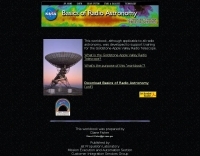 This workbook was developed to support training for the Goldstone-Apple Valley Radio Telescope, but is a resource applicable to all radio astronomy.
 -
 A 10.4-meter diameter, submillimeter spectrum telescope. Situated at the top of Mauna Kea, Big island, Hawaii.
 -
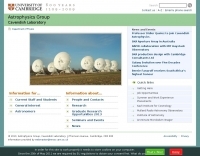 Mullard Radio Astronomy Observatory
 -
 Dedicated to building bridges between the EME, SETI and Radio Astronomy Amateur Interest Groups.
 -
 Site dedicated to amateur radio astronomy, providing information on Earth-Moon-Earth (EME) communication, the Search for Extra-Terrestrial Intelligence
 -
 Starting point for some basic facts about radio astronomy, what radio astronomers do, how radio telescopes work, and the kinds of research done with radio telescopes.
 -
 NRAL at Jodrell Bank are a part of the University of Manchester's Department of Physics and Astronomy. The Laboratories are home to the Lovell Telescope and the MERLIN & VLBI National Facility which is operated by the University on behalf of PPARC.
 -
 Thierry Lombry, LX4SKY (aka ON4SKY) has developped a excellent educational website mainly devoted to amateur astronomy but it includes also a large section dealing with amateur radio activities includes several interesting pages about radio astronomy and SETI
 -
 A graphical add-on package to monitor seti@home activity that may be running on multiple computers over a network or multiple instances on the same computer. Runs on Windows or Linux.
 -
 Research facility of National Science Foundation, operates many radio telescope observatories.
 -
 Non-profit public foundation dedicated to providing research and educational access to optical and radio astronomy. Located in Rosman, North Carolina.
 -
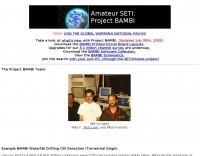 An amateur observatory using a 4 GHz TVRO antenna.
 -
 Supplier of Radio Telescopes and associated equipment since 1994.
 -
 Resources for amateur radio astronomers, teachers, and students.
 -
 The SETI League, Inc. was a non-profit organization dedicated to privatizing the Search for Extra-Terrestrial Intelligence (SETI) from 1994-2024.
 -
 SARA is a dedicated group of people that formed an international society to learn, trade technical information and do their own observations of the radio sky
 -
 Located 30 miles south of Gothenburg, Sweden
 -
 Radio astronomy research at the University of Calgary
 -
 Multi-frequency radio interferometers
 -
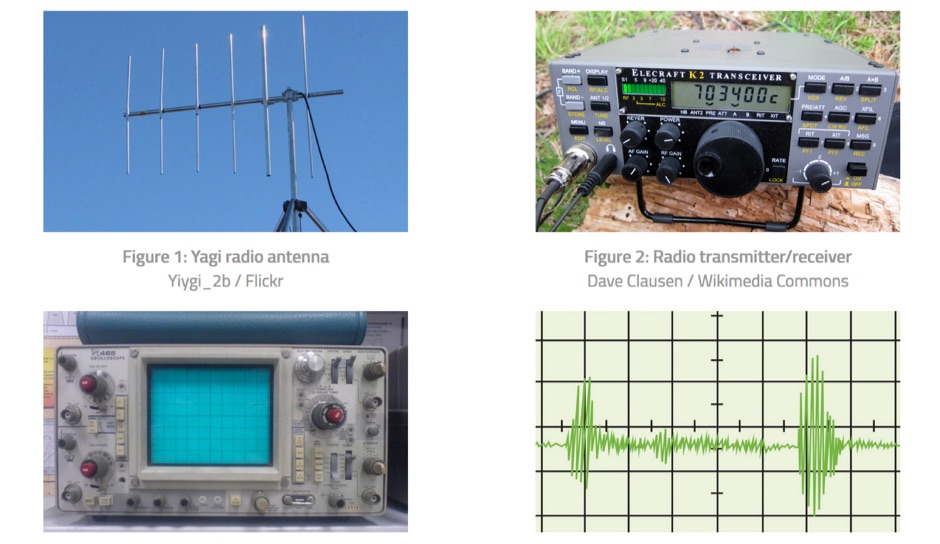 Using a simple calculation, measure the distance between Earth and the Moon with the help of a local amateur radio station