Search results
Query: ham radio..
Links: 2260 | Categories: 351
Categories
- Technical Reference > AI Ham Radio
- Ham Radio
- DX Resources > Ham Radio Awards
- Shopping and Services > Ham Radio Insurance
- Shopping and Services > Ham Radio Stores
- Operating Modes > Ham Radio Balloons
- Technical Reference > Ham Radio Go Kits
- Ham Radio > Ham Radio News
- Shopping and Services > Antique Radios
- Manufacturers > Digital and Packet Radio
- Software > Ham Exam
- Ham Radio > Hamfests
- Operating Modes > Satellites > Hamsat VO-52
- Ham Radio > Clubs > North America > USA > New Hampshire
- Operating Modes > Packet Radio
- Software > Radio Control
- Radio Equipment
- Radio Equipment > Radio Equipment Reference
- Shopping and Services > Radio Equipment Repair
- Technical Reference > Radio Frequency Interference
- Radio Equipment > Radio Manuals
- Technical Reference > Radio Mods
- Software > Radio Programming
- Technical Reference > Radio Programming Cable
- Software > Software Defined Radio
- Technical Reference > Sound Card Radio Interfacing
- Operating Modes > Stealth Amateur Radio
- Operating Aids > Beginner's Guides > What Amateur Radio is
- Ham Radio > Famous Hams
- Ham Radio > Ham Shack
-
-
 Ham radio activities, from satellite operations, eme communications, dxing and contesting, qsling and direction findings, are just some of ham radio exciting activities
 -
 Amateur radio kits. Makers of the WinKeyer, their goal is to keep homebrewing and kit building alive.
 -
 A 2x3-foot laminated world map product is detailed, offering customization for amateur radio operators. Each map features two distinct views: one centered on the operator's specific station location and another precisely centered on its _antipode_. Countries are clearly labeled, complemented by a tabular listing of all countries. The map integrates a standard latitude/longitude grid alongside concentric circles that delineate distance increments radiating outward from the operator's QTH. Personalization includes the operator's name, callsign, and location printed directly on the map. This custom mapping service provides a unique visual aid for DXing and propagation analysis, allowing operators to quickly ascertain beam headings and distances from their station. The dual-view presentation, particularly the antipodal centering, offers a practical reference for understanding long-path propagation and identifying potential DX opportunities. The inclusion of distance circles and personalized station data makes it a tailored tool for daily operating and contest planning, distinct from generic world maps.
 -
 Welcome to w0sv, the st. cloud amateur radio club. here, you will find information about the club, it's events, hamfests, on-air activities, and membership.
 -
 Trio Datacom, Dolectek and Yaesu Vertex Standard cb and ham radio dealer in new zealand
 -
 For radio amateurs seeking to verify contacts or identify stations from Tajikistan, the _Tajikistan EY Callbook_ serves as a dedicated online resource. This callbook, compiled and maintained by Irage M. Tursoon-Zadeh, _EY8WW_, offers a focused database of callsigns within the EY prefix region. It provides a practical utility for DXers and contesters aiming to confirm QSLs or prepare for operations involving stations in this specific geographic area, streamlining the process of identifying active hams. The resource's utility is particularly evident for those engaged in award programs like _DXCC_ or _WAZ_ where accurate callsign verification is crucial for credit. Unlike broader, worldwide callbooks, this specialized listing ensures high relevance and accuracy for its target region, reflecting the local expertise of EY8WW. Its direct focus on Tajikistan makes it a valuable, albeit niche, tool for operators with specific interest in Central Asian DX.
 -
 Operating a ham station often involves encountering radio frequency interference (RFI), RF feedback, or RF burns, which are frequently misattributed to poor equipment grounding. This resource meticulously dissects these assumptions, asserting that RF grounds on the operating desk often merely mask more significant system flaws. It identifies five primary causes for RF problems, including antenna system design flaws, proximity of the antenna to the operating position, DC power supply ground loops, equipment design defects, and poorly installed connectors or defective cables. The content emphasizes that issues like "hot cabinets" or changes in SWR when connecting a ground indicate substantial RF flowing over wiring or cabinets, a phenomenon known as common-mode current. The article provides detailed explanations of common-mode current generation, particularly from single-wire fed antennas like longwires, random wires, and OCF dipoles, which inherently present high levels of RF in the shack. It also illustrates how vertical antennas, lacking a perfect ground system, can excite feed lines with significant common-mode current. Through simulations, the author demonstrates how a dipole without a proper _balun_ can cause RF problems at the operating desk, showing current patterns and voltage distributions on feed line shields. The discussion extends to the proper application of _RF isolators_ and _ferrite beads_, clarifying their role in modifying common-mode impedance on cable shields and cautioning against their use as a band-aid for fundamental system defects. The resource advocates for correcting the actual source of RF problems, such as antenna system issues or poor connector mounting, rather than relying on internal shack grounding or isolators. It highlights that properly functioning two-conductor feed lines, like coaxial or open-wire lines, should result in minimal RF levels at the operating position, even without a desk RF ground. The author shares personal experience, noting that his stations since the late 1970s have operated without RF grounds at the desks, relying instead on proper antenna system design and feed line integrity.
 -
 Presentation about finding, restoring, updating and operating vintage Ham Radio by K4QKY and Bill Call, KJ4W
 -
-
 Turkish ham radio stations with links, and IOTA info, in turkish
 -
 Batterieries for ham radio handheld radios and more
 -
 Explains the fundamental principles of Software Defined Radio (SDR) and Digital Signal Processing (DSP) within the amateur radio context, serving as an initial entry point for hams interested in these technologies. It covers the architectural shift from traditional analog hardware to software-centric radio systems, detailing how digital signal processing algorithms are applied to modulate, demodulate, and filter radio signals. The resource compiles a list of external links to _white papers_ and project pages, offering further technical depth. This page provides a foundational understanding of SDR/DSP, enabling operators to grasp concepts like direct sampling and quadrature mixing. It references various projects and discussions, allowing users to explore practical implementations and theoretical underpinnings. The curated links direct users to resources that might cover specific SDR hardware platforms or software applications, facilitating deeper research into the subject.
 -
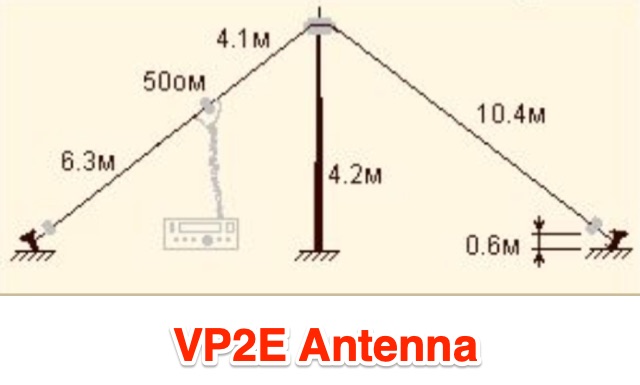 The author explores the VP2E antenna, introduced by Ed Durrant DD5LP, for Portable Operations on the Air (POTA). Detailing its unique design, successful trials, and an unexpected propagation twist, the VP2E proves a promising addition to the author's portable antenna arsenal.
 -
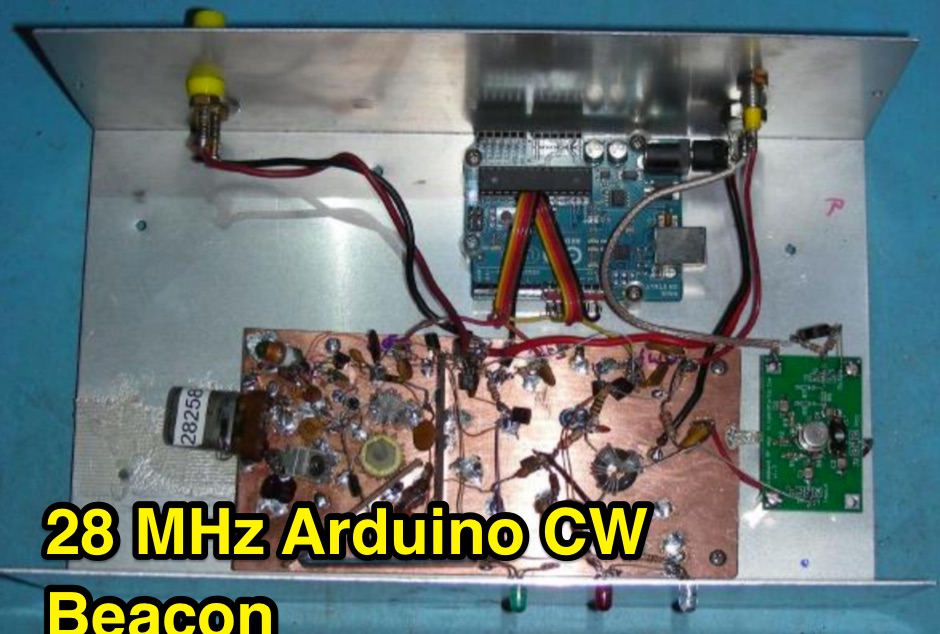 This project involves the construction of a 5 Watt Morse code beacon transmitter that operates in the 28.200 to 28.300 section of the 10 Meter Amateur Radio band. The beacon controller uses an Arduino Uno microprocessor board to produce the three signals that control the transmitter.
 -

-
 This website is made available to the CCARC Hamradio Community and to anyone interested in Amateur Radio.
 -
 Whether you're teaching a ham radio class or studying for your license on your own I hope you find this website useful.
 -
-
 Ham radio dealer IELLE elettronica
 -
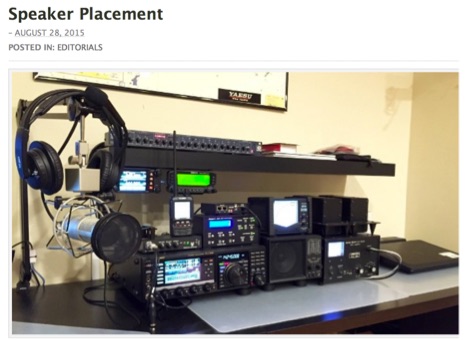 Guidelines for optimal speaker placement inside our ham radio shacks
 -
-
 The Mobileer group is for California Amateur Radio (Ham) operators to discuss family mobile radio caravan and camping trips.
 -
 Almost everything on the Italian ham-radio callsign assignment system
 -
 CS5NRA - NRA Nucleo de Radioamadores da Armada - Portugal (Portuguese Navy Hamradio Club)
 -
 ladder-line is great - extremely low loss, even at high SWR. However, many hams refuse to use it because they are afflicted by common misconceptions
 -
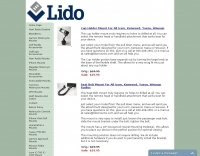 Lido Radio Products specializes in **no-holes mounting solutions** for a wide array of mobile electronic devices, including amateur radio transceivers, smartphones, and tablets. Their product line features cup holders, vent mounts, and window mounts, designed to secure equipment without permanent modifications to a vehicle's interior. The company supports various brands such as Icom, Yaesu, Kenwood, Motorola, Hytera, and Vertex, catering to both amateur radio operators and land mobile users. My own experience with similar mounting systems for mobile operations confirms the utility of a secure, non-invasive setup. A stable mount prevents equipment from becoming a projectile during sudden stops or turns, a critical safety consideration for any mobile station. Lido's focus on specific radio brands suggests a tailored approach to fit and function. They also provide individual parts to customize existing mounts, allowing operators to adapt solutions to unique shack or vehicle configurations. This modularity is a significant advantage for hams who frequently reconfigure their mobile setups or integrate new gear.
 -
 The skyline amateur radio club official website with club news, links and hamfest information as well as forums
 -
 Telecomunications import export, ham radio dealer based in Belgium for MicroHam, MFJ, LDG, ICOM Yaesu and other ham radio brands
 -
 Non-profit Amateur Radio club organized for the educational and scientific study of electronics and communication
 -
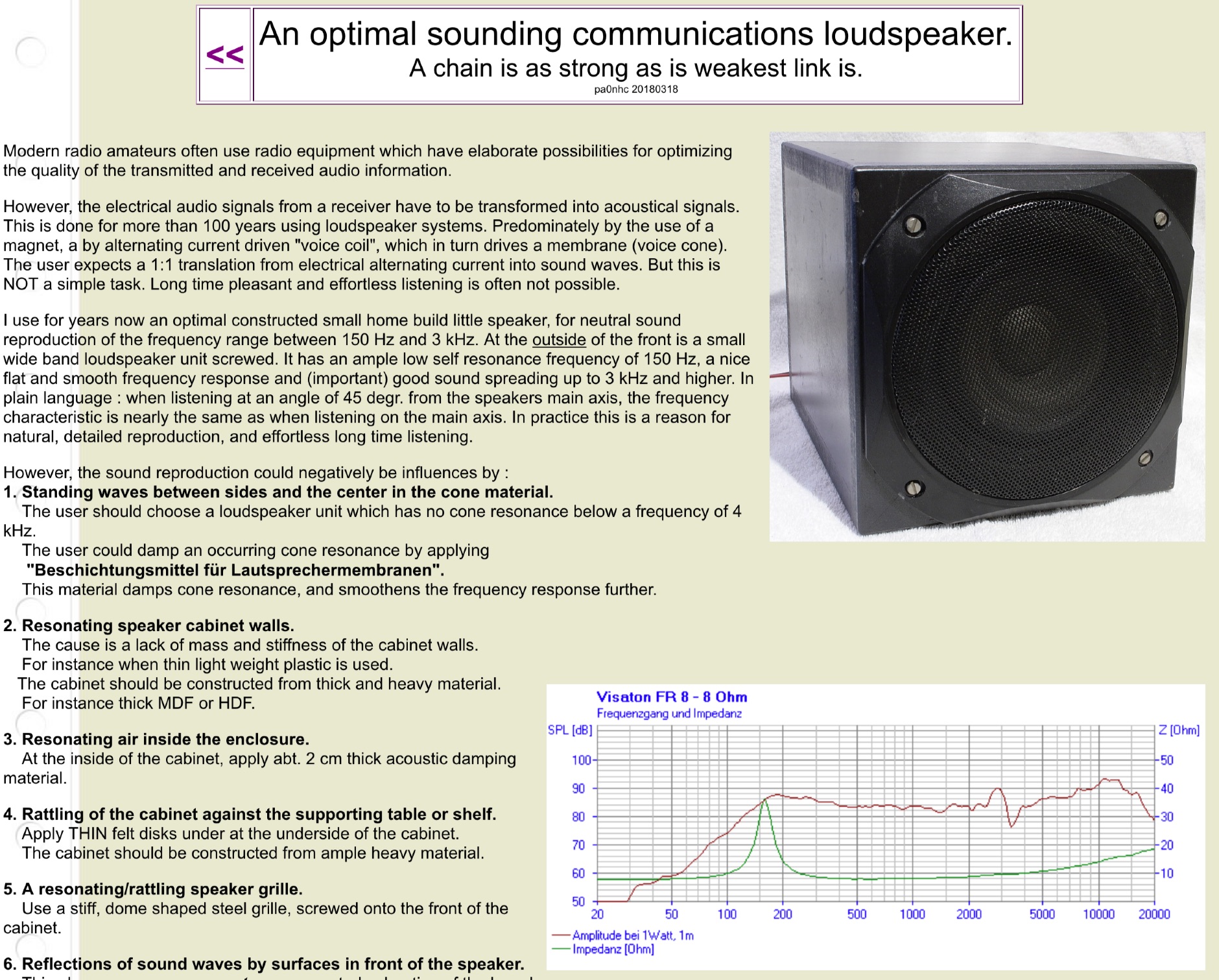 An interesting article on how build an optimal sounding communications loudspeaker capable to optimize sound reproduction at the frequency range from 150 Hz to 3 kHz.
 -
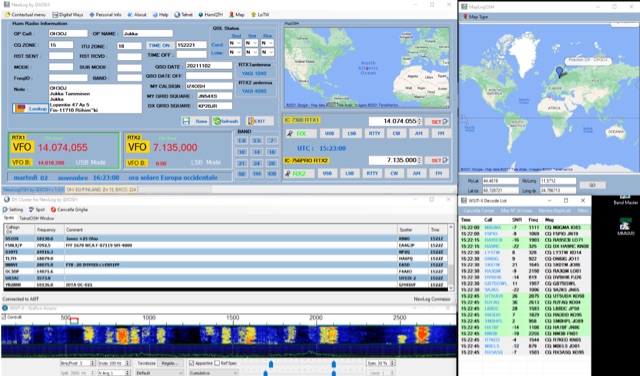 NewLogOSH is a logging application for amateur radio operators, featuring integrated support for various digital modes including FT4, FT8, RTTY, and PSK. The software incorporates DXCluster connectivity and radio interfacing capabilities, allowing for seamless operation with transceivers. Its database is built within the SQLite environment, providing a robust and portable data storage solution for logging QSOs and managing station information. The program's architecture focuses on practical functionality for daily amateur radio operations. Operators can utilize NewLogOSH for contest logging, general DXing, and managing their station's contact history. The inclusion of FT4 and FT8 modes reflects current trends in digital communication, while RTTY and PSK support caters to established digital protocols. The DXCluster integration provides real-time spot information, aiding in DX hunting and propagation analysis. Its SQLite backend ensures data integrity and ease of backup, making it a reliable tool for maintaining comprehensive station logs.
 -
-

-
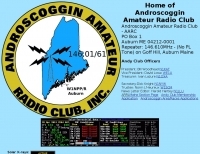 Ham radio club in Maine USA
 -
-
 The web pages of VU2PTT, Prasad Rajagopal, also AT2PTT, AT0PTT. Information on ham radio operations, Contest log book searches
 -
 Ham radio dealer. Antennas, connectors, books, maps baluns and spare antenna components
 -
 Amateur Radio: Links to Lots
 -
 MF TeleType is a program for amateur radio digital communication via sound card, ham radio chat program for extra reliable text transmissions over long distance
 -
 Ararat Shrine Radio Club of Kansas City
 -
 30 meters beacon from UK. QRSS is a method of sending very slow morse code.
 -

-
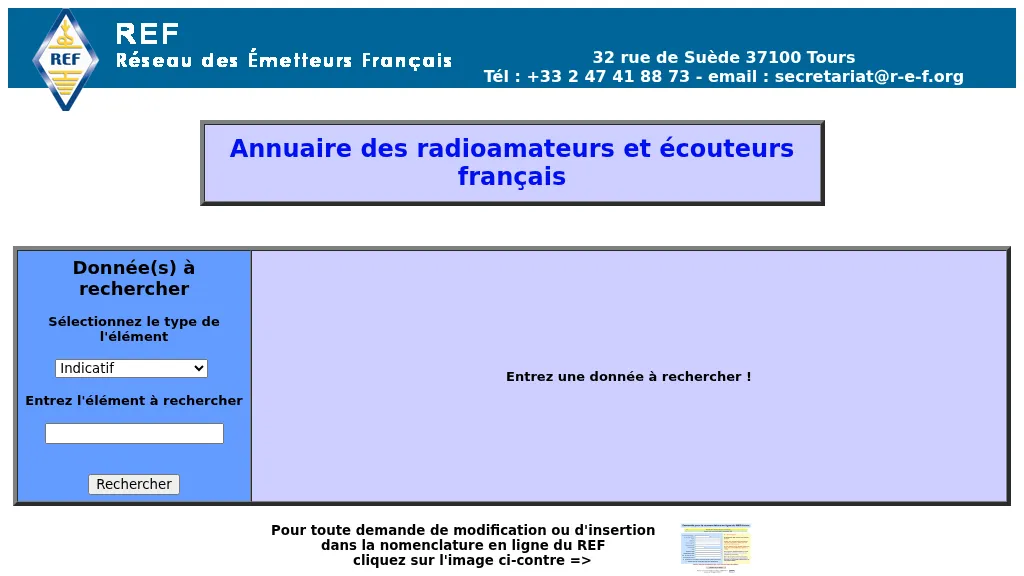 The _Nomenclature Française_ offers an online callbook service specifically for French amateur radio operators and SWLs. This resource facilitates searching for stations by various criteria, including callsign, operator name, city, and postal code. Search results typically display the operator's identity, full address, email contact, and personal website link, if available and publicly listed. The platform serves as a central database for the French amateur radio community, maintained by the _REF Union_. It provides a direct mechanism for operators to request modifications or new insertions of their data into the online nomenclature, ensuring current and accurate listings. The service is a fundamental tool for QSLing, locating fellow hams, and verifying contact information within France. Authored by _F6BIG_, the callbook is a key utility for French hams.
 -
 The BTech DMR-6X2 dual-band DMR handheld radio is thoroughly reviewed, detailing its features and performance for amateur radio operators. This resource covers the radio's capabilities for both VHF and UHF frequencies, supporting Tier II DMR digital and FM analog modes. It highlights key specifications such as its **136-174 MHz** and **400-480 MHz** frequency ranges, CTCSS/DCS, DTMF, 2-TONE, and 5-TONE signaling, and its _digital simplex repeater_ function. The review provides a comprehensive unboxing experience, listing included accessories like two Li-Ion batteries (2100 and 3100 mAh), a programming cable, and a 37-page English user guide. It also specifies the radio's physical dimensions of 5.1 x 2.4 x 1.5 inches and weights of 9.9 oz with the 2100 mAh battery and 10.8 oz with the 3100 mAh battery, offering practical insights for hams considering this transceiver.
 -
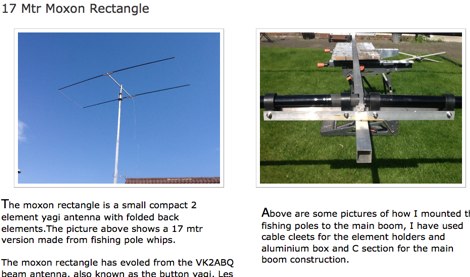 Constructing a compact directional antenna for the 17-meter band, this resource details the build process for a Moxon rectangle, a two-element Yagi variant with folded-back elements. It covers the antenna's evolution from the _VK2ABQ beam_ and provides specific dimensions for a version built using fishing pole whips. The content includes a discussion of the antenna's radiation pattern, feedpoint impedance, and its inherent front-to-back ratio, which is often superior to a standard two-element Yagi. Practical considerations for element spacing and material choices are also addressed, alongside a visual representation of the antenna's physical layout. Performance data presented includes a comparison showing the Moxon rectangle's **2.5 dB gain** over a half-wave dipole and a front-to-back ratio of **20 dB**. The resource also touches upon the antenna's relatively wide bandwidth for a two-element beam and its suitability for portable operations due to its compact footprint. It offers insights into optimizing the design for specific operating conditions and discusses the advantages of its lower take-off angle compared to omnidirectional wire antennas, making it effective for DX contacts on the 17-meter band.
 -
 Operating on the 146.880 MHz repeater, the Inland Empire VHF Radio Amateurs (IEVHFRA) hosts a weekly net, providing a consistent on-air gathering for amateurs within Eastern Washington and Spokane County. My experience with similar regional VHF nets confirms their value in fostering local ham radio community and sharing information, often covering topics from equipment troubleshooting to upcoming hamfests. The club, active for over **50 years**, also organizes the _Inland Empire VHF Tailgate Swap_, an event featuring vendors, emergency communication demonstrations by Spokane ARES-ACS, and POTA/SOTA activity setups. Such events are crucial for hands-on learning and direct interaction, which I've found invaluable for new licensees and seasoned operators alike. Beyond on-air activities and events, IEVHFRA supports the hobby through amateur radio classes and testing, facilitating new license acquisition and upgrades. They also maintain an online messaging group for members, ensuring continuous communication and information exchange.
 -
 Founded in 2000 by Jim Weidner, K2JXW, the ARLHS is the only society devoted exclusively to Maritime Communications and Ham Radio, Lighthouses and Lightships