Search results
Query: times
Links: 107 | Categories: 0
-
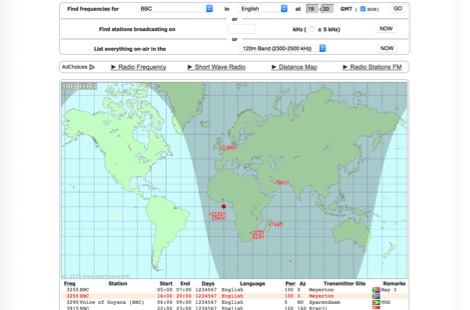 Monitoring shortwave broadcast stations effectively requires accurate schedule information to identify transmissions. This online utility offers a straightforward, graphical interface designed to search for and display current shortwave radio broadcasting schedules. Users can precisely filter results by frequency, specific language, broadcaster, time of day, and even by shortwave band, which simplifies the process of pinpointing desired content. The database, last updated on March 26, 2023, details station callsigns (e.g., BBC), start and end times in UTC, days of the week, broadcast language, transmitter power in kilowatts, and azimuth. Crucially, it includes the precise geographical coordinates of transmitter sites, such as Woofferton in the UK or Al Seela in Oman. This data is invaluable for predicting signal paths and optimizing antenna direction for improved reception, a key consideration for serious SWLs. For instance, a search for BBC English broadcasts at 21:04 GMT quickly reveals multiple active frequencies like 17780 kHz from Woofferton, offering a clear overview of current transmissions. The tool processes queries rapidly, returning results within seconds, demonstrating its efficiency for broadcast listening enthusiasts seeking timely information.
 -
 Loop Recorder, a Windows-based software, offers continuous audio recording capabilities, specifically designed for capturing broadcasts from radio or internet radio sources. It features a **looping buffer** that prevents missing the beginning of desired audio segments, such as songs or specific transmissions. The application supports various audio formats including **MP3**, WMA, Ogg Vorbis, and WAV, allowing users to save recordings in their preferred codec. The software provides functionalities for scheduled recordings, enabling automated capture of content at predefined times. It caters to a range of users, from radio enthusiasts monitoring air traffic and scanner amateurs archiving communications, to professional environments requiring 24/7 broadcast storage or call center monitoring. The Pro version extends these capabilities for more demanding, continuous operational tasks. Compatibility spans multiple Windows operating systems, from Windows 9x up to Windows 10, ensuring broad usability across different system generations.
 -
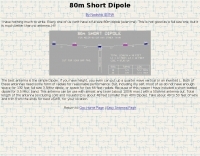 The best antenna is the simple Dipole. If you have height, you even can put up a quarter wave vertical or an inverted, but sometimes you may need shorten version by 4S7NR
 -
 The dipole antenna is an easily designed and made antenna usually used on HF, although can be (and sometimes is) made for VHF and UHF antennas, and in varying forms is also used as part of different designs of antennas i.e. as the driven element for directional antennas.
 -
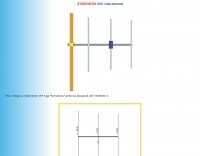 3 elements VHF Yagi homebrew antenna designed with YAGIMAX 3. Maximum forward GAIN is about 8,17 DBi. This antenna offering an effective radiation power 4 times greater of the transceiver output by SV1BSX
 -
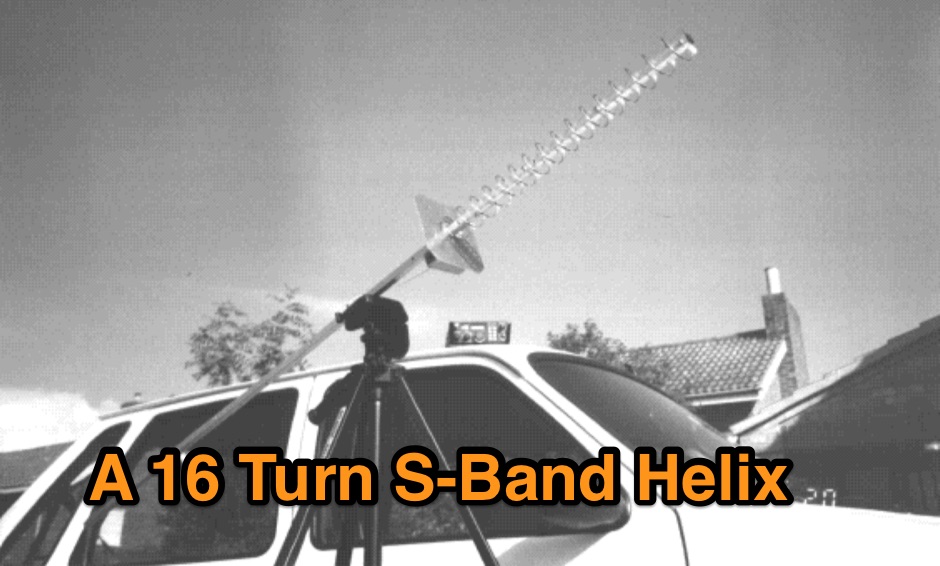 This design represents the smallest practical antenna for Oscar-13 mode-S. Perfect beacon reception at all times is possible, and acceptable SSB even at 43,000 km range.
 -
 The NCDXF/IARU International Beacon Project schedule provides precise transmission start times for 18 beacons operating on 14.100 MHz, 18.110 MHz, 21.150 MHz, 24.930 MHz, and 28.200 MHz. Each beacon transmits every three minutes, cycling through its callsign at 22 WPM followed by four one-second dashes. The initial callsign and first dash are sent at 100 watts, with subsequent dashes at 10 watts, 1 watt, and 100 milliwatts, enabling **propagation analysis** across varying signal strengths. The schedule lists the minute and second within each hour for the first transmission of each beacon on its respective frequencies. This resource allows **DXers** and **contesters** to accurately predict beacon transmissions for real-time propagation assessment. For example, 4U1UN transmits first at 00:00 on 14.100 MHz, followed by VE8AT at 00:10, and W6WX at 00:20, continuing the sequence. The page also notes recent hardware upgrades, such as the installation of IBP 2.0 controllers with Icom 7200 radios at some sites, and provides status updates for beacons experiencing hardware failures or those not recently heard, aiding in troubleshooting and managing expectations for monitoring.
 -
 Lookup callsign histories & applications, available Amateur Extra callsigns, vanity callsign predictions, and more. Updated from FCC data several times a day.
 -
 Argo, developed by I2PHD and IK2CZL, functions as a specialized freeware viewer for various weak signal modes, specifically MTHELL, Slow CW, QRSS, and DFCW. It processes audio input to visualize and decode these extremely low-speed transmissions, which are often imperceptible to the human ear. The software's capabilities extend to EME (Earth-Moon-Earth) operations, where its sensitivity to weak signals is particularly advantageous for detecting faint lunar reflections. The application provides a visual representation of the received signals, allowing operators to discern patterns and decode information from signals buried deep within the noise floor. Its design focuses on extracting data from signals with very narrow bandwidths and long integration times, characteristic of QRSS and similar modes. This tool is distinctively useful for experimenters and DXers engaged in challenging weak signal communication, offering a dedicated platform for modes not typically supported by general-purpose digital mode software. Its specialized focus on _Slow CW_ and _MTHELL_ makes it a niche but effective utility for specific operating scenarios.
 -
 AutoRec is windows freeware time based automatic recorder - player for radio broadcast. Auto Recorder will record or play wav audio files, and execute batch or other executable application programs at scheduled times. The primary use for Auto Recorder is automatic, unattended recording and playback of network or other satellite-delivered radio station program material.
 -
 Monitoring Times, SWL, BCL, montly reports, Broadcast band, satellite television, long-wave coverage, Reviews of new products and radio-related software.
 -
 A PIC16F876 microprocessor-based digital SWR/WATTmeter project provides automatic operation across the 1.8 to 60 MHz frequency range. This design displays both SWR and P.E.P. power values, incorporating a bar graph on the second LCD line for instantaneous power tracking. The directional coupler utilizes a single-wire coil on a ferrite FT50-43 toroid, balanced with a 60 pF trimmer, and employs 1N5711 Schottky diodes for detection, ensuring linearity and a power range of 5 to 120 W. The software, developed by IW3EGT, compensates for diode voltage drop for precise readings, updating power every two seconds for stable display of modulated carriers, while the bar graph updates ten times per second for near real-time feedback. Calibration involves two phases: adjusting the directional coupler for minimum SWR on a 50-ohm dummy load at 28 MHz, and calibrating the microprocessor system by inputting a calculated power value (Power (Watt) = (Vout + 0.5)^2 / 100) at 14-21 MHz. The project includes PCB layouts for both the directional coupler (two-layer copper board) and the PIC module (single-sided), with specific instructions for component placement and shielding to prevent RF interference. The design allows for modification of power reading capability by varying the number of turns in the coupler coil, catering to different power levels.
 -
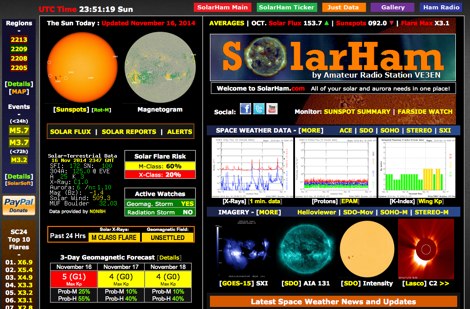 SolarHam is a website all about the Sun and how it affects Earth. This site is routinely updated with breaking news, sometimes hours before other Space News websites. You can trust SolarHam.com for the most up to date and accurate solar information on the net. SolarHam is a trusted and easy-to-use website for anyone interested in solar activity and space weather. It gives daily updates on <b>solar flares</b>, sunspots, geomagnetic storms, and radio blackouts. The site uses data from NOAA and NASA to show what is happening on the Sun and how it may affect radio signals on Earth. Charts and images are clear, and reports are updated often. Many amateur radio operators use SolarHam.net to check band conditions and aurora forecasts before operating. The site is fast, well organized, and focused on the needs of the radio community. Whether you are a beginner or an experienced ham, SolarHam.net is a helpful tool for understanding space weather and its impact on radio communications.
 -
 Notes on bazooka antennas by Katunk: a portable field antenna, sometimes called the double bazooka or a coaxial antenna.
 -
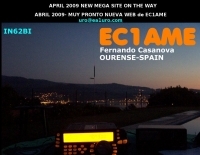 Web site updated several times per month. It covers all aspects of ham radio.
 -
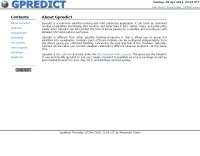 Operating amateur radio satellites effectively requires precise knowledge of their orbital mechanics and pass times. Gpredict, a real-time satellite tracking and orbit prediction application, addresses this need by allowing operators to monitor numerous satellites simultaneously. It displays critical data such as position and pass details through various visualizations, including lists, tables, maps, and _polar plots_. Unlike many other satellite tracking programs, Gpredict introduces the concept of visualization modules. These modules enable users to group satellites and configure each group independently, offering unparalleled flexibility in how orbital data is presented. This modular approach supports tracking satellites from multiple observer locations concurrently, which is particularly useful for stations with diverse antenna setups or remote operations. Originally a GUI client for John Magliacane's _Predict_ program, Gpredict evolved to integrate its own tracking code for improved performance. The software is distributed under the GNU General Public License, ensuring it remains free and modifiable for the amateur radio community.
 -
 Explains the Federal Communications Commission (FCC) vanity call sign program, outlining the specific rules and procedures for amateur radio operators in the United States to obtain a personalized call sign. It details the eligibility requirements based on license class, the application process using FCC Form 605, and the various group formats (e.g., _1x2_, _2x1_, _2x2_) available to different license classes, such as Extra and Advanced. The resource clarifies the priority system for vanity call sign requests, including previous holders and close relatives, and discusses the typical processing times for applications. It also provides insights into how the FCC assigns available call signs and offers practical advice for increasing the likelihood of securing a desired call, referencing the _ARRL Letter_ for updates.
 -
 RF Choke to prevent hf currents on the feedline or...1:1 Choke Balun, sometimes called the "UGLY BALUN"
 -
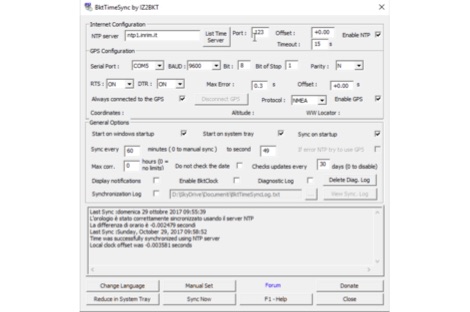 BktTimeSync synchronizes the PC time using an internet time server (NTP server) or a GPS receiver connected to USB, serial port or Bluetooth. Great for use with digital modes like FT8, JT65, JT9, JS8Call and others. For the operation of this program requires an active internet connection or a GPS receiver. This program works on all versions of Windows 32 or 64 bit
 -
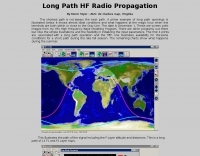 Long path hf radio propagation is sometimes the best path to work dx, since the shortest path is not always the best path.
 -
 VQLog 3.1 - 782 is a shareware logbook program designed for Windows operating systems (95, 98, NT, 2000, ME, XP, Vista, 7, 10, or later), supporting resolutions of 800x600 or higher. It can also operate on macOS and Linux via virtualization software like Virtual PC for MAC, Oracle VirtualBox, or VMware. The software facilitates QSO access by date, callsign, prefix, square, DXCC, and other parameters, offering robust import capabilities for ADIF, Cabrillo, and ASCII files from various contest and logbook programs. Key features include comprehensive award tracking for DXCC, WAZ, WAC, WPX, WAS, IOTA, TPEA, DIE, VUCC, 100EACW, and up to 30 user-defined awards. It generates customizable summaries and graphical statistics for QSO activity, DX contests, Most Wanted Squares (MWS), propagation openings, and prefixes. VQLog supports DX-Spot reception and processing from DX-Cluster and PSK-Reporter with programmable warnings, integrates with callbook services like QRZ.COM and Buckmaster's CD, and offers online lookup. Electronic QSL and log upload support extends to LoTW, eQSL.cc, Clublog, and DXMAPS, with real-time updates for online logs. The program provides extended QSO information for VHF-DXers, including separate TX/RX frequencies, start/end times, propagation modes, and specific entry fields for MS, EME, and Tropo. CAT support for rig control and interfaces with ARSWIN and PstRotator for azimuth/elevation control are also included.
 -
 How to make your ham radio system mobilemany ham radio operators carry radios for fun, safety and public service activities. radios for both vhf and hf frequencies can easily be installed in vehicles.
 -
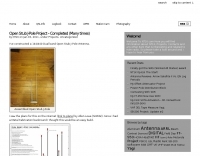 A 144/440 dual band open stub J-Pole Antenna project by NT1K
 -
 Sometimes amateurs like to home-brew their power supplies instead of purchasing one off the shelf at any of the major ham radio retail dealers.
 -
 Putting up wire antennas is always a fun proposition. Sometimes it is fun for the participants and often fun for on-lookers. There are at least as many methods as there are folks putting up antennas.
 -
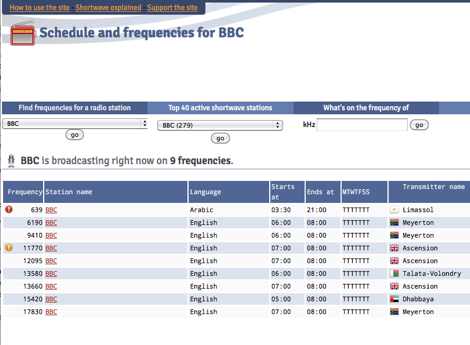 Presents a dynamic, searchable database of shortwave broadcast schedules from around the world, enabling users to locate active stations or plan listening sessions based on scheduled transmission periods and frequencies. The resource details specific station names, such as _Radio Habana Cuba_, _Deutsche Welle_, and _All India Radio_, alongside their operational times and assigned kilohertz frequencies. It also incorporates a distance calculator, which leverages geographical coordinates to estimate propagation paths, though it notes occasional data inaccuracies leading to transmitters appearing in oceanic locations. The platform's development log highlights continuous updates, including the integration of new seasonal schedules like "A24 frequencies" and "B23 schedule," reflecting the fluid nature of shortwave broadcasting. It documents challenges with geolocation services, particularly concerning Google API changes that impacted distance calculations and required user-side browser configuration adjustments for optimal functionality. The site owner, VAXXi, frequently communicates these technical adjustments and database updates, often acknowledging user contributions and donations. Distinctively, the resource provides a historical perspective through its update archives, illustrating the evolution of shortwave listening over more than a decade since its inception in 2011. It also mentions specific events, such as the BBC adding shortwave broadcasts for Ukraine on 5875 kHz and 15735 kHz, demonstrating its responsiveness to global events impacting broadcast schedules. The site's commitment to user feedback is evident in its bug reporting and feature request mechanisms, contributing to its ongoing refinement.
 -
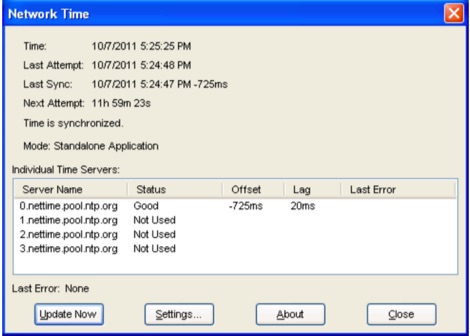 NetTime is a simple and free software to sync your computer clock via internet. Very useful tool for FT8 FT4 operating modes.
 -
 Examines various facets of online casino gaming, focusing on security, game selection, and payment solutions. It details the extensive gaming libraries offered by online casinos, which often feature over **4,500 games** from more than _75 top software providers_, including slots, live dealer games, and table games. The resource also covers stringent security standards, such as 256-bit SSL encryption and dual licensing from authorities like the _Malta Gaming Authority_, ensuring player fund segregation and data protection. Furthermore, the content explores diverse financial solutions, including traditional methods like Visa/Mastercard and modern options like Skrill, Neteller, and cryptocurrencies such as Bitcoin, with withdrawal times ranging from **0-6 hours** for e-wallets. It highlights mobile gaming experiences optimized for various devices using HTML5 technology, offering over 4,000 mobile-optimized games. The resource also delves into VIP rewards programs, loyalty benefits, and customer support channels, emphasizing quick response times.
 -
 The Amateur Radio Society of ROYAL SIGNALS (British Army), 1550 Members. MERCURY Journal issued three times a year (Editor G3NVK) Regular (daily) Nets. Awards and Contests. Own QSL Bureau. E-mail List Server open to all. Regularly updated Web Site (Web Master G3NVK) includes EASYMAIL facility, Guest Book, Photo Gallery, Society Rules, Military Museums.
 -
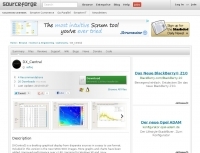 DX_Central, a compact desktop application, provides amateur radio operators with critical propagation data by aggregating solar statistics and imagery from various authoritative sources. This includes real-time information from agencies like NOAA and NIST, offering insights into current space weather conditions that directly impact HF propagation. The software is designed for both Linux and Windows operating systems, making it accessible to a broad range of hams. It presents a concise overview of solar activity, which is essential for planning DX operations and understanding band openings and closures across the HF spectrum. Operators can utilize the displayed solar flux index, K-index, and other relevant parameters to make informed decisions regarding their operating times and target bands, optimizing their chances for successful long-distance contacts.
 -
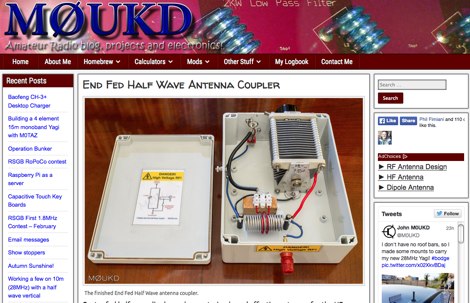 Centre fed half wave dipoles make great, simple and effective antennas for the HF bands. Sometimes however, the centre feed is not ideal. This great project will improve the overall antenna performance.
 -
 Operating on the amateur radio bands, DXers rely on timely information to chase rare contacts. This resource offers a specialized web interface for accessing DX cluster data, specifically designed for mobile phone displays. It presents real-time **DX spots** in a compact, easy-to-read format, stripping away extraneous elements often found on traditional cluster interfaces. The core functionality focuses on delivering essential spotting information—callsign, frequency, mode, and comments—without requiring complex navigation or excessive data loading, which is crucial for mobile data usage. The utility of this mobile-first design becomes apparent when operating portable or away from a shack. Unlike full-featured _telnet clusters_ or web-based aggregators, DXLite prioritizes quick access and readability on small screens. The interface displays a continuous stream of spots, allowing operators to rapidly identify potential DX opportunities across various bands. Its minimalist approach ensures fast loading times and efficient data consumption, making it a practical tool for on-the-go DXing and contesting.
 -
 Sometimes many VHF-UHF modern transceivers have problems with BROADCAST Interference and CROSS-modulation from FM commercial broadcast stations this article shows a simple Batteworth HI-Pass VHF Filter to reduce this problem
 -
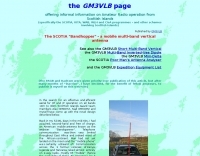 The SCOTIA Bandhopper, a multi-band mobile vertical antenna, offers a unique sliding coil design for rapid band changes across 10m to 80m. Drawing inspiration from the classic Webster _Bandspanner_, this design improves efficiency through near-center loading, theoretically achieving up to **2.25 times** greater radiation resistance than base-loaded counterparts. The antenna, extending to approximately 10 feet on 80m, utilizes a 5-foot fiberglass tube with an internal loading coil and a 57-inch tapered steel whip, allowing continuous tuning across bands without changing coils or whip sections. Field results from GM3VLB and the SCOTIA team, based on over 40 years of /M and /P operations, indicate the Bandhopper significantly outperforms shorter mobile whips. Its slim profile minimizes drag, making it suitable for sustained motorway speeds. The design incorporates a novel "fixed spring contact" arrangement for the variable inductance loading coil, with two sets of contacts for 10/12m and 15-80m. Construction details are provided, including materials like boundary marker poles and specific wire gauges, with an estimated build cost of **£20** or less, depending on junk box availability.
 -
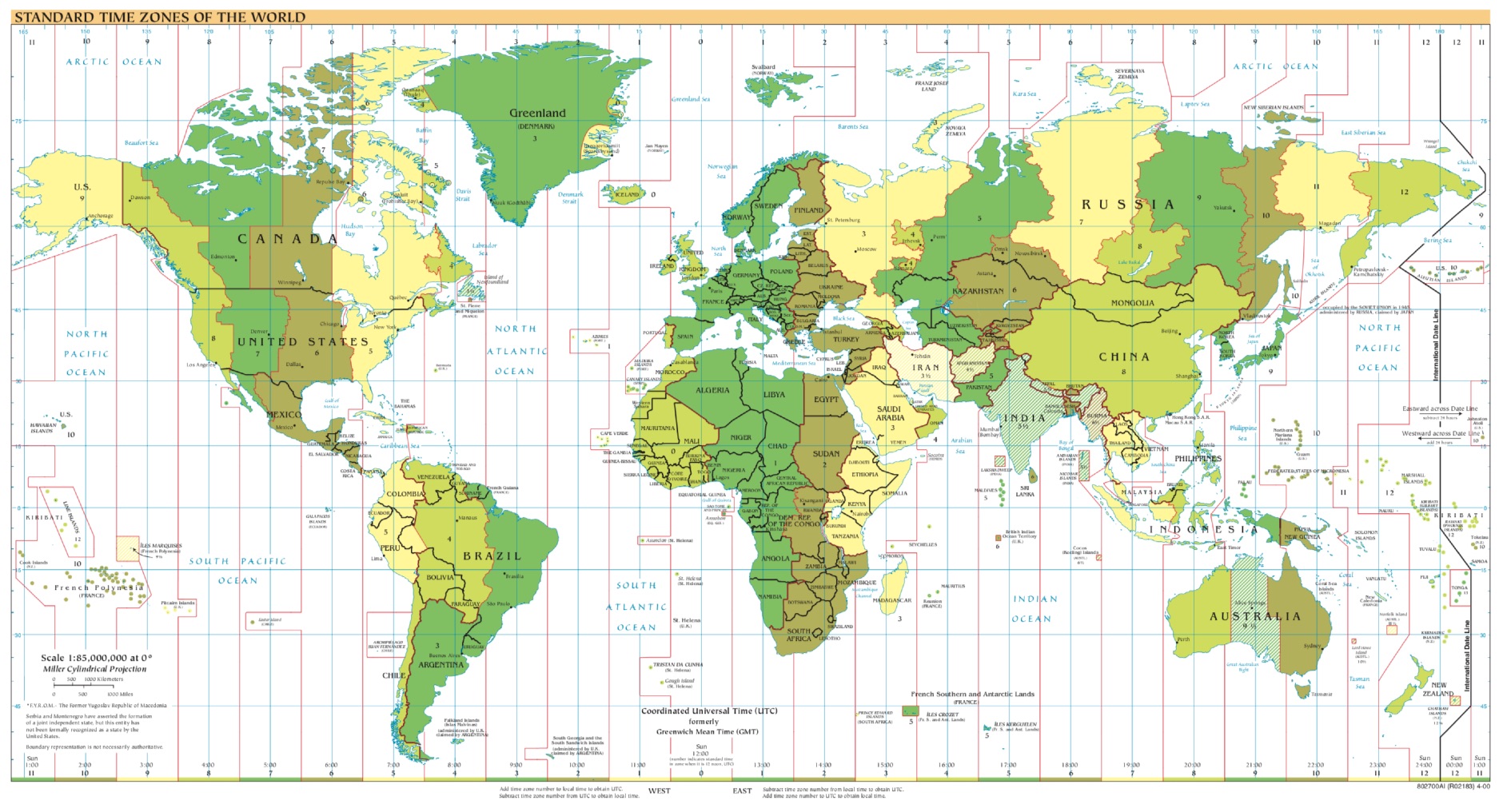 A large printable PDF file representing the world time zones. This map gives an overview of current local times around the world. If you ever asked yourself what time zone am i in, find your answer here.
 -
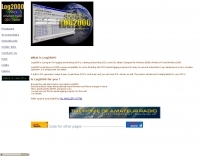 Log2000 provides a structured environment for amateur radio operators to manage their contact records. This software facilitates the logging of two-way radio contacts, a fundamental aspect of the hobby, by capturing essential QSO data such as callsigns, dates, times, bands, and modes. It also supports the generation and printing of QSL cards and labels, streamlining the process of confirming contacts for awards and personal record-keeping. The program was specifically developed for Windows 95/98, Windows NT, and Windows 2000 operating systems. Its feature set includes tools for searching logs, generating various reports, and managing award progress. While tailored for earlier Windows versions, Log2000 offers core logging functionalities that remain relevant for basic station management.
 -
 Specialise in the restoration and sale of vintage valve and transistor radios made from 1930 through to 1975
 -
 County Hunting is one of many amateur radio activities. There are over a thousand hams who have worked all of the US counties. Some have done it several times
 -
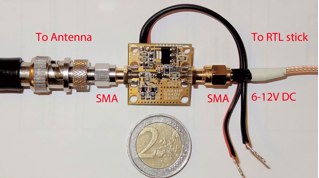 low-noise amplifier for HF reception, amplifies signals 80 to 100 times between 0.15 MHz and 30 MHz. It will let you hear more signals with your RTL-SDR plus Ham-It-Up setup
 -
 Edwin H. Armstrong's foundational contributions to radio technology are presented, including the _Regenerative Circuit_ (1912), the _Superheterodyne Circuit_ (1918), the Superregenerative Circuit (1922), and the complete FM System (1933). This resource functions as a curated collection of historical documents and artifacts, many previously uncirculated, stemming largely from the _Houck Collection_. The site's purpose is to offer these primary source materials for study and enjoyment, rather than to retell Armstrong's life story, which is covered in works like Lawrence Lessing's "Man of High Fidelity" and Tom Lewis's "Empire of the Air." The collection emphasizes original documents, photographs, and equipment, all sourced from the Houck Collection unless explicitly noted otherwise. The site is structured for browsing chronologically, by selected year, or by highlight, allowing users to explore Armstrong's technical evolution. Document files are intentionally large to preserve readability and detail, while individual pages are kept concise to optimize loading times. The content provides direct insight into the technical development of radio communications.
 -
 The article details a specific method for performing maintenance on a crank-up tower, focusing on cable and rotator replacement without a full power pulldown. It outlines the necessary equipment, including a 2-section extension ladder with a horn attachment and a two-piece, 6-foot steel pipe, specifying a 1 1/4-inch diameter. The procedure involves lowering tower sections onto the internal pipe to slacken cables, allowing for their removal and replacement, and also describes how to replace the rotator while the tower remains upright. Key steps involve using the pipe to support tower sections, enabling access to the cables and bearings. The author, N5AR, emphasizes safety by instructing the reader to remain on the ladder at all times, rather than climbing the tower itself. The process is presented as manageable for a single operator, with the author having successfully completed the task on a _UST TX472_ tower. Specific tools mentioned include Allen wrenches and end wrenches for cable ends and bearing bolts. The method provides a practical approach for tower upkeep, minimizing the complexity often associated with such tasks and allowing for maintenance of components like cable pulleys and their bearings.
 -
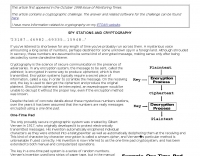 This article first appeared in the October 1998 issue of Monitoring Times
 -
 Sometimes we need a little more output filtering than traditional designs offer. Look at a new filter that can give you that extra boost. QST article by W3NQN
 -
 CLOVER-2000 is a faster version of CLOVER (about four times faster) that uses eight tone pulses, each of which is 250 Hz wide, spaced at 250-Hz centers, contained within a 2 kHz bandwidth between 500 and 2,500 Hz
 -
 The Minuteman Repeater Association is a non-profit communications organization serving the public in times of emergency.
 -
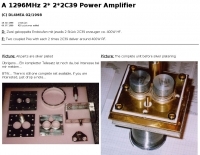 Two coupled PAs with each 2 times 2C39 deliver around 400W RF.
 -
 Our Mission: To provide emergency communications to central Ohio public safety, emergency, health, government and relief agencies in times of disaster.
 -
 Presents the official web presence for the Mike Charlie DX Group, identified as 14MC, a CB radio association operating from Lyon, France. The resource details the group's activities, which include engagement in digital communication modes such as packet radio, PSK31, SSTV, FSSTV, and MT63, indicating a focus beyond traditional AM/SSB CB operations. It provides contact information, including the group's email address and a specific callsign, 14MC17, associated with the publisher. The site offers historical context through its copyright dates of 2000-2001 and a last update timestamp of October 6, 2004, reflecting its operational period. It lists key identifiers like "14MC01" and "14MC17," suggesting individual or station callsigns within the group structure. The content emphasizes the group's identity as a "cibiste lyonnaise" association. The resource serves as a digital archive for the 14MC group, documenting its existence and operational interests in CB radio and digital modes. It provides specific keywords like "14," "cb," "14MC," "packet," "psk31," "sstv," "FSSTV," "MT63," "Lyon," "CIBI," "radio," and "Micro-contact," which collectively define the group's technical scope and geographic base.
 -
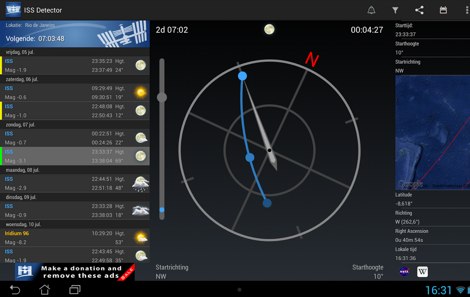 The _ISS Detector_ Android application, with over 5 million downloads, offers precise predictions for visible passes of the International Space Station. It notifies users minutes before an overhead pass, integrating local weather conditions to ensure optimal viewing opportunities. The core functionality focuses on the ISS, but in-app purchases extend its capabilities to track other celestial and artificial objects. Optional extensions, available via in-app purchase, allow users to monitor dozens of amateur radio and weather satellites, providing real-time transmitter information and Doppler frequencies. Additional extensions cover _Starlink_ satellites, the _Hubble Space Telescope_, rocket stages, bright satellites, comets, and planets, expanding the scope beyond the ISS to a broader range of observable space phenomena. The app's interface is designed for ease of use, displaying pass times, directions, and elevation. It adapts predictions based on the user's GPS location, ensuring accurate local forecasts. The latest update, dated April 3, 2026, includes corrections for magnitude values and various speed and stability optimizations.
 -
 The Cuyahoga Amateur Radio Society (CARS) is a not-for-profit organization comprised of Amateur Radio (Ham Radio) operators dedicated to furthering the art of Ham Radio and to serving the public in times of disaster