Search results
Query: ge radio
Links: 2343 | Categories: 129
Categories
- Antique Radios > Antique Radio Reference
- Shopping and Services > Antique Radios
- Ham Radio > Clubs > South America > Argentina
- DX Resources > Nets > Emergency Nets
- Ham Radio > Clubs > North America > USA > Georgia
- Ham Radio > Clubs > Europe > Germany
- Shopping and Services > Regional > Europe > Germany
- Ham Radio > Blogs > Europe > Germany
- DX Resources > Ham Radio Awards
- Technical Reference > Ham Radio Go Kits
- Shopping and Services > Ham Radio Insurance
- Internet and Radio
- Manufacturers > Lightning and Surge Protection
- Manufacturers > Alternative Power > Portable Generators
- Radio Equipment
- Radio Equipment > Radio Equipment Reference
- Internet and Radio > Radio Gateways
- Radio Equipment > Radio Manuals
- Software > Radio Programming
- Radio Equipment > Scanners > Radio Shack PRO-97
- Software > RF Coverage Mapping
- Technical Reference > RF Signal Generators
- Technical Reference > Test Equipment > RF Sweep Generator
- Manufacturers > Test Equipment > Signal generator
- Software > Signal Generator
- Technical Reference > Test Equipment > Signal Generator
- Software > Software Defined Radio
- Operating Modes > SSTV > SSTV Images
- Ham Radio > Clubs > Europe > Italy > Trentino Alto Adige
- Manufacturers > Alternative Power > Wind Generators
-
 Featuring Eddystone, Classic British receivers (a history from 1898 - 1973) and Hubble-Bubble a personal web page
 -
 Heartland Antique Radio Association of Tulsa, Oklahoma
 -
-
 Dedicated to the art of Ham Radio, enhancing individual operational and technical skills as well as providing communications during local and national emergencies. Located on the Kenai Peninsula in South Central Alaska.
 -
 Info about Amateur Radio and emergency info weather related.
 -

-
 Offer EcloLink node to the ham community
 -
 One of the oldest emergency traffic handling nets on amateur radio
 -
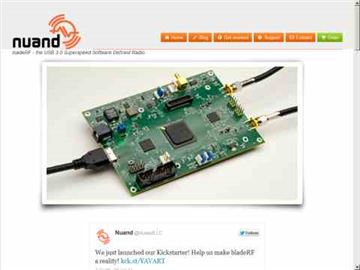 Nuand id the maker of bladeRF - the USB 3.0 Superspeed Software Defined Radio, 300MHz - 3.8GHz RF frequency range Independent RX/TX 12-bit 40MSPS quadrature sampling
 -
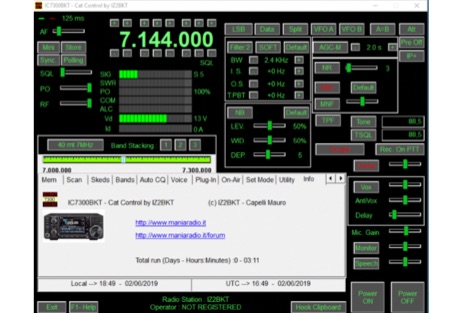 Windows PC control program for the Icom IC-7300 transceiver. Power-on and Power-off by software BktNetInterface for JTDX and WSJT-X, audio recording, memory management, cw keyer management, Interface for other software
 -
 Manufacture remote control interfaces to manage several kind of ham radio transceivers, Antenna rotators and antenna switches. Control can be done using smartphone Apps or from Computers.
 -
 Demonstrates the complete design and development process for a **Low Noise Microwave Amplifier** (LNA), beginning with conceptual design and progressing through prototyping. The tutorial series covers the initial stages of a single-ended first gain stage, focusing on critical parameters such as noise figure, gain, and stability. It systematically details the theoretical underpinnings and practical considerations for achieving optimal performance in microwave frequency applications. This resource provides a structured approach to LNA construction, enabling radio amateurs and RF engineers to understand the iterative steps involved in realizing high-performance receive-side amplification. It offers insights into component selection, impedance matching networks, and the measurement techniques required to validate design specifications, particularly for **microwave** band operation where noise performance is paramount.
 -
 The Tri-County CW Amateur Radio Club, operating under the callsign _W3TCW_, is situated in North Huntingdon, Pennsylvania, just southeast of Pittsburgh. This organization extends an open invitation to all licensed amateur radio operators, regardless of age or experience level, to participate in its activities and community. The club maintains a web presence detailing various aspects of its operations, including a calendar of events, a member roster, and contact information. It also provides resources related to _VE Testing_ and links to other local clubs and the _ARRL_ section website. Historical content, such as information from _Field Day 2008_, is also referenced.
 -
 Describes Atlantic Tower Services (ATS), a company specializing in antenna tower erection and maintenance, operating from Orlando, Florida. ATS offers a range of services including site maintenance, structural repairs, system modifications, and complete tower installations for various communication needs. The company emphasizes its capability to handle diverse tower projects, from routine inspections to complex upgrades, ensuring structural integrity and optimal performance for amateur radio and commercial installations. ATS focuses on delivering reliable infrastructure solutions, supporting the backbone of communication systems. Their service portfolio covers critical aspects of tower ownership, addressing both preventative care and reactive solutions for existing structures. They are equipped to manage projects involving different tower types and heights, adhering to safety standards and operational best practices. Services include **site maintenance** and _structural modifications_.
 -
 Portage amateur radio club, amateur radio emergency service,ares.
 -
 W7VJD Lewis-Clark Amateur Radio Club is located in the Lewis-Clark Valley on the borders of Idaho and Washington. LCARC also provides emergency communcation support.
 -
 The Holiday City Amateur Radio Club (HCARC) invites all hams or prospective hams to join our club. We are an ARRL affiliated club and have members eager to help others to achieve licensing or to up-grade their present license privileges.
 -
 KC0DMH's **amateur radio homepage** provides a personal insight into the station and activities of Jonathan and Sara Imberi. The resource details the relocation of their online presence from QSL.net to a privately funded server, citing increasing site size and traffic volume as the primary reasons for the move. This transition indicates a commitment to maintaining a robust online presence for their ham radio endeavors. The site's move to **ham-shack.com** reflects a common progression for popular amateur radio personal pages, where growth necessitates dedicated hosting beyond free services. The call for donations suggests an effort to sustain the operational costs associated with a private server, ensuring continued availability of their content. This evolution highlights the dynamic nature of personal ham radio web presences and the community support often involved.
 -
 Reports indicate the PA1RBZ DX Cluster, previously accessible via telnet at pa1rbz.dyndns.org on port 9000, is no longer operational. The QSL.net hosting platform displays a 404 error, indicating the specific page or file for the cluster's web interface or related information is missing. This service was designed to provide amateur radio operators with real-time DX spotting data, facilitating long-distance contacts across various bands. The cluster's primary function was to aggregate and disseminate DX spots, allowing users to monitor current propagation conditions and identify active stations. Such systems are crucial tools for DXers and contesters, enabling rapid response to new openings and rare DX entities. QSL.net, which hosts over 30,000 amateur radio websites, provides these services free of charge to hams, relying on user donations for operational continuity.
 -
 G0HWC details and HTML files with images to build yourself a Ham Radio website. Get your Ham Web Site on the internet for free
 -
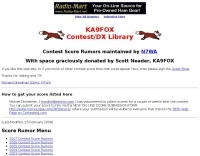 This resource compiles claimed scores, often referred to as "rumor scores," for numerous amateur radio contests, providing a historical snapshot of competitive activity from 1993 through 2007. It lists entries for prominent events such as _CQWW CW_, _ARRL Sweepstakes_, _IOTA Contest_, and various _NAQP_ events, categorized by year and contest. Each entry typically includes the contest name and the month/year of operation, allowing users to quickly navigate to specific contest periods. The site also references the _3830 Web Page_ on Contesting.com as the primary submission portal for these claimed scores. The collection offers a unique perspective on contest participation and performance trends over more than a decade, preceding the widespread adoption of real-time score reporting systems. While not official results, these rumor scores provided early indications of top performers and overall activity levels for a wide array of HF and some VHF contests, including _ARRL 10M_ and _CQWW VHF_. The historical data can be useful for analyzing past contest popularity, identifying consistently strong operators, or simply reminiscing about earlier competitive eras in amateur radio.
 -
 A general interest amateur radio club where all hams are welcome
 -
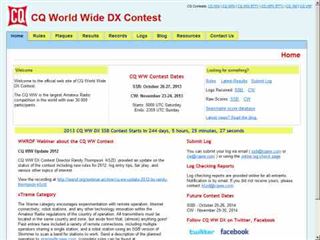 The CQ World Wide DX Contest records page details the highest scores achieved in the CQ WW DX Contest across various categories and years. It systematically lists records for both SSB and CW modes, segmenting results by entry class such as Multi-Multi, Multi-Two, Multi-Single High, Multi-Single Low, Single Operator High Power, Single Operator Low Power, Single Operator QRP, Single Operator Assisted High, Single Operator Assisted Low, and Single Operator Assisted QRP. Each record entry specifies the callsign, the operator's callsign in parentheses if different, the year of operation, and the total score achieved. The data is further broken down by individual amateur radio bands, including 160m, 80m, 40m, 20m, 15m, and 10m, allowing for granular analysis of performance within specific frequency segments. The page also includes records for the "ALL" band category, representing cumulative scores across all operational bands. The presented records span from 1948 to 2025, providing a historical perspective on contest performance. This resource also references other CQ contests like CQ WPX, CQ WW RTTY, CQ WPX RTTY, CQ 160, CQ VHF, and WW DIGI, indicating a broader context of contest record keeping. It explicitly states that late logs are not included in the records, ensuring data integrity. The page is maintained by the World Wide Radio Operators Foundation, Inc.
 -
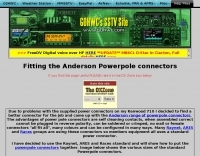 Anderson Powerpole connectors are becoming the standard for Raynet ARES and RACES groups as well as many Ham radio shacks round the world. This recourses page will give you a guide to Anderson Powerpole connectors in the radio shack.
 -
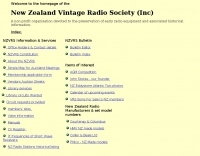 A non-profit organisation devoted to the preservation of early radio equipment and associated historical information.
 -
 In italian language, ham radio tales
 -
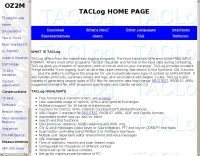 TACLog offers a distinct approach to contest logging for **VHF/UHF/SHF** operations, diverging from the rigid input formats often found in other logging applications. This software prioritizes operational freedom, allowing contesters to input data in a sequence that suits their workflow during a fast-paced event, rather than being constrained by predefined field orders. It's particularly tailored for those participating in contests governed by **Region 1 rules**, ensuring compliance with established regulations. The program's design focuses on practicality for serious contesters, providing a robust platform for managing contacts. Its support for the EDI format is a significant advantage, streamlining the process of submitting logs to contest committees and facilitating data exchange within the amateur radio community. My experience with various logging tools confirms that flexibility in data entry can dramatically improve efficiency during multi-operator or high-rate single-operator contests, where every second counts.
 -
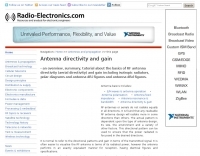 Antenna gain and directivity explained in this article at radio electronics antenna pages
 -
 Home page of the Siskiyou County Amateur Radio Association located in northern California; Club Call Sign is K6SIS.
 -
 For UK resident amateur radio operators. Sell unwanted Ham gear for free
 -
-
 The WB5RVZ Genesis Radio G40 build log documents the construction of a 5W QRP 40m SDR transceiver kit, detailing each phase of assembly from power supply to RF filtering. It provides specific component lists, parts placement diagrams, and testing procedures for stages like the local oscillator, Tayloe detector, and RX op-amps. The resource highlights discrepancies between documentation versions and offers practical advice for builders, including a "virtual build" approach to preemptively address potential ambiguities in component identification and placement. It also addresses a specific "VK6IC Fix" for early board revisions, involving trace cuts and jumper wires for improved performance. The build log presents measured voltages and expected current consumption for various stages, such as the 4.9-5.0 Vdc on the 5V rail and under 100mA for RX current. It outlines critical adjustments like image rejection tuning, a common procedure for direct conversion receivers. The resource also includes practical tips for handling components like the 2N3866 transistor and its heatsink, emphasizing pre-assembly. It details the winding of two 1.45 uH toroidal inductors on T50-6 cores with 17 turns of #20 AWG wire, crucial for the RF path.
 -
 Over 20 distinct discussion categories are available on the Amateur Radio Discussion forum, encompassing a wide array of topics relevant to radio enthusiasts in the UK and beyond. The platform facilitates exchanges on technical aspects of amateur radio, including antenna designs, equipment reviews, and operating practices across different bands. Specific sections are dedicated to CB radio and shortwave listening, broadening its appeal beyond licensed amateurs. The forum's structure supports detailed discussions on operational challenges like the "Work All Postcodes" award, which encourages contacts across UK postal districts. Members can track personal statistics, manage contacts, and engage in challenges, fostering community participation and skill development. The resource provides a centralized hub for sharing knowledge and experiences among radio operators, offering practical insights into diverse radio communication facets.
 -
 Suburban amateur radio repeater is a wider coverage machine with six receiver sites in the chicago metropolitan area.
 -
 Our purpose is to have fun with Amateur Radio, to help others that wish to join the hobby, and to offer assistance to our community in times of eminent danger or disaster.
 -
 Radio amateurs worldwide are being asked to help collect data from the student-built SSETI Express satellite, due to be placed in orbit on 27 September. To encourage them, ESA’s Education department has organised two competitions and is supplying free downloadable software.
 -
 Simple QRP projects, 10m, 6m, WSPR beaconing, sub-9kHz and other random stuff
 -
 Hardsoft products home page: telefonia, telecommunications, radio, computers, base
 -
 RUSSIA Ham radio club AMUR, FarEast Khabarovsk. News, events, photos.
 -
 Hundreds of ham radio operators in the US Midwest rely on regional hamfests for equipment sales, technical presentations, and social interaction. This Yahoo Groups forum serves as a dedicated platform for promoting these events, allowing organizers to post announcements and attendees to find information on upcoming gatherings. The group's focus is specifically on hamfests within the Midwest, facilitating local and regional participation in these important amateur radio activities. The platform enables members to share details about various hamfest activities, including flea markets, vendor exhibits, and license examination sessions. While the group primarily functions as an announcement board, it also supports community discussion related to event planning and attendance. The resource helps hams locate nearby events, fostering engagement within the Midwest amateur radio community.
 -
 Over 100 trained amateur radio operators comprise the New York City Amateur Radio Emergency Communications Service (_NYC-ARECS_), an auxiliary communications service dedicated to providing vital radio links during local, regional, or national civil emergencies. This organization supports governments, civil-preparedness, and relief agencies in situations such as power failures, explosions, fires, floods, earthquakes, or terrorist activities. Their operational readiness is critical for maintaining communications when conventional infrastructure fails, leveraging the resilience and adaptability of amateur radio. NYC-ARECS actively participates in the NYC Office of Emergency Management (_OEM_) Partners in Preparedness program and is a member of DHS FEMA's National Preparedness Coalition, demonstrating its integration into broader emergency response frameworks. The group's activities include regular training, maintaining operational readiness, and deploying communication assets across the five boroughs of New York City. Their efforts ensure robust, independent communication channels are available to support disaster relief and public safety operations.
 -
 Twenty-four repeaters, including D-STAR and Fusion systems, are maintained and operated by MARCA Inc., primarily located on Arizona mountaintops and around the Phoenix metropolitan area. The organization, holding the callsign _W7MOT_, facilitates a wide range of amateur radio activities, such as ARRL Field Day events near Forest Lakes, Arizona, and participation in ARRL FMT contests. Members engage in antenna experimentation, construction, and maintenance trips to repeater sites. The club's interests span diverse topics, including HF voice, digital modes like _WSPR_, _WSJT-X_ (FT8, FT4), and CW, alongside DXing, MESH networking, and EOC operations. It supports technologies from SDR radio building to antique radio restoration and computer-based operations like Echolink, fostering a Single Board Computer (SBC) and Raspberry Pi group. Monthly meetings, held on the third Tuesday, feature business discussions and guest presentations, with informal summer gatherings and an annual holiday dinner in December. Monthly VE testing sessions for Technician, General, and Extra Class licenses are conducted by Ray Vasquez, K4RMV. Post-meeting discussions often cover specialized interests such as repeater operations, technical topics, D-STAR, SDR, APRS, Fusion, and Raspberry Pi projects.
 -
 Constructing a dip oscillator provides radio amateurs with a fundamental piece of test equipment for resonant circuit analysis. This particular design, adapted by VK3YE from a concept by _Drew Diamond VK3XU_, details a practical build using readily available components. The unit incorporates four plug-in coils, covering a frequency range from **2.6 MHz to 55 MHz**, mounted on 5-pin DIN plugs for versatility. A salvaged two-gang air dielectric variable capacitor, fitted with a vernier reduction drive, serves as the tuning mechanism, with the smaller gang optimizing bandspread at higher frequencies. In practical application, the dip oscillator is used by setting the meter needle to approximately two-thirds scale. When the instrument's coil is brought near a tuned circuit under test, a noticeable dip in the meter reading indicates resonance. This allows for precise measurement of resonant frequencies in antennas, filters, and other RF circuitry, proving invaluable for homebrewing and troubleshooting. The design emphasizes short wire runs for stable operation, particularly at the higher end of its operational range.
 -
 Article describes a circuit that accelerates the coil of DC relays by momentarily doubling their voltage.
 -
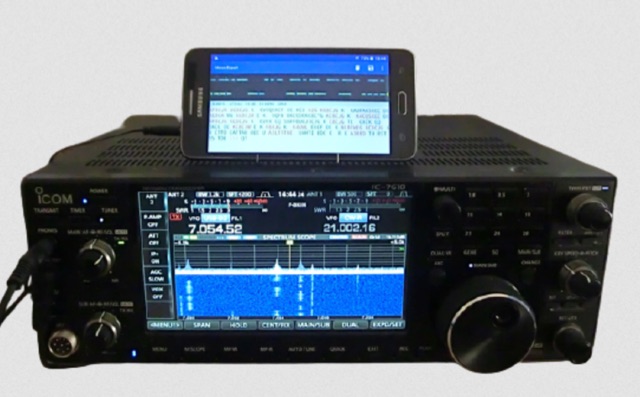 MorseExpert 1.15 decodes Morse Code audio to text, leveraging algorithms from CW Skimmer for optimal performance on weak, fading signals amidst interference on amateur radio bands. It processes audio from the device's built-in microphone or an external radio receiver via cable, optionally highlighting Ham callsigns and keywords. The application features a waterfall display with a bandwidth of 200-1200 Hz, decodes frequencies between 300-1100 Hz, and supports keying speeds from 12-45 WPM with automatic CW pitch detection. Recent updates include support for Android 15, edge-to-edge mode, improved stability, and a pause decoding button. A premium version offers an ad-free experience and user-selected text colors. Users can switch between General Text mode and Ham Radio QSO mode, which enhances word segmentation and highlights callsigns. The app also includes a frequency lock mode, text selection capabilities for copying, sharing, or saving decoded text, and provides guidance on reducing acoustic echo and constructing an audio attenuator for optimal radio interfacing.
 -
 Dedicated to the Preservation and Enjoyment of Vintage Radio and Wireless Equipment Serving the greater Portland, Oregon area
 -
 ARRL documentation on how get reciprocal lincece or authoriazion to operate ham radio abroad
 -
 The RRDXA is the Amateur Radio Contest Club in the western part of Germany and the BENELUX-Countries
 -
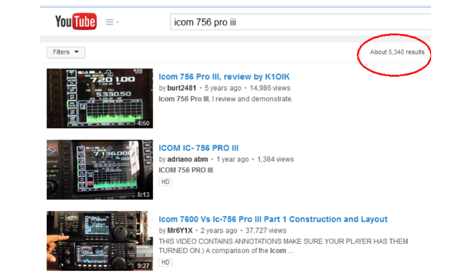 A nice presentation for beginners by Radio Club of Tacoma
 -
 Things on the occasion of amateur radio activity only