Search results
Query: http
Links: 15293 | Categories: 0
This query is too generic. Please try adding an additional term to focus your research.
-
 Small, but growing, group of amateur radio enthusiasts, most of whom are within 90 miles of Atlanta, are interested in promoting the development of the branch of amateur radio known as QRP - building and operating low power transmitters, receivers and transceivers.
 -
 St. Louis County Police Dispatch
 -
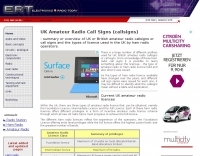 The UK amateur radio licensing scheme features three distinct tiers: Foundation, Intermediate, and Full, each granting specific operating privileges. For instance, the **Foundation Licence** permits a maximum of 10 watts output power on most allocated bands, with restricted band access. The Intermediate Licence allows up to 50 watts, while the **Full Licence** grants access to the maximum UK legal power limits and all available amateur radio band allocations. UK call sign prefixes and formats provide insights into the licensee's class and the approximate issuance date. For example, M3, M6, and M7 prefixes with three letters denote Foundation Licences issued from 2002, 2008, and 2018 respectively. Intermediate Licences, often starting with "2E0" or "2E1" followed by three letters, were issued from 1991 onwards. Full Licences encompass a broader range of prefixes like G2, G3, G4, G0, and M0, with varying letter counts indicating different historical license classes and issuance periods, such as G3 plus three letters issued between 1946 and 1971. Special prefixes like GB are reserved for repeaters, beacons, data mailboxes, and special event stations, with specific numerical sequences (e.g., GB3 for repeaters, GB7 for data repeaters/mailboxes) indicating their function. Optional prefixes such as GC, GD, GI, GM, and GW denote specific UK countries (e.g., Wales, Isle of Man, Northern Ireland, Scotland, England) and can also signify club stations.
 -
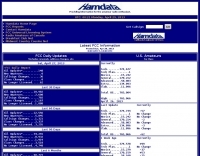 Statistics based on FCC Database. Data is compared to previous perions.
 -
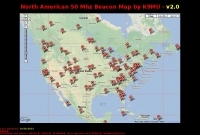 North american 50 Mhz beacon map by K9MU
 -
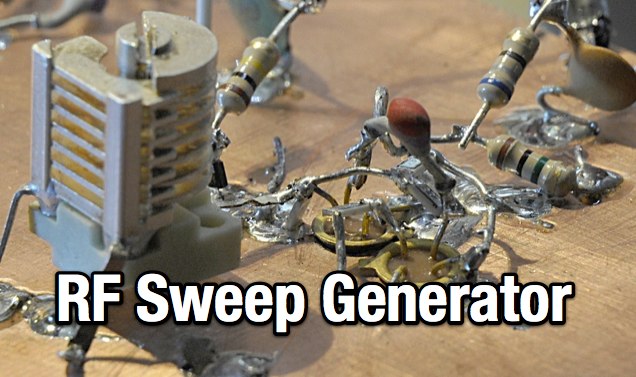 A home made sweeping signal generator up to 2 GHz
 -
 Universal radio IC-V8000 page includes accessories and photos
 -
 An emergency service provided to the city of Mountain View, California and the surrounding communities in time of need.
 -
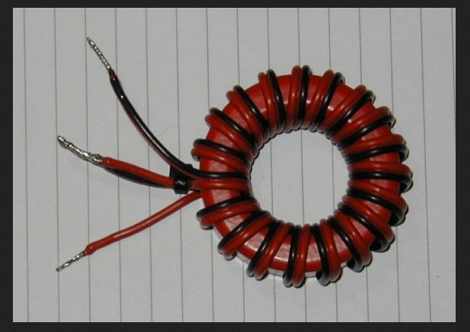 An home made unun with a Amidon T-200-2 toroid
 -
-
 Frequencies, links for scanners, email lists, online audio and more for Maryland, DC, and parts of Delaware and Virginia
 -
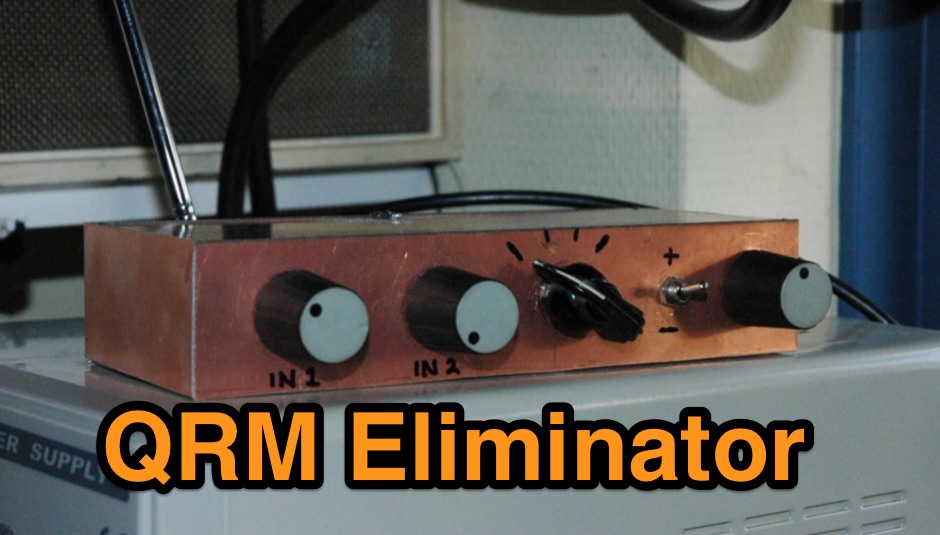 An home made QRM Eliminator project based on the WA1ION original design, used to remove QRN generated locally by an halogen lamp in Dutch
 -
 This 4m Slim Jim Antenna is cheap and easy to build yet it greatly out performs the more usual dipole due to its low angle of radiation. An SWR of 1:1 is obtainable across the 4m ham radio FM band with a simple adjustment.
 -
 The Clearwater Amateur Radio Society is an active amateur radio club based in Pinellas County Florida.
 -
 This program will convert comma delimited ASCII files to ADIF format for import into a logging program that supports ADIF import. The program is intended to be used with comma separated text files produced with other logging programs or with spread sheet programs, such as Excel.
 -
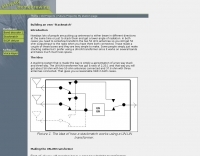 Nowdays lots of people are putting up antennas to either beam in different directions at the same time or just to stack them and get a lower angle of radiation. Use this stackmatch to match you array.
 -
-
 High Power RF Amplifiers by Delta Sigma, Inc
 -
 A helpful guide to building your own beverage-type low noise receiving antenna for broadband use. Easy, do-it-yourself suggestions to optimize directional performance, even if you lack a farm to put it on.
 -
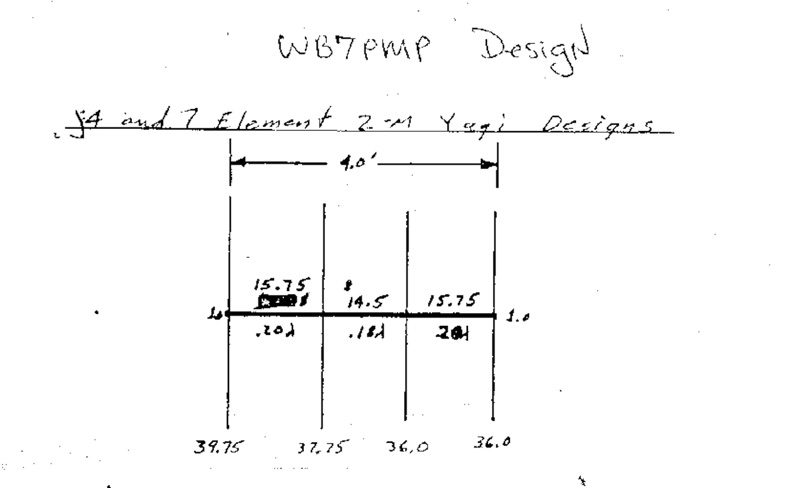 Original drawing and design of a 4 and 7 elements yagi antenna for 50 Mhz
 -
 QRP Station in a Bag is a complete QRP station in an old laptop PC carrying case (photo). It is a true "Work in Progress" in that wd8rif is constantly changing the contents of the bag as learn what works and what doesn't.
 -
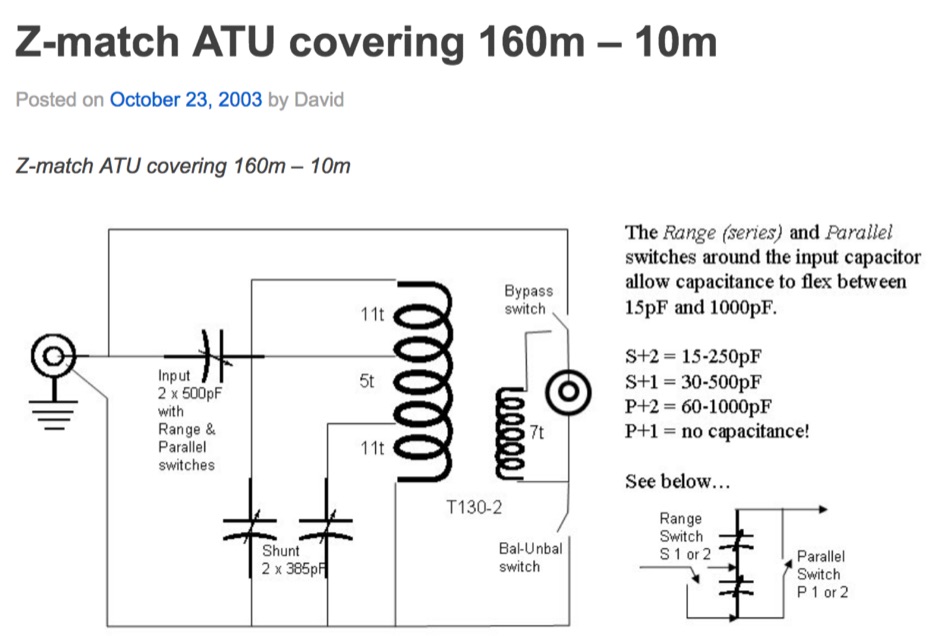 An home made Z-Match antenna tuner unit that cover all HF bands between 10 and 160 meters
 -
 Generates dial tones using the Soundcard. A neat tool for sending out short sequences of DTMF tones.
 -
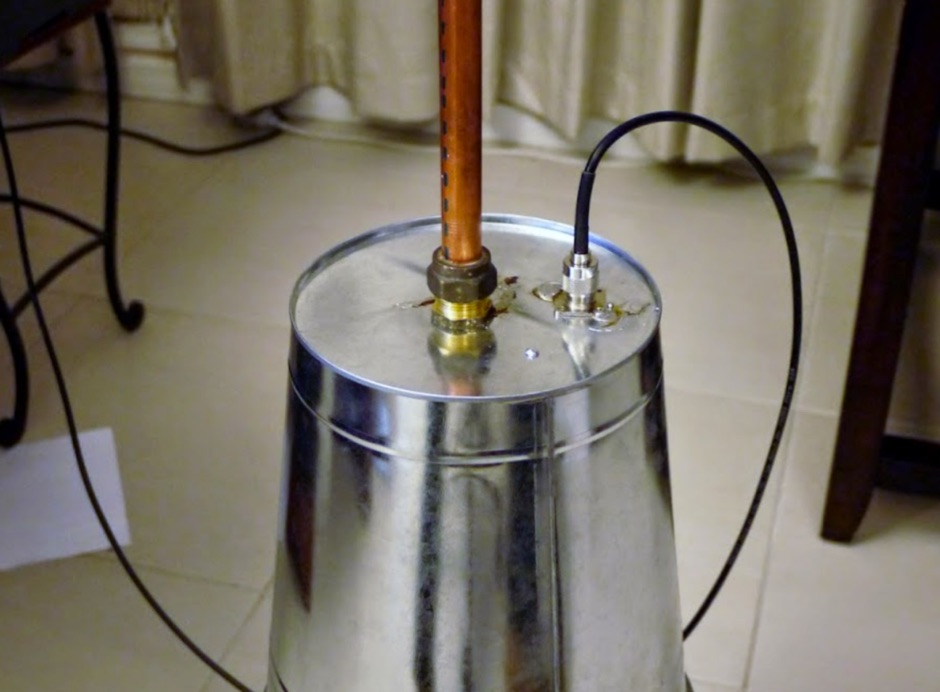 Building a cavity resonator for 144 MHz
 -
 Ham homebrew, software, and ham info
 -
 The Sarasota Emergency Radio Club, is an Amateur (Ham) Radio club in Sarasota, Florida, dedicated to provide emergency and public service communications.
 -
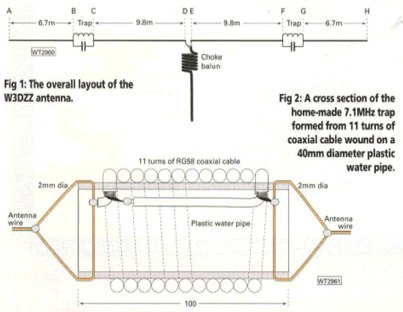 Article published on Practical Wireless about the W3DZZ multiband trapped dipole antenna made available by GM0ONX
 -

-
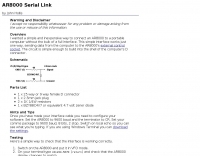 A simple and inexpensive way to connect an AR8000 to a portable computer
 -
-
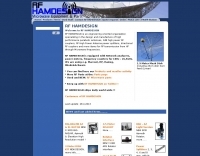 An engineering oriented organization specializing in the design and manufacture of high performance parabolic antennas, 3dB high power RF couplers, Antenna power splitters, directional RF couplers and more items for RF transmission from HF through Microwave frequencies.
 -
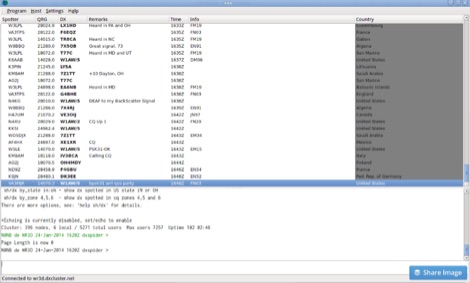 xdx is a dedicated Linux network client for amateur radio operators who want to exchange DX (long distance) radio information
 -
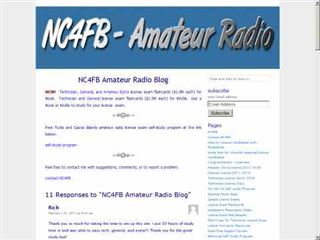 How to operate on 10 and 20 meters in limited space with this trapped dipole.
 -
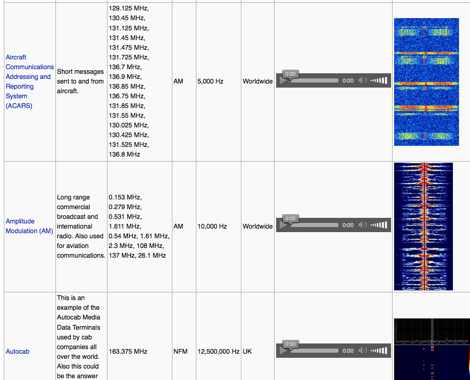 Audio and waterfall images of some sounds found on the RF spectrum
 -
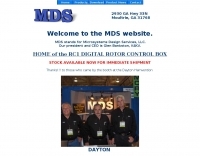 MDS-HAM Amateur Radio Products help make operating easier with the Introduction of the RC-1-Y, and RC-1-M rotor control box. A digital rotor control box with a serial computer interface at an affordable price which is made in America.
 -
 miLog provides an integrated software solution for amateur radio station management, encompassing logging, DXing, and contesting functionalities. The software is designed to operate on Windows 2000 and later versions, indicating a focus on stability and compatibility within the Microsoft ecosystem. Its feature set includes comprehensive logging capabilities, tools for DX operations, and specific modules tailored for competitive contesting, streamlining the workflow for operators engaged in these activities. The resource details the software's commercial availability and its primary functions, which extend to station control. This integration allows users to manage multiple aspects of their amateur radio operations from a single application, potentially reducing the need for disparate tools. The description also highlights support for various operating modes, suggesting flexibility for different communication protocols and techniques. While the page itself is minimal, it serves as a direct point of reference for miLog, outlining its core purpose and system requirements. The emphasis on a highly integrated approach distinguishes it as a tool aiming to consolidate essential ham radio software functions.
 -
-
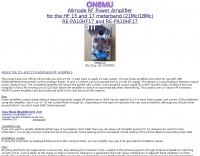 The two linear amplifiers are ment for use with QRP SSB/CW/FM/AM transmitters on the amateur bands 15 and 17 meters can be powered from a 12 volt DC supply by ON6MU
 -
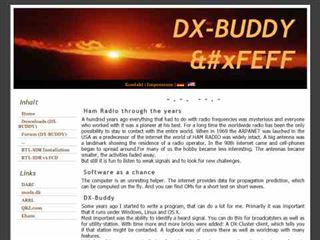 DX Buddy is a multi purpose ham radio application that let you control your radios, or controller, offer a logbook, cluster access, qrz lookups, and interface with several popular ham radio applications
 -
 Grahams Goldcoast Australia Radio Scanner Frequencies
 -
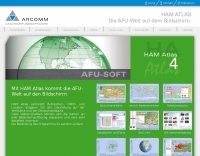 Ham radio map database with search and logging functions. Currently in german only, run under Windows.
 -
 Videos of AO-51 operations. Randy K7AGE has produced a number of practical and useful videos including good info on a minimal antenna setup for AO-51 reception.
 -
-
 Video demostrantion of N1MM contesting software use and configuration
 -
-
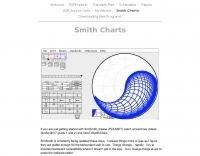 SimSmith is a highly interactive, real time Smith chart graphing program. Circuits are constructed using drag-n-drop. Load files can be imported from the EZNEC and CocoaNEC antenna simulation software and from the AIM4170 and miniVNApro antenna analyzers. Circuits and load files can be of any size. Key Features: SimSmith is one of the few Smith chart packages which models transmission line losses. SimSmith also allows the description of circuit elements using algebraic equations. SimSmith has only one screen and allows the screen to be resized to increase workspace or readability.
 -
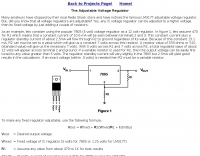 N1HFX article on adjustable voltage regulator
 -
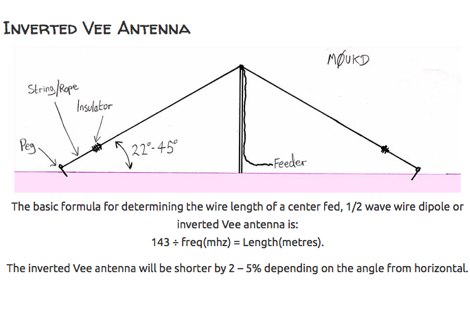 An inverted Vee antenna calculator that consider also minimun vertical height and horizontal spread by M0UKD
 -
 Kenwood Sales, Service, repairs, parts, FAQ, information
 -
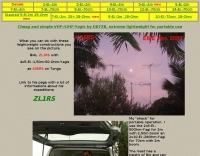 Collection of different techniques to homebrew PVC yagi antennas, including elements assembling, baluns and chokes, radiator box tips and tricks by dk7zb