Search results
Query: open source
Links: 152 | Categories: 2
-
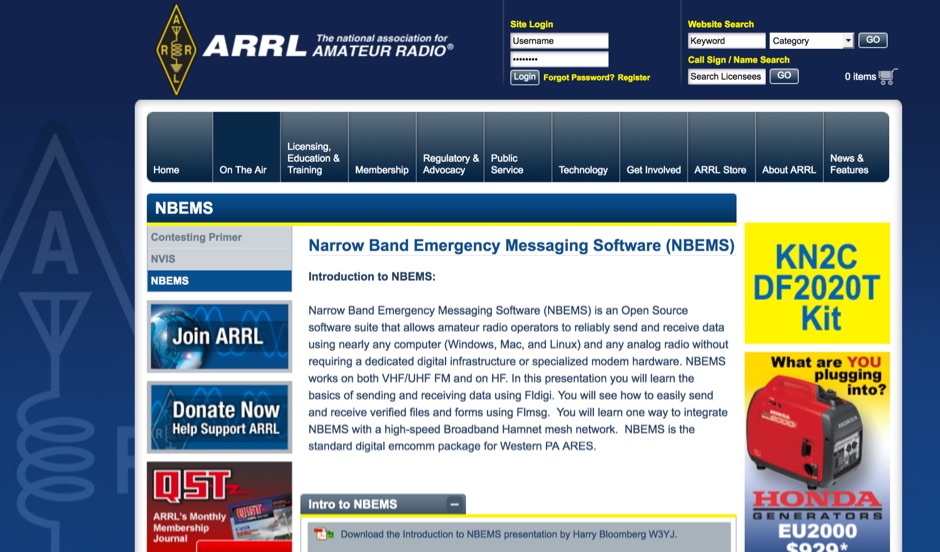 Narrow Band Emergency Messaging Software (NBEMS) is an Open Source software suite that allows amateur radio operators to reliably send and receive data using nearly any computer (Windows, Mac, and Linux) and any analog radio without requiring a dedicated digital infrastructure or specialized modem hardware
 -
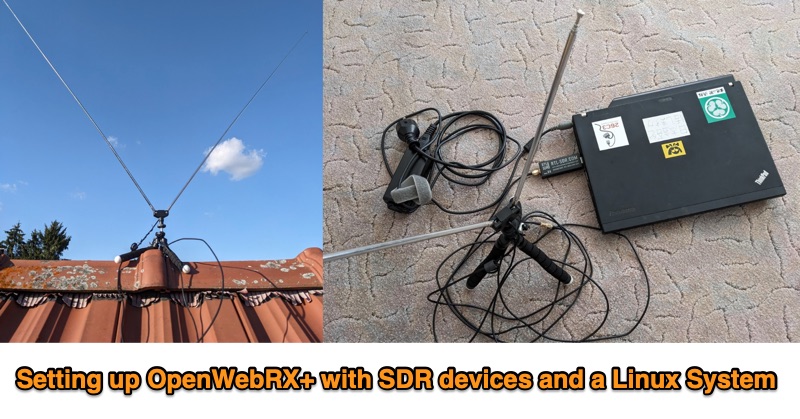 This PDF document outlines the process for establishing an **OpenWebRX+** station utilizing Software Defined Radio (SDR) devices on a Linux platform, specifically Debian Bookworm. It details the capabilities of such a setup, including reception across various frequency bands supported by the SDR hardware and the decoding of multiple modes like FM, WideFM, SSB, AM, ADSB, FT8, and CW, with examples provided for FT8 reception and mapping, sensor data, and ADSB. The guide recommends specific hardware configurations, suggesting older x86-64 laptops with 4GB RAM or Raspberry Pi 4 models for the host system. For SDR devices, it endorses **RTL-SDRv3/v4** or HackRF, noting the necessary driver installations for RTL-SDR. The software installation sequence is meticulously laid out, from installing Debian Bookworm to adding OpenWebRX+ repositories, installing the application, and configuring device-specific drivers. Authored by Christian Horn (JL1AYH), the resource also includes a brief personal background of the author. It concludes with instructions for accessing the OpenWebRX+ interface via a web browser, either locally or remotely over a network, and provides contact information for further inquiries.
 -
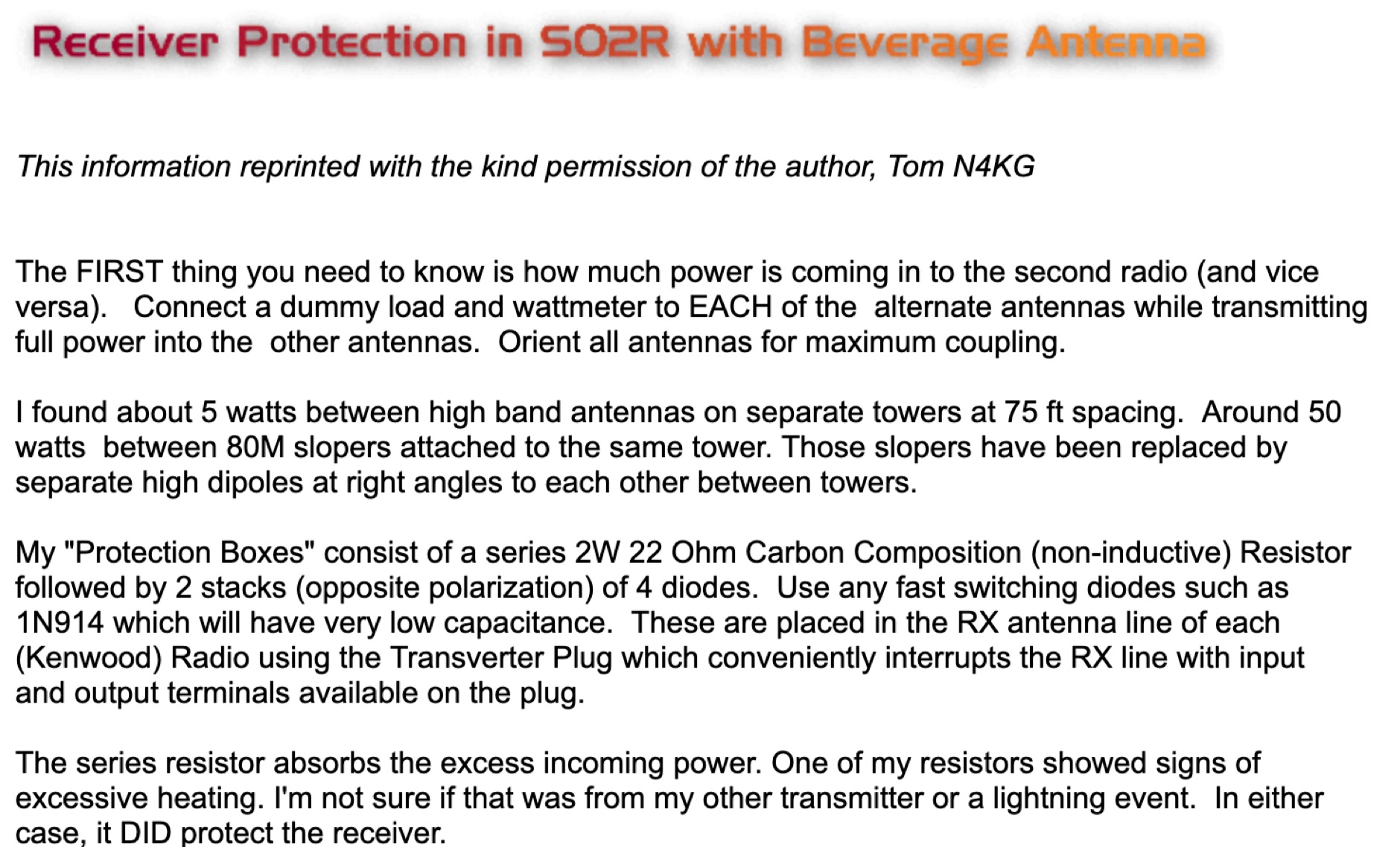 Operating in a Single Operator Two Radios (SO2R) setup, especially with beverage antennas, often exposes the receiving radio's front-end to significant RF energy from the transmitting radio. This resource details a practical, homebrew receiver protection circuit designed to mitigate this risk. The core of the design involves a non-inductive 2W 22 Ohm carbon composition resistor in series with the RX antenna line, followed by two stacks of four fast-switching diodes (e.g., _1N914_) configured in opposite polarizations. This arrangement effectively clamps the incoming voltage to approximately 2.8 V peak-to-peak, safeguarding sensitive receiver input components. The series resistor plays a crucial role by absorbing excess power, preventing the diodes from exceeding their current ratings and potentially failing open, which would leave the receiver unprotected. The author, _N4KG_, measured up to 50 watts of coupled power between 80M slopers on the same tower, highlighting the necessity of such protection. The design is presented as a cost-effective solution to prevent damage to receiver input transformers, with the author noting successful protection of a receiver even after a resistor showed signs of overheating. This simple circuit can be integrated via a transverter plug, offering a robust defense against high RF input.
 -
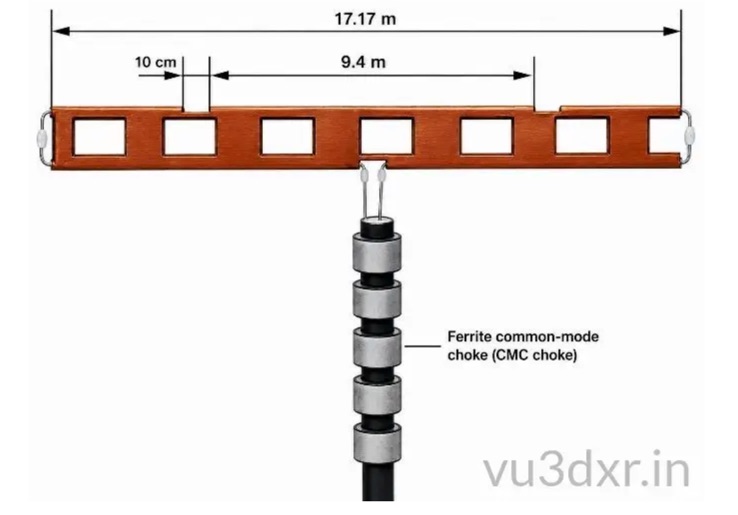 Constructing a dual-band antenna for 40 and 20 meters often involves compromises in size or complexity. This resource presents a compact _open sleeve dipole_ design that addresses these challenges by using 450-ohm ladder line and folded elements to achieve a total length of approximately **17.17 meters**, significantly shorter than a full-size 40-meter dipole. The design leverages electromagnetic coupling, where a primary radiator handles the 40-meter band, and a second conductor resonates on 20 meters without direct electrical connection. This configuration eliminates the need for traditional traps, loading coils, or switching components, simplifying construction and reducing potential loss points. The antenna is fed with RG-58C/U coaxial cable, and a common-mode choke is recommended at the feed point to suppress sheath currents, ensuring a cleaner radiation pattern and minimizing RF in the shack. The design is well-suited for portable operations, field deployments, temporary installations, and restricted urban environments where space is a premium, offering solid performance on both HF bands.
 -
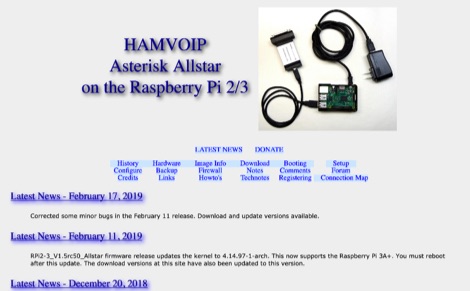 Reference site of the HAMVOIP AllstarLink AllstarLink provides hams with a means of connecting radios, repeaters or simplex links, over the internet. It is built upon the asterisk open source PBX and runs on Linux
 -
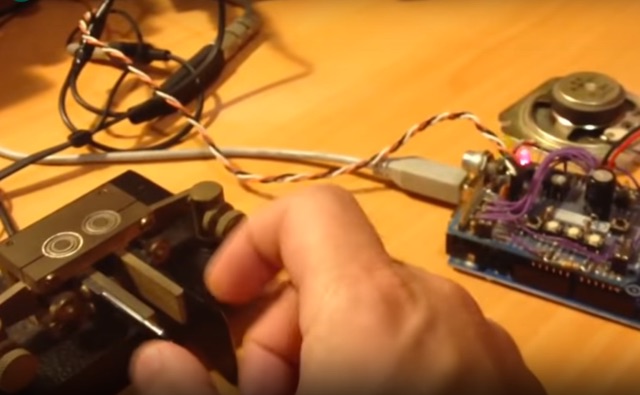 The K3NG Keyer is an open source Arduino based CW (Morse Code) keyer with a lot of features and flexibility, rivaling commercial keyers which often cost significantly more.
 -
 Details the history and cessation of the Amateur Radio Association of Bahrain (ARAB), operating under the callsign **A92C**. Established in 1970, ARAB functioned as the primary representative body for amateur radio enthusiasts within Bahrain for several decades. The organization facilitated various amateur radio activities and provided a central point of contact for local hams. The resource indicates that ARAB ceased operations due to unspecified circumstances. It explicitly states that the organization is no longer active, marking the end of its long-standing service to the Bahraini amateur radio community. Information regarding a newly formed society, open for membership, is provided, with contact details for Fawaz, **A92AA**, for further inquiries about the successor organization.
 -
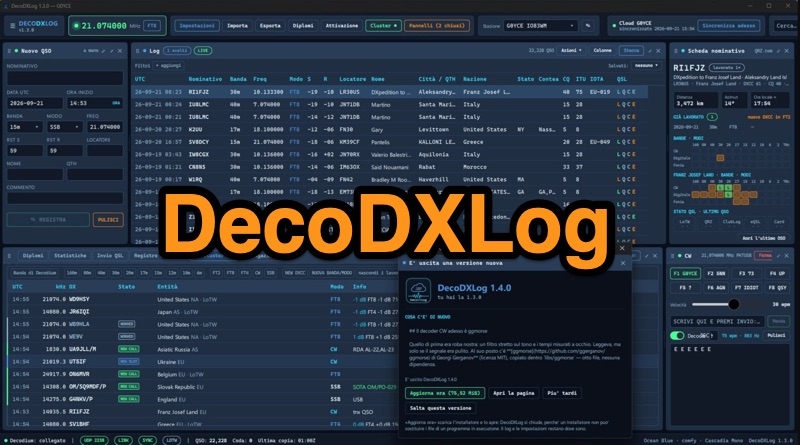 DecoDXLog is a station logbook application for Windows, designed to integrate seamlessly with the _Decodium_ family of software, as well as _WSJT-X_ and JTDX, by receiving QSOs via UDP. It operates around a local SQLite file, providing automatic callbook lookups from QRZ.com XML or HamQTH to complete log entries with name, QTH, and locator data. The software tracks 15 different awards, including DXCC, WAZ, WAS, WPX, IOTA, POTA, and SOTA, calculating progress in real-time and allowing confirmation via LoTW, paper cards, or eQSL. It also features comprehensive statistics, a world map displaying worked locators and cluster spots, and a built-in DX Cluster client that aggregates data from DX Spider/CC Cluster, Reverse Beacon Network, HamAlert, and POTA activations, providing alerts for new DXCC, band, or mode. The application includes a CW keyer/decoder, a contest mode with real-time scoring and Cabrillo export, and robust QSL management for LoTW, QRZ Logbook, eQSL, and Club Log. An optional DecoDXLog Cloud feature enables synchronization of QSOs, station profiles, and settings across multiple devices, ensuring a consistent operating environment. The software is open-source under the GPL-3.0 license, developed by IU8LMC and contributors, and supports lossless ADIF import/export, making it compatible with existing logs. It also integrates with _DecoRotor_ for antenna control, allowing operators to point their antenna directly from the logbook interface.
 -
 The DX FT8 is a compact, multiband tablet transceiver designed for FT8 digital mode enthusiasts. Supporting five or seven HF bands, it integrates an STM32F746-based touchscreen interface for standalone operation, eliminating the need for a PC. The latest firmware (v1.9.2) adds SOTA/POTA calling and free-text messaging. Its efficient power design, unique RF amplifier, and 3D-printed case enhance portability. Open-source firmware and community-driven development make it a versatile choice for portable FT8 operation, ideal for SOTA, POTA, and travel use. DX FT8 TRANSCEIVER PROJECT is a collaboration between Charles(Charley)Hill, W5BAA and Barbaros(Barb)Asuroglu, WB2CBA.
 -
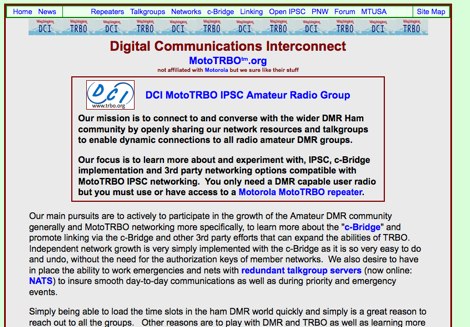 The Digital Communications Interconnect (DCI) resource details the operational philosophy and technical implementation of an open _MotoTRBO_ IPSC network, emphasizing the use of _c-Bridge_ technology for interconnecting DMR repeaters and talkgroups. It outlines the group's mission to facilitate dynamic connections within the regional DMR amateur radio community by openly sharing network resources and talkgroups, promoting independent network growth and exploring the capabilities of c-Bridge linking. The site provides insights into the technical advantages of c-Bridges, such as breaking the finite peer slot limitation of simple IPSC networks and enabling more flexible talkgroup routing beyond two timeslots. This legacy asset, last updated in October 2022, also reflects on the group's history and challenges encountered in national DMR efforts, citing political divisiveness among major c-Bridge groups. It discusses the practical application of c-Bridges for emergency communications and nets, ensuring redundant talkgroup servers for smooth day-to-day operations and priority events. The resource encourages other c-Bridge operators to adopt international talkgroups like "_iCall Talkgroup_" and a nationwide "Emergency Talkgroup," while also offering guidance on affiliating repeaters or IPSC networks with DCI's open network.
 -
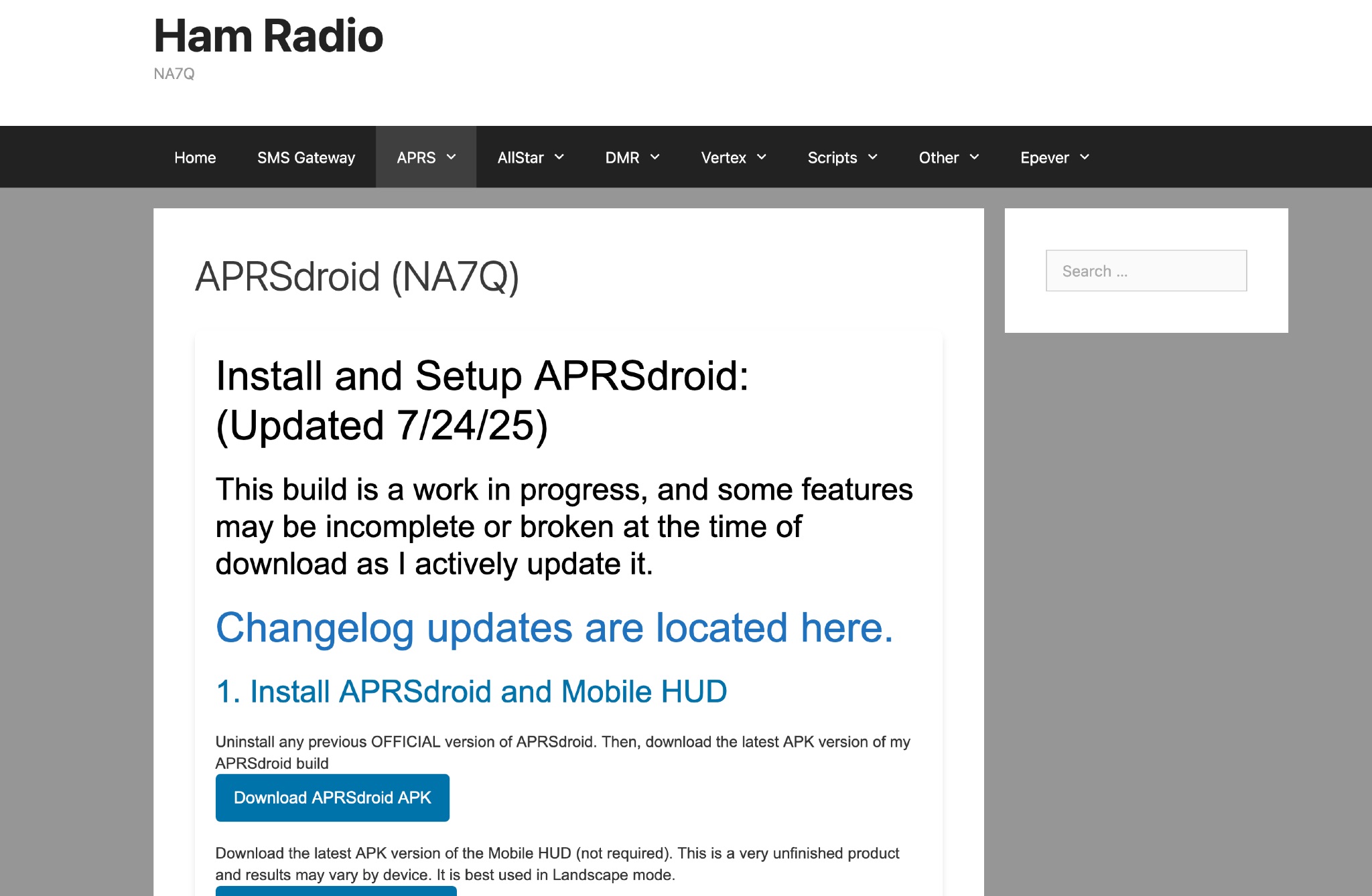 This page provides instructions and links to download the latest APK version of APRSdroid and the Mobile HUD for ham radio operators. It also includes information on manually granting storage permissions for offline mapping files on Android 11+ devices. The page offers guidance on setting up and using offline maps in APRSdroid with OpenStreetMap.org. Various mapping options and providers are mentioned, along with a recommendation to support the author on Patreon. Overall, this resource aims to assist hams in effectively utilizing APRSdroid for their amateur radio activities.
 -
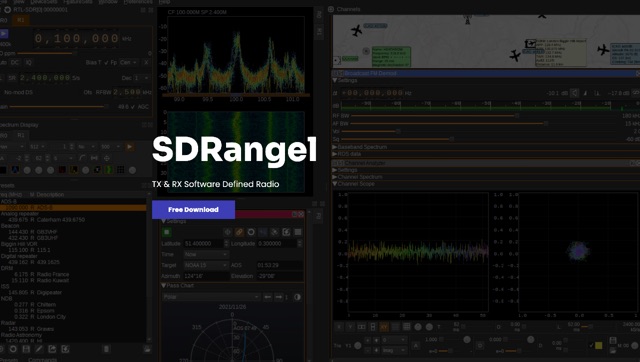 SDRangel is an Open Source Qt5 / OpenGL 3.0+ SDR and signal analyzer frontend to various hardware TX & RX Software Defined Radio. SDRangel uses sample source plugins to collect I/Q samples from a hardware device.
 -
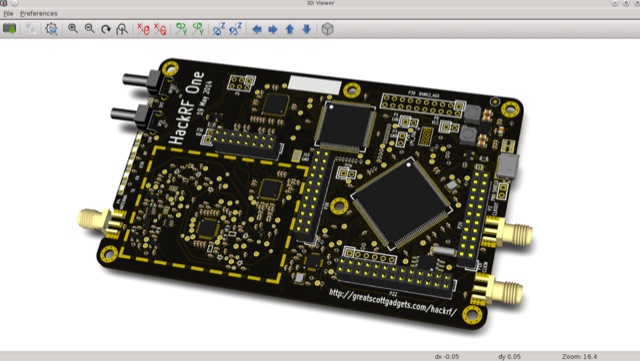
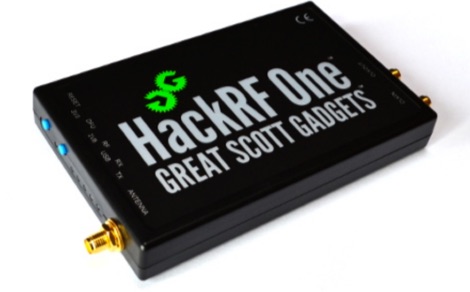 open source hardware for software-defined radio. HackRF One is an open source hardware platform that can be used as a USB peripheral or programmed for stand-alone operation. 1 MHz to 6 GHz operating frequency
 -
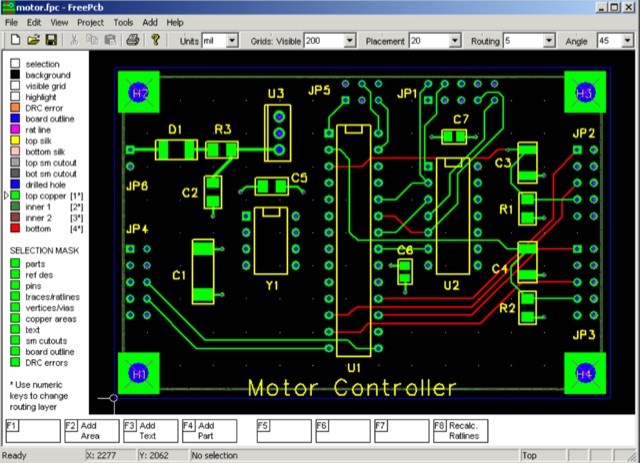 FreePCB is a free, open-source PCB editor for Microsoft Windows, released under the GNU General Public License. It was designed to be easy to learn and easy to use, yet capable of professional-quality work.
 -
 The NOAA/GML Solar Calculator provides critical data for **solar position** and timing, including sunrise, sunset, and solar noon, for any geographic location on Earth. Users can input specific dates and times, or select from predefined locations such as World Cities, U.S. Cities, GML Observatories, and GML Data Sites. The interface allows for precise geographical input by dragging a red pin on an interactive map, complemented by extensive time zone selections and UTC offset adjustments. Key outputs include the Equation of Time, Solar Declination, and the sun's azimuth in degrees at local time. The tool also generates comprehensive sunrise/sunset tables for an entire year, opening these data sets in a new browser tab for easy access and analysis. While the calculator remains operational, NOAA explicitly states it is no longer actively supported or maintained, advising users that accuracy and functionality cannot be guaranteed, and no further updates or technical support will be provided. Despite the lack of ongoing support, the resource details the underlying calculations and offers spreadsheets for users interested in performing their own solar data computations. It also includes links to older versions of the solar calculator and a glossary of relevant terms, serving as a reference for understanding solar mechanics and their impact on radio propagation.
 -
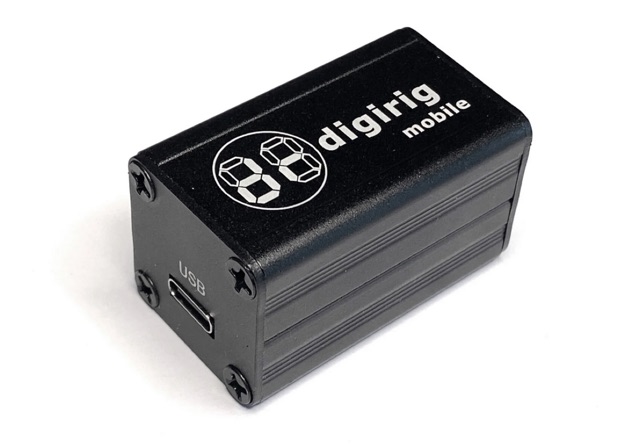 Digirig is an open-source integrated digital modes interface for amateur radio. As a differentiating feature, Digirig only requires a single USB connection to the computer with all the digital goodness packed in a single small enclosure. The internals include a USB hub, audio codec, a fully featured serial CAT (Computer Aided Transceiver) interface, and potentially other modules such as GPS receiver for time synchronization.
 -
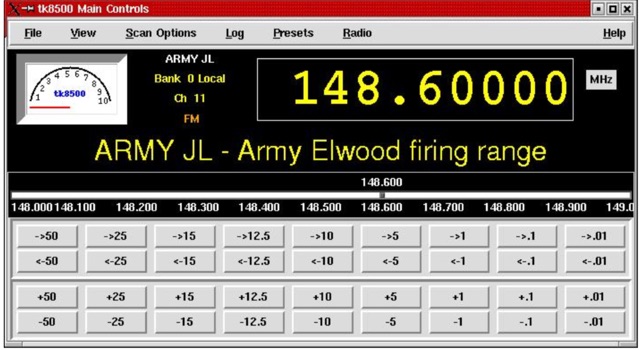 tk8500 is open source software designed to control and program the ICOM IC-R8500 receiver.
 -
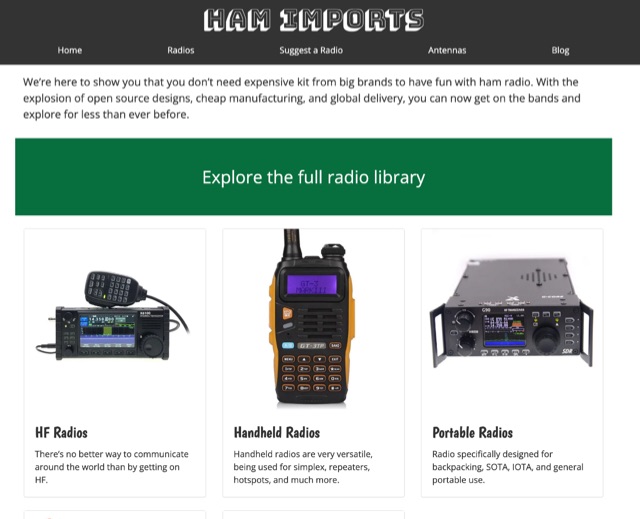 The database of Chinese ham radios. We are here to show you that you do not need expensive kit from big brands to have fun with ham radio. With the explosion of open source designs, cheap manufacturing, and global delivery, you can now get on the bands and explore for less than ever before.
 -
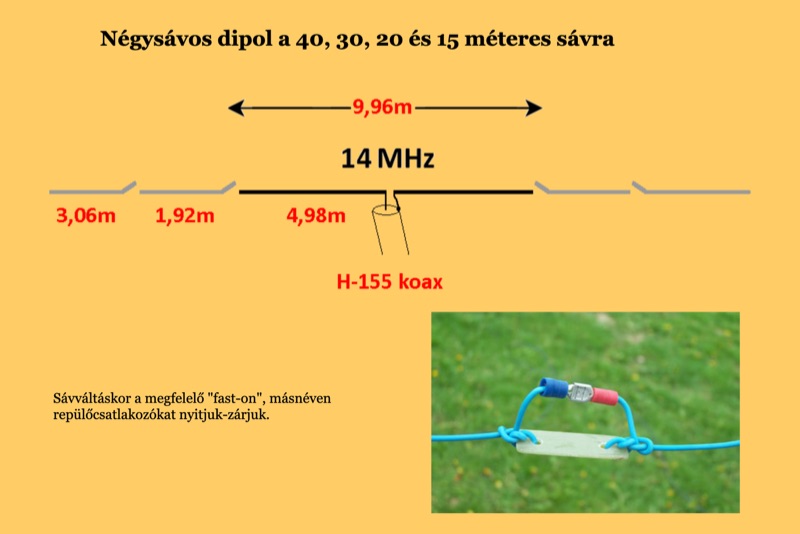 Four distinct amateur radio bands, specifically 40, 30, 20, and 15 meters, are addressed by a portable dipole antenna design. This antenna utilizes a manual switching mechanism, employing "fast-on" or flying connectors to change bands. The design is presented with an animated plan, illustrating how operators can adjust the operating frequency by opening and closing specific connections on the antenna elements. The resource describes a _4 savos dipol_ (4-band dipole) that can be shortened for specific band operation. It provides practical information for hams seeking to construct a versatile, multi-band wire antenna for portable operations or fixed station use. This design offers a straightforward approach to achieving multi-band HF capability without complex tuning units, making it suitable for field deployments like SOTA or POTA activations where rapid band changes are beneficial.
 -
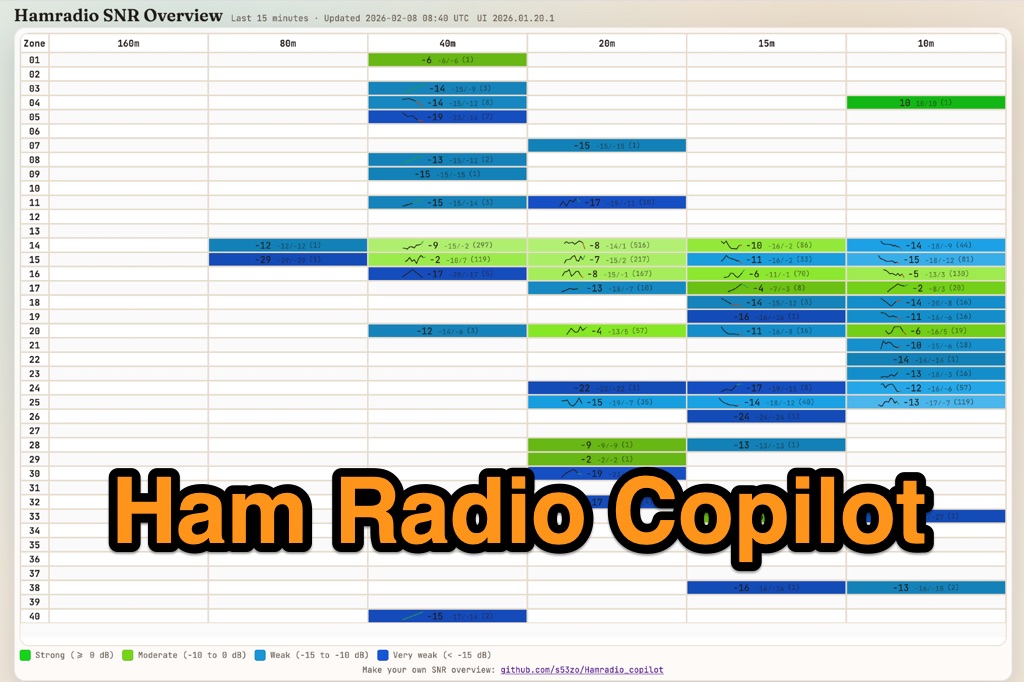 Hamradio_copilot is an open-source tool designed for DXers and contesters who need real-time situational awareness. It is ideal for operators who want to visualize propagation trends instantly rather than scrolling through raw text streams of cluster spots. Rally acting as a copilot for your station, this tool transforms raw data into actionable intelligence. By visualizing Signal-to-Noise Ratios (SNR) across different bands, it helps operators make quick decisions on which band to prioritize or where to point their antennas, effectively showing not just who is on air, but where the propagation is currently open from your location. This is a fantastic information for avid contesters. The software aggregates data from two primary services: - Reverse Beacon Network (RBN) via Telnet. - PSK Reporter via MQTT feeds. It processes this data to generate a comprehensive HTML report featuring SNR heatmaps and statistical breakdowns by ITU Zone. Users can filter data by specific zones or country codes (ADIF), analyze historic time ranges, and optionally integrate solar weather data. The complete source code is available on GitHub, allowing for community customization. It is written in Python and uses SQLite for data management.
 -
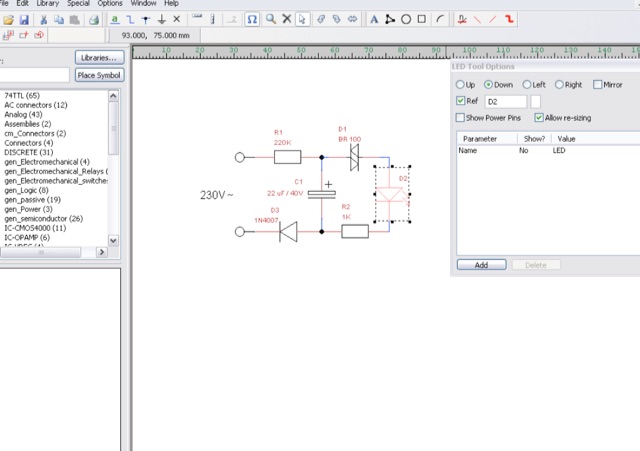 TinyCAD is a an open source program for drawing circuit diagrams which runs under Windows. TinyCAD is a program for drawing electrical circuit diagrams commonly known as schematic drawings. It supports standard and custom symbol libraries. It supports PCB layout programs with several netlist formats and can also produce SPICE simulation netlists.
 -
 SkyRoof is an open-source, 64-bit Windows application designed for amateur radio operators and satellite enthusiasts, combining satellite tracking and Software Defined Radio (SDR) functionality in a unified platform. The software provides real-time satellite tracking, pass predictions, and visual representations through Sky View, Earth View, and Timeline displays. It features an SDR-based waterfall display covering VHF/UHF satellite segments with Doppler-corrected frequency scales, automatic satellite labeling, and visual tuning capabilities. SkyRoof supports various SDR devices (Airspy Mini, SDRplay, RTL-SDR), external transceiver CAT control, and antenna rotator integration. The application automatically downloads satellite data from SatNOGS and other sources, offers voice announcements for satellite passes, and includes comprehensive frequency control with Doppler tracking, manual corrections, and RIT functionality for enhanced satellite communication operations.
 -
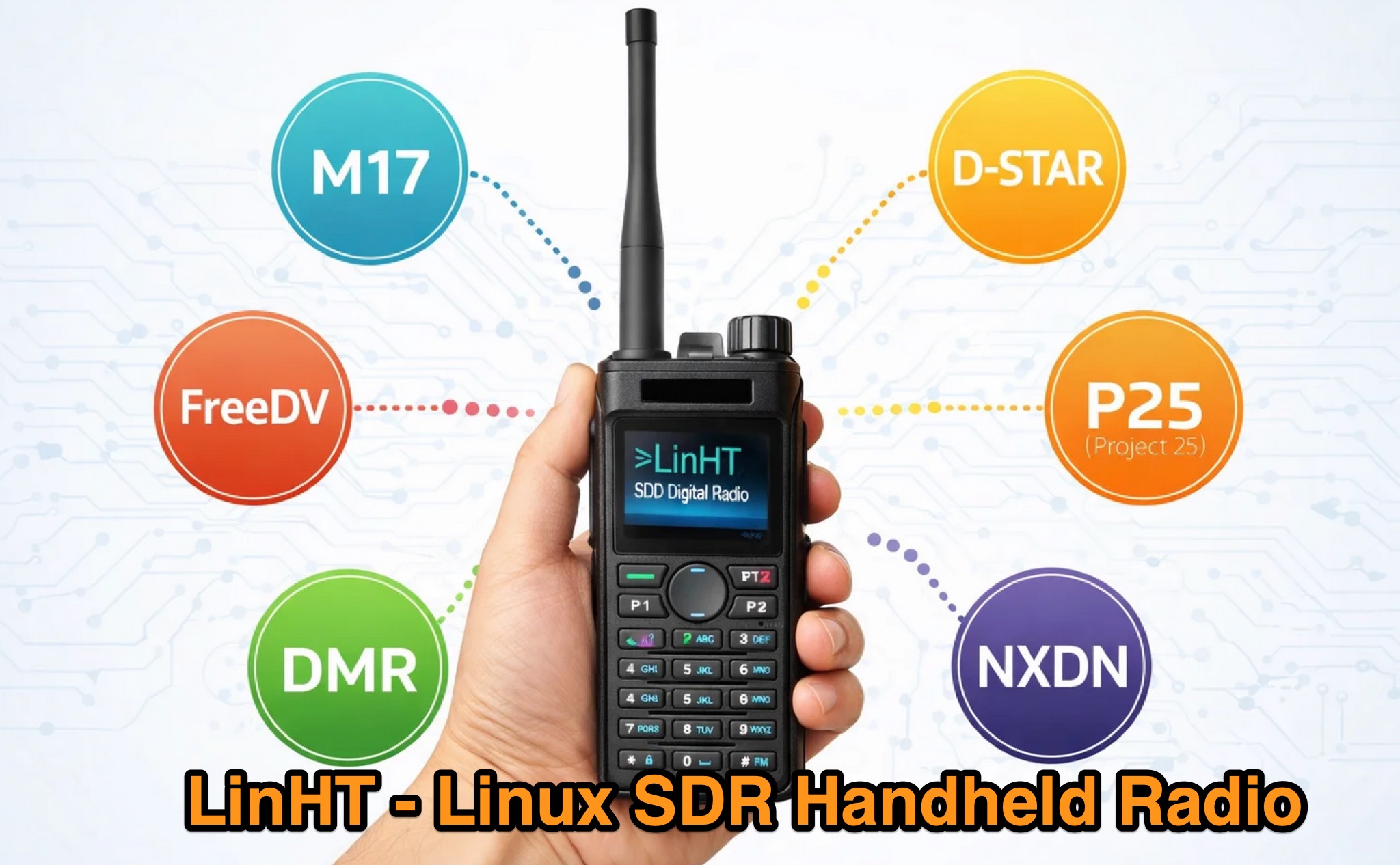 Learn about the LinHT handheld SDR radio, an open-source, Linux-based project that is shaking up the ham radio and SDR communities. This guide is perfect for hams new to digital voice and interested in exploring experimental radio platforms. Discover what sets LinHT apart from traditional handheld radios, how it leverages SDR technology and Linux operating system, and why it's generating buzz in the ham radio landscape. Dive into the world of software-defined handheld radios with this beginner-friendly overview.
 -
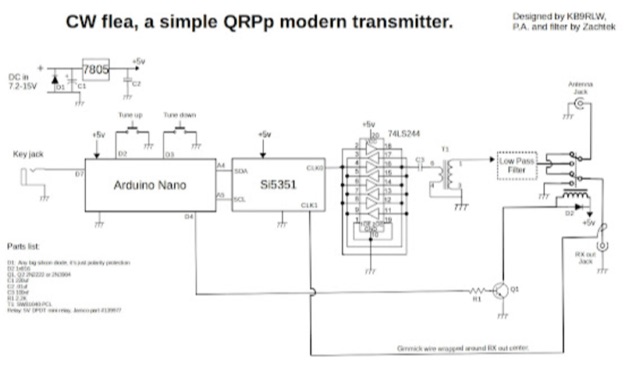 Reviving the spirit of early ham radio experimentation, the CW Flea is a contemporary Morse code transmitter. Utilizing an Arduino Nano, Si5351 clock generator, and innovative design, this open-source project offers simplicity, flexibility, and easy tuning for aspiring radio enthusiasts.
 -
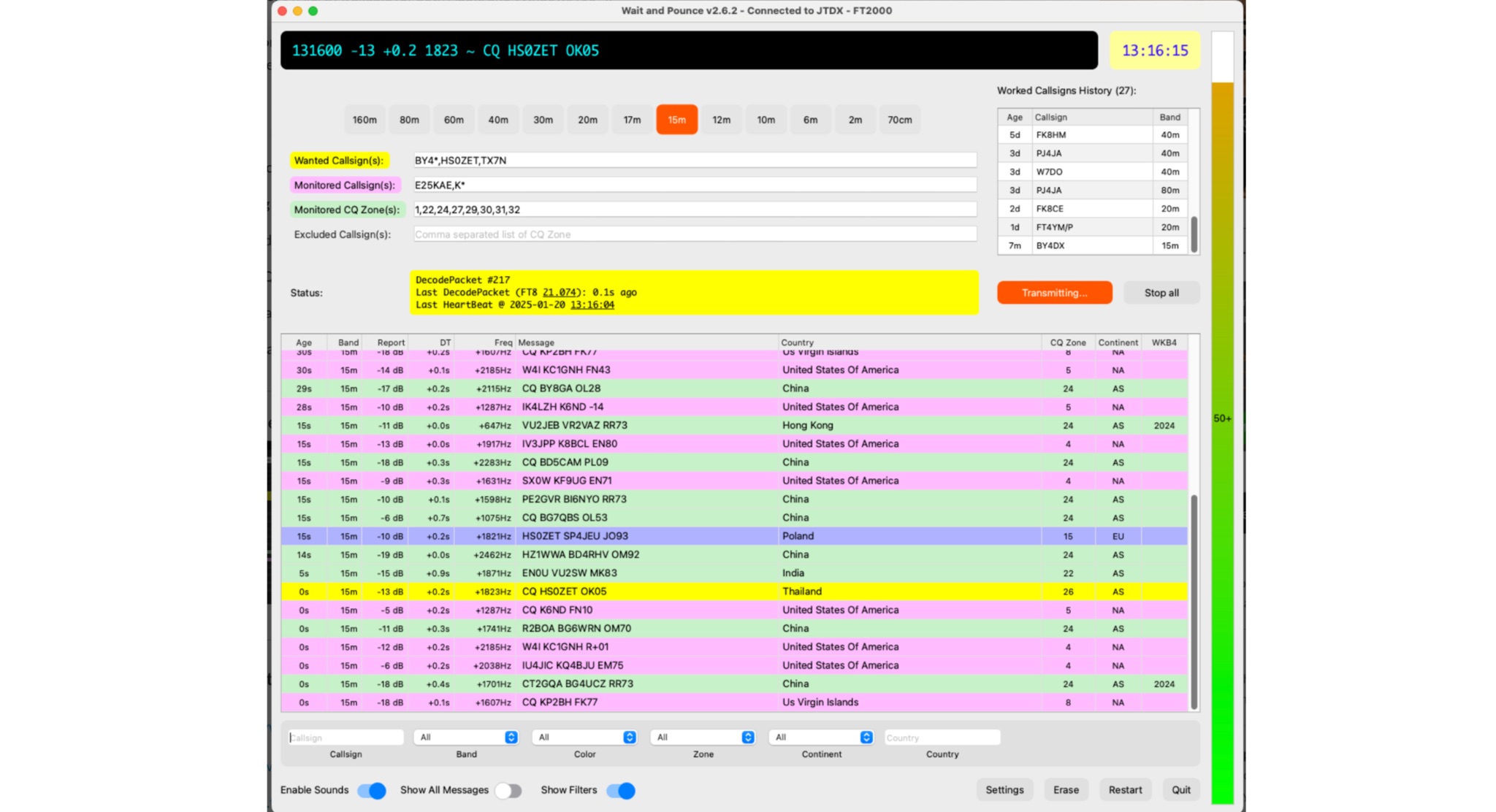 Wait to decode callsigns, then call them using UDP protocol. This utility auto respond to wanted call-signs it is a neat alternative for JTAlert. Automatic logging. Available for both MacOS and Windows (10+). Make sure to automatically call any Wanted callsigns specified. Can also be used to monitor band opening. Can handle callsign exclusions, can even handle wanted callsigns according to your worked before Rules. Works either with JTDX or WSJT.
 -
 This project delves into the development of a compact WSPR beacon, building on earlier experiences with weak-signal modes. Inspired by QRP Labs kits and modified open source designs, it integrates a Si5351 frequency generator, GPS module, and class E PA for efficient operation. Extensive optimizations—addressing drift, heat management, and power stability culminated in a portable, serviceable device. The beacon offers insights into propagation while minimizing reliance on main station equipment. Lessons learned highlight the importance of careful component selection and iterative design improvements for robust amateur radio experimentation.
 -
 Open source code to add CQ Zone, ITU Zone and Maidenhead Locator to your leaflet maps.
 -
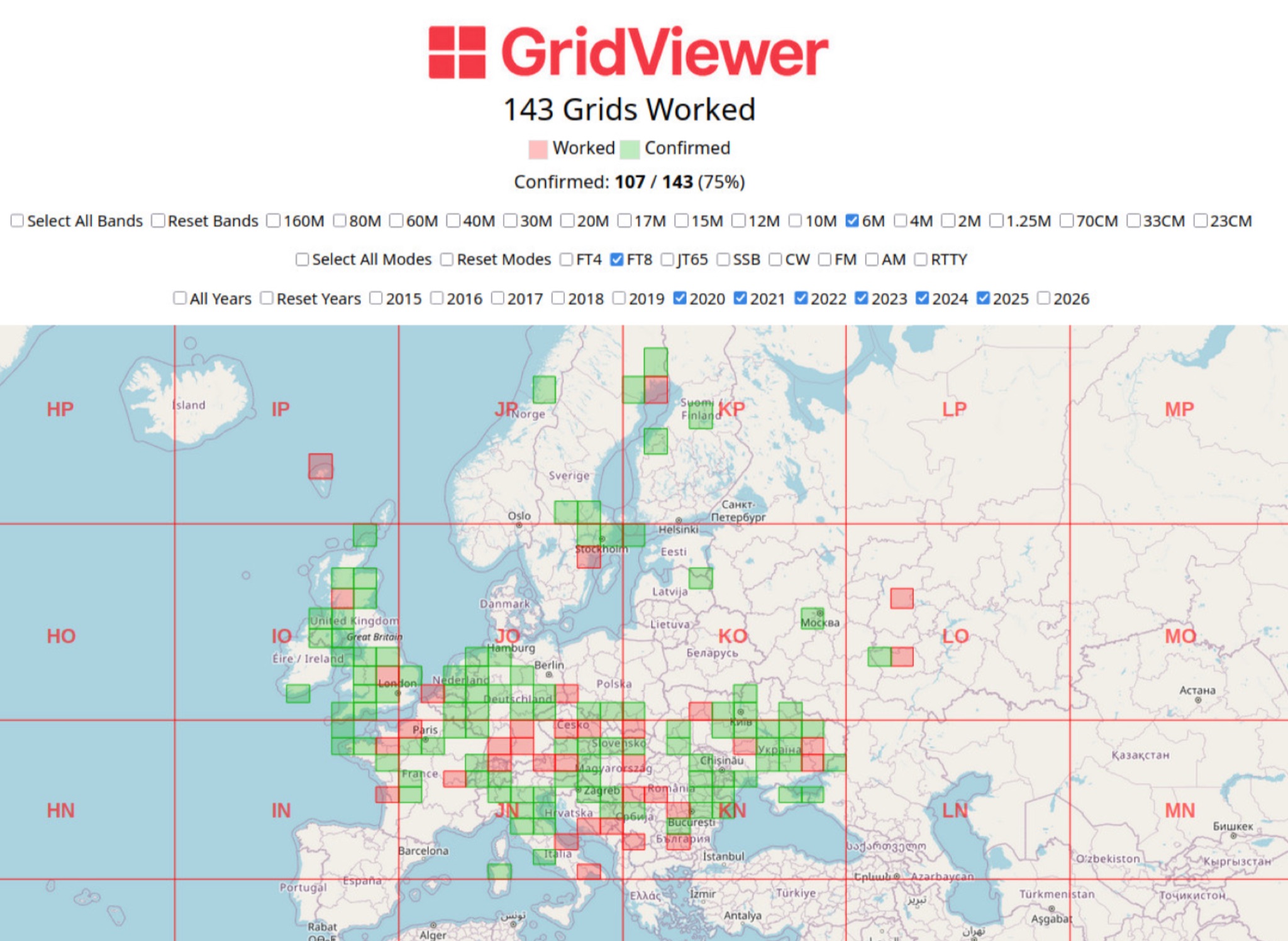 GridViewer is an interactive and lightweight open source web-based tool designed for ham radio operators to visualize and analyze their worked grid squares from ADIF-log files. GridViewer was developed to address a real-world challenge faced by many ham radio operators using lightweight or single-board computers like the Rock 4 SE (in my case) or Raspberry Pi.
 -
 This blog post documents the author's journey building an APRS micromodem for amateur radio applications. Using an open-source design by LY2EN, the author assembled a cost-effective Terminal Node Controller (TNC) with SMD components, an Arduino Nano, and a JDY-31 Bluetooth module. The construction process included PCB fabrication, careful component soldering, microcontroller programming, and Bluetooth configuration. A custom 3D-printed case protected the completed device. Field testing in Romania showed the device functioned with a Baofeng UV-5R radio, though antenna limitations affected performance. The entire project demonstrates an affordable DIY alternative to commercial APRS trackers.
 -
 A Cross Platform and Open Source Electronics Design Automation Suite that runs on multiple operative systems. It allow to easily create even complex schematics and is suitable for professional use
 -
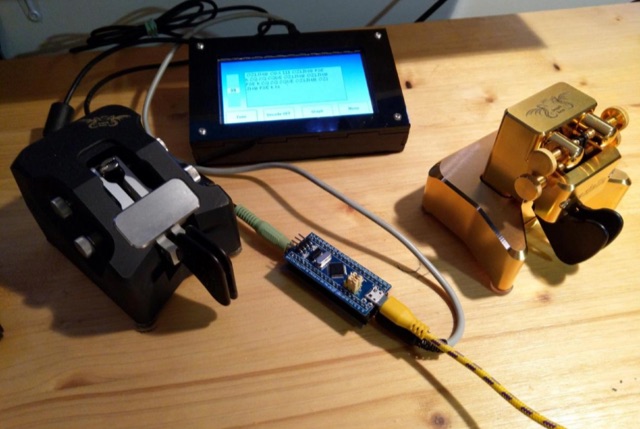 An open hardware and open source keyer that allows you to precisely diagnose any timing errors in your keying.
 -
 Wavelog, a web-based amateur radio logbook application, launched in February 2024, represents a significant fork from the established Cloudlog platform, developed by a core team including DF2ET and DJ7NT. This open-source project focuses on delivering advancements in both stability and functionality, specifically tailored for the amateur radio community. The application allows users to manage their radio logs from diverse environments, including professional servers, standard web hosting, or even compact _Raspberry Pi_ setups. The platform distinguishes itself through its emphasis on simplicity, robust features, and versatile accessibility, enabling operators to log contacts from virtually any location. It supports various operating modes and data formats, providing a flexible solution for tracking QSOs and managing station activities. The project's development is driven by the collaborative spirit of the amateur radio community, prioritizing utility and user experience over commercial objectives. Key features include comprehensive logging capabilities, support for multiple bands and modes, and integration with common amateur radio data standards, ensuring broad utility for DXers and contesters.
 -
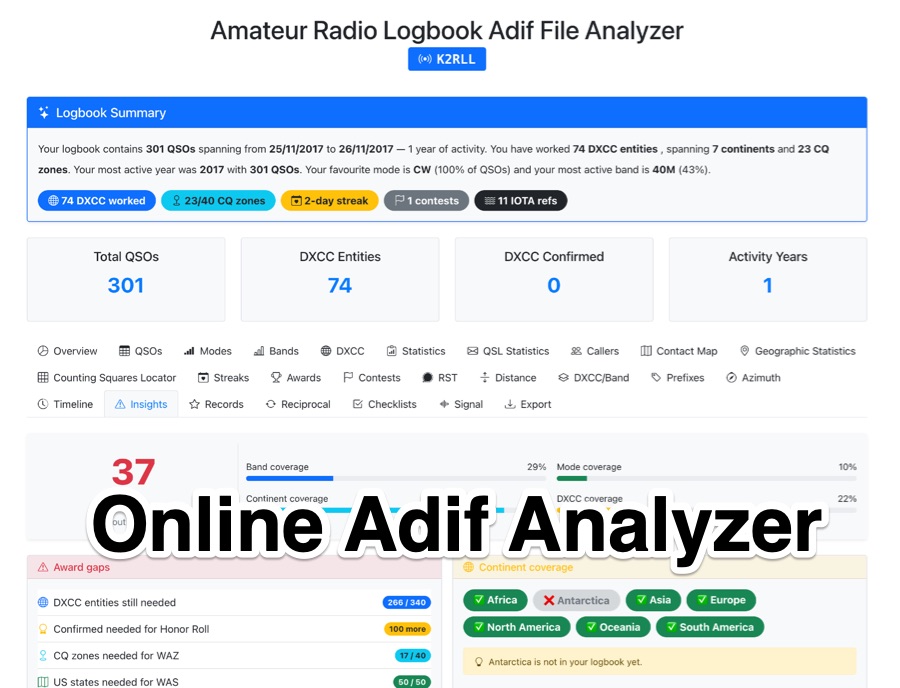 The _Amateur Radio Logbook ADIF File Analyzer_ processes ADIF files locally within the user's browser, ensuring no QSO data is uploaded to a server. It generates a visual map of contacts and detailed statistics across various parameters, including band, mode, time, grid squares, and DXCC entities. The tool offers insights into operating patterns and station performance without requiring any software installation. Users upload their ADIF log files directly, and the analysis is performed client-side, providing immediate results. The output includes charts and graphs that visualize QSO distribution and activity. This approach prioritizes user privacy and data security, as logbook information remains on the user's computer throughout the analysis process. The analyzer supports standard ADIF formats, enabling hams to quickly review their log data for trends and achievements. It is a free, open-source utility designed for general amateur radio log analysis.
 -
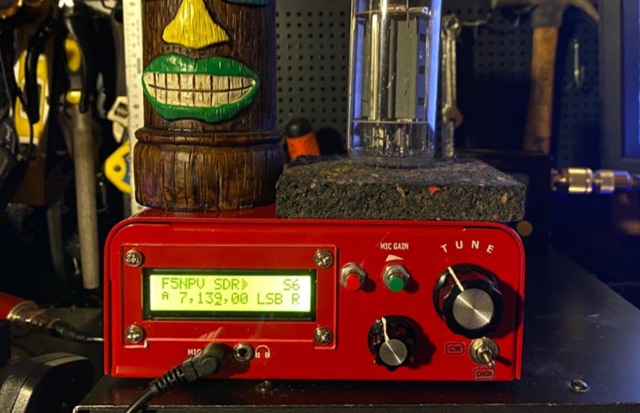 The Homebrew uSDX SDR TRX is an experimental transceiver primarily designed for CW and Digital modes due to limitations in meeting FCC requirements for SSB. Developed from the QRP Labs QCX, it incorporates advanced SDR features while utilizing an 8-bit ATMEGA328P. The µSDX community fosters open-source development with various design streams and versions, encouraging collaboration and sharing among enthusiasts.
 -
 SvxLink is an advanced software suite for the ham radio community, initially launched in 2003 as an EchoLink application for Linux. Now a comprehensive voice services system, the SvxLink Server functions as an advanced repeater controller and can operate on simplex and duplex channels. It acts as an intermediary between transceiver hardware and applications, offering essential system services. The modular architecture of SvxLink supports customization, with modules in C++ or TCL. Key modules include a help system, parrot mode, EchoLink connectivity, DTMF repeater, voice mail, propagation warnings, and selective calling sequences. SvxLink's development and source code are available on GitHub, promoting open-source collaboration in the ham radio community.
 -
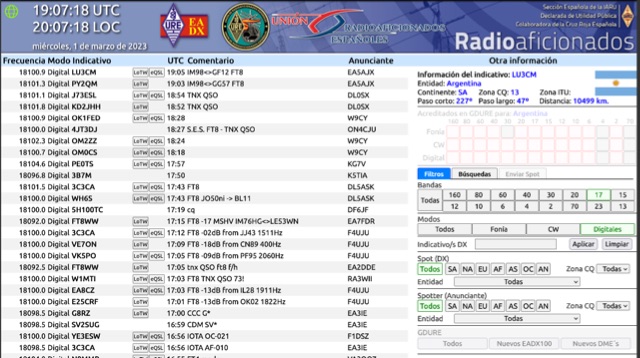 Operating on the HF and VHF bands, the URE WebCluster serves as a real-time DX spotting network for amateur radio operators. It aggregates DX spots from various sources, presenting them with detailed information such as DX callsign, frequency, mode, and spotter details. The platform integrates essential propagation data, including current solar indices like _K-index_ and _A-index_, alongside visual propagation maps, which are crucial for planning long-distance contacts. Users can submit new DX spots, contributing to the collective intelligence of the amateur radio community, and filter existing spots by band, mode, or callsign, enhancing operational efficiency. This resource enables operators to monitor band openings and identify active DX stations, significantly aiding in _DXCC_ pursuit and contest operations. The integration of solar-terrestrial data directly within the cluster interface allows for immediate correlation between propagation conditions and observed DX activity, a feature not universally present in all web clusters. By providing both raw spot data and contextual propagation information, the URE WebCluster offers a practical tool for real-time decision-making during operating sessions, allowing hams to quickly adapt to changing band conditions and target specific _DX_ entities.
 -
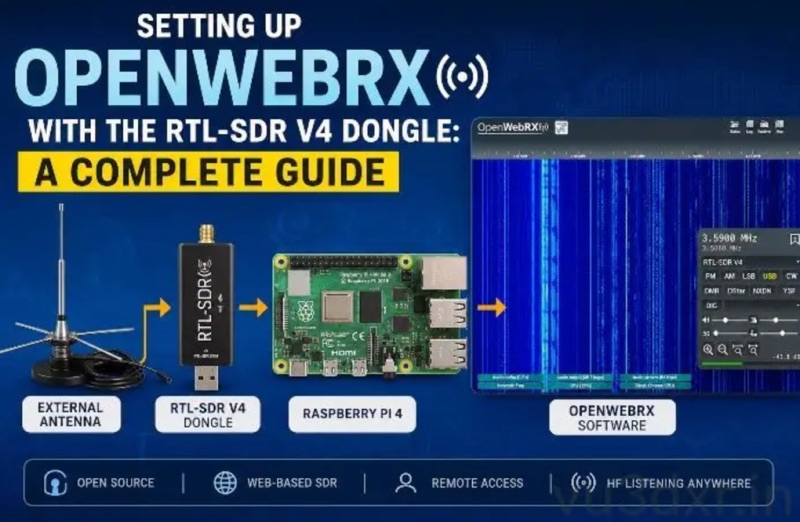 The _RTL-SDR V4_ dongle offers a tuning range from approximately 500 kHz to 1.7 GHz, encompassing HF, VHF, UHF, and microwave amateur allocations, with direct sampling improvements for HF reception. This guide outlines two primary installation methods for _OpenWebRX_ on a Raspberry Pi: utilizing an official Raspberry Pi image or employing a Docker installation. It also provides specific recommendations for Raspberry Pi models such as the 3/3B+, 4, and Zero 2 W, alongside practical advice for antenna selection and placement to optimize reception. _OpenWebRX_ is an open-source, browser-based SDR software package that facilitates web-accessible radio reception. The setup results in a receiver featuring a live waterfall display and demodulation capabilities for AM, FM, SSB, and CW modes. This configuration can be deployed for public access or restricted to a private network, depending on the operator's preference. Further sections address common troubleshooting scenarios and offer tips for mitigating noise, ensuring a stable and effective SDR listening station. The _RTL-SDR V4_ also integrates improved front-end filtering and a software-switchable bias tee, enhancing its utility for various amateur radio applications.
 -
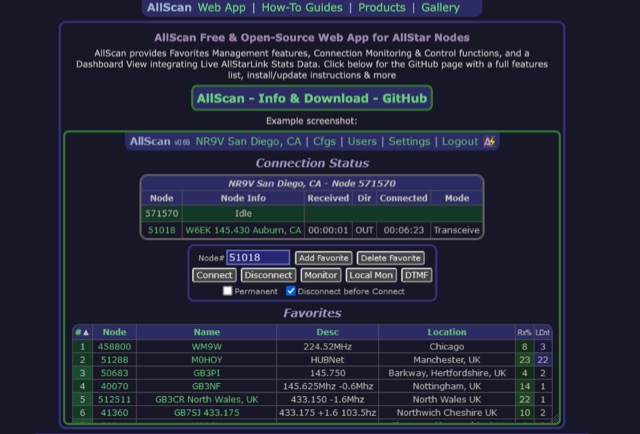 AllScan is a free and open-source web app for AllStar nodes that provides Favorites Management features, AllStarLink Stats integration, and connection monitoring and control functions. Shows your favorites in a Dashboard summary table with Keyed status, Connected Node count and other statistics. Continually scans the status of each favorite using ASL's Stats API data showing which favorites are active and have recently been active. Allows favorites to be connected with a single click (optionally automatically disconnecting any currently connected nodes first). Allows the Favorites Table to be sorted by Node#, Name, Description, Location, etc. Favorites can be added/deleted simply by entering the node# and clicking a button. These features finally give AllStar nodes similar memory management and scan capabilities that analog radios have had for decades. AllScan is mobile-friendly and optimized for ease of use on both small and large screens. AllScan follows the latest web development standards, with PHP, JavaScript, HTML, and CSS cleanly partitioned, runs on both ASL and HamVOIP, and is very easy to install, configure, and update.
 -
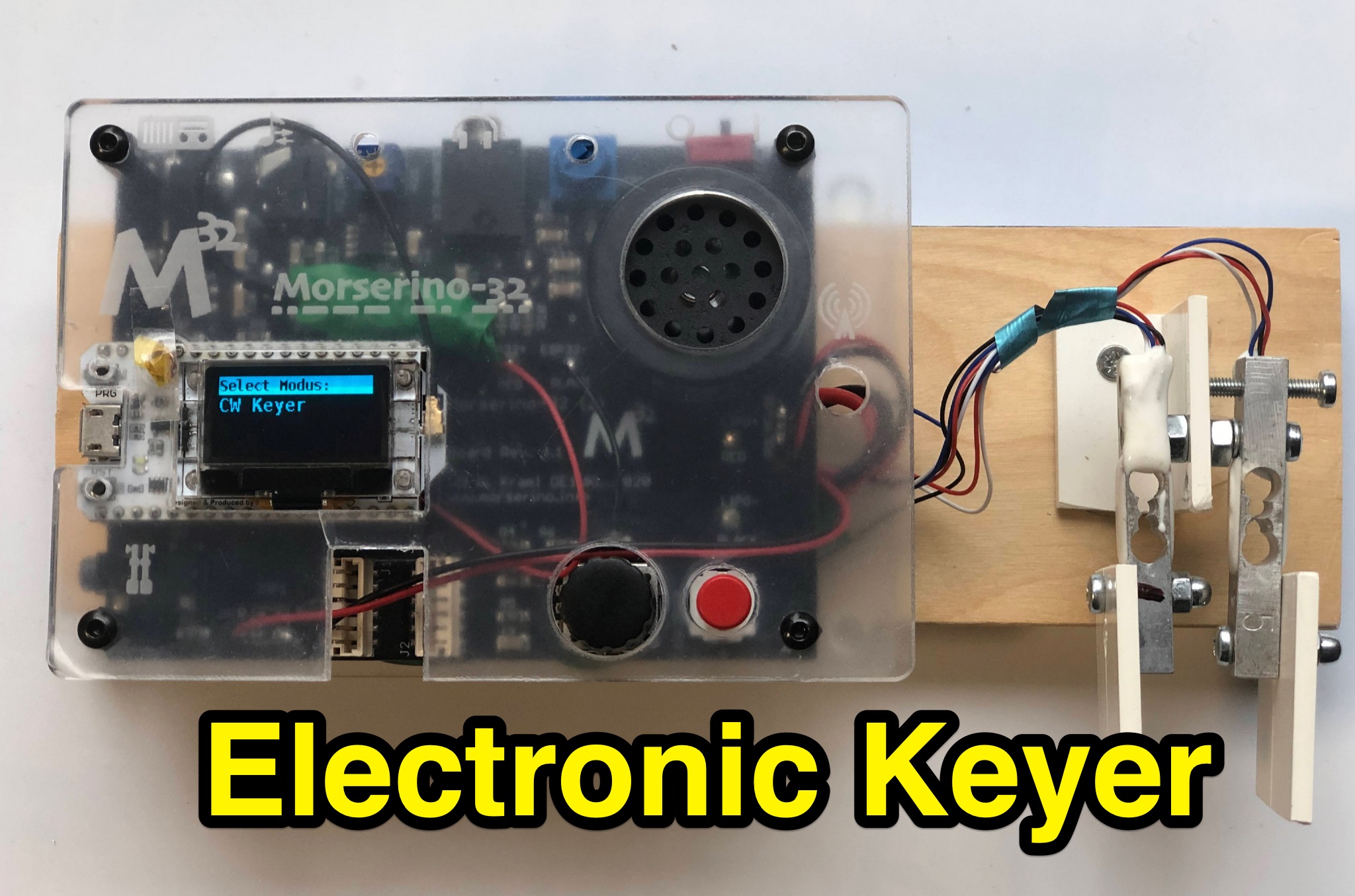 Load Sensor add-on iambic paddles for Morserino-32 and K3NG keyer. Open source with aim to provide affordable high quality paddles without specialized mechanical skills.
 -
 This software enables remote monitoring of the Kenwood TS-590SG HF transceiver. Based on a lightweight, text-based monitor was developed using Python and ncurses. It connects via rigctld, displaying key metrics like frequency, power, SWR, and TX/RX state with minimal data usage. Ideal for low-bandwidth remote operation, it works over SSH or mobile data. The software is open-source under GPL v3.
 -
 M17 is a community of open source developers and radio enthusiasts. We are building understandable systems in support of the hackers and experimenters' history of ham radio. M17 is developing open source hardware, software, and offers a complete digital radio protocol for data and voice, made by and for amateur radio operators. M17 voice mode uses the free and open Codec 2 voice encoder.
 -
 This blog post from KA7OEI covers the author's initial exploration into the world of Arduino, a popular open-source electronics platform. The post likely discusses the author's experiences, challenges, and successes with Arduino projects, particularly in relation to amateur radio or other technical hobbies. It may provide insights, tips, or inspiration for hams interested in incorporating Arduino into their own projects. The content is likely informative, personal, and geared towards amateur radio operators or electronics enthusiasts.
 -
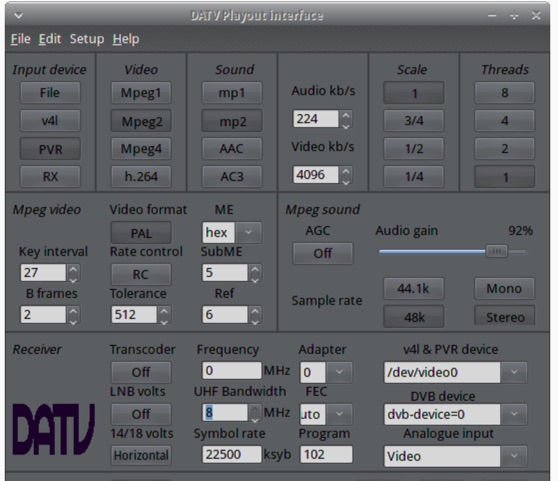 The ZL1WTT resource details an experimental software-based Digital Amateur Television (DATV) system, demonstrating the multiplexing of up to six standard-definition (SD) and one high-definition (HD) channel utilizing _h264 compression_. The author encountered peak data rates reaching 32 Mbit/s, necessitating a shift to Freeview and Sky settings (22.5M Sym/s 3/4FEC) to manage bandwidth. The setup employs four networked computers, with a laptop functioning as the multiplexer to re-code PIDs for various inputs, including looped MPEG2 playlists, MPEG2 encoder card input from a VCR, satellite feeds, and an off-air UHF receiver. The system highlights the inherent flexibility of the DVB transport stream, supporting diverse formats such as MPG2, h264, AC3, and AAC. A significant advantage of this software-defined approach is the absence of video quality degradation from stored MPEG2 files to the displayed output, coupled with the ease of reconfiguring settings for MPEG2 encoder cards (e.g., size, bit-rate, frame rate, video input, coding format) and satellite receiver cards (e.g., frequency, LNB volts, symbol rate, FEC). The author also discusses the development of a new graphical user interface (GUI) using _Gambas_ for Linux, aiming to simplify configuration for this DATV project. Specific hardware components mentioned include Hauppauge WinTV PVR-150 and Nova-S plus cards, with a focus on optimizing analog video input via Y/C (S-video) to minimize frequency roll-off. The resource also provides insights into data rates for HD (1080i) content, recommending 8 to 12 Mb/s for optimal performance. Software utilized includes _Ubuntu Studio 10.04_, WinFF, VLC, and TMPGEnc Editor, underscoring the project's reliance on open-source tools and a foundational understanding of LAN networks and DVB transport streams.
 -
 This page serves as a comprehensive guide for hams, providing open-sourced information that is community-driven and multilingual. It is designed to be accessible to anyone, regardless of language, and can be used offline without internet access. Users can contribute to its development and even install it as an app on their mobile browser. Ideal for ham radio operators looking for a versatile and collaborative resource.
 -
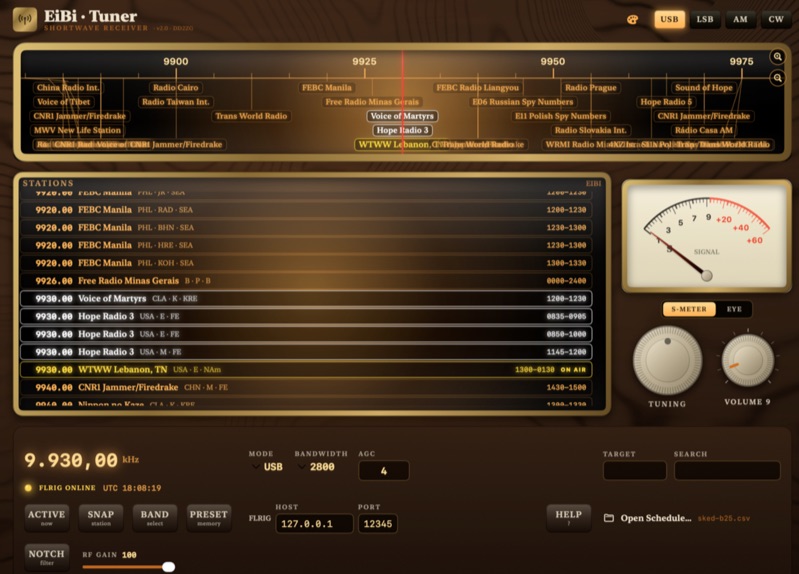 EiBi-Tuner-v2 is an open-source macOS application designed to control amateur radio transceivers via the FLRIG interface, leveraging the EiBi-list for frequency management. This software provides a graphical user interface that emulates an older radio, allowing operators to tune their rigs based on the extensive EiBi database of broadcast stations and utility frequencies. The application is specifically compiled for macOS, offering a native experience for users of Apple's desktop operating system. The software's primary function is to simplify frequency selection and rig control by integrating the EiBi-list, which contains thousands of known frequencies, with FLRIG's robust transceiver control capabilities. This integration allows for rapid QSY to documented frequencies, potentially enhancing DXing and SWL activities by providing quick access to a vast array of signals. The open-source nature permits community contributions and modifications, ensuring adaptability and ongoing development for specific amateur radio operational needs.
 -
 Demonstrates _FreeDV RADE_, an open-source digital voice mode for HF, which combines machine learning with classical Digital Signal Processing (DSP) to achieve improved speech quality and spectral efficiency. Released in June 2025 by ARDC grantee FreeDV, RADE operates at Signal-to-Noise Ratios (SNRs) as low as -2 dB and occupies approximately 1.5 kHz of bandwidth, half that of a typical SSB signal, while transmitting about 8 kHz of voice audio. The mode also features an optimized Peak-to-Average Power Ratio (PAPR) for efficient power amplifier use, reducing heat and consumption. Users, such as _VK3TPM_, report significantly improved listening ease compared to analog modes, particularly in high HF noise environments, making it easier to conduct nets across various Australian states. The mode's integration into popular radios like the _FlexRadio 6000_ series allows direct operation without external computers. A C library for RADE is available, facilitating broader integration into other radios and SDR programs, with development continuing on FreeDV RADE v2 to further narrow bandwidth below 1 kHz.
 -
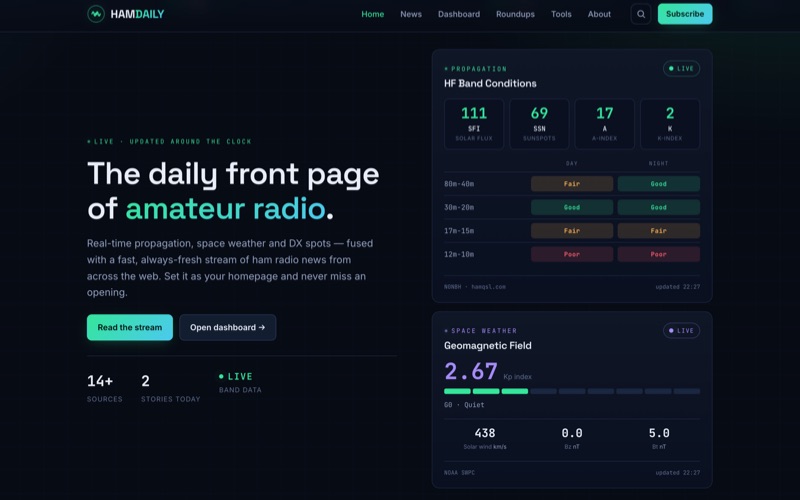 HamDaily presents a **real-time dashboard** for amateur radio operators, integrating live propagation data, current space weather conditions, and a continuously updated stream of DX, POTA, and SOTA spots. The platform also curates news headlines and articles from more than 16 distinct amateur radio sources, offering a centralized hub for daily information. Beyond its real-time data feeds, HamDaily includes practical tools such as practice exams for licensing, a Morse code trainer, a repeater finder, and satellite pass predictions, catering to both active operators and those preparing for their licenses. The resource distinguishes itself by fusing diverse data streams into a single, cohesive interface, allowing operators to quickly assess band openings and relevant activity. The "Today's Roundup" section provides a daily digest of featured articles, ranging from technical insights like "My one-day Tech class 'bag of tricks'" by KB6NU to operational accounts such as QRPer's "Eight Parks, One Missing Mast, and the Midnight Sun: A CW-Only POTA Trek." This aggregation of content, combined with **live band data** and Kp index readings, offers a comprehensive operational awareness tool for the ham radio community.
 -
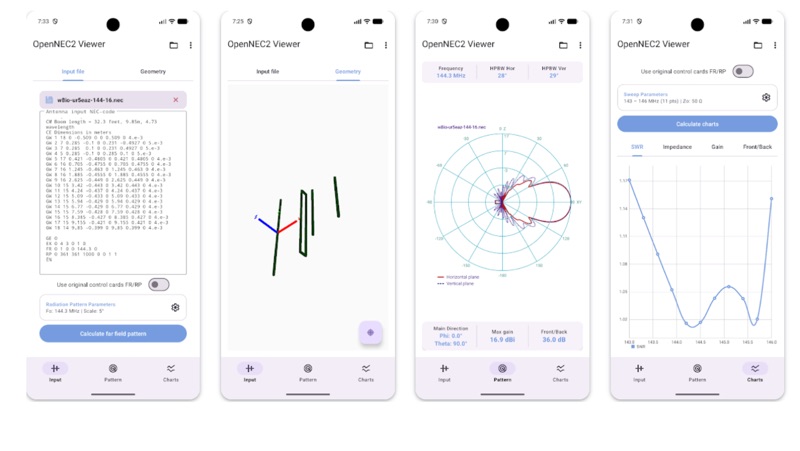 The Open NEC2 Viewer for Android provides a mobile platform for **NEC2** antenna modeling, enabling users to visualize and analyze antenna designs directly on their devices. It integrates the robust NEC2 computational library, leveraging the Method of Moments for full-wave electromagnetic analysis, and utilizes the Google Filament renderer for interactive 3D visualization of antenna structures, segmentation, and wireframes. The application facilitates the calculation of geometric parameters and antenna characteristics across specified frequency ranges. Key functionalities include parametric analysis, offering real-time computation of **radiation patterns** (RP), antenna gain, Voltage Standing Wave Ratio (VSWR), and input impedance. Users can configure flexible calculation settings to control scan step, frequency range, and various control cards, allowing for detailed electromagnetic analysis tailored to specific design requirements. Designed for radio engineers, antenna developers, radio amateurs, and students, the app is distributed as open-source software under the GNU General Public License v3.0. It provides a portable and accessible tool for electromagnetic modeling, making advanced antenna analysis capabilities available on Android devices.
 -
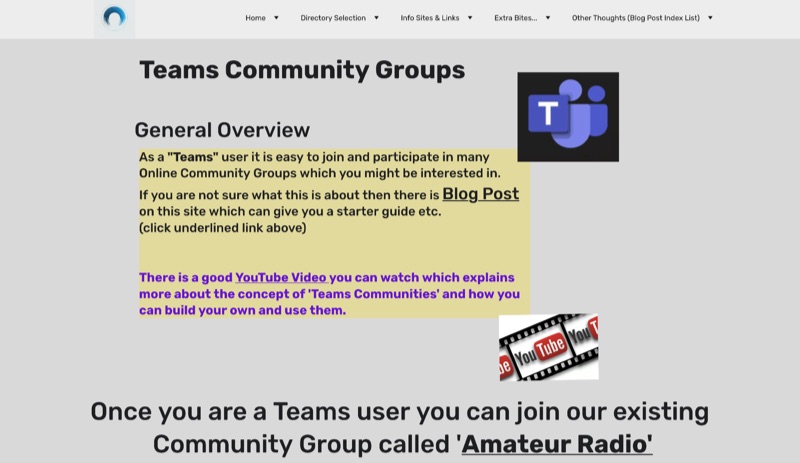 The **Amateur Radio** community on Microsoft Teams provides a platform for hams to connect through chat and video calls. It features five distinct channels, facilitating structured discussions on various topics, akin to a community forum without advertisements. Users can schedule events for group video chats or engage in one-on-one calls, with user status indicators showing availability. The platform supports sharing messages, files, and both video and audio communications within a defined group. An open video chat room is also available, accessible even to non-community members, allowing broader participation. The resource details how to join the existing 'Amateur Radio' community group and provides links to a blog post and a YouTube video for new users to understand Teams Communities.
 -
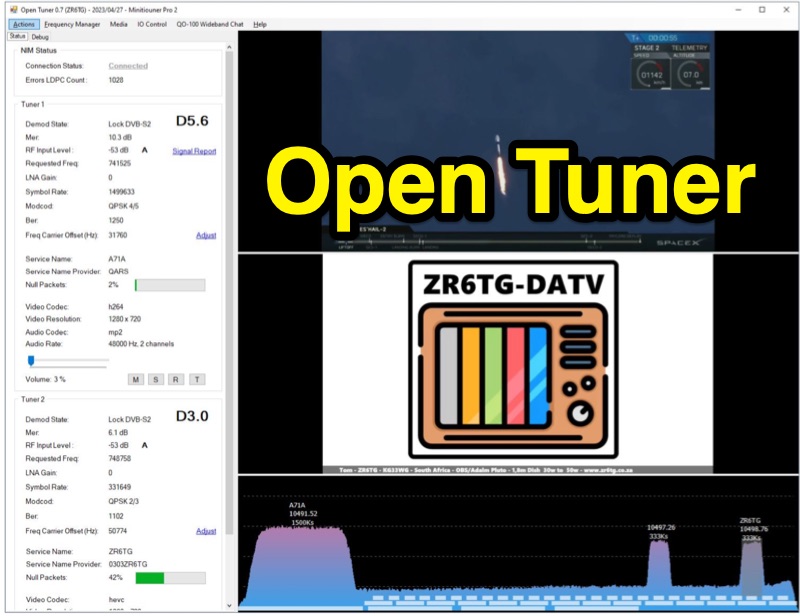 Version 0.7 of Open Tuner, released on April 27, 2023, marked a significant milestone by introducing proof-of-concept dual tuner functionality for the BATC Minitiouner. This C# client, inspired by Heather Lomond's _Longmynd_ project, aims to leverage both tuners and demodulators within the NIM module, a capability crucial for advanced Digital Amateur Television (DATV) operations on QO-100 and terrestrial links. My own experience with DATV often involves juggling multiple receive paths, so a unified client like this simplifies the workflow considerably. Further enhancing its utility, version 0.9 (February 11, 2024) integrated support for the Raspberry Pico, utilizing Colin (G4EML)'s _PicoTuner_ firmware. This offers a more accessible and cost-effective alternative to the traditional FTDI module, streamlining dual tuner setups with a single USB cable. The project's evolution reflects a practical approach to overcoming hardware availability challenges. The software is developed using Visual Studio 2019/2022 and .NET Framework 4.7.2, requiring specific Nuget packages like VLC/Websocket and an ffmpeg folder for full operation. It's an active, community-driven effort, with the source code openly available on GitHub for contributions and bug reporting, embodying the collaborative spirit of amateur radio development.