Search results
Query: Receiver
Links: 511 | Categories: 36
Categories
- Internet and Radio > Online Receivers
- Technical Reference > Receivers > Progressive Receiver
- Technical Reference > Receiver Front-End Protector
- Manufacturers > Receivers
- Radio Equipment > Receivers
- Technical Reference > Receivers
- Technical Reference > Receivers > Regenerative Receiver
- Shopping and Services > Amateur Television
- Technical Reference > Receivers > Crystal radio
- Radio Equipment > Receivers > Drake R-4B
- Radio Equipment > Receivers > Drake R-4C
- Manufacturers > Filters
- Technical Reference > Headsets and Speakers
- Technical Reference > HF Radios
- Manufacturers > Transceivers > Icom
- Radio Equipment > Receivers > Icom IC-R20
- Radio Equipment > Receivers > Icom IC-R7100
- Radio Equipment > Receivers > Icom IC-R75
- Internet and Radio > Live streaming
- Software > Radio Control
- Operating Modes > Radio Direction Finding
- Technical Reference > Radio Direction Finding
- Radio Equipment
- Technical Reference > Radio Mods
- Software > Radio Programming
- Radio Scanning
- Radio Equipment > Reviews and Comparisons
- Technical Reference > RF Design
- Technical Reference > Scanners
- Manufacturers > Scanners
-
 A 200 kHz bandwidth digital transmission system for image transfer in the Amateur Service is under development, specifically targeting VHF allocations. John B. Stephensen, KD6OZH, leads this project under an FCC Special Temporary Authority (STA) valid until September 10, 2006, authorizing emissions up to 200 kHz bandwidth in the 50.3-50.8 MHz segment. Current regulations typically limit bandwidths to 20 kHz on VHF amateur bands, making this STA crucial for testing wideband digital modes. The modem, a modified **OFDM** (Orthogonal Frequency Division Multiplexed) unit, was initially tested on the 70-cm band. It splits a high-rate data stream into multiple low-rate subcarriers to mitigate multipath echoes. The system uses a DCP-1 card with a Xilinx XC3S400 FPGA and Oki Semiconductor ML67Q5003 microcontroller. The transmitter, located at 36d 46m 30s N, 119d 46m 22s W, generates 150 WPEP into an 8 dBi gain vertical antenna, while the mobile receiver uses a Ham-stick. Three data formats for 50, 100, and 200 kHz channels are being tested, with encoded data rates of 96, 192, and 384 kbps. Verilog code for the VHF OFDM modem is 95% simulated, with modifications from the UHF version including increased filter coefficient precision and a change from Ungerboeck **TCM** to BICM for improved performance over fading paths. Final tests will involve one-way over-the-air measurements of bit error rates and coverage area.
 -
 Radio electronic and antenna consulting, servicing and buildups of customer supplied components. Transmitter and receiver site work and on line help.
 -
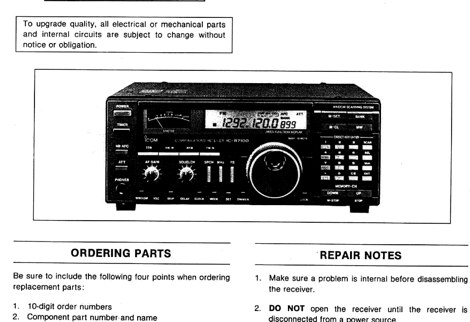 PDF File of the IC R7100 communication receiver service manual
 -
 Effectively teaching amateur radio licensing classes requires more than just technical knowledge; it demands strong pedagogical skills and organizational acumen. This guide addresses the practical aspects of conducting successful amateur radio courses, emphasizing the instructor's role as an educational manager rather than merely a knowledge dispenser. It explores various class organizational structures, including traditional weekly sessions and _hybrid_ full-day formats, noting that many small meetings are often preferable for student engagement. The resource also provides strategies for finding suitable class locations, from public libraries and community centers to navigating public and private school systems, highlighting the importance of stressing the public service aspect of amateur radio to potential hosts. Key sections delve into effective classroom management, stressing the importance of preparation, a structured routine, and creating a comfortable learning environment. It details the VARK learning styles (Visual, Aural, Read/write, Kinesthetic), advocating for teaching methods that engage multiple senses to enhance student comprehension. The guide also offers advice on breaking down complex technical material, defining unfamiliar vocabulary, and making theoretical concepts practical through real-world examples. It includes a sample entry-level license syllabus covering topics like the nature of amateur radio, technical basics, transmitter/receiver fundamentals, and antennas, providing a framework for instructors to build their curriculum.
 -
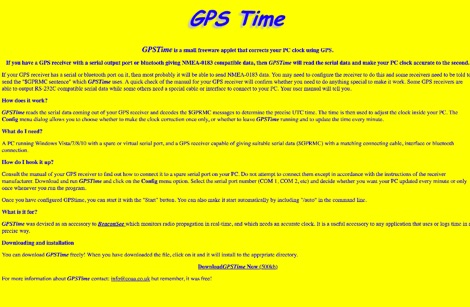 GPSTime is a small freeware applet that corrects your PC clock using GPS. GPSTime reads the serial data coming out of your GPS receiver and decodes the $GPRMC messages to determine the precise UTC time. Works on Windows Vista/7/8/10 with PC with serial ports.
 -
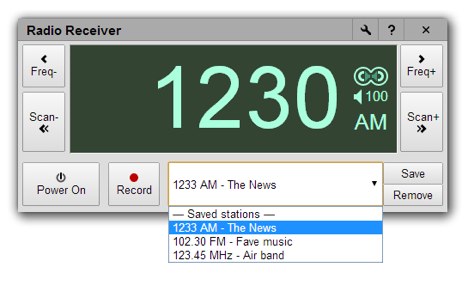 Receive and listen to FM and AM radio broadcasts on your browser or ChromeBook using an RTL2832U-based USB digital TV tuner.
 -
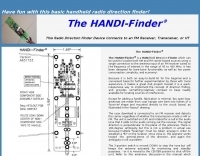 This Radio Direction Finder Device Connects to an FM Receiver, Transceiver, or HT
 -
-
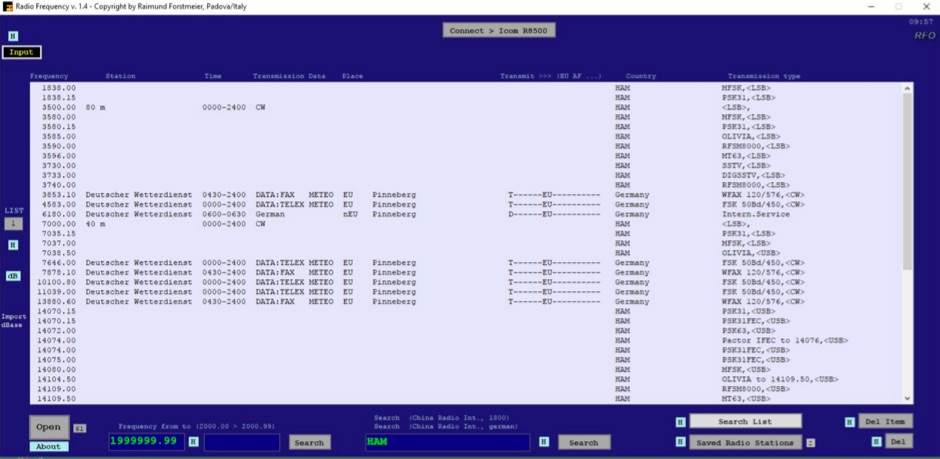 The RadioFrequency Program is a professional Software dedicated to all HAM, SWL and Radio Listeners. Freeware. Included is a Text-CSV dBase Converter. Connection to the ICOM R8500 Receiver. Special Scanning Feature. Special Search Feature x large dBase.
 -
-
 Whether Hamradio software, Transceiver or Receiver, WiFi sticks as well as practical accessories. Bonito have everything around the topic Hamradio.
 -
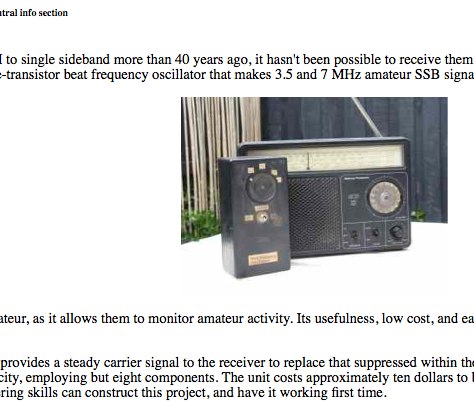 Allow the reception of amateur signals on domestic AM-only short wave receivers article and project by VK3YE
 -
 A group for the purpose of buying-selling-trading SW receivers and scanners only. Free and mainly for individuals.
 -
 Optimizing weak signal reception on the HF bands, particularly in the presence of strong local QRM, often necessitates specialized receiving antenna systems. This resource details the _HI-Z Antennas_ product line, focusing on phased vertical arrays designed for superior noise rejection and directivity. It covers components such as the 4-Square and 8-Element array controllers, which allow for rapid switching of receive patterns, and dedicated low-noise preamplifiers to improve system sensitivity. The site also presents various bandpass filters, crucial for mitigating out-of-band interference and enhancing the dynamic range of the receiver. The HI-Z systems are engineered to provide significant front-to-back and side rejection, often yielding **20-30 dB** of attenuation to unwanted signals, which is critical for DXing and contesting. Users can achieve a notable reduction in local noise, allowing for the discernment of signals that would otherwise be buried. The array controllers facilitate quick pattern changes, enabling operators to null out interference or peak weak signals from distant stations, effectively extending the reach of their receive capabilities by improving the signal-to-noise ratio.
 -
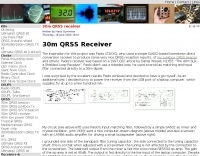
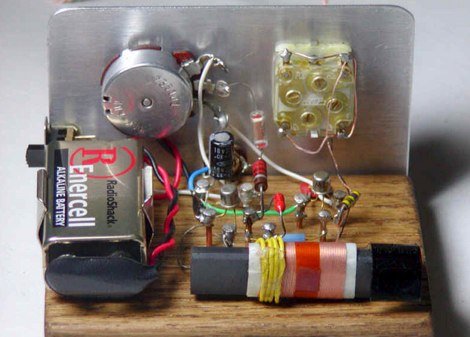
 The idea makes use of a very simple direct conversion receiver on the band of interest.
 -
 Collection of several Crystal Radio receiver circuits with schematics diagrams and pictures
 -
 A project with schematic to build a receiver for 80 meters band by VK1PK
 -
-
 A full superhetrodyne SSB fox hunting receiver kit
 -
 The 80 metre fox-or/test transmitter is a small low power transmitter which is designed to be used as an alignment aid for running up 80 metre foxhunt or ARDF receivers. It is also usable as a micro transmitter for fox-or-ing events.
 -
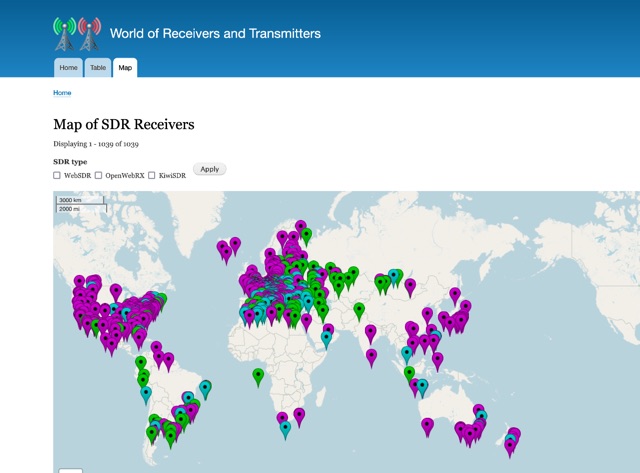 A searchable database of online websdr receivers, lists OpenWebRX, KiWi SDR and WebSDR from all over the world, providing a web interface to search and filter links to websdr
 -
 80 metre ceramix VXO with schematic and assembly instructions
 -
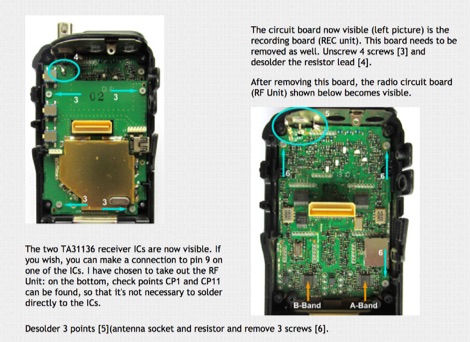 An illustrated modification for the Icom IC-R20 receiver to locate and use the unfiltered audio.
 -
 How to run an SDR Receiver on the Android Google Nexus 7 using SDR Touch App and an RTL-SDR dongle, review and costs by IW5EDI
 -
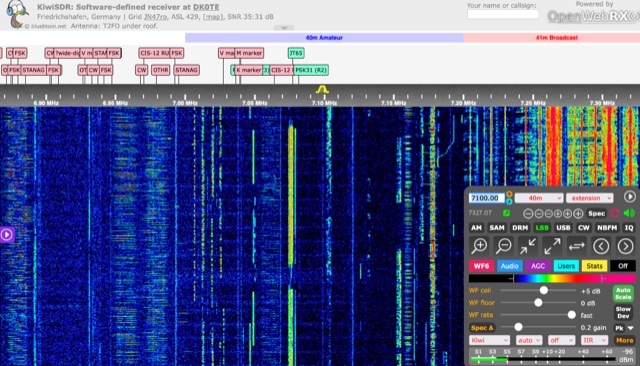 Online internet HF LW MF web receiver based in Baden-Wuerttemberg cooperative state university Ravensburg Campus Friedrichshafen running a T2FD antennan under roof.
 -
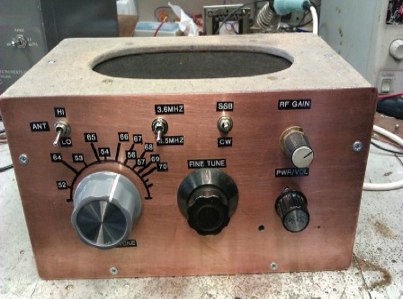 A simple direct conversion receiver for 80m. The receiver covers 3.51 MHz - 3.60 MHz and 3.64MHz - 3.71 MHZ - CW and Phone portions by M0DGQ
 -
 Kenwood TS-2000 Transmit / Receiver eSSB Modifications by N3GX
 -
 A nice tutorial and the basics of the software defined radio, SDR, and links of software defined radios to JTRS, and general SDR receiver technology.
 -
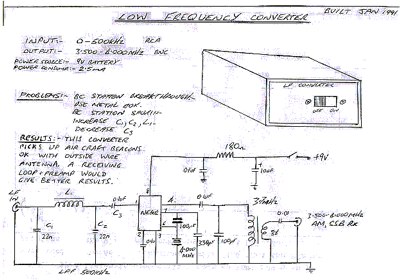 This converter uses the popular NE602 mixer/oscillator chip and allows reception of signals below 500 kHz on a 3.5 – 4 MHz HF receiver
 -
 Software defined radio products. Maker of AFEDRI SDR a direct sampling Software Defined Receiver by 4Z5LV
 -
 Bonito, butel wavecom and bogger products dealer. Accessories to decode encode and process radio communication transmissions for Radio Receivers, Transceivers and Scanners
 -
 The _Sci.Electronics FAQ: Repair: RFI/EMI Info_ document, authored by Daniel 9V1ZV, provides a detailed analysis of computer-generated RFI/EMI, focusing on its impact on radio reception. It identifies common RFI sources such as CPU clock rates (e.g., 4.77 MHz to 80 MHz), video card oscillators (e.g., 14.316 MHz), and even keyboard microprocessors, all of which generate square-wave harmonics across HF and L-VHF regions. The resource outlines a systematic procedure for pinpointing RFI origins, including disconnecting peripherals and using a portable AM/SW receiver with a ferrite rod antenna to localize strong interference sources. The document categorizes RFI mitigation into shielding, filtering, and design problems, offering practical solutions for each. It recommends applying conductive sprays like _EMI-LAC_ or _EMV-LACK_ to plastic casings of radios, monitors, and CPUs to create effective Faraday cages, emphasizing proper grounding and avoiding short circuits. For filtering, the guide suggests using line filters, ferrite beads, and toroids on power and data lines, and small value capacitors (e.g., 0.01 uF for serial/parallel, 100 pF for video) to shunt RFI to ground. It also discusses the use of bandpass, high-pass, low-pass, and notch filters on the receiver front-end or antenna feed to combat specific in-band noise.
 -
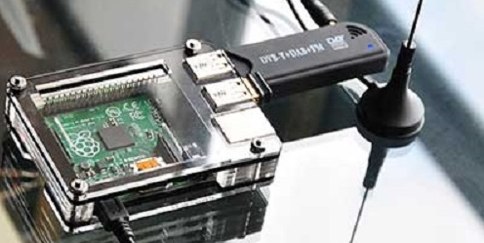 Build and run your own ADS-B receiver for 100 USD with a Raspberry Pi
 -
 Friis-It NF is the first iPhone OS based application that allows you to calculate noise figure, system sensitivity, and cascaded gain for an RF Receiver system
 -
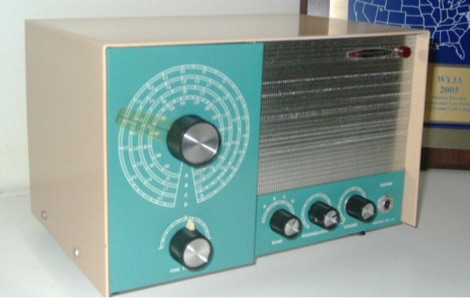 A page dedicated to the Heathkit GR-81 Regenerative Receiver
 -
-
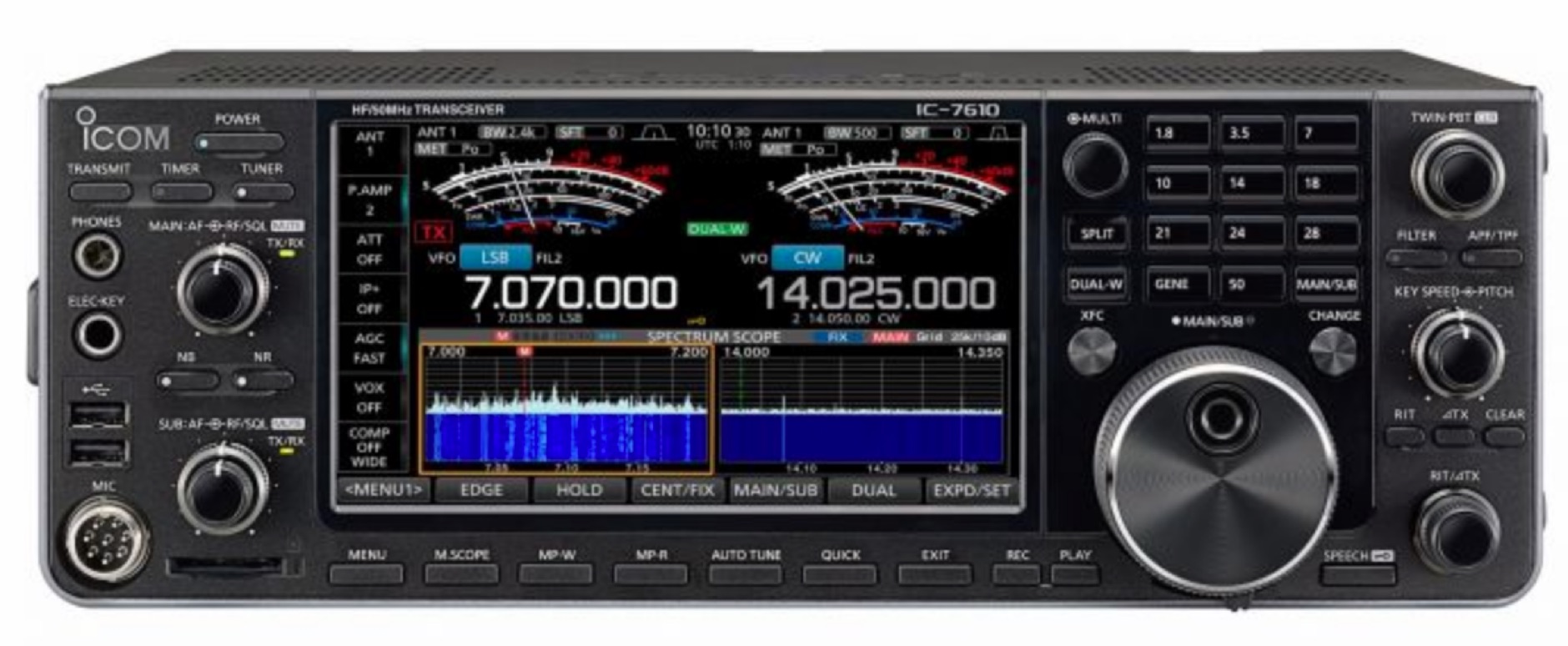 Receiver performance test of the Icom IC-7610 transceiver done by Rob Sherwood
 -
 Commsaudit uk, i/q quadrature , hf receivers, rf, multicoupler, multicouplers, switch matrix, antenna matrices, masthead amplifier,, vhf receiver, uhf,
 -
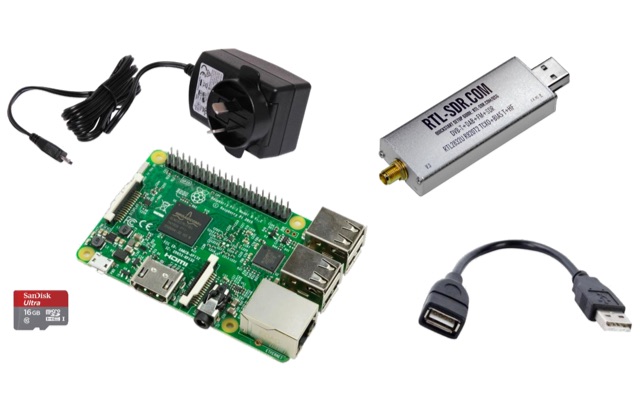 This project is a Software Defined Radio Receiver. It has a frequency range of 24MHz 1.2GHz. It can demodulate AM, FM, USB, LSB with selectable bandwidths of 600, 2400, 2800, 3200 and 6400Hz. Using a simple RTL-SDR Dongle and Raspberry Pi 3 computer using GNU RADIO
 -
 Christoph Petermann DF9CY DRM demonstration receiver project including Circuit Diagram and component list
 -
 This walkie is sold without the wide band receiver enabled, this is, only 144 and 432 MHz band
 -
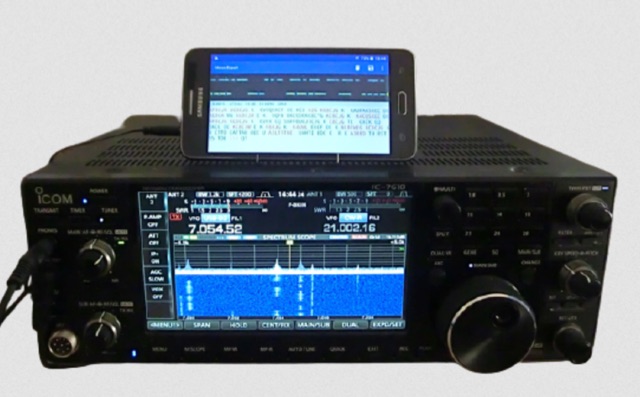 MorseExpert 1.15 decodes Morse Code audio to text, leveraging algorithms from CW Skimmer for optimal performance on weak, fading signals amidst interference on amateur radio bands. It processes audio from the device's built-in microphone or an external radio receiver via cable, optionally highlighting Ham callsigns and keywords. The application features a waterfall display with a bandwidth of 200-1200 Hz, decodes frequencies between 300-1100 Hz, and supports keying speeds from 12-45 WPM with automatic CW pitch detection. Recent updates include support for Android 15, edge-to-edge mode, improved stability, and a pause decoding button. A premium version offers an ad-free experience and user-selected text colors. Users can switch between General Text mode and Ham Radio QSO mode, which enhances word segmentation and highlights callsigns. The app also includes a frequency lock mode, text selection capabilities for copying, sharing, or saving decoded text, and provides guidance on reducing acoustic echo and constructing an audio attenuator for optimal radio interfacing.
 -
 IK2PII describe here a simple direct conversion receiver, thinked for QRSS and DFCW communications, as companion of ARGO or SPECTRAN programs.
 -
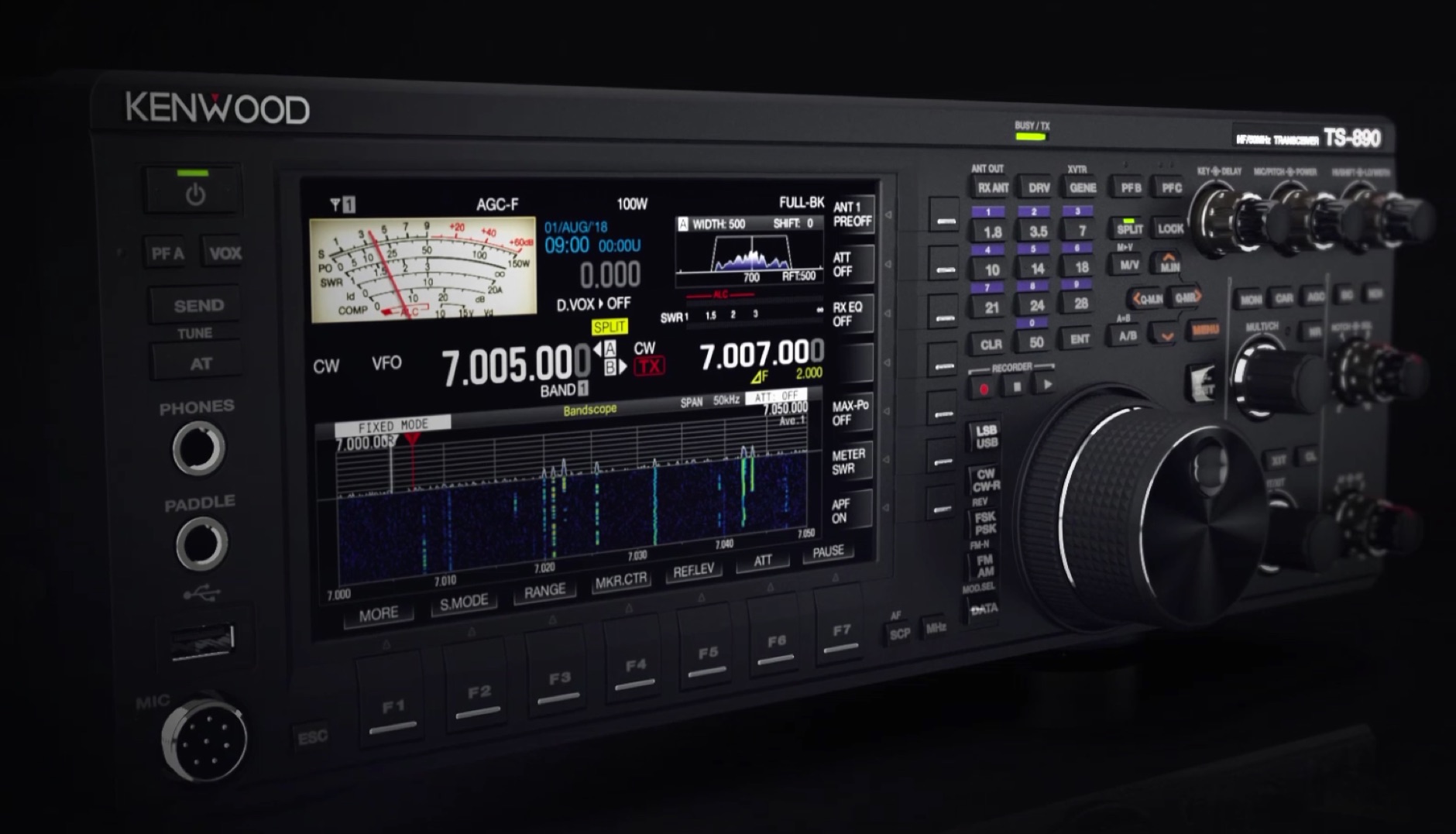 Receiver performance review of the Kenwood TS-890S HF,50MHz,70MHz amateur radio transceiver by Sherwood Engineering
 -
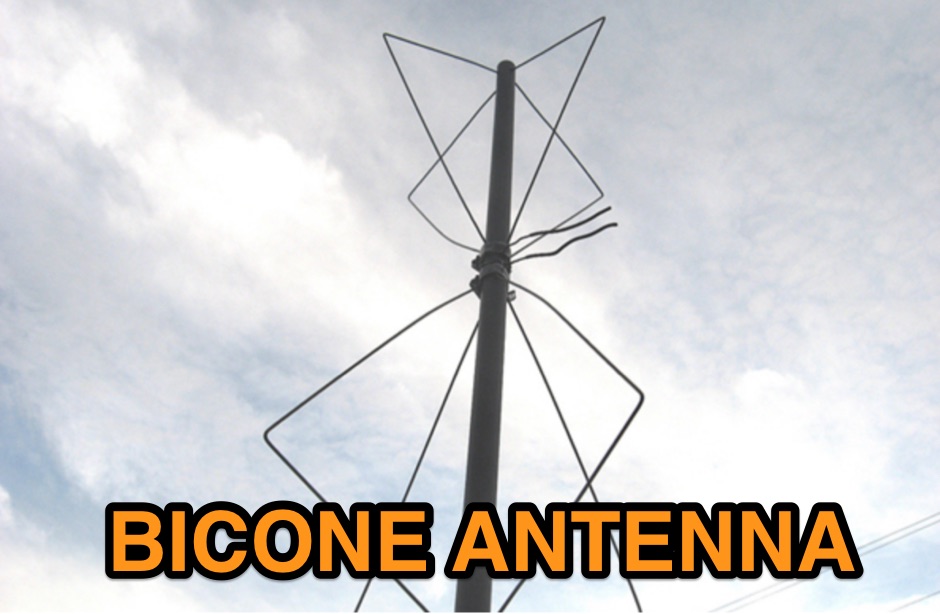 Homebrewing a vhf bicone antenna with 8 clothes hangers and 4 feet of Sch40 non-metallic rigid conduit
 -
 An interesting article on grounding and receiver noise
 -
 Amateur radio products,wire and yagi antennas, SDR Receivers, upconverters, pre-amplifiers, towers and RTL funcube dongles by CT1FFU
 -
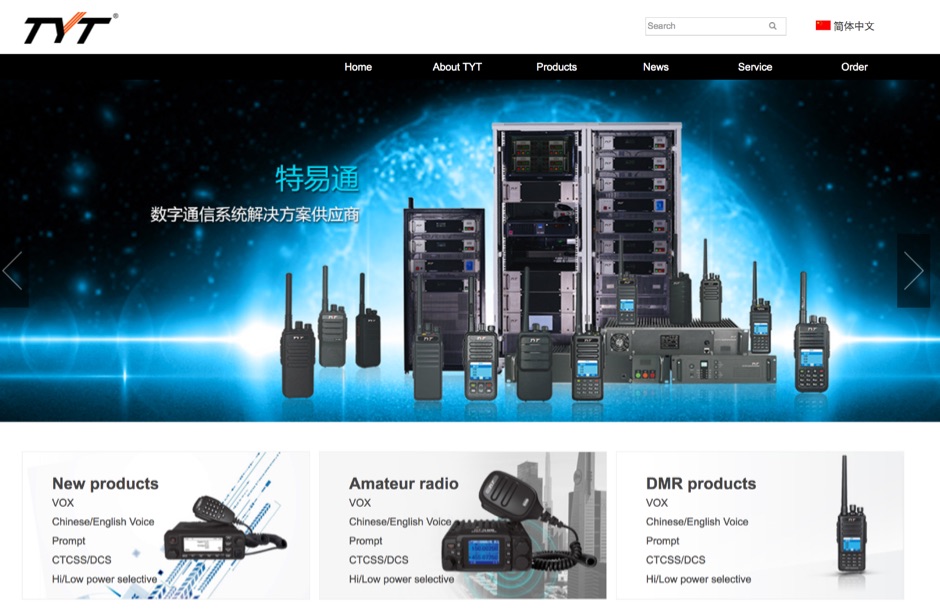 TYT Electronics boasts of 15-year experience in two-way radio manufacture. Produce DMR transceivers, handhelds, receivers and mobile radios, analog amateur radio and commercial VHF transceivers
 -
 Crystal receivers, construction projects and plans, old-time crystal sets, hints, crystal receiver store.
 -
 SPX Communication Technologies, operating under the TCI International brand, presents a range of radio frequency (RF) solutions primarily for government, defense, and commercial sectors. The offerings include advanced systems for spectrum monitoring, communications intelligence (COMINT), and high-frequency (HF) and medium-frequency (MF) broadcasting and communication antenna systems. Specific product lines encompass _Blackbird_ COMINT systems, _Scout_ spectrum monitoring receivers, and various antenna arrays designed for robust performance in challenging RF environments. The resource details the capabilities of these systems, such as wideband signal detection, direction finding (DF), and signal analysis, crucial for intelligence gathering and regulatory compliance. It also highlights the engineering behind their antenna designs, which are optimized for specific frequency ranges and operational requirements, including high-power broadcast applications and secure military communications. The information presented emphasizes the integration of hardware and software for comprehensive RF situational awareness. The company's focus on empowering partners to "Command the Spectrum" underscores its commitment to delivering critical tools for signal interception, analysis, and management across diverse operational landscapes.