Search results
Query: rds radio
Links: 250 | Categories: 16
Categories
- DX Resources > Ham Radio Awards
- Operating Aids > Awards
- Software > Awards tracking
- DX Resources > Ham Radio Awards > Castle Awards
- CB Radio
- DX Resources > Ham Radio Awards > Lighthouses Awards
- Technical Reference > Programming Radio > Cheat Sheets
- DX Resources > Contest > Contest Results
- DX Resources > DXCC
- Internet and Radio > Humor
- Software > Logging
- DX Resources > POTA
- DX Resources > QSL Bureaus
- DX Resources > QSLing > QSL Galleries
- Shopping and Services > QSL Printing
- DX Resources > QSLing
-
 Cubic quad antennas are renowned for their high gain, excellent front-to-back ratios, and low angles of radiation, making them a popular choice among amateur radio operators. This resource provides detailed designs for constructing cubic quads optimized for 2, 6, 10, 12, and 15 meter bands. The lightweight structure can be easily built using fiberglass tubes and central hubs, allowing for portability and ease of assembly. The article discusses the specific dimensions and configurations required for both HF and VHF applications, emphasizing the importance of proper spreader lengths and boom dimensions. It also highlights the challenges of assembling larger cubic quads in limited spaces, offering practical solutions for hams with smaller backyards. With a focus on multi-band operation, this guide serves as a valuable resource for both novice and experienced operators looking to enhance their antenna systems.
 -
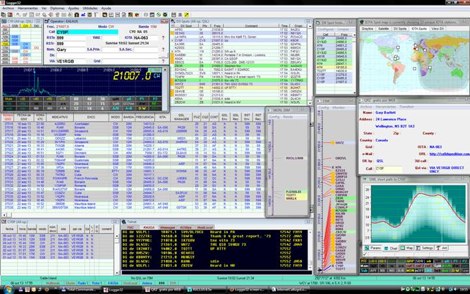 Logger32 is a well-established amateur radio logging program designed primarily for DXers who require a flexible and data-driven logging environment. The software maintains a comprehensive logbook database capable of handling large volumes of QSOs while offering detailed tracking of DXCC entities, awards, and band/mode statistics. One of the core strengths of Logger32 is its DX cluster integration. The program connects to telnet DX clusters and displays spots in real time, with filtering options by band, mode, country, or callsign. The cluster window can automatically highlight needed DXCC entities, band-fills, or new modes based on the operator’s log. Logger32 also provides rig control through CAT interfaces, supporting a wide range of transceivers via serial or USB connections. When properly configured, frequency and mode are automatically captured in the log entry window. The software supports digital mode integration through external applications and can exchange information using standard interfaces. Another important feature is its award tracking system, including DXCC, WAS, IOTA and other common amateur radio awards. The program calculates worked, confirmed, and needed entities with detailed reports. Logger32 supports ADIF import and export, allowing interoperability with other logging systems. It also includes QSL management, with tracking for bureau, direct, and electronic confirmations such as LoTW or eQSL when configured. Overall, Logger32 remains a technically capable logging solution focused on DX tracking, cluster awareness, and detailed statistical analysis of operating activity.
 -
 SSTV freeware software for Windows by Mako JE3HHT. MMSTV is a free software application designed for transmitting and receiving SSTV (Slow Scan Television) images over HF bands. It allows radio amateurs to share still pictures using sound-card interfaces and a transceiver. The program supports popular SSTV modes (Martin, Scottie, Robot, etc.), real-time RX/TX monitoring, and easy image editing. Its user-friendly interface and reliability make MMSTV a favorite choice among ham operators worldwide. Ideal for showcasing QSL cards, shack photos, or technical diagrams over the ai An excellent SSTV program that requires only a computer with soundcard, no expensive TNC required. Works on all Windows version including Windows XP, Vista and Windows 7.
 -
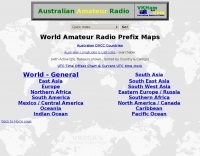 Navigating the global landscape of amateur radio call sign prefixes is essential for DXers and contesters aiming to achieve awards like _DXCC_. This resource offers a series of regional maps, allowing hams to quickly identify the geographical distribution of prefixes across various continents and regions. Each map provides a visual aid for understanding the complex system of call sign allocations, which is crucial for planning operations and confirming contacts. The collection includes detailed maps for areas such as Central America, the Caribbean, Eastern Asia, Europe, North America, Oceania, and South America. These visual tools assist operators in identifying potential DX entities and understanding the geopolitical divisions relevant to amateur radio operating awards. The maps are designed for easy viewing, with options to select and expand each region for closer inspection. Understanding prefix allocations can significantly improve a station's DXing efficiency, potentially leading to an increase in confirmed DXCC entities by **10-15** percent over time. The resource also references a DXCC list, further aiding in the identification of distinct entities.
 -
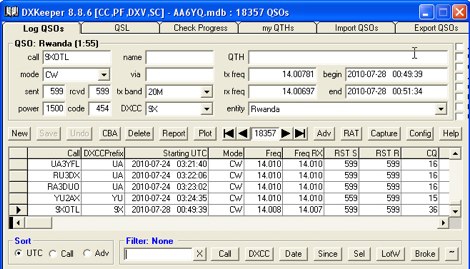 DXKeeper is a robust, freeware logging application designed for amateur radio operators, providing extensive capabilities for managing two-way radio contacts. It records and organizes QSO data, integrates with various callbook CD-ROMs like _HamCall_ and QRZ.com for automatic data population, and supports real-time logging from digital mode software such as MMTTY and MixW. The software runs on Windows NT through 8, supporting both 32-bit and 64-bit systems, and is a core component of the DXLab Suite. This application offers detailed tracking for numerous awards, including DXCC, WAZ, WAS, and IOTA, highlighting needed entities and automating the QSL process. It generates QSL cards and labels, addresses envelopes, and facilitates uploading and downloading of QSO confirmations with eQSL.cc and Logbook of the World (LotW). DXKeeper also interoperates seamlessly with other DXLab Suite members like Commander for transceiver control and SpotCollector for DX spot aggregation, significantly streamlining contest and DXing operations by providing a unified interface for logging and station management, including over **40** supported awards and **3** major online QSL services.
 -
 Freeware Windows QSL card printer software. This tool will let you create you own QSL cards importing pictures and customizing colors and other cards aspects. Print directly to your ink-ject or laser printer. Runs on windows systems by wb8rcr
 -
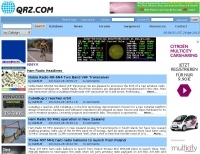 QRZ.com provides a comprehensive online **callbook** service, enabling amateur radio operators to look up detailed information for over 2 million licensed stations worldwide. Each entry typically includes the licensee's name, address, QSL route, and often a personal biography with station details, antenna configurations, and operating interests. The platform integrates various features such as a **Logbook of the World (LoTW)** interface, allowing users to confirm QSOs directly, and a robust search engine for rapid call sign resolution. The resource also features dynamic content, including real-time solar-terrestrial data from N0NBH, an active online swapmeet for buying and selling amateur radio gear, and a news section with articles covering current events, contest results, and special event station announcements. Recent news items highlight topics like the 'Five Two Simplex Challenge' and the '9th HamSCI Workshop,' indicating a focus on active operating and scientific engagement within the amateur community. Furthermore, QRZ.com supports various amateur radio awards, such as the new 'USA250 Award,' encouraging participation in specific operating programs.
 -
 Winlog32 is a freeware amateur radio logging software designed for Microsoft Windows platforms, including versions from 95 up to 11. Developed by G0CUZ, this utility provides robust logging capabilities with a strong focus on DXing across both HF and VHF bands. It integrates extensive tracking for popular awards programs such as DXCC, IOTA, and WAZ, offering features expected from high-quality logging and DXing software. The software is provided without charge to all radio amateurs and SWLs, embodying the spirit of amateur radio. Colin Morris, G0CUZ, has continuously developed Winlog32 over many years, ensuring its functionality remains current and comprehensive. Users can download and utilize the software with full access to all features, free from limitations. While individual distribution is permitted, provided all original files remain unaltered and no charge is made, bulk distribution requires explicit authorization from the author. The software also supports integrations with tools like AGW Packet Engine, ARSWIN Rotator Control, Club Log, and HamQTH Callbook.
 -
 The SK6AW DX-Cluster provided a web-based interface for real-time DX spotting, featuring a flexible and configurable environment for amateur radio operators. It supported various display _skins_, allowed users to send spots, and integrated _e-mail and push notifications_ for alerts. The platform was designed to offer a comprehensive spotting experience, enabling users to track propagation and DX activity across multiple bands, similar to traditional _telnet clusters_ but with a modern web interface. This service, formerly hosted on dedicated servers, transitioned to a shared hosting platform before its scheduled shutdown on December 13, 2025. The decision to discontinue the cluster was attributed to a lack of resources for updating it to contemporary standards. Users seeking similar functionality are directed to alternative DX spotting services such as _dxsummit.fi_ or _dxheat_, which continue to provide real-time DX information and related features for the amateur radio community.
 -
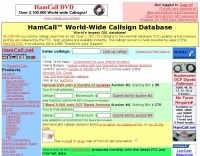 Over 16.7 million callsigns are indexed within the HamCall World-Wide Callsign Database, a long-standing resource for amateur radio operators. This online tool facilitates rapid lookups of callsign data, including operator details and QSL photos, which are crucial for confirming contacts and pursuing operating awards. The database integrates FCC updates as they are released, ensuring timely access to current licensing information. The platform also features a live **DX cluster** displaying recent spots across various bands, from 160m to 3cm, with specific spot counts for active bands like 15m (50 spots) and 10m (46 spots). Users can view **band activity** summaries, providing an immediate overview of propagation conditions and active frequencies. Additionally, the service provides access to a hamfest calendar and amateur radio news updates, making it a multi-faceted resource for daily operating and event planning. Since 1989, the HamCall DVD has supported this server, alongside HamCall.net Gold Memberships, demonstrating a sustained commitment to providing comprehensive callsign data.
 -
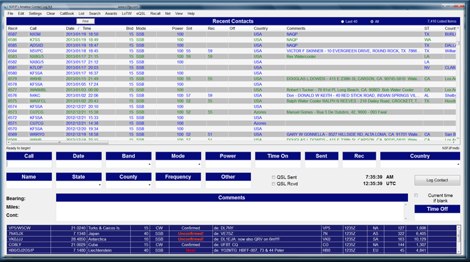 Amateur Contact Log (AC Log) by N3FJP is a commercial Windows-based general logging program designed for amateur radio operators, supporting Windows 7 through 11. It provides comprehensive tracking for various operating awards, including Worked All States (WAS), Worked All Counties, Worked All Countries (WAC), DXCC, VUCC, Grids, Zones, IOTAs, and Lighthouses. The software features a customizable user interface, allowing operators to display specific data fields and adjust font sizes. It includes built-in databases for counties and countries, facilitates queries by band, mode, or power level, and offers a bearing and distance calculator for DX contacts. AC Log also provides DX spotting via Telnet or packet TNC, supports keyboard CW, and can play wave files. The program offers full support for ADIF import and export, enabling seamless integration with external services like eQSL, QRZ, Club Log, and the ARRL's Logbook of the World (LoTW) for QSO uploads and confirmation downloads. It interfaces with popular transceivers from Elecraft, Icom, Kenwood, Ten Tec, and Yaesu, and connects with digital mode software such as WSJT-X, Fldigi, and JTAlert via API. AC Log includes a Net Manager form for group logging, prints basic QSL label strips, and integrates with QRZ and Ham Call lookup services. The software is fully networkable for multi-PC operation, supports Parks on the Air (POTA) logging, and displays worked entities and DX spots on a real-time world map. Full featured Trial version available for 45 days
 -
 SV2AGW packet radio driver, runs TCP/IP protocol over radio, support windows and several devices like baycom and, E5DXL 9600 G3RUH compatible modems, DRSI and Sound cards by SV2AGW George Rossopoulos.
 -
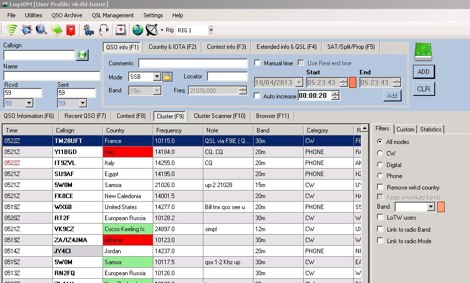 Log4OM is a free logging software designed for amateur radio operators who require an integrated environment for station management and QSO logging. It is widely used by DXers due to its strong database capabilities and its integration with common online services. The program uses a structured SQL database and supports large logbooks without noticeable performance degradation. One of its key features is **CAT Control**, which allows direct communication with many transceivers for automatic frequency and mode detection. The **DX Cluster Client** provides real-time spotting with filtering and band/mode tracking, helping operators quickly identify new DX opportunities. Log4OM integrates with several external confirmation systems. Built-in support for **Logbook of The World (LoTW)** and **eQSL** allows automatic upload and download of confirmations. The software also includes **Award Tracking**, enabling operators to monitor progress toward DXCC and other award programs directly from the log. Additional capabilities include **Callbook lookup** via services such as QRZ, **ADIF import/export**, and customizable **QSL management** for both electronic and paper cards. The interface is modular, with panels that can be arranged depending on operating preferences. Log4OM does not include integrated digital mode engines, so digital operation normally relies on external programs such as WSJT-X or FLdigi connected through standard interfaces. Overall, Log4OM provides a comprehensive logging environment suitable for both casual operation and serious DX chasing, with a feature set comparable to many commercial logging applications.
 -
 Demonstrates _EasyLog_, a commercial logging software for Windows, first released in 1989. The software automates QSO logging, manages awards, and integrates with LoTW for credit submission. It features powerful and intuitive award management, seamless DX-Cluster integration, and a reliable country recognition system, supporting over **37 years** of continuous development. EasyLog provides dedicated technical support and regular updates for awards and DXCC country recognition. Users gain 12 months of access to all software versions and Manager updates with each purchase or renewal, with an option for 13 months upon early renewal. This tool transforms station management, freeing operators from repetitive tasks and enhancing the overall radio experience for both new and experienced DXers. The software is priced at **39,95€** for new users, including 12 months of updates.
 -
 Journal is a **freeware logbook software** designed for Windows operating systems, providing amateur radio operators with a robust tool for managing their contacts. It supports both real-time logging during a QSO and post-event data entry, allowing flexibility for different operating styles. The software facilitates the creation of QSL cards and address labels directly from logged data, streamlining the QSLing process. Additionally, it can generate log sheets specifically formatted for the RSGB VHF-UHF-SHF Competition, which is beneficial for contesters. Derek, G7LFC, developed Journal to be Year 2000 compliant, ensuring its longevity and reliability for logging contacts across different eras. The program supports various operating modes, making it versatile for general DXing, contesting, and everyday ragchewing. Its ability to produce competition-specific logs and QSL materials makes it a practical utility for active operators.
 -
 "How to remove the so called ""ground loop"" and the reentry in the RTTY broadcast and make radio and PC happily coexist"
 -
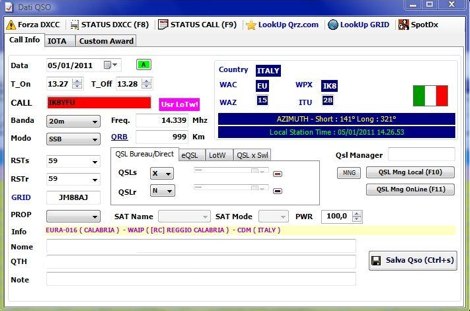 Demonstrates BBLogger, a **freeware** logging application designed for both amateur radio operators and Short Wave Listeners (SWLs). Developed by IK2VIW, IZ2BKT, and IK2UVR, this software provides comprehensive station management capabilities, including **CAT control** for various transceivers, integration with digital mode software like WSJT-X, JTDX, and MSHV, and robust QSL management features. The application supports a wide array of functions such as DX cluster interfacing, mapping, awards tracking (including custom awards), and direct integration with services like LoTW, eQSL.cc, and ClubLog for QSL confirmations and OQRS requests. It also includes utilities for ADIF to CSV conversion and vice-versa, catering to diverse logging and data management needs. Recent updates, such as version 13.1, introduce a web server for log management from any device, allowing remote access and control. The software has improved ADIF import capabilities, including time settings for duplicate QSO detection, and enhanced filtering options for log searches. Performance improvements include faster automatic updates and manager database synchronization, along with optimized log checking at startup. Earlier versions added support for FT8 and FT4 modes, refined OQRS integration with ClubLog, and expanded QSL/label printing functionalities, enabling users to select specific callsign types (OM, SWL) for printing. The developers emphasize compatibility with Windows 10/11 for full functionality, noting limitations when running on older operating systems like Windows 7 due to modern security protocol requirements.
 -
 Catalogs a diverse array of Software Defined Radio (SDR) projects and realizations, systematically classified by their sampling methodologies and underlying hardware architectures. The resource delineates projects into categories such as those utilizing soundcard sampling of traditional transceiver audio outputs (Type Ia), mono soundcard sampling of intermediate frequencies (Type R1x-x-xx), stereo soundcard sampling of I/Q IFs (Type Q1x-x-xx), dedicated stereo audio ADC sampling of I/Q IFs (Type Q2x-x-xx), direct antenna RF signal sampling with off-the-shelf acquisition boards (Type R3x-x-xx), dedicated RF ADC sampling of analog IFs (Type R2x-x-xx), dedicated RF ADC sampling of direct antenna RF signals with ASIC-based processing (Type R4x-A-xx), FPGA-based processing (Type R4x-F-xx), and specialized IF chipsets combining ADC and DDC functions (Type Dxx-S-xx). Each entry provides a brief description, often including pricing, availability of source code, and specific hardware components like ADCs, DACs, DDS, and FPGAs. The compilation presents various practical applications, from PSK31 and Packet radio implementations to adaptations of the DRM standard for amateur radio bandwidths, such as Hamdream and WinDRM. It features specific hardware designs like the SoftRock-40 for the 40-meter band, the Firefly SDR for 30m and 40m, and more complex systems like the Quicksilver QS1R, which employs a 16-bit 130 Msamples/s ADC and an Altera Cyclone III FPGA. The resource also lists sample processing software, RF front-end designs, and academic/commercial SDR initiatives, offering insights into different approaches for I/Q conversion and digital signal processing in SDR systems.
 -
 HamFax is an application for sending and receiving facsimiles in amateur radio and for receiving public facsimile broadcasts like weather maps. Supported interfaces are sound cards and the SCS-PTCII from Special Communication Systems.
 -
 Presents the product lines and corporate information for Japan Radio Company (JRC), a long-standing manufacturer of radio communication equipment. The company's offerings span various sectors, including marine, land, and aviation communication systems, alongside their historical contributions to amateur radio with notable **HF transceivers** and **shortwave receivers**. JRC emphasizes its technological expertise in areas such as radar, satellite communication, and network solutions, contributing to global safety and security infrastructure. The resource details JRC's commitment to leveraging its accumulated knowledge and experience in information and communication technology. While the primary focus has shifted towards commercial and governmental solutions, the legacy of JRC's amateur radio products, such as the JRC JST-245 transceiver and the NRD-525 receiver, remains significant within the ham radio community, known for their robust build quality and performance.
 -
 UX5UO print, world of qsls easy and inexpensive printing of radio amateur qsl cards in russian and english provide agents in several countries.
 -
 Radio Scanners Uniden Bearcat, Antennas, CB_Radios, Ni-Cad Batteries, Frequency Books, Accessories, Power Supplies and Cords, FM Two Way Radios, and other Related Merchandise
 -
 the European equivalent of the Family Radio Service (FRS) in the U.S. and Canada, FRS/PMR? Why 2 standards?, What PMR radios exist? And how much do they cost?
 -
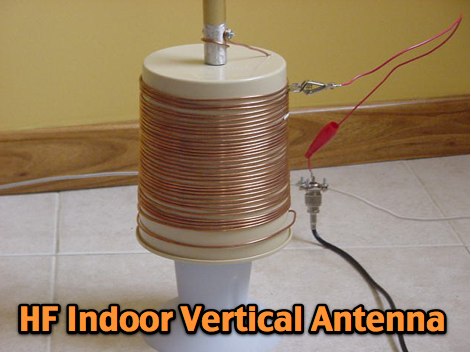 W5ALT Indoor Vertical Antenna is a base loaded vertical antenna that can be tuned on almost all HF bands by adjusting a big coil. Operating a ham radio station from an apartment in Maracaibo, Venezuela, the author demonstrates effective communication with over 100 countries using a custom-built indoor vertical antenna. Addressing common misconceptions, the design uses a balanced approach with radials and a base-loaded vertical element made from affordable materials. The antenna fits discreetly indoors, covers 6 to 40 meter bands, and achieves acceptable SWR with an MFJ tuner. Despite limited space and typical apartment challenges, the setup enables reliable DX contacts, confirmed by numerous QSL cards, proving indoor antennas can perform well in constrained environments.
 -
 Over 20 years of development have gone into _Shacklog_, a logging software designed for radio amateurs and Shortwave Listeners (SWLs), primarily from the UK. This resource provides a detailed overview of its capabilities, which include real-time and post-event QSO logging, comprehensive log analysis and reporting, and the ability to print QSL labels. It also features a country status display, rig control integration, and supports importing existing logs, along with interfacing with CallBook CD-ROMs for callsign lookups. The software facilitates efficient management of radio contacts, allowing users to track their DXCC status and other awards. Its analytical tools help operators review their operating patterns and contest performance, while the QSL label printing function streamlines the process of confirming contacts. The integration with rig control systems enhances the logging experience by automating data entry, making it a practical tool for both casual logging and competitive contesting.
 -
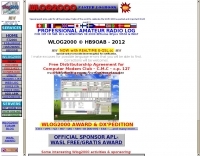 WLOG2000 demonstrates a comprehensive logging software solution tailored for amateur radio operators, shortwave listeners (SWLs), broadcast listeners (BCLs), and CB enthusiasts. It integrates essential utilities such as DX Cluster and DXtelnet for real-time DX spotting, along with PSK and PSK-Pbbs capabilities supporting both TNC and PC sound card interfaces. The software also features radio and rotor control, CDbook interface functionality, and a wide array of other logging and operational tools, making it a versatile station management platform for various radio activities. Franco, HB9OAB, developed WLOG2000 to provide a robust, free logging solution, with continuous updates available from the homepage. The software supports popular digital modes like RTTY, SSTV, KGSTV, EASYPAL, FT8, and FT4, alongside traditional CW operation. It offers rig control for major manufacturers including Kenwood, Yaesu, and Icom, facilitating seamless integration with existing shack setups. Users can track awards like DXCC, WAS, WAZ, and WAC, and manage QSLs, enhancing the practical application for contesters and DXers.
 -
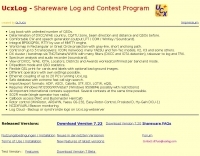 Demonstrates a comprehensive logging and contest program for Windows, _UCXLog_, designed to assist amateur radio operators in managing their QSO records and participating in competitive events. It integrates essential features such as transceiver control for single-operator two-radio (_SO2R_) setups, CW keying via COM/LPT ports, and SSB/RTTY operation through soundcard interfaces. The software also provides DX cluster connectivity via packet, internet, or Telnet, alongside robust statistics tracking for awards like _DXCC_ and _IOTA_, locator management, and greyline map display. Enables operators to efficiently handle log import/export functions, print QSL cards, and maintain detailed records of their contacts. The program's network capability facilitates multi-operator environments, while its support for various digital modes and rig control protocols enhances operational flexibility. Regular updates, including beta versions, are provided, ensuring ongoing development and feature enhancements for the amateur radio community.
 -
 RSCW demonstrates a Linux/Unix command-line utility engineered for **Morse code** decoding via a computer's sound card. It specifically targets the extraction of weak CW signals from noise, operating on 8-bit, 8000 samples/second audio input, typically from `/dev/dsp`. The program outputs decoded characters to `stdout`, supporting user-specified speeds in words per minute (WPM) and carrier frequencies. While effective for machine-sent signals, it exhibits a 2-second decoding lag and requires manual speed input, making it less suitable for general-purpose, real-time contest operation. The resource details the program's components, including `rscw` (the main decoder), `rscwx` (an X11 graphical auxiliary for spectrum and internal signal visualization), `rs12tlmdec` (a specialized decoder for RS-12 amateur radio satellite telemetry), and `noisycw` (a utility for generating noisy Morse signals for testing). Installation instructions involve downloading a `.tgz` file, compiling with `Make`, and requiring the FFTW library (and GTK 2.0 for `rscwx`). Performance is illustrated with a .wav file example of a 12 WPM, 800 Hz CW signal at 12 dB Eb/N0, showcasing RSCW's near-error-free decoding of a test message. The site provides command-line examples utilizing `sox` for audio conversion and `noisycw` for signal generation, inviting comparisons with other decoding software and human operators, particularly for weak signal conditions.
 -
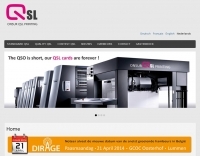 For amateur radio operators seeking to confirm two-way radio contacts, a QSL card serves as a traditional, tangible verification. ON5UR QSL Printing provides a service for designing and printing high-quality, full-color QSL cards, including options for full-color backsides. The service offers various paper weights, such as 250, 280, 300, and 400 grams, allowing hams to select a card stock that meets their preferences for durability and feel. Pricing structures are detailed for different quantities, with 1000 cards starting at 96.00 Euro for 300-gram stock with gloss laminate, inclusive of design costs. The service includes free QSL cards with larger orders, such as 500 free cards with a 2000-card order, or 500 free cards with a 7000-card order. Shipping costs are categorized into six zones, primarily covering Europe, with specific pricing for countries like Belgium (Zone 1) and a request-based system for other regions and export conditions outside Europe. Testimonials from operators like M0URX highlight the design quality and quick turnaround, which are crucial for DXpedition QSL managers needing efficient processing.
 -
 There are many kinds of satellite antennas that will get you on the birds and allow you to have lots of fun
 -
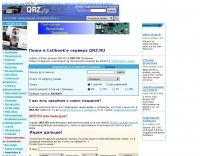 Presents an online callsign lookup service, QRZ.RU Callbook, which offers a searchable database for amateur radio operators. The resource details its extensive collection, including more than 50,000 records for **CIS (Commonwealth of Independent States)** callsigns and over 1,400,000 international entries. It enables users to search for existing callsign records and facilitates the creation of new entries, contributing to a dynamic and expanding repository of amateur radio data. The platform's primary function is to serve as a **callbook**, providing contact information and other details associated with specific amateur radio callsigns. Access to detailed information within the database is available to registered users, indicating a tiered access model for its comprehensive data. The service is maintained by Sergey, UA9OTY, ensuring a degree of accountability and expertise in its operation.
 -
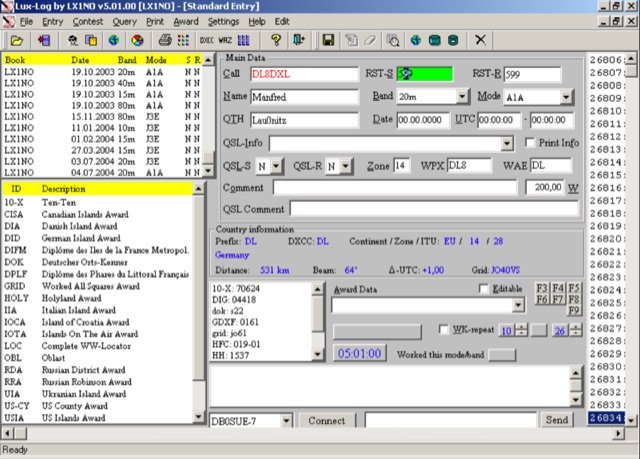 For amateur radio operators running Microsoft Windows XP or later, Lux-Log provides a robust logging and contest software solution, designed by Norbert Oberweis, LX1NO. It is capable of managing over 30,000 logbooks within a single database and image copy, offering comprehensive data handling features. The software facilitates data import and export via **ASCII** and **ADIF** formats, ensuring compatibility with other logging applications, and includes an integrated tool for converting data from other programs into ADIF. It provides instant feedback on previous contacts and country information during data entry, alongside static or serial value generation for contesters. Lux-Log integrates a versatile award module, currently supporting 123 definitions for popular awards such as DXCC, WAZ, WAS, US Counties, IOTA, and more. Operators can generate pre-defined and user-definable data queries, visualize statistics through bar/pie charts, and print QSL labels. The software also interfaces with the RAC Callbook and HamQTH, supports LoTW, and offers radio control for Icom and Yaesu FT-857 transceivers. Additionally, it supports telnet connections to internet clusters and integrates with K1EL's WinKey for CW generation, making it a comprehensive tool for both general logging and contesting activities.
 -
 Managing extensive amateur radio contact logs efficiently requires specialized software that integrates various operational aspects. Aether provides a macOS-native logging solution, designed from the ground up using Apple's Cocoa, to streamline QSO entry, organization, and retrieval for Mac users. It supports modern macOS technologies and offers an intuitive interface, aligning with the user experience expected on Apple platforms. The application includes features such as automatic dupe checking, which quickly identifies previous contacts with a station, and awards tracking, indicating if a new contact is needed for specific operating awards. Aether also integrates rig control via RS-232, automatically populating frequency, mode, and power data from supported Elecraft, Icom, Kenwood, Yaesu, and some TEN-TEC transceivers. This automation reduces manual entry errors and speeds up the logging process. Furthermore, Aether offers comprehensive QSL management, including synchronization with eQSL.cc and Logbook of The World, and the ability to print QSO detail and address labels for paper QSLs. It also incorporates automatic callbook lookup from sources like QRZ.com and HamQTH.com, and calculates distance and beam heading, with Google Maps integration for visualizing contact locations. Full ADIF and Cabrillo import/export capabilities ensure compatibility with other logging software and contest submission platforms.
 -
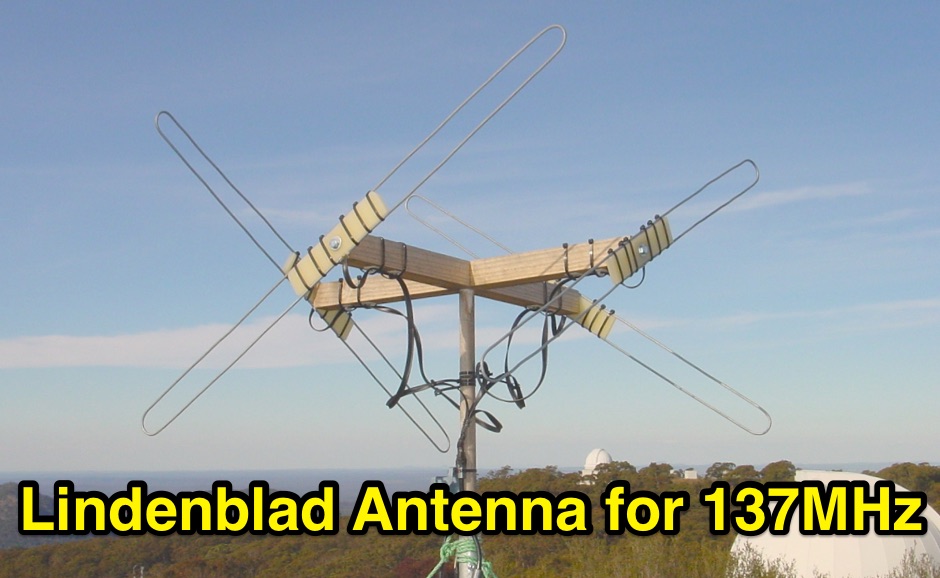 Constructing a Lindenblad antenna for 137MHz NOAA satellite reception involves specific design considerations for optimal performance. The resource details the use of 4mm galvanised steel fencing wire, 300-ohm television ribbon cable, and wood/plastic components for the antenna structure. Key dimensions for a 137.58MHz-resonant antenna are provided, derived from the ARRL Satellite Handbook, specifying s, l, w, and d as 42, 926, 893, and 654mm respectively. The antenna is designed for Right Hand Circularly Polarised (RHCP) signals, requiring the four folded dipole elements to be tilted clockwise by 30 degrees. A significant aspect covered is impedance matching between the antenna's 75-ohm impedance and a typical 50-ohm receiver input. A twelfth-wave matching transformer, constructed from 117mm sections of 50-ohm RG-58 and 75-ohm RG-59 coax with a 0.66 velocity factor, is described. The article also addresses coaxial cable and connector selection, recommending 75-ohm Type-N connectors for RG-6 cable in professional setups and F56/F59 connectors for general use, while strongly advising against PL-259/SO-259 connectors for VHF. Strategies for mitigating Radio Frequency Interference (RFI) are discussed, including antenna placement to shield from local TV transmitters and the use of commercial or DIY band-pass filters, such as cavity resonators or helical notch filters, along with ferrite chokes on coaxial cables. Antenna orientation is explored, noting the Lindenblad's 'cone of silence' directly overhead and its maximized sensitivity towards the horizon. An experimental vertical tilt of 90 degrees is presented as a method to improve overhead reception and reduce interference from strong horizontal signals, particularly relevant in high RFI environments like the Siding Spring Observatory site.
 -
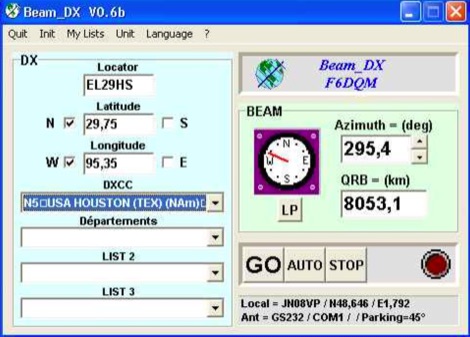 BEAM_DX is a free windows software for radioamateurs or radio listeners usage. It allows to point a directionnal antenna towards an azimuth, a locator, an international prefix or any other geographical position on earth predefined by its latitude and its longitude
 -
 LOGvrr, a **freeware logging software** developed by IN3VRR, provides amateur radio operators with essential tools for managing their contacts. The resource details various downloadable components, including the core LOGvrr application, an international callbook with approximately 1.8 million callsigns, and utility programs for installation and data conversion. It supports functionalities like logging QSOs, managing awards, and interfacing with PacketCluster systems, with specific instructions for installation on Windows operating systems, including compatibility notes for Windows 10 and 11 using Hyper-V or DOSBOX. The site also offers external tools and documentation, such as the FAQ_VRR.PDF manual which covers installation, printer configuration, ADIF conversion, and Packet setup. It references third-party software like Mercurio and BV QSL Management for QSL printing, and ADIF2QSL for label printing, highlighting LOGvrr's ability to export QSOs in **ADIF format** for integration with services like LoTW. The resource includes historical updates, with the latest core component update in August 2014, and notes on the CallBook's maintenance up to 2015.
 -
 LogDDM, a freeware logging application, supports the tracking of over **100** different awards, including _DXCC_, WAZ, and WAS, directly within its interface. This software facilitates comprehensive log management for amateur radio operators, integrating functionalities such as a built-in callbook lookup, real-time packet cluster access, and direct rig control for various transceivers. It also offers robust import and export capabilities, primarily utilizing the ADIF format, which is essential for submitting logs to award sponsors or transferring data between different logging platforms. Developed by Giorgio, IV3DDM, the program is designed to streamline the logging process, allowing hams to efficiently record contacts and manage their QSL information. It provides a centralized hub for operational data, from initial QSO entry to final award application. Key features include detailed QSL management, support for multiple operating modes, and a user-friendly interface, making it a practical tool for daily operating and contest logging.
 -
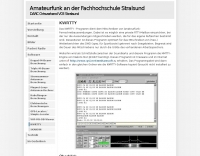 KWRTTY V1.1.3, released on February 4, 2008, is a freeware RTTY reception program designed for Windows operating systems (Win95 and higher, requiring a minimum 133 MHz Pentium processor and 32 MB RAM). Its primary function is to decode and log amateur radio **RTTY** transmissions, including the capability to set up a private RTTY mailbox that records only messages addressed to the user's callsign. The software is specifically optimized for receiving and logging marine weather reports from the DWD (Deutscher Wetterdienst), categorized by sea areas, making it particularly useful for sport boat operators. The duration of logging is limited only by available RAM. For its core functionality, KWRTTY requires the **MMTTY-Engine** by Makoto Mori, JE3HHT, as an interface between the sound card and the program. This engine, also freeware, needs to be copied into the same directory as KWRTTY. The program's design focuses on continuous logging of specific RTTY content, offering a specialized tool for both general amateur radio RTTY monitoring and dedicated weather report reception, distinguishing it from more general-purpose digital mode software.
 -
-
 World's largest collection of amateur radio and broadcast stations' QSL cards and awards
 -
 Generating Morse code audio files from text input is the primary function of _MorseGen v1.2_, a utility designed for amateur radio operators. The software allows users to specify the tone frequency and words-per-minute (WPM) speed for the generated CW. A key feature is its ability to create a WAVE audio file containing the Morse code, which can then be used in various applications. The program also supports repeating the generated CW sequence at user-defined intervals, making it particularly useful for creating station identification signals or beacons. The practical application of this tool extends to automated station identification, especially for repeaters or digital mode gateways that require a CW ident. By producing a standard _WAVE file_, the output is compatible with most audio playback systems and software. This functionality provides a straightforward method for integrating custom Morse code messages into existing amateur radio setups, eliminating the need for external hardware keyers for simple identification tasks. The adjustable parameters offer flexibility to match specific operational requirements or personal preferences for CW characteristics.
 -
 Wholesale distributor of CB radios, parts, antennas, microphones, power supplies, crystals, echo boards, expanders, meters and CB accessories.
 -
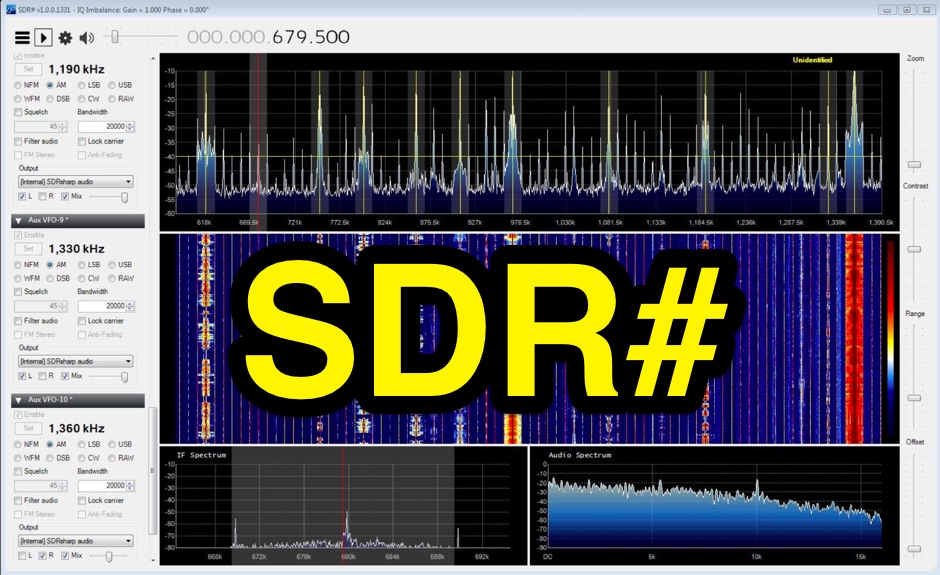 SDR# (read SDR Sharp) is a high performance Software Defined Radio application. SDR sharp is a fully featured SDR capable of handling samplerates from kHz level soundcards up to multi hundred MHz dedicated samplers, thanks to its multi-core architecture.
 -
 The U.S. Amateur Radio Callsign Lookup service, hosted by the University of Arkansas at Little Rock (UALR), offers a direct interface for querying the FCC's amateur radio license database. This resource is specifically designed for rapid retrieval of licensee information, including callsign, name, address, license class, and expiration date, all critical data points for QSLing and contact verification. The underlying database is refreshed daily, ensuring that the presented information reflects the most current FCC licensing records available. This service distinguishes itself by its direct reliance on official FCC data, processed and maintained by a university institution, which lends a degree of authoritative accuracy to its lookups. Users can input a specific callsign to instantly access detailed license particulars, facilitating efficient station identification and record-keeping for DXers and contesters alike. The daily update cycle minimizes discrepancies often found in less frequently synchronized callbook services. The UALR callsign lookup functions as a straightforward, no-frills utility, prioritizing data integrity and accessibility for the amateur radio community. Its operational simplicity and consistent data refresh schedule make it a reliable reference for verifying U.S. amateur radio licenses.
 -
 VHF/UHF DX site showing latest propagation, software, radio dealers, awards, maps etc.
 -
 VQLog 3.1 - 782 is a shareware logbook program designed for Windows operating systems (95, 98, NT, 2000, ME, XP, Vista, 7, 10, or later), supporting resolutions of 800x600 or higher. It can also operate on macOS and Linux via virtualization software like Virtual PC for MAC, Oracle VirtualBox, or VMware. The software facilitates QSO access by date, callsign, prefix, square, DXCC, and other parameters, offering robust import capabilities for ADIF, Cabrillo, and ASCII files from various contest and logbook programs. Key features include comprehensive award tracking for DXCC, WAZ, WAC, WPX, WAS, IOTA, TPEA, DIE, VUCC, 100EACW, and up to 30 user-defined awards. It generates customizable summaries and graphical statistics for QSO activity, DX contests, Most Wanted Squares (MWS), propagation openings, and prefixes. VQLog supports DX-Spot reception and processing from DX-Cluster and PSK-Reporter with programmable warnings, integrates with callbook services like QRZ.COM and Buckmaster's CD, and offers online lookup. Electronic QSL and log upload support extends to LoTW, eQSL.cc, Clublog, and DXMAPS, with real-time updates for online logs. The program provides extended QSO information for VHF-DXers, including separate TX/RX frequencies, start/end times, propagation modes, and specific entry fields for MS, EME, and Tropo. CAT support for rig control and interfaces with ARSWIN and PstRotator for azimuth/elevation control are also included.
 -
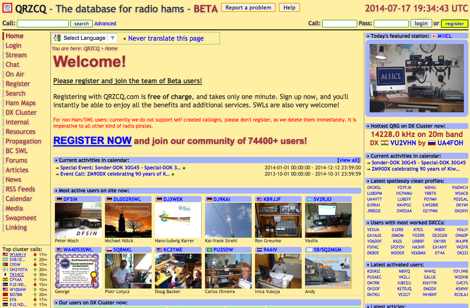 QRZCQ.com provides a centralized online platform for amateur radio operators, integrating a global callsign database with DX Cluster functionality. The service features real-time DX spotting, filtering capabilities for specific bands (e.g., 160m, 80m, 40m, 20m, 15m, 10m), and specialized filters for awards like IOTA, SOTA, WWFF, and QRP activity. It also includes a logbook, QSL manager lookup, contest calendar, and various ham radio articles and news feeds, supporting a wide range of operating activities and information retrieval. The platform aggregates data from multiple sources, offering a dynamic view of on-air activity and callsign information. Users can register for free to access additional services, including a personal logbook, buddy lists, and chat features, fostering community interaction among over 198,600 registered users. The DX Cluster displays recent spots with frequency, DX call, spotter, and remarks, covering bands from VLF to VHF. Beyond DX spotting, the site provides resources such as repeater directories, propagation information, and a swapmeet, making it a multi-faceted tool for both casual browsing and serious DXing or contesting. The service also highlights active users, latest news, articles, and videos, keeping the content fresh and relevant.
 -
 FAR Circuits is exclusively a manufacturer of Printed Circuit Boards for electronic projects that are used by the Amateur Radio and electronic hobby enthusiast.
 -
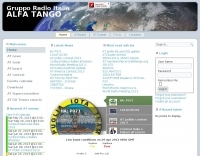 Alfa Tango DX is a premier resource for operators on the 11 meters band, providing a searchable database that includes news, cluster information, and discussion boards. This platform serves as a hub for DXers and contesters, offering valuable insights into activations, dx-peditions, contests, and meetings worldwide. The site features a variety of resources, including event calendars, award programs, and tools for logging contacts. Members can access exclusive content and participate in contests like the AT Women's Day Contest and the Eleven World Wide Contest. With a focus on community engagement, Alfa Tango DX fosters connections among operators and promotes the spirit of amateur radio. Whether you are a seasoned DXer or a newcomer to the 11m band, Alfa Tango DX provides essential information and support for enhancing your amateur radio experience. From QSL services to event participation, this resource is designed to meet the needs of all operators interested in the 11 meters band.
 -
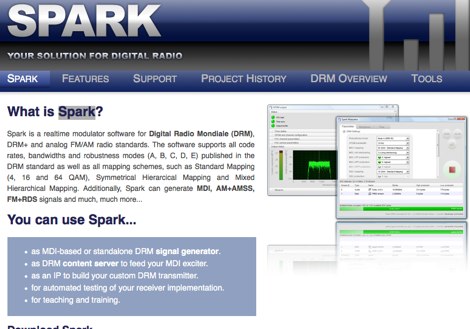 Spark is a realtime modulator software for Digital Radio Mondiale DRM, DRM+ and analog FM/AM radio standards. The software supports all code rates, bandwidths and robustness modes (A, B, C, D, E) published in the DRM standard as well as all mapping schemes, such as Standard Mapping