Search results
Query: project g
Links: 494 | Categories: 78
This query is too generic. Please try adding an additional term to focus your research.
Categories
- Technical Reference > 3D Printed Projects
- Technical Reference > Digital ATV projects
- Technical Reference > QRP Projects
- Antennas > 12M
- Antennas > 20M
- Antennas > 2M
- Antennas > 40M > 40 meter Delta Loop Antennas
- Antennas > 40M > 40 meter Yagi Antennas
- Technical Reference > Alternative Power
- Manufacturers > Amateur Radio Maps
- Operating Modes > Amateur Television
- Technical Reference > Arduino
- Manufacturers > Arduino
- Technical Reference > Audio
- Technical Reference > Batteries
- Antennas > Bazooka
- Technical Reference > Beacon keyers
- Ham Radio > Blogs
- Ham Radio > Personal Pages > Brazil
- Technical Reference > Calculators
- Ham Radio > Blogs > Canada
- Software > Circuit Design
- Operating Modes > Satellites > Clubs
- Operating Modes > Amateur Television > Clubs
- Technical Reference > Components > Component Database
- Operating Modes > Digital ATV
- Radio Equipment > HF Transceivers > Drake TR7
- Technical Reference > DTMF
- Technical Reference > Electronics
- Shopping and Services > Electronics
-
-
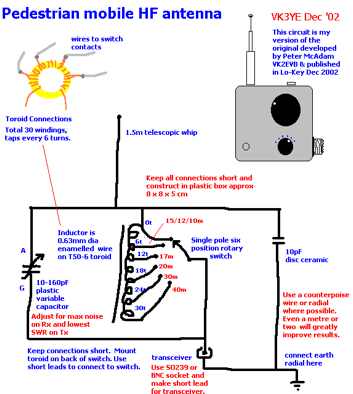 This antenna allow transmission and reception on all bands between 7Mhz and 28 Mhz. Similar in concept to the Miracle Whip by VK3YE
 -
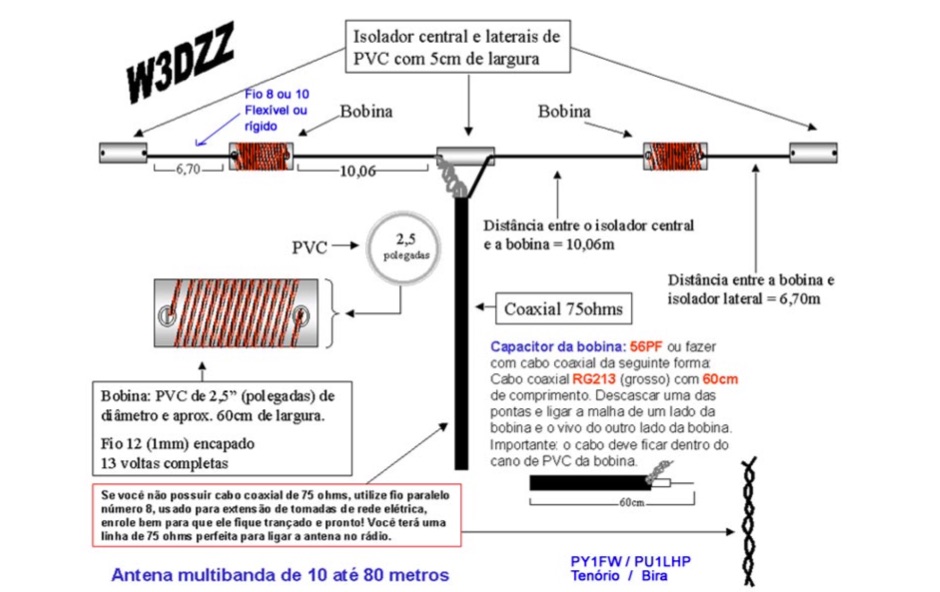 A schematic design of the W3DZZ antenna in portugues with description of trap building
 -
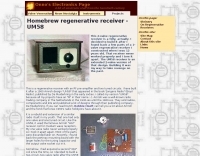 UM58 a regenerative receiver project
 -
 Build this simple and cheap 70 MHz Exciter and start to transmit Digital Television by Jean-Francois Fourcadier
 -
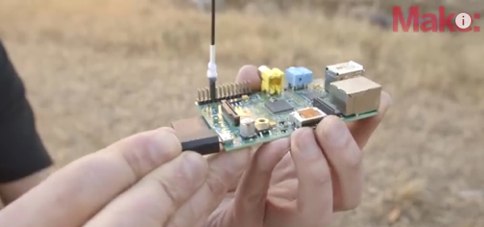 The project outlines the process for constructing a low-power FM broadcast transmitter using a Raspberry Pi Zero, a simple wire antenna, and battery power. It details the software installation steps for PiFM and MPG123, essential for generating and transmitting audio. The resource provides instructions for configuring the Raspberry Pi to broadcast FM signals, including command-line operations for initiating transmission and playing audio files. It specifically focuses on the Raspberry Pi Zero's capabilities for this application, highlighting its cost-effectiveness and minimal hardware requirements. The content presents a practical, hands-on approach to creating a basic FM transmitter, suitable for short-range, experimental broadcasting. It includes guidance on testing the FM output and ensuring proper operation of the software components. The project emphasizes the use of readily available components and open-source software to achieve functional RF output.
 -
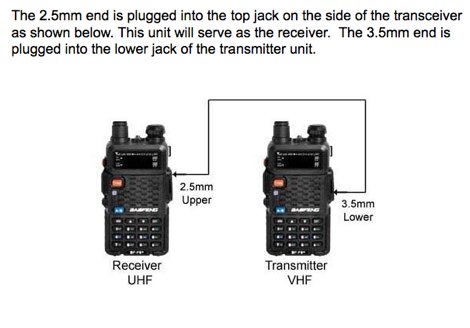 A project to build a cross band repeater using a pair of Baofeng UV5R handheld transceivers.
 -
 An amateur observatory using a 4 GHz TVRO antenna.
 -
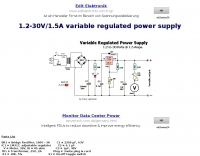 1.2-30V 1.5A variable regulated power supply
 -
 Open source libraries and utilities to support using digital signatures for Amateur radio QSL system information like eqsl and lotw. Available for windows macos e linux.
 -
-
 Signalprocessing for SSB - Direct Conversion Receiver using Phasemethod for Sideband Supression, does all necessary signalprocessing for Direct conversion Receivers using IQ-mixer for demodulation.
 -
 A quick vertical for 160 meters portable use
 -
 The St. Louis Vertical Revisited by Dave Gauding, NF0R here are a few ideas and observations on the St. Louis Vertical
 -
 Details the construction of a **17-meter Moxon Rectangle** antenna, specifically engineered for mounting on a mast beneath an existing beam. The design incorporates insulated wire calculations (0.95804 x generator length) to compensate for velocity factor differences, utilizing readily available materials such as crappie poles for elements, PVC for the boom and mast, and a Budwig HQ-1 dipole connector for the 50 Ohm coax feed. The project outlines a step-by-step assembly process, including mast construction from PVC T-connectors and pipe, element fabrication from crappie poles, and securing elements to prevent droop. Initial testing demonstrated an SWR of 1.3:1 on 17 meters, achieving a 5-8 signal report into Texas with 100 watts. Subsequent reinforcement and elevation of the antenna resulted in a 15 over 9 report from Florida. Comparative testing against an 88-foot center-fed Zepp antenna indicated superior performance, with the Moxon consistently outperforming the Zepp and receiving signals the Zepp could not. A notable DX contact with JA8NFV in Hokkaido, Japan, yielded a 5-9+ signal report both ways using 100 watts.
 -
 Local and DX contacts from tight spaces, it works from 40 to 17 meters
 -
 Demonstrates the essential steps for winding **toroidal cores**, a fundamental skill for amateur radio operators engaged in homebrewing and kit building. It addresses the critical aspects of selecting the correct core material and wire gauge, emphasizing the importance of precise turn counting and consistent winding tension to ensure optimal circuit performance. The resource details methods for preparing the wire, including techniques for safely removing enamel insulation from leads using flame, sandpaper, or a solder pot, and provides guidance on tinning the exposed wire. Explains the process of mounting the wound toroid onto a printed circuit board, highlighting the need for careful lead placement and secure soldering to prevent shorts and ensure mechanical stability. It also offers a practical formula for calculating the required wire length based on the desired number of turns and the specific **toroid** size, referencing common core types like T-50 and FT-240. The guide stresses the importance of verifying the inductance of the wound component, often using an inductance meter, to confirm it matches design specifications. Provides practical tips for handling multi-filar windings and managing short lead lengths, which can be particularly challenging. It underscores the necessity of meticulous attention to detail throughout the winding and installation process to achieve reliable and efficient RF circuits.
 -
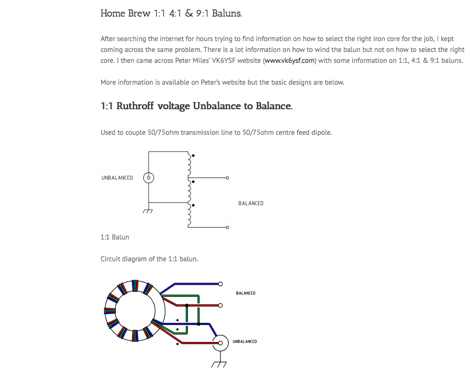 Circuit diagrams to homebrew different baluns by vk2awx
 -

-
-
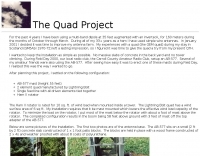
 80 metre ceramic resonator VXO CW Transmitter by VK1PK
 -

-
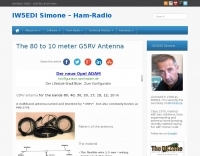 Yet another G5RV antenna plan to build a G5RV Antenna for 80 to 10 meters usage
 -
-
 Remotely controlled antenna switch that can switch between 5 antennas
 -
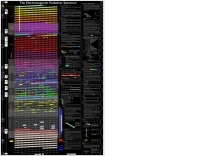 Excellent poster representing the electromagnetic spectrum from 31.2 mHz to 6.52 EHz, PDF file poster designed by Anthony Tekatch
 -
 A pdf file with schematics of an ssb and cw filter AF amplifier
 -
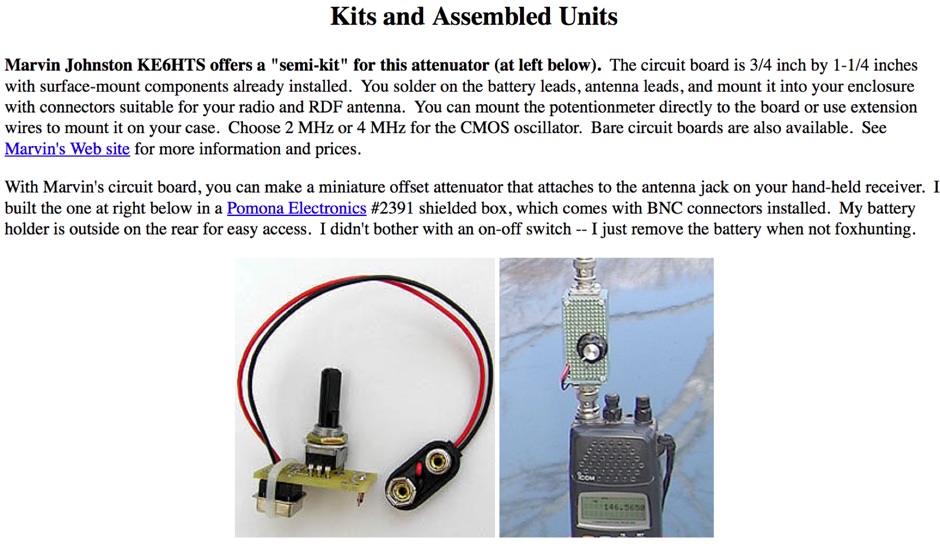 Build An Offset Attenuator by Joe Moell K0OV as featured in Homing In for May 1998
 -
 Spek helps to analyse your audio files by showing their spectrogram. Spek supports all popular lossy and lossless audio file formats. Spek is free software available for Unix, Windows and Mac OS X.
 -
 This vertical antenna consist of a 18 meters telescopic pole and allow operations from 160 to 30 meters band, project by Daniel Zimmerman N3OX
 -
 For radio amateurs seeking compact and efficient antenna solutions, particularly for restricted spaces or noise reduction, HF loop antennas present a viable option. This resource compiles several articles from the ARRL, detailing the theory, design considerations, and practical construction of various loop configurations. Topics include small transmitting loops, receiving loops, and multi-band designs, often emphasizing their performance characteristics such as directivity, bandwidth, and impedance matching. The collected articles provide insights into the comparative performance of different loop geometries, such as circular versus square loops, and discuss the impact of conductor size and tuning methods on efficiency. Practical applications are explored, including their use in portable operations, stealth installations, and urban environments where noise mitigation is critical. The content often includes construction diagrams, parts lists, and performance data derived from modeling or field tests, enabling hams to replicate or adapt the designs for their specific operating conditions.
 -
 Contains digimodes, antenna projects, DX info and lots more
 -
 KG4JJH moxon assembly plan for the 50 Mhz in a pdf file
 -
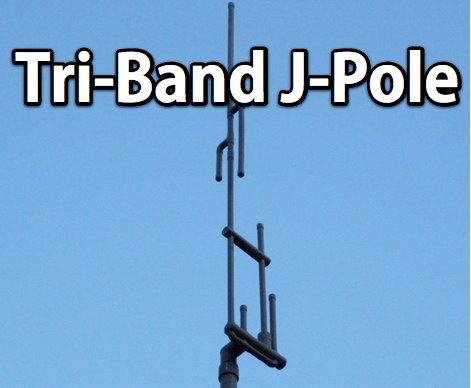 This strange looking antenna is a combination of Coupled-Resonator principle by K9AY and a quarter stubs to achieve low angle radiation pattern. Designed with 4nec2 NEC based antenna modeler and optimizer for 145/220/440MHz bands
 -
 A 144/440 dual band open stub J-Pole Antenna project by NT1K
 -
 Enabling IC 706 for 4 meter band modification in italian.
 -
 W6/PA0ZN CATV tuner based Spectrum Analyzer Building Project
 -
 The page is about the 144 Mhz Dirty Beacon project, a VHF beacon keyer by 9A4QV. It provides technical information, project details, and resources for amateur radio operators interested in beacon keyers. The content is useful for those looking to build or learn about VHF beacon keyers.
 -
 PA is a JAVA software package containing several programs, SW/VHF/UHF Logbook (imports format from RADIOMAN, VMT), Log conversion to HTML format, Import and export functions for RADIOMAN, CT RES files, BV QSL Labels, CSV etc. Internet DX-Cluster support, Keeps track of your worked Callsigns, Checks your worked Grid Squares per band, Databases for worked Grids and Callsigns Uses K1EA CQWW.CTY country file, Easy command line version for terminal operation Moontracking as clock, Pathloss calculation
 -
 K9AY 160M / 80M Receiving Loop Antenna System by K7SFN
 -
-
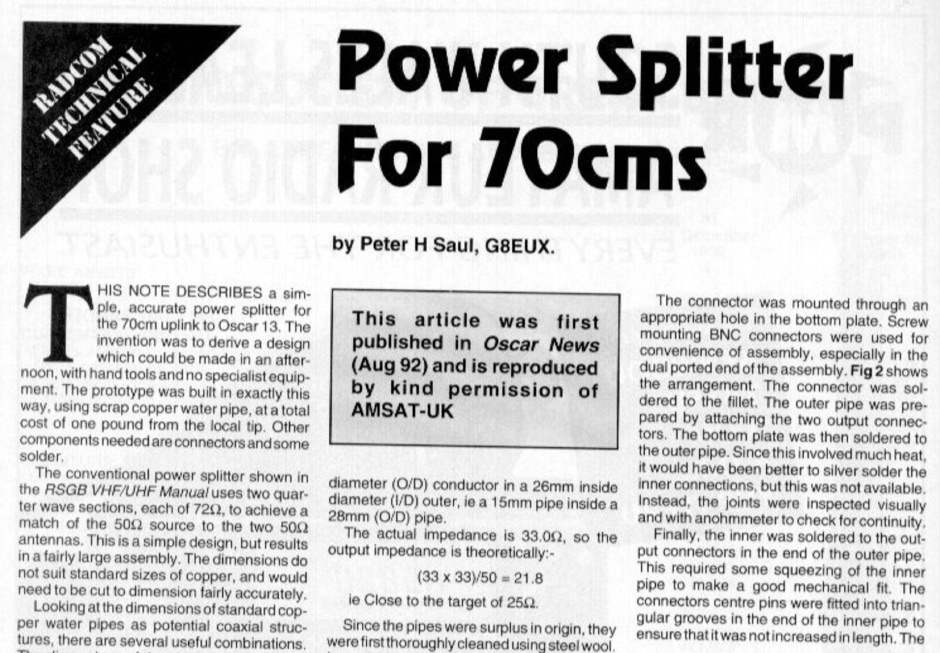 A simple accurate power splitter for the 70cm uplink to Oscar 13
 -
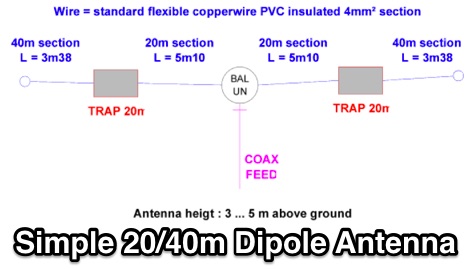 A simple TRAP-dipole project for 20 and 40m bands includes EZNec simulations
 -
-
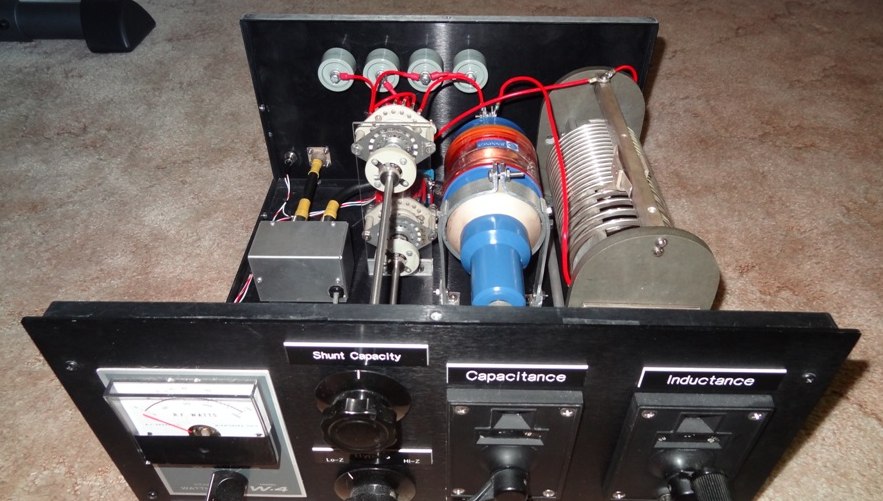 An interesting home made project of an L Network Antenna Tuner Project with pictures and schematics by K7SFN
 -
-
 A lower power desktop linear with integrated 120vac power supply. This, very compact, dual 811 version will deliver about 300 watts output. Covers all bands including WARC bands.
 -
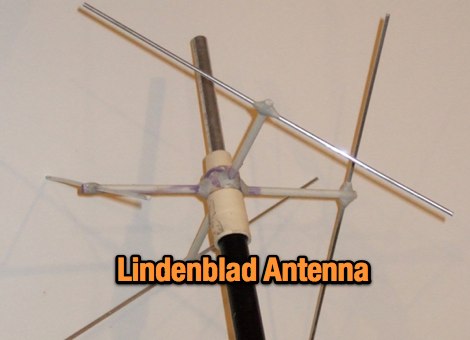 A Lindenblad Antenna for 145 MHz and 435 MHz with an integrated 50 MHz J-pole
 -
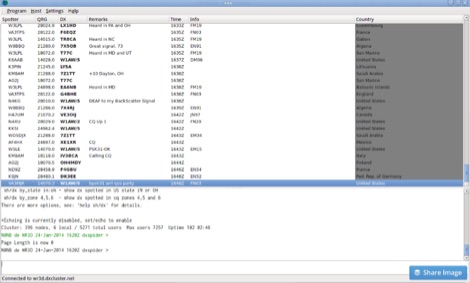 xdx is a dedicated Linux network client for amateur radio operators who want to exchange DX (long distance) radio information
 -
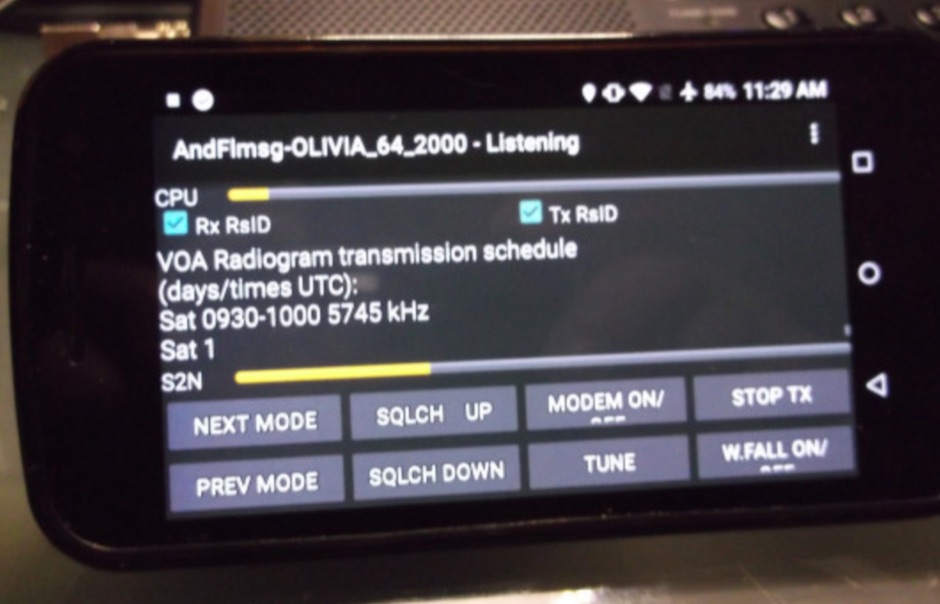 A combination of Fldigi and Flmsg for portable devices running Android used for NBEMS