Search results
Query: RF
Links: 639 | Categories: 67
This query is too generic. Please try adding an additional term to focus your research.
Categories
- Manufacturers > Interfaces
- Technical Reference > Radio Frequency Interference
- Technical Reference > Amplifiers > RF Amplifiers Theory
- Technical Reference > RF Design
- Software > RF Design
- Technical Reference > Test Equipment > RF Probe
- Technical Reference > RF Safety
- Technical Reference > RF Signal Generators
- Technical Reference > Test Equipment > RF Sweep Generator
- Shopping and Services > RF Tubes
- Software > RF Coverage Mapping
- Technical Reference > Sound Card Radio Interfacing
- Shopping and Services > Accessories
- Radio Equipment > HF Amplifiers > Ameritron AL-80B
- Manufacturers > Amplifiers
- Technical Reference > Amplifiers
- Technical Reference > APRS
- Technical Reference > Attenuators
- Antennas > Baluns
- Radio Equipment > HF Portable Antenna > Buddipole
- Manufacturers > Cable and Connectors
- Shopping and Services > Cables and Connectors
- Technical Reference > Calculators
- Antennas > Feed Lines > Choke
- Antennas > Feed Lines > Coax Stubs
- Radio Equipment > HF Vertical Antenna > Cushcraft R5
- Manufacturers > Digital and Packet Radio
- Ham Radio > Clubs > Europe > UK > Eastern England
- Antennas > EH
- Radio Equipment > HF Transceivers > Elecraft K4
-
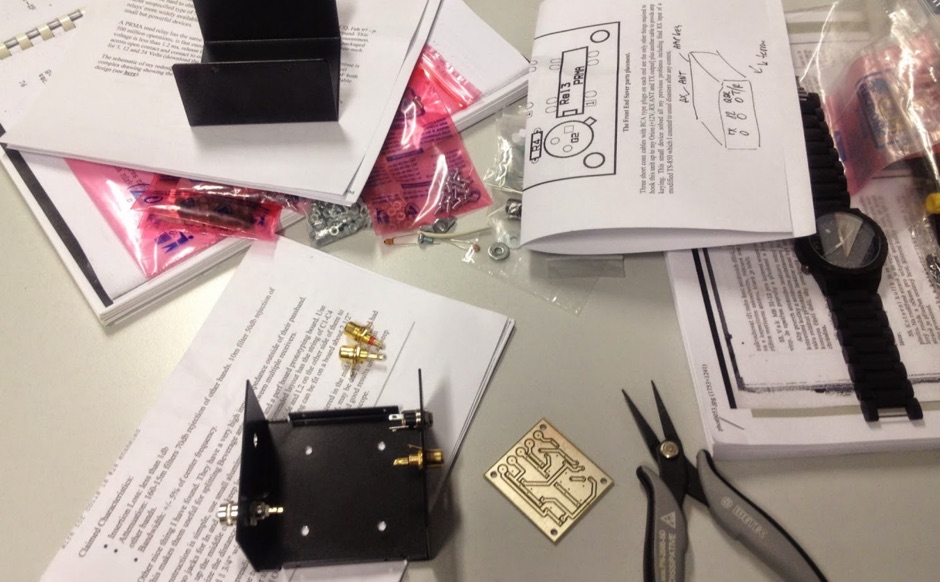 If You are using a separate receive antennas then you need a good protection circuit to eliminate the possibility of blowing out the receiver front-end while using these auxiliary receive antennas specially on low bands.
 -
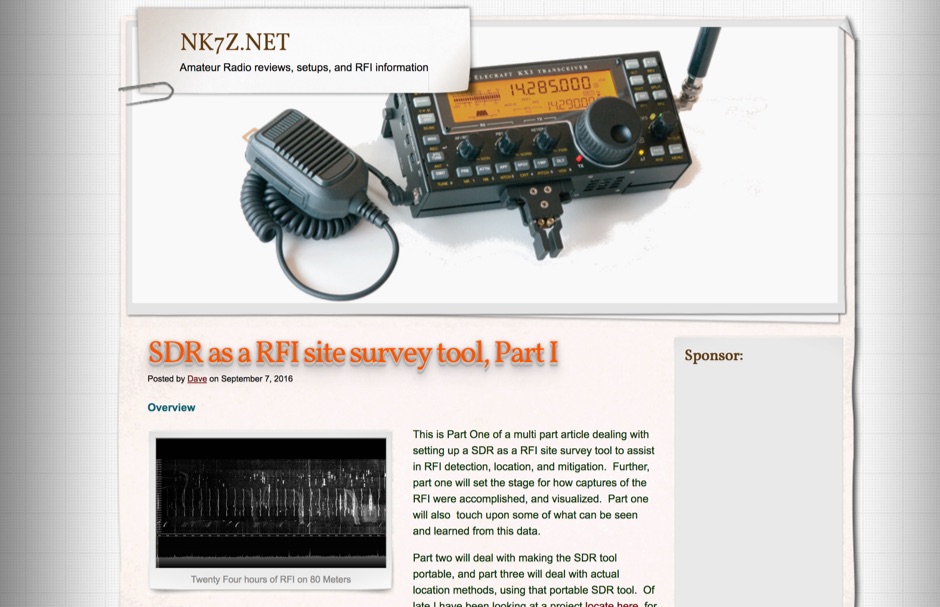 SDR as an RFI site survey tool. This article will show how a site survey tool was built to use in RFI mitigation.
 -
 A W8JK/Moxon antenna variant with 400cm long monopoles is detailed, demonstrating a **1dbd** gain improvement over the traditional Open-Folded W8JK. This design, relying on the _Moxon principle_, achieves higher radiation impedance, leading to increased antenna efficiency and reduced losses. The article includes VNA output data for various HF bands, showing impedance characteristics from 10.1 MHz to 50.1 MHz, and provides NEC model wire definitions for the antenna structure. Field tests performed by F6IIV, Marc, compared his W8JK Moxon style antenna against a Cobweb antenna at the same height. Results indicated the W8JK Moxon variant provided a **6dB** (1 S-meter point) advantage on most bands from 20m to 10m, and a significant 10dB (1.5 S-meter points) advantage on 15m. The antenna features a 2.70m boom and a turning radius of less than 3 meters, making it suitable for limited space installations while maintaining bi-directional performance on most bands.
 -
 Documents S21RC's construction of an impedance transformer harness for a VHF/UHF cross yagi, utilizing 20m of _RG179_ cable. Details the creation of a DIY RF sampler with a -50dB sampling output, primarily for measuring HF radio PA section output with a Spectrum Analyzer, also applicable for _Pure Signal_ transmission. Chronicles the deployment of a 200m long beverage antenna for the _S21DX IOTA_ operation in 2022, positioned 2m above ground. Discusses the construction of a 3-element short beam for 10m to replace a previous 2-element antenna, with assistance from S21DW. Provides guidance on operating cheap _PA-70_ and _PA-100_ type Chinese SSPAs using IRF530 MOSFETs, emphasizing the necessity of a final LPF. Outlines the design and construction of a fully isolated interface for radio-to-computer connections, supporting various digital modes with isolated ground, audio transformers for IN/OUT, optical isolation for CAT/CIV, and isolated PTT/COS lines. Includes a log of software updates, such as the _HMI/TFT for NX8048K070_ and _2.1.14 Lite_ release with bug fixes for PEP hold and gradual watt decay.
 -
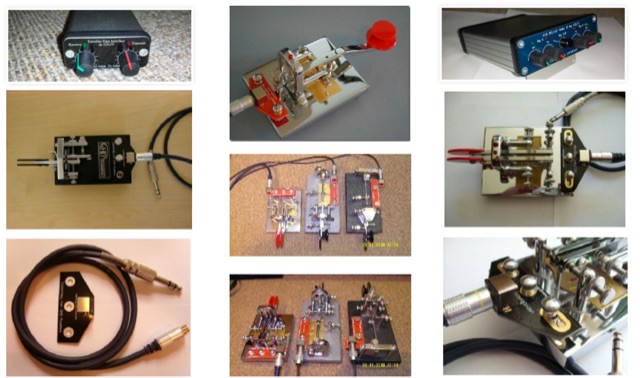 UK based manufacturer of digital mode PC fully isolated interfaces. Includes several types of interfaces including USB interfaces for CW and Digital modes
 -
 Messi & Paoloni offers a range of RF coaxial cables, including the _Ultraflex_ series, specifically engineered for amateur radio applications. These cables feature advanced dielectric materials and high-density braiding, resulting in significantly reduced attenuation across HF, VHF, and UHF bands. For instance, the Ultraflex 7 exhibits a loss of only **2.5 dB per 100 feet** at 144 MHz, making it suitable for demanding DX and contesting operations. The company's product line also includes specialized connectors, such as N-type and PL-259, designed to maintain optimal impedance matching and minimize signal reflections. Each connector is precision-machined to ensure a secure, weather-resistant termination, crucial for outdoor antenna installations and long-term reliability. Messi & Paoloni emphasizes rigorous quality control, with all cables undergoing testing to ensure consistent performance and durability, supporting effective two-way radio communication.
 -
 PRO-LINK specializes in the manufacturing and distribution of high-quality cabling solutions, including a wide array of fiber optic cables and various coaxial cable types. Their product line encompasses 50-ohm and 75-ohm coaxial cables, essential for diverse RF applications, alongside specialized RF cables and 10Base-T networking cables. The company also provides a selection of connectors and custom cable harnesses, catering to specific installation requirements. Since 1988, PRO-LINK has offered a 5-year warranty on its products, underscoring a commitment to durability and performance. The product catalog details specifications for different cable constructions, such as _RG-58_, _RG-213_, and _LMR-400_ equivalents, which are commonly used in amateur radio installations for antenna feedlines and inter-component connections. Their offerings support both commercial and amateur radio operators seeking reliable signal transmission. The company's focus on robust cable and connector solutions addresses the critical need for low-loss transmission lines in radio communication systems, ensuring signal integrity across various frequency bands.
 -
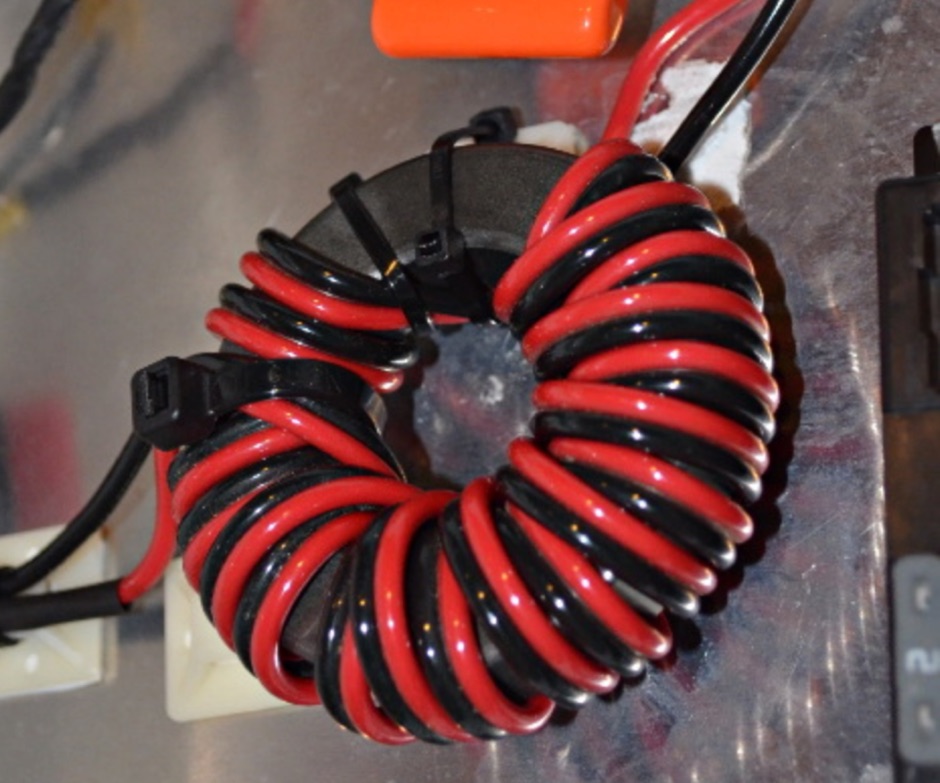 How to solve RFI problems caused by the charge controller, which is a PWM type charge controller, that generates a lot of EMI interference
 -
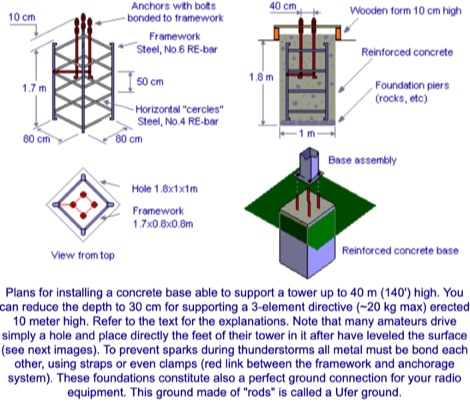 A multiple page article about assembling the antenna system, this section includes informations on constructing of the concrete tower base, starting from setting up correctly the foundations in relation to the antenna height.
 -
 Surprisingly, although PCB soldering is the core process of electronics assembly, few people do know how to solder reliably
 -
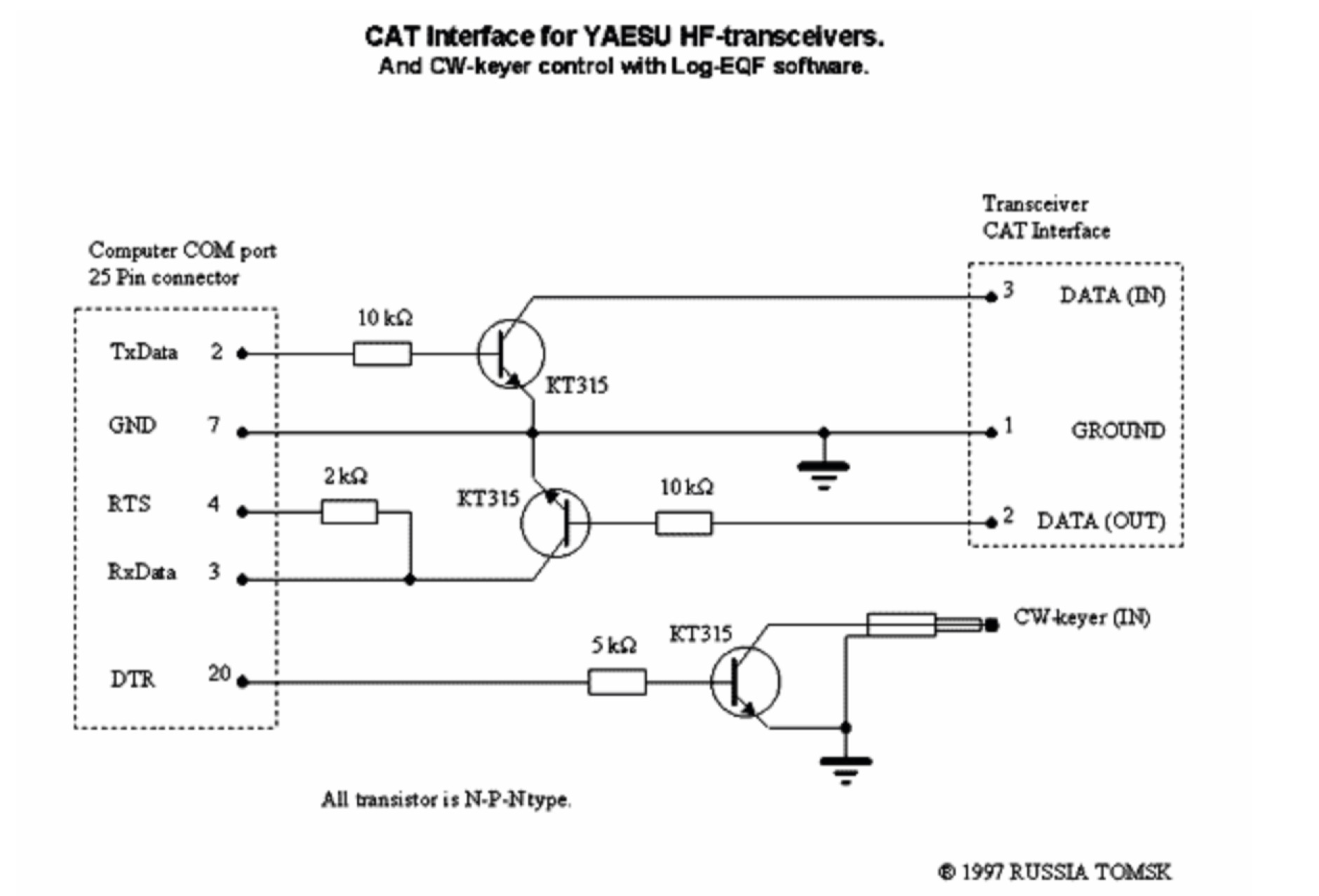 Schematic diagram circuit to build a RS232 serial interface for the Yaesu FT 1000D, works also as CW Keyer control with Log-EQF software. May be used with other Yaesu HF Transceivers.
 -
 List of global weather fax (HF fax) stations, including their locations, call signs, and frequencies. Click on any station's call sign to view its weatherfax broadcast schedule. This site provides various radiofax receiver manuals in PDF format, on the Receivers page.
 -
 Amateurfunk - Ortsverband P47 Wendlingen am Neckar
 -
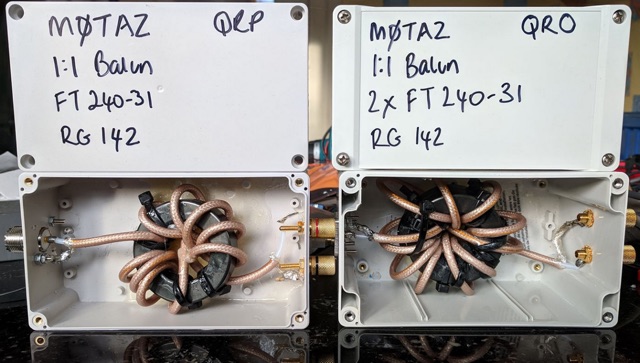 If you want to build your own common mode choke, this article explains how to measure the efficiecy of your choke before using it. In the examples has been used Amidon FT240-31 toroids.
 -
 Microwaves101 provides an extensive repository of information covering fundamental principles of microwave design, targeting engineers and radio amateurs interested in the higher frequency spectrum. The site features a detailed _encyclopedia_ of microwave terms and concepts, alongside practical design considerations for various components and systems. It serves as a foundational reference for understanding RF propagation, transmission lines, and active/passive microwave circuits. The resource includes numerous calculators for impedance matching, filter design, and other critical RF parameters, facilitating hands-on project development. Discussions on **10 GHz** equipment and **24 GHz** projects highlight practical amateur radio applications, extending to operations up to 134 GHz. Content spans from basic theory to advanced topics like MMIC design and antenna characteristics, supporting both educational and practical endeavors in microwave technology.
 -
 This PDF document reviews the POTA PERformer Antenna by KJ6ER, providing insights and details about its performance and features. The content is aimed at hams looking for information on this specific antenna model to help them make an informed purchasing decision. It contains technical specifications, user experiences, and possibly recommendations for optimal use. The review is valuable for hams interested in portable operation and seeking a reliable antenna solution for Parks on the Air (POTA) activations.
 -
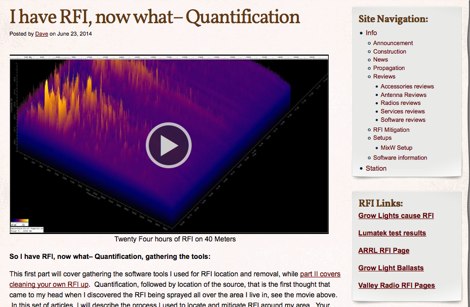 This article will cover gathering some software tools used for RFI location and removal.
 -
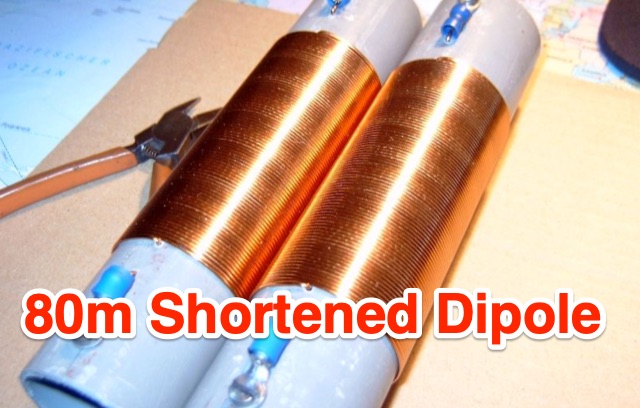 This antenna just requires about 24m of free space instead of 41m that a normal half wave 80m antenna needs to hang up. The so called loaded dipole uses a coil in every dipole arm to electrically lengthen the mechanical too short dipole arms. Every coil has an inductivity of 120 microHenry.
 -
 Dealer in HF, RF and microwave components based in Italy, offering a wide product catalog for amateur radio projects and more.
 -
 DX Pedition TX3X Chesterfield Isl. OC-176, 2015 October 1-12
 -
 Details Amphenol Connex's product range, focusing on RF connectors, adapters, and cable assemblies. The company produces common radio frequency interfaces such as _BNC_, _SMA_, and _TNC_ connectors, alongside numerous other specialized designs. These components are critical for establishing reliable signal paths in amateur radio stations, ensuring proper impedance matching and minimal signal loss across various frequency bands. The manufacturing process emphasizes precision engineering to meet the demanding specifications of RF applications, from HF to microwave frequencies. Product lines support diverse coaxial cable types, facilitating custom cable assembly for specific station configurations. The extensive catalog provides solutions for both fixed station installations and portable operations, addressing the needs of contesters, DXers, and general amateur radio operators.
 -
 NARC affiliated to RSGB
 -
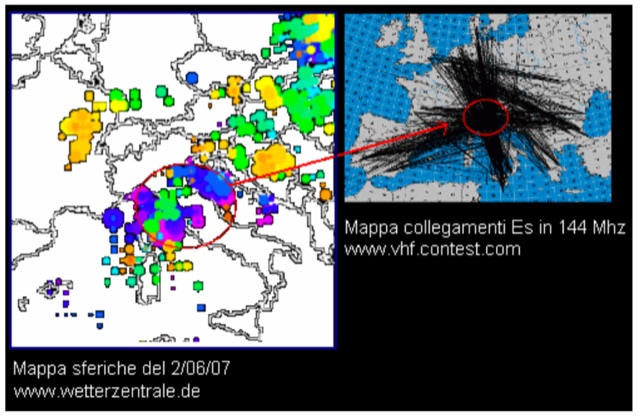 Recent researches seem to support the hypothesis that Sporadic E propagation could be connected to presence of thunderstorms.
 -
 Review of the 144/430 MHz Dual Band FM Transceiver by Yaesu
 -
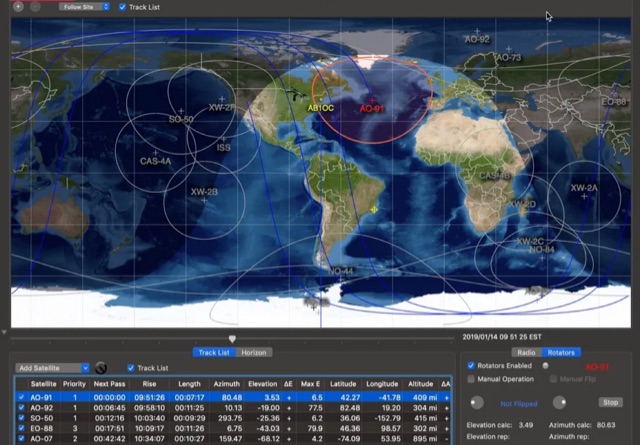 This article provides a step-by-step guide for assembling a Raspberry Pi-based Satellite Tracker Interface, designed to work with Green Heron Engineering's RT-21 controllers and MacDoppler software. The guide covers hardware assembly, SD card image installation, and system configuration for satellite tracking.
 -
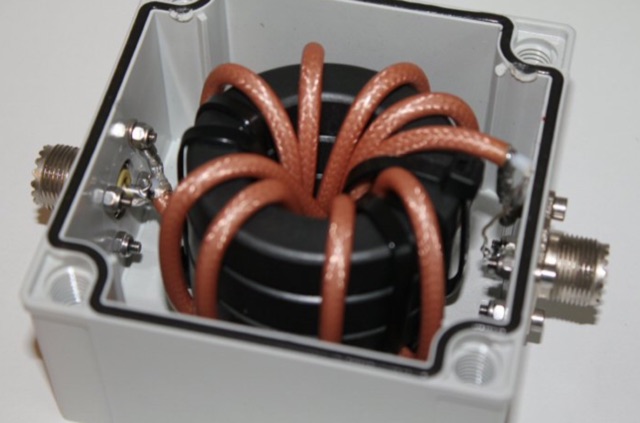 Home brewing a high performance, high power common mode choke for HF bands
 -
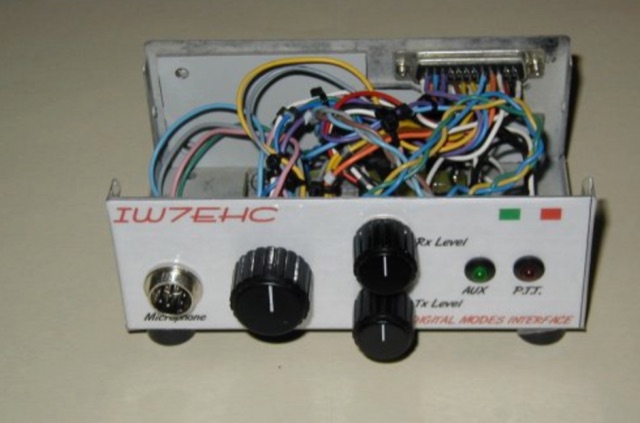 The use of an isolation interface between the radio and the pc is higly recommended,in order to avoid the problems that could be caused from ground loops. This project includes schematic and assembly instructions
 -
 DX Pedition from Palau T88RF Apr.30 - May 4, 2012
 -
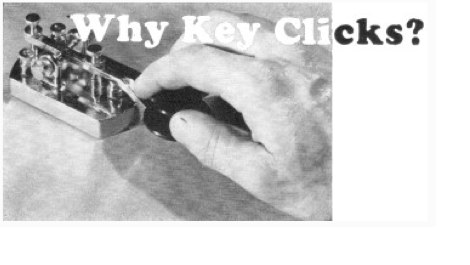 The Necessary Bandwidth for CW Signals By George Grammer W1DF
 -
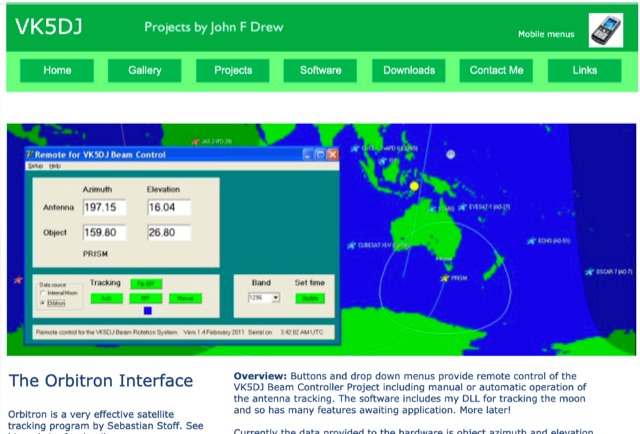 Remote Orbitron enables either direct connection between a computer and the shack unit using a serial port OR remote operation from the internet using a WIZ110SR serial to ethernet board.
 -
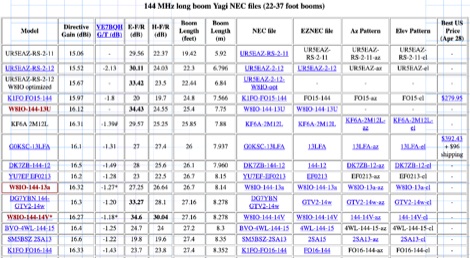 Experimental Long Boom Antennas - CP, LPDA, multiband with several NEC Files for 50MHz 144MHz 222 MHz 432MHz but also 902MHz and 1296 MHz Antenna projects. Includes also for each antenna model, in a general comparison table each antenna characteristics including Directive Gain, G/T, E-F/R, H-F/R abd Boom Length. This is a great value comparison table of several commercial and home made VHF UHF antenna projects.
 -
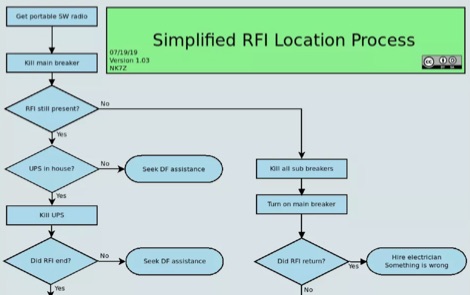 I have RFI, now what– Locating it. This article is the first of a three parts article, that covers the problem of locating the RFI source. Author make use of an SDR receiver to locate RFI emissions. Ai interesting RFI location process diagrams helps on following the various phases, permitting the discovery of almost 75% of the RFI issues.
 -
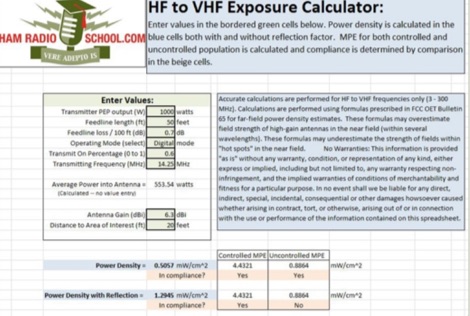 How do you practically conduct an RF exposure evaluation of your station? What information do you need and what values must you compute? What are the tools and techniques readily available to the casual operator to ensure compliance with the FCC regulations about RF exposure
 -
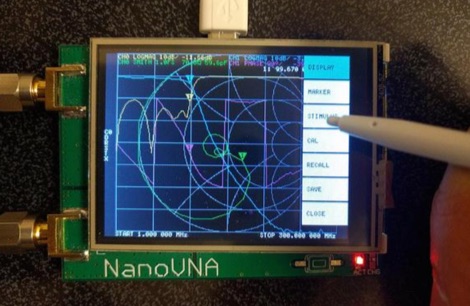 Very Tiny Palmtop Vector Network Analyzer by edy555. This is the original GitHub firmware repository implementing the standard 50KHz to 300MHz model
 -
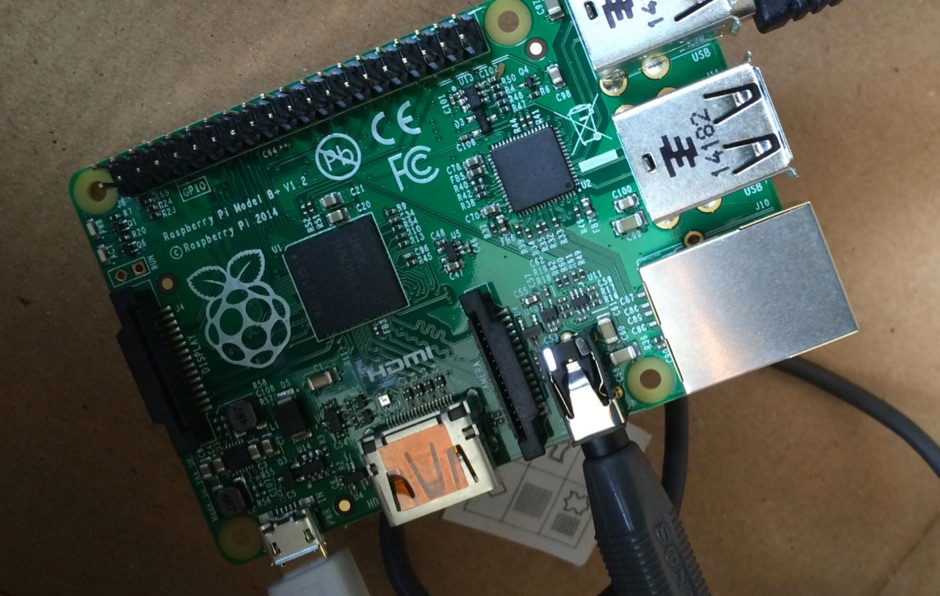 Super Simple APRS Position Reporter. This project idea has been in response to the more hardware heavy Raspberry Pi projects that involve extra TNC hardware, additional sound cards, and custom cabling. This APRS position reporter is done using a Raspberry Pi B+, USB GPS receiver, Baofeng UV-5R, and a mono 3.5mm audio cable between the Pi and HT.
 -
 The sudden explosion of new digital modes has taken the Amateur Radio world by storm. New modes such as PSK31 FT8 JT65 FSK441, ISCAT as well as established modes such as RTTY, SSTV, Hellschreiber and others have rocketed in popularity. In order to use these modes all that is required is a simple computer-to-radio interface which couples the computer soundcard to the radio
 -
 Discover the key facts about what radio propagation is, the different types available and how they affect different frequencies.
 -
 Utilizing snap-on ferrite cores and practical insights, the author enhances their shack's cleanliness against electromagnetic interference. With meticulous experimentation and installation, they improve noise levels across HF bands, reflecting on the effectiveness of their filter in minimizing common-mode disturbances. Updates underscore ongoing refinement and cautionary advice for optimal filtering and radio reception amid changing RF environments.
 -
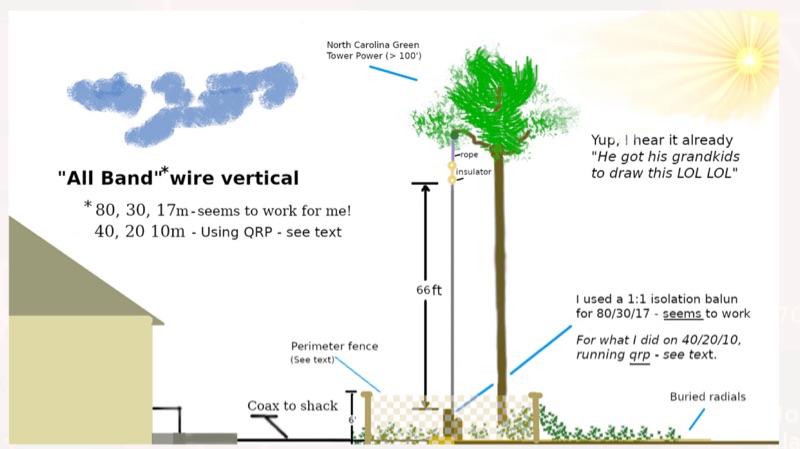 WB8LZR details the construction and initial field results of a multi-band vertical wire antenna, designed to complement his existing horizontal loop for improved DX on 80 meters. The antenna utilizes a 67-foot vertical wire, configured as a quarter-wave radiator on 80m, and employs a 1:1 current balun for RF isolation on 80m, 30m, and 17m. For bands like 40m, 20m, and 10m, where the wire acts as a half-wave or full-wave radiator, an additional impedance transforming _unun_ is integrated to manage the significantly higher feedpoint impedance and voltage. The author notes the vertical's performance as a receiving antenna, observing reduced noise compared to his main horizontal loop, particularly on 80m, and even hearing some long-path signals the loop missed. Initial QRP contacts, including a **1-watt** QSO with a _VP2 station_ on 30m, demonstrate its transmit capability. While the radial system is currently rudimentary, the project outlines practical considerations for multi-band vertical deployment and impedance matching.
 -
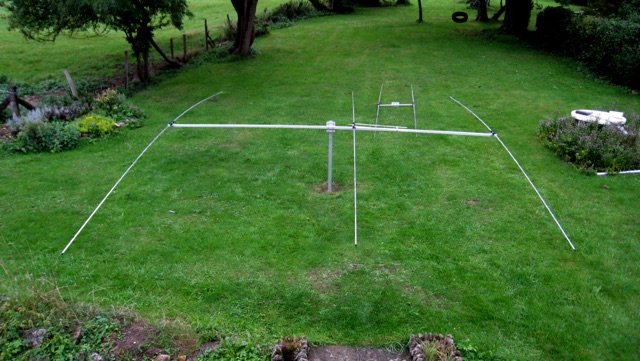 In this article, Steve G0UIH presents a straightforward guide for constructing a lightweight 15m 3 Element Yagi antenna with impressive performance metrics. With a focus on ease of construction and efficiency, the design boasts a nearly 8.2dbi forward gain and 30db front to back ratio. Utilizing readily available materials and a hairpin match for impedance matching, this Yagi offers broad bandwidth and simple tuning for optimal operation across the 15m band.
 -
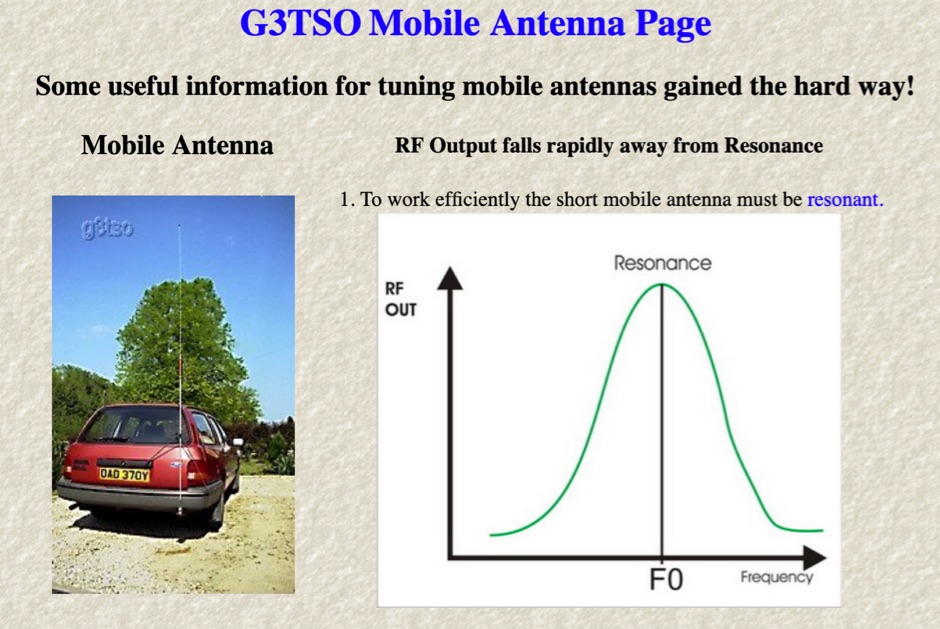 The _G3TSO_ Mobile Antenna Page details construction and tuning methods for mobile antennas operating across **10 to 160 metres**. The content describes a Hustler-based design, optimized for RF performance and vehicle speeds, featuring centre loading. For optimal operation on various bands, the loading coil placement requires clearance from the vehicle body. Antenna resonance is critical for efficient mobile operation. A mobile antenna's base impedance may be as low as 27 ohms, requiring specific matching to achieve maximum radiation, as a minimum SWR at the transmitter does not always indicate resonance or maximum output. Tuning involves physical adjustment of antenna length to achieve resonance at the operating frequency. The _G3TSO_ page outlines a tuning procedure utilizing a low-power signal source and a field strength meter to identify maximum radiation before impedance matching. Loading coil placement, either at the base, center, or top of the antenna, influences radiation efficiency and mechanical stability for mobile installations. Centre-loaded whips, such as the Hustler design, offer a compromise between efficiency and stability, often for single-band operation. Helically wound antennas, including those for **28 MHz**, may present base impedances around 17 ohms, resulting in a 3:1 SWR at resonance. Low resistance grounding at the antenna base is also specified for optimizing performance and minimizing RFI during mobile operation. DXZone Focus: Mobile | Any | Antenna Tuning | HF
 -
 Article about the essentials of radio signal path loss, its causes and prediction, and its use in radio coverage and wireless survey tools
 -
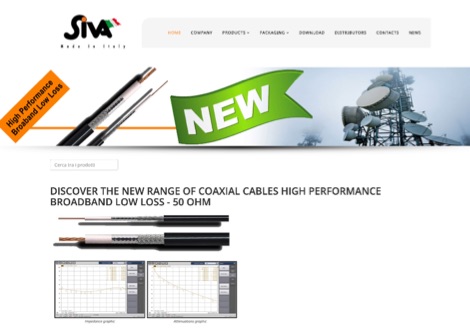 Operating an amateur radio station effectively requires reliable coaxial cable to minimize signal loss between the transceiver and antenna. SIVA Cavi, an Italian manufacturer, produces a range of coaxial cables, including specific 50 Ohm low-loss types suitable for amateur radio applications. Their product line features cables like **RG 58 SHF1**, **RG 213 SHF1**, and **RF 400 SHF1**, which are commonly deployed in HF and VHF/UHF setups. The company also offers specialized cables such as the **HF 214 UF Ultraflex**, a high-performance broadband low-loss 50 Ohm cable designed for flexibility and reduced attenuation across various amateur bands. These cables are engineered with solid or foam dielectric materials, impacting their electrical characteristics and suitability for different power levels and frequency ranges. For instance, foam dielectric cables often exhibit lower loss at higher frequencies, a critical factor for VHF/UHF operations. Beyond amateur radio, SIVA Cavi manufactures cables for digital video broadcast, offshore marine use, and fire detecting systems, demonstrating a broad engineering capability in coaxial cable technology.
 -
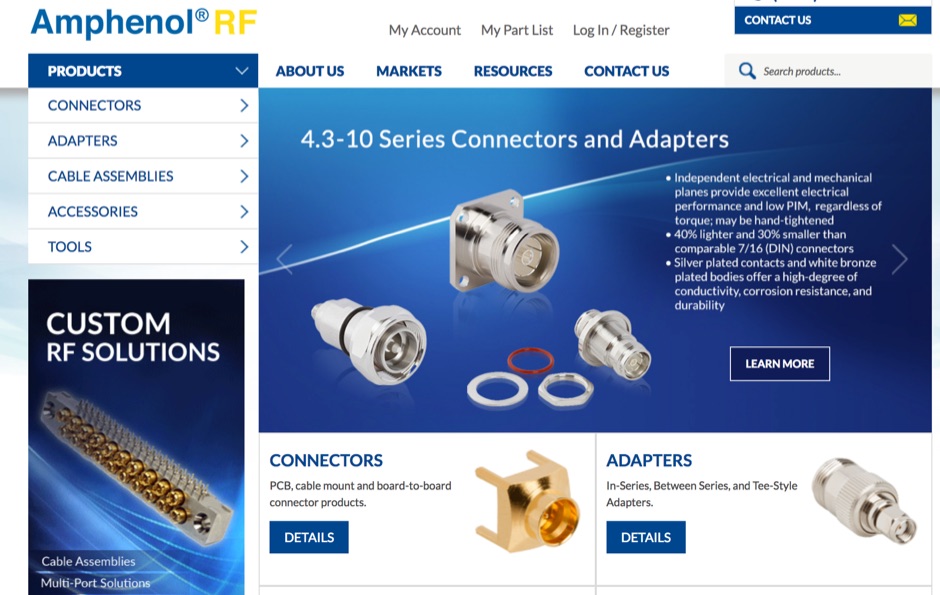 _Amphenol RF_ manufactures RF connectors, RF adapters, RF attenuators, RF cable assemblies, and RF terminators. The company offers custom RF solutions, including modified connectors and integrated cable assemblies. Product examples include SMP to SMPM adapters, surface-mount SMB jack connectors, end-launch SMA bulkhead connectors, and non-magnetic SMPM connectors. The company's product portfolio also features single-crimp N-Type connectors, USCAR compliant Mini-FAKRA connectors, 2.4 mm to 2.4 mm adapters, and 2.92 mm plugs for 0.141-inch cable. _Amphenol RF_ produces MMCX and MCX cable assemblies on RG-316 and RG-174 cable, PFAS-free SMA connectors, and FAKRA rear mount bulkhead plugs for RG-58 and LMR-195 cable. Additional offerings include 2.92 mm to 2.92 mm adapters, BNC bulkhead jacks, SMA to MHF 4 LK cable assemblies, and 2.92 mm to SMA adapters. _Amphenol RF_ is headquartered in Danbury, Connecticut, and operates as part of _Amphenol Corporation_. The company maintains a global manufacturing and distribution network. DXZone Focus: RF connectors | Cable assemblies | Danbury, Connecticut | _Amphenol Corporation_
 -
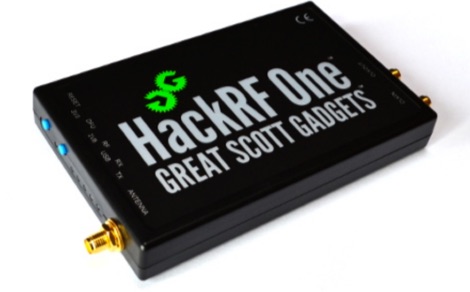 open source hardware for software-defined radio. HackRF One is an open source hardware platform that can be used as a USB peripheral or programmed for stand-alone operation. 1 MHz to 6 GHz operating frequency
 -
 The 80-meter Skyloop antenna, a top-performing HF antenna, excels in weak signal work, low-noise operation, and omnidirectional coverage. Ideal for fixed stations, it delivers strong performance at low power, outperforming many alternatives, including 80m half-wave end-fed antennas. Requiring significant space for deployment, it’s well-suited for NVIS and groundwave use. Though not portable, it’s cost-effective and durable, with minor maintenance needs. Tuning may require adjustments for optimal resonance. It’s a standout for base stations, though a lighter portable version could enhance its versatility.
 -
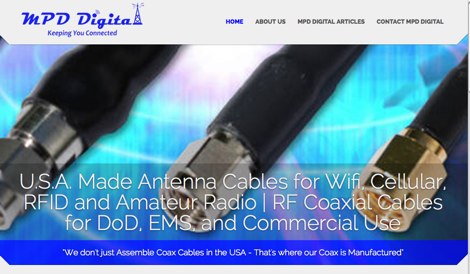 Details the custom manufacturing of high-performance RF coaxial cable assemblies, emphasizing the use of _Times Microwave_ and other premium U.S.-made components. The company operates as a Small Business within the Albany, GA, HUB ZONE, with all warehousing and production facilities located in Southern Georgia, approximately 150 miles south of Atlanta. MPD Digital specializes in bespoke cable solutions for diverse applications, including amateur radio, WiFi, satellite, and cellular systems. Highlights the availability of thousands of connector configurations, supported by expert engineers on staff. The facility's total plant area and commitment to rapid shipping on custom cable assembly orders are noted. A specific product, the _MPD-400PVC Super Flex Coaxial Cable_, is mentioned as a recent update.
 -
 This air-core solenoid style RF inductor calculator calculates the inductance, wire size, number of turns, and other parameters for an air-core solenoid inductor used in radio frequency (RF) circuits, based on user input of frequency, desired inductance value, and physical dimensions.
 -
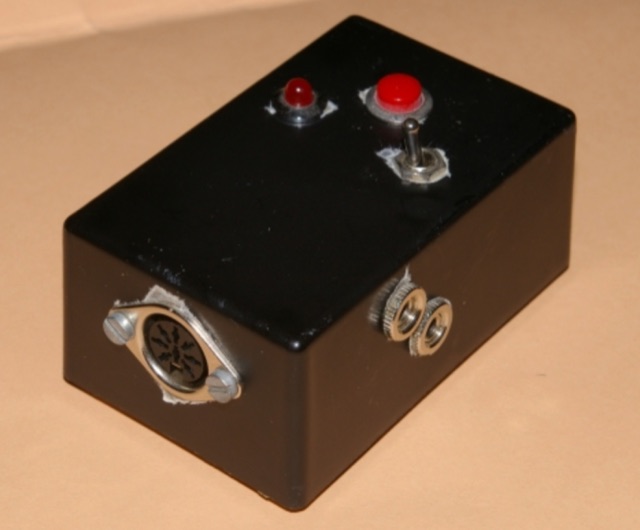 This is a simple interface that will let you use your pc-multimedia headset on your ham rig. It’s a small plastic box with two sockets for the headset jacks.
 -
 There are quite a few recipes for building a suitable transformer for an end fed half wave antenna (EFHW), but I was never sure I really understood the main principles. So, I wound a bunch of transformers, made measurements on them using my NanoVNA, learned how to get what I really wanted out of the VNA measurements, and in the process discovered how to build better transformers and be able to predict what they will do