Search results
Query: log
Links: 1310 | Categories: 64
This query is too generic. Please try adding an additional term to focus your research.
Categories
- Operating Modes > Satellites > Analog Satellites
- Ham Radio > Blogs
- Software > Log Analysis
- DX Resources > Log Analysis
- Software > Log Converters
- Operating Aids > Log Formats
- Manufacturers > Antennas > HF > Log Periodic Antennas
- Operating Aids > Logbook
- Software > Logging
- DX Resources > Logs
- DX Resources > IOTA > Blogs & Personal homepages
- Antennas > Log Periodic
- DX Resources > Logs Search Services
- DX Resources > DX Peditions > 2010 DXpeditions
- DX Resources > DX Peditions > 2011 DXpeditions
- DX Resources > DX Peditions > 2012 DXpeditions
- DX Resources > DX Peditions > 2014 DXpeditions
- DX Resources > DX Peditions > 2017 DXpeditions
- DX Resources > DX Peditions > 2022 DXpeditions
- Software > Android
- Ham Radio > Blogs > Asia
- Software > Awards tracking
- Shortwave Radio > BCL Resources
- Technical Reference > Software Defined Radio > Beginner's Guides to SDR
- Technical Reference > Radio Frequency Interference > BPL
- DX Resources > Contest
- Software > Contesting
- DX Resources > County Hunting
- Operating Modes > D-STAR
- Software > Decoders
-
 Overview, summary, tutorial about the log periodic antenna or aerial used for wideband RF antenna applications
 -
 Linux-based amateur radio logging software, _CQRLOG_, integrates a Firebird database for robust data management and offers radio control via _Hamlib_ libraries. It provides essential features for DXers and contesters, including DX cluster connectivity, _QRZ_ callbook lookup, a grayline map, and support for the ON6DP QSL manager database. The application incorporates a country resolution algorithm, developed by OK1RR, which is noted for its accuracy in identifying DX entities. The software's design prioritizes operational ease and maintenance, making it suitable for active logging. Its country resolution algorithm, based on meticulously maintained country tables, aims to minimize errors in DXCC credit. The integration of _Hamlib_ ensures compatibility with a wide array of transceivers, simplifying rig control for various operating modes and contest scenarios.
 -
 A 7 MHz vertical half-Moxon array, designed by F6IRF, is presented with its MMANA model, featuring a 20cm gap between the two horizontal elements. The design aims for a low take-off angle, crucial for DX work, and includes specific dimensions for the driven element and reflector, which are constructed from 2mm copper wire. The antenna's feedpoint impedance is approximately 50 ohms, allowing for direct coax feed without a matching network, and it is intended for portable or temporary installations. Field results indicate the antenna provides a **3 dB** gain over a quarter-wave vertical, with a front-to-back ratio of **10 dB** on 40 meters. The author notes successful DX contacts into _VK_ and _ZL_ from France, demonstrating its effectiveness for long-haul communication. The design emphasizes simplicity and portability, making it suitable for operators seeking a directional antenna solution for the 40m band without complex setup requirements.
 -
 Here is how to adjust this popular tuner circuit so it transfers maximum power to your antenna without going snap
 -
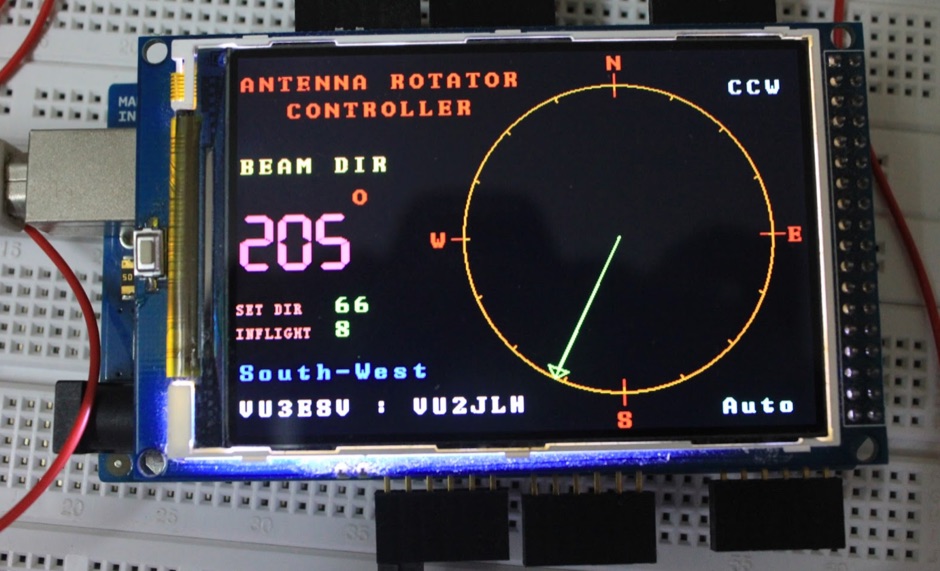 This is an attempt to build an Antenna rotator controller using Arduino Mega 2560 with a nice user interface showing the actual position of the antenna.
 -
-
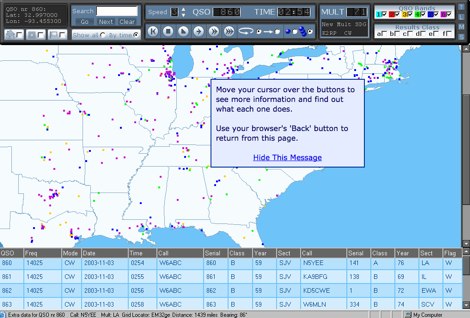 LogView is a free post-contest log-visualisation tool, for analysing contest performance. It plots the QSOs in a Cabrillo-format contest-log on to one of 8 different maps by finding the position of each QSO from an online database of about 970,000 W/VE callsigns.
 -
 Gary Breed, K9AY experience with beverages on 40 meters
 -
 Free VHF/UHF/Microwave contest logging software for rovers and non-rovers - Runs under Linux, Windows, etc.
 -
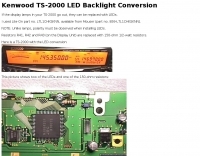 If the display lamps in your TS-2000 go out. They can be replaced with LEDs.
 -
 A complete list on Long Beach Frequencies. Long Beach Police Penal Codes, and Police 10 Codes
 -
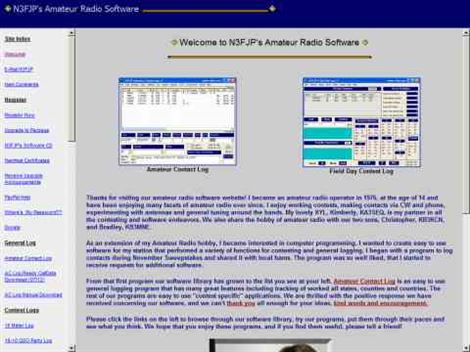 N3FJP's ARRL Field Day Contest Log 6.6.10 is a dedicated software solution for Windows 7 through Windows 11, specifically tailored for the annual ARRL Field Day event in June. This program provides essential contesting features such as duplicate checking, including partials, and a dynamic list of sections that change color upon being worked. It seamlessly interfaces with popular digital mode software like WSJT-X, Fldigi, and JTAlert via API, and supports rig control for most Elecraft, Icom, Kenwood, and Yaesu transceivers. The software also generates computer-generated CW via serial port or Winkeyer, plays wave files, and offers DX spotting capabilities. Operators can leverage its fully networkable design to allow multiple PCs to update a single log file simultaneously, enhancing club operations during Field Day. The program outputs ASCII log, dupe, and summary files for contest submission and provides real-time statistics. A quick start video is available to guide new users through the basics of the software. Registration for permanent use costs $8.99, or it can be obtained as part of the N3FJP Software Package, which includes over one hundred amateur radio programs for a one-time fee of $59.99.
 -
 Antenna was designed for SO-50 satellite operation but can be used for any VHF/UHF activity. It's a mix of a Moxon Antenna and a Yagi antenna. It has gains 4 dBd on 2m and 6.5 dBd on 70cm bands and it is fed via single 50 Ohm cable.
 -
-
 List of mods for the ICOM IC-7000 with many PDF Files
 -
 This project outlines the construction of a 3-element reversible quad antenna specifically designed for the 40-meter band. The materials required include pushup towers, pressure-treated posts, insulated wire, and various electrical components such as relays and a balun. The construction process is straightforward, beginning with the installation of the posts in a straight line, followed by the assembly of the antenna elements and their elevation to the desired height. The antenna's design allows for directional signal reception, making it ideal for operators looking to enhance their communication capabilities on the 40-meter band. The project includes detailed instructions on tuning the antenna for optimal performance, ensuring that operators can achieve the lowest SWR possible. Additionally, the design can be adapted for other bands by extrapolating dimensions, providing versatility for amateur radio enthusiasts. Overall, this reversible quad antenna project is suitable for both beginners and experienced operators, offering a practical solution for improving signal strength and directionality in 40-meter communications.
 -
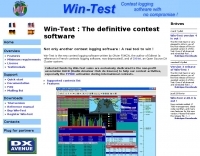 Win-Test is a contest logging software compatible with all the operating systems Windows 32 bits without exception. All major international and many national contests are supported. Network TCP/IP capability, radios and CW interfaced, database-aided autocompletion, and much more...
 -
 Demonstrates a very fast and effective logbook solution for amateur radio, **HAM-LOG** by HB9CQV, which operates as freeware and supports multiple languages including German and English. This application is designed to be self-running, even from USB devices, making it a portable option for hams on the go. Its database capacity is practically unlimited, capable of handling up to a billion QSOs, a significant advantage for active DXers and contesters. The software offers multi-user networking capabilities and integrates with popular digital mode programs like MixW2, FLDigi, and MMVARI through DDE connections or clipboard/INI-file transfers. It streamlines QSO logging by saving entries directly from these programs and supports import/export via **ADIF** for compatibility with other tools such as MMSSTV. HAM-LOG also connects to DX Atlas and Ham-Cap for enhanced operational awareness. Further enhancing its utility, HAM-LOG includes automatic callsign lookup on QRZ.com and supports eQSL.cc for electronic QSLing. The resource also details two smaller utilities: an Online Callbook DLL for MixW, which automatically populates names from QRZ.com into MixW log entries, and an Online Callbook LookUp command-line tool that writes callsign and name data to an INI-file, both requiring QRZ.com credentials.
 -
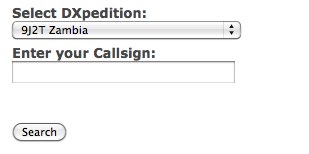
 The TU2T DXpedition log provides a critical resource for verifying contacts made during the 2011 operation from _Ivory Coast_. This online tool allows operators to quickly confirm their QSOs, which is essential for QSLing and award applications. Users can typically search by callsign, date, or band to locate specific entries, ensuring accuracy for their personal logbooks. Such online logs are indispensable for DXers pursuing awards like **DXCC**, as they offer immediate confirmation of rare or distant contacts. The ability to verify a QSO without waiting for a physical QSL card significantly streamlines the award application process. This particular log facilitates the confirmation of contacts with the TU2T operation, a highly sought-after entity.
 -
 MobileLog is a logging package for the PocketPC. It features DXCC reports, searching, alerts, and inport/export.
 -
 Producers of Scancat, Copycat, Magic and Distributors of HOKA's CODE-3 and CODE-30 decoders.
 -
 Band-pass filters can be critical components in competitive stations. This setup may help put your station on the map.
 -
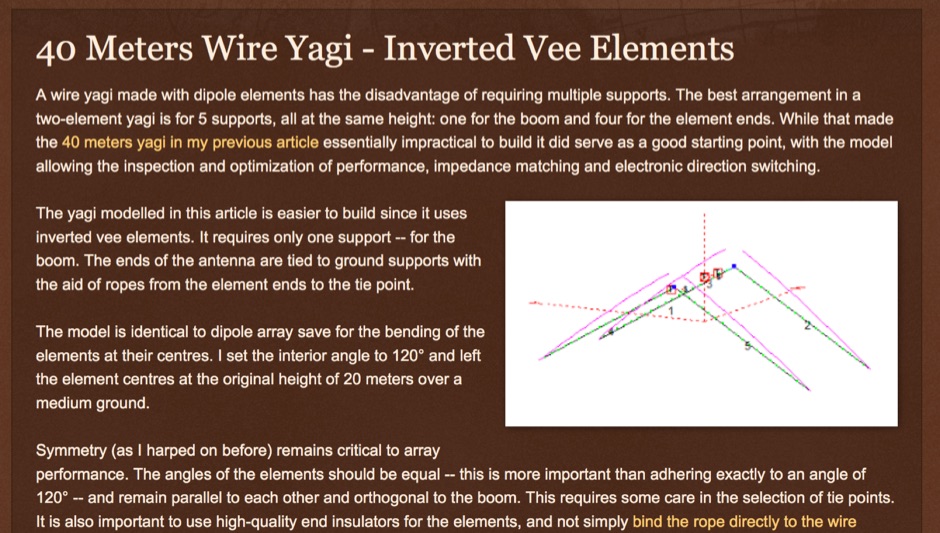 A wire yagi antenna model, easy to build, made using inverted vee elements and requiring just one support by ve3vn
 -
 The ZS6BKW wire antenna, a variant of the G5RV, utilizes a specific 13m (42.6 ft) length of 450-ohm window line as its matching section, feeding a 28.5m (93.5 ft) flat-top element. This design aims for lower SWR on 40m, 20m, 17m, 12m, and 10m compared to a standard G5RV, often achieving SWR values below 1.5:1 on these bands without an antenna tuner. The feedpoint impedance transformation provided by the window line allows for direct connection to 50-ohm coax on multiple bands. F4FHH's experience involved constructing the ZS6BKW and evaluating its performance against an _OCF dipole_ (Off-Center Fed) on various HF frequencies. The article includes observations on SWR readings and operational effectiveness, highlighting the ZS6BKW's suitability for multi-band operation. The antenna's overall length, including the flat-top and window line, is approximately **41.5 meters** (136 feet), making it a significant wire antenna for fixed station use. Comparative analysis with the OCF dipole provided practical insights into the ZS6BKW's advantages and limitations, particularly concerning bandwidth and tuner requirements.
 -
 Some antenna manufacturers place baluns at the incorrect location in LPDA arrays, or tell you to route the cable incorrectly. This can cause substantial RFI and all sorts of weird problems like RF into house wiring.
 -
 Restoring vintage amateur radio gear often presents challenges with accurate dial calibration due to the non-linear characteristics of analog tuning capacitors. This resource details the construction of a 100 kHz crystal calibrator, a crucial tool for precisely setting the frequency of older rigs lacking digital readouts. The design cleverly circumvents the scarcity and cost of 100 kHz crystals by utilizing a readily available 8 MHz microprocessor crystal, such as a _HC49U_ type, in conjunction with common _CMOS ICs_ like the 74HCT00 quad NAND gate and 74HCT393 dual 4-bit binary ripple counter. The circuit employs a two-stage frequency division process: the 8 MHz crystal oscillator output is first divided by 16 to yield 500 kHz, then further divided by 5 to achieve the desired 100 kHz output. A 5.1-volt Zener diode, _1N4733A_, regulates the power supply for the HCT series logic. The article also provides a modification to produce a 50 kHz calibrator by altering the counter reset logic. Installation involves feeding the output to the receiver front end, ensuring it's post-TR relay to prevent RF damage, and incorporating an ON/OFF switch for the 12V supply line.
 -
 An home made trapped dipole antenna for 40 and 60 meters band by 2E0HTS
 -
-
 JG2KJU collect brochures and catalog of vintage radios, including kenwood yaesu icom standard national nec star ten-tec and many more
 -
 The AMRAD Active LF Antenna. You can tune into LF activity with this easy-tobuild and erect active antenna. As a bonus, you get MF and HF coverage, to not to mention world-class performance
 -
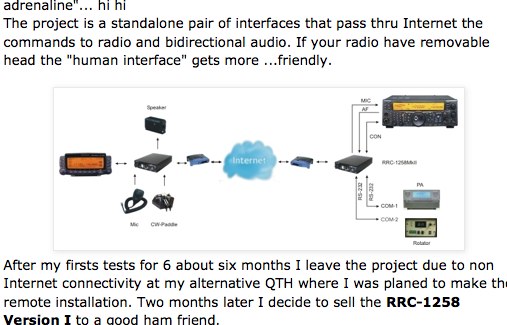 Remote HF - VHF - UHF radio station using TS-2000 and remoterig devices
 -
 2 element reversible verticals, small footprint, big results.
 -
 This attenuator is worth your attention. Built like the proverbial brick outhouse, it's one you can easily duplicate by N9SFX Pdf file
 -
-
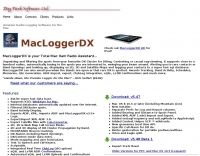 While you are enjoying your favourite scheduled SWL program, DX Net, or W1AW Bulletin, MacLoggerDX is combing the internet looking for the latest Hot DX Spot
 -
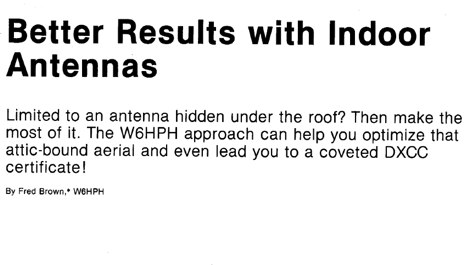 A different approach can help you optimize attic-bound aerial by W6HPH
 -
 A Comprehensive roundup of the most popular QRP transceiver kits on the market in recent years in PDF format
 -
-
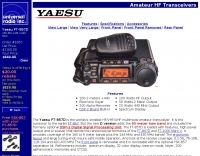 Features and specifications for Yaesu FT 857D
 -
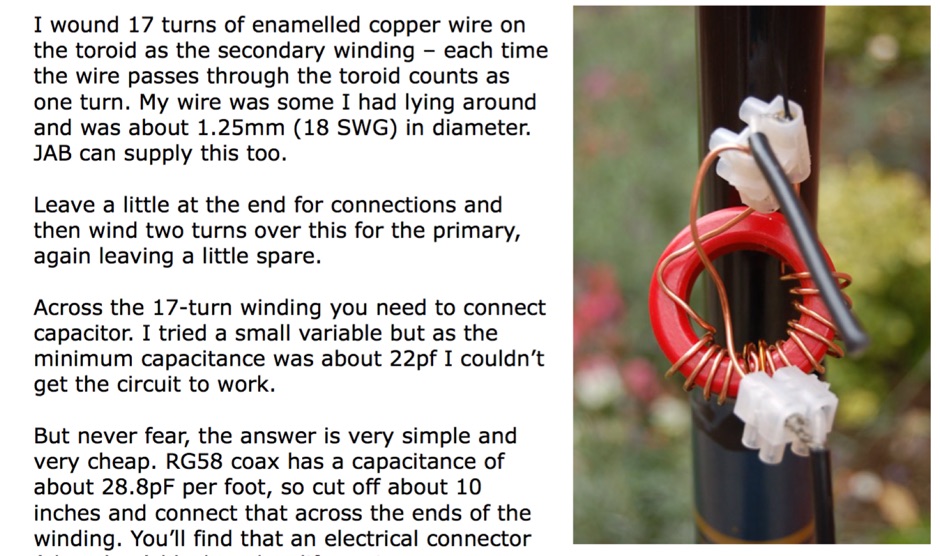 A monoband end-fed half wave for 10m, 20m or any other HF band, includes a PDF with detailed information to build your own monoband or multiband antenna
 -
 Search for your call in many of the logs hosted online, also contains links to other logs on the internet.
 -
-
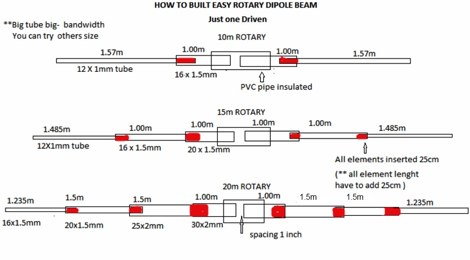 A simple beam antenna offering good performances on 3 bands by 9m2mso
 -
 High speed silicn diodes work well as RF switches. This article describes how to use diodes for selecting two or more filters ARRL QST article by W1FB
 -

-
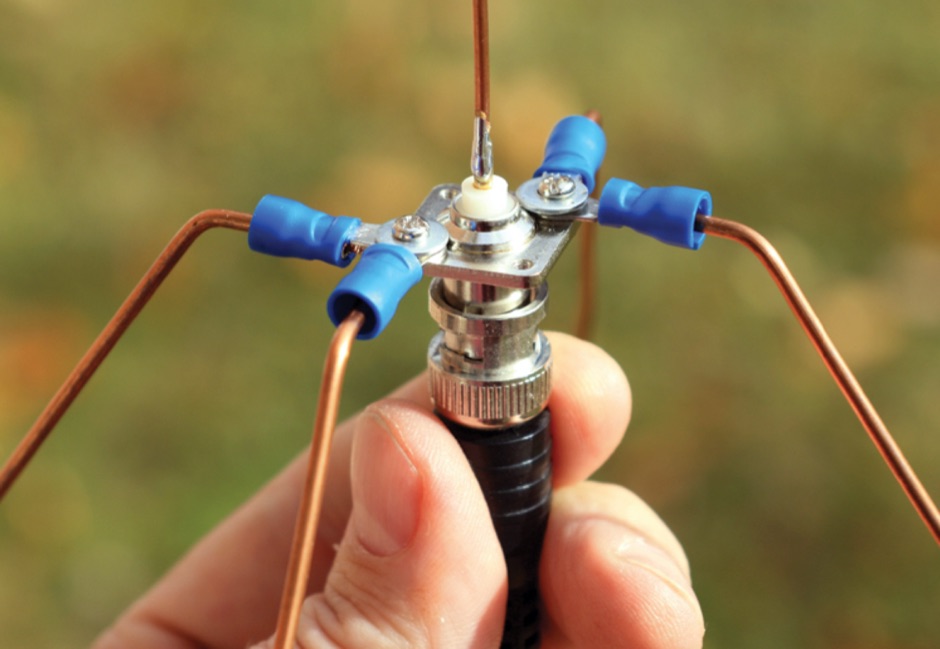 An introduction to antennad including a DIY assembly instruction for a A Ground Plane Antenna for NOAA Weather Stations
 -
 VQLog 3.1 - 782 is a shareware logbook program designed for Windows operating systems (95, 98, NT, 2000, ME, XP, Vista, 7, 10, or later), supporting resolutions of 800x600 or higher. It can also operate on macOS and Linux via virtualization software like Virtual PC for MAC, Oracle VirtualBox, or VMware. The software facilitates QSO access by date, callsign, prefix, square, DXCC, and other parameters, offering robust import capabilities for ADIF, Cabrillo, and ASCII files from various contest and logbook programs. Key features include comprehensive award tracking for DXCC, WAZ, WAC, WPX, WAS, IOTA, TPEA, DIE, VUCC, 100EACW, and up to 30 user-defined awards. It generates customizable summaries and graphical statistics for QSO activity, DX contests, Most Wanted Squares (MWS), propagation openings, and prefixes. VQLog supports DX-Spot reception and processing from DX-Cluster and PSK-Reporter with programmable warnings, integrates with callbook services like QRZ.COM and Buckmaster's CD, and offers online lookup. Electronic QSL and log upload support extends to LoTW, eQSL.cc, Clublog, and DXMAPS, with real-time updates for online logs. The program provides extended QSO information for VHF-DXers, including separate TX/RX frequencies, start/end times, propagation modes, and specific entry fields for MS, EME, and Tropo. CAT support for rig control and interfaces with ARSWIN and PstRotator for azimuth/elevation control are also included.
 -
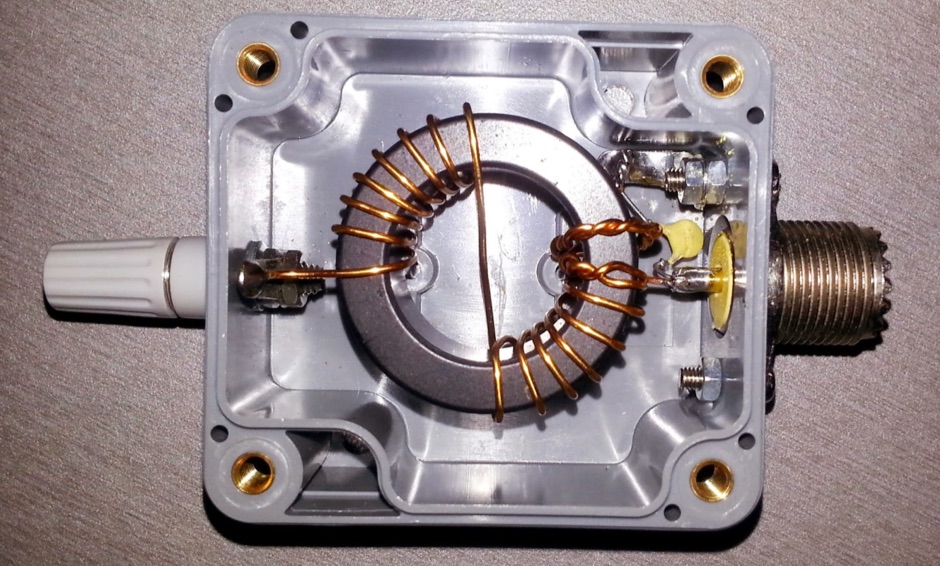 This is a 200 Watt PEP step up transformer for end fed full and half wave antennas without radials, designed as a 200 Watt PEP
 -
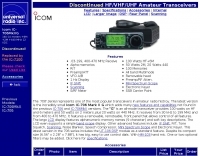 IC706 Specifications by universal radio inc
 -
 Here you will find broadcast, pirate, and clandestine information including loggings, QSLs tips, and last-minute news