Search results
Query: Guide
Links: 479 | Categories: 170
Categories
- Radio Scanning > Beginner's guides
- Operating Aids > Beginner's Guides
- Shortwave Radio > Beginner's guides
- Technical Reference > Software Defined Radio > Beginner's Guides to SDR
- Operating Modes > Morse code > Morse operating guides
- Operating Modes > Packet Radio > Beginner's Guide
- Propagation > Beginner's Guide
- Ham Radio > Exams > Study Guides
- Antennas > Baluns > 1 to 1 Balun
- Antennas > 17M
- Antennas > 20M > 20 meter Vertical Antennas
- Antennas > 30M
- Antennas > Baluns > 4 to 1 balun
- Antennas > 40M > 40 meter Dipole Antennas
- Antennas > 40M > 40 meter Vertical Antennas
- Antennas > 6M > 6 meter J-Pole Antenna
- Operating Modes > 70 MHz
- Radio Equipment > HF Amplifiers > Acom 1000
- Radio Equipment > HF Amplifiers > Ameritron AL-811
- Radio Equipment > HF Amplifiers > Ameritron AL-811H
- Technical Reference > Amplifiers
- Technical Reference > Antenna Launcher
- Technical Reference > Antenna Rotator
- Technical Reference > Antenna Switch
- Operating Modes > Satellites > AO-51
- Technical Reference > Attenuators
- Technical Reference > ATV
- Radio Equipment > VHF-UHF Handhelds > Baofeng UV-3R
- Technical Reference > Batteries > Battery Charger
- Shortwave Radio > BCL Resources
-
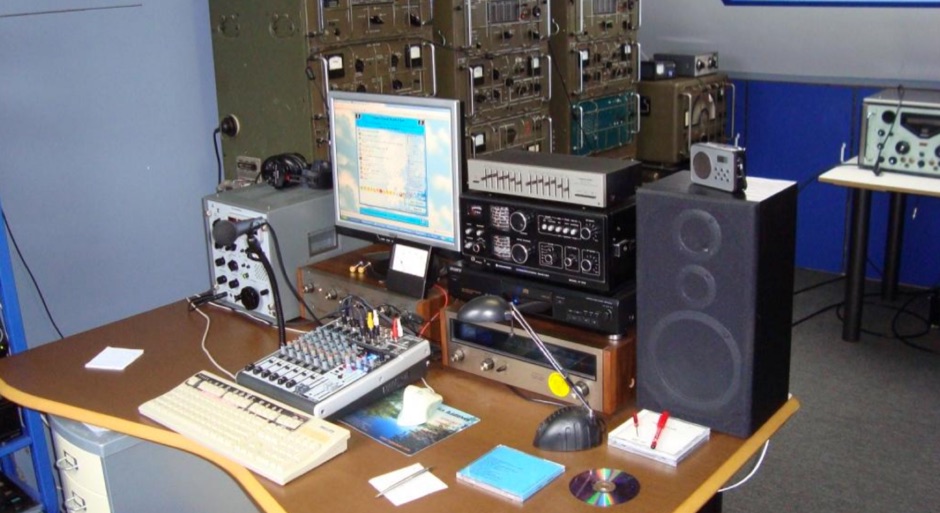 What Are Pirate Radio Stations and Why Listen to Pirate Radio Stations, How to Listen To Pirate Radio Stations
 -
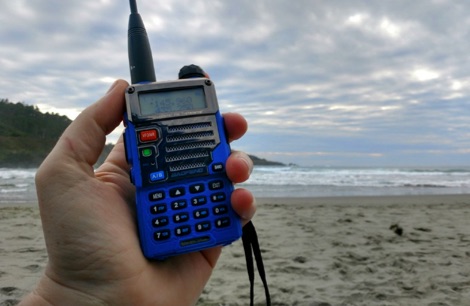 How to program Baofeng handheld transceiver with satellite frequencies, and how to get alerts when satellites are visible by using a smartphone app. A beginners guide to work satellites with a common VHF handheld radio.
 -
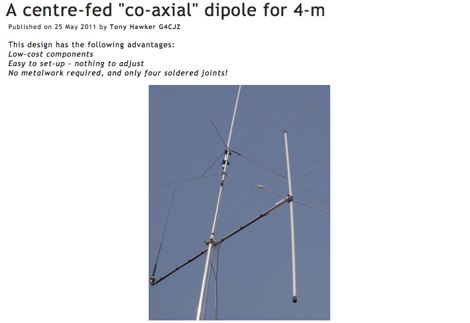 This web article details the construction of a 4-meter band coaxial dipole antenna, designed for operation between **70.000 MHz and 70.500 MHz**. The resource provides a bill of materials and step-by-step assembly instructions for a half-wave dipole constructed from _RG-58_ coaxial cable. The design specifies a direct 50 ohm feedpoint impedance, eliminating the need for an external matching network. Construction photographs illustrate the stripping and soldering processes for the coaxial cable elements, ensuring proper electrical connection and physical integrity. The article includes specific dimensions for the radiating elements, derived from calculations for the 70 MHz band. The project outlines the physical dimensions required for resonance at 70 MHz, with the outer braid forming one half and the inner conductor forming the other. The feedline connection is directly to the coaxial dipole's center, maintaining a 50 ohm characteristic impedance. While the article does not present SWR plots or VNA sweeps, it focuses on the mechanical construction and dimensional accuracy for achieving a functional 4-meter dipole. The design is intended for fixed station use, with no specific mention of polarization or height above ground, but implies a standard horizontal orientation for dipole operation. DXZone Focus: Web Article | 4m Coaxial Dipole | Construction Guide | 50 ohm Feed
 -
 A guide to setup a RTL-SDR on Windows, by installing the Zadig dongle software and setting up SDR Sharp for the very first time
 -
 An article and buyers guide about antenna anlyzers, undestanding differences among popular RF analyzers in the market
 -
 A Short Guide to Harmonic Filters for QRP Transmitter Output. - George Dobbs G3RJV
 -
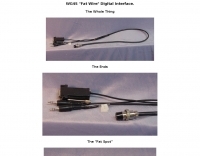 Constructing a digital interface for the Elecraft K2 transceiver, this resource details the "Fat Wire" design by WG4S. It demonstrates how to integrate a sound card for digital modes, outlining specific connections to the K2's microphone jack and internal audio path. The author shares practical insights from his build, including the use of _RG-62_ coax for its flexible braid and the strategic placement of components like the 2.2K resistor and _2N2222_ transistor. The guide provides a breakdown of the interface's internal wiring, specifying connections for AF In (pin 1), AF Out (pin 5), PTT (pin 2), and Ground (pin 7) on the K2's microphone connector. It also covers the external connections to a laptop's headphone and line-in jacks, along with a DB-9 connector for PTT control via _DTR_ or RTS lines. The author notes that his laptop's headphone output level was sufficient for the K2, negating the need for an attenuator. Reflecting on the design, the author, Dan WG4S, acknowledges a later suggestion to house the components directly within the DB-9 shell for a more compact build. This iterative feedback highlights the ongoing evolution of DIY ham radio projects and the community's collaborative spirit in refining designs.
 -
 News, frequency guides and programme information, on shortwave and other international media.
 -
 Mobile RFI, often manifesting as persistent noise in the receiver even with the antenna disconnected, frequently originates from the vehicle's power supply system. This guide details systematic troubleshooting steps, beginning with isolating the radio from the car's 12-volt supply to confirm the power system as the noise source. It emphasizes the critical importance of drawing power directly from the battery using **heavy gauge wire**, bypassing the fuse block to leverage the battery's natural capacitance for RFI suppression and ensuring a solid RF ground. Proper routing of power lines through the firewall is also covered, advocating for dedicated grommeted holes to prevent inductive coupling from other wiring harnesses. The article stresses the necessity of fusing both positive and negative leads from the battery, a crucial safety measure to prevent damage to the rig and mitigate high-current risks should the battery's engine block ground become compromised during service. Addressing **alternator whine**, a common high-pitched noise that varies with engine speed, the resource suggests checking battery connections and the alternator-to-battery harness for looseness or corrosion. It also mentions the utility of adding an external RF noise suppression capacitor in parallel with the alternator's internal capacitor for enhanced filtering, and the effectiveness of commercially available in-line power supply filters.
 -
 Presents the W9VT Tri-Town Radio Club, an ARRL-affiliated organization serving the Illinois amateur radio community. The club maintains a 2-meter repeater on 147.180 MHz (+600 kHz offset, 107.2 Hz CTCSS) and a 70-centimeter repeater on 444.825 MHz (+5 MHz offset, 107.2 Hz CTCSS), both located in Woodridge, IL. Regular meetings are held on the second Tuesday of each month at 7:00 PM at the Woodridge Public Library, focusing on technical discussions, operating practices, and community service. The club participates in Field Day, supports local public service events, and offers licensing classes for Technician, General, and Extra class examinations. Members engage in various amateur radio activities, including DXing, contesting, and digital modes, fostering skill development among hams. The club's repeater infrastructure provides reliable local communication for members and supports emergency preparedness efforts within DuPage County. Participation in ARRL-sponsored events like the Simulated Emergency Test (SET) and various operating awards promotes active engagement and technical proficiency. The club provides a platform for mentorship, allowing experienced operators to guide newer hams through licensing and operational aspects.
 -
 A guide to learn how oscilloscopes work
 -
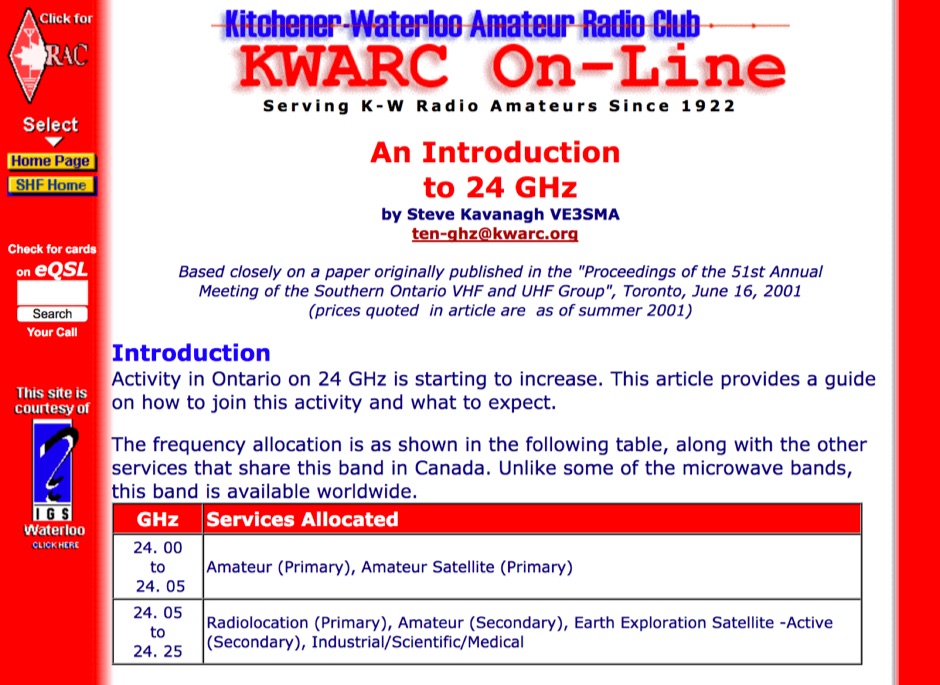 Article provides a guide on how to use 24 GHz band and what to expect, including Active modes, equipment, propagation and antennas for this band in by VE3SMA
 -
-
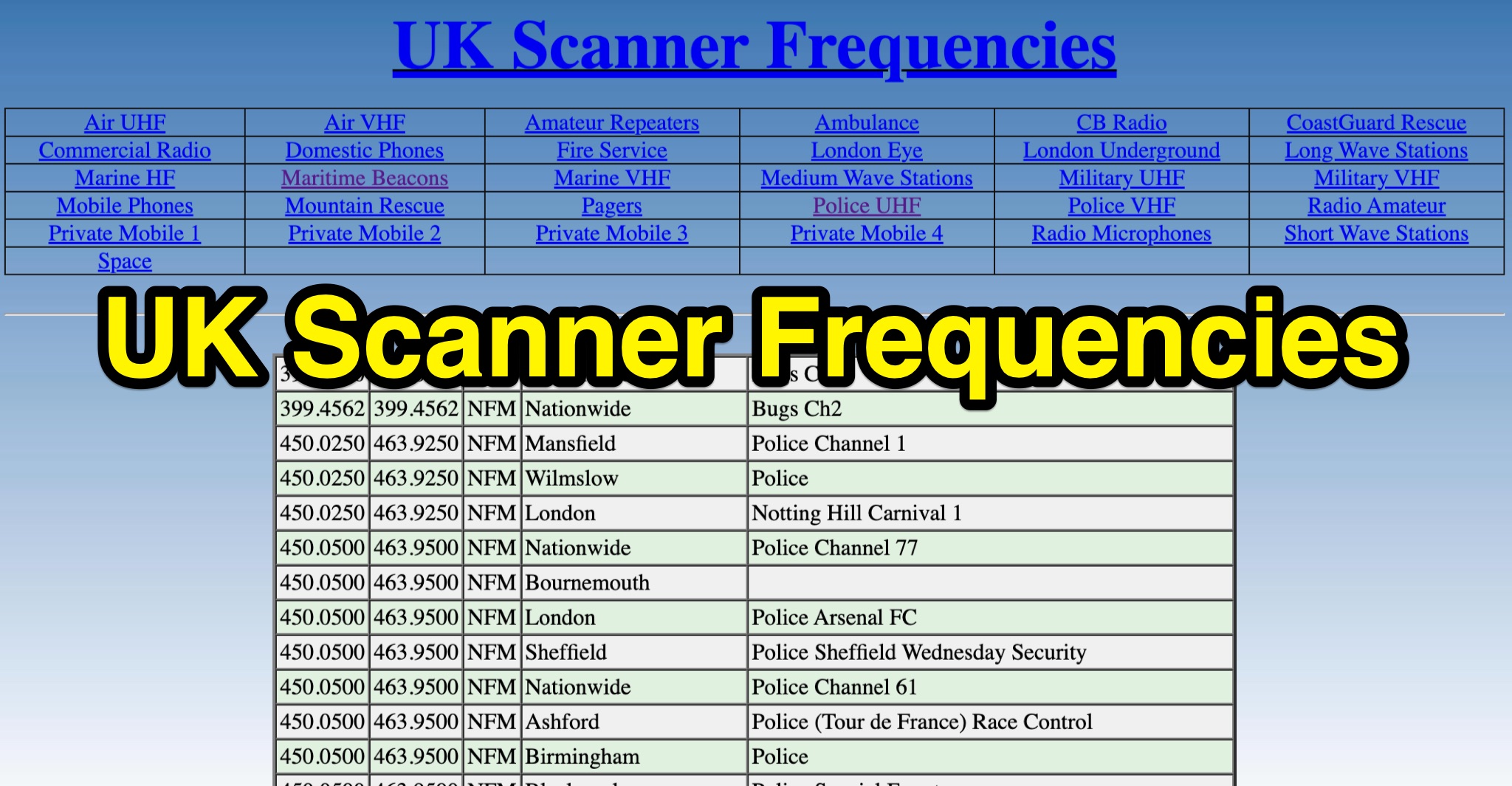 This page provides a list of scanner frequencies for hams in the UK. It offers a comprehensive guide for ham radio operators looking to find and tune into various frequencies for communication. The page is useful for hams who want to explore different channels and connect with fellow operators in the UK. Whether you are a beginner or an experienced ham radio enthusiast, this resource can help you discover new frequencies and expand your communication network.
 -
 Anderson Powerpole connectors are becoming the standard for Raynet ARES and RACES groups as well as many Ham radio shacks round the world. This recourses page will give you a guide to Anderson Powerpole connectors in the radio shack.
 -
 MMSTV help pages, describing how to setup and run this sstv program by Andrew O'Brien
 -
 Summary, tutorial about the basics of what is a waveguide and the basic waveguide theory.
 -
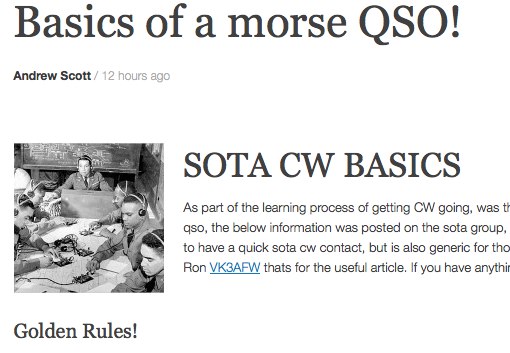 A nice guide to make basic contacts in morse code with a particular reference to SOTA operations by VK3BQ
 -
 What you really need to know about spectrum analyzers
 -
 Home of the Radio Teacher Project Website, study guides, class documents and videos to be used by instructors
 -
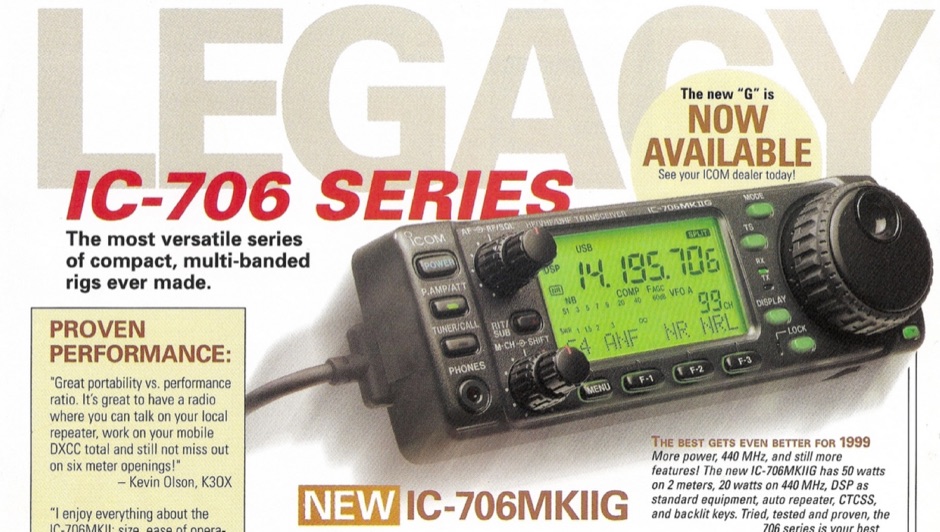 Review of the Icom IC-706 series, include a short demo video and a short menu table available for download
 -
-
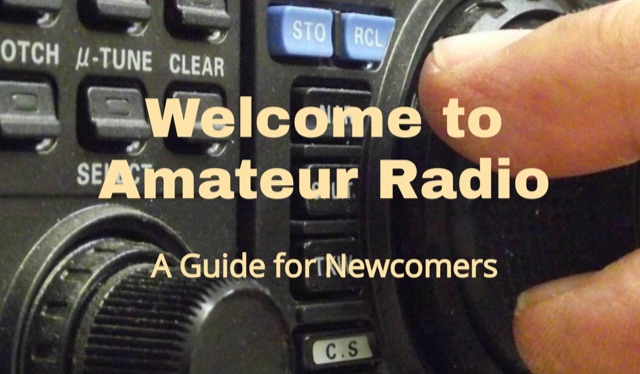 A complete guide for newcomers edited by the Radio Amateur Society of Australia Inc. This free PDF includes several basic articles for new hams, with particular reference to Australian regulations, but is however a good guide for those who are aproaching the hobby worldwide.
 -
 Explains the proper formatting of international addresses on postal items, a critical aspect for ensuring successful delivery of QSL cards. It details how the country of origin dictates the destination country's name format, while the destination country's postal authority governs the remainder of the address. The resource highlights _Universal Postal Union_ (UPU) regulations, specifically Article RL 123.3.3, which mandates the use of roman letters and Arabic numerals for clarity. It provides practical examples, such as an item from Great Britain to the United Arab Emirates, illustrating the need for dual-language addressing. The guide also clarifies the separation of elements for proper transmission versus local delivery, ensuring that the destination country name is clearly marked in capital letters and preferably in an internationally recognized language to facilitate transit, preventing misdirection and ensuring a **99%** delivery rate for QSLs.
 -
 Demonstrates the fundamental principles for connecting a personal computer to a ham radio transceiver, specifically for utilizing sound card-based digital mode software like those in the MM Hamsoft suite. It details the basic hardware setup, emphasizing the use of shielded leads and proper audio routing from the radio's output to the sound card's input, and from the sound card's output to the radio's microphone or data input. The resource highlights the critical need for transmit attenuation, suggesting a 100:1 voltage divider to prevent overdriving the transmitter's audio stage, and mentions the optional addition of ferrite beads and decoupling capacitors for RFI mitigation. The guide also points to external resources for more detailed pin-outs and interface schematics, such as a specific QSL.net page, and recommends consulting the help files within MM Hamsoft programs for interfacing specifics. It underscores that while the process is straightforward, understanding the audio level management and proper cabling is key to successful operation. The author, VE5KC, provides practical advice drawn from common issues encountered by operators setting up digital mode stations.
 -
 About SDR Radio, basics and a how to guide
 -
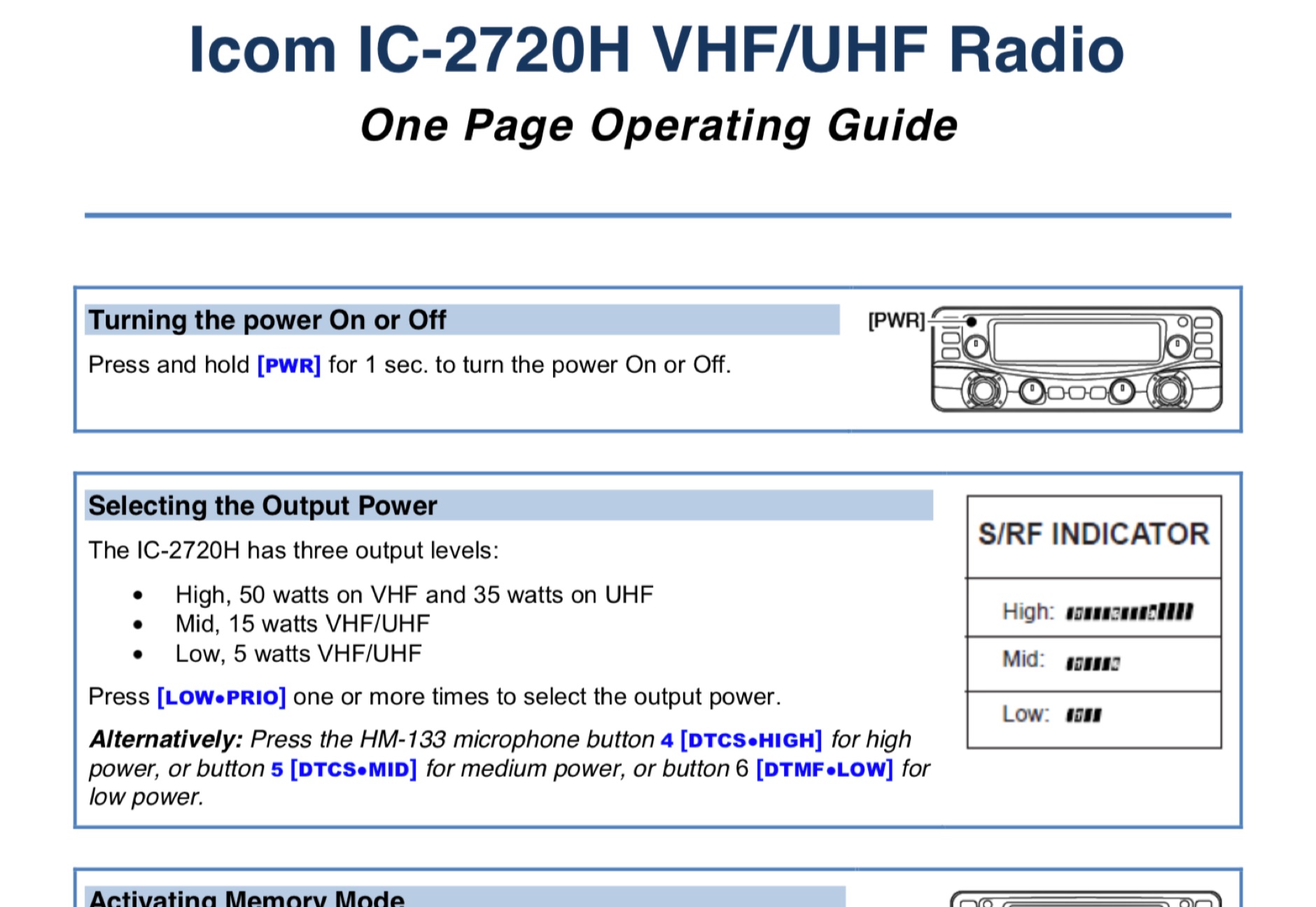 An operating guide for the com IC-2720H VHF/UHF Radio, includes Turning the power On or Off, Selecting the Output Power, Activating Memory Mode, Operating in Memory Mode
 -
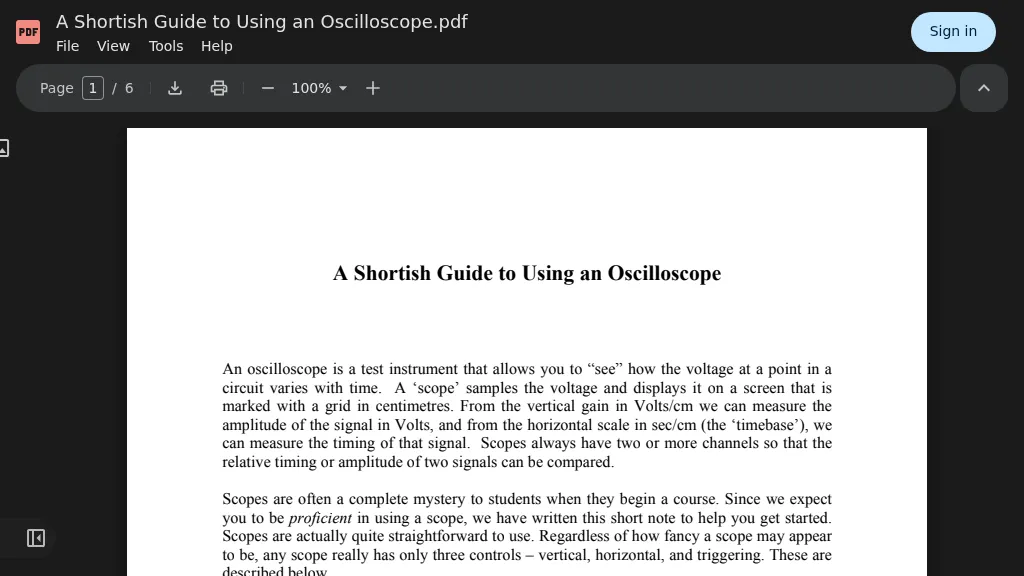 The "Shortish Guide to Using an Oscilloscope" elucidates the fundamental operation of oscilloscopes, detailing the purpose and function of vertical, horizontal, and triggering controls. It explains how vertical gain in Volts/cm and horizontal scale in sec/cm enable measurement of signal amplitude and timing, respectively. The resource differentiates between analog and digital scopes, noting that digital scopes often feature "soft" controls and are inherently storage scopes capable of capturing non-repetitive events. The guide dedicates a significant section to the critical role of oscilloscope probes, emphasizing their design to transmit waveforms without distortion or added noise. It explains the concept of a 10x passive scope probe, which reduces circuit loading by a factor of ten and eliminates waveform distortion through probe compensation, typically adjusted using a 1kHz square wave reference output. The document also provides practical advice on probe care and compensation procedures. Further sections address grounding considerations, explaining how a scope measures voltage relative to its chassis ground, which is tied to the protective earth. It offers troubleshooting steps for a blank screen and outlines essential good practices, such as checking input gain and probe attenuation, while explicitly warning against misusing probes or connecting the ground clip to mains voltage.
 -
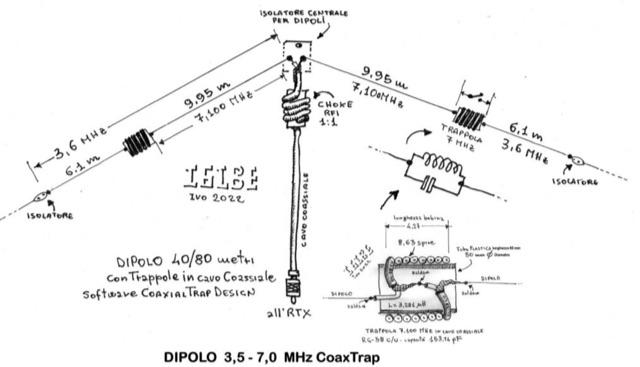 Full article on how to build a home-made wire dipole antenna for 40 and 80 meters band. Article is fully in italian, as it was published on ARI RadioRivista, but is plenty of self explaining pictures that will guide you on homebrewing this trapped dipole antenna for the lower amateur radio bands.
 -
 If you have just bought a new D-STAR radio, have read all the instruction, know how it works but are not too sure of what and how much you can do with your radio, this guide can help you understanding the basics of how to operate in D-STAR mode.
 -
 This site features Samuel M. Goldwasser's latest and greatest "Notes on the Troubleshooting and Repair of..." series of comprehensive repair guides for consumer electronics equipment and other household devices.
 -
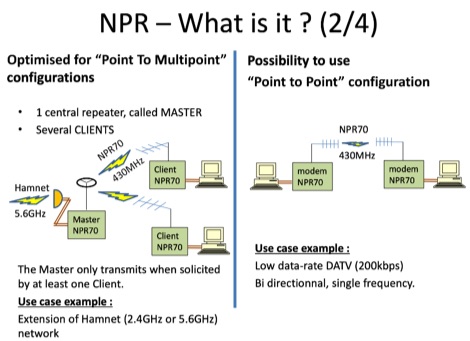 A Quick start guide to NPR New Packet Radio on 70 cm band by the NPR author Guillaume F4HDK. This presentation introducte basic concepts of this niew digital protocol, and guide the user to the first modem configuration both of client and master modems. Includes a final recap of commands.
 -
 Explains the annual Jamboree on the Air (JOTA) event, a global amateur radio gathering for Scouts and Guides. This activity connects young people worldwide through ham radio, fostering international friendship and introducing them to radio communication technology. Participants use various amateur radio bands and modes, including HF, VHF, and digital modes like FT8 and JS8Call, to make contacts with other JOTA stations and learn about the hobby. The ARRL provides resources for Scout leaders and amateur radio operators interested in hosting a JOTA station, including guidelines for setting up temporary stations, safety protocols, and educational materials. The event typically occurs on the third full weekend of October, aligning with the World Organization of the Scout Movement's (WOSM) global schedule. JOTA emphasizes hands-on experience with radio equipment, antenna theory, and basic operating procedures. It serves as a significant public service opportunity for hams to engage with youth and promote the educational aspects of amateur radio.
 -
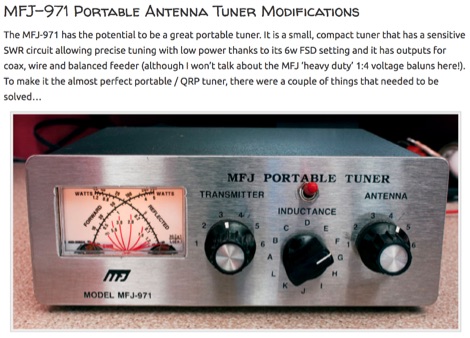 The MFJ-971 portable antenna tuner, as stock, lacks a bypass switch and sufficient inductance for efficient 1.8 MHz operation. This modification addresses these limitations by integrating a DPDT switch for direct signal bypass, enhancing operational flexibility. Furthermore, the guide details the addition of a T130-2 iron powder toroid, wound with **29 turns** of enamelled copper wire, to augment the tuner's internal inductance. This increases the maximum inductance from approximately 17µH to around **27µH**, enabling effective impedance matching on the _160-meter band_. The modification involves cutting the wire after the 'L' tap on the original inductor and inserting the additional toroid, ensuring the entire original coil plus the new inductance is engaged when 'L' is selected. This preserves the functionality of other inductance settings while extending low-band performance. The article also highlights a potential RF burn hazard from the variable capacitor nuts on the MFJ-971, even at QRP power levels.
 -
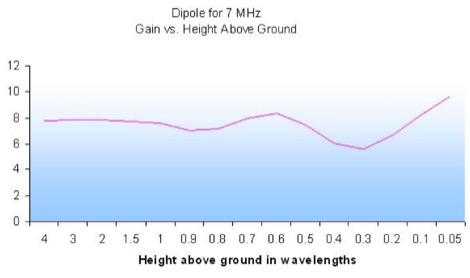 An interesting guide to aerials comparing height, gain and angles
 -
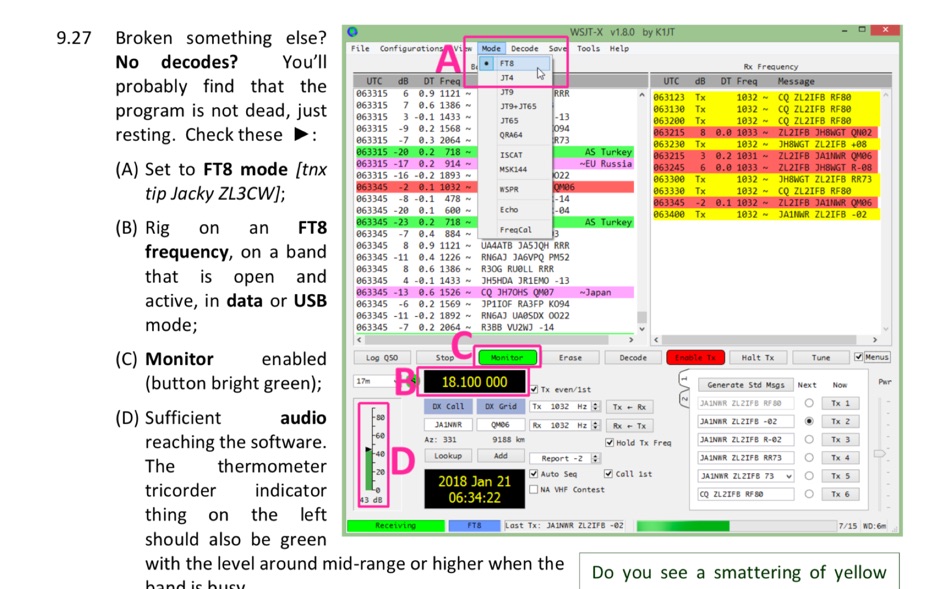 An excellent guide to operating FT8 mode available in English, German and Czech that cover several aspects of the FT8 operations. Includes and exaustive guide to how configure FT8 software, how to conducto a QSO and how to operate DXPeditions in FT8 F/H mode. Covers aspects of FT4 contesting operations and interfacing with logging programs
 -
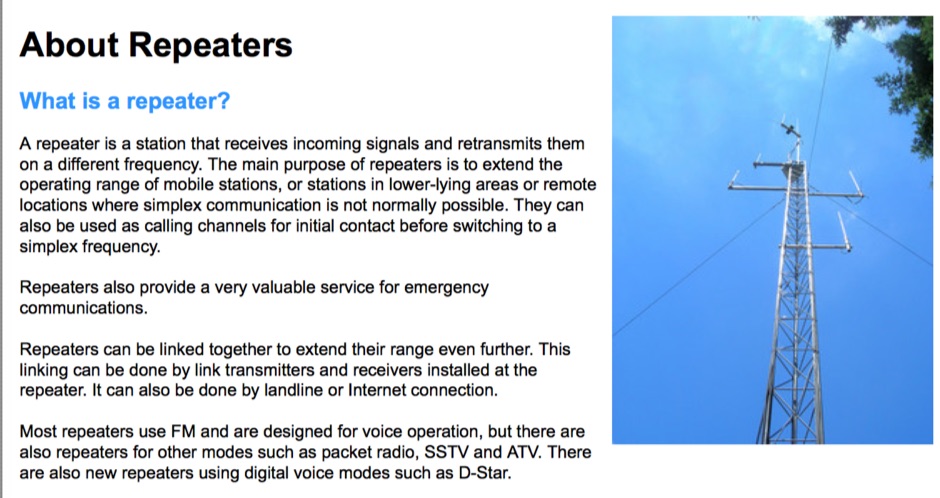 Amateur radio repeaters extend communication range for mobile and remote stations by retransmitting signals on a different frequency, often for emergency communications. The resource details various repeater bands, noting that 2 meters and 70 cm are primary for activity, with 10-meter repeaters offering potential national and overseas coverage. It specifies **18 channels** on 6 meters and **31 channels** on 2 meters, along with a new 70 cm offset of _7 MHz_ adopted in 2015. The content explains how repeaters can be linked via dedicated transmitters/receivers, landlines, or Internet VoIP systems like _IRLP_ and Echolink, enabling global connections. It also describes simplex gateways for multi-band operation and the use of CTCSS subaudible tones for access control and interference mitigation. The document highlights specialized repeaters for modes beyond voice, such as SSTV and ATV, particularly on 70cm and higher bands. Operational guidelines for efficient and courteous repeater use are referenced, along with links to Australian repeater listings and band plans.
 -
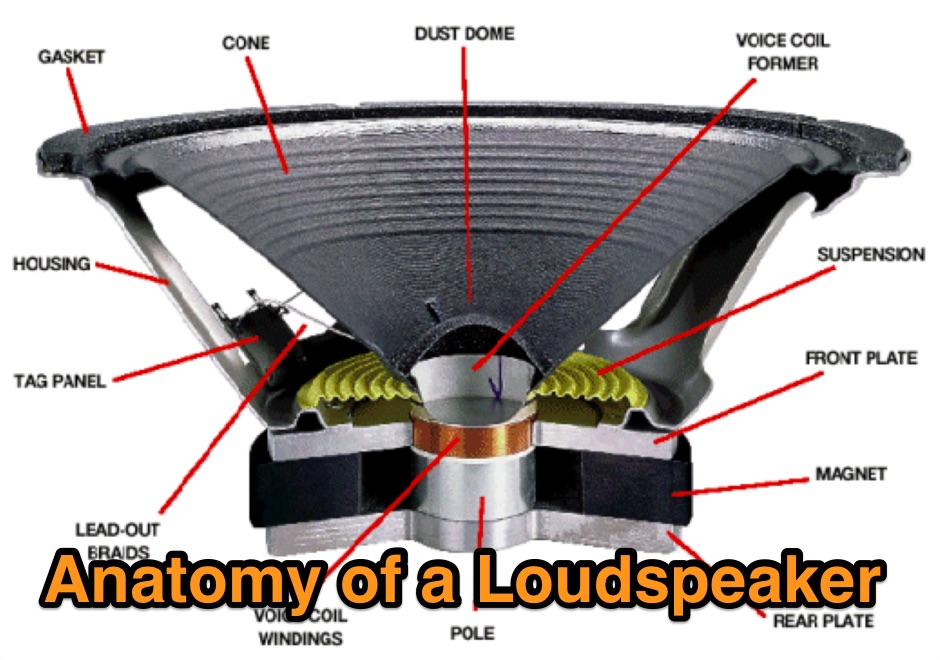 There are a number of important technical issues relating to the matching of speakers to amplifiers, and to the wiring of multiple speaker systems
 -
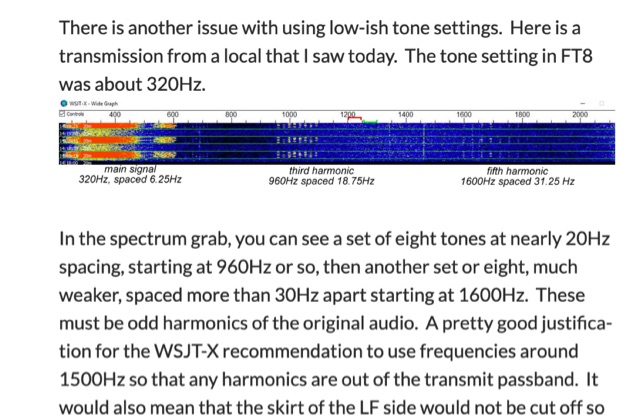 A guide to properly use FT8 ALC and power when transmitting in FT8 Mode. Incorrect usage of power and audio from your computer may cause unreadable signals and transmit harmonics that can didturb other signals.
 -
 KE7X Elecraft K3 operating manual
 -
-
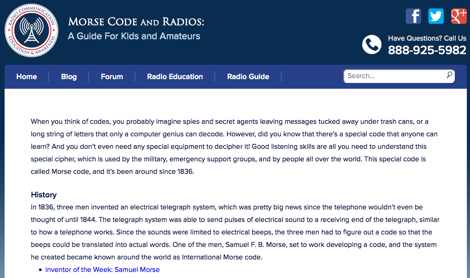 Morse Code And Radio For Kids and Amateurs. This guide covers many different aspects of the history of and how to learn Morse code.
 -
 The No-Nonsense Extra Class License Study Guide (for tests given between July 2016 and June 2020) This is the study guide you want if you want to pass the Extra Class exam
 -
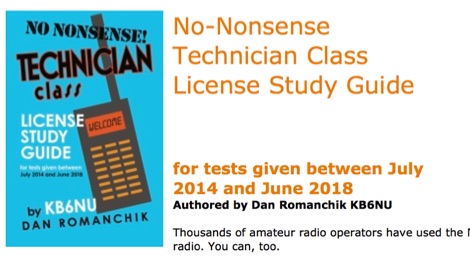 The No-Nonsense Technician-Class License Study Guide for tests given between July 2014 and June 2018, download the free PDF by KB6NU
 -
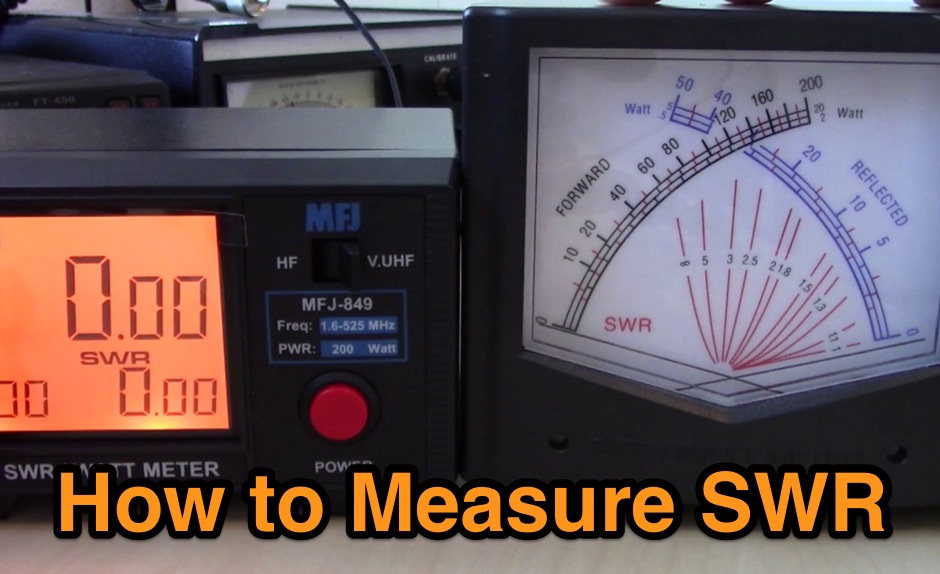 A guide to measuring SWR with different types of SWR Meters, the single needle and dual needle meters
 -
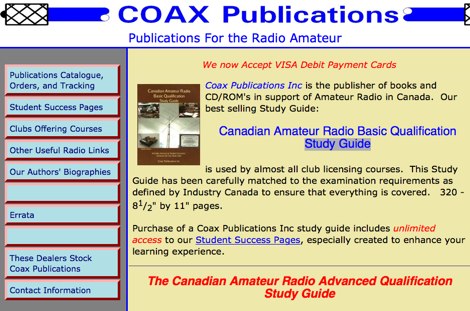 Coax Publications is the publisher of books and CDROMs in support of Amateur Radio and ham radio study guides in Canada.
 -
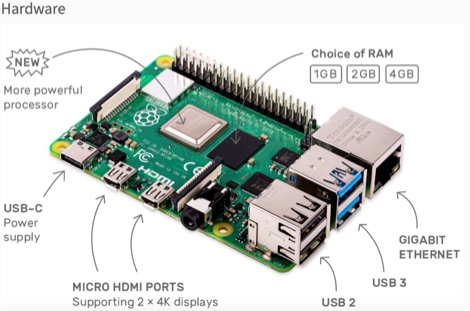 This resource is an online tutorial focused on setting up the Raspberry Pi for amateur radio applications. It covers the installation and configuration of various software packages tailored for digital communications and protocols, including _Packet Radio_ with Hamlib and Direwolf, as well as data modes like FLDigi and WSJT-X. The guide also details the integration of hardware components such as GPS clocks for time synchronization and real-time clocks for enhanced functionality. Users will find instructions for installing software like GPredict for satellite tracking and GQRX for software-defined radio (SDR) applications. The tutorial emphasizes practical steps, including the use of command-line inputs in the Raspberry Pi OS terminal, and provides troubleshooting tips for common issues such as faulty SD cards or insufficient power supplies. Operators are encouraged to explore various applications, including APRS iGates and WSPR beacons, to enhance their ham radio experience. The material is designed for licensed amateur radio operators with basic knowledge of electronics and computing.
 -
 Knowledge and guide on Amateur Radio mix in Malay & English Language for Malaysian SWL & Amateur Radio Operator.
 -
 Over 1900 ARISS school events have been conducted since 2000, facilitating amateur radio contacts between students and ISS crew members. This resource details the Amateur Radio on the International Space Station (ARISS) program, outlining scheduled contacts, operational procedures, and application processes for educational institutions worldwide. It lists specific upcoming contacts, such as those with Lewis Center for Educational Research in California and Vauban, Ecole et Lycée français de Luxembourg, typically operating on a 145.800 MHz downlink frequency. The content also provides crucial guidelines for radio amateurs, emphasizing the importance of not interfering with scheduled school contacts and utilizing the crossband repeater for general QSOs when available. It clarifies crew availability for casual contacts, noting that astronauts are usually free during personal time, approximately one hour after waking and one hour before sleeping, and often on weekends. Constraints on scheduling, such as avoiding EVA weeks and specific crew rest periods, are also detailed. Furthermore, the resource includes historical statistics on direct versus telebridge contacts, QSL information, and links to related ARISS, AMSAT, ARRL, and NASA websites. It also provides information on applying to host an ARISS contact for schools and youth organizations in various regions, including the United States, Europe, Africa, the Middle East, Canada, Central and South America, Asia, and Australia.
 -
 This website is dedicated to Radio Mobile. Radio Mobile is software by Roger Coudé VE2DBE. The program simulates RF propagation and is for free to the amateur radio community. All you want to know about Radio Mobile can be found here.