Search results
Query: the
Links: 1284 | Categories: 269
This query is too generic. Please try adding an additional term to focus your research.
Categories
- Ham Radio > Clubs > Europe > UK > Northern England
- Ham Radio > Clubs > Europe > UK > Northern Ireland
- Shopping and Services > Regional > Other regions
- Technical Reference > Amplifiers > RF Amplifiers Theory
- Ham Radio > Clubs > Europe > UK > Southern England
- Radio Scanning > Weather
- Software > Weather and FAX
- Operating Modes > Satellites > Weather Satellite
- Internet and Radio > Other Resources
- Antennas > Theory
- DX Resources > Beacons > 10 GHz Beacons
- DX Resources > Beacons > 10 meter beacons
- Antennas > 17M
- Antennas > 20M > 20 meter Dipole Antennas
- DX Resources > DX Peditions > 2011 DXpeditions
- DX Resources > DX Peditions > 2022 DXpeditions
- DX Resources > DX Peditions > 2024 DXpeditions
- Antennas > 20M
- Antennas > 23cm
- Antennas > 2M
- Antennas > 30M
- Antennas > 40M > 40 meter Dipole Antennas
- Antennas > 6M > 6 meter J-Pole Antenna
- Antennas > 6M > 6 meter Moxon Antennas
- Antennas > 60M
- Operating Modes > 70 MHz
- Antennas > 80M
- Shopping and Services > Accessories
- Radio Equipment > HF Amplifiers > Acom 1000
- Radio Equipment > HF Amplifiers > Acom 1010
-
 The half wave dipole antenna is a simple and practical antenna model that consists of a half wavelength long centre fed conductor.
 -
 How to easy connect two Pc together with a Ethernet Lan
 -
 Forum thread comparing FT-60 to VX-6R
 -
-
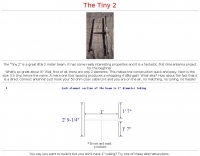 The "Tiny 2" is a great little 2 meter beam. It has some really interesting properties and it is a fantastic first time antenna project for the beginner.
 -
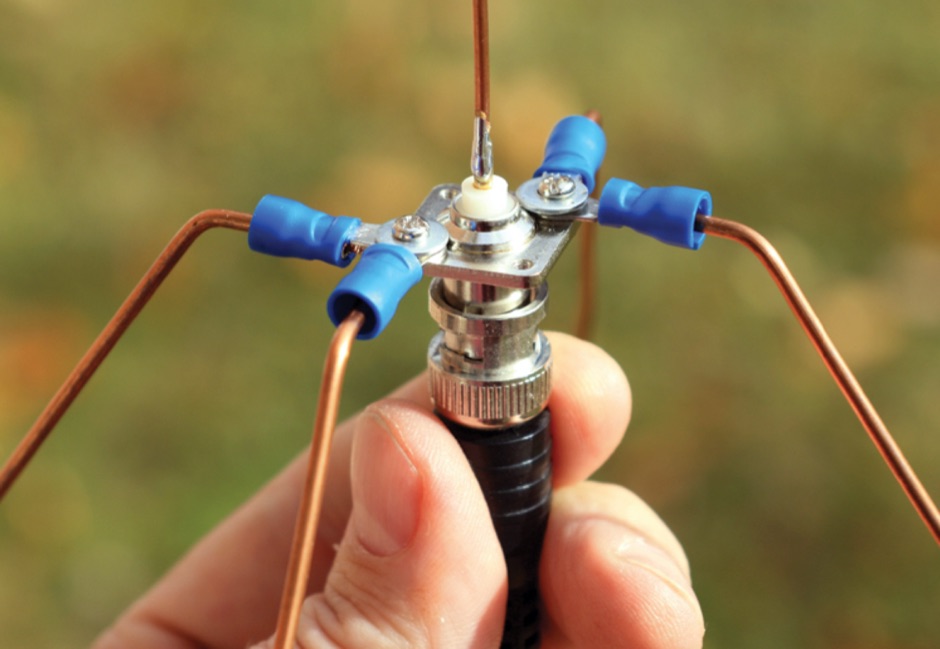 An introduction to antennad including a DIY assembly instruction for a A Ground Plane Antenna for NOAA Weather Stations
 -
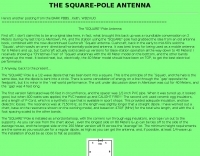 The SQUARE-Pole is a 1/2-wave dipole that has been bent into a square by WB2VUO
 -
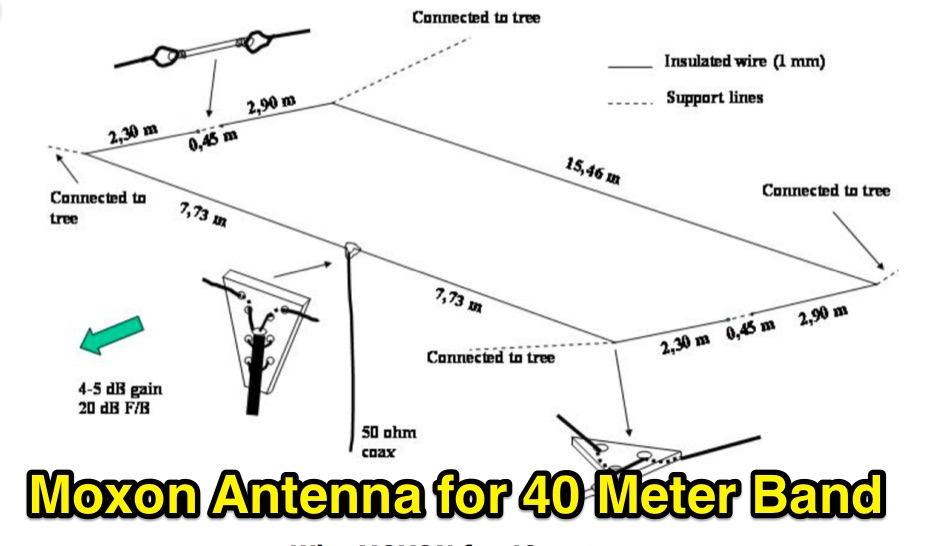 This note looks at the antenna and antenna model for the 40 meter Moxon Yagi designed by Dave Leeson, W6NL. The performance of the antenna, through the model, will be explored in several typical settings.
 -
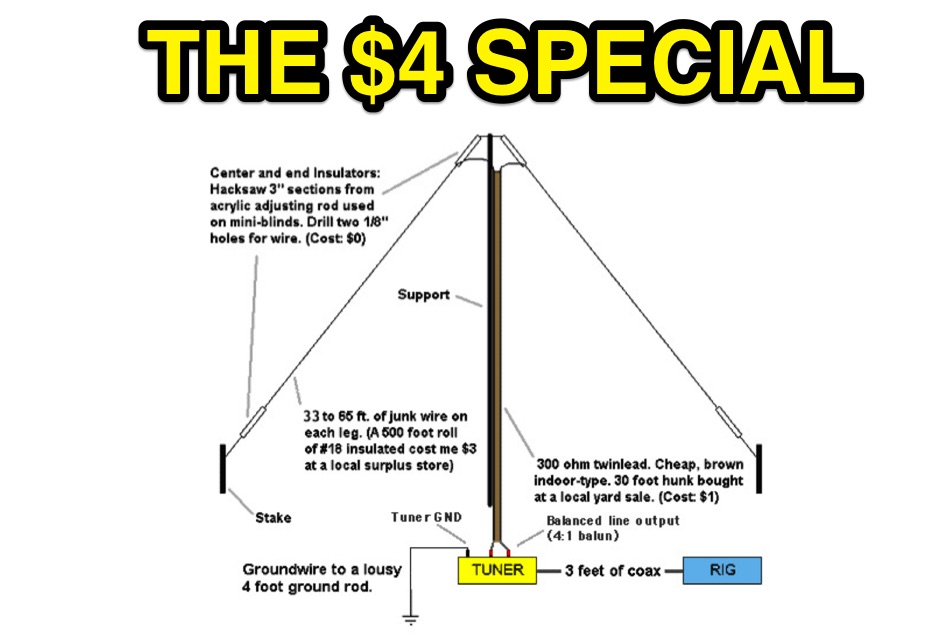 A multiband wire antenna with a twinlead feedline that can be easily tuned in several bands, witha 33 ft per leg you can have a 40 to 10 meters band coverage
 -
-
 Loop antennae have been used from ELF to UHF since the beginning of radiocommunications. At low frequencies, the main problem for loop antennae is to have enough sensitivity; the antenna being very small respect to the wavelength the collected energy is also small. To increase the output level the loop may be made resonant, so loosing it%u2019s intrinsic aperiodic characteristics.
 -
 This project is an interface box for the Yaesu FT-817 that includes a band output port, a computer serial interface, and a remote interface for the FL-7000 (and Quadra?) solid state power amplifiers
 -
 A site exclusively meant for the novice. Find all the information necessary to become an amateur radio operator! More India specific information.
 -
 Yet another G5RV antenna plan to build a G5RV Antenna for 80 to 10 meters usage
 -
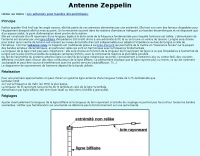 It consists of a radiating wire with a length equal to the half-wave of the fundamental frequency for which the antenna is cut.
 -
 A marriage of the windom and slinky antennasm, article by NC4TC
 -
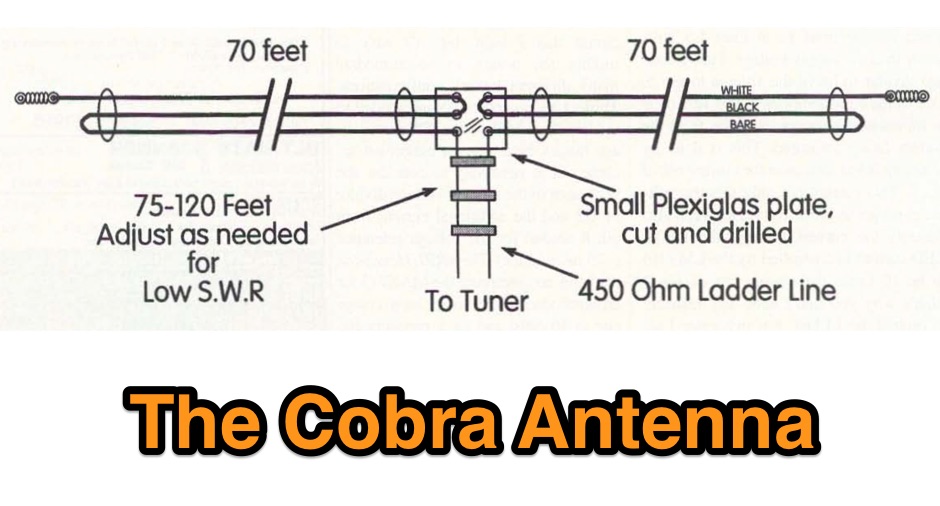 A folded wire antenna for 160 meters as appeared on 73 amateur radio magazine june 1997
 -
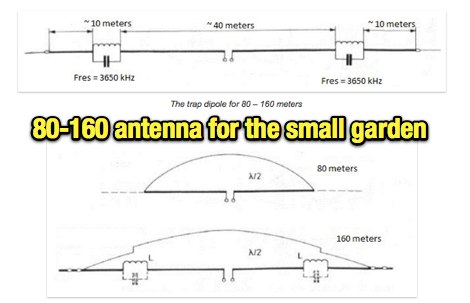 An cheap, easy to construct and not too visible antenna for the low bands
 -
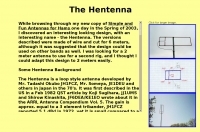 A copper pipe Hentenna for 144 MHz. The Hentenna, a compact, high-gain loop antenna developed in Japan in the 1970s, offers approximately 5.1 dBd gain, comparable to a three-element Yagi. Adapted for 2 meters, it is crafted from copper pipe for simplicity, affordability, and broadband performance. Requiring no feed-point tuning, its construction involves soldering standard copper fittings. Installation demands non-conductive materials to minimize signal disruption. Versatile for vertical or horizontal polarization, it is ideal for FM, repeater, SSB, or CW applications. This design emphasizes practicality and performance for amateur radio enthusiasts
 -
 This tutorial will set out the design stages required to design a theoretical microwave amplifier
 -
 Presents a detailed construction guide for a **Quadrifilar Helix Antenna** (QHA) optimized for 137 MHz, specifically for receiving weather satellite transmissions. The resource outlines the author's experience building previous QHA designs, highlighting challenges with tuning and nulls, and then focuses on a refined design by John Boyer, documented by Steve Blackmore, which proved easier to build and yielded superior reception. The guide provides precise element dimensions, including 1.5m of 32mm PVC pipe for the mast and 8mm soft copper tubing for the helix elements. It specifies lengths for horizontal tubes (190mm, 90mm) and helix elements (903mm, 1002mm), along with instructions for drilling, assembly, and forming a **balun** by wrapping RG58 coax around the mast. The text emphasizes critical steps like ensuring elements are square and twisting in the correct direction to avoid phase issues. It includes references to original QST articles by Buck Ruperto (W3KH) and the WxSat program for decoding satellite transmissions, contextualizing the antenna's purpose. The article concludes with a sample NOAA 12 image from September 1998, demonstrating the antenna's reception capabilities.
 -
 How to calculate "phasing line" lengths that actually work.
 -
-
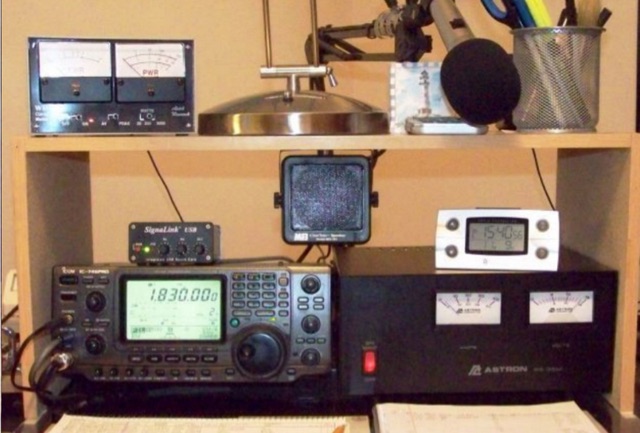 If you want to interface the IC-746 Pro or any other Icom rig with a computer for rig control, an outboard CI-V CAT device is required.
 -
 If you are interested in the environment, the weather and other natural phenomena then there is something magical about being able to see pictures of the earth from space just as it is right this minute. One way you can do this is by receiving images from weather satellites.
 -

-
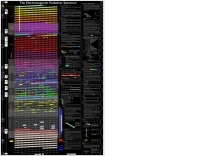 Excellent poster representing the electromagnetic spectrum from 31.2 mHz to 6.52 EHz, PDF file poster designed by Anthony Tekatch
 -
 G3TXQ pages focuses on understanding the HexBeam antennas. Basics, dimensions, multi band issues, antenna modeling.
 -
 Must modern HF transceivers be treated as black box appliances? VE1FA doesn’t think so, and his experience with the Kenwood TS-850SAT bears him out.
 -
 An 85ft wire fed against a 17ft counterpoise that works well in 80 and 40 meters
 -
 Lan-Link and Lan-Link for Windows. Other software by G3ZCZ. Some of G3ZCZ's conference papers on amateur radio, and AMSAT editorials
 -
 An interesting Elecraft KX3 go box, for a total of 1,6 Kg 3,5 lbs with list of needed parts to build your own box by OE2ATN
 -
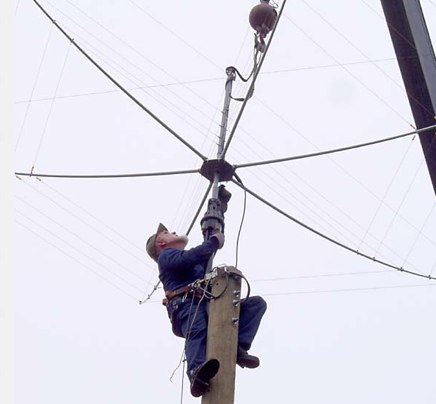
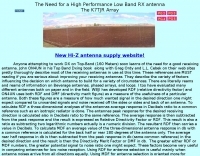 Anyone attempting to work DX on Top-Band 160 Meters, soon learns of the need for a good receiving antenna. This is a 160 meter 8 element receiving array.
 -
-
-
-
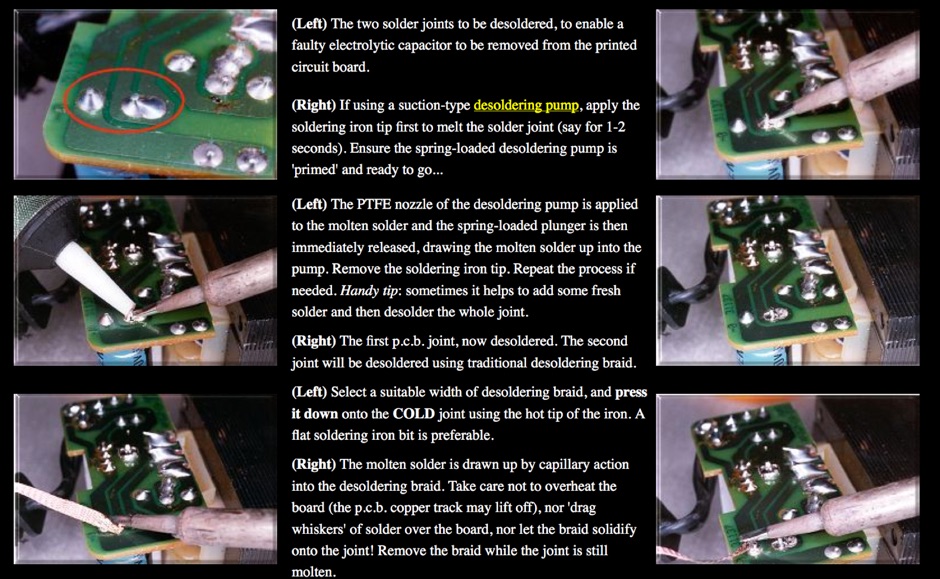 A pictorial guide to the basic ways of desoldering joints
 -

-
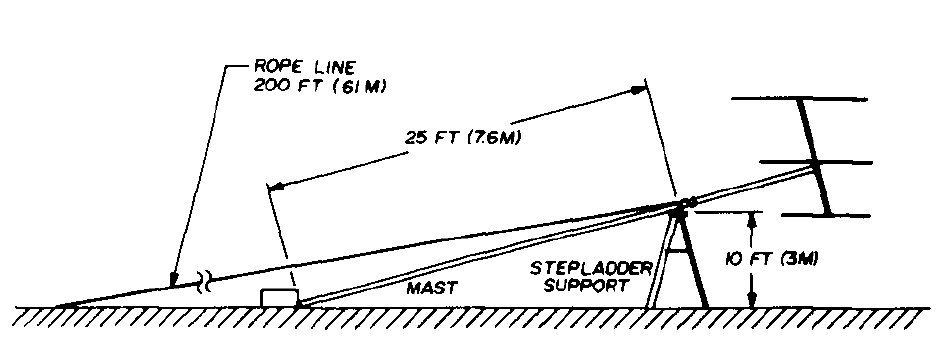 An easy method for erecting antenna masts using readily available material
 -
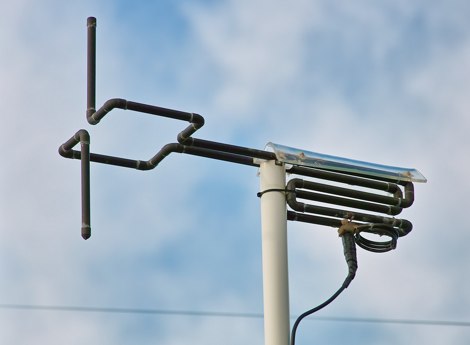 A 2 meter antenna made of copper tubes, offering circular polarization
 -
 A comprehensive guide to receive Weather Satellites signals in wefax mode
 -
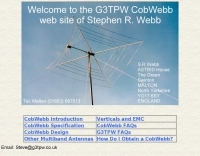 G3TPW CobWebb Antenna for the 14, 18, 21, 24 and 28 MHz Bands
 -
 Learn the Morse Code. Learn from random text or simulated QSO (contact) sources. Create character sequences that you find difficult. Compare your results with what the program sent and view error statistics. Take simulated tests. Sound card not essential. Evaluation version not time limited.
 -
 Northern NJ's number one club. Weekly swap n shop/net, VE sessions 2nd Monday, Meetings, Second Tuesdays. E-mail us to learn more.
 -
-
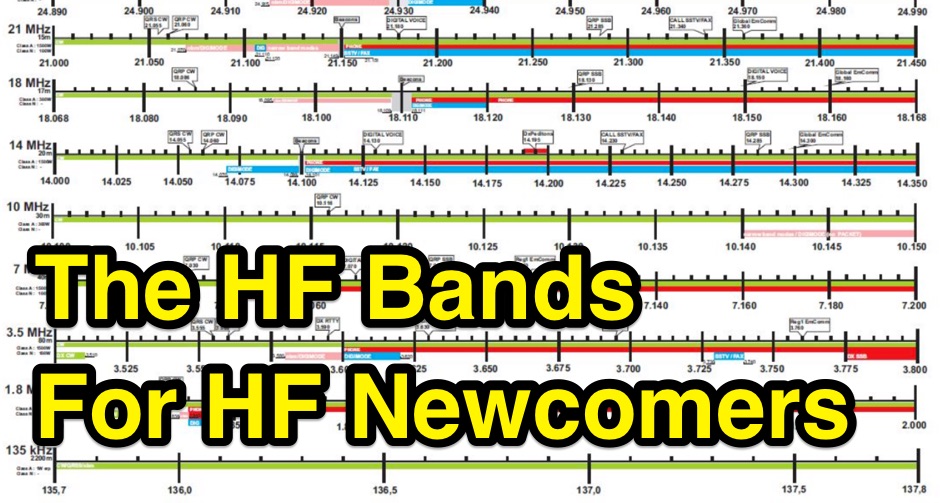 The HF ham bands can be mysterious. Some work at night, some during the day. Some seem to be good for long distance contacts while some are better for nearby contacts. Even worse, they change tremendously from hour to hour and day to day. An overview on operating on HF amateur radio bands
 -
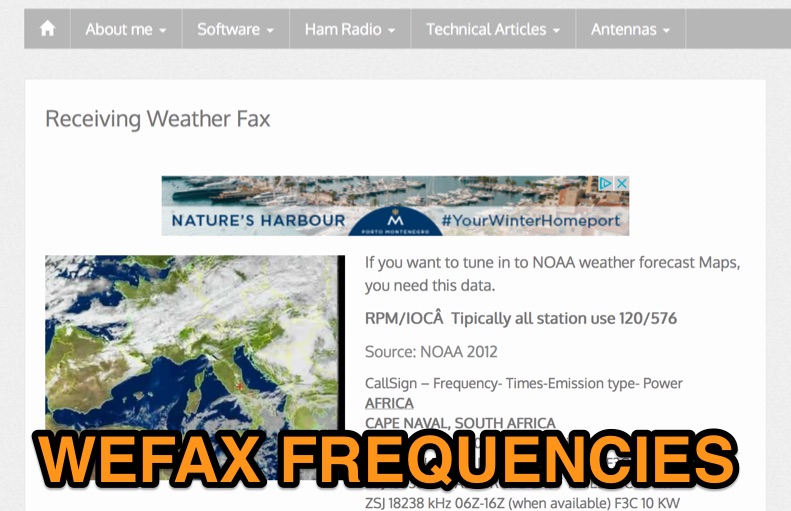 List of latest published Weather Fax world wide schedule including frequencies and modes.
 -
 Olivia MFSK digital communications are becoming popular in amateur radio because Olivia is one of the most robust methods of text keyboarding, that can perform superbly for long distance communications. Olivia frequencies, format and software
 -
 HT Programming for the Absolute Beginner
 -
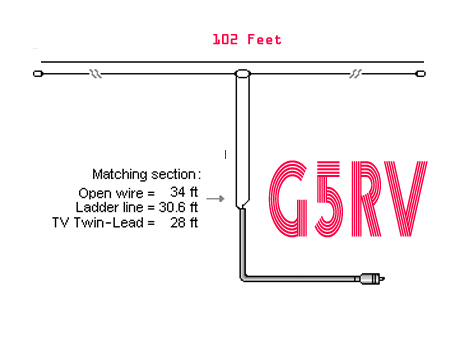 The Truth about the G5RV Antenna, how to optimize the design to be more efficient on all bands