Search results
Query: com
Links: 7679 | Categories: 262
This query is too generic. Please try adding an additional term to focus your research.
Categories
- Radio Equipment > HF Amplifiers > Acom 1000
- Radio Equipment > HF Amplifiers > Acom 1010
- Technical Reference > Components > Component Database
- Shopping and Services > Electronic Components
- Manufacturers > Electronic Components
- Manufacturers > Transceivers > Icom
- Radio Equipment > Antenna Tuners > Icom AH-4
- Radio Equipment > VHF-UHF Mobile > ICOM IC-2100H
- Radio Equipment > VHF-UHF Mobile > Icom IC-2300H
- Radio Equipment > VHF-UHF Mobile > ICOM IC-2720H
- Radio Equipment > HF Transceivers > Icom IC-7000
- Radio Equipment > HF Transceivers > Icom IC-703
- Radio Equipment > HF Transceivers > Icom IC-705
- Radio Equipment > HF Transceivers > Icom IC-706
- Radio Equipment > HF Transceivers > Icom IC-7100
- Radio Equipment > HF Transceivers > Icom IC-718
- Radio Equipment > HF Transceivers > Icom IC-7300
- Radio Equipment > HF Transceivers > Icom IC-746
- Radio Equipment > HF Transceivers > ICOM IC-756
- Radio Equipment > HF Transceivers > Icom IC-7600
- Radio Equipment > HF Transceivers > Icom IC-7700
- Radio Equipment > HF Transceivers > Icom IC-7760
- Radio Equipment > HF Transceivers > Icom IC-7851
- Radio Equipment > HF Transceivers > Icom IC-9100
- Radio Equipment > Receivers > Icom IC-R20
- Radio Equipment > Receivers > Icom IC-R7100
- Radio Equipment > Receivers > Icom IC-R75
- Radio Equipment > VHF-UHF Mobile > Icom IC-V8000
- Radio Equipment > VHF-UHF Handhelds > Icom ID-51A
- Radio Equipment > VHF-UHF Mobile > ICOM ID-880H
-
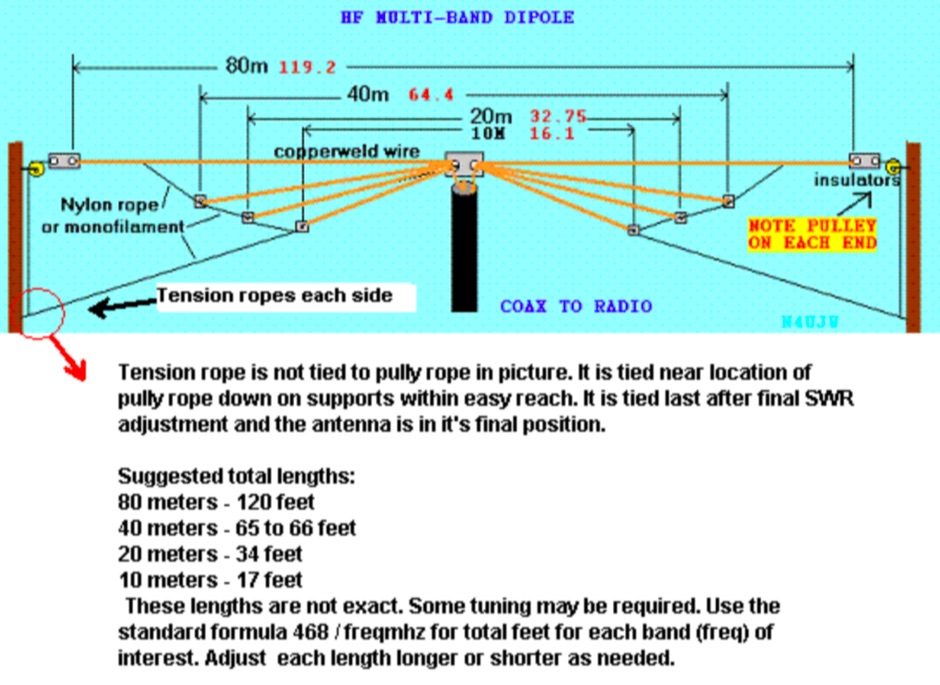 A three-frequency multi-band dipole that can be extended easily to additional bands. This article includes a multiband fan-dipole antenna for 80-40-20-10 meter band.
-
 Amateur Radio License exams are composed of questions from a pool. Use this application to practice all possible questions prior to taking your exam
-
 Revisiting the WA2EBY broadband HF amplifier
-
 The MFJ-940 VERSA TUNER II is a useful little antenna tuner for the HF-bands. However it suffers from a minor design error, which can be easily rectified.
-
 An easy to build single wire antenna for 160 and 80 meters with a better than 2 to 1 swr across the 80 meter band
-
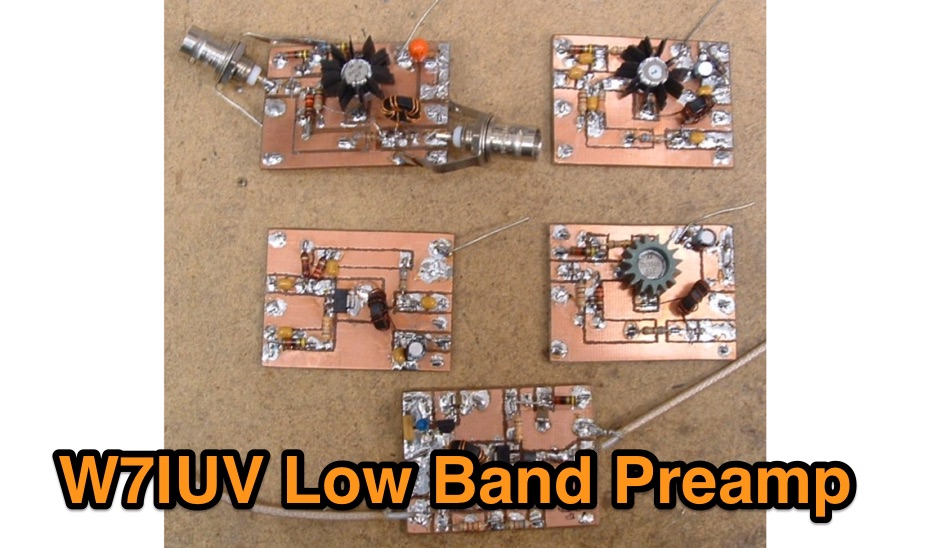 Pre amplifier using a 2N5109 for the 160 meters band
-
 Website for all Chesterfield Gateways on 446, using eQso.
-
 Producers of Scancat, Copycat, Magic and Distributors of HOKA's CODE-3 and CODE-30 decoders.
-
 What is ground?RF ground and the ground plane, how can I tell if I have a good ground? ground loops
-
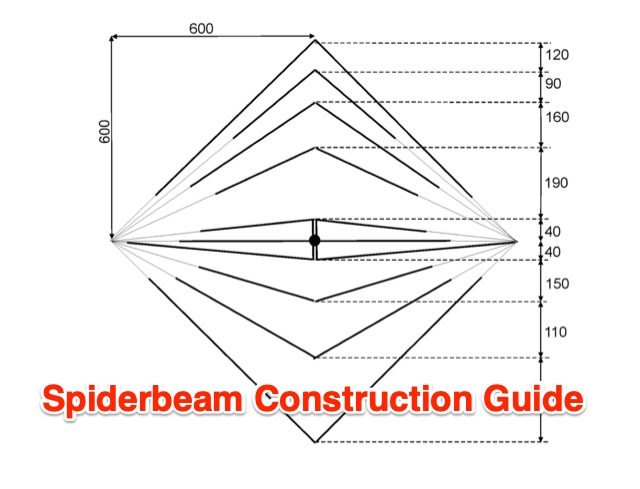 Build a spiderbeam from scratch for 20-17-15-12-10 meters band
-
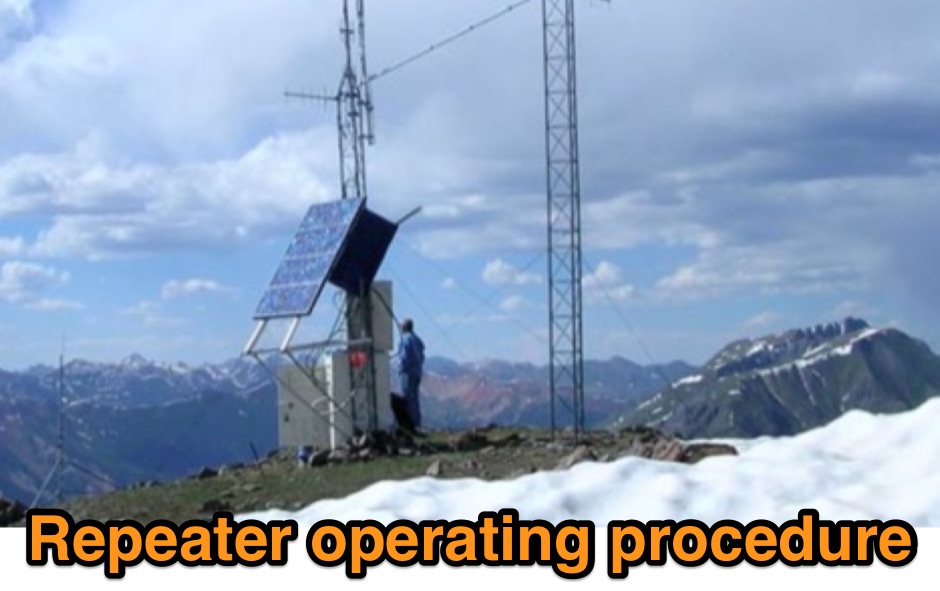 Outlines recommended operating procedures for amateur radio repeaters, detailing best practices for general on-air conduct. It emphasizes using simplex when possible, monitoring the frequency before transmitting, and maintaining concise, thoughtful transmissions to avoid monopolizing the repeater. The resource also stresses the importance of legal identification, such as the Canadian requirement at the beginning and end of a contact and every thirty minutes of operation. Furthermore, the article provides specific instructions for **autopatch** operation, including access codes and the necessity of brief calls, while cautioning against misuse for long-distance calls or commercial purposes. It highlights the financial support expected from regular users to maintain repeater infrastructure. Finally, the guide differentiates between permanently linked repeaters, which offer extended coverage, and **code access linked repeaters**, explaining the sequence of identification and code entry required to establish and terminate links for broader communication.
-
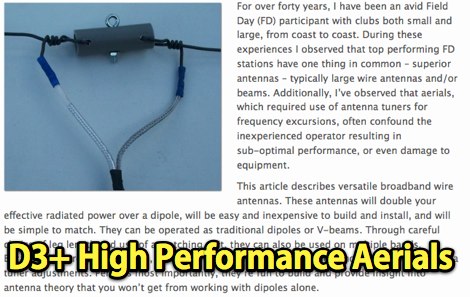 D3+ High Performance Antennas for Field Day. This article describes versatile broadband wire antennas. These antennas will double your effective radiated power over a dipole, will be easy and inexpensive to build and install, and will be simple to match.
-
 Illustrates the specific wiring and configuration steps required to interface an SGC-230 Smartuner with an Icom IC-706 HF/VHF/UHF transceiver. The document details the necessary connections for power, control, and RF signal paths between the two devices, ensuring proper impedance matching and automatic antenna tuning functionality. It specifies the pin assignments for the IC-706's ACC socket and the SGC-230's control port, crucial for successful integration. Outlines the operational considerations for the combined system, including initial setup procedures and potential troubleshooting tips for common connectivity issues. The resource presents a clear, diagrammatic representation of the interconnections, which aids in visual comprehension of the required cable fabrication or modification. Covers the specific settings within the IC-706 menu that need adjustment to enable external tuner control, such as the 'TUNER' function and other relevant parameters. This ensures the transceiver correctly communicates with the SGC-230 for efficient antenna tuning across various amateur bands.
-
 10 Band DSP Equalizer for Ham Radio, requires Win 98 or higher, 128 MB, 16 bit sound card.
-
 Antenna manufacturer from Poland, produce dipole wire antennas, W3DZZ FD4 Windom and long wires, baluns, dealer for toroids and connectors managed by Leszek Mlynarczyk SP1BKS
-
-
 Email, GPS Beacon, GPS Tracker, Text Chat, Private messages, internet Network node (link across the internet). Dstar Comms can be used for email deployment, GPS Tracking, reliable communication plus much more. Availble in free and commercial version
-
 YF1AR 80 to 40 meter vertical antenna project
-
 The Q-signal **QRP** signifies a request to reduce power, and in amateur radio, it defines operating with 5 watts or less for CW and 10 watts or less for SSB. This article addresses common inquiries from new hams regarding the practice, its benefits, and implementation methods. It explains how a 5-watt QRP signal, compared to a 100-watt signal, typically results in only a 13dB drop in signal strength, equating to about two S-units, still providing solid copy under most conditions. Hams choose QRP for various reasons, including seeking a greater challenge in DXing or contesting, reducing band interference, or enabling portable field operations with lightweight, battery-efficient equipment. A modern single-band CW transceiver, key, and antenna can fit into a pocket, offering receiver performance comparable to commercial rigs and extended operation on a small battery. This portability facilitates operations in remote locations where higher-power setups are impractical. Operating QRP can involve simply reducing power on an existing commercial HF rig or building a dedicated QRP transceiver from a kit, such as the **Wilderness Radio SST** with its 2-watt output and 15mA receive current draw. While SSB is viable, CW remains the most popular and efficient mode for QRP due to its superior signal-to-noise ratio. The article lists common QRP calling frequencies across 160m through 10m bands for both CW and SSB, and highlights organizations like QRP ARCI and NorCal that support the QRP community.
-
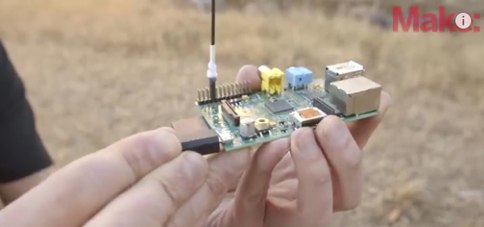 The project outlines the process for constructing a low-power FM broadcast transmitter using a Raspberry Pi Zero, a simple wire antenna, and battery power. It details the software installation steps for PiFM and MPG123, essential for generating and transmitting audio. The resource provides instructions for configuring the Raspberry Pi to broadcast FM signals, including command-line operations for initiating transmission and playing audio files. It specifically focuses on the Raspberry Pi Zero's capabilities for this application, highlighting its cost-effectiveness and minimal hardware requirements. The content presents a practical, hands-on approach to creating a basic FM transmitter, suitable for short-range, experimental broadcasting. It includes guidance on testing the FM output and ensuring proper operation of the software components. The project emphasizes the use of readily available components and open-source software to achieve functional RF output.
-
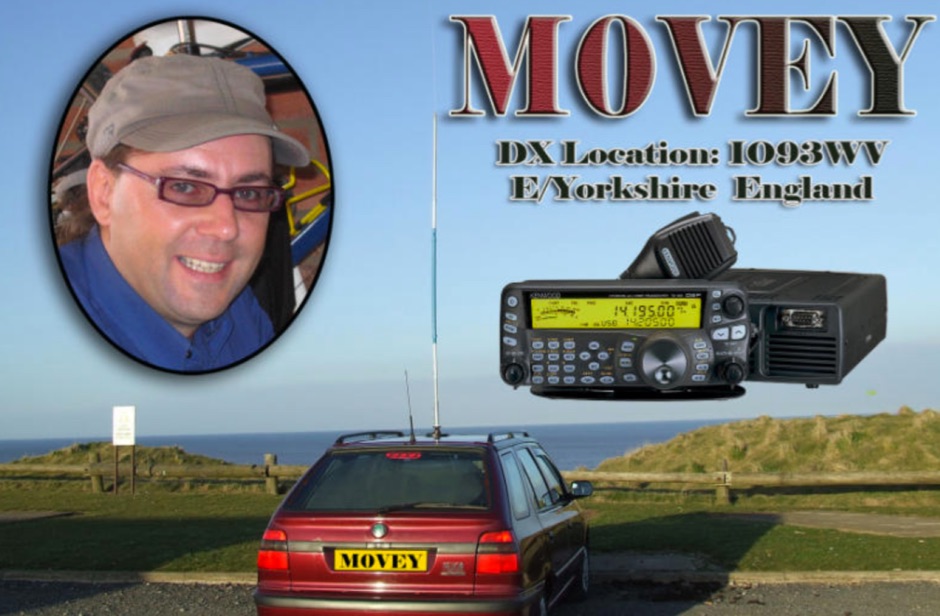 M0VEY shares insights into constructing a 160-meter mobile DX aerial, detailing the process of sourcing materials and assembly. The project began with a goal to avoid a £50 commercial antenna, instead utilizing a £10 reel of _enamelled copper wire_ and salvaged components like alloy tent poles and plastic water pipe. A friend fabricated a custom stainless steel tube for mounting, featuring a 3/8” thread for a mag-mount, enabling secure vehicle attachment. The aerial's design incorporates four alloy tubes, one plastic tube, and a five-foot whip, engineered to split into two pieces for convenient storage. The loading coil, wound with approximately 115 feet of 0.75mm wire onto a plastic former, was then sealed with blue heat shrink. M0VEY reports successful operation, making contacts across the UK and Europe, with the aerial standing about ten feet tall for local nets at 1.972 MHz and taller for the DX window around 1.845 MHz. Future plans include a base-loaded 160m aerial and an 80m version, leveraging components from the existing _160m DX Mobile Aerial_ to maintain a similar overall size with a smaller coil.
-
 Tune in live to the Grants Pass DPS police radio and Josephine County Sheriff's Office radio feeds.
-
 The Upside-Down Umbrella Antenna by Don Keith N4KC
-
 Online shopping, Programming Software, Icom, Yaesu, Kenwood, Istron, HyGain, MFJ, cat cables interfaces and other radio control cables.
-
 Frequently asked questions on Digital Signal Processing
-
 Build the Moorabbin, a regenerative receiver for the AM broadcast band by Peter Parker VK3YE
-
 The ZS6BKW wire antenna, a variant of the G5RV, utilizes a specific 13m (42.6 ft) length of 450-ohm window line as its matching section, feeding a 28.5m (93.5 ft) flat-top element. This design aims for lower SWR on 40m, 20m, 17m, 12m, and 10m compared to a standard G5RV, often achieving SWR values below 1.5:1 on these bands without an antenna tuner. The feedpoint impedance transformation provided by the window line allows for direct connection to 50-ohm coax on multiple bands. F4FHH's experience involved constructing the ZS6BKW and evaluating its performance against an _OCF dipole_ (Off-Center Fed) on various HF frequencies. The article includes observations on SWR readings and operational effectiveness, highlighting the ZS6BKW's suitability for multi-band operation. The antenna's overall length, including the flat-top and window line, is approximately **41.5 meters** (136 feet), making it a significant wire antenna for fixed station use. Comparative analysis with the OCF dipole provided practical insights into the ZS6BKW's advantages and limitations, particularly concerning bandwidth and tuner requirements.
-
 Morse Tutor is a DOS based program written in C++. It can be used to practice morse code. Various options are available. Morse tutor with Complete Source Code and Binary is available for Download (32KB).
-
 a comprehensive listing of both Military and Civil HF networks from Australia and it's surrounding neighbours as well as from countries around the world.
-
 About numbers stations, and their criptic transmissions, where to listen to them and some audio recording samples by fascinating shortwaves
-
 New User Tips for VHF-UHF Operation by Dave Schultheis WB6KHP
-
 Some antenna manufacturers place baluns at the incorrect location in LPDA arrays, or tell you to route the cable incorrectly. This can cause substantial RFI and all sorts of weird problems like RF into house wiring.
-
 Schematic Manual of the 3 element Yagi antenna by ECO antenne
-
 A free application that searches more than 100 web-accessible sources to locate QSL information for a callsign that you enter once
-

-
 K6ZB Bruce presentation of technologies to allow ham radio operate via internet
-

-
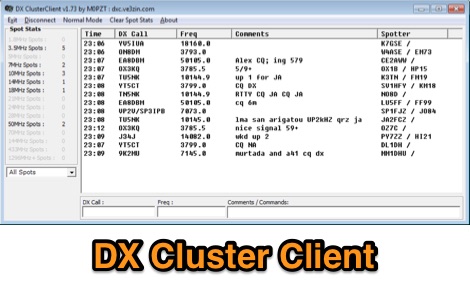 A Windows freeware DX cluster client, allows you to monitor DX spots from users worldwide includes DX filtering and statical functions.
-

-

-
 KB1GW's collection of beverage antenna information
-
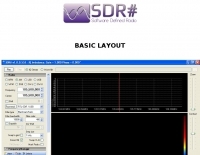 Working with SDR#, adjusting frequency correction and basic setup.
-
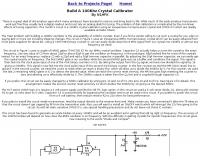 Restoring vintage amateur radio gear often presents challenges with accurate dial calibration due to the non-linear characteristics of analog tuning capacitors. This resource details the construction of a 100 kHz crystal calibrator, a crucial tool for precisely setting the frequency of older rigs lacking digital readouts. The design cleverly circumvents the scarcity and cost of 100 kHz crystals by utilizing a readily available 8 MHz microprocessor crystal, such as a _HC49U_ type, in conjunction with common _CMOS ICs_ like the 74HCT00 quad NAND gate and 74HCT393 dual 4-bit binary ripple counter. The circuit employs a two-stage frequency division process: the 8 MHz crystal oscillator output is first divided by 16 to yield 500 kHz, then further divided by 5 to achieve the desired 100 kHz output. A 5.1-volt Zener diode, _1N4733A_, regulates the power supply for the HCT series logic. The article also provides a modification to produce a 50 kHz calibrator by altering the counter reset logic. Installation involves feeding the output to the receiver front end, ensuring it's post-TR relay to prevent RF damage, and incorporating an ON/OFF switch for the 12V supply line.
-
-
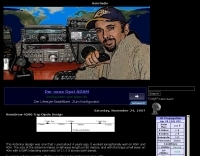 An home made trapped dipole antenna for 40 and 60 meters band by 2E0HTS
-
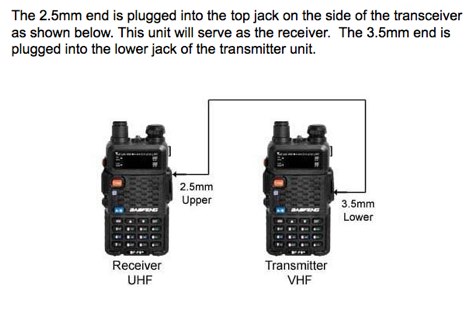 A project to build a cross band repeater using a pair of Baofeng UV5R handheld transceivers.
-
 Learn a little bit about how duplexers work and building your own.
-
 Wholesale distributor of CB radios, parts, antennas, microphones, power supplies, crystals, echo boards, expanders, meters and CB accessories.
-
-
 It's a whole new way of preparing for the government FCC License examination. The classroom is your home.