RF Safety for Amateur Radio Operators
Access essential information on RF exposure regulations, safety guidelines, and tools for evaluating your ham radio station's compliance.

RF safety is a critical concern for all amateur radio operators, ensuring that our stations operate within safe limits for ourselves, our families, and our neighbors. Understanding the potential for electromagnetic field exposure from antennas and feedlines is essential, especially when running higher power or operating on VHF/UHF bands where antennas are often closer to people.
Hams can find various resources to help evaluate their stations compliance with regulations from authorities like the FCC. This includes RF safety compliance calculators, which help estimate power density, and guidelines for proper antenna setup. Operators can also learn about grounding systems for their stations and the use of common mode chokes to mitigate unwanted RF, ensuring safer operation and reducing interference.
Related Categories
-
 RF Safety reource page with links and more documentation on radio frequency safety
 -
 Statio evaluation guidelines and rules for correct antenna setup
 -
 The FCC has answered some of ARRL questions about the RF-exposure rules. Changes to the regulations have a few pleasant surprises for Amateur Radio.
 -
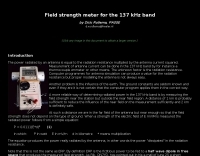 Field strength meter for the 137 kHz band by PA0SE
 -
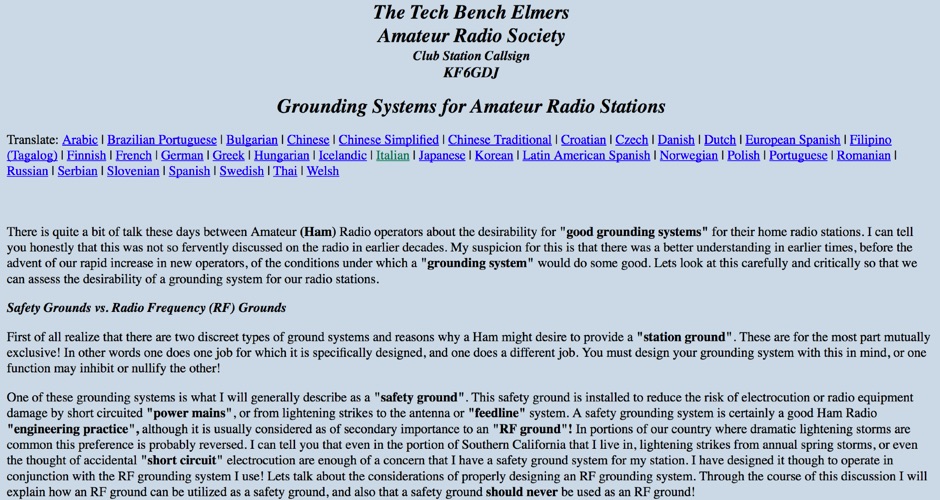 Grounding Systems for Amateur Radio Stations, Safety grounds vs. radio frequency (RF) grounds, the practical station ground
 -
 RF Saferty articles publishes by ARRL
 -
 Isolating traceiver and your computer with an opto-coupler component
 -
 ARRL FCC RF Exposure Regulations
 -
 Preprinted from the 1997 ARRL Handbook for Radio Amateurs. Thermal Effects of RF Energy, Safe Exposure Levels, Cardiac Pacemakers and RF Safety, Determining RF Power Density
 -
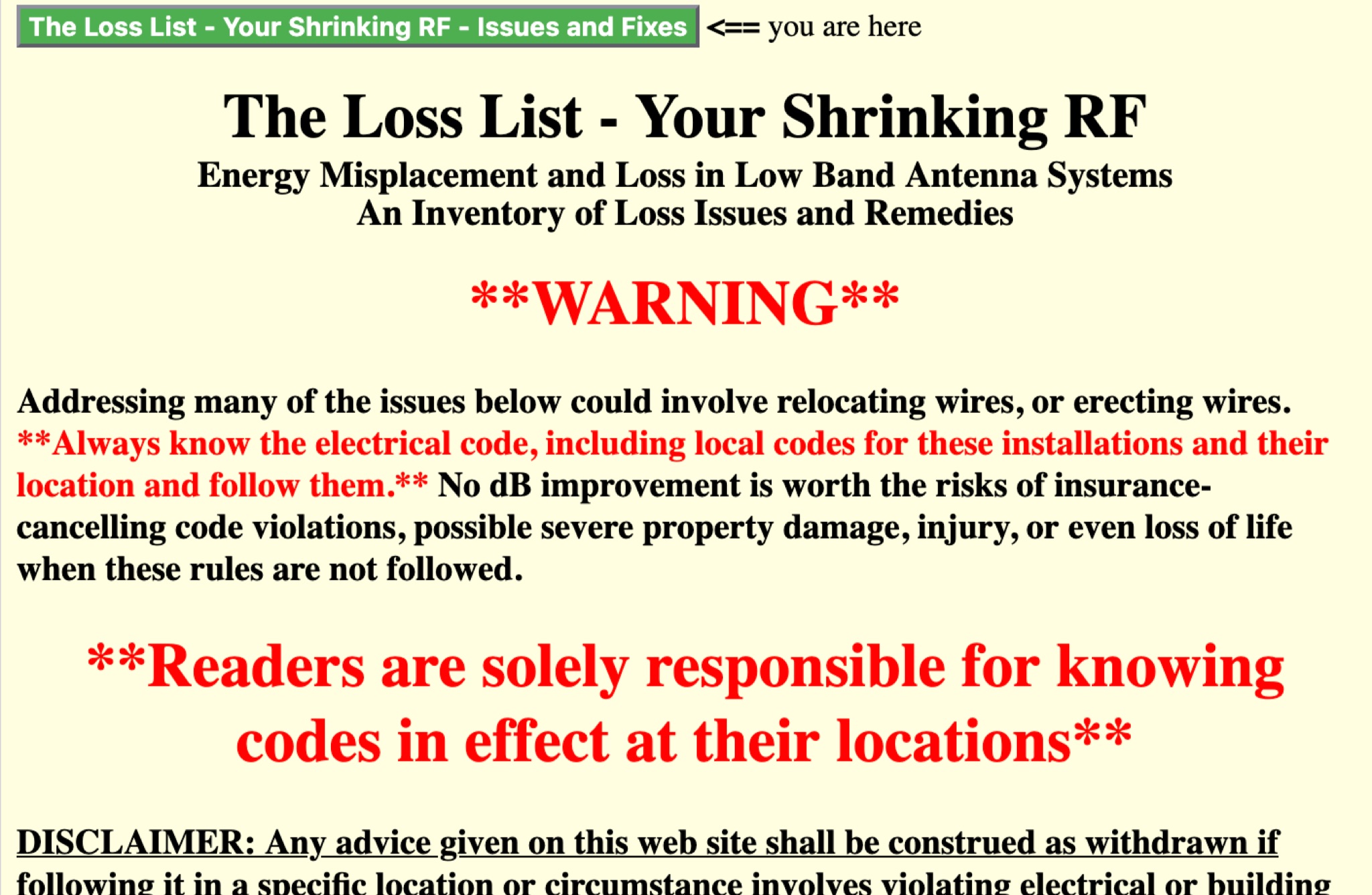 This page discusses the potential risks and safety concerns related to antenna installations for ham radio operators. It emphasizes the importance of following electrical codes and regulations to prevent property damage, injuries, or even loss of life. The author shares personal experiences and advises against using trees for antenna support near power lines. The content serves as a cautionary resource for hams planning antenna setups to ensure safety and compliance with regulations.
 -
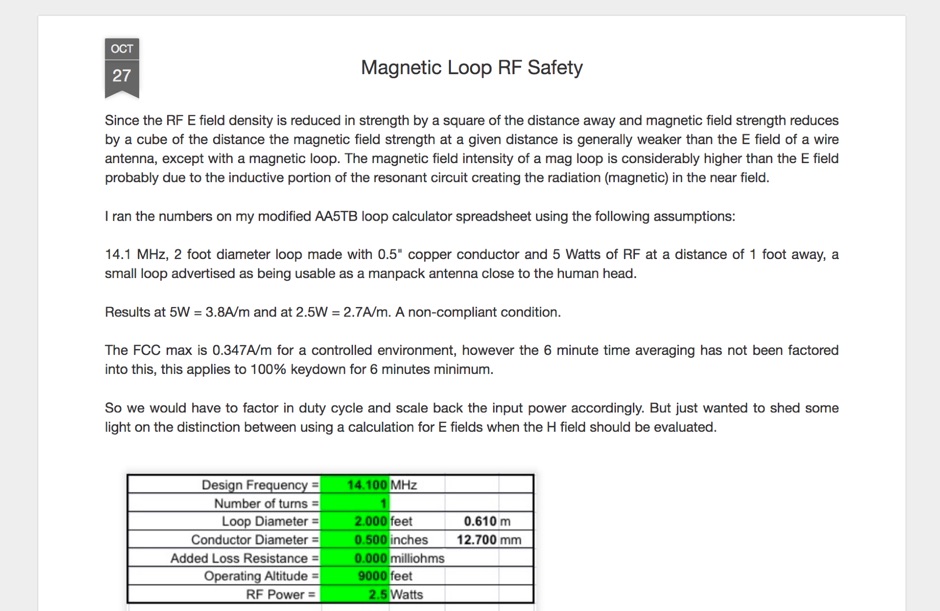 Analyzes RF safety for magnetic loop antennas, detailing magnetic field intensity calculations and near-field considerations for ham radio operators.
 -
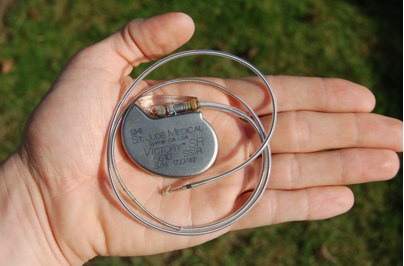 An ARRL article collection about influence of radio frequency with pacemakers and other similar medical devices.
 -
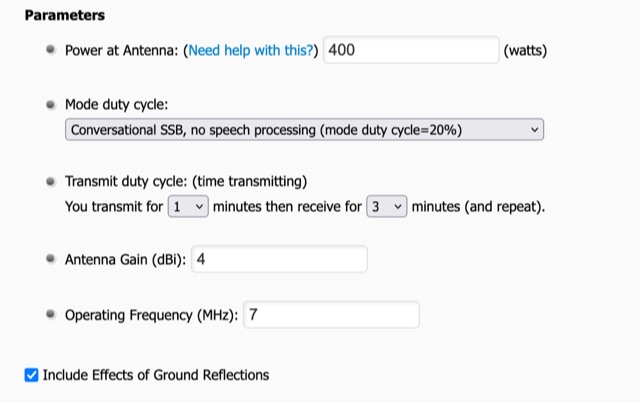 To use the RF Exposure Calculator, fill-in the form with your operating power, antenna gain, and the operating frequency. Depending on how far above ground the RF source is located, you might want to consider ground reflections too.
 -
 ARRL page dedicated to RF Safety